
JEDDAH — Egyptian President Abdel Fattah el-Sisi completed a whirlwind diplomatic tour of four Gulf capitals in less than 48 hours this week, meeting Crown Prince Mohammed bin Salman in Jeddah on Friday and declaring that Gulf security is “an extension” of Egypt’s own national security. The rapid-fire visits to the United Arab Emirates, Qatar, Bahrain, and Saudi Arabia mark the most significant shift in Cairo’s posture since the Iran war began on 28 February, transforming Egypt from a cautious bystander into an active participant in the emerging regional security architecture.
The tour, which carried Sisi from Abu Dhabi to Doha, then to Manama and finally to Jeddah between 19 and 21 March, delivered a consistent message at every stop: Egypt condemns Iran’s attacks on Gulf Cooperation Council states, considers them a threat to its own interests, and stands ready to act. The language represented a marked departure from the “calculated silence” that had defined Egypt’s position for the first three weeks of the conflict, during which Cairo limited itself to tepid statements calling for restraint while avoiding any commitment to its Gulf allies.
Table of Contents
What Did Sisi and MBS Agree in Jeddah?
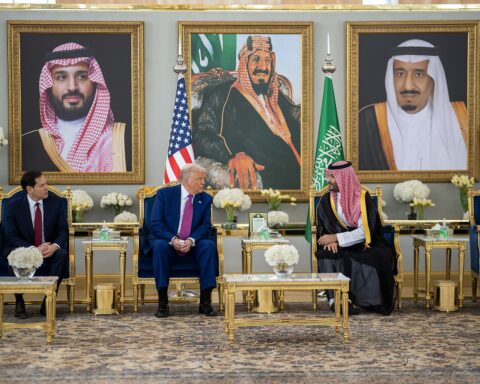
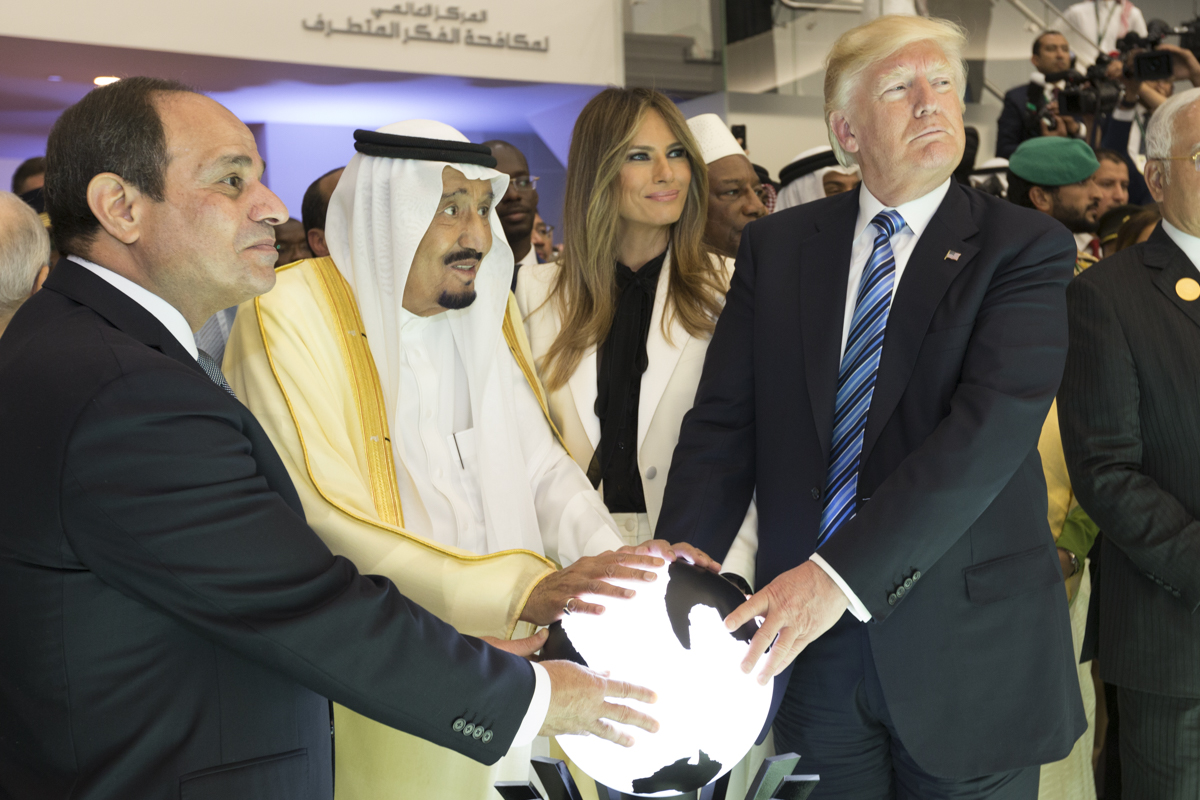
The meeting between Sisi and Crown Prince Mohammed bin Salman in Jeddah on 21 March produced the strongest joint statement to emerge from any of the four stops. According to the Saudi Press Agency, the two leaders “underscored that the repeated Iranian attacks on Gulf Cooperation Council states and the targeting of vital civilian facilities constitute a dangerous escalation that threatens regional security and stability.” The language deliberately mirrored GCC communiqué terminology, signalling that Egypt now considers itself bound by the same threat assessment as the six Gulf monarchies.
Sisi told MBS that Egypt “condemns in the strongest terms” Iranian strikes on Saudi territory, according to a readout from the Egyptian presidency. The statement went further than any previous Egyptian position on the conflict, which until this week had been carefully limited to general calls for de-escalation without naming Iran as the aggressor. A senior Egyptian diplomat, speaking to Reuters on condition of anonymity, said the shift reflected “a recognition in Cairo that this is no longer a war Egypt can sit out without consequences.”
The two leaders also discussed coordination on humanitarian corridors, energy security in the Red Sea, and what the Saudi readout described as “joint measures to protect the interests of both countries.” Egyptian officials did not elaborate on what those measures might entail, but the phrase was widely interpreted in Gulf media as a reference to potential military cooperation, particularly in the areas of air defence and naval security.
The Jeddah meeting came one day after Riyadh expelled Iran’s military attaché and four embassy staff, severing the last formal diplomatic channel between the Kingdom and Tehran. That decision underscored the gravity of the moment: Saudi Arabia was signalling to its allies that the time for quiet diplomacy had passed.
The Middle East briefing 3,000+ readers start their day with.
One email. Every weekday morning. Free.
Four Capitals in 48 Hours
Sisi’s Gulf tour began on Wednesday, 19 March, with short visits to Abu Dhabi and Doha. In the UAE, he met President Sheikh Mohamed bin Zayed Al Nahyan and expressed “full solidarity” with Emirati efforts to defend national territory against Iranian drone and missile attacks. The two leaders reviewed damage from recent Iranian strikes on UAE soil, including the drone attack that shut down Dubai International Airport on 16 March and the strike on Abu Dhabi’s Shah gas field the following day.
In Doha, Sisi met Emir Sheikh Tamim bin Hamad Al Thani and condemned the Iranian missile strike on Qatar’s Ras Laffan industrial complex, the world’s largest liquefied natural gas facility. Qatar had expelled its own Iranian attachés on 19 March in response to the attack, a decision Sisi publicly endorsed. The Egyptian president told reporters in Doha that “no country should be forced to tolerate attacks on the infrastructure that sustains its people,” according to Ahram Online.
On 20 March, Sisi flew to Manama, where he met King Hamad bin Isa Al Khalifa. The two leaders issued a joint call for “international cooperation to protect the Strait of Hormuz,” according to the Middle East Monitor. Bahrain, which has absorbed more than 385 Iranian strikes since the war began, occupies a particularly vulnerable position as home to the United States Fifth Fleet headquarters. Sisi praised what he called Bahrain’s “extraordinary resilience” and pledged Egypt’s support for the island kingdom’s missile defence efforts.
The final stop in Jeddah on 21 March was the most consequential. Saudi Arabia is the largest Gulf economy, Egypt’s single most important economic partner in the region, and the country that has absorbed some of the heaviest Iranian attacks outside of Israel itself.
Why Did Egypt Break Its Silence Now?
For the first three weeks of the Iran war, Egypt maintained what analysts described as a policy of “calculated silence.” Cairo issued generic statements calling for restraint and the protection of civilians, but conspicuously avoided naming Iran as the aggressor or pledging support for any specific Gulf state. That posture earned Cairo criticism from Gulf capitals and drew pointed commentary from regional media.
Three factors appear to have forced the shift. First, Iran’s attacks expanded beyond the Persian Gulf to target facilities in Oman and the Red Sea, including the 19 March drone strike on the SAMREF refinery in Yanbu, Saudi Arabia’s primary oil export terminal on the Red Sea coast. Yanbu sits at the western end of the East-West pipeline that bypasses the Strait of Hormuz, and an attack on the Red Sea coast brought the war geographically closer to Egypt’s own borders. The Suez Canal, Egypt’s most valuable strategic asset, lies less than 600 kilometres from Yanbu.
Second, the economic pressure became untenable. Egypt receives approximately $2.5 billion in annual remittances from its estimated 2.9 million citizens working in Gulf states, according to World Bank data. Saudi Arabia alone accounts for roughly 900,000 Egyptian workers. A prolonged war that destabilises Gulf economies threatens one of Egypt’s most critical revenue streams at a time when Cairo is already managing a severe foreign currency shortage and an International Monetary Fund programme that demands fiscal discipline.
Third, the emerging Turkey-Saudi-Egypt-Pakistan security pact, which was discussed at a foreign ministers’ meeting in Riyadh on 19 March, created a diplomatic vehicle for Egyptian participation. Turkey’s Foreign Minister Hakan Fidan, Saudi Foreign Minister Prince Faisal bin Farhan, Egyptian Foreign Minister Badr Abdelatty, and Pakistani Foreign Minister Mohammad Ishaq Dar met on the sidelines of an Islamic cooperation summit to explore what Turkish sources described as a “security platform” for greater defence cooperation. The meeting gave Sisi a multilateral framework within which to position his bilateral visits.
What Military Assets Could Egypt Contribute?
Egypt operates the largest military in the Arab world and ranks among the top 15 globally according to the GlobalFirepower index. Its 438,500 active-duty personnel and 479,000 reservists give it a combined force of more than 900,000, a scale that dwarfs every other potential contributor to Gulf security except the United States itself.
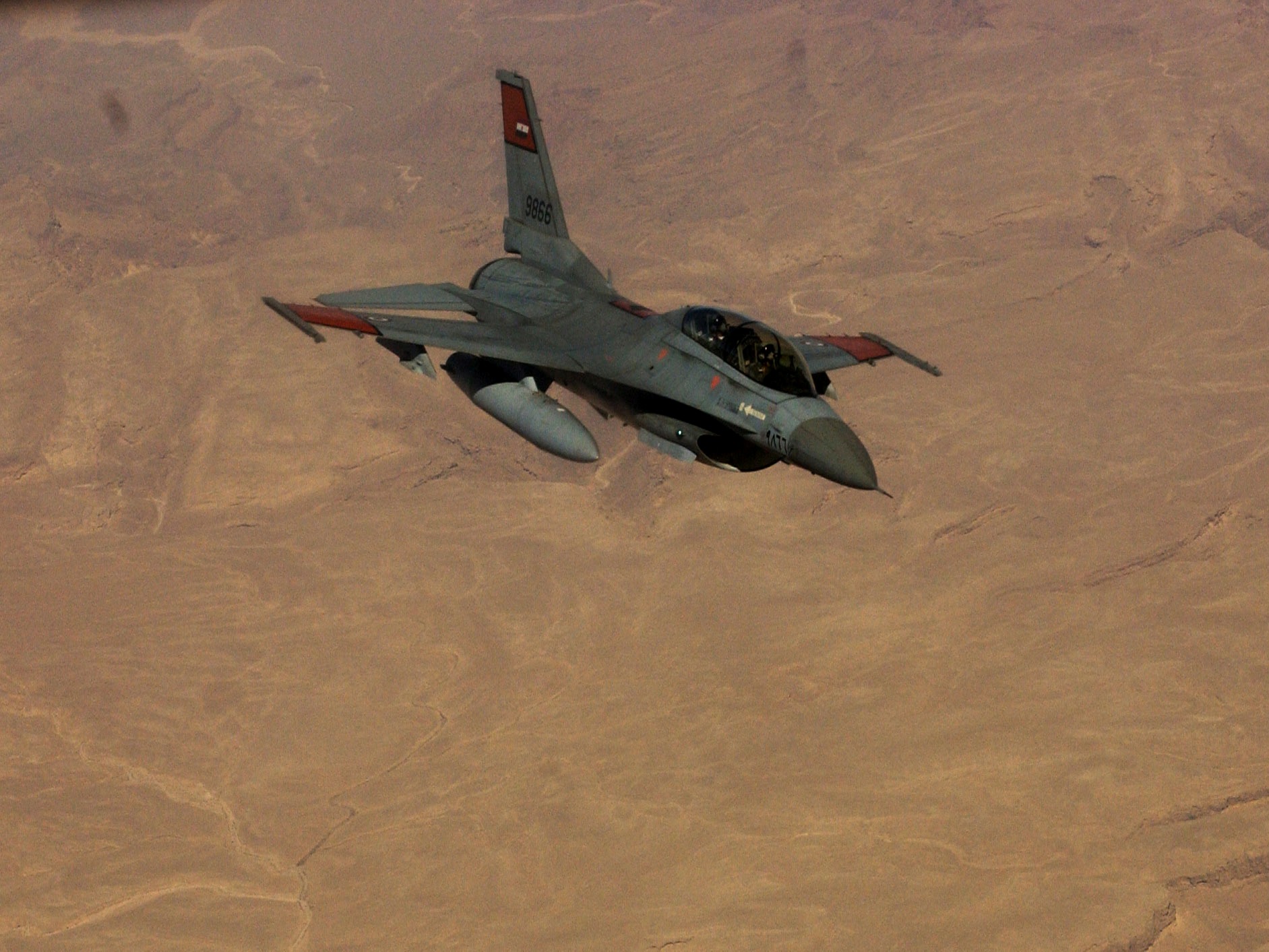
The Egyptian Air Force fields approximately 220 F-16 Fighting Falcons, 24 Dassault Rafale multirole fighters with an additional 30 on order, and 46 MiG-29M/M2 aircraft. Those 54 Rafales, once the full fleet is delivered, will make Egypt the largest Rafale operator outside France and give Cairo a platform capable of carrying the SCALP cruise missile and the Meteor beyond-visual-range air-to-air missile. For a region desperately short of interceptor capacity after three weeks of absorbing Iranian barrages, Egyptian air assets represent a significant potential reinforcement.
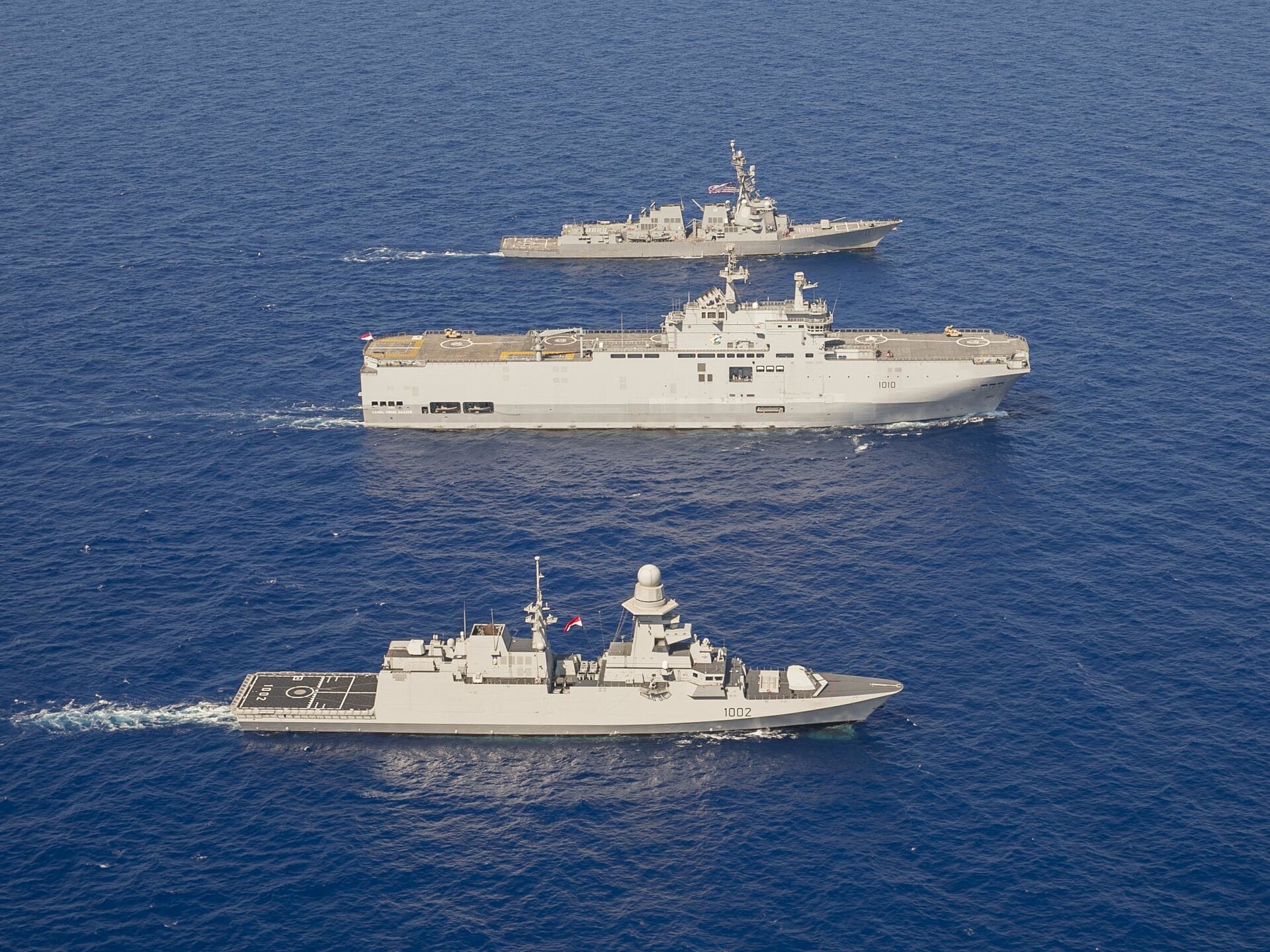
At sea, Egypt’s navy includes two Mistral-class helicopter carriers, the ENS Gamal Abdel Nasser and the ENS Anwar El Sadat, purchased from France in 2015 after Paris cancelled their sale to Russia over the Ukraine conflict. Each Mistral can carry 16 helicopters, 450 troops, and 60 armoured vehicles, providing power-projection capability that no other Arab state possesses. Egypt also operates four FREMM frigates, four German-built Type 209 submarines, and a fleet of fast-attack craft suited to Red Sea operations.
None of this means Egypt is about to deploy combat forces to the Gulf. Egyptian officials have been careful to distinguish between solidarity and belligerency. But the tour signals that Cairo is at least open to discussions about air-defence coordination, intelligence sharing, and naval cooperation in the Red Sea, all of which fall short of direct combat involvement but would materially strengthen the Gulf’s defensive posture.
The $350 million arms deal between Turkey’s state-owned MKE corporation and Egypt’s Ministry of Defence, signed on the margins of the Riyadh foreign ministers’ meeting, further suggested that military cooperation is accelerating. The deal covers ammunition supplies and the establishment of production lines in Egypt, according to Middle East Eye, a move that would reduce Cairo’s dependence on Western supply chains at a time when arms deliveries to the region are subject to increasing political scrutiny.
The Suez Canal Card
Egypt controls the Suez Canal, through which approximately 12 percent of global trade and roughly 10 percent of seaborne oil passes annually. With the Strait of Hormuz effectively closed since 4 March, the canal has become the only viable maritime route connecting Asian markets to European and Mediterranean refineries that rely on non-Gulf crude sources. Canal revenues, which reached $9.4 billion in the 2023-2024 fiscal year according to the Suez Canal Authority, represent Egypt’s second-largest source of foreign currency after remittances.
The canal’s strategic value has only increased since the Houthi attacks on Red Sea shipping in 2024 and 2025 disrupted traffic and forced some vessels to reroute around Africa. Revenue fell sharply during that period, and Egyptian officials are acutely aware that any further destabilisation of Red Sea security could devastate an already fragile economy.
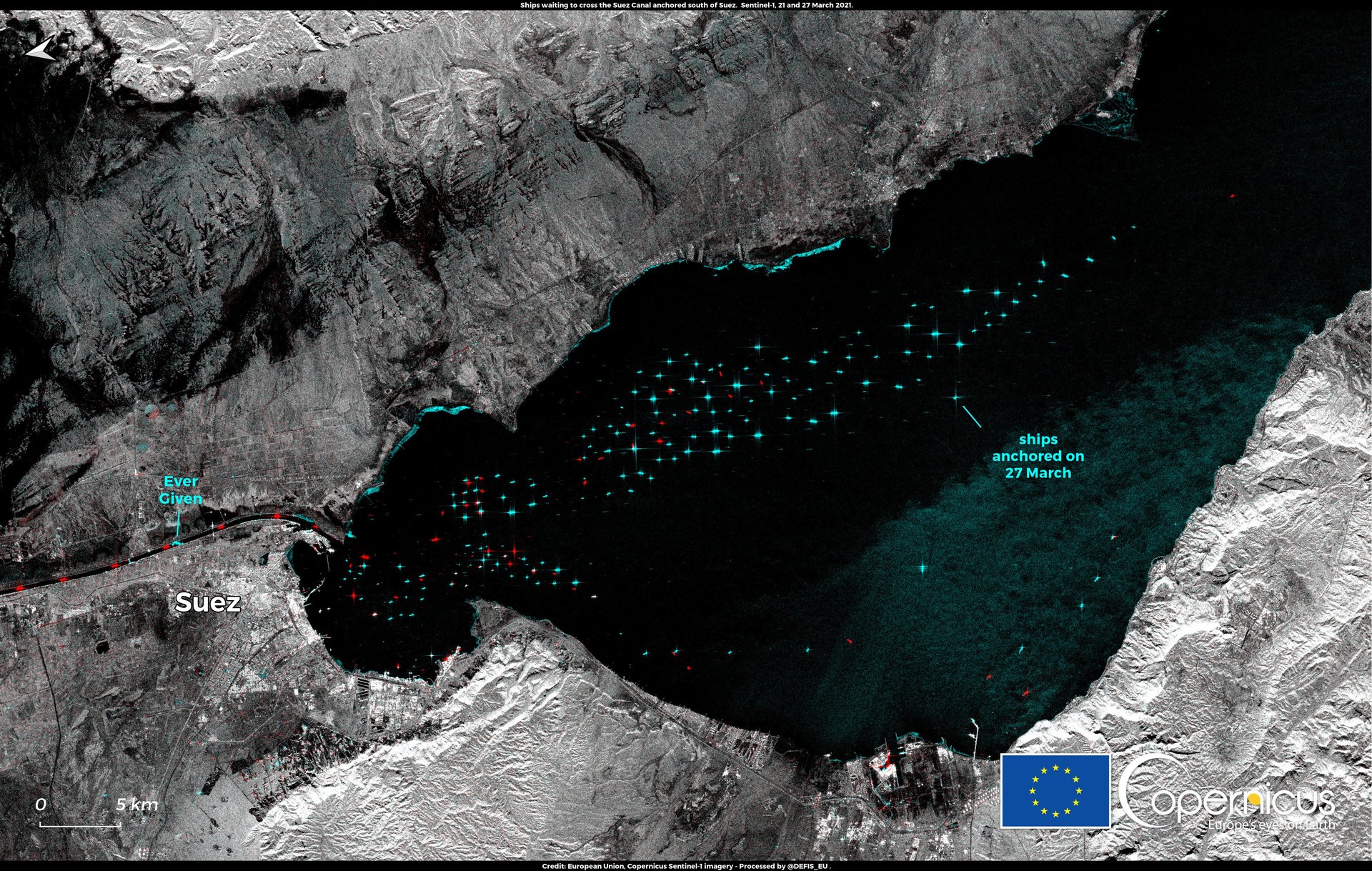
Iran’s 19 March drone strike on Yanbu, which lies on the Red Sea coast approximately 600 kilometres south of the canal’s southern entrance, demonstrated that Tehran is willing to extend its attacks westward. Egyptian military planners view any further escalation toward the Red Sea as a direct threat to national interests. Sisi’s statement in Jeddah that Gulf security is an “extension” of Egyptian national security was not metaphorical; it reflected a geographic and economic reality that the war has made impossible to ignore.
Billions at Stake for Cairo
The economic relationship between Egypt and Saudi Arabia has deepened significantly in recent years, creating financial dependencies that reinforce Cairo’s strategic calculation. Bilateral trade reached nearly $16 billion in 2024, a 29 percent increase over the previous year, according to Saudi customs data. Saudi investments in Egypt totalled approximately $35 billion in 2025, spanning real estate, tourism, pharmaceuticals, and the Suez Canal Economic Zone.
In March 2025, the Egyptian parliament ratified a bilateral investment protection agreement with Saudi Arabia, a legal framework designed to encourage further capital flows. Egyptian businesses have identified Saudi Arabia as their primary growth market, with an HSBC survey in late 2025 finding that nearly 90 percent of Egyptian firms planned to “significantly increase” trade with the Kingdom over the following five years.
Gulf remittances more broadly are a lifeline for Egypt’s current account. The World Bank estimated that Egyptian workers in GCC states sent home approximately $12 billion in 2025, with Saudi Arabia and the UAE accounting for the largest shares. A sustained war that forces expatriate evacuations or triggers Gulf recessions would create a remittance shock at the worst possible moment for an economy already navigating a currency devaluation and IMF conditionality.
The stakes extend beyond direct financial flows. Saudi Arabia’s Public Investment Fund has committed to several Egyptian megaprojects, including a $3 billion mixed-use development in the new administrative capital and a $1.5 billion petrochemical complex. These investments are contingent on regional stability. Every week the war continues, the risk of delays or cancellations grows.
Egypt and the Emerging Gulf Security Pact
Sisi’s tour cannot be understood in isolation from the broader effort to construct a post-American security framework for the Gulf. The quadrilateral discussions between Turkey, Saudi Arabia, Egypt, and Pakistan represent the most ambitious attempt at regional security cooperation since the GCC’s Peninsula Shield Force was established in 1984.
Turkey brings NATO-standard military capabilities and a defence industry increasingly capable of producing advanced drones and ammunition domestically. Pakistan has already deployed air-defence systems and troops to Saudi Arabia, and its nuclear deterrent, while never explicitly invoked, provides an implicit guarantee. Egypt adds the Arab world’s largest conventional military, control of the Suez Canal, and a geographic position that brackets the Red Sea from both sides.
The quadrilateral format is not a formal alliance, and participants have been careful to avoid comparisons to NATO. Turkish Foreign Minister Fidan described it as a “security platform” rather than a mutual defence pact, and Pakistani officials have emphasised that Islamabad’s contributions are bilateral with Saudi Arabia rather than part of a multilateral commitment. But the trajectory is clear: the Iran war is accelerating security cooperation among Sunni-majority states in ways that would have been unimaginable 12 months ago.
For Egypt, joining this architecture carries risks. Cairo maintains diplomatic relations with Tehran, and while those ties have been strained by the war, a formal military alignment against Iran would close a diplomatic channel that Egyptian intelligence has historically valued. Sisi’s careful language throughout the tour, condemning attacks without endorsing military action against Iran, suggested an effort to preserve flexibility even while demonstrating solidarity.
The Limits of Egyptian Solidarity
Despite the upgraded rhetoric, significant constraints limit how far Egypt can go. The Egyptian military is primarily structured for territorial defence, with its most capable units positioned along the Sinai Peninsula border with Israel and in the Western Desert facing Libya. Redeploying significant forces to the Gulf would require a strategic reorientation that the Egyptian high command has historically resisted.
Egypt’s economy is also poorly positioned to absorb the costs of expeditionary operations. The country is in the third year of an IMF Extended Fund Facility programme that imposes strict fiscal targets. Military spending beyond budgeted levels would require either IMF waiver negotiations or creative off-budget financing through the military’s extensive commercial enterprises, neither of which is straightforward.
American influence adds another complication. The United States provides Egypt with approximately $1.3 billion in annual military aid, making Cairo the second-largest recipient of American security assistance after Israel. That aid comes with end-use restrictions that limit how Egypt can deploy American-supplied equipment, including the F-16 fleet. Any Egyptian military contribution to Gulf operations using American hardware would require Washington’s explicit approval, a process that could take weeks and would inevitably come with political conditions.
The accidental alliance that has coalesced around Saudi Arabia’s defence is a coalition of the willing rather than a unified command structure. Each participant, whether Pakistan, Turkey, Britain, France, or now Egypt, brings different capabilities, different constraints, and different conditions. Sisi’s tour added Egypt’s name to the roster, but the terms of its contribution remain deliberately vague. Where Egypt ranks in Saudi Arabia’s complete alliance transformation depends on whether Cairo converts rhetorical solidarity into the kind of operational commitment that the wartime Alliance Durability Matrix rewards.
What is no longer vague is Cairo’s political alignment. After three weeks of studied ambiguity about where Egypt stood, Sisi’s tour delivered an unambiguous answer. Egypt stands with the Gulf. The question is no longer whether Cairo will support Riyadh, but how much support it is willing to provide, and at what price.
Frequently Asked Questions
Why did Sisi visit four Gulf capitals in such a short time?
The rapid pace reflected the urgency of the regional crisis and Egypt’s need to demonstrate solidarity simultaneously to all major Gulf states. By visiting the UAE, Qatar, Bahrain, and Saudi Arabia within 48 hours, Sisi signalled that Cairo’s support extends to the entire GCC rather than to any single bilateral partner. The compressed timeline also aligned with a broader diplomatic calendar, including the foreign ministers’ meeting in Riyadh on 19 March.
Has Egypt committed troops to defend Saudi Arabia?
Egypt has not made any public commitment to deploy combat forces to the Gulf. Sisi’s statements focused on diplomatic solidarity, intelligence coordination, and joint measures to protect shared interests. Egyptian officials have distinguished between condemning Iranian attacks and taking military action, preserving Cairo’s flexibility while demonstrating political support. Any troop deployment would face significant logistical, financial, and legal constraints.
How large is Egypt’s military compared to Gulf states?
Egypt’s armed forces total approximately 438,500 active personnel and 479,000 reservists, making it the largest military in the Arab world. Saudi Arabia’s active forces number roughly 257,000, the UAE’s approximately 63,000, and Qatar’s about 12,000. Egypt also fields more combat aircraft (557) than any Arab state, including 220 F-16s and 54 Dassault Rafales, according to the GlobalFirepower index.
What is the Turkey-Saudi-Egypt-Pakistan security pact?
Foreign ministers from Turkey, Saudi Arabia, Egypt, and Pakistan met in Riyadh on 19 March to explore a quadrilateral “security platform” for greater defence cooperation. The proposed arrangement would not replicate NATO’s mutual defence clause but would enable joint exercises, defence-industry collaboration, intelligence sharing, and coordinated responses to regional threats. Turkey signed a $350 million arms deal with Egypt on the margins of the meeting.
What economic interests does Egypt have in the Gulf?
Egypt-Saudi bilateral trade reached nearly $16 billion in 2024, while Saudi investments in Egypt totalled approximately $35 billion in 2025. An estimated 2.9 million Egyptians work in Gulf states, sending home roughly $12 billion in annual remittances. The Suez Canal, which generates over $9 billion annually in transit fees, also depends on regional stability. A prolonged Gulf war threatens all of these revenue streams simultaneously.