
BAGHDAD — Iran-backed Iraqi militias launched 21 separate attacks against United States military installations across Iraq and the wider Gulf region in a single 24-hour period ending on March 22, according to a statement from the Islamic Resistance in Iraq, marking the highest tempo of militia operations since the Iran war began on February 28. The attacks, using a combination of drones, rockets, and tactical missiles, struck targets ranging from Erbil air base in the Kurdistan Region to facilities near Baghdad International Airport, injuring at least four Iraqi civilians and igniting fires near critical aviation infrastructure.
The escalation carries direct consequences for Saudi Arabia. American forces operating from Prince Sultan Air Base and King Fahd Air Base in the Kingdom coordinate air defense operations, intelligence sharing, and logistics that form the backbone of the Gulf’s missile shield. Every drone or rocket that forces a US base in Iraq into lockdown, diverts interceptors, or damages runways is a drain on the same military apparatus that intercepted three Iranian ballistic missiles over Riyadh and downed sixty drones over the Eastern Province on the same day. By 27 March, the toll on American forces at Prince Sultan had become impossible to ignore — an Iranian missile and drone attack wounded ten US troops and damaged an E-3 Sentry AWACS, the single worst strike against American personnel at the base since the war began.
Table of Contents
- What Happened in the 21 Attacks?
- Who Is the Islamic Resistance in Iraq?
- The US Base Network Under Fire
- Erbil Airport and the Kurdistan Front
- How Does Iraq Threaten Saudi Arabia’s Defense?
- Baghdad’s Force Majeure and the Political Tilt
- A Military Stretched Across Four Fronts
- Frequently Asked Questions
What Happened in the 21 Attacks?
The Islamic Resistance in Iraq, an umbrella front for several Iran-aligned Shia militias, claimed responsibility for 21 distinct operations against what it described as “occupation bases” over the 24 hours ending on the morning of March 22. The group’s statement, published on its Telegram channels and cited by Middle East Eye, said drones and missiles were used to target US military positions across Iraq and in the broader region.
Three drones were intercepted near Erbil International Airport in the Kurdistan Region, according to Kurdish security officials, resulting in a fire in the airport’s vicinity. A fourth drone crashed in the al-Sayyidah district, southwest of Baghdad, injuring four people, according to Iraqi civil defense authorities. Eight separate attacks targeted the area around Baghdad International Airport overnight, according to the Times of Israel, which cited local security sources.
The tempo represents a sharp escalation. In the first week of the war, from February 28 to March 7, pro-Iranian militias in Iraq claimed approximately 100 attacks across the entire period, according to the Foundation for Defense of Democracies’ Long War Journal. That averages roughly 14 per day. The 21 attacks in a single 24-hour window on March 22 suggests the militias have intensified operations significantly as the conflict enters its fourth week, and it represents a 50 percent increase over the average daily rate from the war’s opening days.
The attacks also extended beyond Iraqi borders. The Islamic Resistance has claimed strikes against US positions in Syria and Jordan throughout the conflict, broadening the geographic scope of Iran’s proxy campaign. On March 13, the group claimed 37 operations and said it had targeted two US aircraft, according to GlobalSecurity.org. The expanding theatre of militia operations forces CENTCOM to defend a wider perimeter with forces that were already stretched before the war began.
The Middle East briefing 3,000+ readers start their day with.
One email. Every weekday morning. Free.
Who Is the Islamic Resistance in Iraq?
The Islamic Resistance in Iraq is not a single militia but a front group that coordinates the activities of several Iran-aligned armed factions operating under the broader umbrella of Iraq’s Popular Mobilization Forces. The network includes Kataib Hezbollah, Kataib Sayyid al-Shuhada, Harakat Hezbollah al-Nujaba, and Harakat Ansar Allah al-Awfiya, among smaller factions, according to the FDD’s Long War Journal.
Kataib Hezbollah, widely regarded as the most powerful Iran-backed militia in Iraq, forms the operational core of the network. The group staffs the 45th, 46th, and 47th Brigades of Iraq’s state-sanctioned Popular Mobilization Forces, giving it a quasi-official status within the Iraqi security apparatus. Kataib Hezbollah’s security chief stated in April 2024 that the organisation maintained 12,000 fighters equipped with “light and medium weapons, anti-armor launchers, tactical missiles, millions of rounds of ammunition, and tons of explosives,” according to reporting by the Meir Amit Intelligence and Terrorism Information Center.
The Islamic Revolutionary Guard Corps’ Quds Force has provided these groups with extensive training, funding, logistical support, weapons, and intelligence, according to the US Department of Defense. The relationship gives Tehran a mechanism to strike American forces in Iraq without direct attribution to the Iranian state, although the operational links between the Quds Force and the Islamic Resistance have been extensively documented by US Central Command.
The militia threat escalated dramatically on March 24-25, when US airstrikes killed 22 Iraqi military personnel in Anbar Province, prompting Baghdad to officially authorize the PMF to retaliate against American forces.
| Militia | PMF Brigade | Estimated Strength | Primary Weapons | IRGC Link |
|---|---|---|---|---|
| Kataib Hezbollah | 45th, 46th, 47th | 12,000+ | Tactical missiles, drones, anti-armor | Direct Quds Force command |
| Kataib Sayyid al-Shuhada | 14th Brigade | 3,000-5,000 | Rockets, IEDs, ATGMs | Quds Force coordination |
| Harakat Hezbollah al-Nujaba | 12th Brigade | 5,000-10,000 | Drones, ballistic rockets | Direct Quds Force funding |
| Harakat Ansar Allah al-Awfiya | — | 1,000-2,000 | Rockets, light arms | Quds Force coordination |
The US Base Network Under Fire
The American military footprint in Iraq has been shrinking for months before the war began. Ain al-Assad Air Base, the sprawling installation in Anbar Province that was the last major US facility in western Iraq, was handed over to the Iraqi Army on January 17, 2026, according to Task and Purpose. The planned phased withdrawal was to continue through September 2026, ending with the transfer of Harir Air Base near Erbil.
The Iran war interrupted that timeline. Fewer than 2,000 US troops and coalition personnel remained on Iraqi soil when the conflict began on February 28, concentrated primarily at Harir Air Base in the Kurdistan Region, according to the World Data’s 2026 assessment of US military installations in Iraq. The drawdown from 2,500 troops in 2024 had been based on the assessment that ISIS no longer posed a threat beyond Iraq’s capacity to manage independently, according to US Central Command statements.
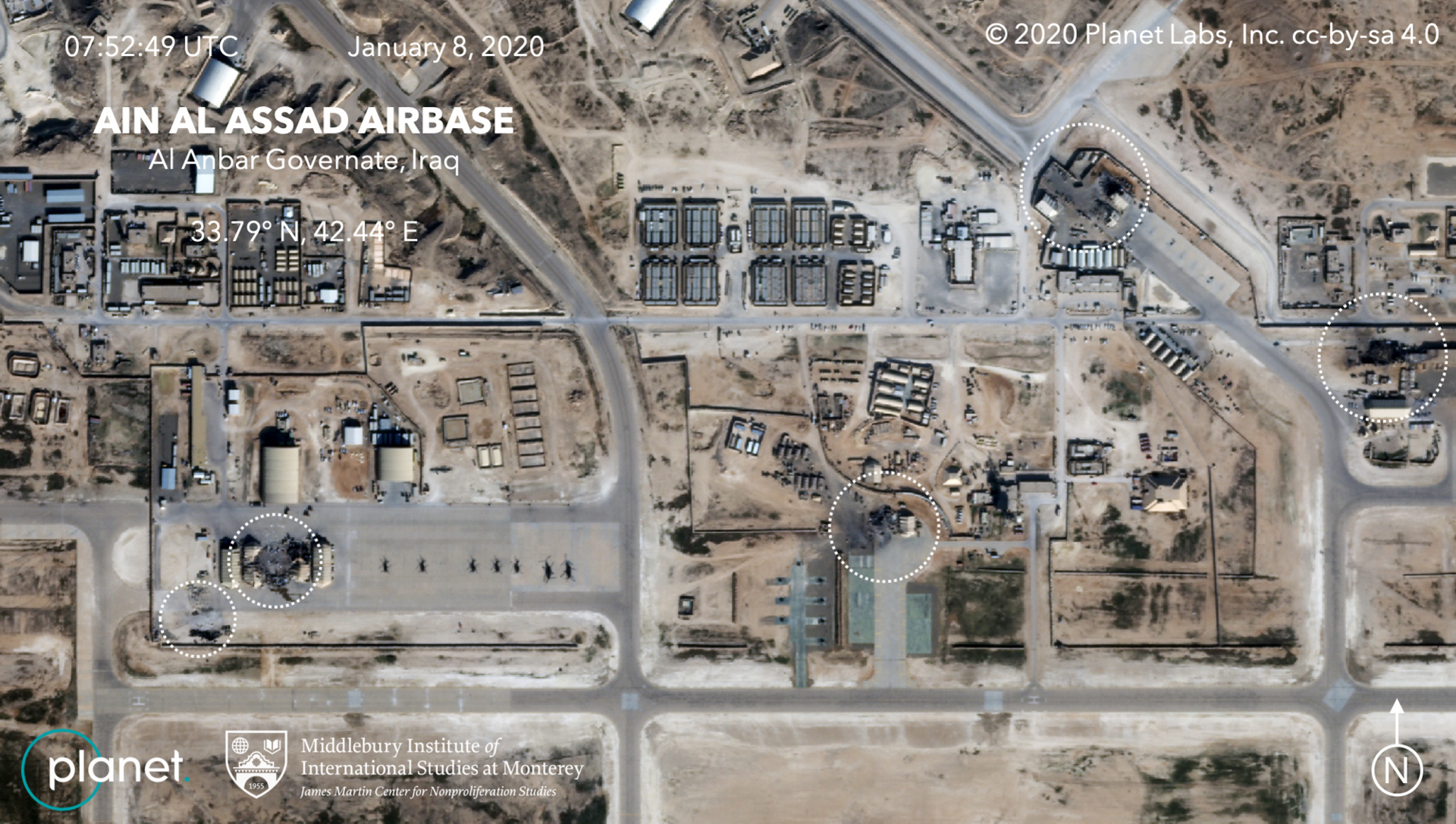
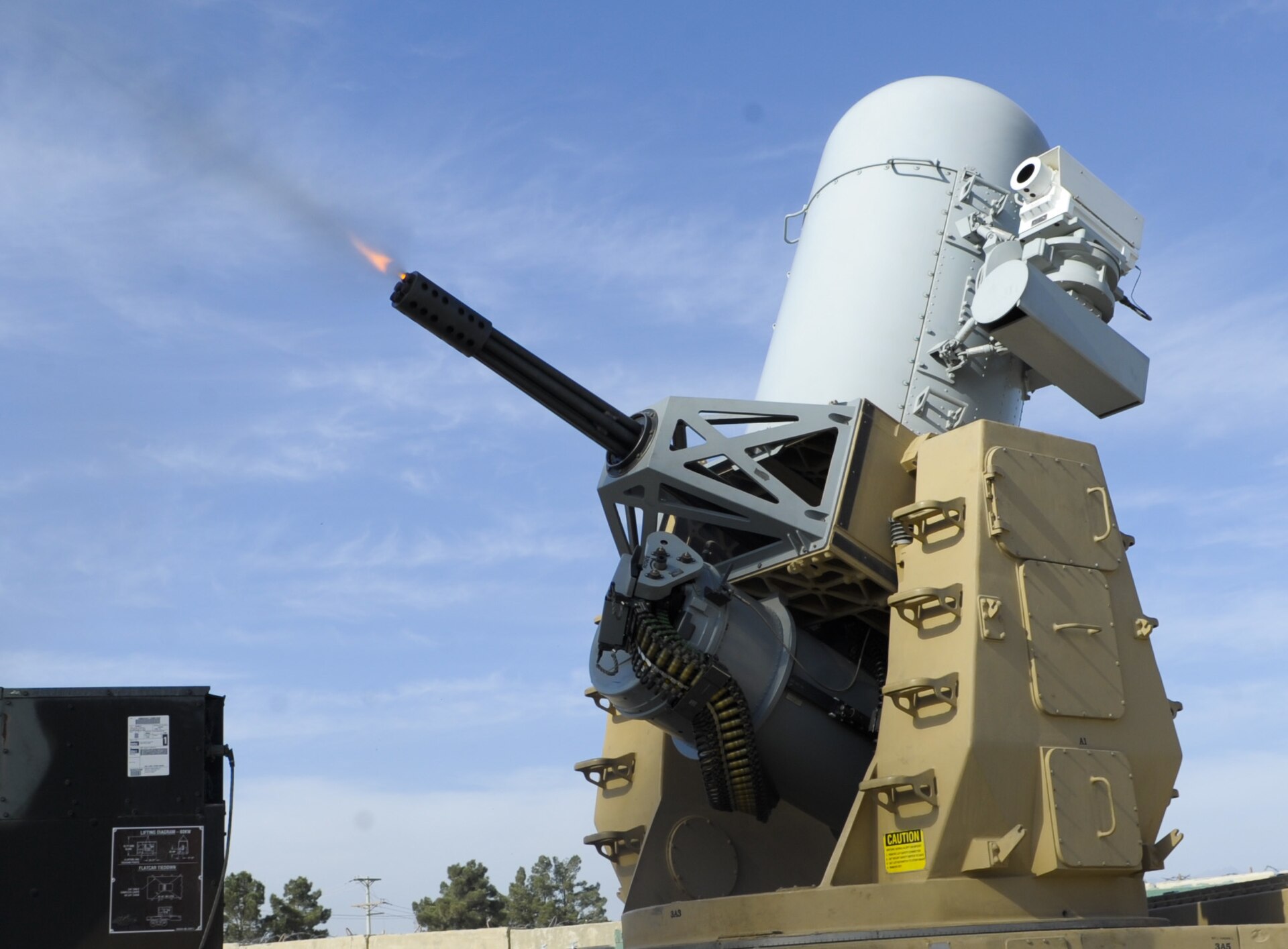
The small US presence has not stopped the Islamic Resistance from treating every remaining American facility as a legitimate target. The attacks target not only troop concentrations but logistics hubs, fuel depots, communications equipment, and runway infrastructure that support wider US operations across the Gulf. CENTCOM has deployed additional C-RAM counter-rocket, artillery and mortar systems to its remaining positions, but the volume of attacks is testing the capacity of point-defense systems designed to handle sporadic threats, not sustained daily bombardment.
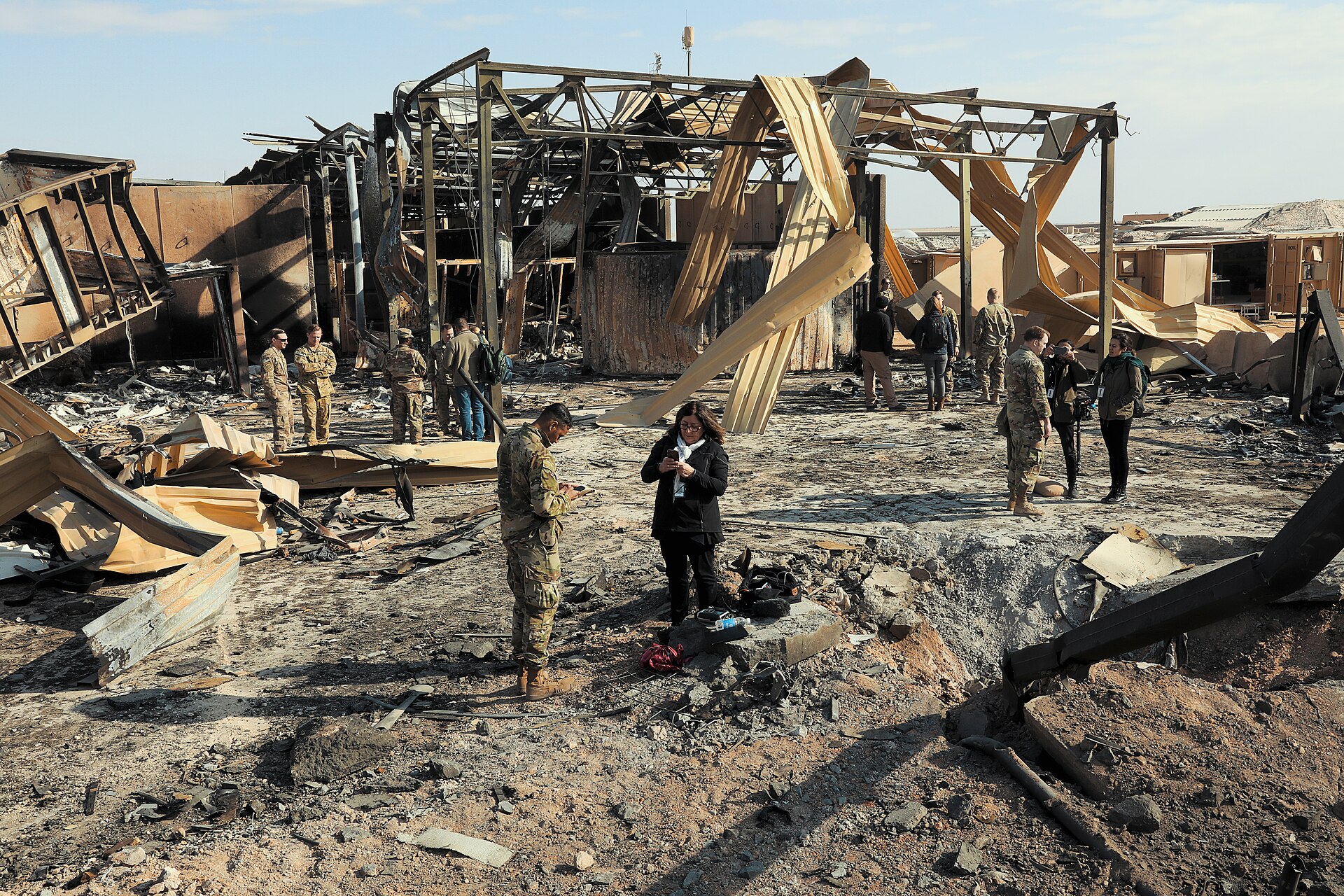
The January 2020 Iranian missile strike on Ain al-Assad, which caused traumatic brain injuries among more than 100 US service members, demonstrated the physical vulnerability of fixed bases to ballistic attack. The 2026 militia campaign uses the same playbook at lower cost and higher frequency. Each drone costs Iran’s proxies an estimated $10,000-$50,000, according to defence analysts, while the C-RAM rounds and short-range interceptors used to defeat them cost significantly more. The economics of attrition favour the attackers, a dynamic that mirrors the broader cost asymmetry that defines the Gulf drone war.
Erbil Airport and the Kurdistan Front
Three drones intercepted near Erbil International Airport on March 22 underscore the vulnerability of the Kurdistan Region, which serves as the last remaining hub for American military operations on Iraqi soil. The airport is a dual-use facility, handling both civilian air traffic and military logistics for the US-led coalition. A fire ignited by one of the intercepted drones near the airport perimeter forced a brief suspension of civilian flights, according to Kurdish security sources.
Erbil has faced repeated attacks since the war began. On the first day of the conflict, February 28, militants struck US positions near Erbil with rockets and drones, according to the National. The Kurdistan Region’s Peshmerga forces and local security services have conducted multiple operations to intercept drone launches from areas south of the region’s administrative boundary, but the terrain and the semi-autonomous nature of militia-controlled territories in Iraq’s Shia-majority provinces complicate interdiction efforts.
The attacks on Erbil carry implications beyond Iraq. The base serves as a staging point for intelligence, surveillance and reconnaissance flights that monitor Iranian military movements across the region. Analysts at the New Lines Institute have noted that disruptions to Erbil’s operations can degrade the sensor network that feeds targeting data to air defense batteries across the Gulf, including the Patriot and THAAD systems that protect Saudi Arabia’s critical infrastructure.
How Does Iraq Threaten Saudi Arabia’s Defense?
Saudi Arabia’s air defense architecture depends on a layered network of sensors, interceptors, and command-and-control nodes distributed across multiple countries. American military assets stationed at Prince Sultan Air Base near Al Kharj, King Fahd Air Base near Dhahran, and other facilities in the Kingdom form an integral part of this network. The emerging security architecture that includes Turkey, Egypt, and Pakistan supplements but does not replace the American backbone.
The Pentagon confirmed on March 22 that it is preparing ground forces for potential operations against Iran from Saudi bases, according to reporting by multiple defence correspondents. Prince Sultan Air Base hosts F-15E Strike Eagles, AWACS E-3 Sentry surveillance aircraft, and Patriot missile batteries that provide overlapping air defense coverage for Riyadh and the Kingdom’s central region. King Fahd Air Base in the Eastern Province supports operations protecting Saudi Aramco’s oil infrastructure, which has faced over 600 Iranian drones since the war began.
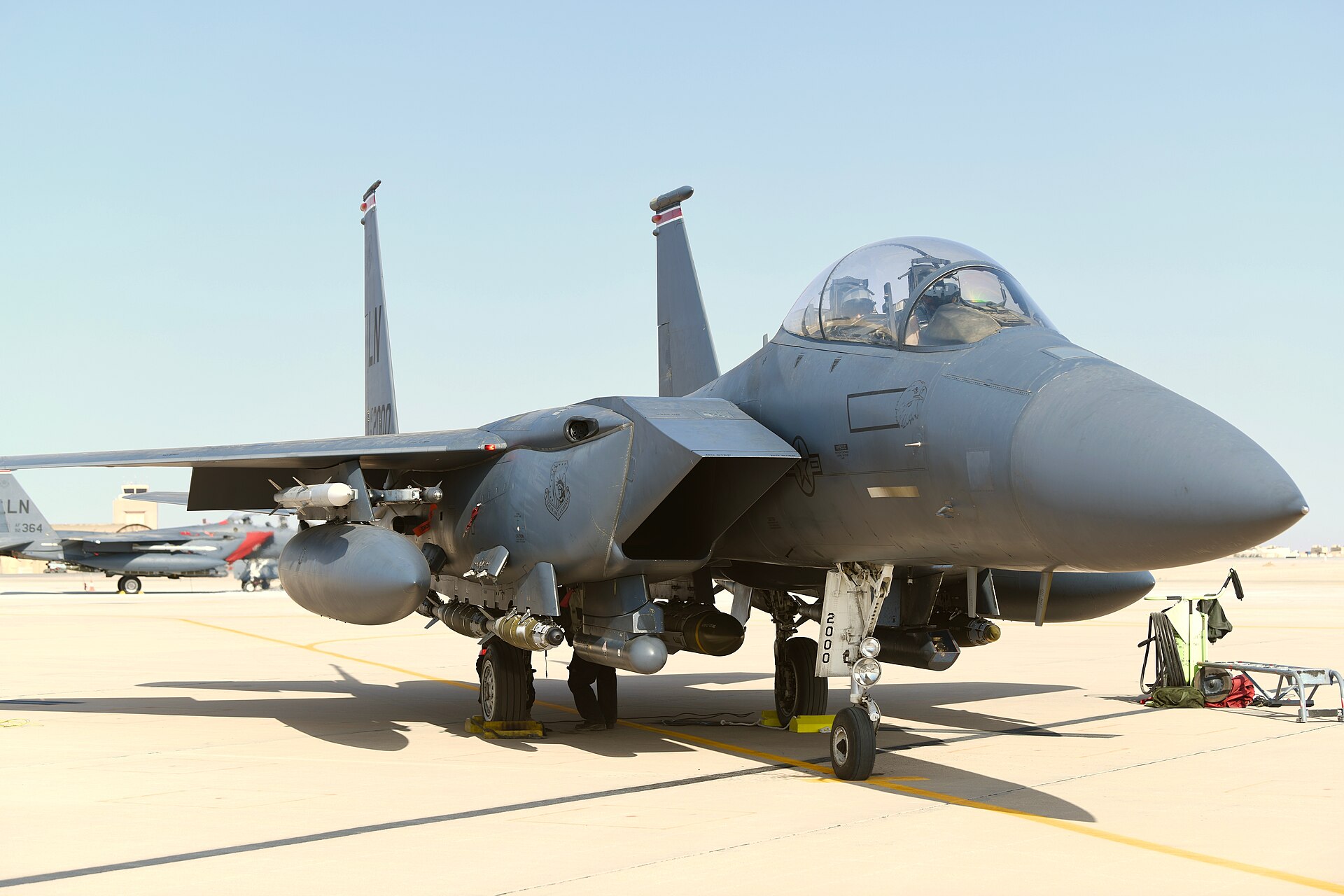
The Iraqi militia attacks threaten this architecture in three ways. First, they force the US military to divert interceptor stocks, electronic warfare assets, and intelligence resources to protect its own personnel in Iraq, reducing what is available for Saudi defense. Second, they complicate logistics. Supplies, spare parts, and personnel rotations that flow through Iraq into the Gulf face disruption when convoys must be rerouted or airfields closed. Third, the attacks create a political problem: if American casualties mount in Iraq, domestic pressure in Washington to scale back the regional military commitment could intensify, weakening the long-term commitment that Saudi Arabia’s accidental wartime alliance depends upon.
Saudi Arabia intercepted three Iranian ballistic missiles over Riyadh Province and downed nearly sixty drones over the Eastern Province on March 22 alone. The capacity to sustain that rate of interception over weeks and months requires constant resupply of interceptor missiles, maintenance of radar systems, and fresh intelligence on Iranian launch sites. Any degradation of the US logistical pipeline running through Iraq and Kuwait directly affects Saudi Arabia’s ability to maintain its missile shield.
Baghdad’s Force Majeure and the Political Tilt
The militia attacks do not occur in a political vacuum. The Iraqi government declared force majeure on all foreign-operated oil fields on March 21, a move that effectively suspended international oil operations across the country. The declaration came as Iranian drones and missiles continued to strike targets in Iraqi territory, ostensibly aimed at US forces but causing significant collateral damage to civilian infrastructure.
Iraq’s prime minister, Mohammed Shia al-Sudani, has maintained a careful ambiguity throughout the conflict. His government has not explicitly endorsed the militia attacks on US bases, but neither has it taken decisive action to stop them. The Popular Mobilization Forces, which include the militias conducting the attacks, are legally part of Iraq’s security apparatus, funded by the state budget and nominally under the command of the prime minister. Disbanding or disarming them would trigger a domestic political crisis that al-Sudani’s coalition government cannot survive.
The force majeure declaration, combined with the escalating militia attacks, signals Baghdad’s gradual tilt toward accommodation with Tehran rather than continued cooperation with Washington. For Saudi Arabia, this trajectory threatens to transform Iraq from a buffer state into an extension of Iran’s strategic depth. Riyadh invested significant diplomatic capital in rebuilding ties with Baghdad after 2014, appointing its first ambassador to Iraq in 25 years in 2017. Crown Prince Mohammed bin Salman hosted al-Sudani in Riyadh multiple times, and Saudi investment in Iraqi reconstruction projects has exceeded $3 billion since 2018, according to Saudi government announcements.
The potential loss of Iraq as a cooperative neighbour extends beyond the current conflict. If the militia campaign succeeds in forcing a premature American withdrawal, Iraq’s security forces — already infiltrated by Iran-aligned factions — would be left as the dominant military power on Saudi Arabia’s northern border. The approximately 800-kilometre Saudi-Iraqi border, much of it remote desert, would become a frontier that Riyadh must defend with fewer American partners and against a neighbour whose armed forces include the very militias now attacking US bases. Saudi Arabia has already expelled Iran’s military attache and declared Iranian diplomatic staff persona non grata as of March 22 — a move that severs the last vestiges of the 2023 Saudi-Iranian rapprochement. The Iraq question threatens to compound that diplomatic rupture with a strategic one.
A Military Stretched Across Four Fronts
The Iraqi militia campaign represents the fourth distinct front that US military forces must manage simultaneously in the Iran war. American commanders are conducting strike operations against Iranian military targets inside Iran, defending Gulf shipping lanes and the Strait of Hormuz, protecting partner nations from Iranian missile and drone barrages across the Gulf, and now responding to escalating militia attacks in Iraq. Each front competes for the same finite pool of interceptors, aircraft, intelligence analysts, and logistics capacity.
Admiral Brad Cooper, the CENTCOM naval commander, reported on March 22 that US forces had dropped multiple 5,000-pound bunker-busting bombs on an Iranian underground facility storing anti-ship missiles, according to Al Jazeera. The operation required assets that could otherwise have been used for base defense in Iraq or air defense in the Gulf. Hezbollah’s rocket barrage from Lebanon on the same day, which wounded two Israeli reservists and forced Israeli schools nationwide to close, added a fifth dimension to a conflict that is already straining the American military’s ability to manage multiple simultaneous threats.
For Saudi Arabia, the implication is straightforward. The United States cannot indefinitely sustain high-tempo operations across four or five fronts without accepting increased risk somewhere. The Israeli destruction of Litani River bridges on March 22 confirmed that the Lebanon front would be prolonged, adding another sustained drain on coalition resources. Iraq, where American force levels are at their lowest in two decades, is the likeliest place for that risk to materialise. If US forces are compelled to withdraw from Iraq entirely under fire, the logistics chain supporting Saudi defense operations becomes more complex, more expensive, and more vulnerable.
The Trump administration has signalled willingness to expand the conflict — issuing a 48-hour ultimatum to Iran on March 22 threatening to destroy Iranian power plants if the Strait of Hormuz is not reopened. But escalation without adequate force protection risks exactly the kind of asymmetric loss that Iran’s proxy strategy is designed to inflict. Twenty-one attacks in 24 hours, using weapons that cost a fraction of the interceptors required to defeat them, illustrate the arithmetic that has defined this war from its first day.
The consequence for Riyadh is a defense partnership that is simultaneously indispensable and increasingly strained. Saudi Arabia opened King Fahd Air Base to US forces as the war shifted westward and is hosting the largest American military presence on its soil since the 2003 Iraq invasion. That presence comes with a dependency: if the US military infrastructure in Iraq collapses under sustained militia pressure, the cost of defending Saudi Arabia rises, the response times lengthen, and the political arguments for American retrenchment grow louder in Washington. Iraq’s proxy war is not a sideshow to the Iran conflict. For Saudi Arabia, it may be the front that determines whether American staying power outlasts Iran’s capacity to endure. The broader pattern of Iran losing control of its proxy network means these militia factions will persist as autonomous threats long after the war ends.
Frequently Asked Questions
How many attacks did Iraqi militias carry out on US bases on March 22?
The Islamic Resistance in Iraq claimed 21 separate attacks on US military installations across Iraq and the broader Gulf region in a single 24-hour period ending on March 22, 2026. The attacks used drones, rockets, and tactical missiles, according to the group’s statement. Three drones were intercepted near Erbil International Airport, causing a fire, and another crashed near Baghdad, injuring four civilians.
What is the Islamic Resistance in Iraq?
The Islamic Resistance in Iraq is a front group coordinating the activities of several Iran-aligned Shia militias operating within Iraq’s Popular Mobilization Forces. The network includes Kataib Hezbollah, the most powerful Iran-backed militia in Iraq, along with Kataib Sayyid al-Shuhada, Harakat Hezbollah al-Nujaba, and other factions. These groups receive training, weapons, and intelligence from Iran’s Islamic Revolutionary Guard Corps’ Quds Force.
How many US troops remain in Iraq in 2026?
Fewer than 2,000 US troops and coalition personnel remain on Iraqi soil as of March 2026, concentrated at Harir Air Base near Erbil in the Kurdistan Region, according to defence analysts. Ain al-Assad Air Base in Anbar Province, formerly the largest US installation in western Iraq, was handed over to the Iraqi Army on January 17, 2026. A full withdrawal was planned by September 2026 before the Iran war disrupted the timeline.
Why do Iraqi militia attacks matter for Saudi Arabia?
The attacks threaten Saudi Arabia’s defense in three ways. They divert US military resources — interceptors, intelligence assets, and logistics capacity — away from Gulf defense. They disrupt supply lines that feed spare parts and munitions to American bases in Saudi Arabia. And they create domestic political pressure in Washington that could weaken the US commitment to defending the Kingdom over time. Saudi Arabia’s air defense operations depend on the same American military infrastructure that Iraqi militias are targeting.
Has Iraq’s government taken action against the militias?
Iraq’s prime minister Mohammed Shia al-Sudani has maintained ambiguity throughout the conflict. His government has not endorsed the militia attacks but has not taken decisive action to stop them. The militias are legally part of Iraq’s Popular Mobilization Forces, funded by the state budget. Baghdad’s declaration of force majeure on all foreign-operated oil fields on March 21 signalled a political tilt toward accommodation with Tehran rather than continued cooperation with Washington. On 25 March, six Arab nations issued a joint ultimatum warning Baghdad to halt the militia attacks or face potential self-defence action under Article 51 of the UN Charter.