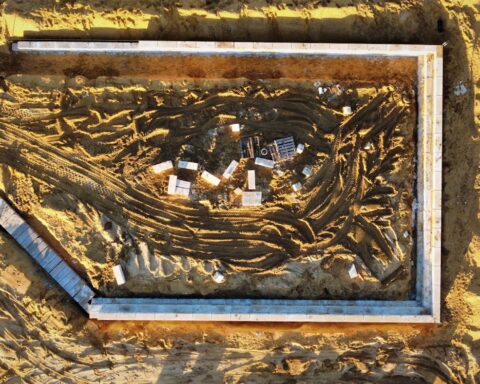
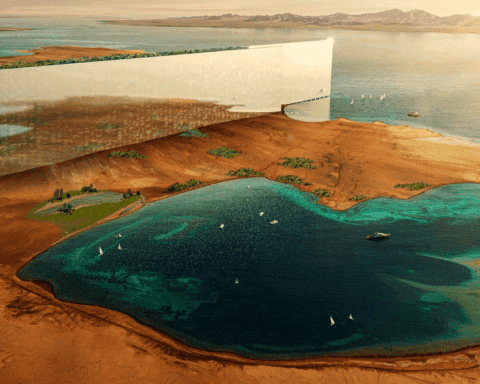
NEOM — Saudi Arabia’s Public Investment Fund has formally halted all construction on The Line, the 170-kilometre mirrored linear city that served as Vision 2030’s most internationally visible symbol, and redesignated Oxagon — NEOM’s octagonal industrial port — as the project’s priority node. The pause, confirmed by Semafor on May 22, follows PIF’s initial construction suspension on September 16, 2025, when only 2.4 kilometres of foundation work had been completed. NEOM’s revised population target for 2030 now stands at up to 100,000 across the entire zone — a 98.9 per cent reduction from the 9 million residents Mohammed bin Salman announced in January 2021. The Line is not delayed. It has been structurally replaced.
Table of Contents
- What Happened to The Line at NEOM?
- The Connector Termination and the Contract Cascade
- The 37-Day Gap
- Why Did Saudi Arabia Choose Oxagon Over The Line?
- How Does the HUMAIN-DataVolt Deal Change NEOM’s Purpose?
- The Fiscal Architecture Behind the Pivot
- What Is NEOM’s Revised Population Target?
- Who Wins and Who Loses in NEOM’s Contractor Reshuffle?
- Does the AI Pivot Save Vision 2030’s Credibility?
- Frequently Asked Questions
What Happened to The Line at NEOM?
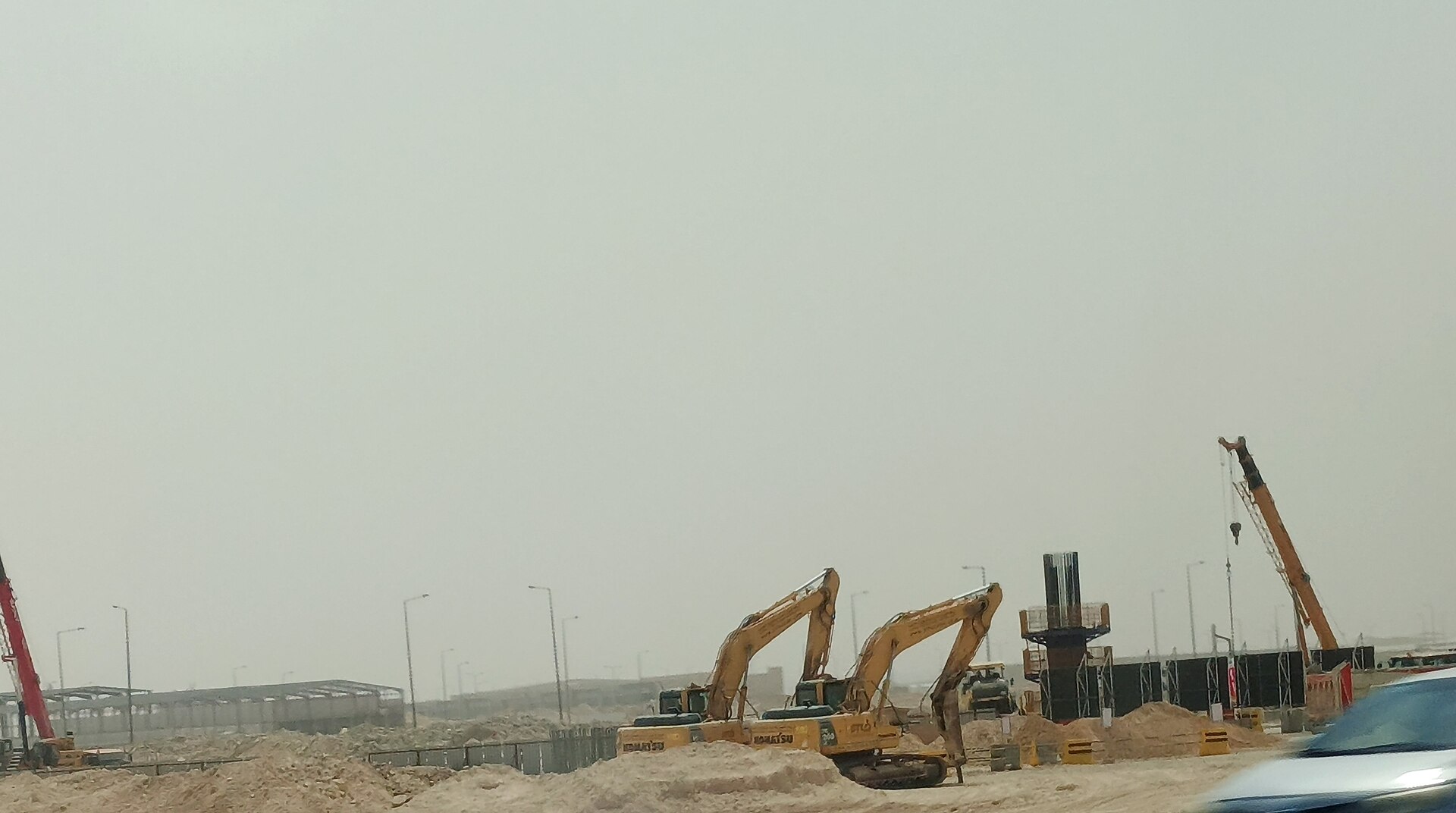
PIF suspended construction on The Line on September 16, 2025, cutting the workforce by approximately 35 per cent and relocating over 1,000 employees from the remote Tabuk Province site to Riyadh. Active NEOM-related job listings dropped from 342 in January 2025 to 87 by December 2025 — a 74.6 per cent reduction, according to Engineering News-Record. On May 22, 2026, Semafor reported that NEOM had formally halted The Line until after 2030, redesignating Oxagon as the priority node and mothballing the tourist coast indefinitely.
The suspension predates the Iran war by more than five months. Operation Epic Fury began on February 28, 2026. The fiscal retreat from The Line was already underway when the first Iranian missiles struck, establishing that the project’s contraction was structural — driven by cost overruns, investment shortfalls, and unrealisable engineering targets — not a wartime emergency measure.
The House of Saud Daily Briefing
Saudi Arabia's news in 3 minutes, every morning. Free. See today's issue
A leaked 2024 Wall Street Journal internal audit estimated The Line’s realistic completion cost at $8.8 trillion, against the $500 billion publicly announced. The audit projected a realistic completion date of 2080. Population targets had already been slashed from 9 million to 1.5 million before the suspension; the latest iteration, reported by Semafor, sets the 2030 target at up to 100,000 across the entire NEOM zone.
Total NEOM spending through early 2026 is estimated at $40–60 billion, with near-zero habitable or revenue-generating output. PIF took an $8 billion write-down across its giga-project portfolio in its 2024 annual results, published August 2025. Giga-project investments declined 12.4 per cent year-over-year to SR211 billion ($56.2 billion), according to PIF’s annual report.
The Connector Termination and the Contract Cascade
On May 21, Italian contractor Webuild announced that NEOM had exercised contractual termination rights on the EUR 1.4 billion ($1.6 billion) Connector High-Speed Rail, the 57-kilometre link between Oxagon and The Line. Work was 20 per cent complete at termination, leaving a residual backlog of EUR 1 billion. The termination takes effect May 27. NEOM is contractually obligated to reimburse all costs incurred plus demobilisation and disengagement costs. All Webuild activities for NEOM are now concluded.
The Connector was not an ancillary amenity. It was the physical spine connecting NEOM’s industrial core to its residential megalith. Its termination at one-fifth completion is infrastructure for a connection that no longer exists to be made.
This follows Webuild’s March 2026 termination of its $4.7 billion Trojena dam-and-lake contract at 30 per cent completion — giving the Italian firm two terminated NEOM contracts in under three months. Total NEOM contract terminations in March 2026 alone reached approximately $6.85 billion across three contractors: Webuild (Trojena, $4.7 billion), Hyundai Engineering (tunnel section), and Eversendai (Trojena structural steel). Each contractor reported no financial loss after completed-works settlement, according to Zawya and Arabian Business.
Combined with the May Connector termination, total terminated NEOM contract backlog in 2026 exceeds $8.45 billion. Trojena’s ski village — the venue for the 2029 Asian Winter Games — had those games ceded to Kazakhstan after the contract cancellations. Sindalah luxury island, NEOM’s boutique resort project, went dark after a high-profile launch party.
The 37-Day Gap
On April 15, PIF Governor Yasir al-Rumayyan told Al Arabiya Business: “Is having The Line by 2030 important? I don’t think so. It would be good to have, but it’s not a must. What we must have is Oxagon.” In the same interview, he insisted “no projects in NEOM have been cancelled,” describing reassessment as “continuous and natural.”
The Webuild Connector termination takes effect May 27 — 37 days after al-Rumayyan’s statement. The language of “no cancellations” was overtaken by contractual termination notices filed with two European stock exchanges.
Al-Rumayyan described AI as a factor in the reassessment. He also said “some projects have been delayed because they are not on the critical path.” The Connector High-Speed Rail — a 57-kilometre link between the two nodes that PIF itself commissioned in May 2023 — was apparently not on the critical path either, though its termination rather than delay suggests a different category of decision entirely.
Cancellation, termination, pause, redesignation: the vocabulary shifts faster than the balance sheet.
Why Did Saudi Arabia Choose Oxagon Over The Line?
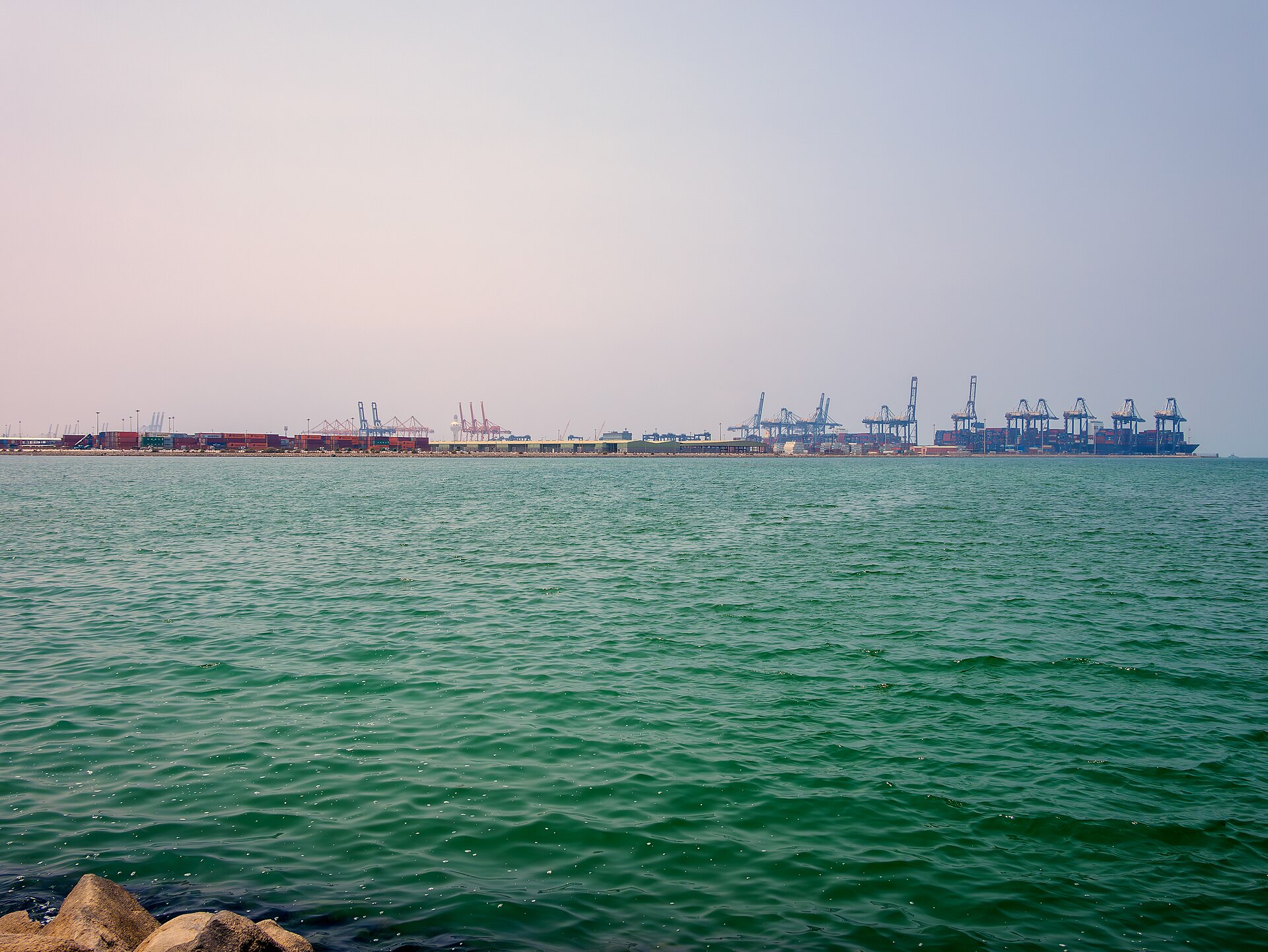
PIF chose Oxagon because it serves two functions The Line never could: port access that bypasses the Strait of Hormuz, and a physical site for data centre infrastructure that international capital markets can underwrite. PIF now plans to spend approximately $3 billion developing Oxagon, framing its Red Sea port as a trade-route alternative to the contested strait. The tourist coast has been mothballed to 2030 and beyond.
The Hormuz rationale is new. Iran’s Passage Governance and Security Authority, established May 5, 2026, has imposed a toll architecture on strait transits — $2 million per VLCC, with Russia, China, India, Iraq, and Pakistan exempt. Only 45 Hormuz transits have occurred since April 8, compared to the pre-war baseline. Aramco CEO Amin Nasser warned on May 11 that the oil market would not normalise until 2027 if Hormuz does not reopen within weeks. Oxagon’s Red Sea positioning — outside the strait’s chokepoint — has become a selling point that did not exist when The Line was commissioned.
Vishal Wanchoo, Oxagon’s CEO, confirmed that large-scale solar and wind manufacturing facilities will begin construction in 2026. A green hydrogen plant at the site is at 80 per cent completion and on track for mid-2026 delivery, according to Arabian Business. These are modest, deliverable industrial outputs — the antithesis of a 170-kilometre mirrored city with hyperloop transit and zero-carbon credentials.
The strategic logic is sound on paper. But the Hormuz rationale also reveals a dependency: Oxagon’s selling point as a trade-route bypass is contingent on Hormuz remaining contested. If the strait reopens — as the fragile ceasefire process aims to achieve — the port’s urgency diminishes. PIF is building a bypass whose commercial value depends on a crisis that Saudi diplomacy is simultaneously trying to resolve.
The contrast with The Line is architectural and commercial. The Line was designed to be photographed. Oxagon is designed to be financed.
How Does the HUMAIN-DataVolt Deal Change NEOM’s Purpose?
HUMAIN, PIF’s $23 billion AI subsidiary, joined the Oxagon project in November 2025 as its technology partner. In February 2026, NEOM announced a $5 billion partnership with DataVolt for a 1.5-gigawatt AI data centre campus at Oxagon, powered by renewable energy using Red Sea seawater cooling. Phase 1 — a 300-megawatt facility — targets 2028 operational readiness, according to Data Centre Dynamics.
Goldman Sachs is advising on HUMAIN data centre financing. HUMAIN simultaneously signed McKinsey and Accenture as dual consulting partners in May 2026, consolidating a shift in PIF’s external advisory spend from construction engineering to digital infrastructure.
Hexagon, a Swedish data and AI infrastructure firm — not a traditional construction company — won a $2.7 billion contract at NEOM. The contractor profile has inverted. Engineering News-Record reported that Bechtel, Fluor, and AECOM had collectively won or been in final-stage negotiations for $4–6 billion in NEOM construction packages, “several of which have been suspended, reduced, or rebid at significantly lower values.” American construction firms are losing packages. American technology companies are capturing priority spend.
The substitution is not ideologically neutral. The Line promised a post-carbon city that would house millions. The data centre campus promises computing capacity measured in megawatts that will employ hundreds. One was a civilisational claim. The other is a capital expenditure line item that institutional investors understand — which is precisely the point. PIF’s $7 billion bond sale in May 2026, 3.4 times oversubscribed with a $23.8 billion order book, demonstrated that markets will fund PIF’s balance sheet. They never funded The Line.
The Fiscal Architecture Behind the Pivot
Saudi Arabia’s Q1 2026 fiscal deficit stands at SR125.7 billion ($33.5 billion) — 194 per cent of the full-year target. Goldman Sachs estimates the full 2026 deficit at $80–90 billion, approximately 6.6 per cent of GDP. National construction awards have dropped from $71 billion to $30 billion. NEOM was absent from Saudi Arabia’s 2026 pre-budget statement — a telling omission for the kingdom’s flagship project.
PIF’s 2024 annual results included an $8 billion write-down across the giga-project portfolio. The fund’s cash position — approximately $15 billion against over $930 billion in assets under management — leaves a 1.6 per cent cash-to-AUM ratio, the lowest since 2020. PIF’s 2026–2030 strategy responds by targeting 80 per cent domestic allocation, cutting overseas exposure to 20 per cent, and deprioritising megaproject capital expenditure.
The war has compressed an existing crisis. The EIA’s May 2026 Short-Term Energy Outlook projects Brent at $89 per barrel by Q4 2026 and $79 per barrel as the 2027 average, assuming Middle East production normalises. The IMF estimates Saudi Arabia’s fiscal breakeven at above $90 per barrel. Every dollar below breakeven widens the deficit that was already consuming the capital that would have built The Line.
The Atlantic Council documented NEOM facing “delays, rising costs, and heavier reliance on public financing” with “shortfalls in foreign investment and repeated capital injections.” The foreign private investment that was supposed to fund 50 per cent of NEOM never materialised. PIF became the project’s sole financier, and PIF has run out of discretionary capital. NEOM’s governance was restructured in January 2026, broken into at least five separate entities managed by different state bodies, according to Semafor — a structural admission that the original management model was not functioning.
Middle East Monitor reported as early as January 26, 2026 — a month before the war began — that Saudi Arabia would “drastically scale back NEOM megaproject amid mounting costs and failures.” The war provided political cover for a retreat that fiscal reality had already mandated.
What Is NEOM’s Revised Population Target?
NEOM’s population target for 2030 is now up to 100,000 across the entire zone — down from the 9 million residents MBS announced for The Line alone in January 2021. The trajectory of successive reductions constitutes the project’s unofficial biography:
- January 2021: 9 million residents (MBS announcement)
- 2022 revision: 1.5 million residents
- 2025 revision: Under 300,000 residents
- May 2026 (Semafor): Up to 100,000 across all NEOM — not just The Line
A 98.9 per cent reduction in population targets over five years, with $40–60 billion spent and no habitable space produced.
The Carnegie Endowment for International Peace assessed in May 2026 that Vision 2030 “is in danger of enriching elites while overlooking the needs of most Saudi citizens.” Carnegie also noted that “it is difficult or impossible to overrule the crown prince once his mind is made up” — a structural observation about the decision architecture that produced both the original announcement and its quiet dissolution.
The WSJ’s leaked internal audit found “evidence of deliberate manipulation” by project managers. The gap between the $500 billion public budget and the $8.8 trillion realistic estimate represents either the most spectacular cost miscalculation in modern infrastructure history or a project that was never intended to be costed honestly.
Who Wins and Who Loses in NEOM’s Contractor Reshuffle?
The contractor shift at NEOM tracks a broader reallocation of Saudi capital expenditure from physical construction to digital infrastructure. The winners and losers are identifiable by contract status:
Terminated or suspended:
- Webuild (Italy) — EUR 1.4 billion Connector rail + $4.7 billion Trojena dam, both terminated. Full completed-works reimbursement.
- Hyundai Engineering (South Korea) — tunnel section terminated, March 2026.
- Eversendai (Malaysia) — Trojena structural steel terminated, March 2026.
- Bechtel, Fluor, AECOM (United States) — $4–6 billion in packages “suspended, reduced, or rebid at significantly lower values” (ENR).
Capturing priority spend:
- DataVolt (Saudi Arabia) — $5 billion AI data centre campus at Oxagon.
- Hexagon (Sweden) — $2.7 billion data and AI infrastructure.
- HUMAIN/PIF (Saudi Arabia) — $23 billion AI portfolio, Goldman Sachs advising on financing.
- McKinsey and Accenture — dual consulting mandates for HUMAIN.
The shift is also geographic. European and Asian construction firms built The Line’s foundations and Trojena’s incomplete ski slopes. American and European technology firms are now capturing the digital substitutes. The labour profile changes accordingly — data centre construction employs a fraction of the workforce that a 170-kilometre linear city demanded. The 74.6 per cent reduction in NEOM job listings between January and December 2025 reflects this transition in real time.
For Webuild, the NEOM exit is orderly. Both terminated contracts included full reimbursement clauses. But the Italian firm had been awarded the Connector as recently as May 2023 — a three-year arc from commissioning to termination, with EUR 1 billion in residual backlog written off. The speed of the cycle suggests procurement decisions made under assumptions that had already collapsed when the contracts were signed.
The labour implications extend beyond contractor rosters. The Line’s construction workforce at peak would have numbered in the tens of thousands. The 35 per cent workforce cut at the September 2025 suspension, the relocation of over 1,000 employees to Riyadh, and the collapse in job listings represent a contraction that data centre construction — with its smaller, more specialised workforce — cannot absorb. NEOM was pitched as an employment engine for Saudi Arabia’s youth bulge. It is becoming an investment vehicle for a narrow slice of the technology sector.
Does the AI Pivot Save Vision 2030’s Credibility?
The AI pivot replaces one speculative megaproject with another, but the second one is legible to international capital markets in a way that a 170-kilometre linear city with hyperloop transit and zero-carbon credentials never was. Data centres have standardised unit economics. Megawatt capacity, power purchase agreements, and cooling infrastructure are bankable. A mirrored city housing 9 million people in the desert was not.
Abu Dhabi has already operationalised this logic. The UAE’s ADNOC is building Habshan-Fujairah pipeline capacity to 1.8 million barrels per day while its tech sector captures AI workloads at scale. Saudi Arabia’s pivot to the same playbook arrives later, at higher cost, and with the reputational damage of The Line’s failure embedded in every international assessment of Saudi delivery capacity.
Carnegie’s May 2026 analysis is direct: “As the monarchy appears to question its grandest gigaprojects and grapples with the uncertain aftermath of the Iran war, the Saudi state could do with more critical debate than rote cheerleading.” The observation cuts both ways. The AI pivot may represent exactly the kind of recalibration Carnegie advocates — rational capital reallocation from speculative construction to bankable digital infrastructure. But it also accelerates PIF’s capital depletion. The $5 billion DataVolt deal, the $2.7 billion Hexagon contract, and the $23 billion HUMAIN portfolio all draw from the same depleted PIF balance sheet that could not sustain The Line.
The deeper structural question is whether international investors distinguish between MBS cancelling a failed construction project and MBS launching a new technology project. PIF’s $7 billion bond sale — 3.4 times oversubscribed — suggests bond markets currently do. But Fitch rates PIF as a Government-Related Entity with “virtually certain” sovereign support, meaning investors are pricing Saudi sovereign credit, not NEOM’s commercial viability. The spread differential — 79 basis points wider than Abu Dhabi — prices in the risk that sovereign support and commercial delivery are not the same thing.
The Line’s human costs remain unresolved. Amnesty International documented the forced displacement of the Huwaitat tribe in 2020; tribe member Abdul Rahim al-Huwaiti was killed by Saudi security forces in April of that year. Human Rights Watch documented construction worker deaths and labour abuses throughout 2021–2024. These costs do not transfer when the project pivots. They remain on The Line’s ledger — $40–60 billion spent, 2.4 kilometres completed, a community displaced, workers dead, and a population target reduced by 98.9 per cent.

The NEOM that al-Rumayyan now describes — an industrial port with data centres and a green hydrogen plant — is a rational project. It may even be a good one. But it is not the project that was announced, not the project that displaced a tribe, not the project that employed tens of thousands of construction workers who have since been relocated or laid off, and not the project that MBS presented to the world as proof that Saudi Arabia could transcend oil. It is the project that replaced all of that — quietly, contractually, and without a single official admission that the original vision failed.
Frequently Asked Questions
Has NEOM’s The Line been permanently cancelled?
Not formally. PIF has halted all construction “until after 2030” and redesignated Oxagon as the priority node, but has not used the word “cancelled.” However, the termination of the EUR 1.4 billion Connector High-Speed Rail — the physical link between Oxagon and The Line — eliminates the infrastructure that would connect any future Line construction to NEOM’s operational core. Restarting would require re-procuring terminated contracts at potentially higher costs in a tighter fiscal environment. PIF Governor al-Rumayyan’s framing — “it would be good to have, but it’s not a must” — positions The Line as aspirational rather than planned.
How much money has Saudi Arabia spent on NEOM so far?
Estimated total spending through early 2026 is $40–60 billion, though independent verification of NEOM expenditure is limited by the absence of granular public accounting. For context, this sum exceeds the entire GDP of Jordan ($47 billion, 2024) and produced 2.4 kilometres of foundation work — roughly the distance from Marble Arch to Buckingham Palace. NEOM contract terminations in 2026 alone exceed $8.45 billion in backlog value, though contractors report full reimbursement for completed works.
What does NEOM’s pivot mean for Saudi construction workers?
The transition from linear city to data centre campus produces a structural employment gap that no announced programme addresses. The Line’s peak workforce would have numbered in the tens of thousands; a 1.5-gigawatt data centre campus employs hundreds in operations. The 35 per cent workforce cut at the September 2025 suspension displaced over 1,000 employees to Riyadh. Data centre construction — specialised, capital-intensive, automated — does not recreate the low-to-mid-skill construction employment that NEOM promised Saudi Arabia’s youth bulge.
What happened to the 2029 Asian Winter Games at Trojena?
The games were ceded to Kazakhstan after three Trojena contracts — totalling approximately $6.85 billion across Webuild’s dam-and-lake system, Hyundai Engineering’s tunnel section, and Eversendai’s structural steel — were terminated in March 2026. Trojena was NEOM’s alpine resort and ski village, designed at an elevation of approximately 1,500 metres in the Tabuk Mountains. The Asian Winter Games bid, announced in October 2022 with widespread international scepticism, had been NEOM’s nearest-term deadline and a credibility test for the project’s delivery capacity. Its loss to Kazakhstan — which hosted the 2011 Asian Winter Games at Astana-Almaty — removes NEOM’s only fixed international commitment.
Is the HUMAIN AI pivot financially sustainable for PIF?
HUMAIN’s $23 billion portfolio draws from a PIF balance sheet carrying approximately $15 billion in cash. Goldman Sachs is advising on data centre financing, indicating external capital is being sought rather than solely deploying PIF reserves. The critical distinction from The Line is that data centres generate measurable revenue — power purchase agreements, co-location fees, compute contracts — against which debt can be serviced. The Line had no revenue model. Whether that distinction is enough depends on whether AI infrastructure demand in the region materialises before Saudi Arabia’s fiscal position forces another capital reallocation.
The House of Saud Daily Briefing
Saudi Arabia's news in 3 minutes, every morning. Free. See today's issue