
WASHINGTON — Iran’s parliament speaker declared on 22 March 2026 that every financial institution holding United States Treasury bonds is a legitimate military target, a threat that, if acted upon, would transform the global financial system into a war zone far more consequential than any battlefield in the Persian Gulf. Mohammad Bagher Ghalibaf’s statement — “Purchase US Treasury bonds, and you purchase a strike on your headquarters” — was dismissed by some Western officials as bluster from a regime losing a conventional war. But the financial markets did not dismiss it. The ten-year Treasury yield climbed to its highest level since July 2025 within hours, according to CNBC data, and banks across the Gulf region activated emergency cyber-defence protocols that had not been triggered since Russia’s invasion of Ukraine.
The threat represents the most significant expansion of Iran’s target set since the war began on 28 February 2026. Tehran has already closed the Strait of Hormuz, struck Saudi Aramco facilities at Yanbu, and launched more than 600 drones and missiles at Gulf states. But Ghalibaf’s warning opened a front that no Patriot battery can defend and no Iron Dome can intercept — the interconnected global financial system that underpins every economy on earth. US Treasury bonds are held by virtually every major bank, sovereign wealth fund, central bank, and pension fund in the world, meaning Iran effectively declared war on the entire architecture of global finance.
Table of Contents
- What Did Iran’s Parliament Speaker Actually Threaten?
- Can Iran Attack the Global Financial System?
- The Operation Ababil Precedent
- Why Are US Treasury Bonds Iran’s Chosen Weapon?
- The Dollar Dominance Paradox
- Oil, Bonds, and the Financial Warfare Escalation Matrix
- How Exposed Is Saudi Arabia to Financial Warfare?
- The SWIFT Alternative and Iran’s Shadow Financial Network
- What Would a Full-Scale Financial Attack Look Like?
- The Insurance Weapon That Already Closed Hormuz
- The Contrarian Case for Taking Iran’s Financial Threats Seriously
- Frequently Asked Questions
What Did Iran’s Parliament Speaker Actually Threaten?
Ghalibaf’s warning was more specific than the general bluster that has characterised Iranian rhetoric throughout the conflict. In a post on X on 22 March, the speaker of Iran’s Islamic Consultative Assembly stated that “alongside military bases, those financial entities that finance the US military budget are legitimate targets,” and that US Treasury bonds were “soaked in Iranians’ blood.” He concluded with a line that sent a chill through compliance departments from London to Singapore: “We monitor your portfolios. This is your final notice.”
The statement was not made by a fringe figure or an anonymous military spokesman. Ghalibaf is the speaker of Iran’s parliament — the Majlis — and a former mayor of Tehran, former IRGC air force commander, and a presidential candidate who ran against Ebrahim Raisi. His words carry institutional weight. According to Iran International, the statement was coordinated with the Supreme National Security Council and followed a classified briefing to Majlis members on what Iranian intelligence services described as the “financial geography of American military power.” The financial warfare campaign reflects the IRGC’s expanding institutional autonomy under Mojtaba Khamenei’s invisible reign.
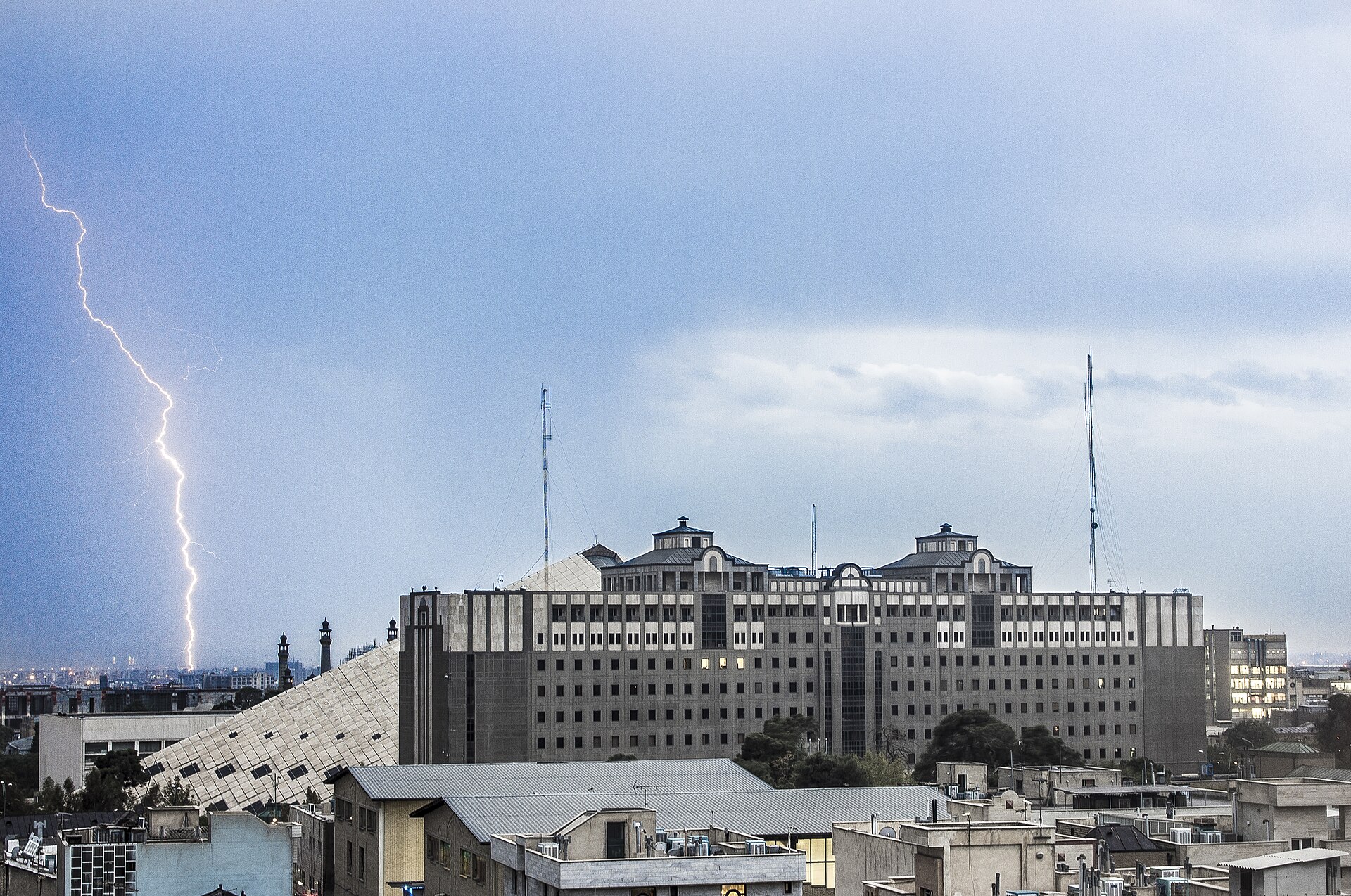
The threat came two days after Iran’s military command publicly named US- and Israeli-linked banks as military targets, according to American Banker. Iran also declared that “all economic and banking interests” belonging to the United States and Israel in the region were now part of the target set, Al Jazeera reported on 11 March. Taken together, the declarations amount to a systematic campaign to extend the war from physical infrastructure into the financial system — a theatre where Iran’s asymmetric advantages are far greater than on any conventional battlefield.
The timing was deliberate. Ghalibaf issued the statement hours before Trump’s 48-hour ultimatum for Iran to reopen the Strait of Hormuz was due to expire. The message was unmistakable: if the United States escalates against Iranian power plants, Tehran will respond not just with missiles but with an attack on the dollar-denominated financial system that sustains American military power.
The Middle East briefing 3,000+ readers start their day with.
One email. Every weekday morning. Free.
Can Iran Attack the Global Financial System?
Iran possesses the most sophisticated state-sponsored cyber-offensive capability in the Middle East, and its track record against financial institutions is not theoretical — it is documented, prosecuted, and feared. The question is not whether Iran can attack the financial system but how much damage it can inflict before defenders respond.
US bank regulators have already sounded the alarm. The New York Department of Financial Services issued a letter to chief information security officers of its regulated institutions in early March, alerting them to “increased risk of cyberattacks from global conflict,” according to Banking Dive. The California Department of Financial Protection and Innovation sent a similar bulletin. The US intelligence community issued what CNN described as “a flurry of private warnings” to American companies and government agencies urging the hardening of cyber defences against Iranian retaliation.
Palo Alto Networks’ Unit 42 threat intelligence team published a detailed threat brief in March 2026 documenting the escalation of Iranian cyber operations since the war began. The brief identified multiple Iranian advanced persistent threat (APT) groups — including APT33 (Elfin), APT34 (OilRig), and APT35 (Charming Kitten) — as having shifted their targeting from espionage to destructive operations against financial sector networks. According to Symantec’s security research division, now operating under Broadcom, Iranian hackers from the Seedworm group were found on the networks of a US bank, an airport, and a software company in March 2026.
The banks are taking the threat seriously. American Banker reported that financial institutions can expect Iran to deploy multiple attack vectors simultaneously: distributed denial-of-service (DDoS) attacks to overwhelm servers, credential-driven intrusions to breach internal systems, and destructive wiper malware designed to permanently destroy data. The combination is far more dangerous than any single vector — a coordinated multi-vector assault could simultaneously lock out customers, corrupt databases, and erase transaction records.
The Operation Ababil Precedent
Iran’s capacity to attack financial institutions is not hypothetical. Between September 2012 and mid-2013, Iranian hackers operating under the banner of the Izz ad-Din al-Qassam Cyber Fighters conducted Operation Ababil — a systematic DDoS campaign against 46 major US financial institutions that remains the most significant state-sponsored cyberattack against the American financial sector in history.
The targets included Bank of America, JPMorgan Chase, Wells Fargo, Citigroup, US Bancorp, and the New York Stock Exchange. The attackers overwhelmed bank servers with up to 140 gigabits per second of garbage data, according to the National Security Agency documents obtained by The Intercept. In a six-week span in early 2013, fifteen targeted bank websites experienced a cumulative 249 hours of downtime, averaging about 2.7 hours per week per institution. Hundreds of thousands of customers were locked out of their accounts.
US authorities attributed the campaign to direction from Iran’s Islamic Revolutionary Guard Corps. Leaked NSA signals intelligence confirmed that the operation was conducted in retaliation for the Stuxnet cyberattack against Iran’s nuclear centrifuges at Natanz. Seven Iranian nationals were indicted by a federal grand jury in 2016.
Operation Ababil was conducted during peacetime, by a smaller and less sophisticated Iranian cyber apparatus, against banks that had minimal DDoS defences. Today, Iran’s cyber forces are larger, more experienced, better funded, and operating under wartime conditions that remove the restraints of peacetime deniability. The IRGC’s electronic warfare division has spent over a decade studying the American financial system’s vulnerabilities. The question that haunts every CISO on Wall Street is whether the defences built since 2013 are sufficient against what Iran can bring to bear in 2026.
Why Are US Treasury Bonds Iran’s Chosen Weapon?
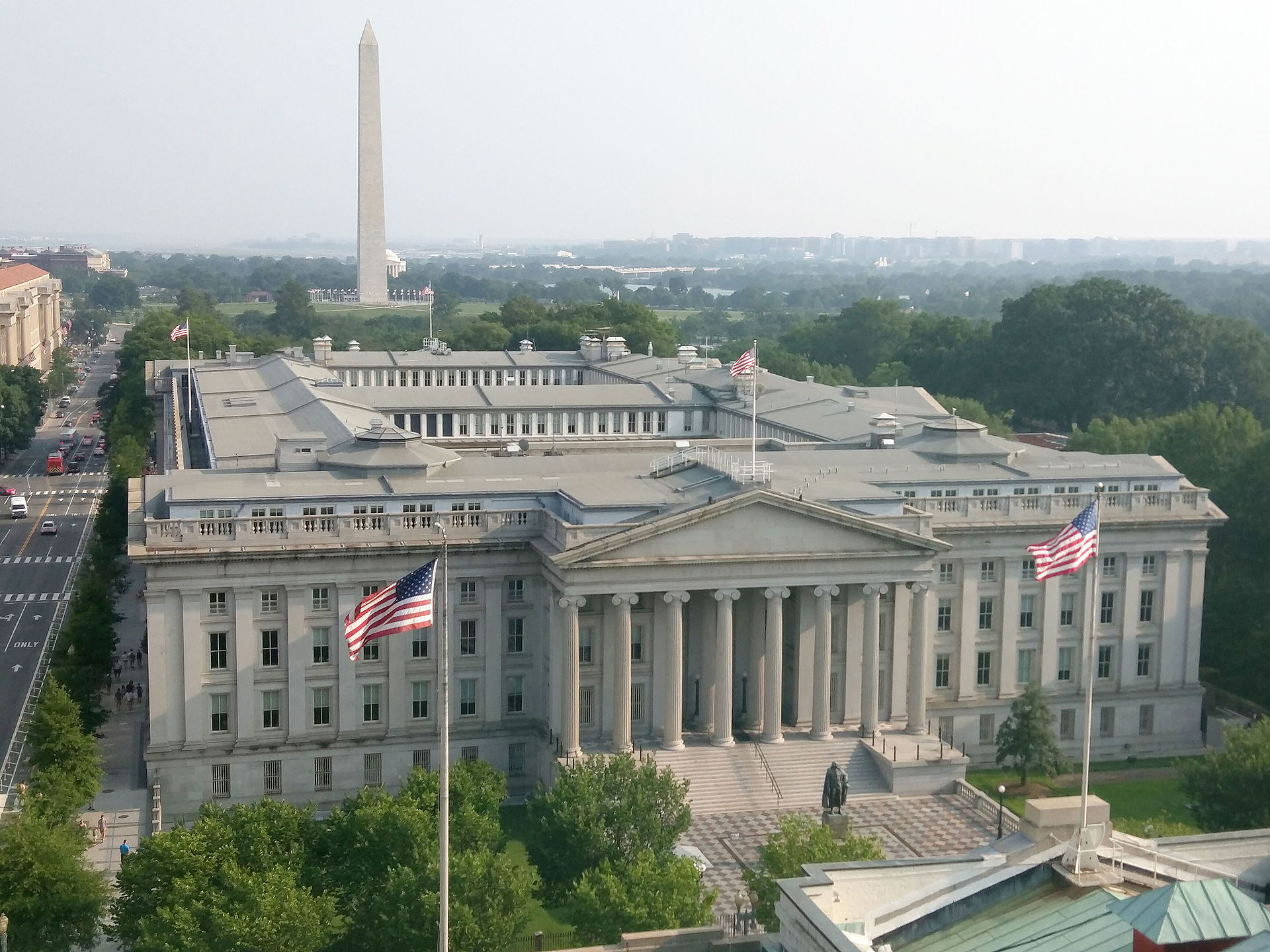
Ghalibaf’s choice of US Treasury bonds as the target was not rhetorical accident — it was a calculated escalation designed to exploit the foundational vulnerability of American military power. The US military’s $886 billion annual budget, according to the Congressional Budget Office’s 2025 estimate, is financed primarily through the issuance of Treasury securities. The national debt stands at approximately $36 trillion, much of it held by foreign governments, central banks, and institutional investors. Iran’s argument, stripped of its propaganda framing, is straightforward: the money that buys the bombs falling on Tehran comes from bond markets, and those bond markets are legitimate targets.
The logic is not without precedent. During the Second World War, allied strategic bombing campaigns targeted not just factories but the financial infrastructure that sustained German war production — banks, insurance companies, and clearing houses. Iran is applying the same principle in reverse, arguing that the institutions financing American military operations are combatants by proxy.
The practical implications are staggering. US Treasury bonds are held by more than 7,500 financial institutions worldwide, according to the Federal Reserve’s Flow of Funds data. Japan holds approximately $1.1 trillion, China $775 billion, the United Kingdom $723 billion, and Saudi Arabia’s central bank SAMA holds an estimated $120 billion in US government securities. If Iran’s threat were taken at face value, virtually every central bank and major commercial bank on earth would qualify as a legitimate target — an absurdity that reveals the threat as partly theatrical but partly genuine in its targeting of the concept of dollar dominance itself.
The Dollar Dominance Paradox
Iran’s financial warfare strategy exploits a paradox at the heart of American power: the same dollar system that enables the United States to project military force worldwide also creates a single point of failure that adversaries can attack. The dollar accounts for approximately 58 percent of global foreign exchange reserves, 88 percent of foreign exchange transactions, and nearly all oil trade outside of Chinese bilateral arrangements, according to the Bank for International Settlements. This dominance gives the United States extraordinary leverage — the ability to impose sanctions, freeze assets, and exclude nations from the global financial system — but it also concentrates risk in a way that no previous monetary system has.
Iran has experienced the weaponisation of dollar dominance firsthand. Cut off from SWIFT in 2012, subjected to the most comprehensive financial sanctions regime in history, and denied access to approximately $100 billion in frozen assets according to the US Treasury’s Office of Foreign Assets Control, Tehran has spent a decade building alternatives to the dollar system. The war has accelerated this process dramatically.
According to Middle East Eye, Iran and Russia have linked their banking systems, connecting approximately 700 Russian banks and 106 non-Russian banks from 13 countries into an alternative payment network that bypasses SWIFT entirely. Nearly 90 percent of transactions between Russia and China are now settled in yuan or rubles, according to OANDA’s sanctions analysis, which completely insulates their largest trading relationship from dollar-denominated controls. China’s Cross-Border Interbank Payment System (CIPS) is being promoted as a yuan-based alternative to SWIFT, with pilot programmes expanding through the UAE, Singapore, and Hong Kong.
The irony is acute. The very sanctions designed to isolate Iran have forced it to build the financial infrastructure for a post-dollar world. The Hormuz blockade is now accelerating this trend — nations that cannot access Gulf oil through dollar-denominated markets are increasingly willing to use yuan, ruble, or rupee settlement mechanisms to secure alternative supplies. As one senior Gulf banker told Bloomberg: “Every day Hormuz stays closed is another day the dollar loses a customer it will never get back.”
Oil, Bonds, and the Financial Warfare Escalation Matrix
Iran’s financial threats can be understood through a systematic framework — a Financial Warfare Escalation Matrix — that maps the relationship between military escalation and financial counter-escalation. Each rung of the ladder represents a qualitative increase in the scope and severity of financial warfare, and Iran has climbed the first four rungs in less than four weeks.
| Level | Tactic | Target | Status (as of 23 March 2026) | Estimated Economic Impact |
|---|---|---|---|---|
| 1 | Hormuz closure / oil supply disruption | Global oil markets | Active since 4 March | $2.1 trillion annualised |
| 2 | Strikes on Gulf energy infrastructure | Saudi Aramco, Qatar LNG, UAE gas | Active since 19 March (Yanbu) | $340 billion in stranded exports |
| 3 | Insurance market withdrawal | Shipping, aviation, commercial property | Active — premiums up 300%+ | $180 billion in additional costs |
| 4 | Rhetorical targeting of financial institutions | Treasury bondholders, banks | Active — Ghalibaf statement 22 March | Unquantified market volatility |
| 5 | Cyber operations against financial networks | Bank systems, clearing houses, exchanges | Preparing (warnings issued) | $50-500 billion per major incident |
| 6 | Physical strikes on financial infrastructure | Data centres, submarine cables, satellites | Not yet escalated | Potentially catastrophic |
| 7 | De-dollarisation acceleration | Dollar reserve status itself | Structural — ongoing | Unmeasurable |
The matrix reveals a critical asymmetry. Iran’s conventional military capabilities are being systematically degraded by American and Israeli strikes — CENTCOM has destroyed underground missile facilities, the Israeli Air Force has struck nuclear sites, and the US Navy is fighting to clear Hormuz. But each military escalation by Washington pushes Iran further up the financial warfare escalation ladder, where American defences are far weaker. The more effectively the United States degrades Iran’s missiles, the more likely Tehran is to escalate into cyber and financial domains where its relative capabilities are stronger.
Level 3 — insurance market withdrawal — demonstrates how financial warfare can achieve strategic objectives without firing a shot. Maritime war-risk insurance premiums for the Strait of Hormuz surged over 300 percent in March 2026, according to The Middle East Insider. Al Jazeera reported that major insurers cancelled war-risk coverage in the Gulf entirely. The result was that commercial shipping through Hormuz effectively ceased — not because Iran physically blocked the strait, but because the financial cost of transiting it became prohibitive. The insurance weapon achieved what Iran’s mines and fast boats could not.
How Exposed Is Saudi Arabia to Financial Warfare?
Saudi Arabia occupies a uniquely vulnerable position in Iran’s financial warfare campaign. The Kingdom’s entire economic model depends on two things that Iran has directly threatened: access to global oil markets through dollar-denominated transactions and integration with the Western financial system through institutions like SAMA, the Public Investment Fund, and the Tadawul stock exchange.

SAMA holds approximately $440 billion in foreign reserves, the majority denominated in dollars and heavily weighted toward US Treasury securities, according to the Saudi Central Bank’s most recent quarterly report. The Public Investment Fund manages approximately $941 billion in assets spread across global markets — stakes in gaming companies, Silicon Valley tech firms, European football clubs, and Japanese conglomerates. Both pools of capital are overwhelmingly held in dollar-denominated instruments. Both are, under Ghalibaf’s framework, legitimate targets.
The Tadawul has shown remarkable resilience. The All Share Index (TASI) closed at 10,886 on 16 March, essentially flat compared to its pre-war level of 10,847 on 25 February, according to Bloomberg data. Saudi Aramco shares rose approximately 13.7 percent year-to-date as oil prices surged above $100 per barrel. But this resilience masks a deeper vulnerability: net foreign selling on the Tadawul exceeded $8 billion in the first three weeks of the war, according to Saudi Exchange data. Local institutional buyers — primarily government-linked entities — absorbed the selling, but the flight of international capital signals a loss of confidence that could accelerate if Iran’s financial threats materialise.
The Gulf states are already adjusting. US News reported that Saudi Arabia, the UAE, and Qatar are “reviewing sovereign investments to offset the economic shock of the Iran war.” Goldman Sachs has relocated key personnel from Dubai, and HSBC has pulled staff from Qatar. The financial centre of gravity in the Gulf is shifting toward Riyadh — partly because of its relative safety from Iranian strikes, partly because MBS has spent years building the KAFD infrastructure to host exactly this kind of flight-to-safety capital reallocation.
The SWIFT Alternative and Iran’s Shadow Financial Network
Iran’s financial warfare strategy is not limited to threats and cyberattacks. Tehran has spent the years since its SWIFT disconnection building a parallel financial architecture designed to function outside Western control — and the war is stress-testing this system in real time.
The centrepiece is the Russia-Iran banking linkage. According to Middle East Eye’s reporting, the two countries connected their interbank messaging systems in 2023, creating a channel through which approximately 700 Russian banks and 106 non-Russian banks from 13 countries can process transactions without touching SWIFT. The system is crude compared to SWIFT’s 11,000-institution network, but it is functional and growing.
China’s role is equally critical. Iran continues to sell oil to China through a network of intermediaries, ship-to-ship transfers, and yuan-denominated settlement mechanisms that bypass American sanctions entirely. Chinese policymakers have encouraged oil suppliers to accept yuan settlement through the Shanghai International Energy Exchange, and Iran is one of the most active participants. The war has accelerated Chinese purchases of Iranian crude — with Hormuz closed to Western-insured tankers, Iranian oil is one of the few Gulf supplies still reaching Chinese refineries through alternative routes.
Iran has also turned to cryptocurrency. The country’s abundant natural gas reserves have made it a significant Bitcoin mining hub, and Iranian entities have used cryptocurrency to move funds across borders outside the reach of OFAC sanctions. The US Treasury identified Iranian cryptocurrency operations as a sanctions evasion vector in its 2025 annual report. While crypto volumes remain small relative to Iran’s total trade, they represent a proof of concept for financial transactions that exist entirely outside the dollar system.
The strategic significance extends beyond Iran itself. Every day that the alternative financial infrastructure processes transactions successfully, it demonstrates to other nations — those that fear future American sanctions, those that resent dollar dominance, those that simply want optionality — that the Western financial system is not the only game in town. India, which imports approximately 85 percent of its crude oil according to the International Energy Agency, has quietly begun settling some Iranian oil purchases in rupees through intermediary banks in Oman and Turkey. Brazil’s Petrobras has explored yuan-denominated oil purchases from Middle Eastern suppliers as a hedge against dollar-system disruptions. Even traditional US allies like South Korea and Japan, whose economies depend on Gulf oil imports, have opened preliminary discussions with Chinese counterparts about access to yuan-settlement mechanisms.
The war is accelerating a fragmentation of the global financial architecture that was already underway, and Iran’s financial warfare rhetoric is the catalyst. The question is no longer whether alternatives to the dollar system will emerge but whether the current conflict will compress what might have been a thirty-year transition into a decade.
What Would a Full-Scale Financial Attack Look Like?
If Iran escalates from rhetorical threats to operational financial warfare, the attack would likely unfold across multiple vectors simultaneously. Intelligence assessments from Palo Alto Networks’ Unit 42 and Kennedys Law identify three primary scenarios of increasing severity.
| Scenario | Attack Vector | Primary Targets | Probability (90 days) | Estimated Cost |
|---|---|---|---|---|
| Disruption | Coordinated DDoS + credential attacks | Gulf banks, regional exchanges, payment processors | High (70%+) | $5-20 billion |
| Degradation | Wiper malware + supply chain compromise | Major international banks with Gulf operations | Medium (30-50%) | $50-200 billion |
| Destruction | Physical + cyber attacks on financial infrastructure | Data centres, submarine cables, clearing houses | Low (under 10%) | $500 billion+ |
The disruption scenario is the most likely and arguably the most effective for Iran’s purposes. A coordinated DDoS campaign against Gulf-based banks — targeting Samba Financial Group, Al Rajhi Bank, National Bank of Kuwait, and Qatar National Bank simultaneously — would not permanently damage these institutions but would create panic, demonstrate capability, and force the affected governments to divert resources from military operations to financial defence. The precedent is clear: Operation Ababil caused 249 hours of cumulative downtime across 15 banks with relatively unsophisticated tools. Iran’s current capabilities are orders of magnitude greater.
The degradation scenario would involve the deployment of destructive wiper malware — software designed to permanently erase data rather than steal it. Iran has form here as well. The 2012 Shamoon attack against Saudi Aramco destroyed data on approximately 35,000 workstations, according to Kaspersky Lab’s post-incident analysis. A similar attack against a major bank’s core systems could corrupt transaction records, freeze settlements, and create days or weeks of operational chaos. Kennedy’s Law analysis warns that financial institutions face “significant legal and regulatory exposure” from Iranian cyber operations, including potential class-action litigation from affected customers.
The destruction scenario remains unlikely but cannot be dismissed. The world’s financial system depends on physical infrastructure — data centres, submarine fibre-optic cables, satellite communications — that is concentrated in a small number of locations. A significant proportion of Middle Eastern internet traffic passes through submarine cables running through the Red Sea and the Persian Gulf. Iran has submarines, mines, and naval special forces capable of damaging or severing these cables. The economic consequences of a cable-severing campaign would cascade far beyond the Gulf, disrupting financial transactions across Asia, Europe, and Africa.
The Insurance Weapon That Already Closed Hormuz
The most consequential financial attack of the war has already occurred, and it was not executed by Iranian hackers — it was executed by Lloyd’s of London. When major maritime insurers cancelled war-risk coverage for vessels transiting the Strait of Hormuz in early March 2026, they achieved what the Iranian navy could not: the effective closure of the world’s most important shipping lane.
Shipping insurance costs through the Strait of Hormuz surged over 300 percent in March 2026, according to analysis by The Middle East Insider. War-risk premiums for a single transit rose from approximately 0.125 percent to between 0.2 percent and 0.4 percent of the vessel’s insured value — an increase of roughly $250,000 per transit for a very large crude carrier, Al Jazeera reported. For a fully loaded VLCC carrying $200 million worth of crude oil, the insurance premium alone could exceed $800,000 for a single passage. At those prices, the economics of Gulf oil exports collapsed.
The insurance withdrawal has been more effective than any physical blockade because it operates through the financial system rather than the military system. A tanker captain can navigate around mines and dodge missiles, but a tanker captain cannot sail without insurance — no port will accept an uninsured vessel, no bank will finance the cargo, and no buyer will take delivery. The insurance weapon turned the entire global financial system into an enforcement mechanism for Iran’s blockade.
This pattern — using financial mechanisms to achieve strategic military objectives — is the template for Iran’s broader financial warfare strategy. Tehran does not need to destroy Wall Street’s servers. It needs to create enough uncertainty about the safety of dollar-denominated assets to change the behaviour of risk-averse institutions. If banks begin treating exposure to Gulf assets as a compliance risk — the way they currently treat exposure to Russian or North Korean assets — the economic consequences for Saudi Arabia and its neighbours would be devastating.
The Contrarian Case for Taking Iran’s Financial Threats Seriously
The dominant Western narrative treats Ghalibaf’s threat as desperation — the flailing of a regime that is losing the conventional war and resorting to empty rhetoric. This assessment is dangerously wrong. Iran’s financial threats deserve more attention than its missiles for three reasons that the conventional analysis consistently overlooks.
First, financial warfare is the one domain where Iran possesses genuine escalation dominance. On the conventional battlefield, the United States enjoys overwhelming superiority — more aircraft carriers, more precision munitions, more intelligence assets, more allies. But in the financial domain, Iran possesses the ability to create disproportionate damage at minimal cost. The Hormuz closure alone has wiped an estimated $2.1 trillion in annualised economic activity from global markets, according to the Dallas Federal Reserve’s research estimate. Iran achieved this with a few dozen mines, some fast boats, and the threat of anti-ship missiles — a total investment of perhaps $200 million that produced a return of more than 10,000 to one.
Second, the United States has no retaliatory capability in the financial domain that it has not already exhausted. Iran is already under maximum sanctions. Its banks are already disconnected from SWIFT. Its assets are already frozen. Washington has no financial escalation options remaining — every financial weapon in the American arsenal has already been deployed. Iran, by contrast, has significant escalation options that remain unused: cyber attacks against major banks, disruption of undersea cables, and the acceleration of de-dollarisation through its partnerships with Russia and China.
Third, the time horizons of financial warfare favour Iran. A missile can be intercepted in seconds and its damage repaired in weeks. But the structural damage to the dollar system from a sustained financial warfare campaign — the loss of confidence, the acceleration of alternatives, the fragmentation of global capital markets — takes years to reverse and may prove permanent. Every day that Gulf sovereign wealth funds review their dollar-denominated holdings, every day that Asian central banks add yuan reserves, every day that a ship transits an alternative route to avoid dollar-denominated insurance, the architecture that sustains American financial hegemony weakens by a fraction. Those fractions compound.
“Every day Hormuz stays closed is another day the dollar loses a customer it will never get back.”Senior Gulf banker, Bloomberg, March 2026
The Goldman Sachs assessment captures the scale of the economic disruption. The bank raised its 2026 US inflation forecast by 0.8 percentage points to 2.9 percent and trimmed GDP growth projections by 0.3 percentage points, according to their March report. In a severe scenario — oil sustained at $110 per barrel through April — Goldman sees US inflation reaching 3.3 percent and GDP growth falling to 2.1 percent. The European Central Bank postponed planned interest rate reductions on 19 March, raising its inflation forecast and warning that energy-intensive economies face “high risks of technical recession.” UK inflation is expected to breach 5 percent in 2026, according to the ECB’s assessment reported by Euronews. The Chatham House analysis is blunter: oil at $120 per barrel “would be enough to cut US GDP growth by 1.5 percentage points to around 1 percent or less,” producing “a global energy-induced recession.”
None of this requires Iran to hack a single bank or destroy a single server. The financial damage is being inflicted through the existing mechanisms of the global economy — oil prices, insurance markets, shipping costs, inflation expectations. Ghalibaf’s threat to target Treasury buyers is an escalation of rhetoric, but the financial war is already being fought and won through channels that no military can defend.
| Indicator | Pre-War (Feb 2026) | Current (23 March 2026) | Change | Source |
|---|---|---|---|---|
| Brent crude oil | $73/barrel | $114/barrel | +56% | Bloomberg |
| US 10-year Treasury yield | 4.15% | 4.62% | +47 bps | CNBC |
| Hormuz shipping insurance | 0.125% | 0.4%+ | +300% | The Middle East Insider |
| Gulf foreign investment outflow | Baseline | $8 billion+ (Tadawul alone) | Net sell-off | Saudi Exchange |
| Goldman US inflation forecast | 2.1% | 2.9-3.3% | +0.8-1.2 pp | Goldman Sachs |
| Goldman US GDP growth forecast | 2.5% | 2.1-2.2% | -0.3-0.4 pp | Goldman Sachs |
| Dubai DFM index | Baseline | -17% | Severe decline | Bloomberg |
| Tadawul TASI | 10,847 | 10,886 | Essentially flat | Saudi Exchange |
Frequently Asked Questions
Can Iran actually attack US Treasury bondholders?
Iran cannot physically attack every institution holding US Treasury bonds — that would encompass thousands of banks, central banks, and pension funds across dozens of countries. The threat is primarily rhetorical and cyber-focused. Iran’s realistic capability lies in conducting cyberattacks against specific financial institutions, particularly Gulf-based banks, and in using the threat itself to create market uncertainty that raises borrowing costs and depresses investor confidence in dollar-denominated Gulf assets.
What was Operation Ababil and could it happen again?
Operation Ababil was a series of Iranian-directed cyberattacks against 46 major US financial institutions between September 2012 and mid-2013, attributed by US authorities to Iran’s IRGC. The attacks caused 249 hours of cumulative downtime across targeted banks. A repeat campaign is considered highly likely by US intelligence agencies, though banks have significantly hardened their defences since 2013. The concern is that Iran’s capabilities have grown faster than bank defences, and that wartime conditions permit more destructive attacks than the DDoS campaigns of 2012.
How does the Hormuz insurance crisis work as financial warfare?
When maritime insurers cancelled war-risk coverage for vessels transiting the Strait of Hormuz, they made commercial shipping economically unviable — premiums surged over 300 percent. Without insurance, vessels cannot dock at international ports, banks will not finance cargoes, and buyers will not accept delivery. The insurance withdrawal effectively closed Hormuz to commercial traffic without Iran needing to physically block the strait, demonstrating how financial mechanisms can achieve military objectives more efficiently than conventional weapons.
Is Saudi Arabia’s financial system protected from Iranian cyber attacks?
Saudi Arabia has invested heavily in cybersecurity since the 2012 Shamoon attack destroyed 35,000 Aramco workstations. The National Cybersecurity Authority (NCA) oversees critical infrastructure protection, and major banks have implemented advanced threat detection systems. The Tadawul has shown remarkable resilience, recovering to pre-war levels despite $8 billion in foreign outflows. Saudi Arabia’s vulnerability lies not in its domestic defences but in its exposure to the global dollar system — if Iran’s financial warfare campaign damages confidence in Gulf assets globally, Saudi institutions cannot defend against capital flight through cybersecurity alone.
Will Iran’s financial threats accelerate de-dollarisation?
The war is already accelerating de-dollarisation trends that were underway before the conflict. Iran and Russia have linked their banking systems to bypass SWIFT, nearly 90 percent of Russia-China trade now settles in local currencies, and China’s CIPS system is expanding into the Gulf through pilot programmes with the UAE. The structural shift will take years to significantly reduce dollar dominance — the dollar still accounts for 58 percent of global reserves — but each day of conflict erodes the network effects that sustain dollar hegemony. The long-term impact on the dollar’s reserve currency status may prove more consequential than any battlefield outcome.