
RIYADH — Twenty-five days into the most sustained aerial bombardment any Gulf state has faced in modern history, Saudi Arabia has intercepted more than 600 Iranian drones and ballistic missiles — and the system that makes each interception possible operates on a timeline measured in seconds, not minutes. From the moment a Space Force satellite detects the infrared bloom of an Iranian missile launch near Isfahan to the instant a Patriot PAC-3 interceptor strikes its target over Riyadh, the entire kill chain unfolds in under four minutes. For the hundreds of low-altitude drones that cross the Persian Gulf each week, the window is even shorter. The detection-to-kill sequence that protects eight million people in the Saudi capital has become the most battle-tested air defense architecture in the world — and its inner workings reveal as much about the war’s future as any diplomatic cable from Washington or Tehran. The interceptor consumption rate has contributed to what analysts describe as the largest global arms race since the Cold War, with over 30 nations scrambling to replenish depleted air defense stocks.
The International Institute for Strategic Studies estimates that Saudi and coalition forces have achieved a 90 percent interception rate against ballistic missiles and roughly 85 percent against drones since the war began on February 28, 2026. Those numbers sound reassuring until the arithmetic is applied: a 10 percent leakage rate across 600 projectiles means approximately 60 warheads have struck targets inside the Kingdom, killing at least two civilians, damaging five American tanker aircraft at Prince Sultan Air Base, and temporarily shutting down loading operations at Ras Tanura — the world’s largest oil export terminal. Even successful interceptions carry risks: falling debris from intercepted missiles has struck civilian homes in the Eastern Province. The air defense war over Saudi Arabia is simultaneously the most successful missile shield deployment in history and a stark demonstration that no defensive system, however sophisticated, can stop everything.
Table of Contents
- How Does Saudi Arabia Detect an Iranian Missile From 1,200 Kilometres Away?
- The Peace Shield Underground
- What Weapons Defend Saudi Arabia’s Skies?
- The Kill Chain — Thirty Seconds From Alarm to Intercept
- Why Do 85 Percent of Drones Fall But 10 Percent of Missiles Get Through?
- The Multinational Shield Over the Gulf
- How Many Interceptors Does Saudi Arabia Have Left?
- The Defense Cost Asymmetry Matrix
- What Happens When Iran Destroys the Radars?
- Can This Air Defense Architecture Survive a Longer War?
- The Permanent Shield — Why This Network Outlasts the War
- Frequently Asked Questions
How Does Saudi Arabia Detect an Iranian Missile From 1,200 Kilometres Away?
Saudi Arabia detects Iranian missile launches before the weapons leave Iranian airspace, using a layered surveillance architecture that begins 36,000 kilometres above the Earth’s surface and ends at ground-based radar stations scattered across the Arabian Peninsula. The detection chain involves at least four distinct sensor layers, each feeding data into a fused picture that gives Saudi and coalition commanders between 90 seconds and eight minutes of warning depending on the threat type.
The first layer is space-based. The United States Space Force operates the Space-Based Infrared System, a constellation of satellites in geosynchronous and highly elliptical orbits that scan the Earth’s surface for the infrared signatures of rocket and missile launches. SBIRS satellites detected more than a dozen Iranian ballistic missiles launched at American bases in Iraq during the January 2020 strikes, providing the early warning that saved American and coalition lives, according to General John Raymond, then-Chief of Space Operations. In the current conflict, SBIRS provides the initial alert — typically within 15 to 30 seconds of an Iranian launch — that triggers the entire downstream response. The 2nd Space Warning Squadron at Buckley Space Force Base in Colorado processes the raw infrared data and transmits launch warnings to the Combined Air Operations Center at Al Udeid Air Base in Qatar and directly to theater missile defense units.
The second layer is the AN/TPY-2 radar, the ground-based sensor that forms the eyes of the Terminal High Altitude Area Defense system. Operating in forward-based mode, an AN/TPY-2 radar can detect and track ballistic missiles at ranges exceeding 3,000 kilometres using an active electronically scanned array with thousands of individual transmit-receive modules, according to the Missile Defense Advocacy Alliance. Saudi Arabia has ordered seven AN/TPY-2 radars as part of its $15 billion THAAD acquisition package from 2017, with two currently deployed — one southeast of Riyadh and another south of Jeddah, according to Defense Express. In forward-based mode, these radars can detect Iranian ballistic missile launches from western Iran within seconds of the missile clearing the horizon, tracking the weapon through its boost phase, midcourse trajectory, and terminal descent.
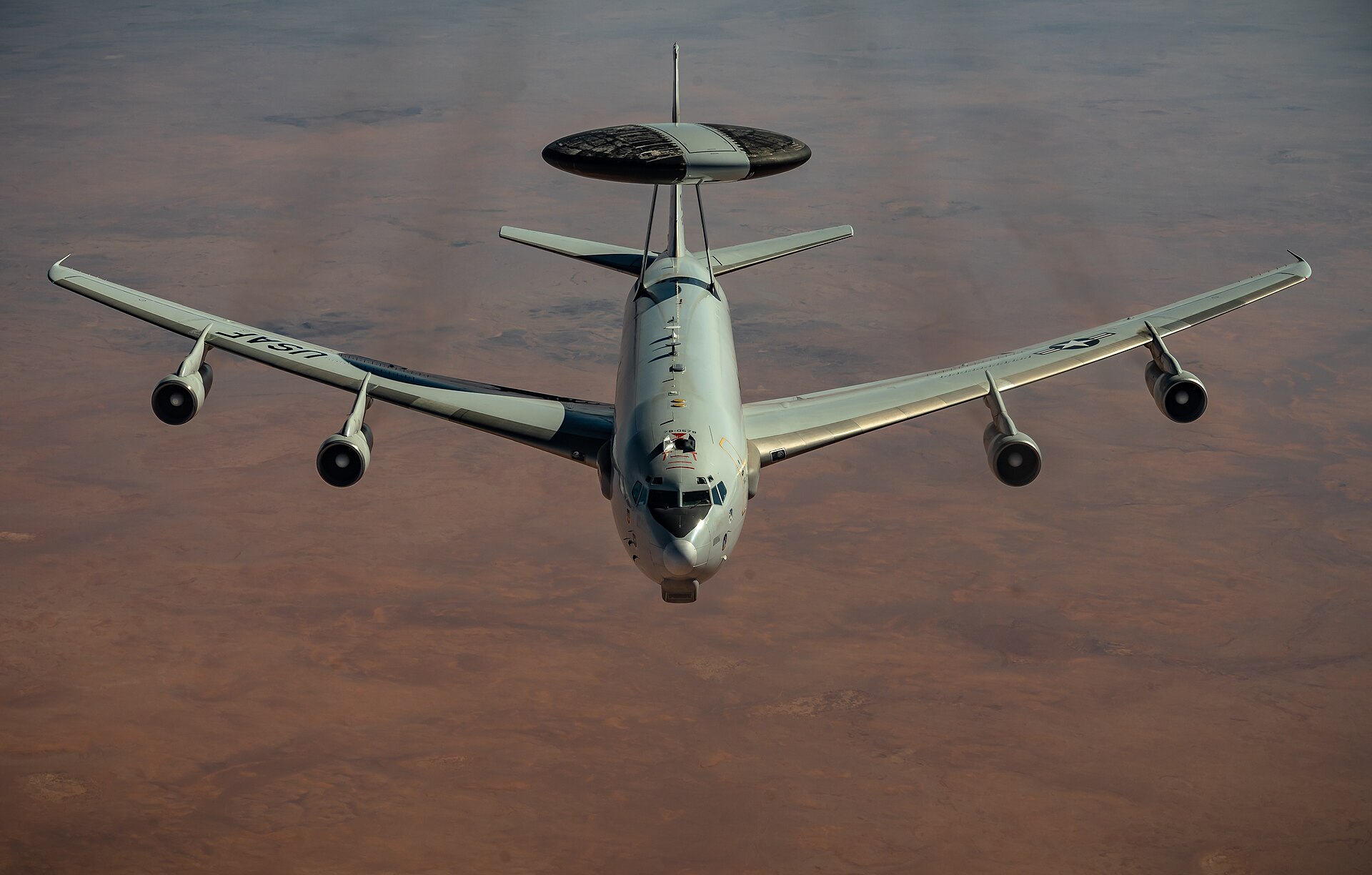
The third layer consists of airborne early warning aircraft. The U.S. Air Force operates Boeing E-3 Sentry Airborne Warning and Control System aircraft from Al Udeid and other regional bases, providing 360-degree radar surveillance across the Gulf. Each E-3 carries a Westinghouse AN/APY-2 radar capable of tracking more than 600 targets simultaneously at ranges exceeding 375 kilometres for low-flying objects and considerably further for high-altitude threats, according to the U.S. Air Force fact sheet. The Royal Saudi Air Force operates five Boeing E-3A AWACS aircraft of its own — making Saudi Arabia one of only four countries to possess the type — providing sovereign early warning capability independent of American assets. The vulnerability of these irreplaceable platforms was exposed on 27 March when an Iranian strike damaged an E-3 Sentry at Prince Sultan Air Base, wounding ten American troops and degrading the surveillance network these aircraft sustain.
The Middle East briefing 3,000+ readers start their day with.
One email. Every weekday morning. Free.
The fourth and final detection layer is the network of ground-based surveillance radars integrated into Saudi Arabia’s Peace Shield system, a nationwide air defense command-and-control architecture that links every sensor, every launcher, and every command post into a single fused picture. AN/FPS-117 long-range radars and AN/TPS-43 tactical radars positioned along the Gulf coast and at strategic inland locations provide continuous low-altitude coverage designed specifically to detect cruise missiles and drones — the threats that satellites and high-altitude radars are least effective against.
The Peace Shield Underground
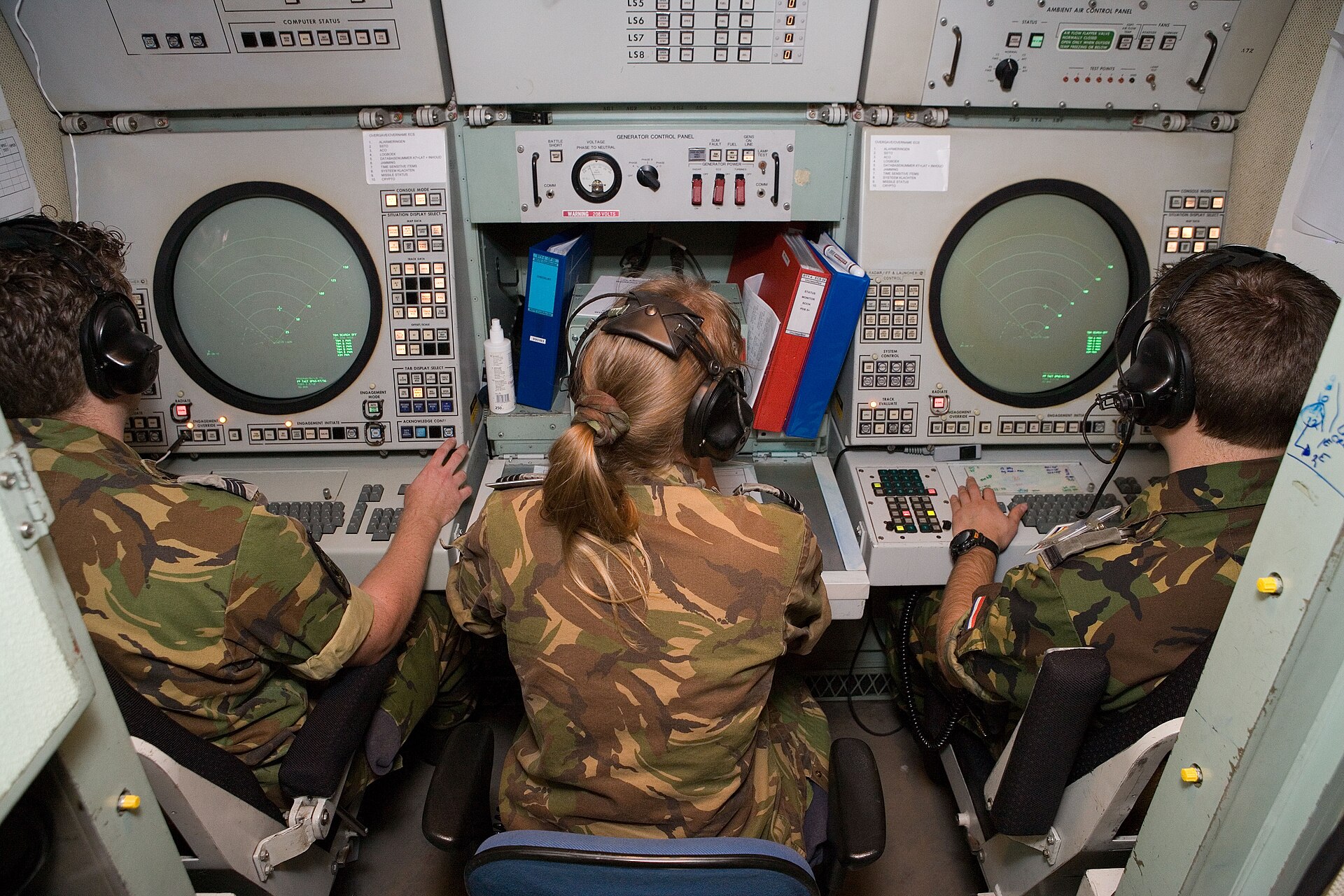
The data from every sensor — satellites, AN/TPY-2 radars, AWACS aircraft, and ground-based radar stations — converges at an elaborate underground command facility beneath Riyadh. Known as the Peace Shield Command Operations Center, this hardened installation serves as the nerve center of the Royal Saudi Air Defense Forces and coordinates the engagement of every incoming threat across Saudi airspace.
Boeing built the original Peace Shield system in the late 1990s under a contract worth approximately $5.6 billion, making it one of the most expensive air defense command systems ever constructed, according to GlobalSecurity.org. The system integrates data from 17 major radar sites, multiple AWACS orbits, and forward-deployed missile batteries into a common operational picture displayed on hardened workstations deep beneath the Saudi capital. Operators can track an Iranian ballistic missile from the moment of launch and assign it to the appropriate interceptor battery — THAAD for high-altitude threats, Patriot PAC-3 for lower trajectories — without a single voice command. The engagement sequence is designed to be semi-automatic: the system recommends the optimal interceptor and firing solution, and the operator confirms.
The Peace Shield upgrade, completed between 2018 and 2022, added Link 16 tactical data link capability, allowing Saudi air defense units to share targeting data in real time with American, British, and coalition aircraft and warships operating in the region. Prince Khalid bin Salman, Saudi Arabia’s defense minister, described the system during the February 2026 World Defense Show in Riyadh as “the nervous system of the Kingdom’s security” — a characterization that proved prescient within weeks when Iranian missiles and drones began arriving in waves.
The underground facility’s survivability has become a critical question as Iran has demonstrated the ability to strike high-value targets. The command center is designed to withstand a direct conventional strike and continue operating, with redundant communications links, independent power generation, and the ability to transfer command authority to alternate sites if the primary facility is compromised. Whether those design specifications hold against the weapons Iran has actually deployed remains one of the war’s classified questions.
What Weapons Defend Saudi Arabia’s Skies?
Saudi Arabia’s air defense relies on a layered system of interceptor missiles, each designed to engage threats at different altitudes and ranges. The Kingdom operates the most diverse arsenal of Western air defense systems of any nation outside NATO, a distinction that reflects both the severity of the threat environment and decades of arms purchases totaling well over $100 billion.
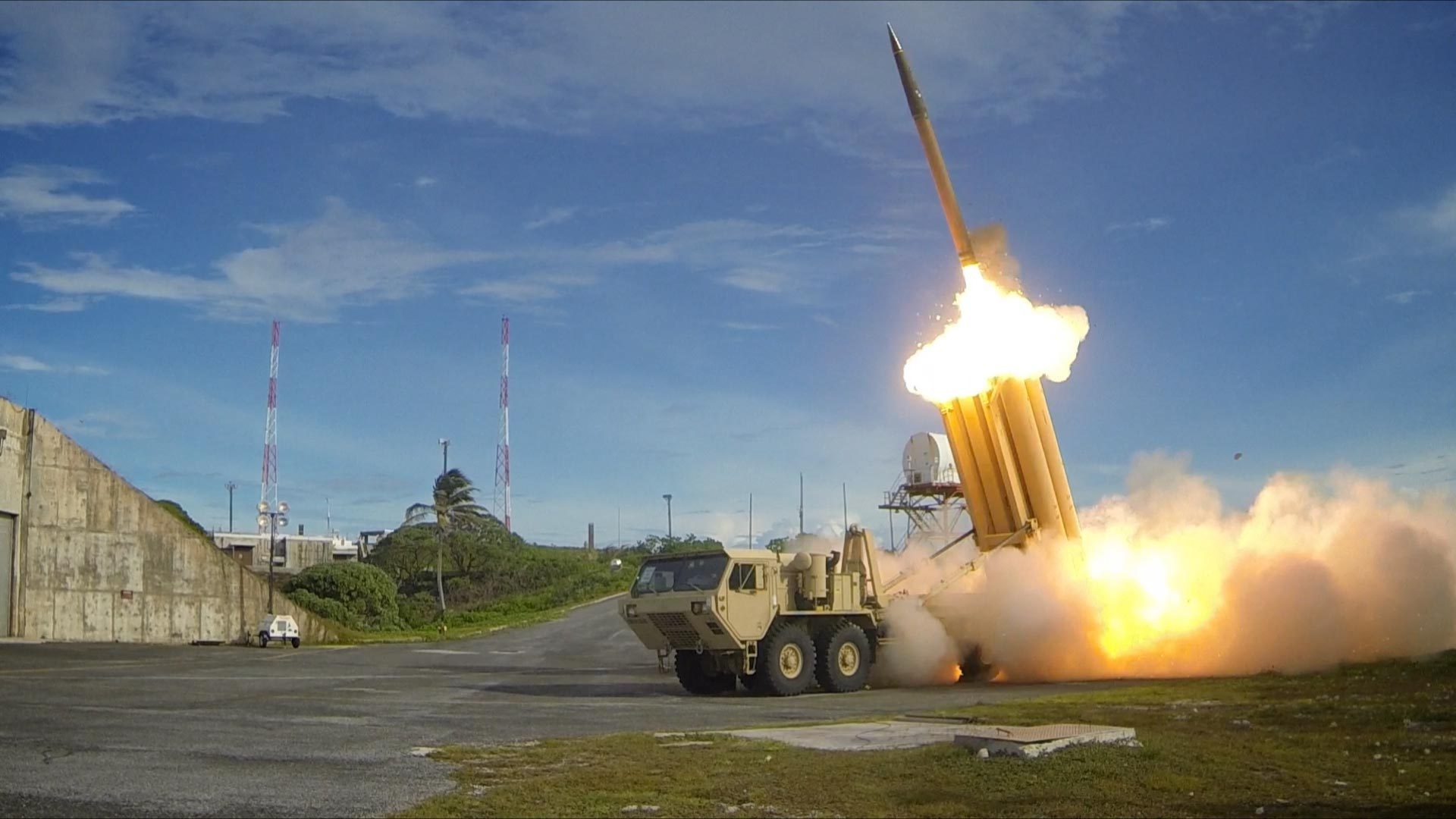
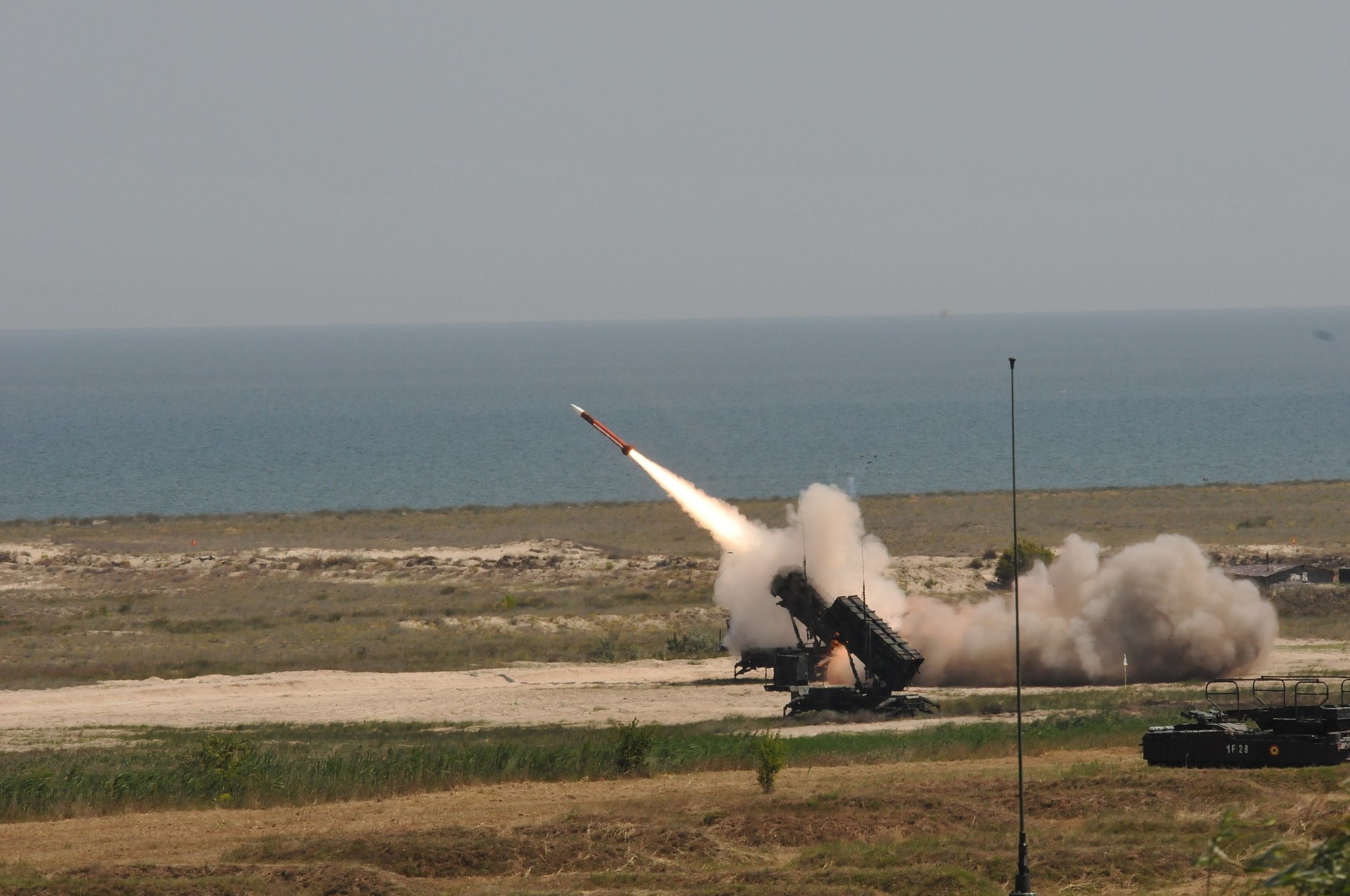
The top layer is the Terminal High Altitude Area Defense system, designed to intercept ballistic missiles in the upper atmosphere and beyond — at altitudes between 40 and 150 kilometres. Saudi Arabia signed a $15 billion contract for seven THAAD batteries in 2017, comprising 44 launchers, 360 interceptor missiles, seven AN/TPY-2 radars, and 16 mobile fire control and communication units, according to the Defense Security Cooperation Agency notification. As of March 2026, two batteries are operational — one protecting Riyadh and one covering the western approaches — with a third expected to reach initial operating capability by mid-2026 and the full complement of seven batteries scheduled for delivery by 2028, according to Defense Express. Each THAAD interceptor uses hit-to-kill technology, destroying its target through kinetic impact at closing speeds exceeding 8 kilometres per second — there is no explosive warhead. The force of collision at that velocity is sufficient to vaporize a ballistic missile warhead.
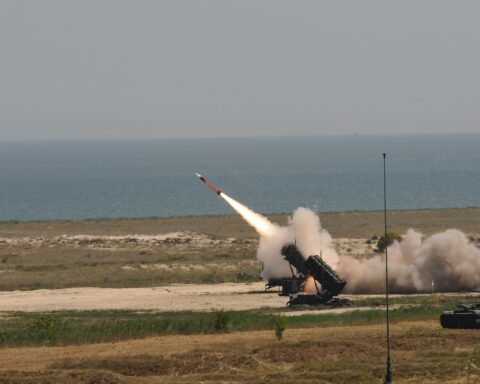
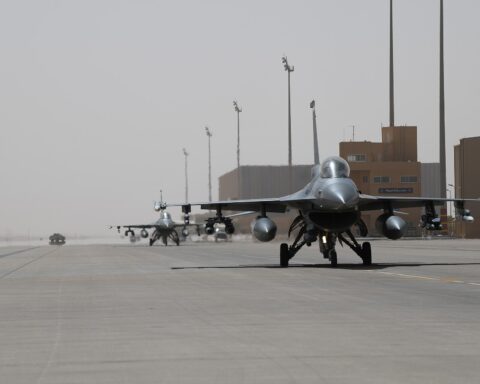
The primary workhorse of Saudi air defense is the MIM-104 Patriot system. The Royal Saudi Air Defense Forces operate 108 M902 launchers organized into six battalions, fielding a mix of PAC-2 GEM-T interceptors optimized for aircraft and cruise missiles and PAC-3 Missile Segment Enhanced interceptors designed for ballistic missile defense, according to the International Institute for Strategic Studies Military Balance 2026. In January 2026 alone — weeks before the war began — the Trump administration approved a $9 billion sale of 730 PAC-3 MSE interceptors, 217 launchers, and seven fire control stations to Saudi Arabia, the largest single Patriot sale in the programme’s history, according to the Defense Security Cooperation Agency. Whether those interceptors arrive fast enough to offset the rate at which Iran is deliberately exhausting Saudi Arabia’s interceptor stockpile remains the war’s most consequential industrial question.
Saudi Arabia has also begun integrating the South Korean KM-SAM Block II medium-range air defense system, diversifying its supplier base beyond the United States for the first time in the Kingdom’s air defense history. The KM-SAM, developed by LIG Nex1 and based on technology transferred from Russia’s Almaz-Antey, provides coverage at altitudes between 20 and 40 kilometres — filling the gap between the Patriot’s lower engagement envelope and THAAD’s upper-tier capability, according to the Korea JoongAng Daily. The first KM-SAM battery arrived in Saudi Arabia in late 2025.
For the low-altitude drone threat that has defined much of this conflict, Saudi Arabia deploys a mix of short-range systems including the Oerlikon Skyshield 35mm gun system, vehicle-mounted electronic warfare jammers, and the Chinese-origin Sky Dragon 50 medium-range system — the latter a quiet acquisition that Riyadh has never officially confirmed but which analysts have identified at Eastern Province oil facility perimeters in commercial satellite imagery.
The Kill Chain — Thirty Seconds From Alarm to Intercept
The kill chain that protects Saudi Arabia from Iranian aerial threats operates on two distinct timelines. For ballistic missiles launched from western Iran — a distance of approximately 1,200 kilometres — Saudi defenders have between four and eight minutes from launch detection to required intercept. For low-altitude drones crossing the Persian Gulf from Iranian territory or from launch sites in Iraq, the timeline compresses to as little as 30 seconds from radar detection to engagement.
A ballistic missile engagement begins when a SBIRS satellite detects the infrared plume of the launch. Within 15 to 30 seconds, the warning reaches the Combined Air Operations Center at Al Udeid and the Peace Shield command facility in Riyadh simultaneously. The AN/TPY-2 radar — if operating in forward-based mode with a clear line of sight to the launch area — acquires the missile within its first minute of flight and begins generating a track. As the missile climbs through its boost phase and enters its midcourse trajectory, the radar refines the predicted impact point and transmits the data via the Integrated Air and Missile Defense Battle Command System to the appropriate THAAD or Patriot battery.
The battery fire control officer — a role that in Saudi service carries the rank of captain or major — receives an engagement recommendation from the automated system. In most cases, the officer confirms the engagement within seconds. The interceptor launches, guided initially by the radar’s tracking data and then, in the case of PAC-3 MSE, by its own onboard seeker for terminal guidance. The entire sequence from satellite detection to interceptor launch typically takes under two minutes. The interceptor then flies for two to four minutes depending on the engagement geometry, striking the incoming missile at a combined closing speed that can exceed Mach 10.
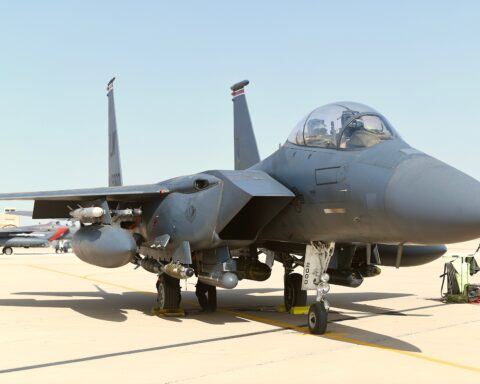
The drone kill chain is fundamentally different and far more challenging. Iranian Shahed-136 one-way attack drones fly at altitudes between 100 and 1,000 metres at speeds of approximately 185 kilometres per hour, according to the Royal United Services Institute. At those altitudes and speeds, the drones are below the detection floor of most strategic radar systems and fly too slowly to register on systems optimized for fast-moving missile threats. Detection often depends on ground-based tactical radars, electro-optical sensors, or the short-range surveillance radars organic to Patriot batteries. Once detected, engagement may require scrambling fighter aircraft — Saudi F-15SA or Eurofighter Typhoon jets — or directing fire from short-range gun systems and shoulder-fired missiles operated by ground units positioned at critical infrastructure sites.
The fundamental tension in the kill chain is that the most expensive and sophisticated systems — THAAD and Patriot — are designed for the least common threat (ballistic missiles), while the most common threat (cheap drones) often requires the least sophisticated response. Shooting down a $50,000 Shahed-136 with a $4 million PAC-3 interceptor is militarily effective but economically unsustainable — a reality that Tehran has weaponized with ruthless clarity. Zelenskyy’s arrival in Riyadh on March 26 with Ukrainian interceptor drones costing as little as $1,000 represents the most direct answer yet to this cost asymmetry.
Why Do 85 Percent of Drones Fall But 10 Percent of Missiles Get Through?
The gap between Saudi Arabia’s 90 percent ballistic missile interception rate and its 85 percent drone interception rate appears narrow in percentage terms. Applied to the volume of threats Iran has launched, it tells a different story. Iran has fired approximately 50 ballistic missiles at Saudi territory since February 28, meaning five have struck their targets. Iran has launched more than 500 drones — at peak rates exceeding 100 per day — meaning approximately 75 have penetrated Saudi defenses. The drone problem is not one of percentages but of volume.
Ballistic missiles are, paradoxically, easier to intercept than drones. They follow predictable parabolic trajectories that can be computed within seconds of launch detection. They emit large radar cross-sections and travel at speeds that make them clearly distinguishable from civilian air traffic. The physics of their flight path constrains the possible impact zone to a calculable ellipse. THAAD and Patriot PAC-3 were specifically engineered to solve this mathematical problem, and 30 years of development have refined the solution to a high degree of reliability.
Drones present the opposite challenge. They are small, slow, low-flying, and capable of routing around known radar coverage. Their radar cross-section — often less than 0.1 square metres — is comparable to a large bird. They can be launched from multiple locations simultaneously, arriving at a target from different azimuth angles and saturating defenses through sheer numbers rather than speed or sophistication. A formation of 50 Shahed-136 drones launched from three different sites in southern Iraq can arrive over Ras Tanura from the north, northwest, and northeast simultaneously, forcing defenders to engage in three directions with systems that may have been oriented toward the most likely single axis of attack.
The conventional wisdom holds that Saudi Arabia’s 85 percent drone interception rate is remarkably high for a threat the system was never designed to counter. The evidence suggests a more troubling interpretation: the 85 percent figure may be inflated by the inclusion of drones that crashed or malfunctioned before reaching their targets. Iran’s Shahed-series drones have a documented technical failure rate of approximately 15 to 20 percent based on Ukrainian combat data, according to the Royal United Services Institute. If a significant portion of the “intercepted” drones were actually self-defeating, the true defensive interception rate against functioning drones may be lower than advertised — a distinction with serious implications for Saudi Arabia’s long-term defense posture.
The Multinational Shield Over the Gulf
The air defense of Saudi Arabia is not a Saudi operation. It is a multinational enterprise coordinated through the Combined Air Operations Center at Al Udeid Air Base in Qatar, where military personnel from 17 nations plan, direct, and execute air operations across the Middle East. The CAOC has operated continuously for more than 20 years, but the Iran war has transformed it from a coordination hub into a genuine wartime command center directing hundreds of engagements per week.
In January 2026 — one month before the war began — U.S. Central Command and regional partners opened the Middle Eastern Air Defense Combined Defense Operations Cell, known as MEAD-CDOC, within the CAOC at Al Udeid. The timing was either remarkably prescient or reflected intelligence that a conflict was imminent. The MEAD-CDOC co-locates multinational personnel in a permanent facility for air and missile defense planning, real-time information exchange, and synchronized threat response, according to a CENTCOM press release. Its establishment meant that when Iranian missiles began striking Gulf states on March 1, the coordination architecture was already in place.
Individual national contributions to the air defense shield have been substantial. The United Kingdom deployed Sky Sabre and Aster-30 missile systems to Saudi Arabia, Kuwait, and Bahrain in the war’s first week, as reported in mid-March. Greece deployed a Patriot battery to Saudi Arabia at American request, and Greek operators achieved one of the war’s first confirmed ballistic missile interceptions over the Eastern Province. France, operating under the expanded mandate of Operation Aspides, has positioned a dozen warships in the wider Gulf region, including the nuclear-powered aircraft carrier Charles de Gaulle, whose Rafale fighters have flown combat air patrols over Saudi airspace. Paris further cemented its role in the coalition on 25 March, when France and Saudi Arabia agreed to deepen defense ties during a meeting between Prince Khalid bin Salman and French Defense Minister Vautrin in Riyadh, with France committing additional warships and accelerating an $8 billion Rafale sale to the Kingdom.
The coalition’s intelligence-sharing arrangements are arguably more valuable than its hardware contributions. Five Eyes intelligence — from the United States, United Kingdom, Australia, Canada, and New Zealand — provides signals intelligence and communications intercepts that have enabled Saudi defenders to anticipate Iranian attack timings. Israeli Arrow radar data, shared through the newly operational bilateral channel established during the Abraham Accords framework, provides an additional detection layer from the eastern Mediterranean. The resulting sensor network stretches from the Mediterranean coast to the Indian Ocean, providing overlapping coverage that no single nation could achieve alone.
How Many Interceptors Does Saudi Arabia Have Left?
The single most classified number in the Saudi military is the current inventory count of Patriot PAC-3 and THAAD interceptors. No official figure has been released, but the arithmetic of 25 days of sustained combat provides a framework for estimation.
Saudi Arabia entered the war with an estimated stockpile of approximately 1,200 to 1,500 PAC-3 and PAC-2 GEM-T interceptors, based on historical delivery data compiled by the Stockholm International Peace Research Institute. The January 2026 emergency sale of 730 additional PAC-3 MSE interceptors was approved but not yet fully delivered when the war began on February 28 — with defense industry sources telling Reuters that initial shipments of approximately 200 interceptors arrived at King Khalid International Airport in the war’s first week via emergency airlift.
Against approximately 50 ballistic missiles, Saudi and coalition forces have likely fired between 75 and 120 interceptors, given the standard doctrine of launching two interceptors per incoming ballistic missile to ensure a high probability of kill. Against 500-plus drones, the calculus is more complex: many drones were engaged by fighter aircraft cannon fire, electronic warfare systems, or short-range gun defenses that do not deplete the strategic interceptor stockpile. However, intelligence sources cited by the Foundation for Defense of Democracies estimate that Patriot batteries have been used against approximately 30 percent of incoming drones — roughly 150 engagements — at an average expenditure of 1.2 interceptors per engagement.
The total interceptor expenditure over 25 days likely falls between 250 and 350 missiles. If the pre-war stockpile was 1,400 interceptors and approximately 200 emergency replacements have arrived, Saudi Arabia may have approximately 1,250 to 1,350 interceptors remaining — sufficient for another 60 to 90 days of combat at current engagement rates before the stockpile reaches critically low levels. This timeline assumes Iran maintains its current launch tempo. If Tehran escalates to sustained 200-drone-per-day operations — a capability that defense analysts at the Foundation for Defense of Democracies assess is within Iran’s production capacity — the stockpile timeline compresses to under 45 days.
The resupply pipeline from Lockheed Martin’s PAC-3 production line in Camden, Arkansas, can produce approximately 500 interceptors per year at maximum capacity. Raytheon’s THAAD interceptor line in Tucson, Arizona, produces fewer than 100 per year. Neither rate is sufficient to replace interceptors at the pace they are being consumed. The global implications are severe: every PAC-3 fired over Riyadh is one fewer available for NATO’s eastern flank or Taiwan’s defense.
The Defense Cost Asymmetry Matrix
The economic logic of the air defense war over Saudi Arabia favors the attacker by a ratio that makes long-term defense unsustainable without a fundamental shift in technology. The gap between the cost of Iranian attack and the cost of Saudi defense is not a marginal inefficiency — it is a structural advantage that Tehran has exploited with strategic discipline.
| Threat Type | Iranian Launch Cost | Saudi Intercept Cost | Ratio | Interception Rate | Strategic Assessment |
|---|---|---|---|---|---|
| Shahed-136 drone | $20,000-$50,000 | $2-4 million (PAC-3) | 80:1 | ~85% | Economically devastating for defender |
| Shahed-238 jet drone | $100,000-$200,000 | $2-4 million (PAC-3) | 20:1 | ~80% | Faster, harder to detect than Shahed-136 |
| Fateh-110 ballistic missile | $1-2 million | $6-8 million (2x PAC-3) | 4:1 | ~90% | Manageable cost ratio, high interception |
| Emad MRBM | $3-5 million | $12-15 million (THAAD) | 3:1 | ~92% | Most efficient defense ratio |
| Khorramshahr MRBM | $5-8 million | $12-15 million (THAAD) | 2:1 | ~90% | Near parity, but limited Iranian stockpile |
| Combined drone swarm (50+) | $1-2.5 million total | $60-120 million | 50:1 | ~85% | The defining threat of the war |
The matrix reveals that ballistic missiles — the weapons that generate the most dramatic headlines — are actually the most economically rational threat for Saudi Arabia to defend against. The cost ratio between a Khorramshahr medium-range ballistic missile and a THAAD interceptor is approximately 2:1 — expensive, but within the bounds of sustainable defense. The cost ratio for drones is catastrophic. A 50-drone swarm costing Iran between $1 million and $2.5 million can consume $60 million to $120 million in interceptors, even accounting for the drones that are engaged by cheaper means such as fighter aircraft guns or electronic warfare.
Over 25 days of conflict, the arithmetic is punishing. Iran’s total expenditure on the approximately 600 weapons launched at Saudi Arabia — a mix of drones, cruise missiles, and ballistic missiles — has cost Tehran an estimated $150 million to $300 million, according to an analysis by the Center for Strategic and International Studies. Saudi Arabia’s defensive expenditure on interceptors alone has exceeded $1.5 billion, with total air defense operational costs including aircraft fuel, maintenance, crew rotation, and ammunition resupply approaching $3 billion. The 10:1 cost ratio between defense and attack is consistent with historical air defense economics, but the sheer volume of threats has compressed what would normally be years of expenditure into less than a month.
The asymmetry explains Iran’s strategy. Tehran does not need to overwhelm Saudi defenses in a single strike. It needs to sustain a tempo of 20 to 100 attacks per day for long enough that the cost of defense becomes politically and economically untenable. At current rates, Saudi Arabia’s daily air defense expenditure is approximately $60 million to $120 million. Iran’s daily attack expenditure is approximately $6 million to $12 million. The mathematics of attrition favor the attacker — a reality that no amount of defensive skill can overcome without either destroying the launch infrastructure or exhausting the attacker’s stockpile first. The same calculus applies across the Gulf — Kuwait International Airport has been struck five times by drones that penetrated defenses designed to stop the majority, not the totality, of incoming threats.
What Happens When Iran Destroys the Radars?
Iran has identified the sensor network as the air defense system’s critical vulnerability and has devoted significant effort to degrading it. The destruction of a $500 million AN/TPY-2 THAAD radar at Muwaffaq Salti Air Base in Jordan by Iranian ballistic missiles in early March — confirmed by commercial satellite imagery analyzed by CNN — represented the single most consequential Iranian strike of the war outside of energy infrastructure.
The AN/TPY-2 is not merely expensive. It is irreplaceable on any timeline relevant to this conflict. Raytheon produces the radar at a rate of approximately two per year, and each unit requires 18 to 24 months of integration and testing before deployment. The loss of the Jordan-based radar — which was operating in forward-based mode to provide early warning of Iranian launches toward Israel and the Gulf — created a detection gap that forced the remaining AN/TPY-2 units in Qatar, Turkey, and Saudi Arabia to adjust their coverage sectors, temporarily reducing the warning time available for some engagement scenarios.
Iran has claimed to have destroyed or damaged four AN/TPY-2 radars across the Gulf and Levant in the war’s first 24 days, at a cumulative replacement cost of approximately $2.7 billion, according to Military Watch Magazine. The Pentagon has neither confirmed nor denied the full extent of radar losses, but the operational impact is visible in the increased reliance on AWACS aircraft for detection — E-3 sorties from Al Udeid have increased from two to four per day since mid-March, according to flight tracking data compiled by open-source intelligence analysts.
Iran’s counter-ISR campaign extends beyond physical destruction. Tehran has deployed GPS spoofing and jamming systems that have disrupted satellite navigation across the Gulf, forcing military aircraft and naval vessels to rely on inertial navigation systems. Iranian cyber operations — which one senior CENTCOM official described to the Washington Post as “the most sophisticated state-level cyber campaign we have seen in active combat” — have targeted the data links that connect sensors to shooters, attempting to sever the kill chain at its most vulnerable point: the communications network that transforms raw radar data into firing solutions.
Can This Air Defense Architecture Survive a Longer War?
The air defense network protecting Saudi Arabia faces three compounding pressures that will intensify with every additional week of conflict: interceptor depletion, sensor attrition, and crew exhaustion. Any one of these factors could degrade performance below acceptable thresholds. Together, they represent the war’s most dangerous convergence.
Interceptor depletion has been addressed above. The resupply pipeline is insufficient to replace expenditures at current rates, and any escalation in Iranian launch tempo will accelerate the gap between consumption and production. The $9 billion emergency Patriot sale from January 2026 provides a buffer, but the full delivery will take 18 to 24 months — far beyond the likely duration of this conflict. Stopgap measures, including the transfer of Patriot interceptors from U.S. Army stocks in Germany and South Korea, have provided limited relief but carry their own strategic risks by reducing NATO and Indo-Pacific defensive capability.
Sensor attrition — the loss of radars, AWACS aircraft, and communications infrastructure to Iranian strikes and cyber operations — is the less visible but potentially more destabilizing threat. The air defense system’s effectiveness is a function of its sensor coverage. Every radar destroyed or jammed creates a detection gap that incoming threats can exploit. Iran has demonstrated both the capability and the strategic sophistication to target the sensor network systematically rather than randomly.
Crew exhaustion is the factor that receives the least attention and may ultimately prove the most consequential. The Royal Saudi Air Defense Forces entered the war with approximately 10,000 active personnel organized into six regional groups, according to the IISS Military Balance. Those personnel have been operating at maximum tempo — 24-hour shifts with minimal rest — for 25 consecutive days. Human factors research by the U.S. Army’s Aeromedical Research Laboratory consistently shows that sustained operations beyond 72 hours without adequate rest produce measurable degradation in operator performance, including slower reaction times, increased error rates, and impaired decision-making. At 25 days, the cumulative fatigue burden on Saudi air defense operators is severe. The engagement decisions — confirm or deny, fire or hold — that these operators make in seconds under extreme stress are the final link in a kill chain that is otherwise highly automated. When that link degrades, the system’s overall effectiveness degrades with it.
The multinational coalition partially mitigates the personnel pressure. American, British, Greek, and French operators rotate through air defense positions, providing surge capacity that Saudi forces alone could not sustain. But the growing dependence on allied personnel creates its own vulnerability: if domestic political pressure forces any contributing nation to withdraw its military personnel, the coverage gap would be immediate and potentially catastrophic.
The Permanent Shield — Why This Network Outlasts the War
The air defense architecture being built over Saudi Arabia under the pressure of Iranian bombardment will not dismantle when the war ends. The multinational integration, the sensor-sharing agreements, the communications protocols, and the operational relationships forged under fire are creating a permanent security infrastructure that did not exist before February 28, 2026 — and that represents Crown Prince Mohammed bin Salman’s most significant strategic acquisition of the entire conflict.
The MEAD-CDOC at Al Udeid was designed as a permanent facility before the war began. Its existence ensures that Saudi Arabia, the UAE, Bahrain, Kuwait, Qatar, and the United States will maintain co-located air defense coordination for the foreseeable future — a regional equivalent of NATO’s Combined Air Operations Centre at Uedem, Germany. The Link 16 integration between Saudi, American, British, and French forces has been tested under combat conditions and proven effective. Reverting to the pre-war status quo of bilateral, disconnected air defense arrangements would require a deliberate political decision to abandon proven capability.
The war has also accelerated Saudi Arabia’s indigenous air defense ambitions. The Saudi Arabian Military Industries company has announced plans to establish a domestic interceptor production line by 2028, leveraging technology transfer agreements from the $9 billion Patriot sale. Prince Khalid bin Salman, meeting with French Defense Minister Catherine Vautrin in Riyadh on March 24, discussed expanded defense industrial cooperation that would include joint development of next-generation drone defense systems. The Kingdom’s goal — articulated in the Vision 2030 defense localization target of 50 percent domestic content — has been rendered urgently practical by a war that has demonstrated the strategic danger of depending entirely on imported interceptors from a single allied nation.
The most consequential legacy of the air defense war may be institutional rather than technological. Before February 2026, Saudi Arabia’s air defense relationships were bilateral — separate agreements with the United States, separate purchases from South Korea, separate discussions with European suppliers. The war has forced multilateral integration. Saudi, American, British, French, and Greek air defense personnel now operate from the same command centers, share the same sensor data, and fire from coordinated positions. That level of interoperability — achieved under combat pressure in weeks rather than through years of peacetime exercises — represents a qualitative shift in Gulf security architecture that no post-war political settlement can easily undo.
“The air defense network being built over the Gulf right now is the most significant multinational military integration in the Middle East since the 1991 coalition. The difference is that this one was designed to be permanent.”Senior CENTCOM official, speaking to the Wall Street Journal, March 2026
That permanent integration extends beyond traditional Western allies. The CENTCOM network now connects nations that have no formal diplomatic relations with one another, creating an invisible alliance architecture that functions as a de facto military partnership without the treaties or embassies that normally accompany one. The intelligence network that makes this kill chain possible — from SBIRS satellites in orbit to counter-UAS sensors on the ground — represents six layers of surveillance that Iran is now racing to blind.
Frequently Asked Questions
What air defense systems does Saudi Arabia use against Iranian missiles?
Saudi Arabia operates a layered air defense system consisting of THAAD for high-altitude ballistic missile interception, Patriot PAC-3 and PAC-2 for lower-altitude missiles and cruise missiles, the South Korean KM-SAM Block II for medium-range threats, and various short-range systems including Oerlikon Skyshield guns for drone defense. The Kingdom operates 108 Patriot launchers and two operational THAAD batteries as of March 2026.
What is Saudi Arabia’s missile interception rate in the Iran war?
The International Institute for Strategic Studies estimates Saudi and coalition forces have achieved approximately 90 percent interception rates against ballistic missiles and roughly 85 percent against drones. However, given the volume of more than 600 Iranian weapons launched at Saudi territory, even these high rates mean approximately 60 projectiles have struck targets inside the Kingdom since the war began on February 28, 2026.
How does Saudi Arabia detect incoming Iranian missiles?
Detection relies on four sensor layers: Space Force SBIRS satellites that detect missile launch infrared signatures within seconds, AN/TPY-2 ground-based radars with 3,000-kilometre detection range, E-3 AWACS airborne warning aircraft providing 360-degree radar coverage, and ground-based tactical radars integrated into the Peace Shield command system. Saudi Arabia is one of only four countries to operate its own E-3 AWACS fleet.
How much does it cost Saudi Arabia to intercept Iranian drones?
The cost asymmetry is severe. A single PAC-3 interceptor costs approximately $4 million, while an Iranian Shahed-136 drone costs between $20,000 and $50,000 to produce — a ratio of roughly 80:1 in Iran’s favor. Over 25 days of conflict, Saudi defensive expenditure on interceptors alone has exceeded an estimated $1.5 billion, while Iran’s total attack expenditure is estimated at $150 million to $300 million.
How many countries contribute to Saudi Arabia’s air defense?
At least 17 nations coordinate air operations through the Combined Air Operations Center at Al Udeid Air Base in Qatar. Countries with direct air defense contributions to Saudi Arabia include the United States, United Kingdom, France, Greece, South Korea, and Pakistan. The Middle Eastern Air Defense Combined Defense Operations Cell, established in January 2026, provides permanent multinational air defense coordination across the Gulf region. Britain’s addition of a Sky Sabre battery under Royal Artillery command now adds a third distinct national system — with its own engagement authority — raising the question of whether those coordination mechanisms hold under fire, analyzed in depth in Ninety Seconds Over Riyadh.
Can Saudi Arabia sustain its air defense over a longer war?
Sustainability depends on three factors: interceptor resupply rates from American production lines, sensor survivability against Iranian counter-targeting, and crew endurance. At current engagement rates, Saudi Arabia’s interceptor stockpile could reach critically low levels within 60 to 90 days without accelerated resupply. The global production capacity for PAC-3 interceptors — approximately 500 per year — is insufficient to replace wartime consumption rates. The structural gap between Saudi Arabia’s defense spending and its actual operational capability remains the most consequential vulnerability the war has exposed.