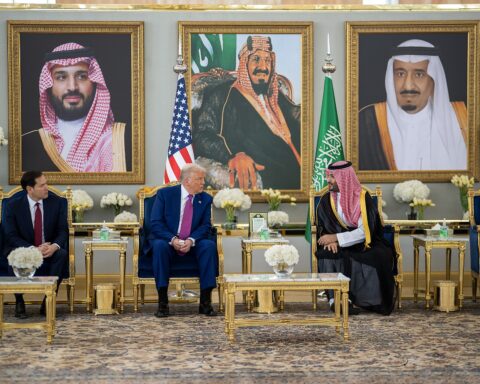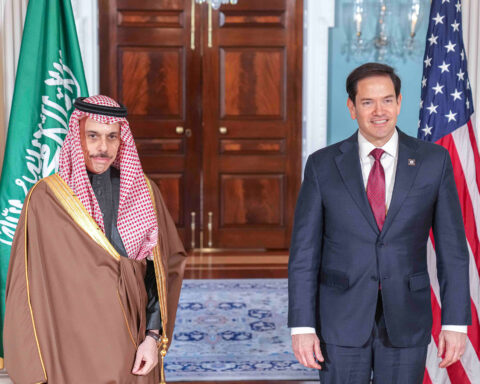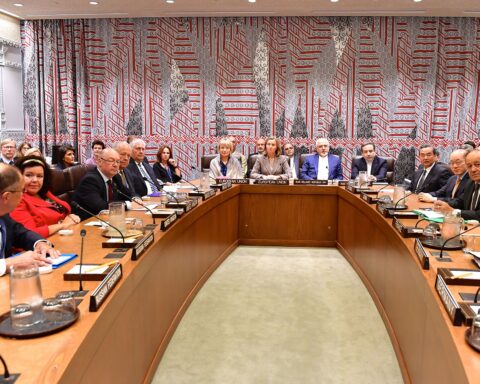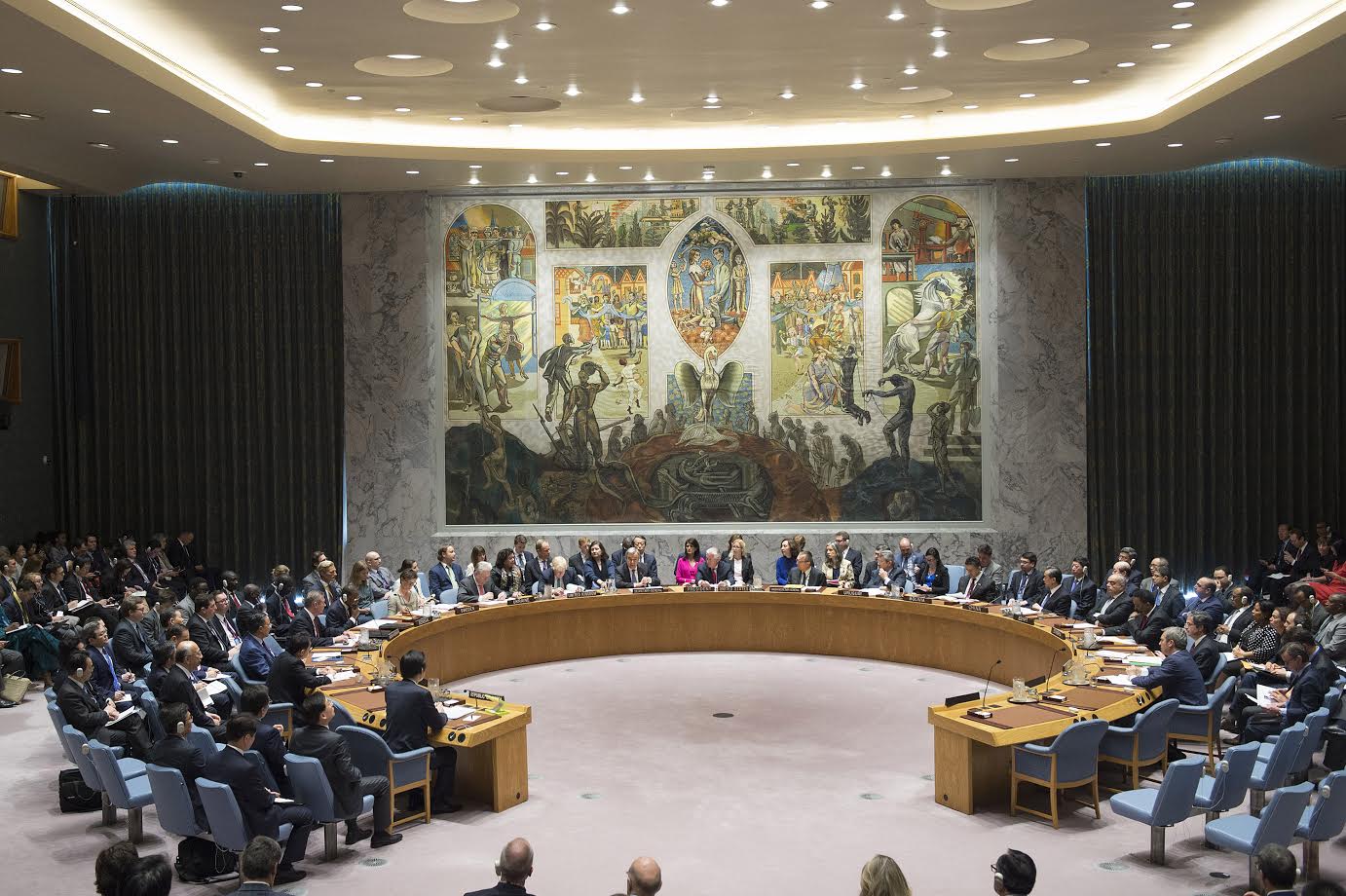

NEW YORK — Bahrain has circulated a draft resolution to the United Nations Security Council that would authorize member states to use “all necessary means” to secure shipping through the Strait of Hormuz, invoking the same Chapter VII language that preceded military interventions in Iraq, Libya, and Korea. The proposal, backed by the Gulf Cooperation Council, Jordan, and the United States, marks the most aggressive diplomatic escalation of the Iran war to date and would grant legal authority for a multinational naval campaign in the world’s most critical energy chokepoint.
The draft landed on Security Council desks on Monday as Iran’s blockade of the strait entered its fourth week, with tanker traffic down more than 90 percent from pre-war levels and approximately 200 commercial vessels stranded across the Persian Gulf, according to Lloyd’s List. Russia and China, both veto-wielding permanent members, have signalled opposition to the resolution’s language, raising the prospect of a diplomatic standoff that could determine whether the 22-nation coalition already pledging support moves from rhetoric to warships.
France has tabled a rival text that omits any mention of Iran and avoids Chapter VII authority entirely, calling instead for a general ceasefire and a return to diplomacy. The competing drafts have split the Security Council into camps that mirror the broader divisions of the war itself.
Table of Contents
- What Does Bahrain’s Draft Resolution Actually Say?
- Who Backs the Resolution and Who Opposes It?
- France Tables a Rival Text Without Teeth
- What Does Chapter VII Authorization Mean in Practice?
- Saudi Arabia’s Quiet Hand Behind Bahrain’s Proposal
- Twenty-Two Nations Pledge Forces Before the Vote
- Russia and China Signal Veto as Iran Demands War End First
- How Bad Is the Hormuz Shipping Crisis?
- From Operation Earnest Will to 2026
- Frequently Asked Questions
What Does Bahrain’s Draft Resolution Actually Say?
The draft resolution circulated by Bahrain on behalf of the GCC and Jordan invokes Chapter VII of the United Nations Charter, the legal framework that defines threats to international peace and permits the Security Council to authorize military force. The operative paragraph authorizes member states, “acting nationally or through voluntary multinational naval partnerships, for which advance notification has been provided to the Security Council, to use all necessary means, in and around the Strait of Hormuz, including within the territorial waters of littoral States within or bordering the Strait of Hormuz, to secure transit passage and to repress, neutralize, and deter attempts to close, obstruct, or otherwise interfere with international navigation through the Strait of Hormuz, until such time as the Council decides otherwise.”
The text specifically demands that Iran “immediately cease all attacks against merchant and commercial vessels and any attempt to impede lawful transit passage or freedom of navigation in and around the Strait of Hormuz,” Reuters reported after reviewing the draft. It also condemns attacks on civilian infrastructure, including oil and gas installations, desalination plants, airports, and diplomatic premises across the Gulf.
The resolution expresses readiness to impose targeted sanctions if Iran fails to comply and does not set a time limit on the authorization, meaning it would remain in force indefinitely until the Security Council passes a subsequent resolution revoking it. Crucially, the mandate would extend into the territorial waters of Oman and Iran, the two nations whose coastlines form the strait’s 21-mile-wide shipping channel.
The Middle East briefing 3,000+ readers start their day with.
One email. Every weekday morning. Free.
Who Backs the Resolution and Who Opposes It?
The Bahraini draft has explicit backing from all six GCC member states, Jordan, and the United States. Washington’s support was confirmed by National Security Adviser Mike Waltz, who told reporters that US allies were “starting to come around” to the necessity of reopening the strait by force, according to The Hill.
Among the Security Council’s 15 members, the resolution is expected to receive support from the United States, the United Kingdom, and France, though Paris has complicated the picture by tabling its own alternative. Japan, which holds a rotating seat and depends on the strait for roughly 80 percent of its crude oil imports, has been among the most vocal advocates for action.
Opposition centres on Russia and China, both permanent members with veto power. Moscow circulated its own shorter draft that avoids naming individual countries and focuses on a general call for de-escalation. Beijing has argued the Bahraini text is “unbalanced and confrontational” and fails to address what China calls the root cause of the crisis: the US-Israeli military campaign against Iran that began on February 28, according to Reuters.
| Position | Countries | Key Argument |
|---|---|---|
| Support (Bahrain draft) | US, UK, Japan, GCC states | Freedom of navigation is non-negotiable; Iran’s blockade threatens global energy security |
| Conditional support | France | Supports reopening Hormuz but prefers softer language without Chapter VII |
| Oppose / likely veto | Russia, China | Resolution is one-sided; must address root cause (US-Israel strikes on Iran) |
| Undecided | Remaining elected members | Weighing economic damage against risk of escalation |
France Tables a Rival Text Without Teeth
France circulated its alternative draft resolution on Monday, taking what diplomats described as a more conciliatory approach designed to attract broader support within the Council. The French text makes no mention of Iran by name and does not invoke Chapter VII, meaning it would carry no legal authority to use military force.
The operative language “urges all parties to refrain from further escalation, calls for a cessation of the ongoing hostilities in the Persian Gulf, the Strait of Hormuz, and the Gulf of Oman, and calls for a return to the path of diplomacy,” according to the draft reviewed by Reuters.
French diplomats told reporters that the Bahraini language would be “difficult to adopt” given the certainty of Russian and Chinese opposition. Paris is attempting to bridge the gap between the Gulf states’ demand for enforceable action and Moscow and Beijing’s insistence that any resolution address the broader conflict, not just Iran’s maritime behaviour.
Negotiations to reconcile the two texts were ongoing as of Wednesday, though diplomats said there was little prospect of merging fundamentally different approaches. A vote on either resolution this week appeared unlikely, according to the Security Council Report, an independent monitoring group.
The French manoeuvre reflects Paris’s broader diplomatic positioning during the conflict. French Armed Forces Minister Catherine Vautrin met Saudi Defence Minister Prince Khalid bin Salman in Riyadh on Tuesday to discuss deepening bilateral defence cooperation, signalling that France is simultaneously pursuing both military engagement with the Gulf and diplomatic restraint at the United Nations.
What Does Chapter VII Authorization Mean in Practice?
Chapter VII of the United Nations Charter gives the Security Council authority to determine the existence of threats to international peace, breaches of peace, or acts of aggression, and to decide what measures shall be taken. When the Council uses the phrase “all necessary means,” it is granting legal authority for member states to employ military force. The language is deliberately euphemistic but universally understood.
The phrase has been invoked in some of the most consequential military operations since 1945. Resolution 678, adopted in November 1990, authorized “all necessary means” to remove Iraqi forces from Kuwait, providing the legal basis for the Gulf War. Resolution 1973, adopted in March 2011, authorized “all necessary measures” to protect civilians in Libya, leading to a NATO air campaign that toppled Muammar Gaddafi’s government. The Korean War was authorized under similar Chapter VII language in 1950.
| Resolution | Year | Target | Outcome |
|---|---|---|---|
| SC Res. 83 | 1950 | North Korea | Korean War; 36,000+ US casualties |
| SC Res. 678 | 1990 | Iraq (Kuwait invasion) | Gulf War; Iraqi forces expelled |
| SC Res. 1973 | 2011 | Libya | NATO air campaign; regime change |
| Proposed 2026 | 2026 | Iran (Hormuz blockade) | Pending; would authorize naval force |
If adopted, the Bahraini resolution would authorize participating navies to engage Iranian forces that attempt to interfere with commercial shipping, including mine-laying operations, drone attacks on merchant vessels, and the boarding or seizure of tankers. The mandate’s extension into territorial waters of littoral states is particularly significant, as it would legally permit coalition forces to operate in Iranian and Omani waters without the consent of those governments.
That provision is also what makes adoption virtually impossible without Russian and Chinese acquiescence. Authorizing military operations in a sovereign state’s territorial waters against that state’s wishes is among the most extreme measures the Security Council can approve.
Saudi Arabia’s Quiet Hand Behind Bahrain’s Proposal
Bahrain’s role as the resolution’s sponsor is no diplomatic coincidence. The island kingdom has served as Saudi Arabia’s closest military and political ally for decades, and Western diplomats told Reuters that Bahrain was acting as spokesperson for two key regional sponsors: Saudi Arabia and the United Arab Emirates.
Riyadh’s decision to channel the initiative through Manama rather than present it directly serves multiple purposes. It avoids placing Saudi Arabia in the position of directly requesting UN authorization for military action against its neighbour, a step that would mark an irrevocable break in Saudi-Iranian relations. It also frames the resolution as a collective Gulf initiative rather than a Saudi-US project, broadening its diplomatic legitimacy.
Saudi Arabia co-sponsored the earlier Resolution 2817, adopted on March 11, which condemned Iran’s attacks on Gulf states and passed with 13 votes in favour and abstentions from China and Russia. That resolution was co-sponsored by a remarkable 136 UN member states, establishing broad international consensus that Iran’s actions in the strait constitute a threat to international peace.
The new draft goes further, seeking to convert that moral condemnation into operational authority. For Crown Prince Mohammed bin Salman, the resolution serves as diplomatic insurance. If adopted, it would provide international legal cover for the military steps Saudi Arabia and the UAE are reportedly considering, including granting the US military access to King Fahd Air Base in Taif and allowing coalition aircraft to operate from Saudi territory.
Twenty-Two Nations Pledge Forces Before the Vote
Even before the Security Council votes, 22 nations have already declared their readiness to contribute to efforts to secure shipping through the strait. The coalition, formalized in a joint statement issued on March 22, includes Australia, Bahrain, Canada, the Czech Republic, Denmark, Estonia, Finland, France, Germany, Italy, Japan, Latvia, Lithuania, the Netherlands, New Zealand, Norway, Romania, Slovenia, South Korea, Sweden, the United Arab Emirates, and the United Kingdom.
The signatories condemned “recent attacks by Iran on unarmed commercial vessels in the Gulf and attacks on civilian infrastructure including oil and gas installations” and called on Tehran to “cease immediately its threats, laying of mines, drone and missile attacks and other attempts to block the Strait to commercial shipping.”
The breadth of the coalition is notable. It includes four of the five Nordic nations, all three Baltic states, and major Asian energy importers in Japan and South Korea. The United States is not listed among the 22 signatories but has separately confirmed its support through National Security Adviser Waltz’s public statements.
| Region | Countries | Count |
|---|---|---|
| Gulf states | Bahrain, UAE | 2 |
| Western Europe | France, Germany, Italy, Netherlands | 4 |
| Northern Europe | Denmark, Estonia, Finland, Latvia, Lithuania, Norway, Sweden | 7 |
| Eastern Europe | Czech Republic, Romania, Slovenia | 3 |
| Five Eyes / Anglosphere | UK, Canada, Australia, New Zealand | 4 |
| Asia-Pacific | Japan, South Korea | 2 |
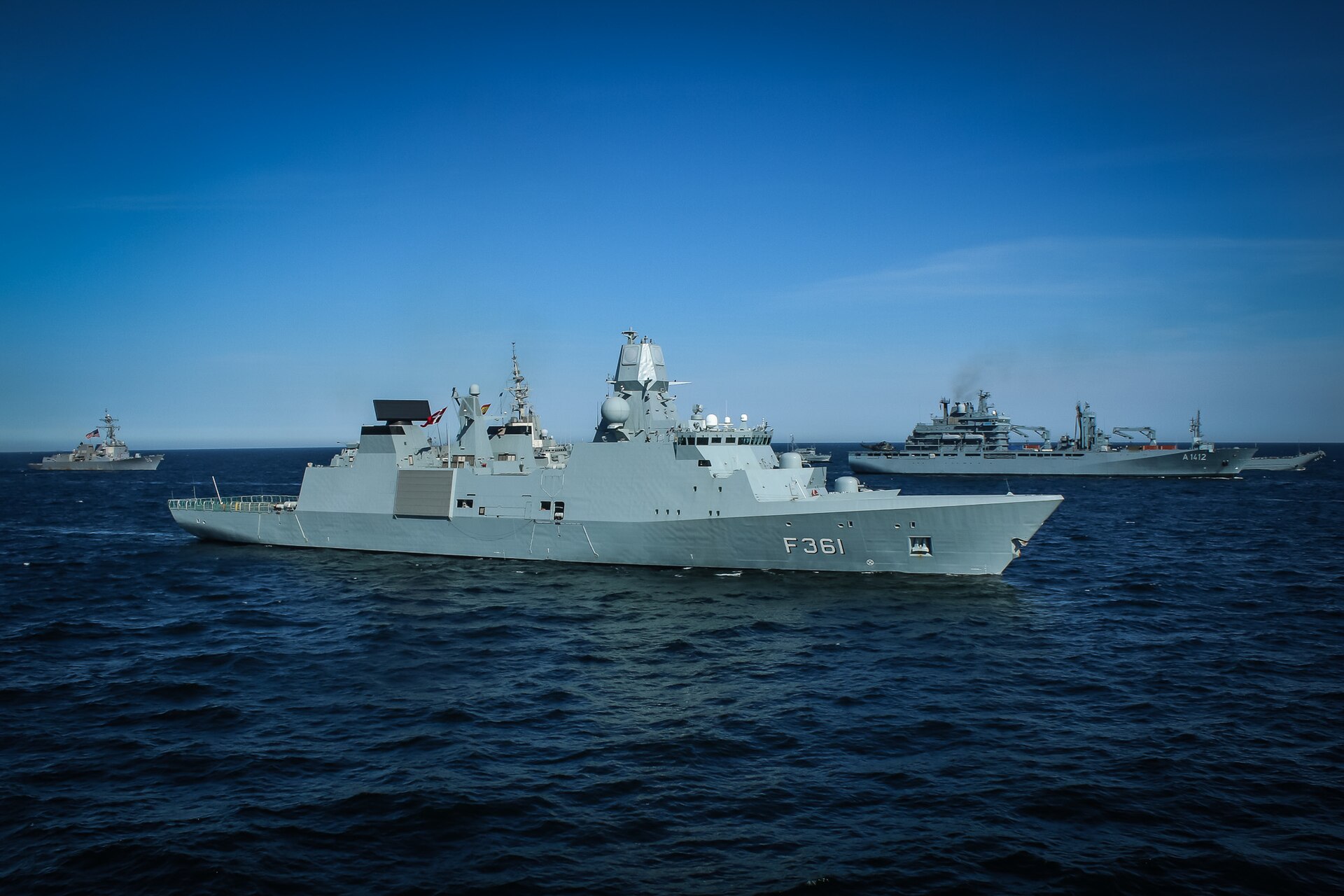
Britain has already announced it will lead a mine-clearing operation through the strait, deploying Royal Navy vessels and mine countermeasure capabilities. Several European nations, including France and Germany, have already positioned naval assets in the region as part of existing bilateral agreements with Gulf states.
The coalition’s willingness to commit before a Security Council vote suggests that many participating nations may proceed with naval operations regardless of whether the Bahraini resolution passes. The joint statement’s language about “appropriate efforts” to ensure safe passage leaves room for action authorized by individual governments or regional arrangements rather than the Security Council.
Russia and China Signal Veto as Iran Demands War End First
Russia and China have made their opposition to the Bahraini draft explicit. During consultations, both nations argued the text was one-sided for condemning Iran’s maritime actions while ignoring the US-Israeli military campaign that provoked them, according to diplomats briefed on the discussions.
Moscow circulated its own shorter draft resolution that avoids naming individual countries and calls for a general de-escalation across the region. China backed Russia’s approach, with Chinese diplomats arguing that any meaningful resolution must address “the root causes of the current crisis” rather than treating Iran’s maritime actions in isolation.
Iran’s ambassador to the United Nations, Amir Saeid Iravani, called the Bahraini proposal “a transparent attempt to provide legal cover for an illegal war of aggression against the Iranian people,” according to Iranian state media. Tehran has demanded that any Security Council action begin with condemning the US-Israeli strikes that have killed more than 1,400 Iranians since February 28, a condition that Washington and its allies will not accept.
The veto threat creates a familiar deadlock. Russia used its veto four times during the Syrian civil war to block resolutions targeting the Assad government, and China joined Moscow in three of those vetoes. The pattern of great-power paralysis at the Security Council during Middle Eastern conflicts has led previous coalitions to act outside UN authority, as the United States did when it invaded Iraq in 2003 without Security Council authorization.
Even a vetoed resolution would carry political weight. A vote of 13 in favour with two vetoes would demonstrate the isolation of Russia and China on the Hormuz question and strengthen the moral authority of any coalition that proceeds without UN backing.
How Bad Is the Hormuz Shipping Crisis?
The scale of the disruption that prompted Bahrain’s resolution is unprecedented in modern maritime history. Approximately 20 percent of the world’s oil supply normally transits the Strait of Hormuz, along with significant volumes of liquefied natural gas. Since Iran began restricting and attacking commercial shipping in early March, that flow has virtually stopped.
Tanker traffic through the strait has collapsed by more than 90 percent. Before the war, an average of 24 crude tankers transited the strait daily. By mid-March, that figure had fallen to three or four vessels operating with their identification transponders active, according to Lloyd’s List. Approximately 200 internationally trading, non-sanctioned tankers are effectively stranded in the Persian Gulf, unable to move through the blockade. The deliberate targeting of civilian ships that attempted to transit has been classified by Human Rights Watch as apparent war crimes.
The supply disruption has removed roughly 8 million barrels per day of crude oil and 2 million barrels per day of condensates and natural gas liquids from global markets, according to energy analysts tracking the crisis. Brent crude, the global benchmark, surged past $119 a barrel earlier in March before falling back to approximately $98 on Wednesday amid tentative ceasefire optimism following the Trump administration’s delivery of a 15-point peace proposal to Tehran.
| Metric | Pre-war (February 2026) | Current (March 25) | Change |
|---|---|---|---|
| Daily tanker transits | 24 | 3-4 | -85% |
| Crude flow (mb/d) | ~17 | ~9 | -47% |
| Stranded commercial vessels | 0 | ~200 | N/A |
| Brent crude price | $65/bbl | $98/bbl | +51% |
| Insurance war risk premium | 0.05% | 5-7% | +100x |
The insurance market has effectively imposed its own blockade. War risk premiums for vessels transiting the Gulf have soared from 0.05 percent of hull value to between 5 and 7 percent, according to Lloyd’s. For a supertanker valued at $100 million, that represents a premium increase from $50,000 to as much as $7 million per transit. Many shipping companies have concluded the economics no longer justify the risk, even for vessels that Iran might theoretically allow through.
The disruption has had cascading effects across global energy markets. Saudi Arabia, which pumps the majority of its crude from Eastern Province fields that depend on Gulf export terminals, has been forced to divert shipments through the Red Sea port of Yanbu, itself the target of an Iranian drone strike on March 19. The International Energy Agency has warned that the crisis already surpasses the severity of the 1970s oil shocks.
From Operation Earnest Will to 2026
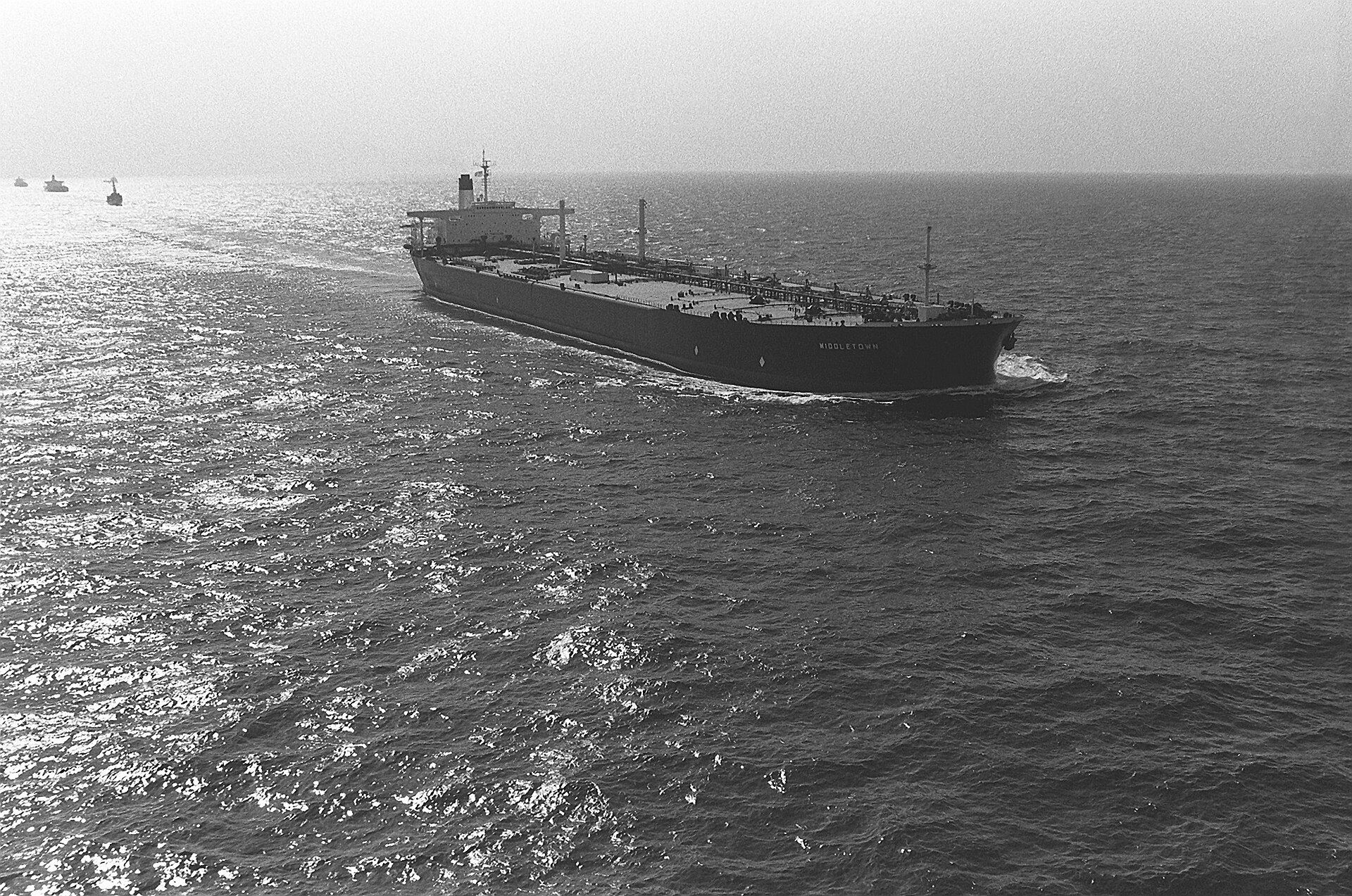
The proposed resolution would mark the second time the international community has authorized naval protection for commercial shipping in the Persian Gulf against Iranian threats. The first was Operation Earnest Will, launched by the United States in July 1987 during the Iran-Iraq War.
That operation saw US Navy warships escort reflagged Kuwaiti tankers through the strait for 14 months. It culminated in Operation Praying Mantis in April 1988, the largest surface naval engagement the US Navy had fought since World War Two, in which American forces sank or damaged six Iranian warships and patrol boats.
The parallels between 1987 and 2026 are striking but the scale is vastly different. Operation Earnest Will involved a single nation escorting the tankers of a single Gulf state. The proposed 2026 operation would involve 22 or more nations protecting commercial shipping from dozens of countries. Iran’s 1987 arsenal consisted primarily of mines and patrol boats. Its 2026 capabilities include ballistic missiles, cruise missiles, armed drones, fast attack craft, submarines, and a sophisticated mine-laying capacity, according to the International Institute for Strategic Studies.
The air defence war over Saudi Arabia has already demonstrated the density of threats any naval force would face. Saudi forces have intercepted hundreds of drones and dozens of ballistic missiles since the war began. A naval convoy operation through the strait would face those same threats at close range in confined waters.
Military analysts have warned that even with a Chapter VII mandate, the operational challenge of securing a 21-mile-wide waterway against a determined adversary equipped with shore-based anti-ship missiles would be enormous. The Soufan Center, an independent security think tank, noted in an assessment published March 23 that there was “no easy way” for the United States to open the strait militarily.
Frequently Asked Questions
What is Bahrain’s UN resolution on the Strait of Hormuz?
Bahrain has circulated a draft United Nations Security Council resolution that would invoke Chapter VII of the UN Charter and authorize member states to use “all necessary means,” including military force, to secure commercial shipping through the Strait of Hormuz. The resolution was submitted on behalf of the Gulf Cooperation Council and Jordan, with backing from the United States.
Will Russia and China veto the Hormuz resolution?
Both Russia and China have signalled opposition to the Bahraini draft, calling it one-sided for targeting Iran while ignoring the US-Israeli strikes that began the conflict. Diplomats expect at least one veto if the resolution goes to a vote, though the 22-nation coalition backing naval action may proceed regardless of Security Council authorization.
How many countries support military action to reopen the Strait of Hormuz?
Twenty-two nations, including the United Kingdom, France, Germany, Japan, South Korea, Australia, and Canada, issued a joint statement on March 22 declaring their readiness to contribute to efforts to secure the strait. The United States has separately confirmed its support through public statements by National Security Adviser Mike Waltz.
What does “all necessary means” mean in a UN resolution?
The phrase “all necessary means” is diplomatic language authorizing the use of military force. It has been used in UN Security Council resolutions that preceded the Korean War in 1950, the Gulf War in 1990, and the NATO intervention in Libya in 2011. If adopted for the Strait of Hormuz, it would legally permit coalition navies to engage Iranian forces interfering with commercial shipping.
Why is Bahrain leading the resolution instead of Saudi Arabia?
Bahrain is acting as spokesperson for Saudi Arabia and the UAE, which are the principal regional sponsors of the initiative. Routing the resolution through Bahrain frames it as a collective Gulf Cooperation Council effort rather than a bilateral Saudi-US project, broadening its diplomatic legitimacy while allowing Riyadh to maintain some distance from the direct confrontation with Iran.
The urgency of Bahrain’s initiative became clearer on March 25, when Iran issued a counterproposal demanding formal sovereignty over the Strait of Hormuz as one of five conditions for ending the war — a claim that would make international enforcement of transit rights impossible without Iranian consent.
The same day, the UN Human Rights Council adopted a separate resolution by consensus demanding Iran immediately cease all attacks on Gulf states and pay reparations to victims, further strengthening the multilateral legal framework underpinning the GCC’s position.