
RIYADH — Human Rights Watch accused Iran of committing war crimes in the Strait of Hormuz after documenting deliberate attacks on at least two civilian commercial vessels on March 11, the rights group said in a report published on March 24. Seven seafarers and one shipyard worker have been killed, four remain missing, and ten were injured across 17 confirmed maritime incidents since the war began on February 28, according to the investigation.
The findings mark the first formal legal designation of Iran’s maritime campaign as a potential violation of international humanitarian law. Iran’s Islamic Revolutionary Guard Corps had previously framed the attacks as enforcement of a blockade, but the evidence compiled by Human Rights Watch — including video footage, vessel-tracking data, crew testimony, and Iranian state media confirmations — suggests the targeting was deliberate, indiscriminate, and directed at civilian objects with no military function.
For Saudi Arabia, whose economy depends on uninterrupted maritime transit through the Strait, the report adds legal weight to an already urgent strategic crisis. Approximately one-quarter of the world’s seaborne oil trade passes through the narrow channel, and the closure has forced Riyadh to reroute the bulk of its exports through the Red Sea port of Yanbu at reduced capacity.
Table of Contents
- What Did Human Rights Watch Find in the Strait of Hormuz?
- Which Ships Were Attacked and What Happened to Their Crews?
- How Many Maritime Incidents Have Occurred Since the War Began?
- What Does International Law Say About Attacking Civilian Vessels?
- How Are Saudi Arabia’s Oil Exports Affected?
- Twenty Thousand Seafarers Trapped in the Persian Gulf
- The Global Economic Fallout From Hormuz
- What Comes Next for Accountability?
- Background and Timeline of the Hormuz Crisis
- Frequently Asked Questions
What Did Human Rights Watch Find in the Strait of Hormuz?
Human Rights Watch documented deliberate Iranian attacks on at least two civilian commercial ships in and around the Strait of Hormuz on March 11, 2026. The rights group concluded that these attacks would amount to war crimes under international humanitarian law because the vessels had no military function and their crews were civilians. A comprehensive analysis of the Iran war’s international law dimensions reveals that Iran’s toll booth system in the strait challenges the entire foundation of maritime freedom of navigation.
The investigation relied on multiple evidence streams: videos from three separate social media accounts showing explosions striking the vessels, photographs taken by rescued crew members documenting structural damage, vessel-tracking data from Marine Traffic and VesselFinder, incident reports filed by the United Kingdom Maritime Trade Operations, and statements published by the International Maritime Organization.
Iranian state media provided additional corroboration. The state news agency IRNA confirmed on March 12 that forces had targeted the oil tanker Safesea Vishnu. Tasnim News, an outlet affiliated with the IRGC, published claims on its Telegram channel taking responsibility for firing on vessels that had “disobeyed and ignored warnings,” according to the Human Rights Watch report.
The Middle East briefing 3,000+ readers start their day with.
One email. Every weekday morning. Free.
Deliberately targeting civilian ships and their crew members is a war crime.
Niku Jafarnia, Human Rights Watch researcher, March 24, 2026
The IRGC navy justified the attacks as enforcement of what it calls a blockade of the Strait. On March 4, an IRGC naval official named Mohammad Akbarzadeh declared the waterway “under complete control.” On March 16, IRGC spokesman Naini reiterated that no vessels would pass without Iranian authorization. The new Supreme Leader, Mojtaba Khamenei, was quoted as saying that “the lever of blocking the Strait of Hormuz must definitely continue to be used,” according to statements reviewed by the rights group.
Which Ships Were Attacked and What Happened to Their Crews?
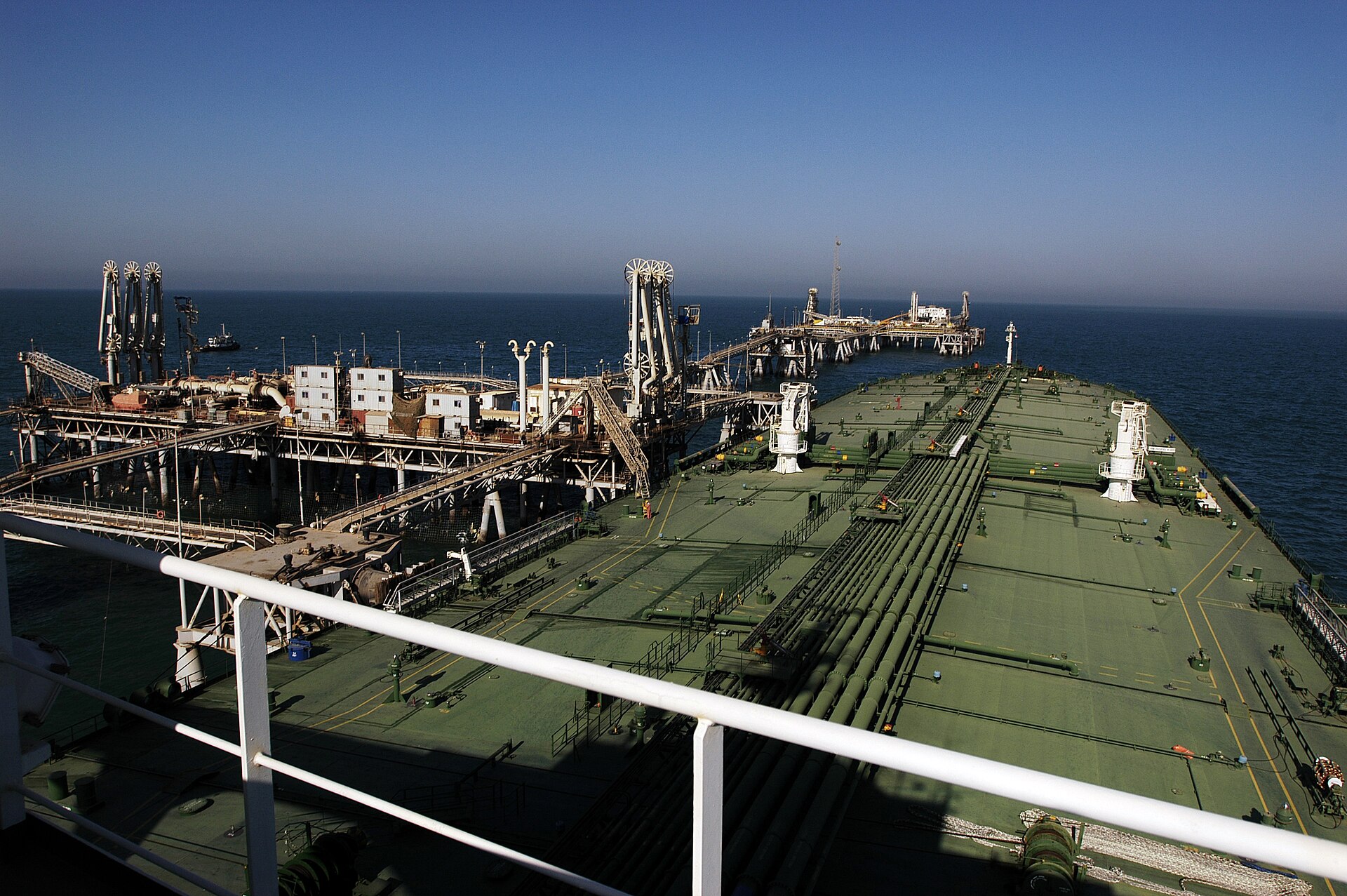
The two primary incidents documented by Human Rights Watch both occurred on March 11. The Marshall Islands-flagged oil tanker Safesea Vishnu was struck by unmanned explosive boats while conducting a ship-to-ship cargo transfer approximately five nautical miles south of Al Basrah in the northern Persian Gulf, according to the UKMTO and the vessel’s operator.
One Indian crew member aboard the Safesea Vishnu was killed in the blast. The vessel’s operator, Safesea, confirmed the death in a statement posted on LinkedIn. The remaining 15 Indian crew members were evacuated to a safe location. A second tanker, the Zefyros, which was alongside during the transfer, caught fire in the same incident.
The Thai-flagged bulk carrier Mayuree Naree was struck by two projectiles 11 nautical miles north of Oman while transiting from Khalifa Port in the UAE to Kandla, India. The projectiles hit above the waterline, triggering explosions at the stern and in the engine room, CNN reported on March 20 after interviewing surviving crew members.
Twenty of the Mayuree Naree’s 23 crew members abandoned the vessel in a lifeboat and were rescued by the Omani navy. Three crew members who had been working in the engine compartment at the time of the attack remained unaccounted for as of the date of the Human Rights Watch report. The 20 rescued crew returned to Thailand by plane, the Royal Thai Navy confirmed on March 18. Iran admitted striking the Mayuree Naree, with the IRGC stating the vessel was fired upon after “disregarding warnings and insistently attempting to illegally pass through the Strait of Hormuz,” Nation Thailand reported.
| Vessel | Flag | Type | Date | Location | Weapon Used | Casualties |
|---|---|---|---|---|---|---|
| Safesea Vishnu | Marshall Islands | Oil tanker | March 11 | 5nm south of Al Basrah | Unmanned explosive boats | 1 killed (Indian crew) |
| Zefyros | N/A | Oil tanker | March 11 | Alongside Safesea Vishnu | Collateral fire | None reported |
| Mayuree Naree | Thailand | Bulk carrier | March 11 | 11nm north of Oman | Two projectiles | 3 missing |
| One Majesty | Japan | Container vessel | March 11 | Strait of Hormuz | Projectile | Not disclosed |
| Star Gwyneth | Marshall Islands | Bulk carrier | March 11 | Strait of Hormuz | Projectile | Not disclosed |
| Skylight | N/A | N/A | March 1-17 | Hormuz area | N/A | Not disclosed |
| Safeen Prestige | N/A | N/A | March 1-17 | Hormuz area | N/A | Not disclosed |
Human Rights Watch also documented attacks on additional vessels including the Skylight and Safeen Prestige, corroborated through photographs and video. The MKD Vyom was confirmed attacked through statements only. In one case, the Express Rome was claimed by Iran as a target, but the ship’s owner confirmed no damage had occurred.
How Many Maritime Incidents Have Occurred Since the War Began?
Between March 1 and 17, the United Nations confirmed 17 incidents of damage to commercial vessels in and around the Strait of Hormuz, according to the Human Rights Watch report. The actual number is likely higher, as some ship operators have declined to report attacks for fear of increased insurance premiums or reputational damage, maritime analysts told Reuters.
The cumulative toll across all documented incidents stands at seven seafarers killed, one shipyard worker dead, four seafarers missing, and ten people injured — five of them severely. Al Jazeera reported on March 12 that six vessels were attacked in a single day amid reports of Iranian drone boats and sea mines deployed across shipping lanes.
The attacks have employed a range of weapons. Iranian forces have used unmanned explosive boats, anti-ship missiles, naval projectiles, and — according to USNI News on March 13 — sea mines laid in shipping channels. The variety of methods indicates a deliberate campaign rather than isolated defensive actions, defense analysts at the International Institute for Strategic Studies noted.
By March 25, the scale of Iran’s broader aerial and maritime campaign across the Gulf had reached staggering proportions. The UAE Ministry of Defence reported that its air defenses alone had engaged 357 ballistic missiles, 15 cruise missiles, and 1,815 unmanned aerial vehicles since the conflict began. Saudi Arabia’s defences intercepted at least 45 ballistic missiles, seven cruise missiles, and more than 600 drones launched toward the Kingdom, according to figures compiled from daily Ministry of Defence statements.
What Does International Law Say About Attacking Civilian Vessels?
International humanitarian law prohibits direct attacks on civilians and civilian objects during armed conflict. Warring parties must take all feasible precautions to verify that targets are military objectives before striking, and they must take steps to minimize harm to civilians. Deliberately attacking civilian ships — or failing to distinguish between military and civilian vessels — constitutes a war crime under customary international humanitarian law and the Geneva Conventions, Human Rights Watch stated.
The legal framework is unambiguous on this point. Merchant vessels, oil tankers, and bulk carriers engaged in routine commercial operations are civilian objects unless they are being used for military purposes, are integrated into a belligerent’s military logistics chain, or refuse to submit to lawful search and seizure under a legally established blockade. None of these conditions applied to the Safesea Vishnu or the Mayuree Naree, according to the evidence reviewed by Human Rights Watch.
Iran has not formally declared a blockade under international law, which would require specific procedures including notification to neutral states, proportionality in enforcement, and allowance for humanitarian shipments. Instead, the IRGC has unilaterally declared the Strait closed to all traffic and fired on vessels that attempted to transit, a distinction that removes any legal basis for the use of force against civilian ships, according to the report.
The UN Security Council had already weighed in on Iran’s maritime campaign. Resolution 2817, adopted on March 11 with 13 votes in favour and two abstentions from China and Russia, condemned Iran’s “egregious attacks” against Gulf neighbours and determined that they constituted a breach of international law. The resolution attracted 135 co-sponsors — the highest number in Security Council history, according to the UN.
Customary international humanitarian law also requires environmental protection during hostilities. The Human Rights Watch report documented significant environmental damage from the maritime attacks, including a 20-kilometre oil slick near Sri Lanka resulting from a US strike on an Iranian vessel, and a 25-kilometre oil slick near Bandar Abbas threatening Iran’s Hara Biosphere Reserve and the Khuran Strait Wetlands.
How Are Saudi Arabia’s Oil Exports Affected?
The Iranian maritime campaign has forced the most significant rerouting of Saudi oil exports since the East-West pipeline was built during the Iran-Iraq war of the 1980s. With the Strait of Hormuz effectively closed to commercial traffic since late February, Saudi Arabia has diverted the bulk of its crude shipments to the Red Sea port of Yanbu through the 1,200-kilometre trans-Arabian pipeline, Bloomberg reported on March 25.
Crude exports from Yanbu have surged to a five-day rolling average of 3.66 million barrels per day — approximately half of Saudi Arabia’s pre-crisis export levels — as Riyadh pushes toward a target of five million barrels per day, according to Bloomberg’s latest shipping data. An armada of tankers has congregated around the Red Sea port, creating logistical bottlenecks that are adding to delivery delays.
The disruption extends far beyond Saudi Arabia. Shutting Hormuz has halted approximately 15 million barrels per day of crude shipments that normally transit the waterway for global markets, the International Energy Agency stated in what it called “the largest supply disruption in the history of the global oil market.” The loss has sent crude prices approximately 40 percent higher since the conflict began, according to the New York Times.
Marine insurance markets had already priced in the risk before the IRGC formally closed the Strait. War-risk insurance premiums for Gulf-bound tankers surged to levels that made transit commercially unviable, effectively creating a private-sector blockade before Iran’s navy completed the military one. Lloyd’s of London syndicates imposed additional premiums of up to seven percent of hull value for vessels transiting the Hormuz corridor, according to industry sources cited by Reuters.
The economic consequences are cascading. The World Food Programme warned that an additional 45 million people could be pushed into acute hunger by the resulting price rises in energy, food, and fertilisers, according to WFP Deputy Executive Director Carl Skau, as quoted in the Human Rights Watch report.
Twenty Thousand Seafarers Trapped in the Persian Gulf
The attacks on civilian vessels have created a humanitarian crisis at sea. Approximately 20,000 seafarers remain stranded aboard ships in the Persian Gulf, unable to transit out through the Strait of Hormuz and facing “heightened risk” from ongoing military operations, International Maritime Organization Secretary-General Arsenio Dominguez said in a statement on March 6.
The stranded crews come from dozens of countries, with large contingents from India, the Philippines, Bangladesh, Indonesia, and Thailand — nations whose maritime workers form the backbone of the global shipping industry. One Nepali seafarer was detained by Iranian authorities after being pulled from the Strait, a Nepali government official confirmed on March 20.
Ships trapped in the Gulf have become a crisis within a crisis. With resupply difficult, food and freshwater provisions are running low on some vessels. Medical evacuations have been complicated by the closure of nearby ports and the danger of transiting contested waters. The IMO Council passed a resolution on March 19 condemning Iranian threats to maritime safety and calling for immediate protection of seafarers regardless of the vessels’ flag states.
The human cost falls disproportionately on workers from developing nations. Indian maritime unions have called on New Delhi to negotiate safe passage for its nationals. Thai authorities arranged military flights to retrieve the 20 rescued crew members from the Mayuree Naree. But for the thousands still trapped, no evacuation plan exists.
The Global Economic Fallout From Hormuz
The closure of the Strait and the attacks on civilian shipping have produced what economists are calling the fourth great oil shock, after the 1973 Arab embargo, the 1979 Iranian revolution, and the 1990 Iraqi invasion of Kuwait. Crude oil prices have risen approximately 40 percent since the conflict began, with Brent briefly surging past $119 per barrel before retreating on ceasefire speculation.
The International Energy Agency described the disruption as the most severe in the history of the global oil market. Asian economies, which are most dependent on Gulf crude imports, have been hit hardest. India’s strategic petroleum reserves have dropped to nine days of coverage, the lowest level since the country began building its reserve infrastructure. Japan and South Korea, which import virtually all their crude via tanker, have declared energy emergencies.
An Iranian IRGC official predicted that crude prices could reach $200 per barrel if the Strait remained closed through April, according to the Human Rights Watch report. That projection aligns with worst-case modelling by Goldman Sachs, which in a March note estimated that prolonged closure would push Brent past $150 within 60 days.
| Indicator | Figure | Source |
|---|---|---|
| Oil price increase since conflict began | ~40% | New York Times |
| Global crude supply disrupted daily | ~15 million bpd | IEA |
| Saudi Yanbu export rate (5-day avg) | 3.66 million bpd | Bloomberg |
| Seafarers stranded in Persian Gulf | ~20,000 | IMO |
| Commercial vessels damaged (March 1-17) | 17 | UN/HRW |
| Seafarers killed | 7 | HRW |
| Additional people at risk of acute hunger | 45 million | WFP |
| UNSC Resolution 2817 co-sponsors | 135 | UN |
The shipping industry itself has been transformed. Lloyd’s List reported that daily vessel transits through the Strait have fallen from a pre-war average of approximately 80 to fewer than five, almost all under Iranian escort. Marine insurance rates for the Persian Gulf are now the highest for any waterway in the world, exceeding even the premiums charged during the peak of the Houthi attacks on Red Sea shipping in 2024.
What Comes Next for Accountability?
Human Rights Watch called on Iranian forces to immediately halt all attacks on civilian vessels, ensure the safety and release of any detained seafarers, and comply fully with international humanitarian law. The rights group also urged all parties to the conflict — including the United States and Israel — to avoid further escalation and to take all feasible precautions to protect civilians and civilian objects.
The legal pathway to accountability remains unclear. Iran is not a party to the International Criminal Court’s Rome Statute, which means the ICC cannot exercise jurisdiction over Iranian nationals without a Security Council referral. Russia and China, which abstained on Resolution 2817, would likely veto any referral attempt.
Alternative mechanisms exist. States whose nationals were killed or injured in the attacks could pursue cases in their domestic courts under universal jurisdiction principles. The Marshall Islands, whose flag was carried by both the Safesea Vishnu and the Star Gwyneth, could bring a case before the International Tribunal for the Law of the Sea. India, which lost one national in the Safesea Vishnu attack, has made no public statement regarding legal action.
The broader question is whether the accumulation of documented evidence changes the political calculus around the conflict. Iran has offered selective passage through the Strait to nations it considers friendly, but the HRW report undermines any claim that the maritime campaign is a lawful or proportionate response to the US-Israeli strikes. Gulf states, led by Bahrain, are already pressing the Security Council for a Chapter VII resolution authorising the use of military force to reopen the waterway.
Background and Timeline of the Hormuz Crisis
The crisis in the Strait of Hormuz began on February 28, 2026, when the United States and Israel launched surprise airstrikes on multiple sites across Iran, killing Supreme Leader Ali Khamenei and other senior officials. Iran responded within hours with Operation True Promise IV, launching missiles and drones at US military bases and allied nations across the Middle East.
The IRGC Navy moved to assert control over the Strait of Hormuz within the first 48 hours of the conflict, deploying fast attack craft, laying mines, and issuing warnings to all commercial vessels to halt transit. By March 4, the IRGC declared the Strait under its complete control. Daily vessel transits effectively ceased, trapping hundreds of ships inside the Persian Gulf.
Iran’s retaliatory strikes expanded to target all six Gulf Cooperation Council nations — Saudi Arabia, the UAE, Kuwait, Bahrain, Qatar, and Oman — marking the first time in history that all GCC states came under simultaneous attack from a single adversary. The attacks focused on military bases hosting US forces, energy infrastructure, and — as the Human Rights Watch report now documents — civilian shipping.
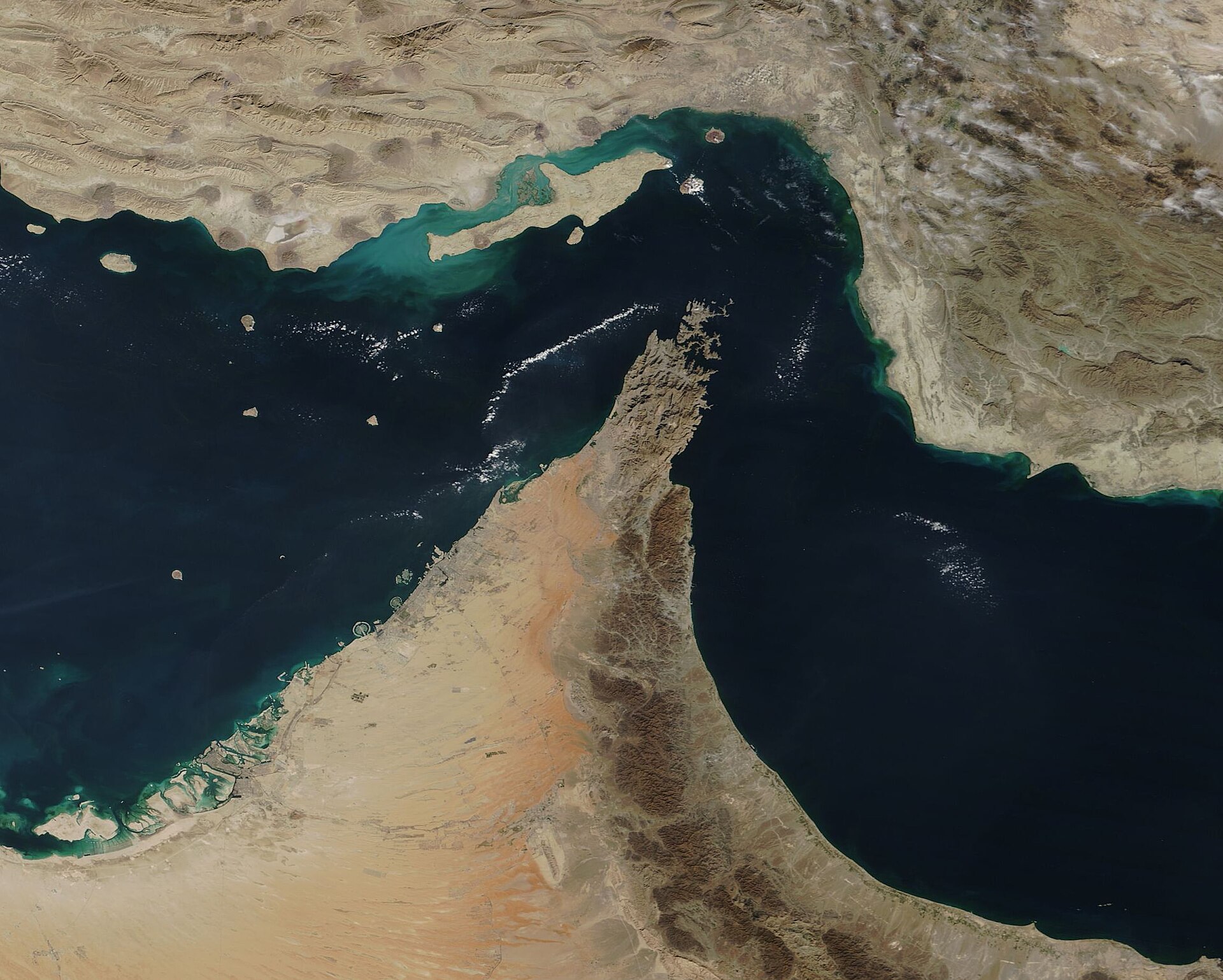
The US military destroyed 43 Iranian naval vessels in the first seven days of the conflict, according to US Central Command, yet was unable to reopen the Strait to commercial traffic. The narrow geography of the waterway — just 33 kilometres wide at its tightest point — gives Iran’s shore-based anti-ship missiles and remaining fast attack craft a persistent advantage over even the most powerful naval forces.
Saudi Arabia’s response has been measured but increasingly firm. Riyadh expelled Iran’s military attaché and four embassy staff on March 21, citing “repeated Iranian attacks” on Saudi territory. Foreign Minister Faisal bin Farhan warned that “Saudi Arabia’s patience with Iranian attacks is not unlimited” and that “any belief that Gulf countries are incapable of responding is a miscalculation.” Crown Prince Mohammed bin Salman agreed to give the US military access to King Fahd Air Base, a reversal of earlier policy, the Wall Street Journal reported on March 24.
The commander who oversaw these operations, IRGC Navy chief Alireza Tangsiri, was reportedly killed in an Israeli air strike on Bandar Abbas on March 26. Whether his elimination changes the IRGC Navy’s rules of engagement in the strait remains to be seen.
Frequently Asked Questions
What war crimes did Human Rights Watch accuse Iran of committing?
Human Rights Watch documented deliberate Iranian attacks on at least two civilian commercial ships — the oil tanker Safesea Vishnu and the bulk carrier Mayuree Naree — on March 11 in the Strait of Hormuz. The rights group said these attacks on vessels with no military function would amount to war crimes under international humanitarian law. Seven seafarers and one shipyard worker were killed across 17 maritime incidents.
How many ships have been attacked in the Strait of Hormuz?
The United Nations confirmed 17 incidents of damage to commercial vessels between March 1 and 17, 2026, in and around the Strait of Hormuz. Named vessels include the Safesea Vishnu, Mayuree Naree, Zefyros, One Majesty, Star Gwyneth, Skylight, and Safeen Prestige. The actual number of incidents is believed to be higher, as some operators have not reported attacks.
Can Iran be prosecuted for attacks on civilian ships?
Iran is not a party to the ICC’s Rome Statute, so the International Criminal Court cannot exercise jurisdiction without a UN Security Council referral, which Russia and China would likely veto. Alternative legal avenues include domestic courts under universal jurisdiction, the International Tribunal for the Law of the Sea, and ad hoc tribunals. No state has announced formal legal proceedings as of March 25.
How has the Hormuz closure affected global oil supplies?
The closure has halted approximately 15 million barrels per day of crude shipments, which the International Energy Agency called the largest supply disruption in history. Oil prices have risen roughly 40 percent. Saudi Arabia has rerouted exports through Yanbu on the Red Sea, achieving 3.66 million barrels per day, but this represents only half of pre-crisis export capacity.
How many seafarers are stranded in the Persian Gulf?
The International Maritime Organization reported approximately 20,000 seafarers stranded aboard ships in the Persian Gulf as of March 6, unable to transit out through the Strait of Hormuz. The crews come predominantly from India, the Philippines, Bangladesh, Indonesia, and Thailand. Supplies including food, freshwater, and medical provisions are running low on some vessels.