In this article:
- What Does the Pentagon’s Ground War Plan Mean for Saudi Arabia?
- Where Is the Legal Line Between Hosting Defenders and Staging Invaders?
- What Does the Hague Convention Say About Neutral Territory?
- How Would Co-Belligerent Status Change Iran’s Retaliation Calculus?
- Can MBS Refuse Staging Rights Without Losing the Shield?
- The Islamabad Track and the Disappearing Off-Ramp
- Frequently Asked Questions
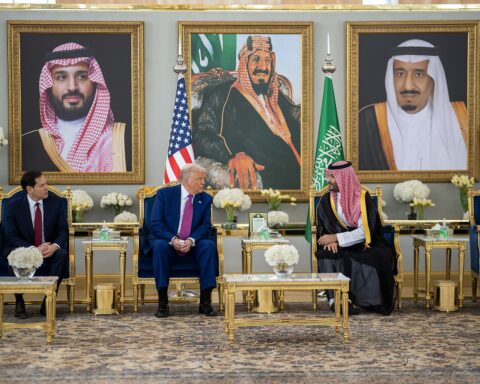
RIYADH — The Pentagon is preparing weeks-long ground operations inside Iran, including potential raids on Kharg Island, and the 3,500 Marines who arrived aboard USS Tripoli on March 27 need somewhere to stage. If that staging ground is Saudi Arabia, Crown Prince Mohammed bin Salman faces a legal and strategic threshold far more dangerous than anything the previous month of absorbing Iranian strikes has produced: the Kingdom’s reclassification from passive host of defensive systems to active co-belligerent in a ground invasion of Iranian sovereign territory.
The distinction matters under international humanitarian law. Saudi Arabia has spent 30 days maintaining a posture of non-belligerency, absorbing more than 600 Iranian strikes without returning a single offensive sortie, according to tracking of the Kingdom’s restraint posture. That posture collapses the moment Saudi territory becomes a launchpad for ground forces crossing into Iran. The legal framework, the Iranian threat calculus, and MBS’s bargaining position with Washington all shift at once. The belligerency trap is the sharpest expression yet of the structural failures in the US-Gulf security bargain that have accumulated since the war began.
What Does the Pentagon’s Ground War Plan Mean for Saudi Arabia?
The Pentagon is preparing for limited ground operations in Iran lasting “weeks, not months,” according to U.S. officials cited by the Washington Post on March 28. The plans include raids by special operations and conventional infantry troops on Kharg Island and coastal sites near the Strait of Hormuz, targeting weapons systems capable of hitting commercial and military shipping.
The force structure for these operations is already assembling. USS Tripoli (LHA-7) arrived in the U.S. Central Command area of responsibility on March 27 carrying approximately 3,500 sailors and Marines from the 31st Marine Expeditionary Unit, according to Military Times and CBS News. This deployment supplements the 10,000 additional troops the Pentagon ordered to the region earlier in March, bringing total U.S. force posture in the Gulf past 50,000 personnel.
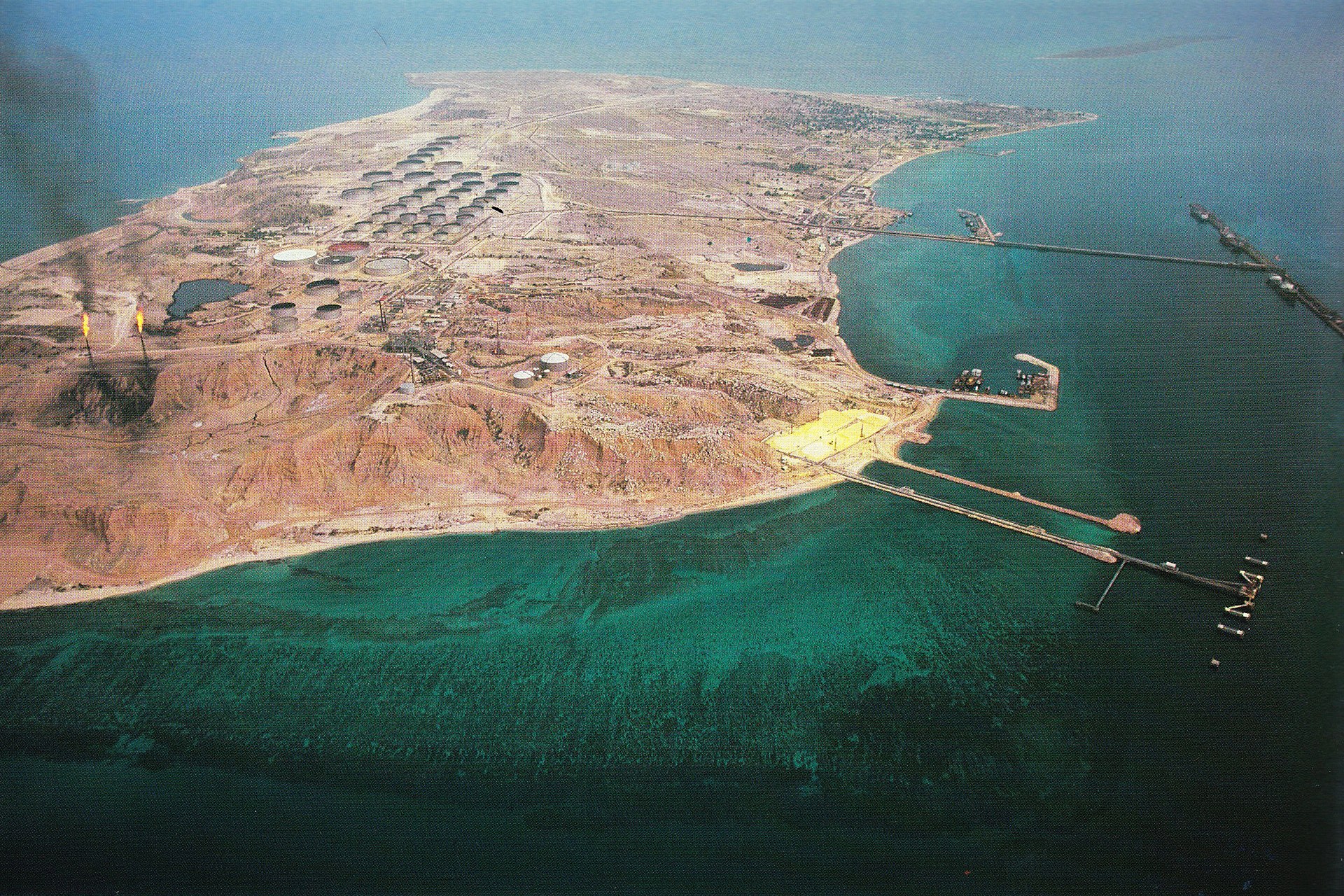
President Trump has publicly mused about seizing Kharg Island, which handles approximately 90 percent of Iran’s oil exports. “Maybe we take Kharg Island, maybe we don’t,” Trump told reporters, according to Axios. In a subsequent Financial Times interview on March 29, Trump went further, declaring his “preference would be to take the oil in Iran” and driving Brent crude past $116. White House press secretary Karoline Leavitt stated that “the Pentagon making preparations does not mean the president has made a decision.”
The Middle East briefing 3,000+ readers start their day with.
One email. Every weekday morning. Free.
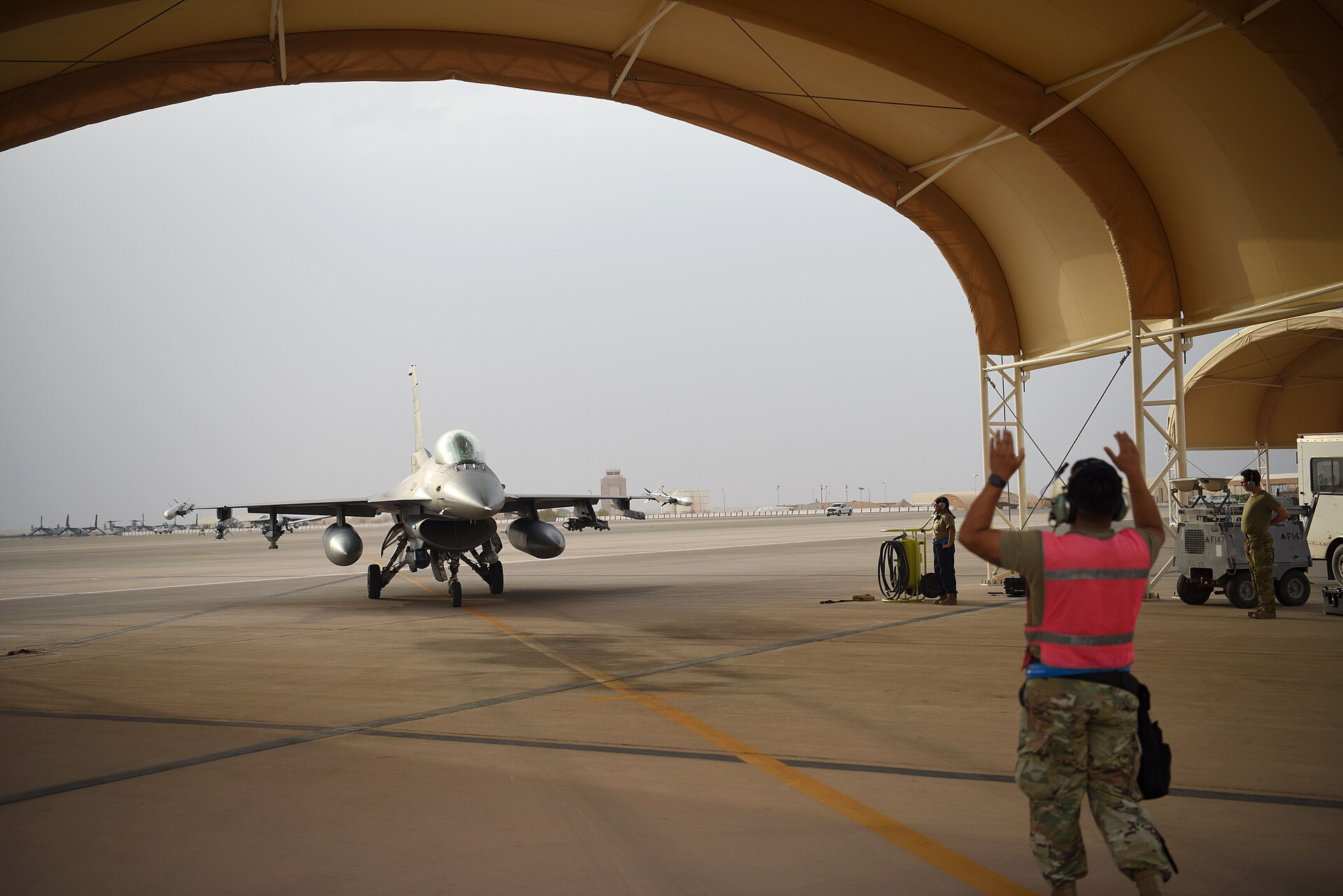
The operational question Washington has not publicly answered is where ground forces stage before crossing into Iranian territory. The Gulf’s geography limits the options. Bahrain hosts the U.S. Fifth Fleet but lacks the footprint for expeditionary staging. Kuwait and Qatar host major installations but face the same legal exposure Saudi Arabia does. Prince Sultan Air Base, located 600 kilometers from the Iranian coast in Saudi Arabia’s interior, already hosts THAAD batteries, Patriot systems, KC-135 tankers, and E-3 Sentry AWACS aircraft. It is the single largest U.S. operational footprint in the Arabian Peninsula.
The Foundation for Defense of Democracies warned on March 26 that seizing Kharg Island “could be a trap of America’s own making.” FDD’s analysis noted that Iran has been laying anti-personnel and anti-armor mines around Kharg’s shoreline in anticipation of an amphibious landing, and that any withdrawal after seizure would be perceived as an American defeat, according to FDD’s Long War Journal.
Where Is the Legal Line Between Hosting Defenders and Staging Invaders?
International law draws a sharp distinction between a state hosting foreign defensive systems on its soil and a state permitting its territory to serve as an offensive staging ground. The first is permissible under bilateral security agreements and does not alter a host nation’s legal status. The second crosses a threshold that can reclassify the host from a non-belligerent into a co-party to the armed conflict.
Saudi Arabia’s current military relationship with the United States falls squarely in the defensive category. THAAD and Patriot batteries intercept incoming Iranian missiles. AWACS aircraft provide airborne early warning. KC-135 tankers refuel aircraft conducting defensive combat air patrols. None of these assets stage offensive ground operations into another sovereign state.
A March 2024 research paper by Chatham House titled “Identifying Co-Parties to Armed Conflict in International Law” established the framework currently applied by international legal scholars. The paper found that “when a state allows its territory to be used as a launchpad for specific hostilities against another state, this may constitute a sufficient connection to the hostilities” to render it a co-party. However, it also noted that overflights, stopovers, and logistical support short of direct operational staging do not necessarily cross the threshold.
The French Institute for Strategic Research (IRSEM) addressed the same question in its Strategic Brief No. 39, observing that while “co-belligerency” is not formally codified in the Law of Armed Conflict, the concept identifies “the threshold at which the support given by one or several states to another in its fight against a common enemy makes them party to that armed conflict.” The brief cited Belarus’s role in Russia’s 2022 invasion of Ukraine as a contemporary example: allowing territory to serve as a launchpad for ground forces invading a neighboring state constituted sufficient connection to make Belarus a de facto co-belligerent.
The analogy to Saudi Arabia is direct. If Marines from the 31st MEU stage at Prince Sultan Air Base, board transport aircraft, and fly to an amphibious assault on Kharg Island, Saudi territory has served the same function as Belarusian territory in the Ukraine invasion. The legal distinction between hosting Patriot batteries and hosting invasion forces is not ambiguous.
What Does the Hague Convention Say About Neutral Territory?
The 1907 Hague Convention V, “Respecting the Rights and Duties of Neutral Powers and Persons in Case of War on Land,” provides the foundational treaty law governing neutral states during armed conflict. Saudi Arabia is not formally neutral in the current conflict — it has condemned Iran and hosts U.S. defensive systems — but neither has it declared itself a belligerent. This intermediate status, sometimes called “non-belligerency” or “qualified neutrality,” carries specific legal obligations.
Article 2 of Hague Convention V states that “belligerents are forbidden to move troops or convoys of either munitions of war or supplies across the territory of a neutral Power” for offensive purposes. Article 5 establishes that a neutral power “must not allow belligerents to form corps of combatants or open recruiting agencies on the territory of a neutral Power.” The convention was drafted in 1907, but the International Committee of the Red Cross considers its core principles part of customary international law binding on all states.
The Lieber Institute at West Point published an analysis distinguishing “strict” neutrality from “qualified” neutrality. Strict neutrality requires complete impartiality. Qualified neutrality permits a state to favor one belligerent without formally entering the conflict — hosting defensive systems, providing intelligence, or granting overflight rights. The critical boundary, the Lieber Institute analysis found, is when the qualifying state’s territory becomes integral to offensive military operations rather than defensive posture.
Saudi Arabia has operated under qualified neutrality since March 1, 2026. It hosts defensive assets, shares intelligence, and permits overflight. None of this constitutes belligerency. Staging ground forces for a cross-border invasion does.
| Activity | Legal Status Under IHL | Saudi Current Practice |
|---|---|---|
| Hosting THAAD/Patriot batteries | Permissible under bilateral agreements; non-belligerent | Active since March 1 |
| Hosting AWACS and refueling aircraft | Defensive support; qualified neutrality maintained | Active since March 1 |
| Granting overflight for strike aircraft | Qualified neutrality; does not cross belligerency line | Presumed active |
| Staging ground forces for cross-border invasion | Potential co-belligerency under Chatham House / IRSEM framework | No public confirmation |
| Serving as logistics hub for occupied territory | Co-belligerency under Hague Convention V, Articles 2 and 5 | Not yet applicable |
How Would Co-Belligerent Status Change Iran’s Retaliation Calculus?
Iran has already struck Saudi Arabia more than 600 times in 30 days. But Tehran’s targeting has followed an internal logic: the strikes hit U.S. military assets on Saudi soil, not Saudi sovereign infrastructure for its own sake. Iranian messaging has consistently framed these attacks as retaliation against American forces, not aggression against the Kingdom. That framing changes if Saudi Arabia permits offensive ground staging.
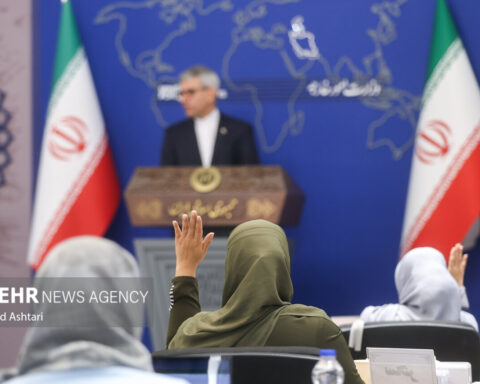
Iranian Parliament Speaker Mohammad Bagher Ghalibaf made the shift explicit on March 29. “Our men are waiting for the arrival of the American soldiers on the ground to set them on fire and punish their regional allies once and for all,” Ghalibaf said, according to the Times of Israel and Haaretz. The phrase “punish their regional allies” represents a direct escalation from previous Iranian rhetoric, which targeted only U.S. forces stationed on Gulf territory.
CSIS analysis from late March 2026 documented that nearly 70 percent of Saudi-intercepted Iranian projectiles were aimed at the oil-rich Eastern Province or specific petroleum facilities, including the Shaybah Oil Field and the Samref refinery. Iran has demonstrated both the capability and the willingness to target Saudi economic infrastructure. What it has lacked is the political justification to escalate from striking American bases to deliberately destroying Saudi oil output.
Co-belligerent status provides that justification. Under international humanitarian law, a co-belligerent’s economic infrastructure becomes a legitimate military target. Iran could argue — with legal cover that does not currently exist — that destroying Saudi oil facilities serves a military purpose: degrading the economic capacity of a state actively participating in the invasion. The distinction between striking a U.S. base on Saudi soil and striking Ras Tanura or Abqaiq narrows to nothing once Saudi Arabia crosses from host to staging ground.
“Our men are waiting for the arrival of the American soldiers on the ground to set them on fire and punish their regional allies once and for all.”
Mohammad Bagher Ghalibaf, Iranian Parliament Speaker, March 29, 2026 (Times of Israel)
Goldman Sachs warned in late March that Brent crude could exceed $147 per barrel if the conflict expands to target Gulf oil infrastructure directly, according to Bloomberg. Brent already trades at $112.57 per barrel, and the Dallas Federal Reserve has estimated that a full closure of the Strait of Hormuz would remove approximately 20 percent of global oil supply. Saudi Arabia’s revenue windfall from high oil prices depends on its production facilities remaining intact. Co-belligerency puts those facilities in the crosshairs with legal rather than merely practical justification.
Can MBS Refuse Staging Rights Without Losing the Shield?
This is the core of the trap. Crown Prince Mohammed bin Salman has maintained non-belligerency at extraordinary cost — absorbing strikes, restraining his air force, and accepting repeated attacks on the installations that underpin Vision 2030. He has done so because the alternative, entering the war as a combatant, carries risks that dwarf anything Iran has inflicted so far. But the defensive umbrella that allows Saudi Arabia to absorb those strikes without catastrophic loss is entirely American.
Saudi Arabia depends on U.S.-operated THAAD and Patriot batteries for ballistic missile defense. The multinational air shield protecting the Kingdom relies on American AWACS for early warning and American tankers for combat air patrol endurance. On March 27, Iran struck Prince Sultan Air Base with six ballistic missiles and 29 drones, according to the Associated Press. The attack wounded at least 15 U.S. service members, damaged multiple KC-135 tankers, and effectively destroyed an E-3 Sentry AWACS aircraft, according to Air and Space Forces Magazine and the Aviationist. The strike was part of a broader Iranian campaign to exhaust Saudi interceptor stockpiles faster than American factories can replace them.
The destruction of that AWACS — one of the U.S. Air Force’s most valuable airborne command and control platforms — illustrates the fragility of the defensive architecture. Every component is American-owned, American-operated, and American-deployed at American discretion. If MBS refuses to permit ground staging, Washington has both the motive and the mechanism to withdraw defensive assets as coercion. The F-35 sale confirmed on March 30 deepens this trap further: 48 stealth fighters whose maintenance, software, and spare parts Washington controls create a thirty-year dependency that makes withdrawal threats permanent leverage.
Vice President JD Vance’s public statements have reinforced the asymmetry. As House of Saud previously reported on Vance’s posture toward Saudi territory, the administration’s language implies access without formal request — a presumption of staging rights rather than a negotiation over them. No public Saudi statement has addressed whether ground operations can stage from Saudi territory. The silence itself suggests Riyadh may not have been consulted.
The precedent from the 1990-91 Gulf War is instructive but misleading. Saudi Arabia hosted the full Coalition force for Operation Desert Storm, but it did so as a co-belligerent by choice, responding to Iraq’s invasion of Kuwait, a direct threat to Saudi sovereignty. The Kingdom declared its participation openly and accepted the legal and strategic consequences. The current situation is the inverse: MBS has deliberately avoided belligerent status, and the question is whether Washington will force it upon him regardless.
The Islamabad Track and the Disappearing Off-Ramp
On March 29, Saudi Foreign Minister Prince Faisal bin Farhan joined counterparts from Turkey, Egypt, and Pakistan in Islamabad for a quadrilateral meeting aimed at de-escalating the conflict, according to Bloomberg and Geo News. Pakistan has emerged as a key intermediary between Washington and Tehran, with Foreign Minister Ishaq Dar stating that “both Iran and the US have expressed their confidence in Pakistan” to broker direct negotiations.
The timing of the Islamabad meeting — one day after the Washington Post reported Pentagon ground war preparations — underscores the diplomatic contradiction Saudi Arabia faces. Prince Faisal sits at a table working toward ceasefire while the Pentagon prepares to launch a ground invasion from his country’s territory. If ground staging proceeds, Saudi Arabia’s diplomatic credibility as an honest broker evaporates. No mediator can host the invasion force and the peace talks simultaneously. That contradiction sharpened further when Trump claimed Iran accepted most of his 15-point deal framework, even as Iran’s counter-proposal demanded sovereignty over Hormuz and an end to hostilities against its proxy network — terms that would leave Saudi Arabia’s core security interests unaddressed.
The Islamabad quadrilateral track represents one of the few remaining diplomatic channels. Turkey’s Hakan Fidan, Egypt’s Badr Abdelatty, and Pakistan’s Ishaq Dar each bring separate relationships with Tehran that Washington lacks. Saudi Arabia’s participation signals that Riyadh still sees diplomacy as preferable to escalation. Ground staging would destroy that signal overnight.
Ghalibaf’s rhetoric connects directly to this diplomatic calculus. His explicit threat to “punish regional allies” is not just military posturing — it is a warning that co-belligerent status will be treated as such by Tehran. Iran’s information warfare apparatus, already broadcasting Saudi Arabia’s role as a base for American operations, would gain a decisive new argument: the Kingdom is not a victim of geography but a willing participant in invasion.
The contrast with Oman’s defiant neutrality sharpens the Saudi dilemma. Muscat has refused any military cooperation with the U.S. campaign, preserving its role as a diplomatic channel to Tehran. Saudi Arabia cannot replicate Oman’s position — it hosts too many American assets and has too much at stake economically — but Oman’s example demonstrates that Gulf states are not required to accept every American demand simply because they host military infrastructure.
The war’s trajectory over the next two weeks will determine whether Saudi Arabia’s 30-day restraint posture survives or is overridden by Washington’s ground war escalation. MBS has absorbed a month of Iranian bombardment to preserve non-belligerency. The question now is whether the Pentagon’s war plan will sacrifice that posture without Riyadh’s consent, and whether the Kingdom has any mechanism to prevent it.
The one-month balance sheet for Saudi Arabia already shows a country paying an enormous price for a war it did not start. The belligerency trap threatens to multiply that price by removing the legal distinction between hosting and fighting — a distinction that is, for now, the only thing standing between Saudi Arabia and a direct Iranian assault on the infrastructure that funds MBS’s entire national project.
FAQ
What is the difference between hosting defensive systems and co-belligerency under international law?
Hosting defensive systems such as THAAD and Patriot batteries falls within bilateral security agreements and qualifies as “qualified neutrality.” Co-belligerency begins when a state’s territory becomes an active staging ground for offensive operations crossing into enemy sovereign territory, a threshold defined by the 1907 Hague Convention V and elaborated in Chatham House’s 2024 framework on co-parties to armed conflict. The key legal test is whether the host state’s territory is integral to the offensive operation itself.
Has Saudi Arabia officially confirmed or denied that U.S. ground forces can stage from its territory?
As of March 30, 2026, Riyadh has issued no public statement addressing whether U.S. ground operations against Iran may stage from Saudi soil. This silence contrasts with the 1990 Gulf War, when King Fahd publicly invited Coalition forces and accepted belligerent status. The absence of any Saudi diplomatic communication on the question has led analysts to question whether Washington has sought formal permission or simply assumed access under existing base agreements.
Could Iran legally target Saudi oil infrastructure if the Kingdom becomes a co-belligerent?
Under international humanitarian law, the economic infrastructure of a co-belligerent can be classified as a legitimate military objective if it sustains the opposing war effort. Iran’s current strikes on Saudi soil target U.S. military installations specifically. Co-belligerent status would widen the legal aperture for strikes on refineries, desalination plants, and export terminals in the Eastern Province — targets Iran has the demonstrated missile capability to reach but has so far attacked only selectively.
What historical precedent exists for a host nation being forced into belligerency by an ally’s escalation?
The closest modern parallel is Belarus during Russia’s 2022 invasion of Ukraine. Minsk allowed Russian ground forces to stage from Belarusian territory, leading the European Union and NATO to treat Belarus as a de facto co-belligerent despite President Lukashenko’s insistence that Belarusian forces were not participating. Ukraine considered Belarusian territory a legitimate target zone, and the EU imposed the same sanctions regime on Minsk as on Moscow. Pakistan’s 2001 experience, when Islamabad permitted U.S. staging for operations in Afghanistan under intense pressure, offers another precedent where basing access was effectively non-negotiable.