TEHRAN — Iran is preparing a formal rejection of the Trump administration’s memorandum of understanding proposal, Reuters reported on June 2, citing diplomatic sources — a harder posture than the suspension of communications that the IRGC-affiliated Tasnim News Agency announced one day earlier. The shift from suspension to formal decline, if carried through, would close the 72-hour courier window through which Mojtaba Khamenei — the de facto holder of ratification authority over any agreement — was expected to respond to Trump’s May 31 amendments to the MOU text.
Reuters described Iran as having “toughened its negotiating stance amid mediation efforts.” Tasnim’s June 1 announcement used different language: it said Iran had “halted talks and the exchange of documents through mediators,” accusing Washington of “sending mixed signals and prolonging negotiations.” Tasnim’s vocabulary — suspension, halt, pause — implies a negotiating freeze with re-entry possible. Reuters’ framing implies the current MOU draft cannot be salvaged as written. On June 9, Iran confirmed the Reuters report by formally rejecting the proposal and filing Iran’s formal counteroffer through Oman — not through the Pakistan-brokered channel that had carried the original text.
Table of Contents
From Suspension to Formal Decline
The vocabulary difference between Tasnim on June 1 and Reuters on June 2 is not a matter of translation or editorial emphasis. Under Iran’s established diplomatic pattern, suspension and rejection serve different institutional functions. When the US withdrew from the JCPOA in May 2018, Iran did not reciprocate immediately. It waited a full year and then chose graduated compliance reduction in 60-day steps beginning May 2019 — explicitly preserving reversibility as a negotiating instrument. Suspension follows that template: Iran signals displeasure while keeping the framework intact.
Formal rejection is structurally different. It implies that a new text — not amendments to the existing one — would be required to resume negotiations. The existing MOU draft, with its 60-day ceasefire framework, Hormuz reopening provisions, and deferred nuclear timetable, would no longer serve as the baseline. Any resumption would start from a different document, potentially through a different mediating channel — which is precisely what Iran’s June 9 announcement, routing its counteroffer through Muscat rather than Islamabad, confirmed.
The counteroffer Iran routed through Muscat introduced a new sequencing problem: why Saudi Arabia cannot price a Hormuz reopening timeline — Iran now demands $12 billion in frozen-assets access as a Phase 1 precondition, before any Hormuz action, collapsing the two-phase framework that structured prior US-Iran talks.
No Iranian state outlet used the phrase “formal rejection” on June 2. Tasnim and IRNA described the position as “suspension” and “halted communications.” Iran’s foreign ministry spokesperson Esmaeil Baghaei told Iran International in late May that Iran “has not reached a final understanding with the United States despite continued exchanges of messages and will wait to see whether Washington actually ends what Tehran calls an illegal naval blockade.” Reuters’ diplomatic sourcing suggests the internal position had already moved past that measured framing, even as Iran’s public vocabulary preserved the option of claiming it was Washington, not Tehran, that had abandoned the framework.
The Middle East briefing 3,000+ readers start their day with.
One email. Every weekday morning. Free.
What the 72-Hour Courier Window Returned
Trump sent revised MOU amendments on May 31 via a courier chain that terminates at Mojtaba Khamenei’s underground bunker at an undisclosed location. The amendments demanded specifics on “how the US gets the material and the timing” for Iran’s stockpile of 60-percent enriched uranium — a Phase 2 issue folded into Phase 1 terms — and tightened the MOU’s Hormuz wording. A senior US official told Axios that Mojtaba is “literally in caves, not using email.” Communications travel by motorcycle courier. The structural minimum turnaround for any ratification-level decision is 72 hours. When Iran formally rejected the MOU on June 9, the IAEA’s admission that it cannot verify the 97-day-old 440.9 kg HEU stockpile meant Phase 2 nuclear talks had no verified baseline to begin from.
As of June 2 — Day 95 of the war — that window had elapsed without a positive response. The Reuters “preparing to decline” report represents the first public indication of what the courier chain returned. The amended text traveled from Washington through intermediaries to an underground facility, was reviewed by a man whom senior Iranian officials say they cannot contact directly, and came back as a negative.
On June 2, Secretary of State Rubio told the Senate Foreign Relations Committee that Mojtaba Khamenei is “increasingly engaging” through written intermediaries — the first public congressional confirmation of the courier architecture — and placed the PGSA toll among four named US conditions for reopening Hormuz. The full account of Rubio’s testimony and why it sharpens the counterparty problem Reuters reported that same day is here.
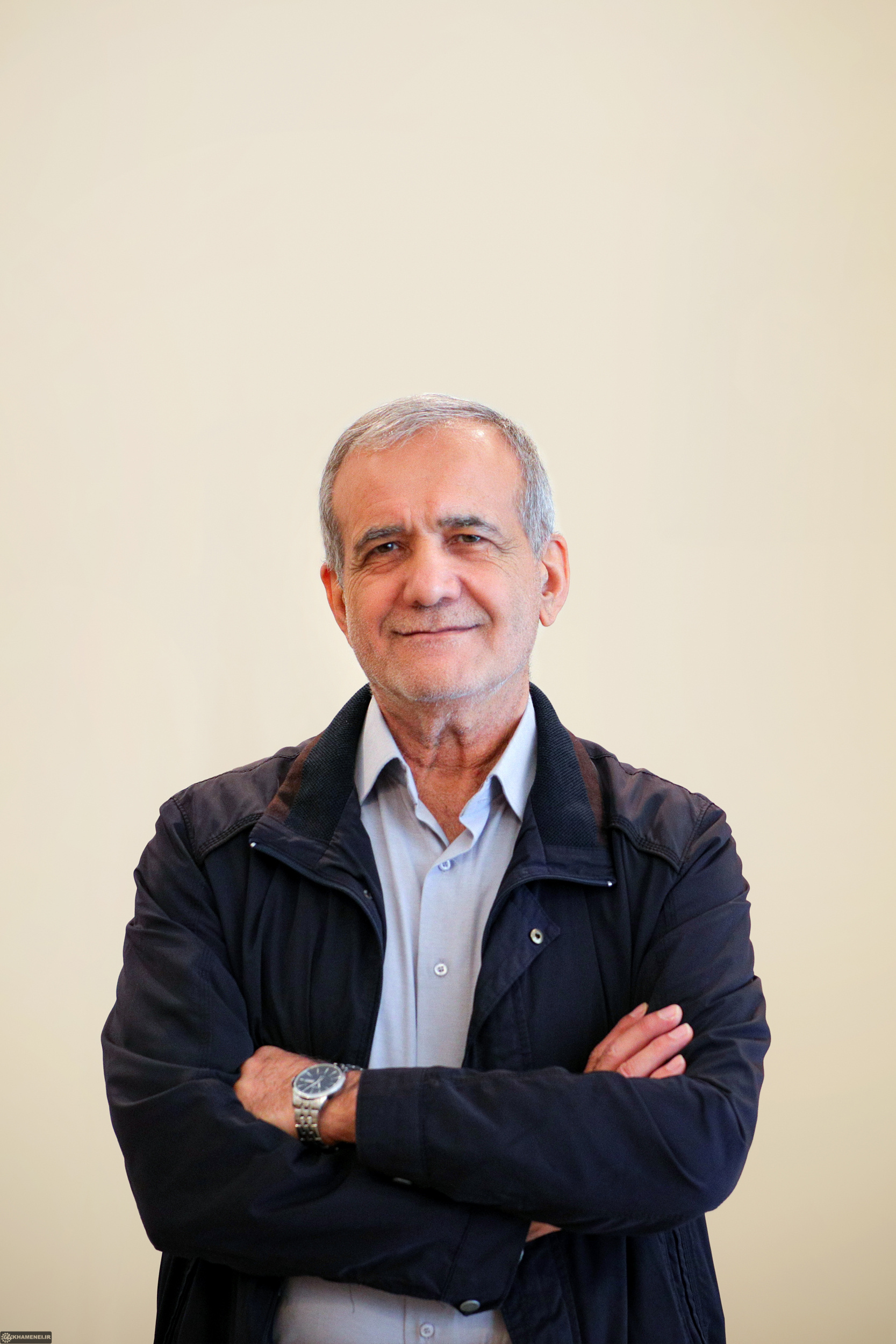
The courier system is not a wartime improvisation. President Masoud Pezeshkian stated on May 24, per IRNA, that “no decision will be made in the Islamic Republic of Iran outside the framework of the Supreme National Security Council and without the coordination and permission of the Supreme Leader.” The SNSC-to-Mojtaba ratification pathway is constitutionally mandated. The physical inaccessibility of the decision-maker — a feature of wartime security, not bureaucratic design — imposes a structural floor beneath any response time that makes rapid amendment cycles impossible. A courier-accessible leader can issue only binary signals: accept or reject. The 72-hour window did not produce an acceptance.

FM Abbas Araghchi had said on May 31, per IRNA, that “dialogue and an exchange of messages are ongoing” but that “it is not possible to judge until a clear conclusion is reached.” By June 2, that diplomatic framing had been overtaken by the Tasnim suspension and the Reuters rejection report. Araghchi’s carefully hedged language was no longer operative — if it ever reflected the actual distribution of authority within Iran’s wartime decision-making apparatus.
Which MOU Provisions Triggered the Shift?
Reuters’ June 2 report does not specify which MOU provisions triggered the shift from suspension to decline. The most detailed public accounting comes from Mehdi Khanalizadeh, a state television analyst who accompanied Iran’s negotiating team in Islamabad, who told Iran International on May 29 that the draft MOU “violates eight of the ten conditions approved by Mojtaba Khamenei and contradicts the Supreme National Security Council’s ceasefire statement.”
Iranian lawmaker Abolfazl Aboutorabi specified the categories the same day, telling Iran International that Mojtaba’s “red lines” regarding “the Strait of Hormuz, the nuclear issue and compensation demands had been violated in the talks.” The MOU’s proposed 60-day framework, per Axios (May 24), offers Hormuz reopening with no tolls, mine clearance over 30 days, shipping restoration, and a sanctions-lifting timetable. It defers nuclear enrichment specifics entirely to Phase 2.
Mojtaba’s conditions, as described by Khanalizadeh and Aboutorabi, demand Hormuz sovereignty recognition and a ban on US naval presence — terms structurally incompatible with the MOU’s “no tolls” framing. The MOU treats Hormuz reopening as a concession Iran would make in exchange for sanctions relief. Mojtaba’s conditions treat Hormuz as Iranian sovereign territory whose status is not subject to negotiation. The distance between these positions is not bridgeable by amendment; it requires a different conceptual framework. Trump’s May 31 amendments — which tightened nuclear terms and Hormuz wording — moved the draft further from that framework, not closer. The tightened nuclear language arrives at the same moment Washington’s own Arms Control Association has formally declared the US-Saudi 123 Agreement a “gilded sweetheart deal” that exempts Riyadh from the enrichment verification standards being demanded of Tehran — a documented double standard Iran holds in reserve as a diplomatic asset.
Lebanon — the stated trigger for the June 1 suspension — was not a new condition invented for the occasion. Iran’s March 2026 five-point counter-proposal already listed Lebanon as a structural precondition for any agreement. On June 1, Israeli PM Netanyahu stated that “the IDF will continue to operate in southern Lebanon as planned.” Defense Minister Katz was blunter: “There is no ceasefire in Lebanon.” Trump called Lebanon “a little glitch” in his ABC News interview the same day. Iran’s negotiating team treated the same issue as a condition tabled three months earlier in its own counter-proposal. The following morning, Israel struck Jabal Amel Hospital in Tyre, killing four, and Israeli airstrikes killed eight in Lebanon — the documented ground violations that gave Iran’s suspension notice its evidentiary foundation. The full record of what Trump declared, what the IDF did next, and how Iran assembled its case is here.
Baghaei framed the broader pattern in late May: “Negotiations have started amid severe suspicion and mistrust. The other party is constantly changing its views and putting forward new or contradictory demands.” PressTV reported on May 28 that Iran demanded “unconditional release of all frozen assets” before any agreement — a precondition absent from the current MOU draft and from any of Trump’s amendments to it.
| Date | Event | Source |
|---|---|---|
| May 29 | Khanalizadeh: draft violates 8 of 10 Mojtaba conditions | Iran International |
| May 31 | Trump sends MOU amendments via courier chain | Axios |
| May 31 | Araghchi: “dialogue ongoing,” cannot judge until conclusion | IRNA |
| June 1 | Tasnim: Iran suspends communications with US | Tasnim / CNBC |
| June 1 | Katz: “There is no ceasefire in Lebanon” | Al Jazeera / WaPo |
| June 1 | Trump: deal achievable “over the next week” | ABC News |
| June 2 | Reuters: Iran “preparing to decline” MOU | Reuters |
| June 2 | Brent surges 7%+, trades above $95/bbl | CNBC |
| June 7 | OPEC+ ministerial meeting | — |
| June 9 | Aramco $21.89B quarterly dividend payable | Aramco Q1 filing |
| June 9 | Iran formally rejects MOU, announces Omani counteroffer | CNBC / multiple |

Can Trump’s Timeline and Iran’s Rejection Both Be True?
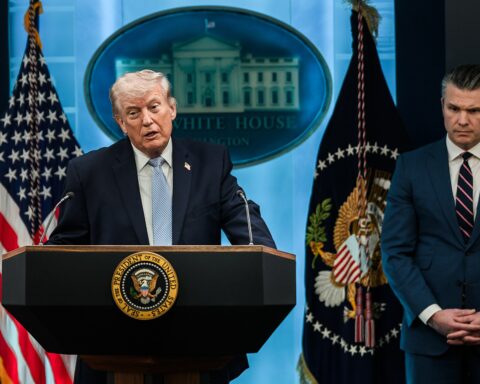
Trump told ABC News on June 1 that he believed an agreement was achievable “over the next week.” He posted on Truth Social the same day that “talks are continuing, at a rapid pace.” Both statements were made after Tasnim’s suspension announcement and — based on the administration’s own briefing patterns — potentially before Trump had been informed of the suspension itself.
The narrow reading under which both Trump’s timeline and Iran’s rejection posture could be simultaneously true requires that “deal in a week” refers to a new proposal rather than the current draft. Under this reading, Iran’s formal rejection would function as a counter-position — a clearing of the table before a different offer — rather than a termination of talks. That interpretation is plausible only if Washington was prepared to produce a fundamentally different MOU text within days, one that addressed the Hormuz sovereignty, nuclear, and compensation conditions that the current draft fails on eight of ten counts to meet.
There is no public evidence of such a text. Trump’s May 31 amendments tightened nuclear terms and Hormuz language — moving toward harder US positions, not toward the Iranian conditions that Khanalizadeh identified as violated. The pattern since April has been one in which each revision moves the draft further from the conditions required for Mojtaba’s approval. Iran’s June 9 counteroffer arrived through Omani mediators using new text — confirming that the current MOU was treated as a dead document requiring replacement, not revision — but it arrived seven days after Trump’s prediction, not within the week he described, and through a channel he had not anticipated.
Brent crude tracked the contradiction in real time on June 2. Prices surged more than 7 percent, trading above $95 per barrel on the Reuters report and broader escalation signals from Tehran, before partially retracing on Trump’s continued optimism. The market settled in the $94-97 range — a band that priced neither full war-escalation risk nor deal confidence, and that sat $11-17 below Saudi Arabia’s fiscal breakeven.
Saudi Arabia’s Fiscal Exposure
The gap between Iran’s rejection signal and whatever replaces the current MOU — counteroffer, silence, or escalation — lands directly on Saudi Arabia’s fiscal calendar. Brent at $94-97 on June 2 sits $11-17 below the kingdom’s PIF-inclusive breakeven of $108-111 per barrel, per Bloomberg Economics. At sustained levels, that gap represents approximately $153-180 million per day in government revenue shortfall.
Aramco’s quarterly dividend of $21.89 billion is payable June 9 — the same day Iran formally confirmed its rejection and announced the Omani-channel counteroffer. The payment exceeds Q1 free cash flow of $18.6 billion by approximately $3.3 billion, a coverage ratio of 0.85x that means Aramco is distributing more cash to the state than it generates. The dividend eligibility date was June 1, the day of the Tasnim suspension. The convergence of the fiscal and diplomatic calendars on June 9 — rejection and payment on the same date — compresses two exposure windows into a single 24-hour period. The credibility fracture that left Saudi Arabia unable to plan around either outcome — the outcome in which Trump was right, and the outcome in which Reuters was right — is examined in Trump Said Next Week. June 9 Said Otherwise.
OPEC+ must set production policy on June 7 against a negotiation whose direction is already visible. If Iran’s rejection holds — and it did — the prospect of Hormuz normalization recedes, which supports prices through sustained supply risk. But the mechanism works in both directions: sustained conflict suppresses demand expectations, depresses Gulf investment confidence, and raises the probability of a global slowdown in which oil demand contracts. Saudi Arabia’s Q1 deficit of SAR 125.7 billion already consumed 76 percent of the full-year SAR 165 billion deficit target in 90 days. What the June 7 meeting delivers — 188,000 b/d of pre-committed supply Saudi Arabia cannot produce at a Brent price it cannot survive — makes both failure modes worse simultaneously.
The Cairo Agreement — a prior US-Iran understanding reached in September 2025 — lasted 10 weeks before collapsing, establishing the fragility of any framework without IRGC institutional buy-in. A formal MOU rejection before signature is a harder outcome than Cairo’s post-signing collapse. Cairo fell apart after parties had committed to specific terms; the current MOU failed before reaching the signature stage. The difference matters for fiscal planning: Cairo’s collapse was a shock event with a defined starting price. A pre-signature rejection extends the period during which Saudi revenue shortfall accumulates against a budget designed for higher oil prices and a shorter war. On the same day as the formal rejection preparations, the IRGC struck the MSC Sariska V container ship near Umm Qasr — the first cruise missile attack on a commercial vessel inside the upper Gulf, reinforcing the military pressure track running parallel to diplomacy.
Iran’s signalling architecture extended beyond the MOU track. At Hajj 2026 — which closed the same week Iran’s formal rejection landed — Tehran sent 30,000 of 87,550 allocated pilgrims and cited the “wartime situation” as justification, deploying the war’s framing inside the institution Saudi Arabia administers as custodian of Islam’s holiest sites. The MOU negotiations and the Hajj reduction operated on separate tracks toward the same audience: 1.7 million pilgrims, the international press, and Riyadh.
| Metric | Figure | Source |
|---|---|---|
| Brent crude (June 2, post-retrace) | $94-97/bbl | CNBC |
| PIF-inclusive fiscal breakeven | $108-111/bbl | Bloomberg Economics |
| Below-breakeven gap | $11-17/bbl | Calculated |
| Daily revenue shortfall at gap | $153-180M | Calculated |
| Aramco Q2 dividend (payable June 9) | $21.89B | Aramco Q1 filing |
| Q1 free cash flow | $18.6B | Aramco Q1 results |
| Dividend-to-FCF coverage | 0.85x | Calculated |
| Q1 deficit as share of full-year target | 76% | Saudi MoF |
| Day of war | 95 | — |
Frequently Asked Questions
What is the difference between the MOU “suspension” and the “formal rejection” Reuters reported?
Suspension, as Tasnim framed it on June 1, keeps the existing MOU text intact as a negotiating baseline — talks are paused but the document remains the framework for any resumed discussion. Formal rejection, which Reuters reported Iran was preparing on June 2 and which Iran confirmed on June 9, treats the current draft as beyond repair. The practical difference is whether future negotiations resume from the existing text with amendments or restart from a new document through different mediators. Iran’s June 9 announcement specified that its counteroffer would travel through Omani mediators — not through the Pakistan-brokered channel that carried the original MOU text — confirming that the rejection included a change in diplomatic infrastructure, not just diplomatic posture. The Islamabad track, where Khanalizadeh accompanied the negotiating team, is functionally closed as a venue for the current process.
Why does Mojtaba Khamenei’s approval matter more than the elected government’s position?
Iran’s constitutional structure routes all national security decisions through the Supreme National Security Council, which requires the Supreme Leader’s coordination and permission — a process Pezeshkian publicly confirmed on May 24 (IRNA). Mojtaba Khamenei holds de facto authority over this ratification chain, operating from an underground bunker via motorcycle courier with a structural minimum 72-hour response time. Saudi Arabia’s diplomatic access terminates at the foreign minister level: four Bin Farhan-Araghchi meetings and one MBS-Pezeshkian Eid call — described by Saudi readouts as “purely bilateral” — have produced no channel to the SNSC or to Mojtaba. Beijing’s prior NSA-tier track through Ali Shamkhani was extinguished during IRGC restructuring. No external government has demonstrated the ability to communicate with Mojtaba directly; the courier system that frustrates Washington’s timeline blocks every other capital’s access to the actual decision-maker as well.
What happens to the MOU framework if Iran formally rejects the current draft?
A formal rejection resets the negotiation to a pre-draft state. Unlike the Cairo Agreement (September-November 2025), which collapsed after parties had signed, a pre-signature rejection means no baseline text exists for future talks. A new document must be drafted, transmitted through a mediating channel, delivered through the courier system to Mojtaba’s bunker, and returned — a process whose minimum timeline is measured in weeks, not days. The MOU’s proposed 60-day ceasefire window — including Hormuz reopening, mine clearance, and shipping restoration — cannot begin without a signed framework. Oman’s prior involvement in Hormuz co-management negotiations (the May 13 legal drafting meeting in Muscat, confirmed by Bagheri Kani to PressTV on May 27) suggests the Omani channel has institutional depth but also its own processing speed: that framework took three months to reach a preliminary stage.
Has any Iranian official used the phrase “formal rejection”?
No. As of June 2, all Iranian state media outlets — Tasnim, IRNA, PressTV — used “suspension,” “halt,” and “paused communications.” The phrase “preparing to decline” originated with Reuters’ unnamed diplomatic sources, not with any Iranian government statement. This vocabulary gap follows Iran’s institutional pattern of maintaining diplomatic flexibility in public while communicating harder positions through back-channels. The pattern mirrors the JCPOA period, when Tehran maintained the legal position of “partial compliance” even after operationally exceeding all enrichment caps. When Iran formally rejected on June 9, it attached a counteroffer — framing the move as a position shift with a new proposal, not a door-closing refusal. Iran gains nothing by using the hardest available language in public; “suspension” preserves the option of blaming Washington for any permanent breakdown. The parallel precondition Iran was simultaneously deploying — the June 4 Lebanon ceasefire’s Hezbollah signature gap — is examined in Hezbollah Did Not Sign the Ceasefire Iran Required. The subsequent escalation — Qassem’s explicit public rejection of the June 4 ceasefire as “surrender,” and how it structurally locked Iran’s June 9 MOU position — is in Hezbollah Rejected the Ceasefire Out Loud. The IRGC Needed It To.. The institutional context that made Iran’s June 9 position legally actionable at the Board level — and put Saudi Arabia’s vote at the centre of a US-Iran contradiction — is examined in Washington Said Nuclear Talks Were Close. Then It Drafted the Censure.