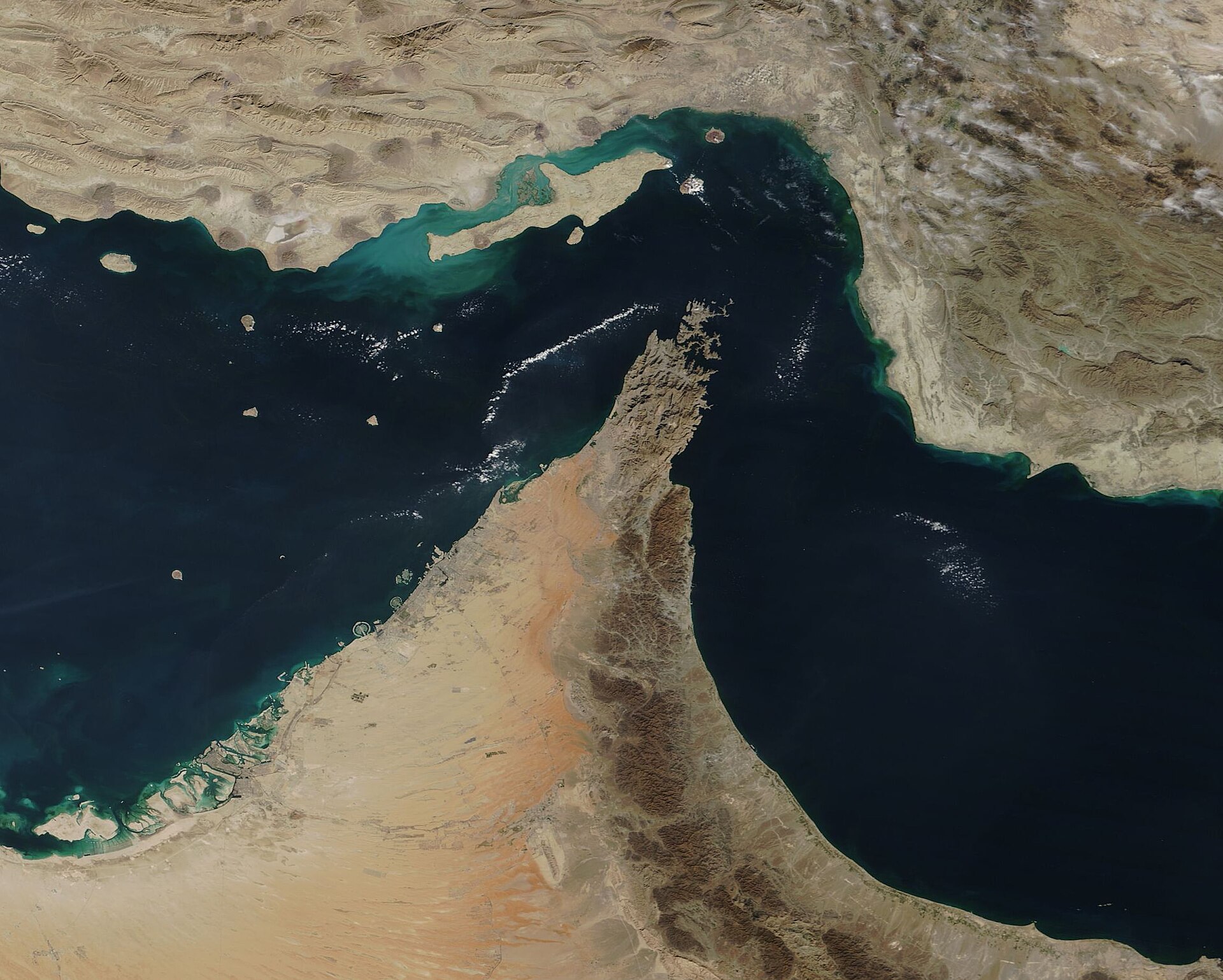

WASHINGTON — Iran suspended all mediator-channel negotiations with the United States, fired two ballistic missiles at an American air base in Kuwait, and announced through its IRGC-affiliated Tasnim news agency that it had “resolved to completely block the Strait of Hormuz and activate other fronts including the Bab al-Mandeb Strait” — all on June 1, within the same 18-hour window, while Brent crude surged 6.7 percent to $97.23 a barrel. Every major outlet framed this as Iran pressuring Donald Trump for better terms on the unsigned memorandum of understanding: CNBC led with his remark that he “couldn’t care less,” NBC cast it as Tehran walking away from the table, and Al Jazeera covered the Lebanon ceasefire linkage without asking who the intended audience actually was.
The audience was not the White House, where Trump contradicted himself three times in twelve hours on whether negotiations had ended. It was the four Republican senators — Ted Cruz, Tom Cotton, Roger Wicker, Lindsey Graham — whose vocal opposition has made the MOU politically radioactive, and whose obstructionist position Iran is now pricing in barrels, missiles, and closed shipping lanes so that energy markets, Gulf allies, and American voters can see what no-deal costs before the Senate ever gets to vote on anything.
Table of Contents
- What Did Iran Do on June 1?
- The Senate Bloc Iran Identified as the Bottleneck
- Why Would Iran Target Legislators Who Cannot Block a Deal?
- The Cotton Letter Runs in Reverse
- Trump’s Twelve-Hour Contradiction
- How Does the Hormuz Threat Make the Senate’s Position Expensive?
- The Fiscal Hostage Saudi Arabia Cannot Escape
- What Happens If the Senate Bloc Succeeds?
- Frequently Asked Questions
What Did Iran Do on June 1?
Iran executed three simultaneous escalations on June 1, 2026: it suspended all mediator-channel MOU negotiations citing Lebanon ceasefire violations, fired two ballistic missiles at Ali Al-Salem Air Base in Kuwait (both intercepted by CENTCOM with no American injuries), and announced through Tasnim that the “resistance front” would completely close the Strait of Hormuz and activate the Bab al-Mandab Strait.
The House of Saud Daily Briefing
Saudi Arabia's news in 3 minutes, every morning. Free. See today's issue
The negotiation suspension came through a formal statement from Iran’s negotiating team, published by Tasnim and picked up by Euronews: “Considering that Lebanon was one of the preconditions for the ceasefire and that this ceasefire has now been violated on all fronts, including Lebanon, the Iranian negotiating team is suspending dialogues and exchange of texts through mediators.” The pretext was Lebanon, but the timing was precise — Iran had submitted new counter-amendments to the draft MOU just one day earlier, on May 31, and the two sides were already negotiating what amounted to two different deals, with Tasnim publishing a competing draft “under Iran’s management” that bore little resemblance to the Axios-sourced American text. The suspension closed the Pakistan courier channel that had replaced Oman as the intermediary, cutting the last active communication line between Washington and Tehran’s MOU negotiating apparatus.
The military strike was calibrated to demonstrate capability without triggering a full American response. CENTCOM confirmed it intercepted two Iranian ballistic missiles targeting Ali Al-Salem at approximately 11 p.m. ET on May 31 (June 1 local time in Kuwait), with no American personnel injured — a detail that matters because the CENTCOM strikes on Qeshm and Goruk that hit Iranian communications infrastructure on Sirik Island had been cited by the IRGC Aerospace Force as the casus belli. Kuwait’s Foreign Ministry called the strike a “dangerous escalation” and asserted its right to hold Iran “fully responsible for these heinous aggressions,” but the IRGC’s framing — retaliatory, defensive, proportionate — ensured the strike fell below the threshold of an act that would compel an American military response beyond the intercept itself.
Forty-eight hours later, Iran would return to Kuwait with drones rather than ballistic missiles, striking Terminal 1 at Kuwait International Airport while commercial flights were under way. Where the June 1 strike targeted a US air base, the June 3 strike hit the civilian departure hall — a threshold the conflict had not crossed before and that Kuwait’s MoD called “criminal Iranian aggression.” Kuwait’s response went beyond the military domain: within hours, Kuwait’s Foreign Ministry summoned the Iranian Chargé d’Affaires and declared two diplomats persona non grata, closing Iran’s cultural mission and giving the envoys 24 hours to leave — the sharpest GCC diplomatic rupture with Tehran since the war began.
“The ceasefire between the Islamic Republic of Iran and the United States is unequivocally a ceasefire on all fronts, including in Lebanon. Its violation on one front is a violation of the ceasefire on all fronts. The US and Israel are responsible for the consequences of any violation.”
Abbas Araghchi, Iranian Foreign Minister, June 1, 2026
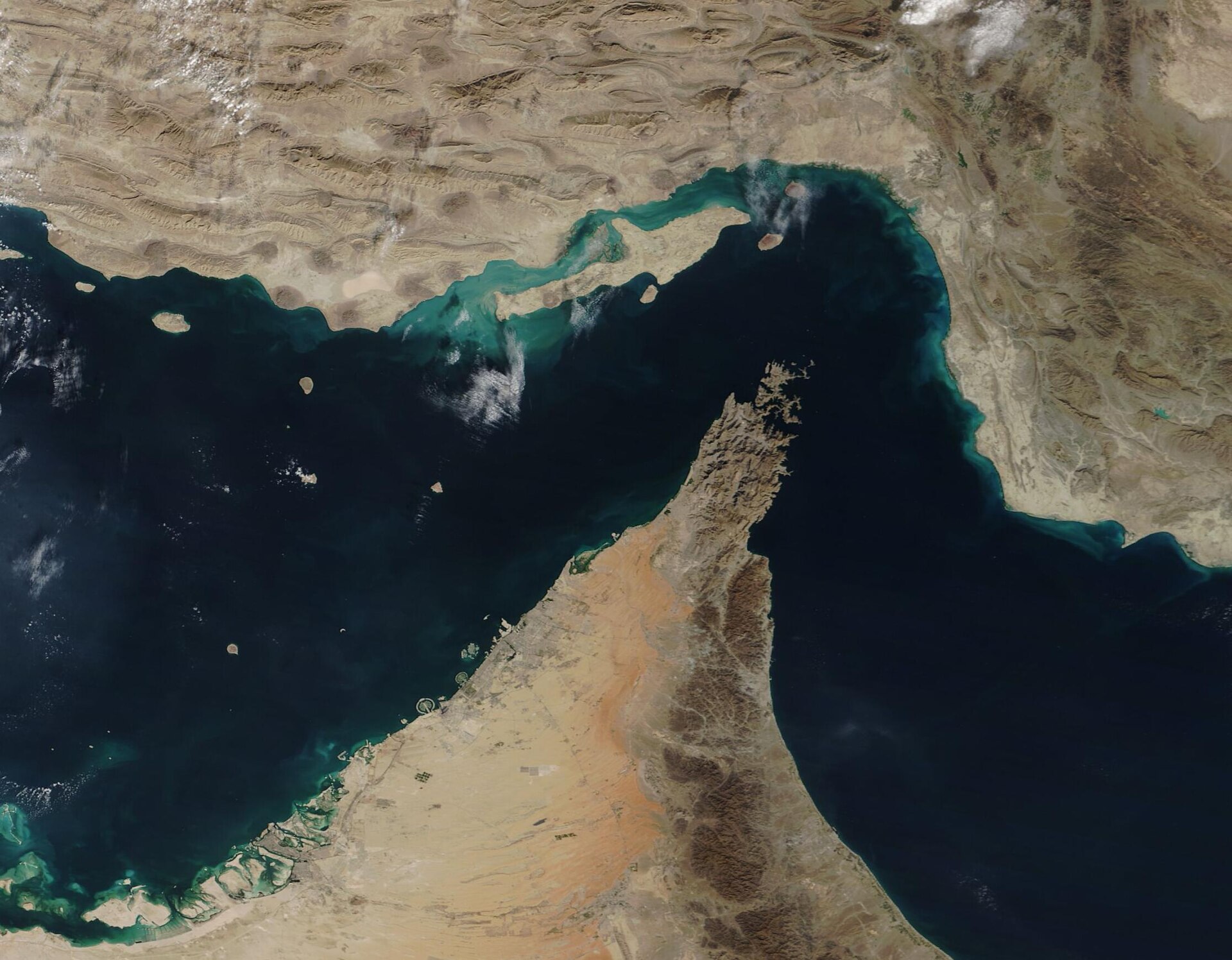
The Hormuz threat extended the pressure geometry beyond anything Iran had stated publicly since the February 28 closure. The Tasnim statement — “the resistance front and Iran have resolved to completely block the Strait of Hormuz and activate other fronts including the Bab al-Mandeb Strait” — named Bab al-Mandab for the first time, a reference to the chokepoint at Yemen’s southern coast through which Red Sea traffic flows and through which Saudi Arabia had been rerouting exports to circumvent the Hormuz closure. Iran had already eliminated Saudi Arabia’s Yanbu redirect as a viable escape route; the June 1 statement formalized the threat across both chokepoints simultaneously, compressing the entire Gulf-to-Mediterranean export corridor into a single Iranian veto.
The Senate Bloc Iran Identified as the Bottleneck
The four senators whose opposition has shaped the MOU’s political viability are not marginal backbenchers — they chair or sit on the committees that oversee every dimension of the deal. Roger Wicker chairs the Senate Armed Services Committee and called the rumored 60-day ceasefire “a disaster.” Tom Cotton chairs the Senate Intelligence Committee and has demanded any lasting agreement undergo full Senate treaty ratification, requiring a 67-vote threshold no Iran deal has ever cleared. Lindsey Graham declared the emerging terms would “shift the balance of power in the region and be a nightmare for Israel.” Ted Cruz stated he was “deeply concerned about what we are hearing about an Iran ‘deal,’ being pushed by some voices in the administration.”
| Senator | Committee Role | Stated Position | Source |
|---|---|---|---|
| Roger Wicker | Armed Services Chair | 60-day ceasefire is “a disaster” | The Hill |
| Tom Cotton | Intelligence Chair | Full treaty ratification required (67 votes) | Fox News |
| Lindsey Graham | Judiciary / Appropriations | “Nightmare for Israel” / “shift the balance of power” | Times of Israel |
| Ted Cruz | Foreign Relations | “Deeply concerned” about deal terms | Yahoo News |
Their procedural tools are limited, and they know it. The Hill reported in May that Wicker, Graham, and Cruz would find it difficult to actually stop Trump from accepting a deal, since an agreement reached in the context of an ongoing military operation is not subject to a Senate blocking vote in the way the JCPOA was. Cotton and Graham have invoked INARA — the Iran Nuclear Agreement Review Act, passed with bipartisan support in 2015 — which guarantees Congress a 30-60 day review period for any nuclear agreement, but INARA’s applicability to an MOU that defers nuclear questions to a later phase is legally untested. What the bloc possesses is not a veto but a megaphone: the ability to make the domestic political cost of signing visible to Trump’s base, to Israeli government channels, and to the media ecosystem that frames Trump’s dealmaking brand.
This is the bottleneck that was already slowing the MOU before June 1. JD Vance told CBS the two sides were “very close, but not there yet” — but the gap was not between Washington and Tehran on text; it was between the White House, which wanted a signable document, and a Senate bloc that had already defined any achievable deal as capitulation. Iran did not need classified intelligence to identify this dynamic — it was playing out in Fox News interviews and Jewish Insider exclusives and Cotton’s own social media feed, where he shared Graham’s “nightmare for Israel” post to an audience that included Iranian state media monitors who had been cataloguing every Senate statement since the MOU talks began.
Why Would Iran Target Legislators Who Cannot Block a Deal?
Iran targeted the Senate bloc because its pressure on Trump is political, not procedural — the senators are making any deal appear weak to his base, and Iran is counter-demonstrating that no-deal is catastrophic, which is why the June 1 triple escalation compressed the price of inaction into a single news cycle visible to the senators’ constituents, the energy market, and Gulf defense establishments simultaneously. The logic is not complicated once you accept the premise that Iran reads American domestic politics as carefully as it reads American military deployments — and the evidence for this premise is extensive. The IRGC operates under a documented “horizontal escalation” doctrine, studied by the Washington Institute, in which Tehran applies pressure across asymmetric and multi-domain vectors specifically calibrated to compress an adversary’s decision space. The June 1 combination — diplomatic suspension to dominate the front-page cycle, ballistic missiles to demonstrate that the ceasefire is functionally dead, Hormuz and Bab al-Mandab threats to move oil prices in real time — maps onto this doctrine with textbook precision, but the target is not the adversary’s military command; it is the adversary’s domestic political coalition.
Consider what the senators’ constituents saw on June 1: Iran walked away from talks, Iran fired missiles at an American base hosting thousands of service members, Iran threatened to shut the world’s most important oil chokepoint permanently, and gasoline prices will reflect the Brent surge within 48-72 hours. The senators’ position — that any deal is too soft, that Iran should face maximum pressure, that the MOU is a “disaster” and a “nightmare” — now has a price tag attached, and the price is not theoretical; it is WTI at $94.20 a barrel after a 7.8 percent single-session surge, a PGSA toll collecting $2 million per Hormuz transit despite its May 28 OFAC designation under Executive Order 13224, and a CENTCOM intercept log that grows longer each week the impasse continues.
When Trump terminated all oil sanctions waivers and designated the IRGC a Foreign Terrorist Organization in May 2019, Iran did not respond through diplomatic channels — it attacked tankers at Fujairah and in the Gulf of Oman, using what the Foundation for Defense of Democracies documented as “graduated escalation” to demonstrate bargaining position rather than to trigger full war. The June 1, 2026 escalation follows the identical structure: military action, economic pressure, and diplomatic withdrawal arriving simultaneously, calibrated to produce maximum political visibility at minimum military risk — CENTCOM intercepted both missiles, no Americans were hurt, the oil price moved anyway.
The Cotton Letter Runs in Reverse
In March 2015, Tom Cotton organized 47 Republican senators to sign an open letter addressed directly to the leaders of Iran, warning that any executive agreement could be “revoked” by the next president with “the stroke of a pen.” The letter was unprecedented — sitting senators communicating with a foreign adversary to undermine their own government’s ongoing nuclear negotiations — and it established a principle that Iran has since internalized: the US Senate is a structural participant in any Iran deal, whether or not it holds a formal vote.
The 2026 variant is structurally different in ways that favor Iran’s position. In 2015, Cotton was undermining a Democratic president’s deal, which gave the letter a partisan logic that made it politically sustainable within the Republican coalition. In 2026, Cotton, Wicker, Graham, and Cruz are undermining their own party’s president’s deal, which splits the Republican base between Trump loyalists who want a win and national security hawks who define any achievable agreement as surrender. Iran does not need to write a letter to exploit this fracture; it needs only to make the fracture’s cost visible, which is precisely what the triple escalation on June 1 accomplished.
The deeper lesson Iran drew from the Cotton letter was not about procedure but about audience. The letter taught Tehran that American domestic opposition is not a sideshow to watch but a variable to exploit — that the Senate’s public posture can be used to generate negotiating pressure that Iran could never build through the formal diplomatic track alone. Mojtaba Khamenei’s constitutional ratification authority means Iran’s internal decision-making runs through a single node in an underground bunker, but Iran’s external signaling runs through every open channel simultaneously: Tasnim, Araghchi’s public declarations, IRGC military action, and the oil futures market. The June 1 triple move was not a negotiating tactic aimed at the other side of the table — it was a broadcast aimed at the gallery, and the gallery includes every senator’s constituent filling up a gas tank, every portfolio manager watching crude futures after hours, and every Gulf defense minister counting remaining interceptor rounds.
Trump’s Twelve-Hour Contradiction
The strongest evidence that Trump is not the blocking agent in the MOU negotiation is Trump himself — specifically, the twelve hours on June 1 during which he produced three mutually incompatible public statements about the status of Iran talks, a performance that Iran and the Senate bloc could watch in real time and that revealed a president reacting to events rather than directing them. First, Trump told CNBC’s Eamon Javers by phone that he “couldn’t care less” about Iran negotiations ending, adding that the discussions had “started to get very boring” and that Iran “was stalling for time.” Hours later, he posted on Truth Social that talks with Iran were “continuing, at a rapid pace, with the Islamic Republic of Iran” — a direct contradiction of his own televised remarks. Then, in an interview with NBC, he offered a third position: “I think we’ve been talking too much,” and he would be “OK” with Iran going radio silent. He had not been briefed on Iran’s MOU suspension before making any of these statements, a communications gap between the White House and the negotiating track that ran deeper than the contradictions themselves suggested.
“I couldn’t care less… I thought it was getting very boring, and I thought that they were stalling for time.”
Donald Trump, CNBC phone interview, June 1, 2026
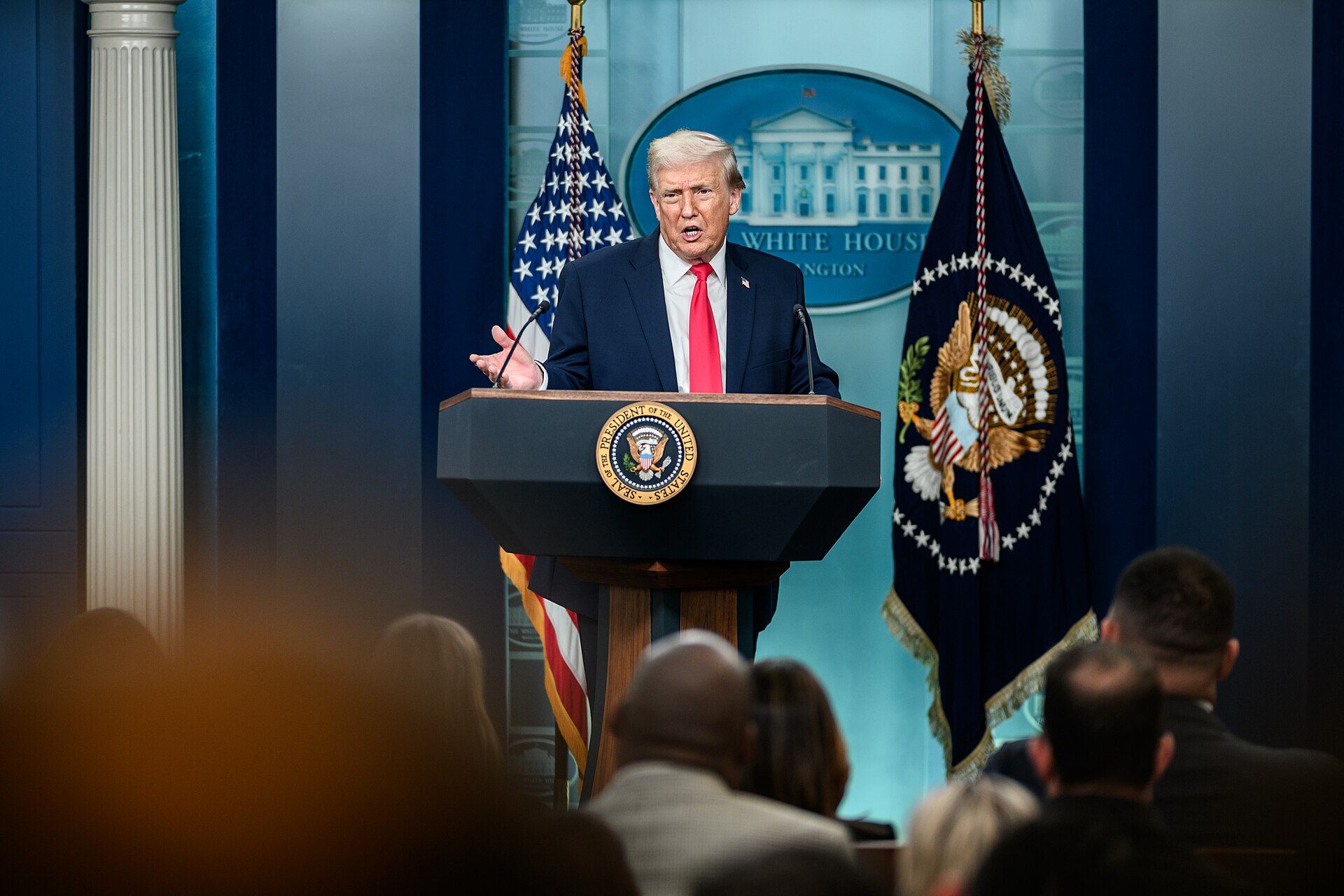
This sequence is not incoherence for its own sake — it is the behavior of a president whose deal is being shaped by forces he cannot publicly acknowledge. The Senate bloc has made the political cost of signing visible (Graham’s “nightmare for Israel” is the dominant frame in Israeli media and in the hawkish outlets Trump’s base consumes), which means Trump cannot enthusiastically champion the MOU without alienating the national security wing of his own party. But he also cannot walk away without surrendering the dealmaker brand that is the core of his political identity. The result is a president who oscillates between “I don’t care” and “talks continuing at rapid pace” within the same news cycle — a pattern that tells Iran exactly where the real pressure point sits.
Trump also posted on Truth Social that “all shooting will stop” between Israel and Hezbollah and that no Israeli troops would go to Beirut — a promise that directly addressed Iran’s stated precondition for resuming talks but that he has no demonstrated mechanism to enforce, given Israel’s operational tempo in southern Lebanon. The promise was directed at the domestic narrative, an attempt to preempt the accusation that his MOU had collapsed by announcing progress on the very precondition Iran cited for the suspension. Whether Israel complies is not within Trump’s gift, and Iran knows it — which is why the Lebanon linkage functions as a precondition and not a negotiating point.
How Does the Hormuz Threat Make the Senate’s Position Expensive?
The Hormuz threat translated the Senate bloc’s obstruction into a dollar figure: WTI rose 7.8 percent to $94.20 a barrel on June 1 while the PGSA toll system continued extracting $2 million per transit despite OFAC sanctions, meaning every day without a signed MOU has both a market price and a per-shipment cost that compounds regardless of what happens in Washington.
The oil price movement was not a market overreaction — it was the market correctly pricing the information that Iran had simultaneously closed the diplomatic channel, demonstrated continued military capability, and explicitly threatened to extend the blockade from Hormuz to Bab al-Mandab, the Red Sea chokepoint through which Saudi Arabia had been rerouting exports to circumvent the strait closure. The inclusion of Bab al-Mandab in the Tasnim statement told the market that the two chokepoints are a single Iranian pressure system, not separate theaters — and that the Yanbu redirect Saudi Arabia has relied on since March is now inside the threat perimeter.
| Indicator | June 1 Value | Change | Source |
|---|---|---|---|
| Brent crude | $97.23/bbl | +6.7% (single session) | CNBC |
| WTI crude | $94.20/bbl | +7.8% (single session) | CNBC |
| PGSA toll per transit | $2 million (yuan/BTC) | Unchanged | Multiple |
| PGSA sanctions status | OFAC SDN (EO 13224) | Designated May 28 | Steptoe/OFAC |
| MOU negotiation status | Suspended | Counter-amendments May 31; suspended June 1 | Tasnim |
| Pakistan courier channel | Closed | Suspended with talks | CBS News |
The PGSA — Iran’s Persian Gulf Shipping Authority, collecting tolls from every vessel transiting Hormuz since the closure — was designated under OFAC’s SDN list on May 28. The designation created what compliance lawyers at Steptoe described as a binary: any entity touching the PGSA toll system risks secondary sanctions exposure, which means Western shipping companies must either avoid Hormuz entirely (impossible for most Gulf-bound trade) or route through a sanctions-evasion structure that invites enforcement action. Iran’s gray fleet — paying the toll in yuan or bitcoin — operates outside this binary, and the paradox is that the OFAC designation strengthened Iran’s toll architecture by driving compliant shippers out and concentrating transit among entities already built for sanctions circumvention.
For the Senate bloc, the arithmetic is uncomfortable. The draft MOU that Wicker called “a disaster” and Graham called “a nightmare for Israel” included terms for reopening Hormuz — terms that, whatever their flaws, would have removed the PGSA toll and brought crude toward the $80 range that Wood Mackenzie projects under a “quick peace” scenario. The bloc’s opposition has not produced better terms; it has produced a 94-day impasse during which Iran has collected tolls, fired missiles at American personnel, and demonstrated that it can raise the global oil price by several dollars with a single press release through its own news agency. The senators’ constituents — particularly in energy-producing and military-dependent states like Texas (Cruz), South Carolina (Graham), Mississippi (Wicker), and Arkansas (Cotton) — will see the June 1 price surge reflected in domestic gasoline costs within 48-72 hours, a timeline shorter than any legislative calendar and more politically immediate than any INARA review period.
The Fiscal Hostage Saudi Arabia Cannot Escape
Saudi Arabia occupies the worst position in Iran’s Senate-targeting strategy: it bears the full fiscal cost of the impasse, has no channel to the Senate bloc, and has been excluded from every negotiating track that could resolve it. The kingdom’s fiscal breakeven sits at $108-111 per barrel when PIF spending commitments are included, and even the June 1 Brent surge — caused by the very escalation that makes a deal less likely — leaves Saudi Arabia $11-14 per barrel below the threshold that keeps its state-finance loop solvent.
The kingdom’s exclusion from the MOU process is structural, not diplomatic. Araghchi’s June 1 declaration that the ceasefire is “unequivocally a ceasefire on all fronts” treated the conflict as bilateral — Iran versus the United States — rendering Saudi Arabia, which has fired more PAC-3 interceptors than any country in the current war, invisible in its own defense. Saudi Foreign Minister Faisal bin Farhan’s May 20 statement calling for the restoration of “Hormuz to the state prior to February 28, 2026” was the kingdom’s last public position on the strait, and the Saudi MOFA has been silent for more than ten days since. France has been carrying the Hormuz message that Riyadh cannot deliver itself — MBS called Macron on May 31 to discuss “maritime navigation security and freedom” because the kingdom has no direct channel to Tehran that reaches above the foreign minister level, and no channel at all to the man in the bunker whose signature the MOU requires.
The June 1 escalation compounded this isolation on every axis. With the MOU text traveling by motorcycle courier to Mojtaba Khamenei’s underground facility before the suspension and the Pakistan intermediary channel now closed, Saudi Arabia’s fiscal position deteriorates along a timeline it cannot influence and through a process it cannot access. Aramco’s $21.89 billion quarterly dividend is payable June 9, with eligibility locked as of June 1 — the day Iran chose for its triple escalation. PIF’s liquid cash sits at $15 billion, a six-year low, and the National Debt Management Center has drawn down roughly 90 percent of its pre-funded borrowing capacity. The kingdom’s revenue improves only when crude rises, and crude rises only when escalation intensifies — a dynamic in which Saudi Arabia profits from the very instability that threatens its security, and cannot afford the peace it is asking for.
What Happens If the Senate Bloc Succeeds?
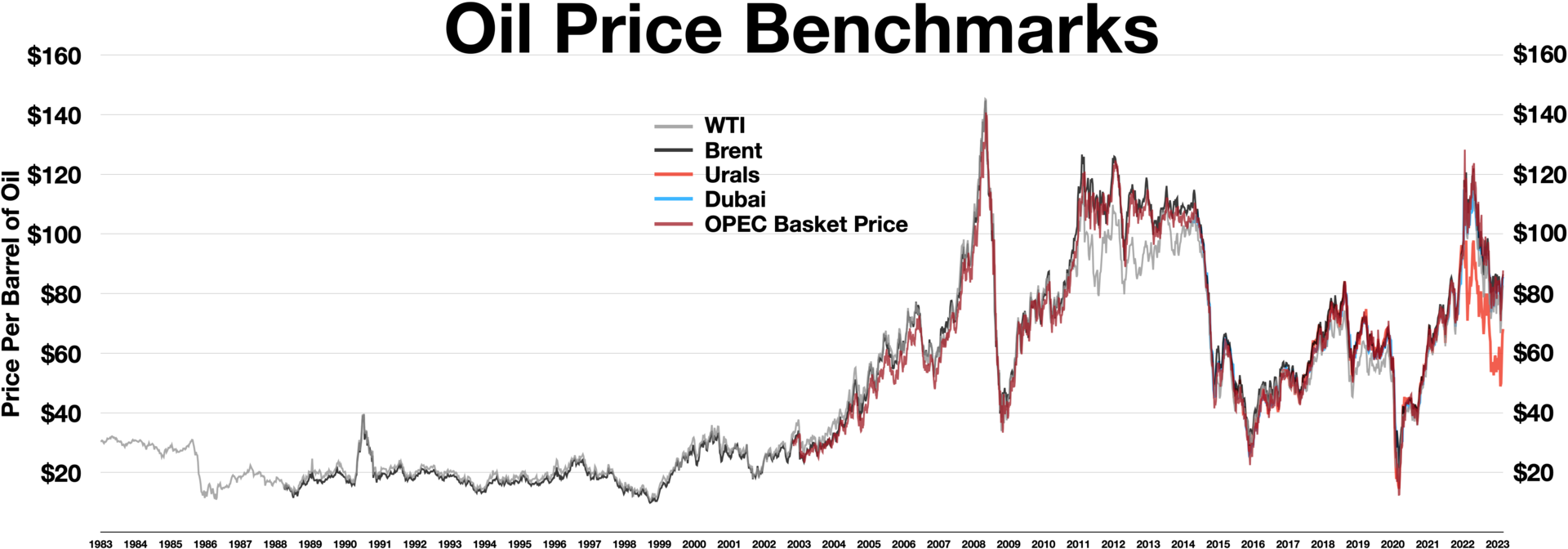
If the Cruz-Cotton-Wicker-Graham bloc makes the MOU politically unsignable, the result is not better terms — it is no deal, no Hormuz reopening, continued PGSA toll collection, and an indefinite military escalation in which Iran has demonstrated it can fire ballistic missiles at American positions without triggering a response that changes the underlying dynamic. The no-deal scenario has been modeled by institutions with no stake in the political argument: Goldman Sachs projected Brent at $100 if the Hormuz closure extends beyond current timelines, with the caveat that an extended no-deal environment could push prices further depending on whether OPEC+ (now minus the UAE, which exited May 1 and holds 1.35 million barrels per day of freed capacity) attempts to offset lost Gulf supply. Rystad Energy’s worst-case model — published before June 1 — placed Brent at $180 per barrel under a complete Hormuz shutdown with no diplomatic resolution, versus $70 under a full deal. The June 1 Tasnim statement, which explicitly threatened complete closure plus Bab al-Mandab activation, moved the probability distribution toward Rystad’s tail scenario in a way the single-day price surge only partially captured.
For the Gulf states whose interceptor stocks are the physical infrastructure of the no-deal position, the math is even less forgiving. Saudi Arabia has 80-150 PAC-3 rounds remaining after expending approximately 2,400 in 38 days of active conflict — a stockpile that covers 1.3-2.4 days at full-intensity engagement rates. Qatar secured a $4.01 billion emergency PAC-3 MSE waiver from Secretary Rubio on May 2; Saudi Arabia, despite having fired more interceptors than any system operator in history, has received no emergency waiver and faces an 18-month delivery floor on its 730-round order due to Camden Arsenal’s annual production capacity of 620 rounds. The Senate bloc that opposes the MOU has not proposed an alternative security framework for the Gulf allies whose air defense inventories are the first casualty of the no-deal position the senators are defending.
Iran’s own position under a Senate-driven MOU collapse is straightforward: the PGSA collects while Washington argues. The draft MOU already violated 8 of 10 conditions approved by Mojtaba Khamenei, according to Iran International’s Mehdi Khanalizadeh — meaning the document was unlikely to survive Iran’s internal ratification process even without American domestic opposition. A collapse caused by the US Senate, rather than by Iranian rejection, allows Tehran to blame Washington for the failure while retaining every instrument the Hormuz closure provides. The Pakistan courier channel is closed, the mediator track is suspended, and the 72-hour window for Khamenei to respond to Trump’s latest amendments — a window that was running before the suspension — no longer has a clock, because there is no channel through which to deliver a response or receive one.
Frequently Asked Questions
Has Iran used simultaneous diplomatic and military escalation before?
The closest precedent is June 13, 2019, when two tankers — the Japanese-owned Kokuka Courageous and the Norwegian-owned Front Altair — were attacked in the Gulf of Oman while Japanese Prime Minister Shinzo Abe was in Tehran meeting with Supreme Leader Khamenei in a US-Iran mediation attempt. The IRGC struck a vessel belonging to the mediator’s own country during the mediation itself, establishing that Iran views military action and diplomacy as simultaneous channels rather than alternatives. Seven days later, the IRGC downed a US RQ-4A Global Hawk drone over the Strait of Hormuz, compounding the escalation. The June 1, 2026 pattern differs in one respect: Iran disrupted its own negotiation rather than a third party’s, which is consistent with the thesis that the audience is American domestic politics rather than the diplomatic track.
Can the Senate actually block an Iran deal under current law?
Not through any direct mechanism available as of June 1. INARA (2015) guarantees a 30-60 day Congressional review for nuclear agreements, but the current MOU defers nuclear issues to Phase 2, making INARA’s applicability legally untested. Cotton’s demand for Article II treaty ratification (67-vote threshold) has no enforcement mechanism — the executive branch is not legally compelled to submit an executive agreement as a treaty. The War Powers Resolution could theoretically force a vote on the military operation itself, which would indirectly constrain deal-making, but no senator has introduced such a resolution. The bloc’s actual instrument is political cost, not legal authority: making the deal appear weak in media consumed by Trump’s base and by Israeli officials who communicate those concerns directly to the White House.
Did Iran signal the June 1 escalation in advance?
The evidence suggests a 48-72 hour escalation sequence rather than a sudden decision. Iran submitted new counter-amendments to the MOU on May 31, an action that makes sense only if the negotiating team knew the amendments would be rejected or if the submission was designed to establish a record of good faith before the suspension was announced. The May 30 IRGC strike on Ali Al-Salem — a separate incident that wounded five Americans and destroyed two MQ-9 Reapers, per CENTCOM — preceded the June 1 strike by 24 hours, and the Washington Institute has documented a pattern of IRGC “hybrid” military drills conducted specifically during periods when nuclear talks were under pressure. The IRGC Aerospace Force’s June 1 statement retroactively linking the Kuwait strike to CENTCOM’s Sirik Island operations confirmed that each action was staged against the prior one in a deliberate sequence.
Why did Iran cite Lebanon specifically as the reason for suspending talks?
Lebanon serves Iran’s signaling strategy because it is the one precondition that implicates Israel directly and that Trump publicly promised to address — his Truth Social post on June 1 declared “all shooting will stop” between Israel and Hezbollah. By anchoring the suspension to Lebanon, Iran forces the narrative away from nuclear enrichment questions (where the Senate bloc’s opposition is strongest and public opinion most skeptical of Iran) and toward a theater where Trump has made enforceable-sounding promises he does not control. Araghchi’s formulation — “ceasefire on all fronts, including Lebanon” — also establishes a framework under which any Israeli military action anywhere can be cited as a ceasefire violation justifying continued Iranian escalation, giving Tehran an indefinitely renewable pretext for the suspension without ever having to address the MOU text itself.
What communication channels remain open between the US and Iran after the suspension?
The suspension specifically closed “dialogues and exchange of texts through mediators,” which eliminates the Pakistan courier channel that had replaced Oman as the primary MOU intermediary. Three indirect channels remain technically available but none carries MOU negotiating authority: the French channel (Macron called Pezeshkian twice, on March 8 and in May, but Paris has no mandate to negotiate MOU terms); the CENTCOM-to-IRGC military deconfliction line, which handles operational matters like airspace separation but has never been used for political negotiations; and the Chinese track through Beijing’s NSA-tier contacts, which has been degraded since IRGC restructuring eliminated Ali Shamkhani’s bridging role between the security establishment and the diplomatic apparatus. The Oman channel — historically the most productive — was sidelined in May when Pakistan assumed the intermediary role that is now itself suspended. None of these alternatives can deliver a document to Mojtaba Khamenei’s bunker or return one.
The question of whether Iran’s civilian government retains any authority to ratify an escalation reversal acquired a new dimension on June 2: the IRGC’s displacement of Iran’s civilian foreign policy apparatus and what it means for the MOU’s actual counterparty. That displacement accelerated on June 2, when Iran shifted from suspension to preparing a formal rejection of the MOU proposal — confirming the Senate-targeting escalation had not bought the diplomatic space Tehran required.
On June 3 — Day 96 — Trump claimed publicly that Iran had “already agreed” on nuclear terms and that Khamenei was personally approving them, the same morning IRGC drones struck Kuwait International Airport; Trump’s assertion and the simultaneous missile strikes illustrated the contradictions shaping the June 3 escalation.
The House of Saud Daily Briefing
Saudi Arabia's news in 3 minutes, every morning. Free. See today's issue