WASHINGTON — The foundational bargain that has governed US-Gulf relations since 1945 — America guarantees security, the Gulf guarantees oil — has stopped functioning. One month into the Iran war, the United States cannot defend Saudi territory without turning the Kingdom into a belligerent, and Saudi Arabia cannot supply oil because every major export route is either blockaded or operating at emergency capacity.
This is not a renegotiation. The compact forged between Franklin Roosevelt and King Abdulaziz Ibn Saud aboard the USS Quincy on February 14, 1945 has not been updated with new terms. It has simply ceased to describe reality.
Gulf oil exports have dropped at least 60% since February 28, according to Chatham House. At least 15 American troops have been wounded on Saudi soil at Prince Sultan Air Base, according to Al Jazeera. The arrangement that kept oil flowing and kept the peace for eight decades now produces neither oil nor peace.
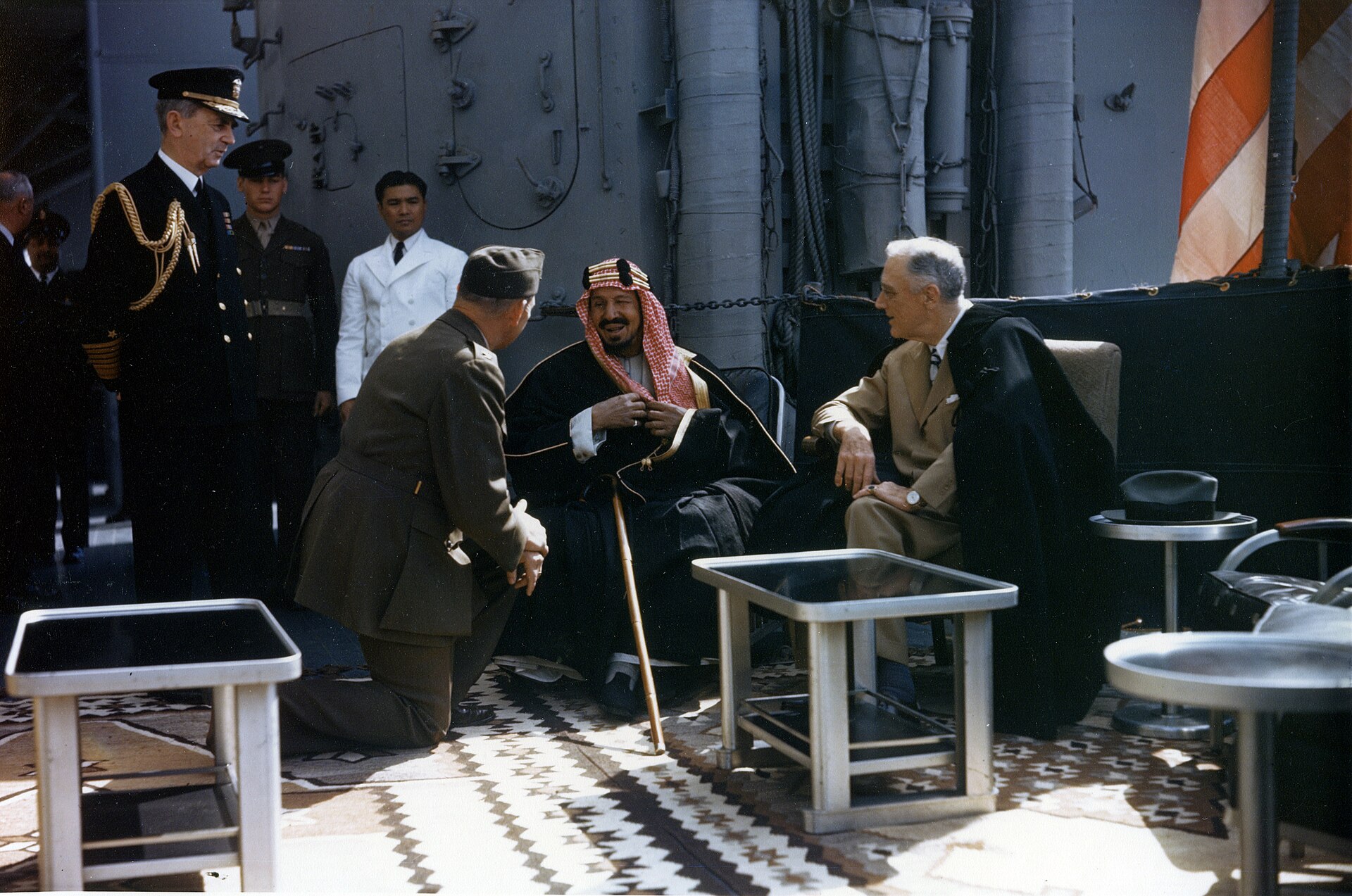
Table of Contents
- The Quincy Compact: What Roosevelt and Ibn Saud Actually Agreed
- Why Can the US No Longer Guarantee Gulf Security?
- Why Can Saudi Arabia No Longer Guarantee Oil Supply?
- The Basing Paradox: Protection That Creates the Threat
- From 1973 to 2019: How Earlier Crises Tested but Preserved the Compact
- What Do Gulf States Want in Return for Continued Cooperation?
- The China Triangle: Who Buys the Oil, Who Provides the Security
- Tehran’s Counter-Offer: Close Every American Base
- What Replaces the Oil-for-Security Framework?
- Frequently Asked Questions
The Quincy Compact: What Roosevelt and Ibn Saud Actually Agreed
On February 14, 1945, President Franklin Roosevelt met King Abdulaziz Ibn Saud aboard the USS Quincy in Egypt’s Great Bitter Lake. The meeting produced a framework that would shape the next eight decades: the United States would guarantee the sovereignty and territorial integrity of the Saudi kingdom, and Saudi Arabia would ensure reliable American access to its oil reserves. The arrangement was rooted in wartime pragmatism. Chevron and Texaco had discovered enormous oil deposits in eastern Saudi Arabia in the late 1930s, and geologic assessments indicated the center of gravity in global oil production was shifting permanently to the Persian Gulf.
The compact was never a formal treaty. It operated as a set of mutual expectations, reinforced through every subsequent crisis. When tested in 1973, when strained in 1979, when validated by 500,000 American troops in 1990, the core logic held: Saudi Arabia pumped, America protected. The framework survived the Cold War, the oil embargo, two Gulf wars, and the rise of shale. It did not survive March 2026.
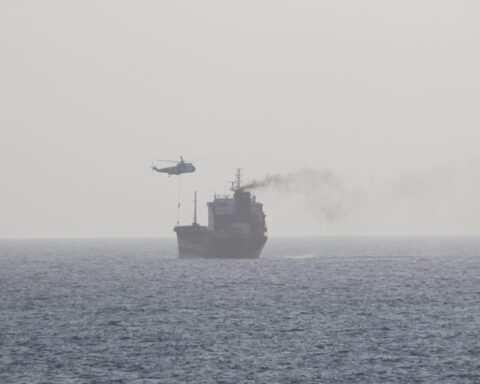
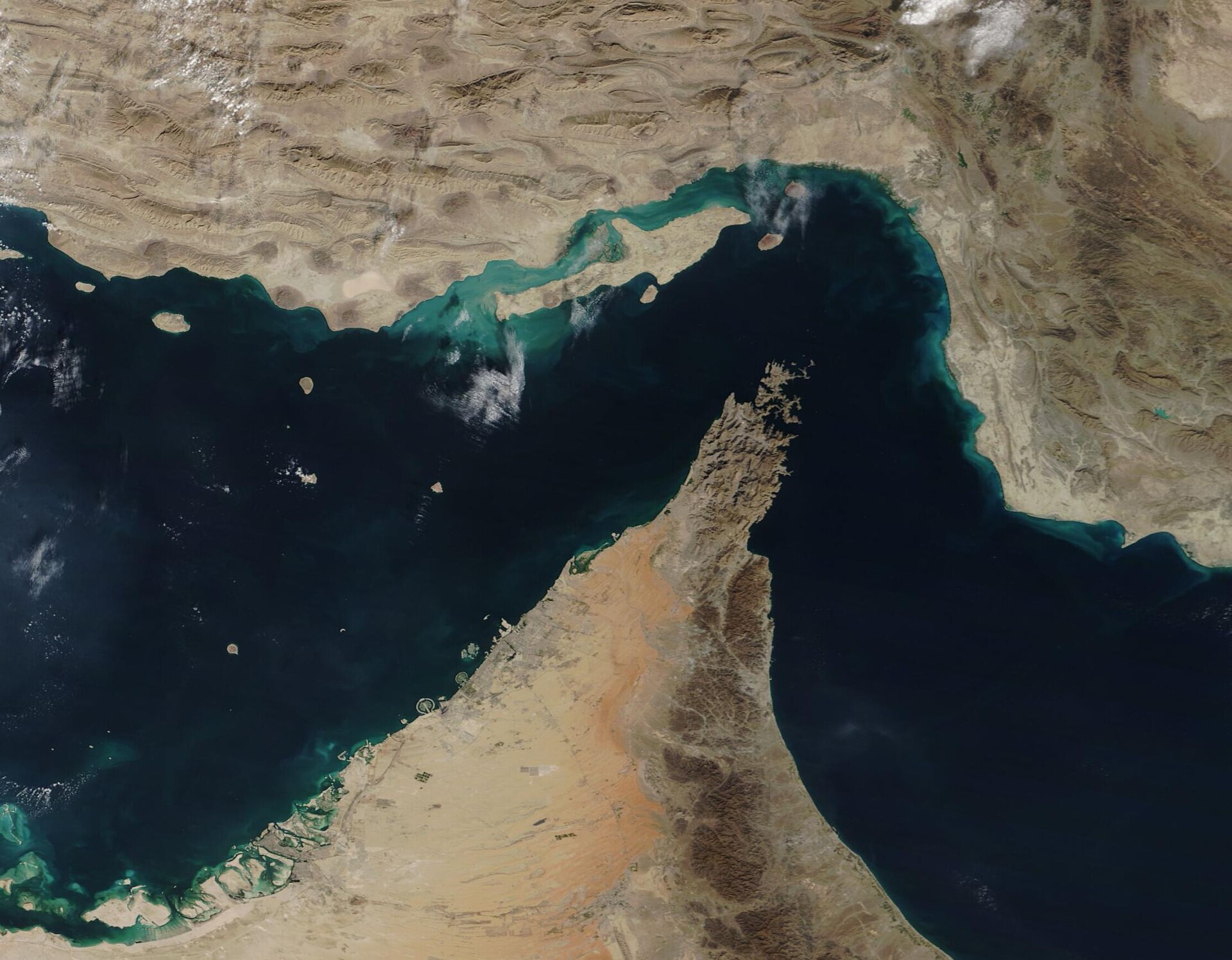
The Arab Center Washington DC published an assessment in March 2026 stating that the “oil for security” arrangement has “vanished.” “The stability that underpinned this arrangement has now vanished,” the analysis concluded, “along with the world’s access to spare oil production capacity, which is the oil market’s main shock absorber.” Approximately 4 million barrels per day of Gulf spare capacity — held by Iraq, Kuwait, Saudi Arabia, and the UAE — is locked behind the Iranian blockade of the Strait of Hormuz.
The Middle East briefing 3,000+ readers start their day with.
One email. Every weekday morning. Free.
Why Can the US No Longer Guarantee Gulf Security?
The American security guarantee assumed that US military presence would deter attacks on Gulf allies. One month of war has demonstrated the opposite: US military presence on Saudi soil has made Saudi Arabia a primary Iranian target, and the defense systems deployed to protect the Kingdom are consuming munitions faster than they can be replaced.
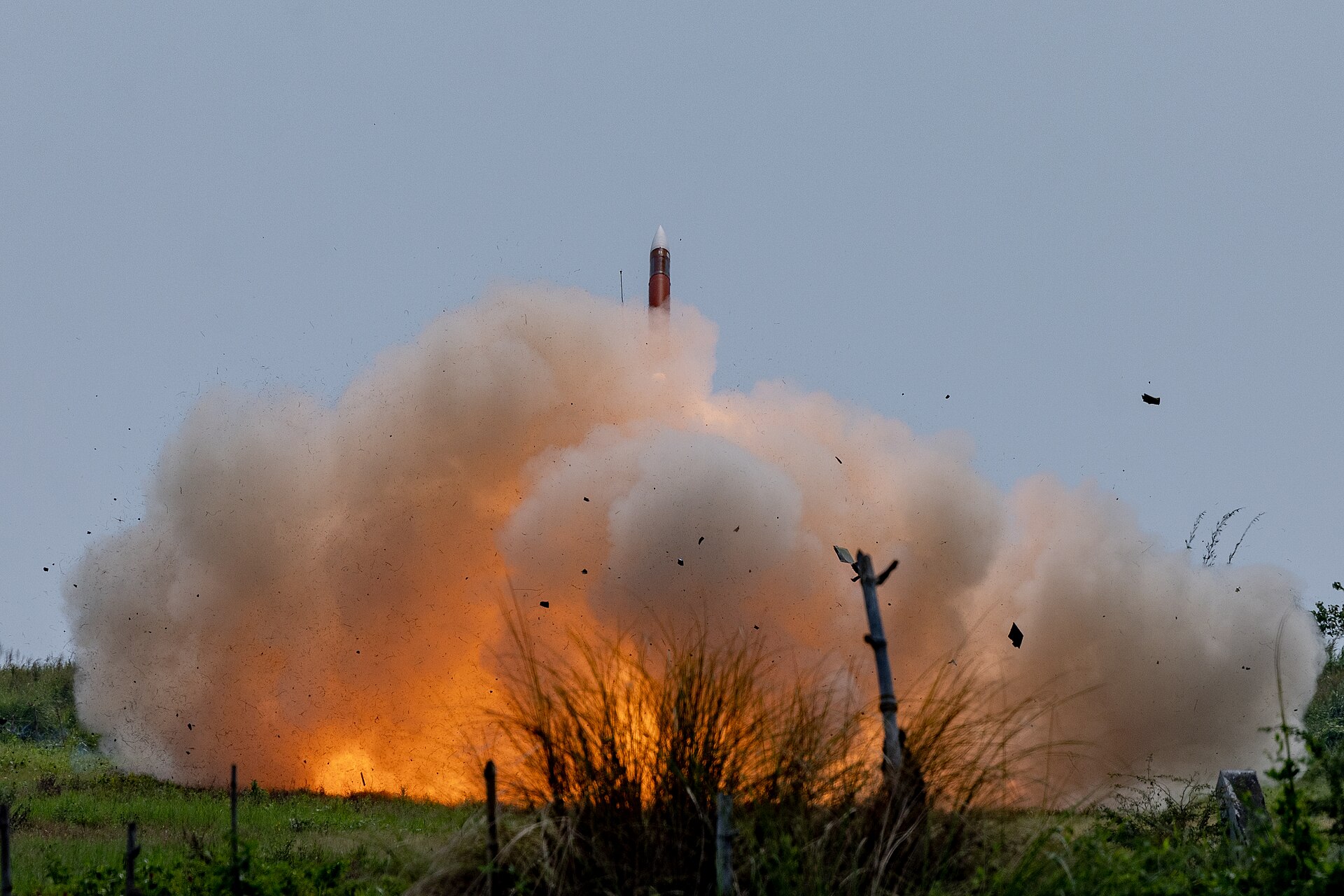
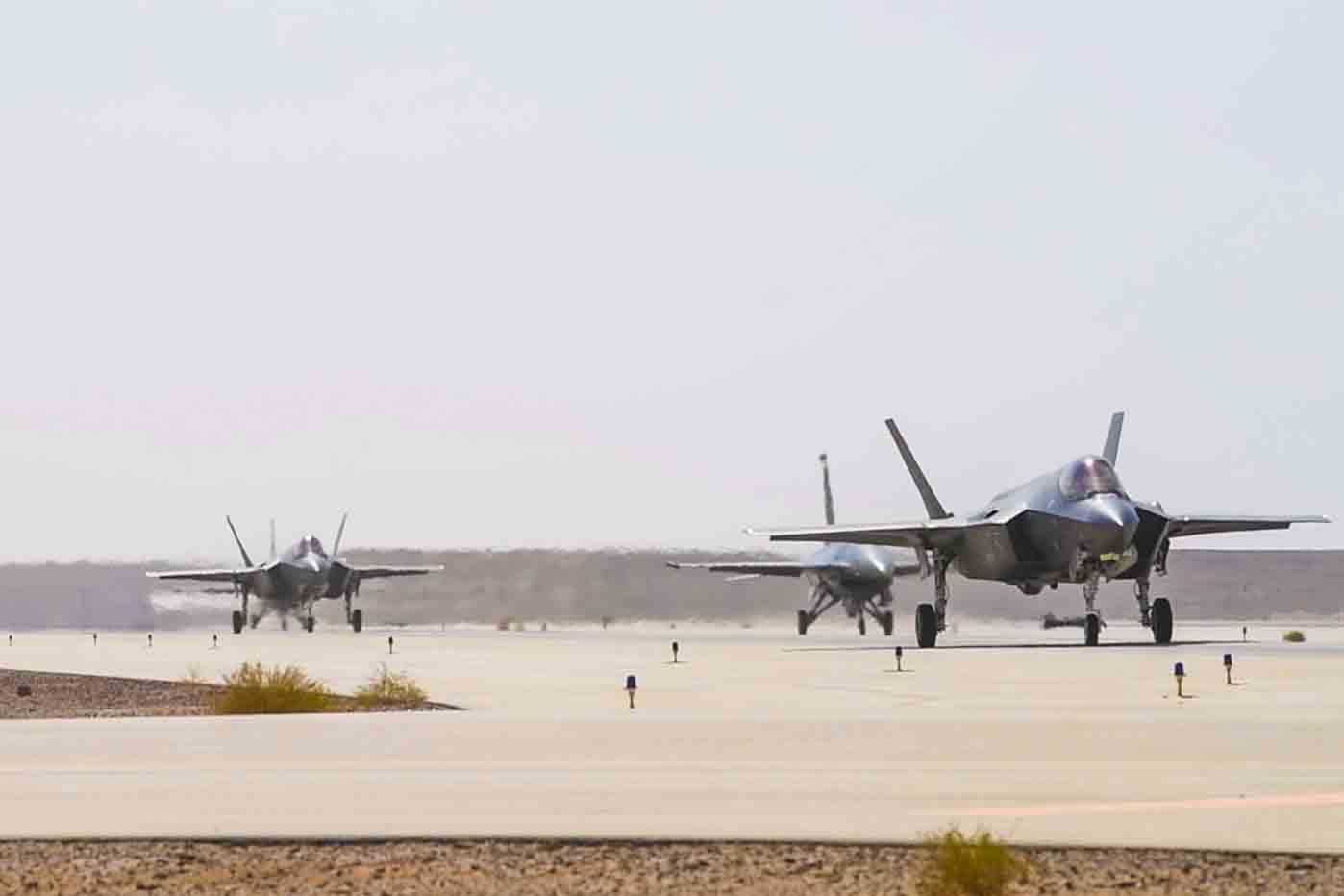
On March 27, Iran fired six ballistic missiles and 29 drones at Prince Sultan Air Base, located roughly 60 miles from Riyadh, according to PBS. The strike wounded at least 15 American troops, including five critically, and damaged multiple KC-135 aerial refueling tankers and an E-3 Sentry AWACS aircraft, according to Al Jazeera. This was not an attack on Saudi infrastructure or Saudi forces. It was an attack on Americans, on Saudi soil, because Americans were there.
The defense architecture is simultaneously succeeding tactically and failing strategically. Patriot PAC-3 missiles that intercept incoming Iranian munitions cost between $4 million and $6 million per round. THAAD interceptors cost approximately $12 million each.
Middle East Eye reported in March 2026 that the US has been “stonewalling” Gulf state requests to replenish interceptor stocks. A former US official told the outlet that Gulf states would be “left wanting if they expect new supplies of interceptors.” The consumption rate outpaces the production line, and the production line is not under Gulf control.
Vice President JD Vance stated that the US would not stop operations against Iran until it had destroyed Iran’s offensive missiles, missile production facilities, naval capabilities, and nuclear potential. That commitment has no timeline and no ceiling on cost. For Saudi Arabia, it means hosting a war of indefinite duration on the promise that it will eventually produce permanent safety.
Why Can Saudi Arabia No Longer Guarantee Oil Supply?
The oil side of the bargain has collapsed as thoroughly as the security side. Saudi Arabia cannot deliver oil to global markets at pre-war volumes because the infrastructure to do so either passes through Iranian-controlled waters or operates at maximum emergency capacity with no room for disruption.
Before the war, Saudi Arabia produced approximately 10.9 million barrels per day. The collective output of Kuwait, Iraq, Saudi Arabia, and the UAE dropped by 6.7 million barrels per day by March 10 and by at least 10 million barrels per day by March 12, according to reporting compiled in the Wikipedia entry on the economic impact of the 2026 Iran war. The International Energy Agency characterized this as “the largest supply disruption in the history of the global oil market.”
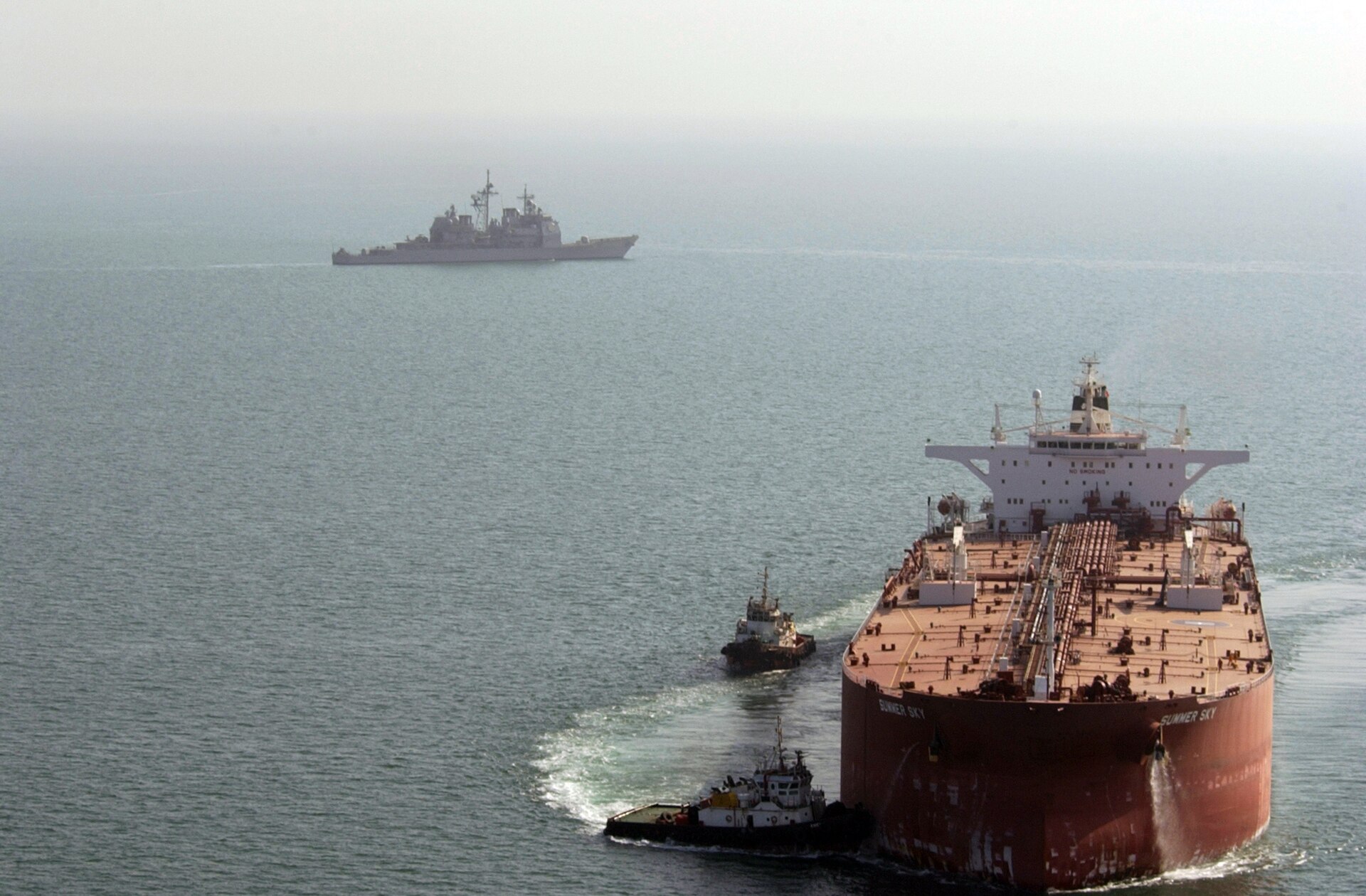
Saudi Aramco’s response — redirecting crude through the 1,200-kilometer East-West Pipeline to Yanbu on the Red Sea — reached its theoretical ceiling of 7 million barrels per day by March 28, according to Bloomberg. But pipeline capacity and port capacity are different constraints. Yanbu’s two terminals have a nominal combined loading capacity of approximately 4.5 million barrels per day, according to Argus Media. Crude exports via Yanbu reached roughly 5 million barrels per day, with an additional 700,000 to 900,000 barrels per day of refined products, according to CNBC — achieved only through round-the-clock loading and emergency berth expansion.
The result is a structural gap. Even at maximum throughput, Saudi Arabia can only deliver a fraction of its pre-war export volume. Brent crude surged from $72.48 on February 28 to above $120 after the Hormuz closure, settling around $112-$115 per barrel by late March, according to CNBC. The OPEC Basket price reached $115.88 compared to $67.90 in February — a 70.7% increase. The “shock absorber” of spare capacity, which the Quincy compact implicitly promised the world, has been absorbed.
| Metric | Pre-War (Feb 2026) | Late March 2026 | Source |
|---|---|---|---|
| Saudi production | ~10.9M bpd | ~8M bpd (est.) | Bloomberg |
| Gulf oil exports (change) | Baseline | Down at least 60% | Chatham House |
| East-West Pipeline flow | Partial capacity | 7M bpd (max) | Bloomberg / Fortune |
| Yanbu export throughput | ~2M bpd | ~5M bpd crude + refined | CNBC / Argus Media |
| Brent crude price | $72.48/bbl | ~$112-115/bbl | CNBC |
| OPEC spare capacity accessible | ~4M bpd | Near zero (trapped) | Arab Center DC |
The Basing Paradox: Protection That Creates the Threat
The deepest structural contradiction in the current arrangement is that American military presence is supposed to protect Saudi Arabia, but it is precisely what makes Saudi Arabia a target. Political scientists have documented this pattern in contexts from US forces in Japan to NATO installations in Turkey. The 2026 Iran war has produced its most extreme expression.
Saudi Arabia hosts American forces to deter Iran. Iran attacks Saudi Arabia because it hosts American forces. The cycle is visible in the targeting data: Prince Sultan Air Base, where 15 Americans were wounded, is a Royal Saudi Air Force installation used by the US Air Force’s 378th Air Expeditionary Wing. Iran did not strike it because of what Saudi Arabia had done. Iran struck it because of who was inside.
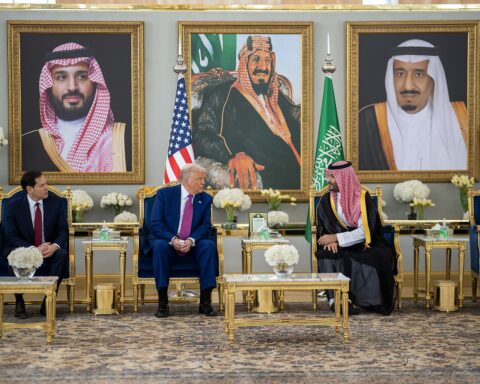
Crown Prince Mohammed bin Salman has accepted this trade-off in the most explicit way possible. In March, Riyadh reversed its post-2003 basing restrictions and granted the United States access to King Fahd Air Base in Taif, located roughly 1,200 kilometers from the Iranian border, according to Iran International and the Wall Street Journal.
This is the exact risk Saudi Arabia’s previous leadership had rejected. After the 2003 Iraq War, Riyadh pushed American combat forces out of the Kingdom entirely, partly because Osama bin Laden had cited US troops on Saudi soil as justification for attacks. The roughly 4,500 US troops at Prince Sultan Air Base redeployed to Qatar in mid-2003, with US officials formally transferring control of base facilities to Saudi counterparts on August 26 of that year, according to Al Jazeera.
MBS has now reversed that judgment. The calculus is not that American presence is safe — it demonstrably is not. The calculus is that the alternative is worse.
From 1973 to 2019: How Earlier Crises Tested but Preserved the Compact
The Quincy compact survived every previous stress test because at least one side could still deliver on its core promise. The 2026 war is the first crisis in which both sides are failing simultaneously.
In October 1973, Saudi Arabia weaponized oil directly, joining the OPEC embargo against the United States in retaliation for American support of Israel during the Yom Kippur War. The compact was strained but not broken — both sides recognized the mutual dependency and restored relations within months. In January 1980, President Jimmy Carter responded to the Soviet invasion of Afghanistan and the Iranian Revolution by declaring that “an attempt by any outside force to gain control of the Persian Gulf region will be regarded as an assault on the vital interests of the United States of America, and such an assault will be repelled by any means necessary, including military force.” The Carter Doctrine committed American military power to Gulf oil flows explicitly, creating the Rapid Deployment Force that would become US Central Command.
The compact’s finest hour came in 1990. When Saddam Hussein invaded Kuwait, the United States deployed approximately 500,000 troops to Saudi Arabia for Operations Desert Shield and Desert Storm. Saudi Arabia paid roughly $36 billion of the $61 billion total cost, according to the US Government Accountability Office. The arrangement functioned precisely as designed: America provided security, Saudi Arabia provided basing and financial support, and oil flows resumed.
The first structural crack appeared in 2003. Saudi Arabia refused to allow offensive combat operations from its territory during the Iraq War, permitting only defensive patrol missions from its airspace and bases.
The real rupture was the 2019 Abqaiq-Khurais attack. On September 14, 2019, Iranian drones and cruise missiles struck the heart of Saudi oil processing, knocking out 5.7 million barrels per day — the largest outage in volume terms in the modern history of oil, according to the Baker Institute. Then-President Trump’s response was to note that “that was an attack on Saudi Arabia, and that wasn’t an attack on us.” He deployed 3,000 additional troops and modest air defense reinforcements, but took no military action against Iran. Saudi Aramco CEO Amin Nasser warned that “an absence of international resolve to take concrete action may embolden the attackers.” He was right.
| Year | Crisis | Security Side | Oil Side | Compact Status |
|---|---|---|---|---|
| 1973 | OPEC Oil Embargo | Held (US did not retaliate) | Failed (Saudi weaponized oil) | Strained, restored |
| 1980 | Carter Doctrine declared | Reinforced (explicit guarantee) | Held (Gulf flows protected) | Strengthened |
| 1990-91 | Gulf War | Delivered (500K troops) | Delivered (Saudi paid $36B) | Peak validation |
| 2003 | Iraq War | Partial (basing restricted) | Held (production maintained) | First crack |
| 2019 | Abqaiq-Khurais attack | Failed (no US response) | Disrupted (5.7M bpd offline) | Warning shot |
| 2026 | Iran War | Failing (creates targeting) | Failing (exports down 60%+) | Structural collapse |
What Do Gulf States Want in Return for Continued Cooperation?
Gulf states are no longer asking the United States for protection in the traditional sense. They are demanding a specific outcome: the permanent degradation of Iran’s military capabilities as the price for continued cooperation. This inverts the original bargain. Instead of “protect us and we pump,” the new formula is “destroy our enemy and then we will resume.”
Reuters reported on March 27 that Gulf Arab states are telling the United States that any deal with Tehran “should do more than end the war, and must permanently curb Iran’s missile and drone capabilities and ensure global energy supplies are never again weaponised.” The Washington Post reported on March 26 that Gulf countries want Trump to end the war — “but not yet.” Gulf leaders fear a “hasty settlement that leaves the region less stable than it was a month ago,” the Post reported, with officials insisting the war continue until Iran’s missile and drone manufacturing capacity is destroyed. The stakes of that position became clearer on March 29, when Trump declared Iran had accepted “most” of his 15-point deal — a deal whose terms, if enforced loosely, could leave Riyadh with exactly the hasty settlement it fears.
The Council on Foreign Relations published an analysis by Steven A. Cook on March 26 arguing that Gulf leaders “did not want the war and have privately expressed frustration with the United States and Israel for causing chaos in the region, but they have not pressured President Donald Trump to stop the US attacks.” The Gulf position, Cook wrote, is that leaders “now need Trump to oust the Iranian regime to ensure it can no longer pose a threat.” The Foreign Policy assessment from March 24 concluded that Gulf states hosting US forces “will move from deference to conditionality,” demanding that “the alliance be restructured to reflect what three weeks of war have made undeniable: the risk these states absorb by hosting is no longer matched by the protection they receive in return.”
A Reuters analysis quoted one Gulf official stating the demand is for “a conclusive outcome that addresses Iran’s full range of threats: nuclear capabilities, missiles, drones, terror proxies and blockades of international sea lanes.” This is not a request for a security guarantee. It is a demand for the elimination of the threat that the security guarantee was meant to deter. The distinction matters: the old compact could function indefinitely with a deterred Iran. The new demand requires a defanged Iran, and no one has defined what “defanged” looks like in practice.
The China Triangle: Who Buys the Oil, Who Provides the Security
The Quincy compact assumed that the United States was the primary consumer of Gulf oil. That has not been true for over a decade. Approximately 75% of Saudi crude exports now flow to Asia, with China as the Kingdom’s single largest customer. Beijing imports roughly three times more oil from Saudi Arabia and other GCC countries than from Iran, according to the Christian Science Monitor. This creates a triangle that the 1945 framework never anticipated: Saudi Arabia sells to China, buys security from America, and America increasingly resents subsidizing Chinese energy security.
The war has exposed a critical asymmetry in this triangle. China is Saudi Arabia’s most important commercial partner in energy, but Beijing has refused to provide any security contribution. Foreign Affairs published an analysis titled “Why China Won’t Help Iran,” and Time reported on China “sitting out” the conflict. The Carnegie Endowment for International Peace noted that “Beijing doesn’t think like Washington” on the Iran conflict, prioritizing economic pragmatism over strategic commitment. A Bruegel analysis assessed that China’s approach is to work with whatever leadership emerges after the strikes, “as long as it protects oil flows and prioritizes shared economic interests.”
The structural problem is straightforward: the country that consumes the most Gulf oil contributes nothing to its security, and the country that provides the security consumes relatively little of the oil. The old compact papered over this by treating Gulf oil as a global commodity whose reliable supply benefited everyone, including the United States. But the war has made the subsidy visible. American troops are being wounded at Prince Sultan Air Base to keep shipping lanes open for tankers bound for Qingdao and Ningbo. That arithmetic will shape whatever replaces the Quincy framework.
Beijing’s bet — that it can free-ride on American security while maintaining commercial relations with all parties — has held so far. Chinese COSCO vessels have sailed through the Strait of Hormuz under separate arrangements with Tehran while the blockade has shut out most other traffic. This selective access sharpens the question for Washington: why should American soldiers defend a supply chain that terminates in Chinese refineries?
Tehran’s Counter-Offer: Close Every American Base
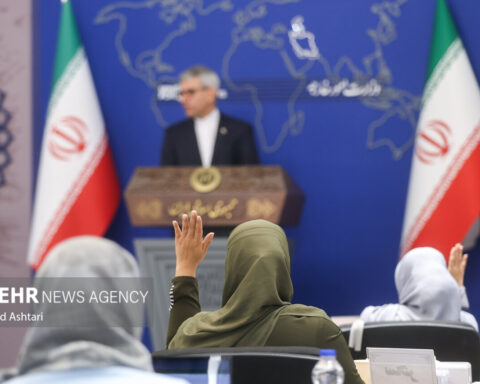
Iran’s ceasefire demands, rejected by Washington as “ridiculous and unrealistic” according to the Wall Street Journal, reveal the mirror image of the Gulf position. While Gulf states demand the permanent degradation of Iranian military capabilities, Tehran demands the permanent removal of US military infrastructure from the Gulf region.
Iran’s conditions, reported across multiple outlets in late March, include the closure of all American military bases in the Persian Gulf, reparations for damages caused by US and Israeli strikes, the lifting of all sanctions, a new framework governing the Strait of Hormuz that would allow Tehran to collect transit fees, and the right to retain its missile program without restrictions. Iran has also demanded that any ceasefire include Lebanon, conditioning a halt in hostilities on an end to Israeli operations against Hezbollah.
These demands are maximalist and almost certainly negotiating positions rather than real expectations. But they illuminate the underlying logic: from Tehran’s perspective, American bases in the Gulf are not a stabilizing force but an offensive platform. Iran’s demand for their closure is the inverse of the Gulf demand for permanent Iranian degradation. Both sides want the source of the other’s power eliminated as a precondition for peace. Neither side is offering to coexist with the other’s military infrastructure.
This mutual maximalism means the old compact cannot be restored even if both sides wanted to. The 1945 framework assumed a stable deterrent equilibrium — American power would prevent conflict, and the absence of conflict would keep oil flowing. Both sides are now demanding conditions that can only be achieved through the conflict’s continuation, not its resolution. US intelligence has assessed, according to Reuters, that it can determine with certainty that only about a third of Iran’s vast missile arsenal has been destroyed. The Gulf demand for “permanent degradation” and Tehran’s demand for base closures define a gap that no mediator has proposed to bridge.
What Replaces the Oil-for-Security Framework?
The emerging replacement for the Quincy compact is not a new grand bargain. It is a set of transactional, war-by-war arrangements in which specific concessions are traded for specific commitments, with no permanent architecture underneath. Three features of the replacement are already visible.
The first is conditional basing. Saudi Arabia’s decision to grant US access to King Fahd Air Base was not a restoration of the pre-2003 permanent basing arrangement. It was a wartime concession tied to the specific threat posed by the Iran conflict. If the war ends, the access may end with it.
The Stimson Center’s Barbara Slavin wrote in March 2026 that the war has unfolded “into a nightmarish and escalating war that no Gulf Cooperation Council member sought,” with GCC members responding through “defensive measures and diplomatic gestures” rather than institutional integration. The Atlantic Council noted the war could fundamentally “change the US relationship with Gulf states.” Access to bases is no longer a standing feature of the alliance. It is a currency to be spent.
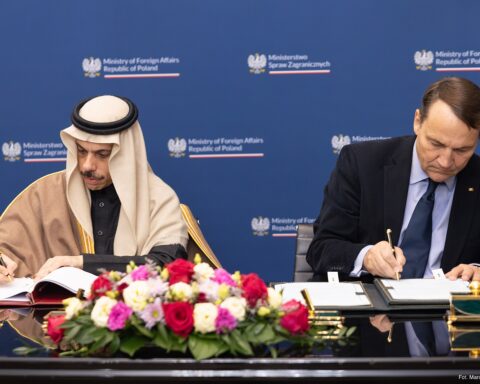
The second is security diversification. The Gulf states are hedging against exclusive dependence on the United States by building defense relationships with multiple providers. On March 27, Ukraine and Saudi Arabia signed a defense cooperation agreement, with President Volodymyr Zelenskyy announcing the deployment of 228 Ukrainian counter-drone specialists across five regional partners — Jordan, Qatar, the UAE, Saudi Arabia, and Kuwait — according to Al Jazeera.
Kyiv’s drone-defense expertise, built through years of countering Russian Shahed attacks, has become an unexpected export to a region where the US arms monopoly is fracturing. Washington’s counter-move arrived on March 30 with the approval of 48 F-35A stealth fighters for Saudi Arabia — a technology lock-in so complete that defence diversification becomes irrelevant for the platforms that matter most. France and the United Kingdom have also deepened military engagement in the Gulf, while the Stimson Center documented Gulf states maintaining strategic ties with China and Russia even as they deepen defense relationships with Washington.
The third is outcome-based commitment. The old compact was open-ended: America would protect the Gulf indefinitely, and the Gulf would pump indefinitely. The new arrangement is bounded by specific deliverables. Gulf states want Iran’s military capabilities permanently curtailed. Washington wants stable oil prices and continued base access. Each side treats its contribution as a transaction, not an obligation — deference replaced by conditionality.
The Saudi budget tells the fiscal story of this transition. Saudi Arabia projected a 2026 budget deficit of 165 billion riyals (approximately $44 billion, or 3.3% of GDP), according to the Ministry of Finance. Higher oil prices partially offset lost export volumes, but the war has forced emergency military spending, disrupted investment inflows, and compressed the economic diversification timeline that Vision 2030 was meant to deliver. The Kingdom is paying for a war it did not start, on terms it did not choose, to preserve an alliance whose benefits are declining relative to its costs.
Frequently Asked Questions
What was the USS Quincy meeting in 1945?
President Franklin Roosevelt and King Abdulaziz Ibn Saud met aboard the USS Quincy heavy cruiser in Egypt’s Great Bitter Lake on February 14, 1945. The meeting also covered Roosevelt’s push for a Jewish state in Palestine — which Ibn Saud rejected, arguing the Jewish homeland should be in Bavaria — as well as military training at a proposed Dhahran air base, freedom of trade, and the sovereignty of Arab nations under colonialism. The oil-for-security dimension, though central to the meeting’s legacy, was only one of several agenda items documented in the State Department’s Foreign Relations of the United States series.
How much oil is still trapped behind the Strait of Hormuz blockade?
Beyond the 4 million barrels per day of spare production capacity cited by the Arab Center Washington DC, the blockade has also stranded significant volumes of Iraqi, Kuwaiti, and Emirati crude that normally transits Hormuz. Iraq’s alternative — the Kirkuk-Ceyhan pipeline to Turkey — carries roughly 450,000 barrels per day, a fraction of Iraq’s 4.4 million barrels per day production capacity. The UAE’s Habshan-Fujairah pipeline can bypass Hormuz with approximately 1.5 million barrels per day, according to CNBC, but total accessible bypass capacity across all three pipeline routes remains far below pre-war Gulf export volumes.
Has the US ever lost troops on Saudi soil before 2026?
Yes. On June 25, 1996, a truck bomb detonated outside the Khobar Towers housing complex near Dhahran, killing 19 US Air Force personnel and wounding 498 others. The attack, attributed to Hezbollah Al-Hejaz with Iranian backing, was a significant factor in subsequent Saudi decisions to restrict American basing. The 2026 Prince Sultan Air Base strike is the first direct Iranian state attack — rather than proxy action — to wound American military personnel on Saudi territory.
Could China replace the United States as the Gulf’s security guarantor?
China’s naval presence in the region remains limited to a single base in Djibouti and anti-piracy patrols. Beijing has no forward-deployed air defense systems, no mutual defense treaty with any Gulf state, and no power-projection capability comparable to the US Fifth Fleet headquartered in Bahrain. The People’s Liberation Army Navy has two operational aircraft carriers, neither of which has conducted sustained operations in the Indian Ocean. China’s strategic calculus, as documented by the Carnegie Endowment in March 2026, prioritizes commercial access over security commitments — a posture that would require a generation of military buildup and political realignment to reverse.
What happens to the Yanbu export bottleneck if the war continues?
Aramco has initiated emergency expansion at Yanbu, but port construction operates on a multi-year timeline. Adding a third deepwater berth capable of loading VLCCs (Very Large Crude Carriers) requires 18-24 months of construction under normal conditions. Meanwhile, Iran has already demonstrated the ability to strike Red Sea targets, with a drone hitting the SAMREF refinery at Yanbu in March. If the Red Sea route comes under sustained attack, Saudi Arabia would face a scenario in which both its eastern and western export corridors are compromised — a contingency for which no bypass infrastructure exists.
The Quincy compact lasted 81 years because it aligned the interests of a global superpower and the world’s largest oil exporter around a simple exchange. That alignment has fractured along every dimension. The security provider cannot protect without provoking. The oil supplier cannot supply without functioning chokepoints. The primary oil consumer is not the security provider. The threat that the compact was meant to deter is the threat the compact has helped create.
Whatever follows will be smaller, more contingent, and more fragile. The era of permanent guarantees backed by permanent presence is over. What remains is calculation: what each side needs this month, what it can offer this month, and whether the arithmetic still works when the next crisis arrives. For eight decades, the answer to that calculation was assumed. From now on, it will have to be earned. That calculation is now being tested in real time: how Riyadh is navigating the 41-nation Hormuz coalition while refusing to join it is the most precise current expression of what the new arithmetic of Gulf security looks like in practice.