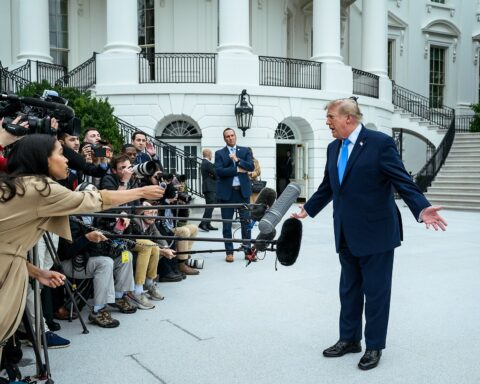

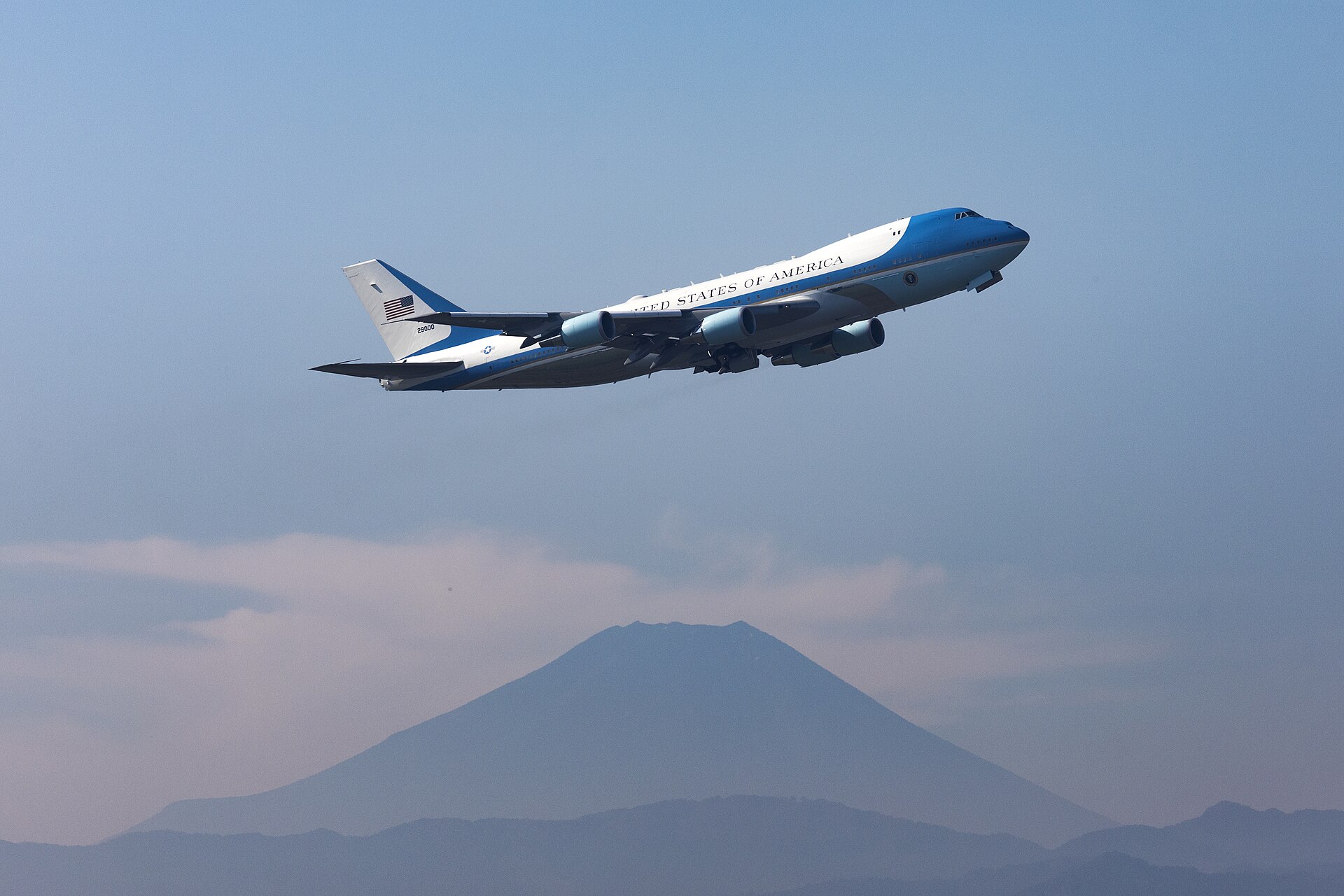
RIYADH — Donald Trump, speaking to reporters aboard Air Force One as it departed Beijing on May 15, retroactively disowned the ceasefire framework that has governed the Iran conflict since April 8, calling it something “we did as a favour to Pakistan” and adding that he “would not have been in favour of it.” The statement arrived on the same day that Abbas Araghchi, Iran’s foreign minister, told reporters at the BRICS summit in New Delhi that Tehran “cannot trust the Americans at all” — and two days after an Indian-flagged merchant vessel was sunk near the Strait of Hormuz, with a second ship seized off Fujairah 24 hours later. The ceasefire is now an orphan: the president who announced it on Truth Social has disclaimed it, the country that brokered it has no capacity to enforce it, and the state that paid the highest price for it — Saudi Arabia — is left holding a 30% production collapse, a war-premium pricing structure built on a diplomatic foundation that no longer exists, and a covert co-belligerent record that Reuters exposed three days before Trump pulled the rug.
Table of Contents
- What Trump Actually Said — and What It Means
- Why Is Saudi Arabia the Most Exposed Party?
- Pakistan: The Enforcer Holding a Worthless Contract
- What Do the Hormuz Attacks Signal About the Ceasefire’s Collapse?
- The Beijing Summit Produced Nothing — and That Was the Point
- How Does Iran Exploit the Disavowal?
- What Dies Next
- Frequently Asked Questions
What Trump Actually Said — and What It Means
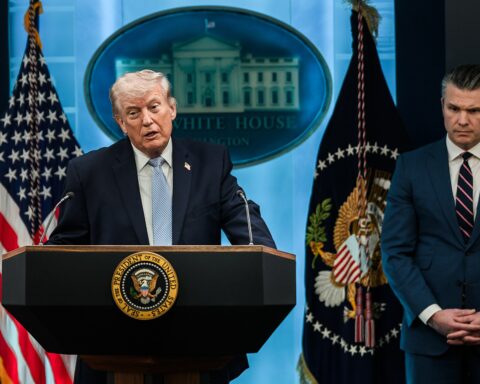
The full quote, delivered in a pool-spray gaggle aboard Air Force One, was this: “We really did the ceasefire at the request of other nations, I would not have been in favour of it. We did it as a favour to Pakistan, they are terrific people, the field marshal, the prime minister.” In the same session, responding to a question about the Strait of Hormuz, he said: “We control the Strait.” These two sentences — one disclaiming responsibility for the ceasefire, the other asserting physical dominion over the waterway the ceasefire was supposed to reopen — are not contradictory in Trump’s framing, but they are devastating in combination for every party that treated the April 8 framework as US policy.
The ceasefire’s origin was already structurally ambiguous. Trump announced it on Truth Social on April 8, accepting a Pakistani-brokered arrangement that Field Marshal Asim Munir had assembled through round-the-clock shuttle diplomacy with Vice President Vance, special envoy Steve Witkoff, and Iranian foreign minister Araghchi. There was no US co-signature on the formal Islamabad Accord, no State Department joint communiqué, no Rose Garden ceremony — just a social media post from a president who, five weeks later, would describe the entire enterprise as something he did reluctantly, at someone else’s request, as a personal accommodation.
The Air Force One statement is not a diplomatic recalibration or a negotiating tactic aimed at extracting better terms from Tehran. It is a retroactive reclassification of the ceasefire from “US policy” to “personal favour” — a category that carries no institutional obligation, no enforcement commitment, and no political cost for abandonment. When a president says he would not have been in favour of an agreement he publicly announced, every government that structured its military, economic, and diplomatic posture around that agreement is exposed.
Why Is Saudi Arabia the Most Exposed Party?
Saudi Arabia entered the ceasefire period carrying three costs that no other party absorbed. First, the production crash: Saudi output fell from 10.4 million barrels per day in February to 7.25 million bpd in March, a 30% collapse that the International Energy Agency called the largest disruption on record — driven by Iranian strikes on Eastern Province infrastructure, the Khurais field going offline with no timeline for restoration, and a Yanbu bypass pipeline operating at a ceiling of 4–5.9 million bpd against a pre-war Hormuz throughput of 7–7.5 million bpd. Second, the pricing trap: Aramco’s May Official Selling Price was set at a +$19.50/bbl premium when Brent was above $109, then had to be reset to +$3.50/bbl for June as spot prices collapsed to the low $90s — a $16/bbl swing that transferred billions in paper losses directly onto the national balance sheet. Third, and most damaging in the post-disavowal context, the covert war that Reuters exposed on May 12.
Reuters reported, citing two Western officials and two Iranian officials, that the Royal Saudi Air Force launched “numerous, unpublicized” attacks on Iranian soil in late March 2026 — strikes that Saudi Arabia had informed Iran about in advance, in what appears to have been a calibrated escalation designed to establish deterrence without triggering a full Iranian retaliatory cycle. The strikes worked in narrow military terms: Iranian attacks on Saudi targets dropped from approximately 105 per week in late March to roughly 25 per week in early April — a 76% reduction, per the same Reuters report — that preceded and arguably enabled Trump’s April 8 ceasefire announcement. But Reuters published this three days before Trump told the world the ceasefire was a favour to Pakistan — meaning Riyadh’s covert co-belligerent role was already public knowledge when the diplomatic framework it was supposed to undergird was disclaimed.
The Middle East briefing 3,000+ readers start their day with.
One email. Every weekday morning. Free.
The fiscal pressure compounds the strategic exposure. PIF raised a record $7 billion in debt in May 2026, according to Bloomberg — the kind of issuance that signals a sovereign wealth fund bridging a gap, not deploying surplus. Goldman Sachs estimated a war-adjusted deficit of 6.6% of GDP against an official projection of 3.3%. Saudi Arabia’s fiscal break-even price sits at $108–111/bbl when PIF obligations are included, against a Brent spot price in the low $90s. Every week the ceasefire framework degrades without a functioning enforcement mechanism is a week that the production gap widens, the pricing premium erodes, and the covert strikes look less like strategic deterrence and more like an uninsured bet on an American commitment that turned out to be a personal favour to Islamabad.
Pakistan: The Enforcer Holding a Worthless Contract
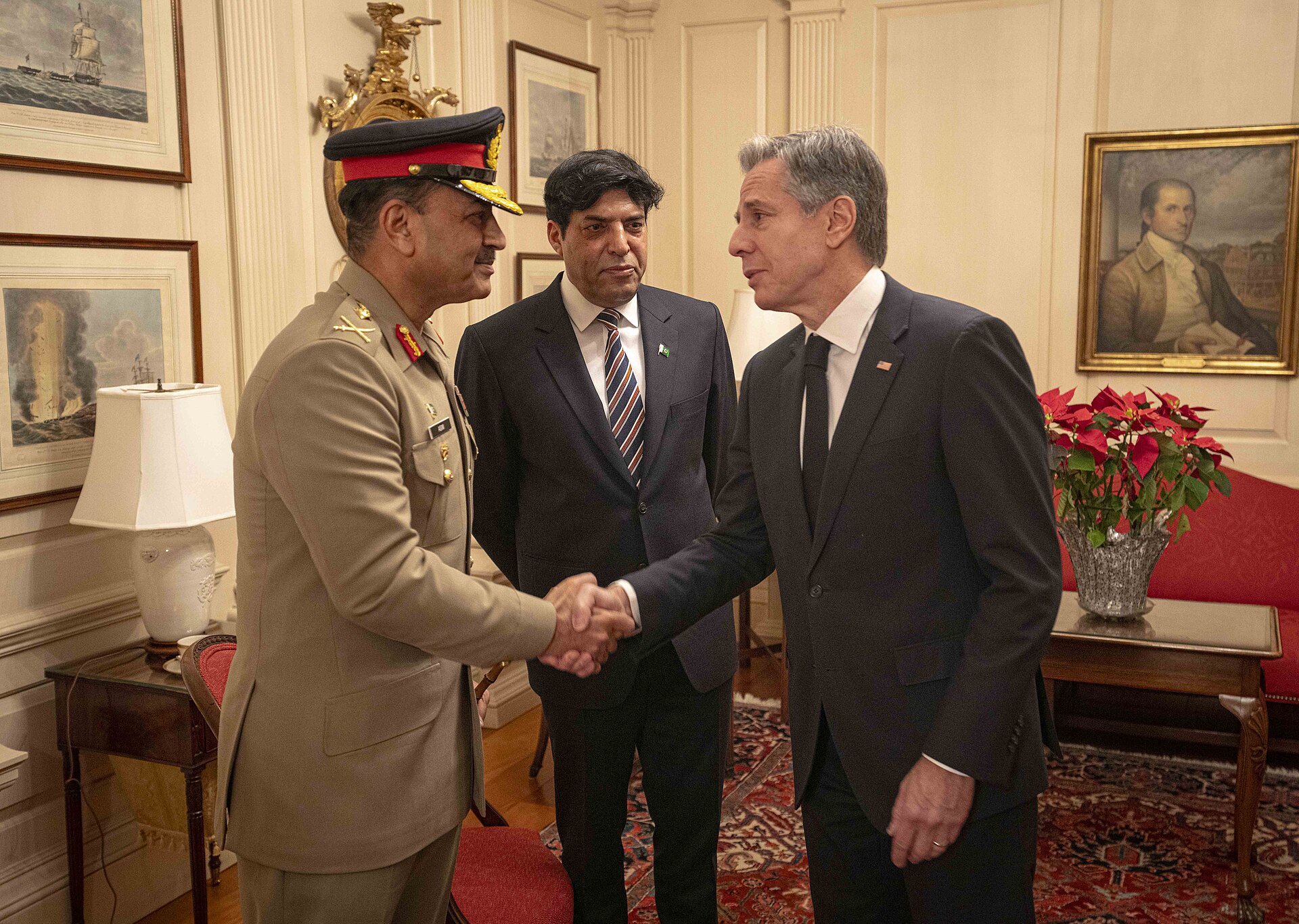
Field Marshal Asim Munir’s ceasefire diplomacy was, by any reasonable measure, the most consequential Pakistani foreign policy operation in decades — the mediation that produced the first direct US-Iran talks since 1979, the shuttle that kept Vance and Araghchi in the same building in Islamabad, the phone relay on the night of April 8–9 that turned a framework into a ceasefire. Pakistani Foreign Minister Ishaq Dar described it as having delivered “direct talks for the first time in 47 years,” and he was right. The problem is that Munir’s domestic positioning — which Carnegie’s May 2026 analysis identified as part of a broader military consolidation under the 27th Constitutional Amendment — depended on the ceasefire being an ongoing US policy commitment, not a personal accommodation that the president wished he hadn’t made.
Trump’s Air Force One language was revealing in its specificity. He praised “the field marshal, the prime minister” by title, not by name — the kind of compliment that functions as a receipt, establishing that the favour was rendered to identifiable individuals rather than to an institutional alliance. The April 21 ceasefire extension, which Trump granted at Pakistan’s explicit request while citing Iran’s “seriously fractured” government, now reads as a second accommodation in the same register: not a strategic commitment extended, but a personal indulgence renewed. Pakistan was already “scrambling” to salvage the diplomacy before the Air Force One statement, according to Al Jazeera’s May 12 reporting — the disavowal didn’t create the crisis, it formalized one that was already underway.
The structural problem is that the Islamabad Accord contains no enforcement clause. Pakistan’s role as sole enforcer was always dependent on implicit US backing — the understanding that Washington stood behind the framework Islamabad had brokered, that violations would carry American consequences, that the ceasefire was a joint enterprise even if the formal documents bore only Pakistani fingerprints. Trump has now made explicit what was previously ambiguous: the US was never a co-owner of this framework, the ceasefire was a concession to Pakistani requests, and the president’s own preference was against it from the start. Pakistan holds the pen on a contract whose guarantor just walked out of the room.
What Do the Hormuz Attacks Signal About the Ceasefire’s Collapse?
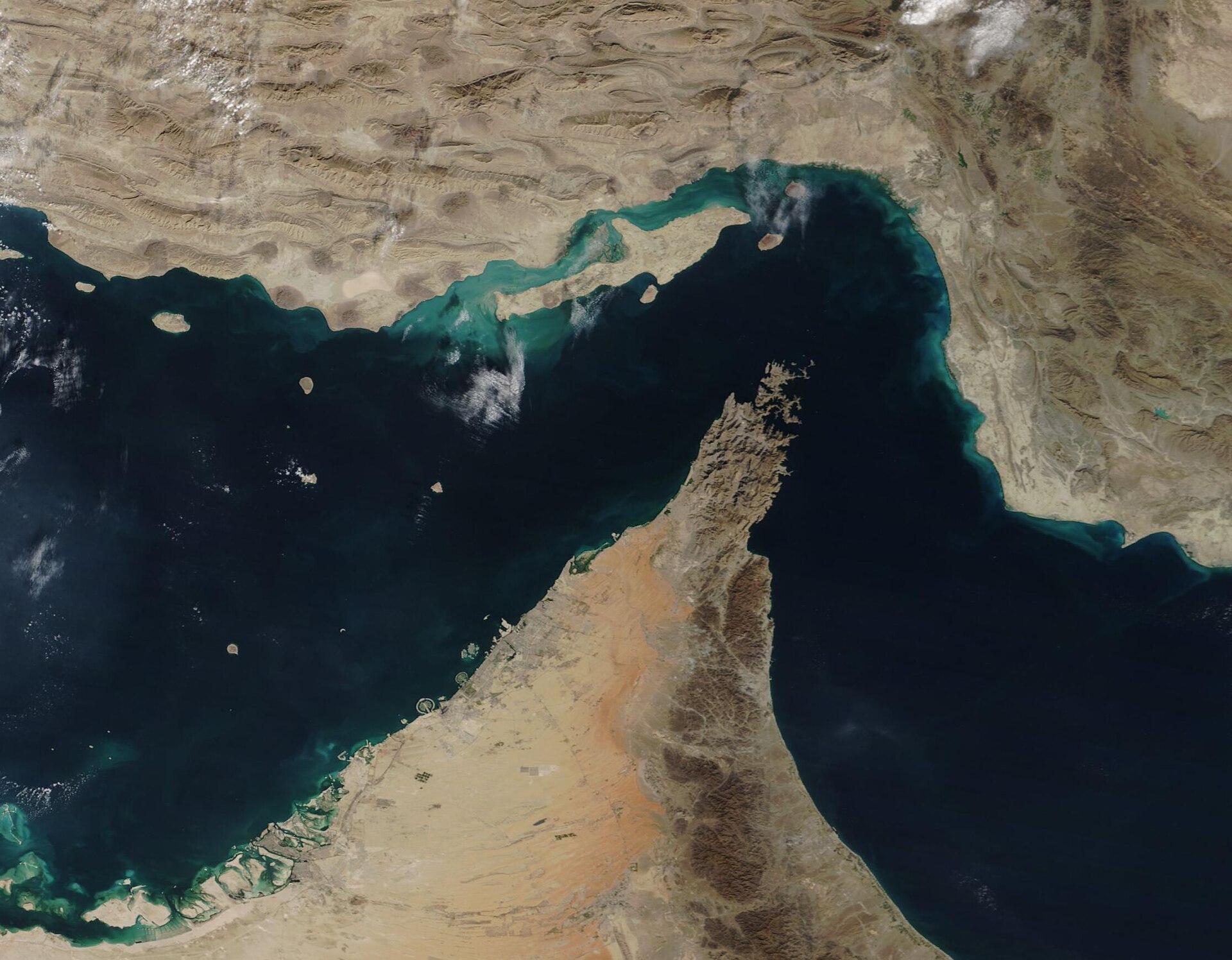
The timing is the message. On Wednesday May 13, the MV Haji Ali, an Indian-flagged merchant vessel, was sunk off the coast of Oman — 14 crew were rescued by the Omani coast guard, according to Mukesh Mangal of India’s shipping ministry. On Thursday May 14, UK Maritime Trade Operations reported a second, unnamed vessel seized 38 nautical miles northeast of Fujairah, headed toward Iranian waters. Both incidents occurred before Trump boarded Air Force One in Beijing on Friday May 15. A senior Iranian official told CBS News that Iran “has a right to seize oil tankers connected to the U.S.” — framing the seizures not as ceasefire violations but as enforcement of a parallel legal order that operates independently of whatever framework Islamabad produced.
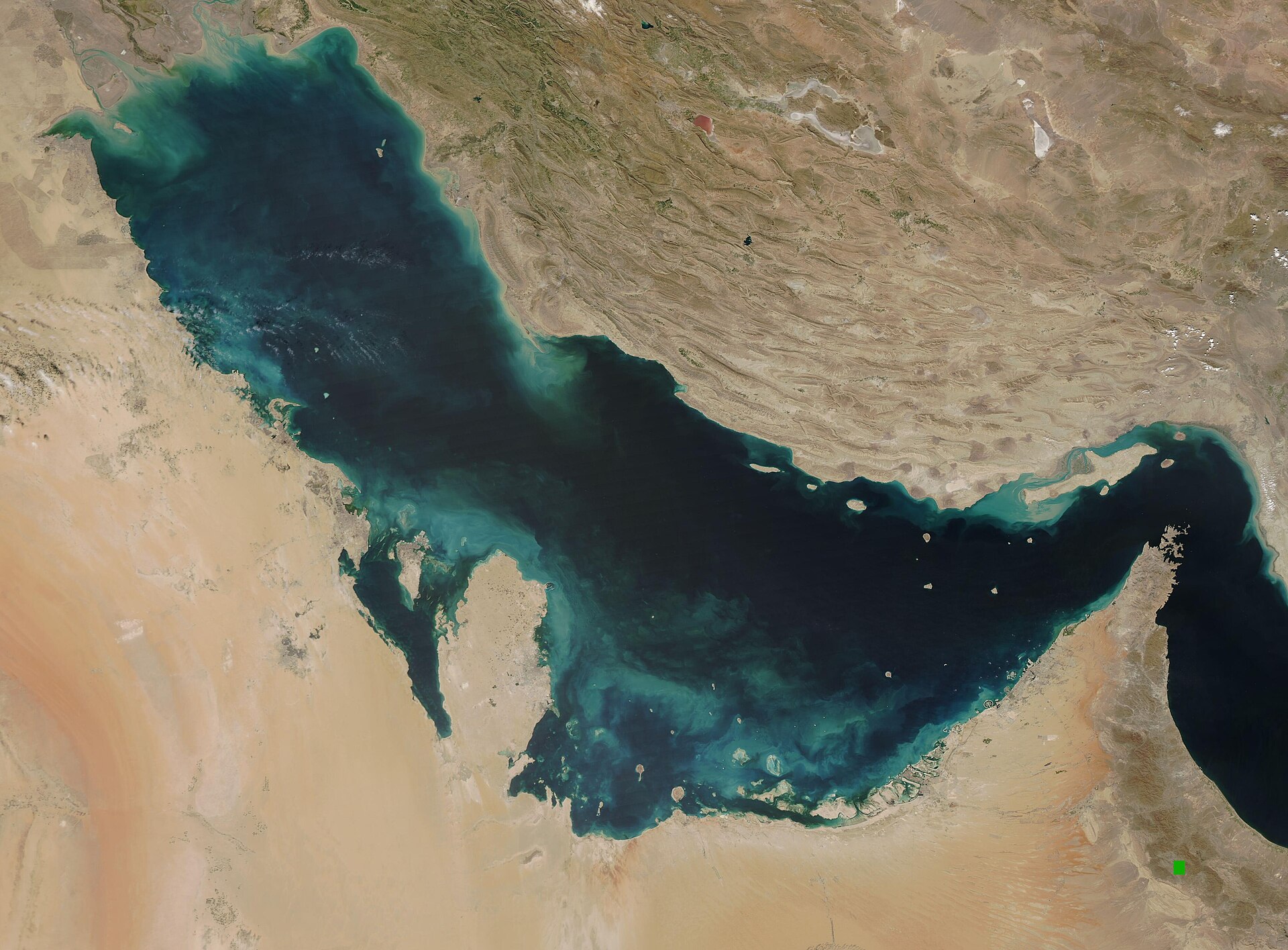
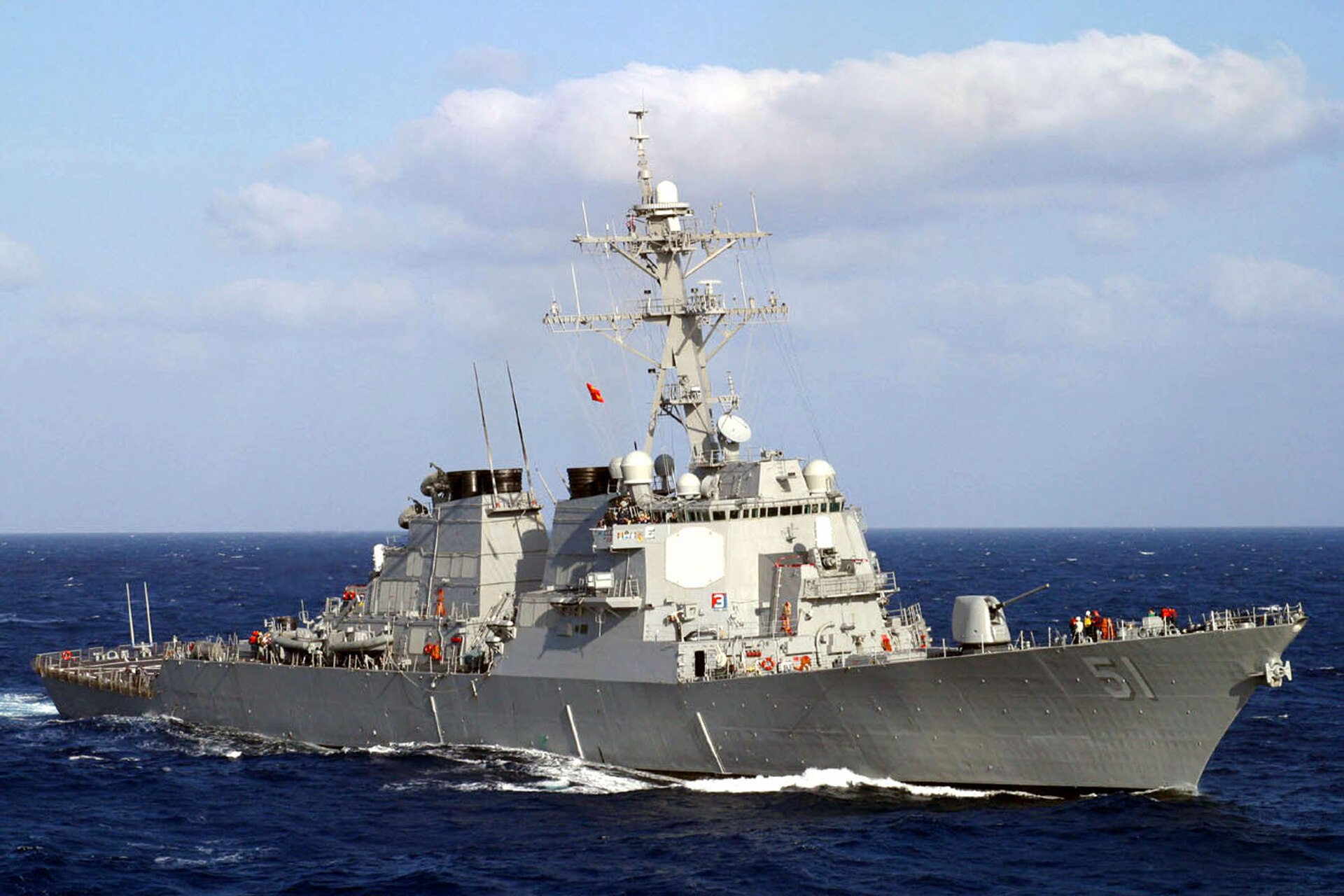
The operational pattern is consistent with the IRGC’s post-ceasefire posture, which has treated the Strait as a dual-authority zone: the US controls the Arabian Sea approach through its April 13 blockade of Iranian ports, and the IRGC controls the Gulf of Oman exit through the mine-and-intercept architecture it has maintained since early March. The ceasefire was supposed to create a pathway toward mutual de-escalation of these overlapping controls, but Trump’s “We control the Strait” claim — made on the same day as his ceasefire disavowal — reinforces the American side of the dual blockade while abandoning the diplomatic framework that was supposed to resolve it. For IRGC fast-boat commanders and mine-warfare units operating in the Strait, the signal is unambiguous: the ceasefire’s sponsor doesn’t own it, so neither do they.
The two attacks also shatter the residual fiction that commercial shipping could operate in a grey zone between the ceasefire framework and the kinetic reality. Before May 13, there was a thin argument that vessels transiting Hormuz were protected by the April 8 framework’s implicit commitment to reopening; after the Haji Ali sinking and the Fujairah seizure, that argument is gone. The Strait is now governed by two competing physical-control regimes — American and Iranian — with no diplomatic umbrella over either, and mine clearance that CENTCOM’s own Admiral Cooper acknowledged would take months even after a deal is reached.
The Beijing Summit Produced Nothing — and That Was the Point
Trump spent approximately 40 hours in Beijing — the longest US presidential visit to China since the normalization era — and left with nothing that changes the Iran conflict’s trajectory. Xi Jinping offered diplomatic help, confirmed that China would not supply military equipment to Iran, and confirmed that China would continue purchasing Iranian oil. The first commitment is vague, the second was already the status quo, and the third is a direct contradiction of the US sanctions regime that Trump’s own administration has intensified since the war began. No concrete agreement emerged, no joint statement was issued on Iran, and Saudi Arabia was not included in any bilateral discussion about the conflict that has destroyed 30% of its oil production.
The Beijing summit’s relevance to the ceasefire disavowal is atmospheric rather than substantive. Trump made the “favour to Pakistan” comment while departing a summit that produced no alternative framework — meaning the ceasefire was orphaned without a replacement. There is no new diplomatic track, no bilateral US-Iran channel (Araghchi’s talks are “on hold”), no multilateral mechanism, and no Chinese commitment to use its oil-purchasing relationship with Tehran as a pressure instrument. The diplomatic terrain after Beijing is not “ceasefire replaced by something better” — it is “ceasefire abandoned with nothing behind it.”
For Riyadh, the Beijing non-outcome is a second-order blow. Saudi Arabia’s wartime diplomacy has operated on the assumption that the US would either enforce the ceasefire, escalate toward a deal, or at minimum maintain the fiction of diplomatic engagement that keeps insurance markets, shipping companies, and oil traders calibrated to a resolution timeline. Trump’s Beijing visit accomplished none of these, and his departure statement actively undermined all three. The next scheduled multilateral engagement on the Iran file is undefined — there is no date, no venue, and no framework, because the framework was a favour and the favour has been acknowledged as such.
How Does Iran Exploit the Disavowal?
Araghchi’s timing at the BRICS summit in New Delhi was surgical. His declaration that Iran “cannot trust the Americans at all” and his accusation that Washington sends “conflicting messages” landed on the same day as Trump’s Air Force One comments — giving Tehran the rare luxury of appearing to be the consistent party in a negotiation where the other side just publicly repudiated its own framework. Iranian state broadcaster IRIB reinforced this framing, declaring that Iran’s position “remains in line with previous positions, including readiness to continue the ceasefire in exchange for the reciprocal opening of Hormuz.” The message to every non-aligned capital watching the BRICS session was unmistakable: Iran offered terms, the US agreed to a framework, and the US president just called it a favour he didn’t want to do.
President Pezeshkian’s earlier statement — “We will never bow our heads before the enemy, and if talk of dialogue or negotiation arises, it does not mean surrender or retreat” — now functions as retrospective vindication for the hardline position that Iran’s counter-conditions represented. Tehran’s response to the US 14-point MOU, which Trump described as having been met with demands for “massive life support” on May 10–11, included full war reparations, full Hormuz sovereignty recognition, the end of all sanctions, the lifting of the US naval blockade, and the release of seized assets. These were conditions that no US administration would accept, and Iran’s negotiators almost certainly knew it — but Trump’s disavowal retrospectively validates Tehran’s bet that the ceasefire was never a serious US commitment worth making concessions to preserve. Iran’s formal nuclear response to Trump’s May 16 ultimatum followed the same pattern: IRGC-aligned media amplified a year-old Shamkhani interview as though it constituted a current offer, channeling a dead man’s “yes” to three separate audiences while every living official with authority remained structurally incapable of reaffirming it.
The IRGC’s operational exploitation is already visible in the Hormuz attacks. The sinking of the Haji Ali and the Fujairah seizure are not random acts of maritime aggression — they are calibrated demonstrations that the ceasefire’s collapse creates operational space. Multiple Council on Foreign Relations analyses that treated the ceasefire as ongoing US policy — including one titled “Trump Extended the Iran Ceasefire. Now What?” — are now analytically defunct, and Tehran knows it. Iran’s information warfare apparatus, which Israeli INSS tracked as producing 37,000 AI-generated content items reaching 145 million views with 72% distributed via TikTok, will amplify Trump’s “favour” quote for months as proof that American commitments are personal whims, not institutional obligations.
What Dies Next
The ceasefire was already on life support before Trump’s Air Force One statement — Iran had rejected the US 14-point MOU, Araghchi had declared talks “on hold,” and the Hormuz attacks demonstrated that the IRGC’s operational tempo was accelerating rather than decelerating. But there is a difference between a ceasefire that is failing and a ceasefire that has been disowned by one of its principals, and the distinction matters for what comes next. A failing ceasefire can be revived through new talks, new pressure, new concessions; a disowned ceasefire is a political artifact that no party can credibly invoke without appearing naive.
Saudi Arabia’s immediate exposure is in the oil market. The June OSP reset to +$3.50/bbl already priced in steep deterioration from the May war premium, but the complete collapse of the diplomatic framework removes whatever residual floor the ceasefire provided to forward pricing. Aramco set May OSPs at +$19.50/bbl when Brent was above $109; the June reset to +$3.50 reflects a Brent spot around $91–94 — and if the Hormuz attacks accelerate, the pricing will bifurcate further between physical barrels that can actually move through the Strait and paper barrels priced on frameworks that no longer exist. The 7.25 million bpd production level is not recovering to pre-war capacity while Iranian strikes continue at even the reduced rate of 25 per week, and the Yanbu bypass ceiling means Saudi Arabia cannot export its way back to fiscal equilibrium through the Red Sea route alone.
Pakistan’s exposure is domestic. Munir’s ceasefire was the centrepiece of a military consolidation that the 27th Constitutional Amendment enabled — the argument that the army’s direct management of foreign policy produced results that civilian governance could not. Trump’s characterization of the ceasefire as a personal favour, rendered to “terrific people” identified by title rather than by institutional role, transforms Munir’s achievement from a diplomatic triumph into a dependency relationship. The $5 billion Saudi loan maturing in June 2026 adds a financial dimension to the political vulnerability: Pakistan’s ceasefire enforcer role gave it standing with both Riyadh and Washington that justified continued financial accommodation, and that standing is now compromised.
The deepest damage, though, is to the architecture of American commitment itself. Multiple CFR analyses, CENTCOM operational adjustments, Saudi covert strikes, Pakistani shuttle diplomacy, Iranian counter-proposals, insurance market recalculations, VLCC rerouting decisions, and OPEC+ production coordination all proceeded from the assumption that the April 8 ceasefire was US policy. Trump has now established that it was not — that it was a personal accommodation, reluctantly granted, to a country he likes but a framework he opposed. Every future US diplomatic commitment in the Gulf now carries an asterisk: the last one turned out to be a favour, and the president said so from 40,000 feet while leaving a summit that produced nothing to replace it. The ceasefire’s headstone, when it is eventually written, will not say it was killed by Iranian intransigence or IRGC aggression — it will say the president of the United States called it a favour to Pakistan, and nobody on his plane corrected him.
Frequently Asked Questions
Did the US formally co-sign the Islamabad Accord ceasefire?
No. The formal Islamabad Accord bears no US co-signature and was never accompanied by a State Department joint communiqué. Trump’s involvement was limited to a Truth Social announcement on April 8 accepting the Pakistani-brokered arrangement, and a subsequent extension on April 21 — also granted at Pakistan’s request. The absence of institutional documentation meant the ceasefire’s legal standing as US policy was always ambiguous, a vulnerability that Trump’s Air Force One statement exploited rather than created. The US role was closer to that of an endorser than a co-signatory, which is precisely what allowed the president to reclassify it as a personal favour without contradicting any formal document.
What were Iran’s specific counter-conditions to the US 14-point MOU?
Iran’s rejection of the US proposal, which Trump characterized as requiring “massive life support” on May 10–11, included five core demands: full war reparations for damage to Iranian infrastructure, full sovereignty recognition over the Strait of Hormuz, the complete lifting of all US and multilateral sanctions, the end of the US naval blockade imposed on April 13, and the release of all seized Iranian assets. These conditions were framed by Tehran not as negotiating positions but as prerequisites — baseline requirements before substantive talks could begin. The gap between the US 14-point framework and Iran’s counter-conditions was so wide that multiple analysts characterized it as intentional, with both sides presenting terms designed to be rejected in order to shift blame for the collapse.
How does Trump’s “We control the Strait” claim interact with the ceasefire disavowal?
The two statements, delivered in the same Air Force One gaggle, create a paradox that is operationally coherent but diplomatically destructive. “We control the Strait” refers to the US naval blockade of Iranian ports imposed on April 13, which restricts access to the Arabian Sea approach to Hormuz — a physical-control claim that CENTCOM maintains independently of any ceasefire framework. The ceasefire disavowal removes the diplomatic overlay without removing the military posture, meaning the US position after May 15 is raw coercion without diplomatic packaging. For Saudi Arabia, this is the worst combination: the military posture that protects outbound shipping is maintained, but the diplomatic framework that was supposed to resolve the underlying conflict — and justify Riyadh’s production sacrifices — has been disclaimed by the commander in chief who ordered both.
What Is the Saudi-Munir Financial Dependency at Stake?
Pakistan holds a $5 billion Saudi loan maturing in June 2026, a facility that has been repeatedly rolled over as part of the broader Saudi-Pakistani financial relationship. Munir’s ceasefire diplomacy gave Pakistan institutional standing with Riyadh — the argument that Islamabad was delivering strategic value that justified continued financial accommodation. Trump’s reframing of the ceasefire as a personal favour rather than a strategic achievement degrades this argument at the precise moment the loan maturity approaches. The Saudi-Pakistan Military Defense Agreement signed in September 2025 added a treaty layer to this relationship, but treaties don’t renegotiate loan terms — and Riyadh’s own fiscal pressure at a war-adjusted deficit of more than twice its official projection reduces its tolerance for financial accommodations that no longer purchase strategic returns.
Could the ceasefire be revived after Trump’s disavowal?
Technically, nothing prevents a new framework from being negotiated — the Islamabad Accord was itself assembled in under 72 hours. But Trump’s statement has poisoned the well in three specific ways that make revival qualitatively harder than original negotiation. First, any future US-endorsed ceasefire will be received by all parties as potentially another “favour” subject to retroactive disavowal, creating a credibility discount that raises the cost of concessions. Second, Iran’s Araghchi has declared talks “on hold” and used the BRICS platform to broadcast that the US cannot be trusted — a public posture that requires a face-saving concession to reverse. Third, Pakistan’s enforcer role depended on the perception that Munir had delivered a US commitment, not a US indulgence; restoring that perception requires Trump to say something he has shown no inclination to say, which is that the ceasefire was his policy and he stands behind it.