Saudi Arabia’s Co-Belligerent Trap Was Built With Its Own Bombs
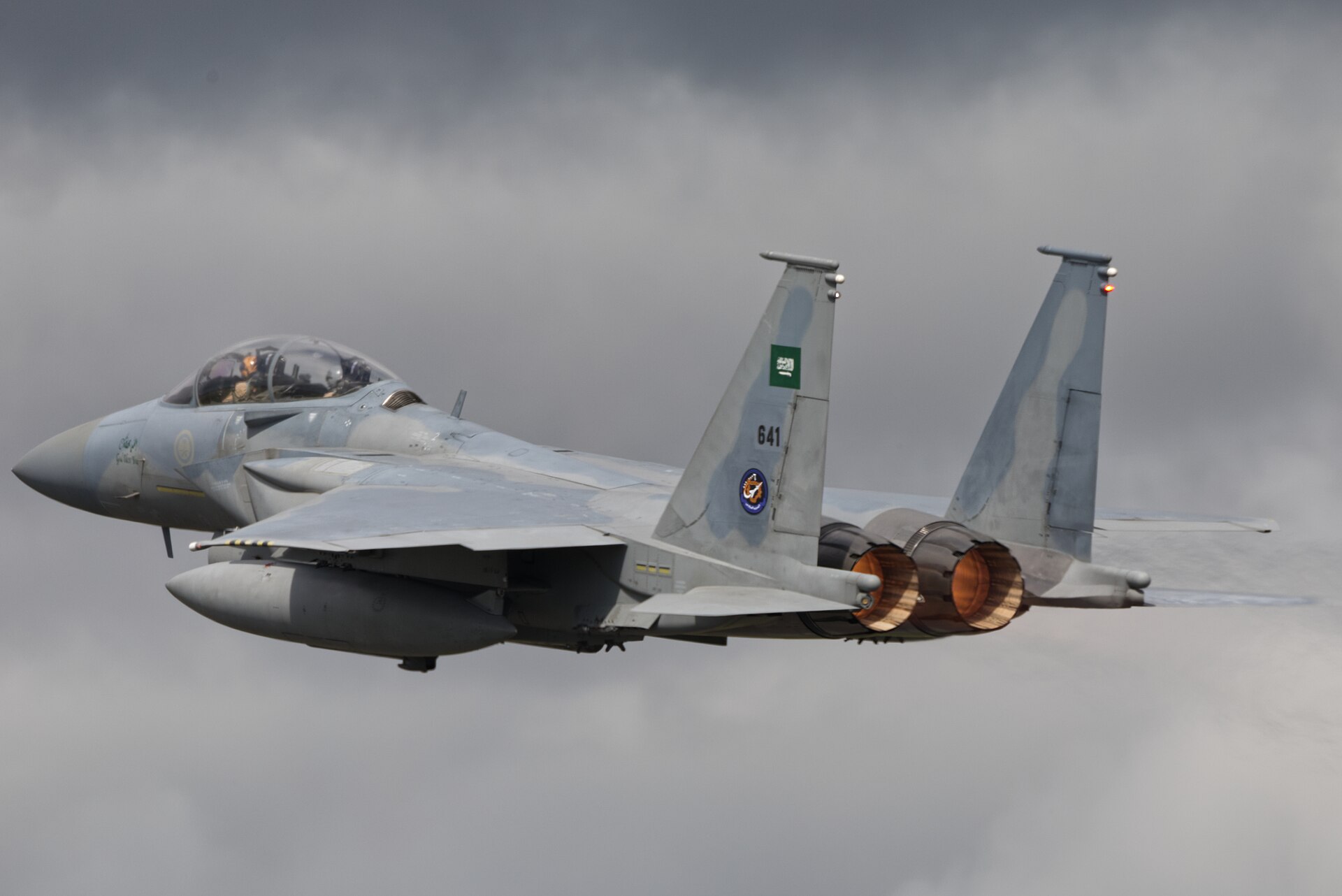
RIYADH — Reuters confirmed on May 13 that Royal Saudi Air Force jets struck Kataib Hezbollah targets in southern Iraq in April 2026 and participated in Operation Epic Fury strikes on Iranian territory in late March — the first confirmed Saudi offensive military operations against Iran in the kingdom’s history. The confirmation destroyed the legal and diplomatic fiction on which Saudi Arabia had built its entire wartime position: that it was a host nation and aggrieved party, not a combatant.
Under international humanitarian law, Saudi Arabia is now a co-belligerent in the US-Iran war. The classification is not academic. It strips the kingdom of the mediator status it used to manage backchannel negotiations with Tehran, exposes its economic infrastructure to legitimate military targeting under IHL, and reveals that the $142 billion US arms deal purchased the equipment of a warfighting state without the treaty protections of one. Every diplomatic architecture Riyadh constructed since February 28 — the ceasefire co-sponsorship, the Araghchi phone calls, the Pakistani channel management — rested on a premise that Reuters has now publicly incinerated.
Table of Contents
- The Deniability Ladder That Collapsed
- What Does Co-Belligerent Status Mean Under International Law?
- How Does Co-Belligerency Destroy Saudi Mediation Credibility?
- Why Would Iran Escalate Targeting of Saudi Infrastructure Now?
- The $142 Billion Gap Between Hardware and Treaty
- The Project Freedom Paradox
- Did Saudi Covert Strikes Actually Work?
- What Falls When the Premise Collapses
The Deniability Ladder That Collapsed
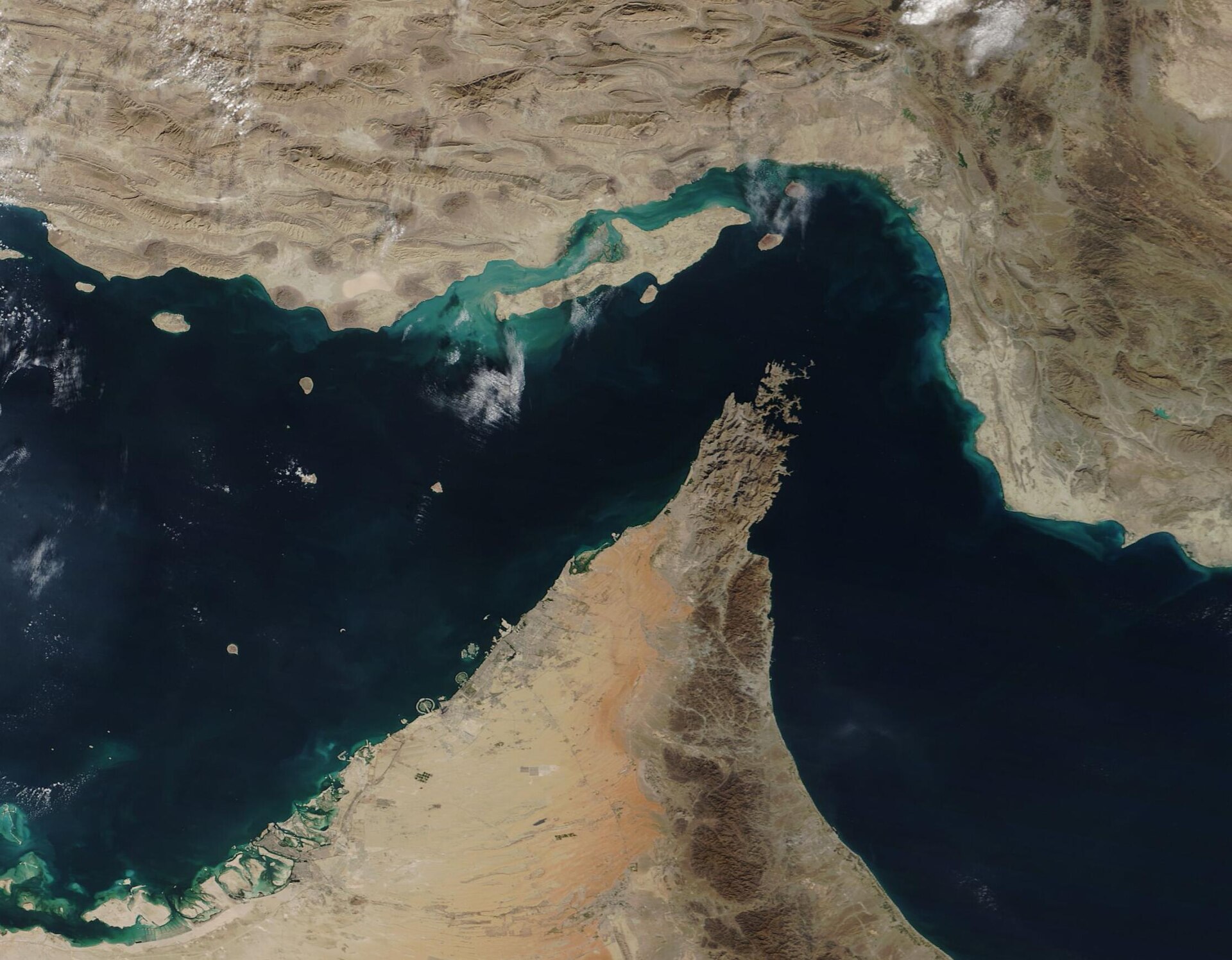
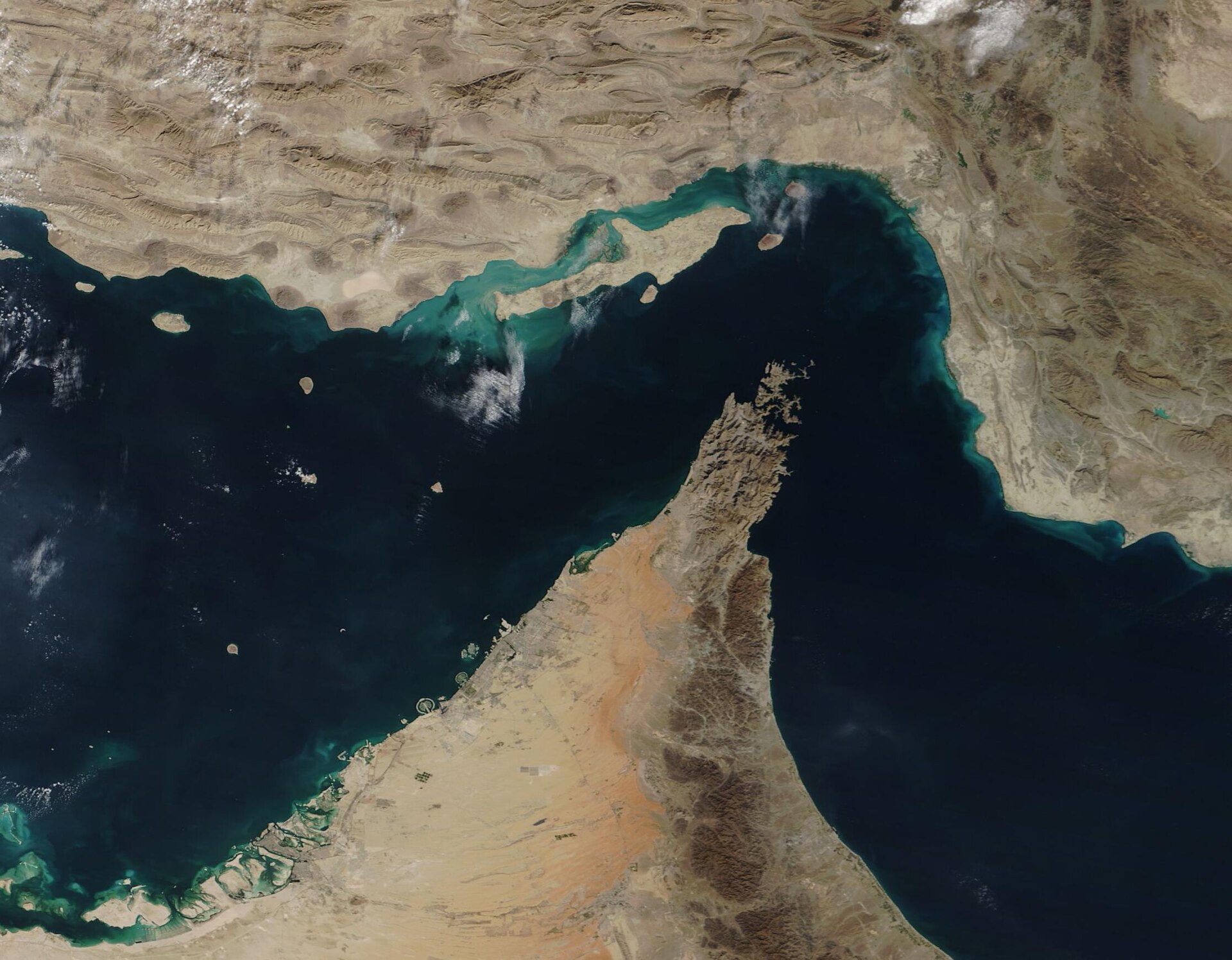
Saudi Arabia operated on a graduated scale of military involvement throughout the conflict, each rung calibrated to stay below the threshold of legal belligerency. Intercepting Iranian missiles over Saudi airspace was self-defense, legally unambiguous. Sharing intelligence with Washington was cooperation, not combat. Even opening King Fahd Air Base in Taif to American strike aircraft could be argued, if uncomfortably, as host-nation support rather than offensive participation — Middle East Eye and Iran International both reported the base opening in March, and Riyadh did not dispute it.
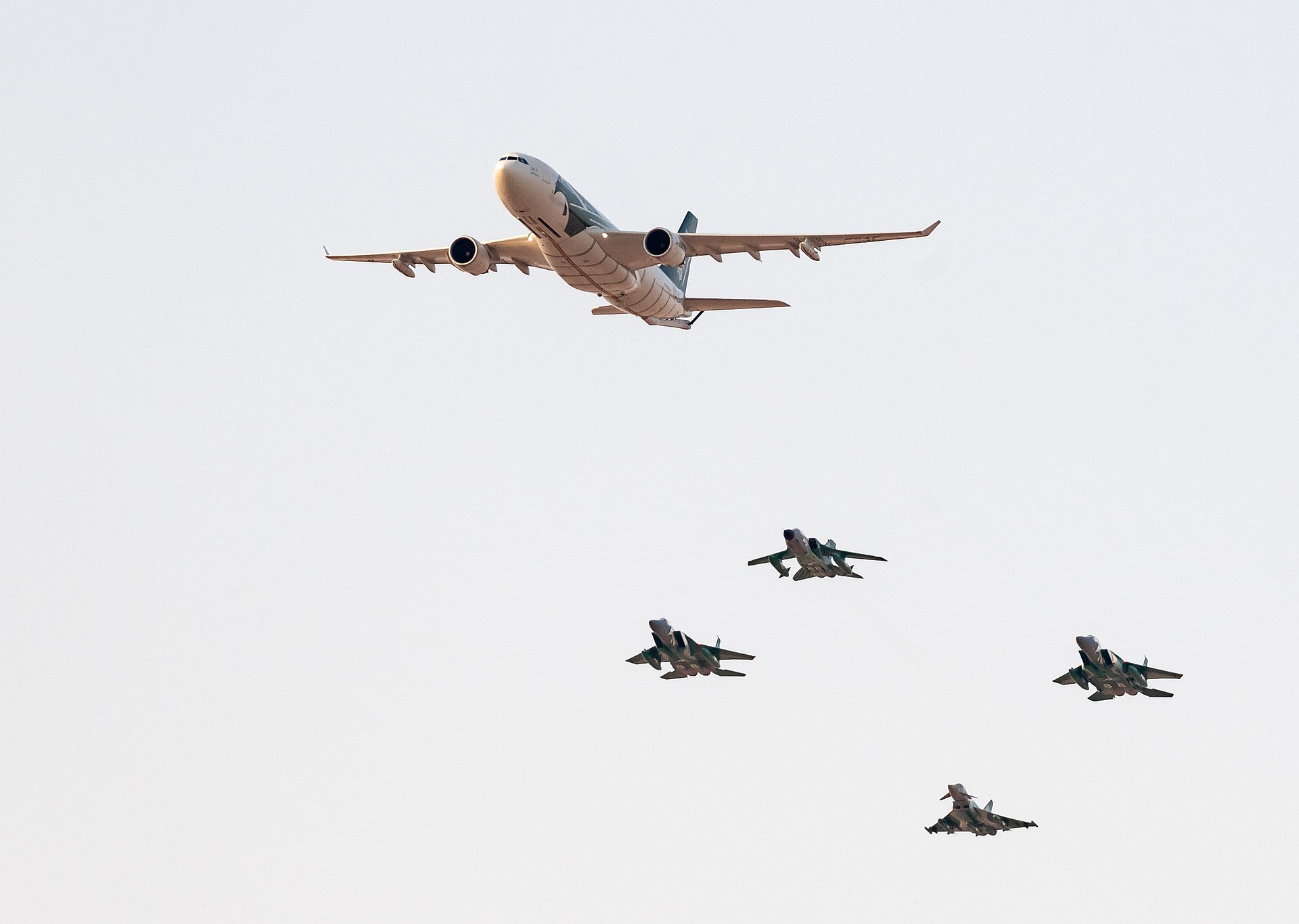
Reuters collapsed the top two rungs of that ladder in a single dispatch. RSAF jets struck a Kataib Hezbollah drone and communications facility in southern Iraq in April, killing fighters belonging to a militia that Reuters described as commanding “tens of thousands of fighters and arsenals including missiles and drones.” Separately, Saudi and Emirati jets participated in Operation Epic Fury strikes on Iranian territory in late March — the first Saudi direct military action on Iranian soil. Kuwait, too, launched missiles at least twice from its own territory into Iraq targeting Kataib Hezbollah, according to the same Reuters report. Bloomberg’s documented sequencing of the Saudi-UAE fracture establishes that MBS declined MBZ’s proposal for a joint Gulf strike before conducting those operations unilaterally — a sequencing that explains why the Emirates and Saudi Arabia entered the same coalition through separate decisions rather than a shared command.
The kingdom’s response was to pretend it had not happened. A Saudi foreign ministry official told Reuters the kingdom sought “de-escalation, self-restraint and the reduction of tensions,” declining to confirm or deny the strikes. Prince Faisal bin Farhan’s March 19 statement — “the kingdom reserved the right to take military actions if deemed necessary” — was the last public signal before covert operations began, and the post-Reuters posture reverted entirely to the language of restraint: a complete contradiction of confirmed behaviour.
What Does Co-Belligerent Status Mean Under International Law?
Co-belligerency under international humanitarian law means Saudi Arabia is now legally a party to the armed conflict with Iran, carrying every obligation and vulnerability that status entails. Chatham House’s 2024 analysis of IHL frameworks established the threshold clearly: “The support one entity provides to parties in existing conflicts may transform it into a co-belligerent, subject to IHL obligations. Being a co-party simply means being a party to an armed conflict — all the legal implications of party status apply equally.”
The Middle East briefing 3,000+ readers start their day with.
One email. Every weekday morning. Free.
The implications are severe and specific. Under IHL, a co-belligerent’s economic infrastructure becomes a legitimate military target — not under the adversary’s rules of engagement, but under the internationally recognized laws of armed conflict. Abqaiq, which processes more than seven million barrels per day and remains the nerve centre of Saudi crude operations, is no longer civilian infrastructure enjoying protection under the principle of distinction. Ras Tanura, struck on March 2 and shut for weeks before exports were rerouted, was already being hit before the legal reclassification — now the strikes carry a different legal character entirely.
The co-belligerency threshold was arguably crossed before the Iraq strikes ever happened. Opening King Fahd Air Base for offensive US operations against Iran, independently reported by Middle East Eye and Iran International, constituted a direct enabling action for combat operations — a higher threshold than intelligence sharing or defensive interception. The RSAF strikes on Iraqi and Iranian territory did not create co-belligerency so much as render it undeniable.
| Action | Legal classification | IHL threshold crossed? |
|---|---|---|
| Missile interception over Saudi airspace | Self-defence (Article 51, UN Charter) | No |
| Intelligence sharing with US/coalition | Cooperation, not combat | No |
| Opening Taif base for US offensive strikes | Enabling offensive operations | Arguable — strong case |
| RSAF strikes on Kataib Hezbollah in Iraq | Offensive military operations against third-party target | Yes |
| RSAF strikes on Iranian territory (Operation Epic Fury) | Direct attack on adversary sovereign territory | Unambiguous |
Human Rights Watch’s Bonnie Docherty, who leads the organization’s arms division, has stated since February that “all parties to the conflict have been responsible for serious violations of the laws of war, including possible war crimes.” The Reuters confirmation gives that assessment a new subject: Saudi Arabia is no longer being evaluated as a victim of Iranian aggression, but as a party whose own military conduct falls under IHL scrutiny. Every RSAF sortie over Iraq and Iran is now reviewable under the same legal framework that governs American and Iranian operations — including the proportionality and distinction requirements that HRW has already documented violations of by other belligerents.
How Does Co-Belligerency Destroy Saudi Mediation Credibility?
Saudi Arabia’s mediation architecture was not peripheral to its war strategy — it was the strategy. Riyadh co-sponsored UNSC ceasefire language, managed the Pakistani diplomatic channel that produced the Islamabad talks, and maintained direct phone contact with Iran’s Foreign Minister Araghchi even as Iranian missiles struck Saudi territory. The premise underlying all of this was that Saudi Arabia, as an aggrieved but non-combatant party, had standing to broker and guarantee outcomes between Washington and Tehran.
That premise is dead. No state in the modern history of armed conflict has simultaneously conducted offensive strikes against three separate targets — Iraqi militias, Iranian sovereign territory, and joint operations alongside US forces — while serving as the primary diplomatic backchannel to the adversary and co-sponsoring ceasefire resolutions at the United Nations Security Council. Pakistan offers the closest structural parallel: Islamabad is simultaneously Iran’s interlocutor, Saudi Arabia’s treaty ally under the Saudi-Pakistan Military Defence Agreement, and host to the Islamabad talks. The critical difference is that Pakistan has not conducted offensive operations against any party.
“Cowering in silence and begging Iran for mercy.”
Hussain Abdul-Hussain, Foundation for Defense of Democracies, on Saudi Arabia’s public posture, May 12, 2026
The FDD’s Abdul-Hussain used that phrase to describe a Saudi leadership simultaneously participating in military strikes, rebuffing Israel, and positioning itself as a neutral arbiter. That assessment was published on May 12, one day before Reuters made the co-belligerency official. CSIS offered a more measured version of the same structural diagnosis: Saudi Arabia “may be reluctant to undertake offensive military operations against Iran, unlike the United States, because Saudi Arabia will have to live in the region and with its neighbours long after the conflict ends.” The Reuters report proved CSIS wrong on reluctance — Saudi Arabia was not reluctant; it was covert.
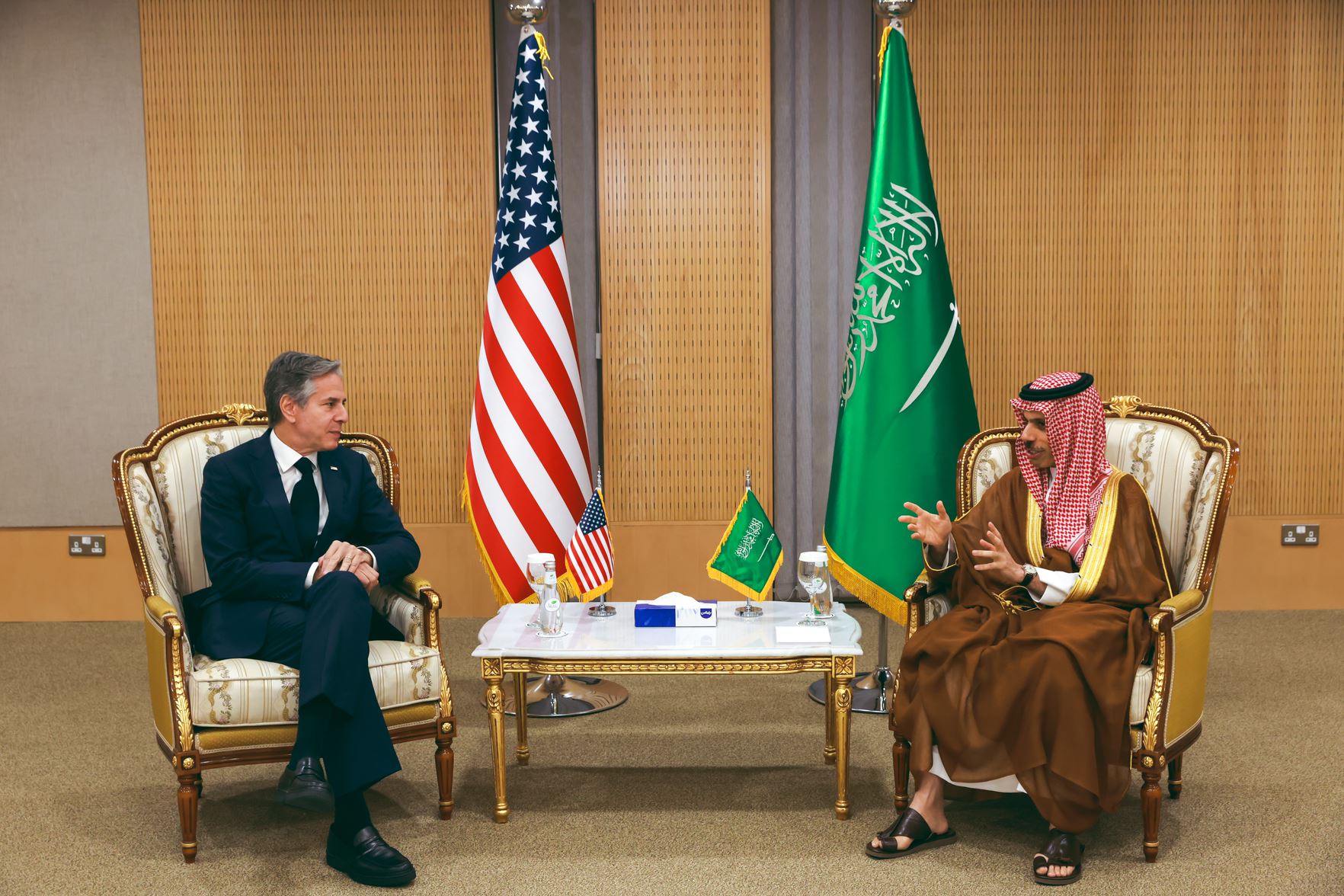
The Araghchi phone calls illuminate the trap’s mechanics most precisely. Iran’s foreign minister called Prince Faisal bin Farhan twice within 24 hours around blockade day on April 13 to discuss ceasefire diplomacy, according to reporting tracked by this publication. Tehran was receiving Saudi mediation outreach while knowing — from battlefield intelligence, not Reuters — that Saudi jets had struck Iranian territory weeks earlier. The coexistence of those tracks was Iran’s leverage, not Saudi Arabia’s: Tehran accepted the calls because a mediator who is secretly a combatant is a mediator you can blackmail.
Why Would Iran Escalate Targeting of Saudi Infrastructure Now?
The IRGC’s targeting doctrine underwent a formal shift on April 7, more than five weeks before Reuters published its confirmation, when Brigadier General Ebrahim Zolfaqari declared that “all such precautions have been removed” regarding strikes on regional US partners. The full statement was explicit: “Regional American partners should know that, until now we have exercised significant restraint for the sake of good neighbourliness and have taken precautions in selecting retaliatory targets, but from now on, all such precautions have been removed.” The IRGC also threatened to deprive “the Americans and its allies of regional oil and gas for years.”
The timing of Zolfaqari’s statement is the critical detail. It was issued after Saudi covert strikes on Iranian territory in late March but before the Reuters public confirmation in May, which means the IRGC was operating on its own battlefield intelligence rather than waiting for media reporting. Iran already knew. The Zolfaqari doctrine was a direct response to Saudi military action, and it functionally reclassified Saudi economic infrastructure as legitimate targets under Iran’s own rules of engagement.
The Reuters confirmation changes the calculus in one specific dimension: international legitimacy for escalation. Before May 13, any Iranian strike on Abqaiq or the East-West pipeline’s Yanbu terminus could be condemned as aggression against a non-combatant state. After May 13, Iran can frame identical strikes as lawful retaliation against a confirmed co-belligerent — and under IHL, the framing has legal substance. A co-belligerent’s economic infrastructure is targetable, and Saudi Arabia accepted that risk without securing the mutual defence treaty that would have placed those facilities under an allied protective umbrella.
The attack data tells its own story of what IRGC restraint looked like and what its absence might mean. Saudi Arabia absorbed more than 105 drone and missile attacks in the week of March 25–31 alone; after Saudi covert strikes on Iran, that rate fell to approximately 25 between April 1–6. Total Iranian strikes on Saudi territory across the conflict reached at least 38 missiles and 435 drones, with Ras Tanura struck on March 2 and shut for weeks. The question is no longer whether the IRGC will strike Saudi infrastructure — it already has, repeatedly — but whether the co-belligerency confirmation removes the last political constraint on targeting Abqaiq’s seven-million-barrel-per-day processing capacity.
The $142 Billion Gap Between Hardware and Treaty
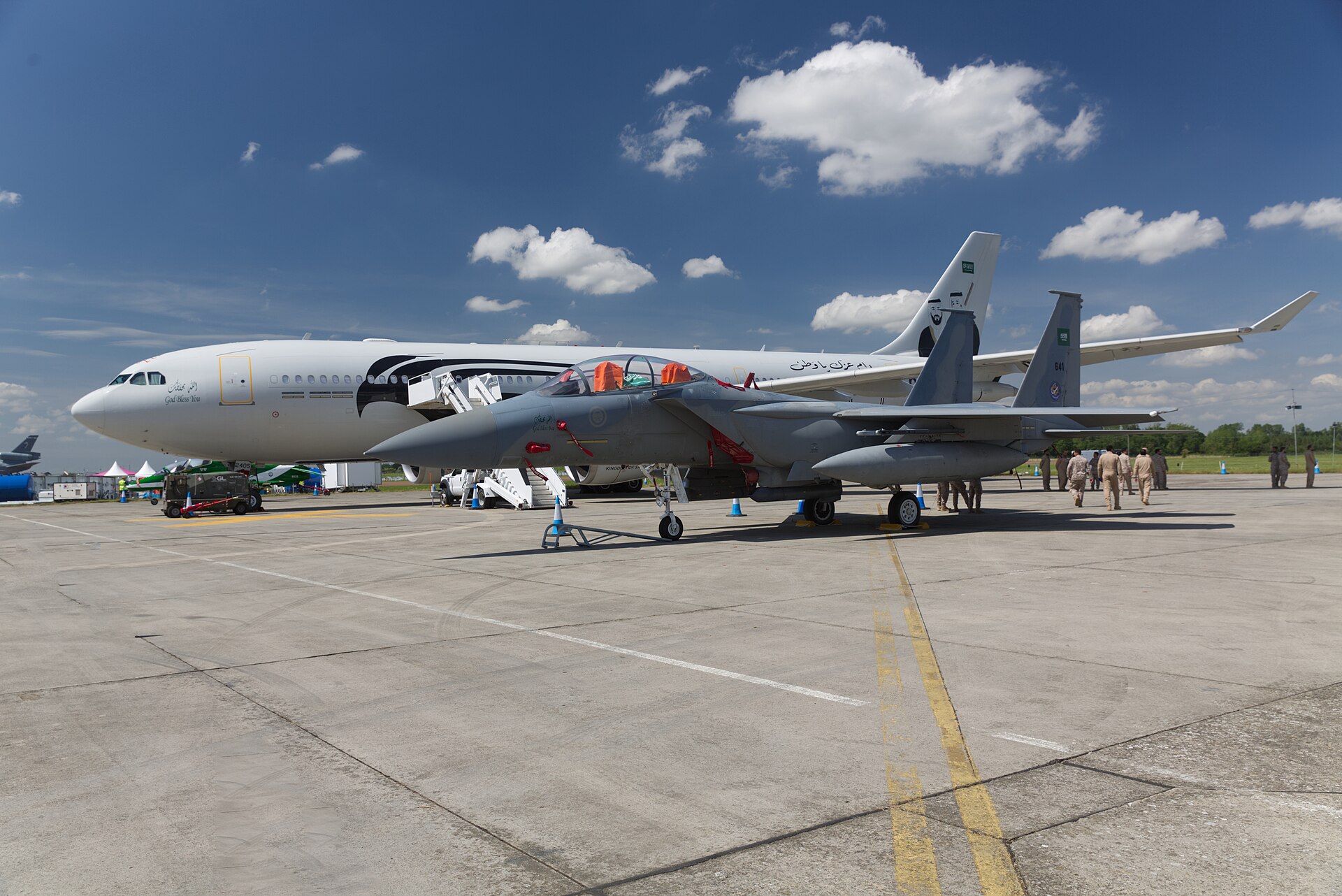
The $142 billion US-Saudi arms deal, signed in May 2025, covers air force and space systems, air and missile defence, maritime security, land forces modernisation, and information and communications technology. It is, by dollar volume, the largest bilateral arms transfer in history — and it contains no mutual defence treaty. The Stimson Center’s 2025 assessment warned the deal “may not add up to expectations,” and the gap between hardware acquisition and strategic protection has never been wider than it is this week.
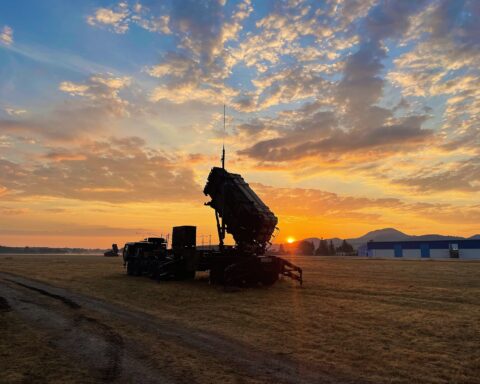
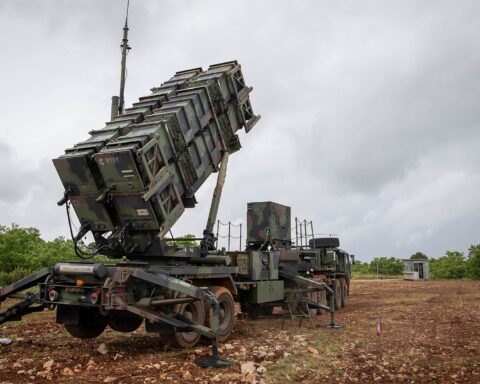
Saudi Arabia purchased the equipment a co-belligerent needs to fight and the platforms a co-belligerent needs to protect — but not the alliance framework that would make those platforms someone else’s problem if they were destroyed. When IHL reclassifies Abqaiq, Ras Tanura, and the Yanbu pipeline terminus as legitimate military targets, the US arms deal offers no legal umbrella and no automatic American response.
The hardware sits on Saudi soil, operated by Saudi personnel, defending infrastructure that is now legally targetable. The only thing the $142 billion bought in this scenario is a more expensive set of things for Iran to hit.
The production numbers make the exposure concrete. Saudi output dropped from 10.4 million barrels per day in February to 7.25 million in March — a 30 per cent collapse that the IEA called “the largest disruption on record.” Chatham House’s MENA programme noted that Aramco needs to reorient toward Red Sea export capacity of seven million barrels per day, but current East-West pipeline throughput sits at approximately four million. The two-chokepoint trap — Hormuz closed by the IRGC, Bab el-Mandeb vulnerable — means even the bypass route carries risk. Saudi Arabia’s Q1 2026 budget deficit hit $34 billion, a record, according to FDD analysis published May 12. The kingdom is bleeding revenue faster than it can reroute exports, and the co-belligerency classification means every remaining export facility is now a legal target.
The Project Freedom Paradox
The most revealing episode in Saudi Arabia’s co-belligerency was not the strikes themselves but what happened immediately after. Within 48 hours of conducting offensive operations on Iranian territory as part of Operation Epic Fury, Saudi Arabia vetoed Project Freedom — blocking US aircraft from Prince Sultan Airbase and denying Saudi airspace to American strike missions on May 5–6, forcing Trump to pause the broader operation. The restrictions were lifted on May 8 after what The Defense News and the New York Times described as Saudi Arabia and Kuwait “backing down.”
This is not the behaviour of a host nation exercising sovereignty over basing rights. It is the behaviour of a co-belligerent exercising independent strategic judgement about which escalatory actions serve its interests and which do not. Riyadh was willing to bomb Kataib Hezbollah in Iraq and strike Iranian territory alongside American jets, but it was not willing to let Washington use Saudi bases for a broader campaign whose consequences Riyadh could not control. The distinction is not between war and peace — it is between Saudi-directed war and American-directed war.
CSIS captured the underlying logic, even before Reuters confirmed the strikes: Saudi Arabia is simultaneously trying “to protect its own economic and societal transformation, navigate its relationship with the US president, and manage living near a country that will likely remain its principal antagonist.” The Project Freedom veto reveals that Riyadh resolved those competing pressures not by choosing neutrality or belligerency, but by trying to wage a selective, covert war while publicly maintaining the posture of a restraining influence on Washington. Reuters made that position untenable.
Did Saudi Covert Strikes Actually Work?
By one narrow tactical measure, they did. The fourfold drop in attack rate after the April covert operations — from more than 105 strikes in a single week to roughly 25 in the following six days — is a deterrence signal the IRGC received and acted on, adjusting its tempo in response to a cost it had not previously been forced to absorb. For a Saudi leadership watching missiles land on Ras Tanura and drone swarms traverse its eastern airspace, the covert strike option offered something no diplomatic channel had delivered: a measurable reduction in incoming fire.
The problem is that covert deterrence and public diplomacy cannot coexist indefinitely, and Reuters has now ended the coexistence. The tactical success of the strikes depended on deniability — Saudi Arabia could absorb the benefit of reduced Iranian attacks without absorbing the legal and diplomatic costs of acknowledged belligerency. Once the strikes are confirmed, the deterrence calculation inverts. Iran can no longer calibrate its response to an unacknowledged signal; it must now respond to a publicly established fact, and the IRGC’s institutional culture does not permit absorbing confirmed strikes on sovereign territory without escalatory retaliation.
Chatham House observed that the war has “slowed the kingdom’s decision-making process as the leadership reassesses its long-term strategy.” The reassessment is now operating under fundamentally different constraints. Saudi Arabia cannot return to the posture of a non-combatant mediator — the legal reclassification is not reversible through press statements or diplomatic language. The senior Saudi journalist Abd Al-Rahman Al-Rashed, whose March 2 social media post of a gravestone inscribed “The Islamic Republic: 1979–2026” was documented by MEMRI, represented a sentiment within the Saudi establishment that the kingdom should not pretend neutrality. Reuters has ensured it no longer can.
What Falls When the Premise Collapses
The diplomatic consequences will arrive in a specific sequence, and the first is already visible. Saudi Arabia’s standing as a ceasefire co-sponsor at the UNSC is compromised — any Iranian objection to Saudi-backed resolution language now carries the weight of a confirmed adversary sponsoring terms for its own conflict. The Pakistani channel, which Riyadh managed as a parallel track to the failed Islamabad talks, depends on Pakistan’s willingness to treat Saudi Arabia as a neutral facilitator rather than a party whose military actions must be accounted for in any ceasefire framework. That exposure deepened further when Trump flew from Beijing on May 15 and publicly disowned the diplomatic framework that was supposed to protect Saudi Arabia’s co-belligerent exposure, calling the ceasefire something he did “as a favour to Pakistan.”
| Saudi wartime asset | Pre-Reuters protection | Post-Reuters vulnerability |
|---|---|---|
| UNSC ceasefire co-sponsorship | Aggrieved-party standing | Iran can challenge Saudi neutrality in drafting process |
| Araghchi backchannel | Mediator-adversary ambiguity | Iran holds blackmail leverage (knew before Reuters) |
| Pakistan diplomatic channel | Saudi as neutral facilitator | Pakistan must account for Saudi as belligerent party |
| Abqaiq / Ras Tanura / Yanbu | Civilian infrastructure (IHL protected) | Co-belligerent economic infrastructure (IHL targetable) |
| $142B arms deal platforms | Defensive assets of non-combatant | Military assets of co-belligerent with no treaty shield |
| Vision 2030 narrative | Economic transformation under external threat | Economic transformation of an active warfighting state |
The economic exposure is the most dangerous layer. Saudi Arabia entered this war with Aramco’s output providing the fiscal foundation for Vision 2030, MBS’s defining domestic project. Chatham House identified the closure of Hormuz as “a key threat to Saudi Arabia’s Vision 2030 strategy” — and that assessment was written before co-belligerency made the kingdom’s remaining export infrastructure a legal target.
The granular evidence for that threat is now visible in Q1 data: a first-quarter audit of Vision 2030 Phase 3 shows private-sector non-oil GDP growth of 0.2 percent, a record quarterly deficit of $33.5 billion, FDI down an estimated 60–70 percent year-on-year, and a non-oil PMI that recorded its second-worst reading in 17 years — with every major Phase 3 target now facing an arithmetic gap compounded by the same legal exposure that makes the kingdom’s export infrastructure a legitimate target.
The 30 per cent production collapse the IEA called “the largest disruption on record” was achieved without touching Abqaiq directly. If the IRGC treats the Reuters confirmation as licence to target that facility’s seven-million-barrel-per-day processing capacity, the disruption would dwarf anything the conflict has produced so far.
Prince Faisal bin Farhan told Al Jazeera in March that “the kingdom is not going to succumb to pressure, and on the contrary, this pressure will backfire.” The pressure has backfired, but not in the direction he meant. The entire wartime position rested on three fictions operating in parallel: that covert strikes would stay covert, that a secret combatant could still broker peace, and that American hardware was a substitute for an American defence guarantee. Reuters destroyed the first fiction and the second collapsed with it, leaving only the third — the $142 billion in weapons purchased without the mutual defence treaty that would have made their use survivable. The IRGC, which removed “all precautions” in selecting targets five weeks before the world learned why, has been operating on the correct answer since April 7.
Frequently Asked Questions
What specific IHL obligations does Saudi Arabia now face as a co-belligerent?
As a confirmed co-belligerent, Saudi Arabia is bound by the full body of IHL applicable to parties in international armed conflict, including the obligation to distinguish between military and civilian targets in its own operations, the duty to investigate potential violations by its forces, and accountability under the grave breaches regime of the Geneva Conventions. Critically, Saudi Arabia’s own military personnel captured by Iran or its proxies would be entitled to prisoner-of-war status — a classification that simultaneously protects Saudi fighters and formally acknowledges the kingdom’s combatant role in any future legal proceedings, including potential International Criminal Court referrals.
Could Saudi Arabia reverse its co-belligerent status through diplomatic action?
Co-belligerency under IHL is determined by conduct, not by declaration — a state cannot unilaterally withdraw from belligerent status through press statements or diplomatic repositioning while the conflict remains active. Saudi Arabia would need to demonstrably cease all offensive military operations, withdraw enabling support such as the Taif basing arrangement, and establish a clear temporal break from combat participation. Even then, IHL obligations related to conduct during the period of belligerency — including accountability for strikes in Iraq and Iran — would persist indefinitely, as there is no statute of limitations on grave breaches of the Geneva Conventions.
How does Saudi co-belligerency affect the legal status of the $142 billion arms deal?
The Arms Trade Treaty, to which neither the United States nor Saudi Arabia is a party but which reflects customary norms, requires exporters to assess whether transferred weapons will be used to commit IHL violations. Several European states that supply components for US weapons systems are ATT signatories, creating potential legal challenges to supply chains feeding into Saudi military operations. The Leahy Law, which prohibits US military assistance to foreign units credibly implicated in gross human rights violations, could also be triggered if Saudi strikes in Iraq or Iran are found to have caused disproportionate civilian harm — a determination that HRW’s existing documentation of “serious violations of the laws of war” by all parties makes plausible.
What is Kataib Hezbollah’s likely response to the confirmed Saudi strikes?
Kataib Hezbollah notably issued no public statement or formal retaliation threat following the Reuters report, a silence that regional analysts interpret as deference to Tehran’s broader strategic calculation rather than operational incapacity. The militia commands tens of thousands of fighters with missile and drone arsenals capable of reaching Saudi territory from southern Iraq without transiting Kuwaiti or Jordanian airspace. Any retaliation decision will be made in Tehran, not Baghdad, and the IRGC’s April 7 removal of “all precautions” in targeting regional partners provides the doctrinal framework for authorising Kataib Hezbollah operations against Saudi targets as a proxy response — maintaining Iranian deniability while escalating pressure on Riyadh through a vector the $142 billion arms deal was not designed to counter. King Salman’s response to both the co-belligerency trap and the Kataib Hezbollah threat arrived fourteen days after the Bubiyan infiltration, in the form of seven royal decrees that restructured the National Guard command, the Finance Ministry, and the Cabinet secretariat simultaneously — a wartime realignment analysed in King Salman’s Seven Decrees Were One Decision.
Why did Kuwait’s parallel strikes receive less attention than Saudi Arabia’s?
Kuwait’s missile strikes into Iraq from its own territory, confirmed in the same Reuters report, received less analytical attention because Kuwait has not attempted to maintain a mediator posture during the conflict. Kuwait’s co-belligerency carries its own significant risks — the Bubiyan infiltration incident demonstrated Iranian willingness to probe Kuwaiti territorial integrity — but Kuwait was not co-sponsoring UNSC resolutions, managing backchannel negotiations, or positioning itself as a neutral guarantor. The diplomatic damage of confirmed strikes is proportional to the diplomatic architecture they contradict, and Saudi Arabia’s architecture was vastly more ambitious than Kuwait’s. That architecture now extends further: Riyadh is simultaneously floating a Helsinki-style non-aggression pact with Tehran — a diplomatic initiative that only deepens the contradictions between Saudi Arabia’s co-belligerent status and its self-appointed mediator role. The reverse of that trap — where Washington acts without Riyadh’s blessing but the IRGC retaliates on Saudi soil regardless — is the scenario examined in Saudi Arabia’s Reverse Co-Belligerent Trap: The Veto MBS Won’t Get Twice.