Table of Contents
- The Strike Near Limah
- The Floating Armoury Off Fujairah
- Why Did the IRGC Hit an Indian Ship?
- What Araghchi Said in New Delhi While the Haji Ali Sank
- Does the Trump-Xi Hormuz Declaration Change Anything?
- The Escalation in Numbers
- Background: India’s Vanishing Neutrality Corridor
- Frequently Asked Questions
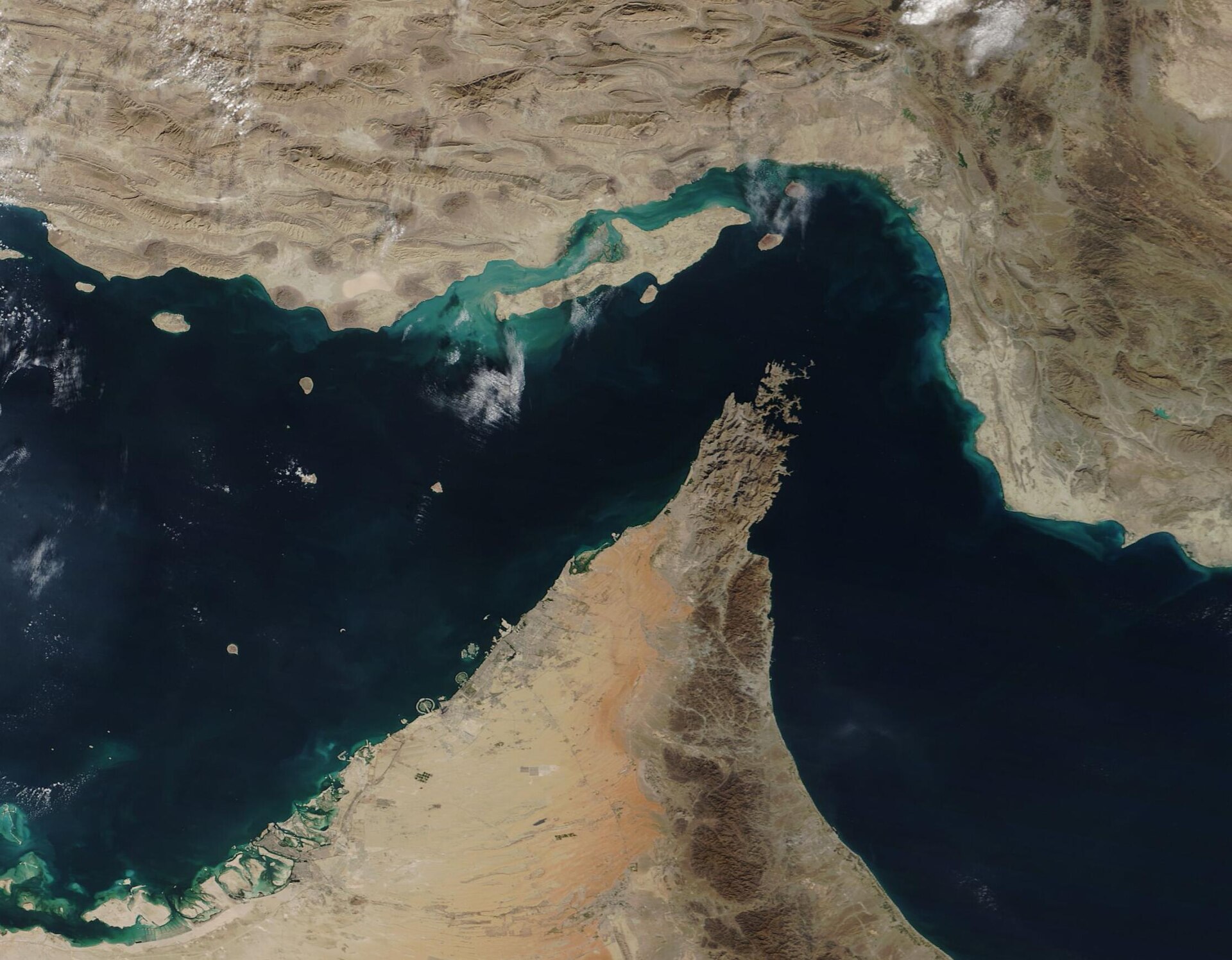
MUSCAT — The Islamic Revolutionary Guard Corps sank an Indian-flagged livestock carrier off Oman at 03:30 on May 13 and seized a floating armoury near Fujairah in the same operational window — two maritime actions bracketing the hours in which Donald Trump and Xi Jinping declared in Beijing that the Strait of Hormuz “must remain open.” In New Delhi, India’s external affairs minister S. Jaishankar opened the BRICS Foreign Ministers’ meeting calling for “safe, unimpeded maritime flows,” while Iran’s Abbas Araghchi — present at the same summit — was publicly accusing the UAE of being “directly involved in the aggression against my country.”
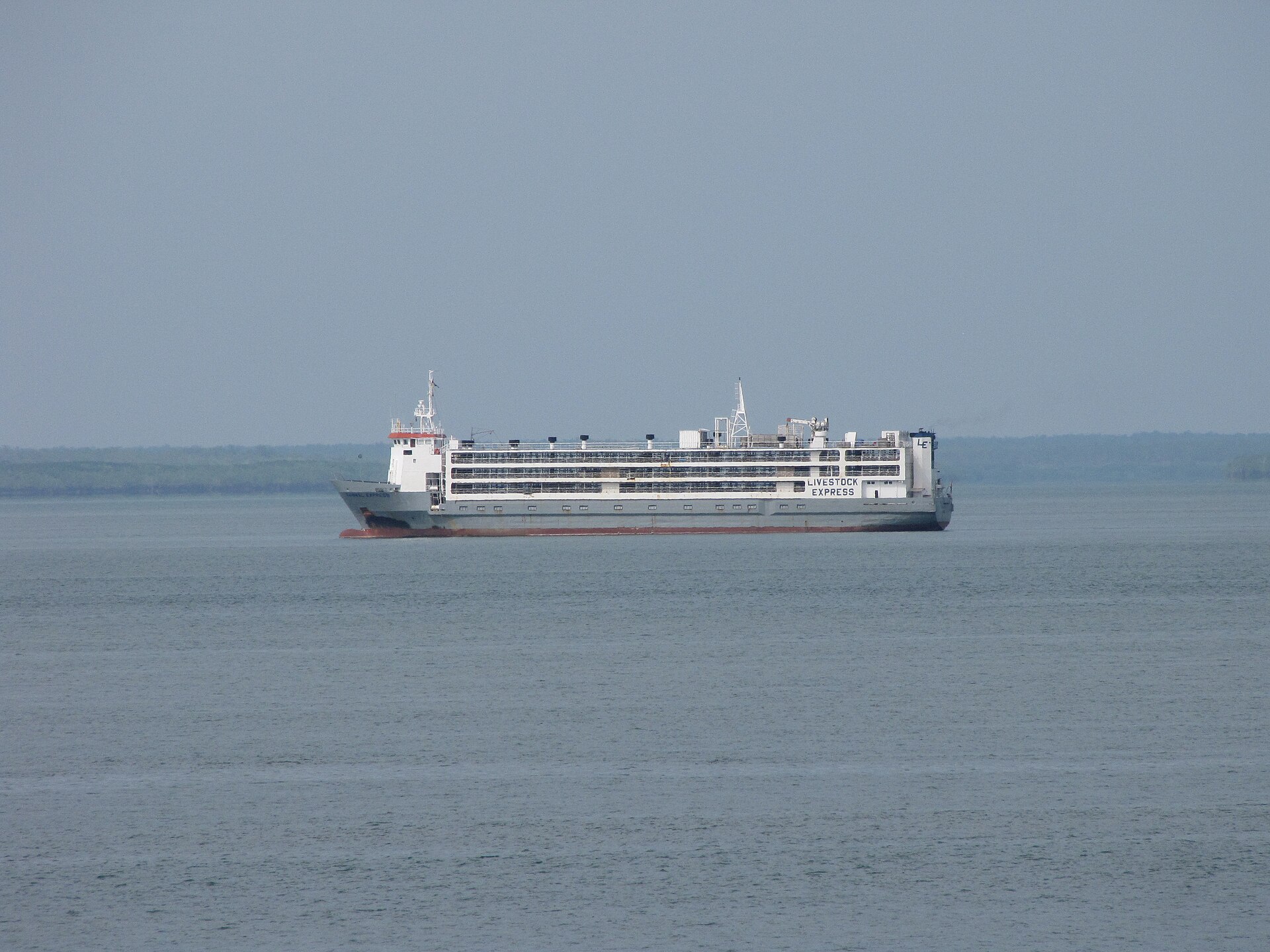
The MSV Haji Ali, a livestock carrier registered at Salaya Port in Gujarat’s Devbhoomi Dwarka district, was en route from Berbera, Somalia to Sharjah carrying approximately 4,000 animals and 14 Indian crew when a suspected drone or missile strike caused a major explosion and fire that sent the vessel to the bottom near Limah, just south of the Strait of Hormuz (India Shipping News, Anadolu Agency, Jakarta Post). All 14 crew — one tandel and 13 sailors — were rescued by the Oman Coast Guard and Royal Oman Police and brought to Dibba Port (Free Press Journal, PortNews). Iran’s Tasnim News Agency published that the vessel had “ignored repeated warnings”; no formal IRGC claim of responsibility has been issued.
The Haji Ali is the first confirmed hull loss of an Indian-flagged vessel in the Iran-Gulf war. It follows the April 18 IRGC gunboat attacks on the VLCC Sanmar Herald and bulk carrier Jag Arnav — both Indian-flagged, both holding Iranian FM clearance — which amounted to warning fire against a country the IRGC had no apparent operational reason to antagonize. The escalation from shots across the bow to a ship on the seabed is not incremental; it is categorical, and it landed on the single day when every major capital involved in the Hormuz crisis was publicly calling for the strait to stay open.
The Strike Near Limah
The MSV Haji Ali (BDI 1492) was a livestock carrier registered at Salaya Port in Devbhoomi Dwarka district, Gujarat — a small-craft port serving India’s western coastal commodity trade, not a strategic terminal or an energy hub. The vessel departed Berbera, Somalia on May 5 carrying approximately 4,000 livestock animals, bound for Sharjah, UAE, with a crew of 14 Indian nationals (India Shipping News, PortNews). It was the kind of ship that normally completes a voyage without generating a single headline anywhere.
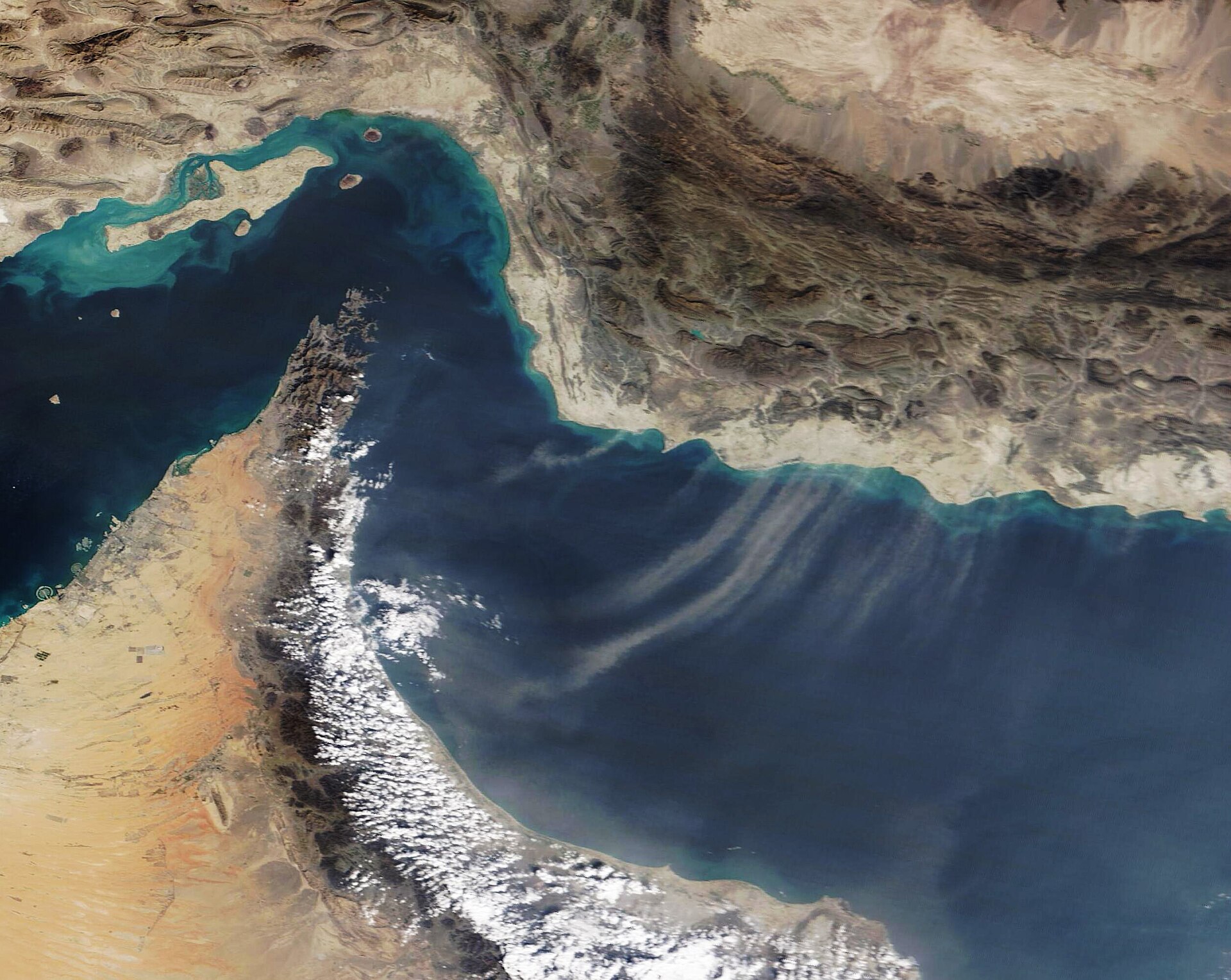
At approximately 03:30 local time on May 13, the vessel was struck near Limah, Oman, just south of the Strait of Hormuz. A suspected drone or missile strike caused a major explosion and subsequent fire that sank the vessel (Jakarta Post, Anadolu Agency). Neither Indian nor Omani authorities have officially confirmed the weapon type or attributed the attack to a specific actor. Tasnim News Agency, the IRGC-aligned semi-official outlet, published that the Haji Ali had “ignored repeated warnings” — the justification framework that has preceded every documented IRGC maritime action since the war began without ever graduating into a formal claim of responsibility.
India’s Ministry of External Affairs responded on May 14. Spokesperson Randhir Jaiswal stated: “The attack on an Indian-flagged ship off the coast of Oman yesterday is unacceptable, and we deplore the fact that commercial shipping and civilian mariners continue to be targeted. Targeting commercial shipping and endangering innocent civilian crew members, or otherwise impeding freedom of navigation and commerce, should be avoided” (The Wire, Free Press Journal, The Statesman). The language is revealing: “should be avoided” rather than “will not be tolerated,” a formulation that condemns an attack while preserving diplomatic room with the country that carried it out.
The Middle East briefing 3,000+ readers start their day with.
One email. Every weekday morning. Free.
The Floating Armoury Off Fujairah
In the same operational window, a second IRGC maritime action unfolded approximately 40 nautical miles northeast of Fujairah. The Honduras-flagged Hui Chuan — a floating armoury that stores weapons and ammunition for private maritime security contractors running anti-piracy escorts in the Gulf of Oman and Indian Ocean — was boarded by what UKMTO described as “unauthorised personnel whilst at anchor” and directed toward Iranian territorial waters (UKMTO advisory via Al Arabiya, Bloomberg, Maritime Executive). This publication covered the Fujairah seizure separately.
The Hui Chuan had been anchored at that position for approximately one month (UPI, Athens Times). Floating armouries exist because port states in the Gulf and East Africa prohibit armed commercial vessels from entering their harbors; security contractors collect weapons from these anchored ships before high-risk transits and return them afterward. Seizing one hands the IRGC not only a physical weapons cache but operational intelligence — client manifests, route schedules, contractor communications — while eliminating a node in the commercial anti-piracy infrastructure that Gulf-bound shipping depends on.
No official source has identified the specific IRGC unit responsible for the boarding. The operational signature — a vessel taken at anchor by fast-boat teams and directed toward Iranian territorial waters — matches the pattern documented in the April 22 seizures of the MSC Francesca and the Epaminodas, both taken after Iran’s foreign ministry had declared the strait “completely open.” The Hui Chuan seizure adds a new dimension: floating armouries are part of the legitimate commercial security ecosystem, not military assets, and taking one signals that the IRGC considers every anchored vessel in the Gulf of Oman within its operational reach regardless of function or flag.
Why Did the IRGC Hit an Indian Ship?
India is the only founding BRICS member that has not condemned the US-Israeli strikes on Iran or the killing of Khamenei (CNBC). That deliberate silence was structurally useful to Tehran: it preserved India as a diplomatic channel, a multilateral neutral, and — under OFAC General License U — an actual crude oil customer. India imported approximately four million barrels of Iranian crude under GL-U before the waiver expired on April 19 with no renewal (The National, CNBC). India’s neutrality corridor rested on the premise that staying equidistant from Tehran and the Gulf states was commercially and diplomatically sustainable.
The April 18 IRGC attacks on the Sanmar Herald and Jag Arnav broke that premise. Both vessels were Indian-flagged, both held prior Iranian FM clearance, and the IRGC fired on them anyway — demonstrating that the foreign ministry’s diplomatic track and the IRGC Navy’s operational track serve different masters. The Haji Ali sinking confirms the second escalation tier: a livestock carrier from Gujarat with no conceivable strategic profile, destroyed south of the strait. The IRGC is not targeting Indian shipping because India is hostile; it is targeting Indian shipping because India is useful, and coercing useful actors is the operational logic of the IRGC’s Hormuz management regime.
Two India-bound LPG carriers — the Symi on May 13 and the NV Sunshine on May 14 — transited Hormuz safely in the same 24-hour window as the Haji Ali’s destruction (Business Standard, The Week). The IRGC is applying selective pressure, not a blanket blockade on Indian shipping: some vessels pass, others are fired upon, and now one has been sunk. The mechanism forces New Delhi into a dependency in which each transit is a product of IRGC discretion rather than Indian sovereignty or international law.
The CSIS assessed that “India will try to salvage what it can from its Iranian relationship through calls for peace and by seeking special protection for Indian shipping and nationals.” The Council on Foreign Relations concluded that the conflict is “badly hurting New Delhi’s economic interests and forcing it to negotiate with Tehran practically ship-by-ship for essential cargoes.” Jaishankar confirmed as much, acknowledging that India’s transit arrangements are handled on a “case-by-case basis through diplomatic talks” rather than through any blanket arrangement with Iran (Marine Insight, Gulf News). The ship-by-ship framing is not a neutral description of process — it is an admission that every Indian vessel that enters the Hormuz corridor does so at the IRGC’s pleasure. The parallel dynamic for Saudi Arabia — whose crude exports to China have fallen sharply as the disruption persists — and what China’s agreement to purchase US crude means for Saudi Aramco’s market share is examined in the companion analysis.
What Araghchi Said in New Delhi While the Haji Ali Sank
Abbas Araghchi arrived at the BRICS Foreign Ministers’ meeting in New Delhi on May 14 — the morning after the Haji Ali sank, the same day India’s MEA issued its condemnation. He used the platform not to address the sinking of an Indian ship but to publicly escalate against the UAE, declaring that the Emirates was “directly involved in the aggression against my country” by providing “bases, airspace, territory, intelligence, and facilities” to the US-Israeli campaign (Reuters via Times of Israel, Iran International, Al-Monitor).
The accusation landed inside India’s diplomatic showcase. New Delhi had positioned the BRICS meeting as a demonstration of its convening power — proof that India could keep Iran, Saudi Arabia, and the UAE in the same multilateral room while a Gulf war raged outside. Araghchi’s statement, delivered at a table where India was urging restraint, subordinated the host’s agenda to Iran’s bilateral grievance against a third country. Jaishankar’s call for “safe, unimpeded maritime flows” at the same meeting (Gulf News, Al Jazeera), issued while an Indian ship was on the seabed off Oman and while Iran’s own foreign minister was escalating rhetoric in the same building, marked the distance between India’s aspirational diplomacy and the operational facts on the water.
The kinetic and diplomatic tracks were running in deliberate parallel. Araghchi was in New Delhi calling for multilateral solidarity while IRGC fast boats were seizing the Hui Chuan off Fujairah and the Haji Ali’s 14 crew were recovering at Dibba Port, Oman. This is not a contradiction in Iranian policy — it is the architecture. Since the war began, the IRGC has maintained that the foreign ministry’s diplomatic channel and the IRGC’s operational channel serve different audiences, and that the audience with boats, drones, and missiles is the one that determines what moves through the strait and what does not.
Does the Trump-Xi Hormuz Declaration Change Anything?
Trump and Xi’s joint statement that the Strait of Hormuz “must remain open” was issued on the same day the IRGC demonstrated, through two separate maritime operations, that it does not treat summit communiqués as operational constraints. Xi agreed not to supply military equipment to Iran — “a big statement,” Trump told Fox News’ Hannity — and Treasury Secretary Scott Bessent told CNBC from Beijing that China would work “behind the scenes, to the extent anyone has any say over the Iranian leadership.” The qualification in Bessent’s phrasing is the declaration’s actual substance.
Beijing has commercial leverage over Tehran — Chinese refineries remain Iran’s largest crude customer, and Chinese intermediaries have brokered individual Hormuz transits since the war began. But the IRGC’s command structure does not route through Beijing’s commercial preferences. Xi’s endorsement of Hormuz openness was a diplomatic positioning exercise delivered from the Great Hall of the People, not an operational order delivered to the IRGC Navy headquarters on Qeshm Island. On May 12, the day before the Haji Ali sinking, 668 IRGC high-speed craft were observed across all five tracked zones — 2.9 times the prior-week peak of 230 on May 4 (UANI). Beijing sent an ambassador to the BRICS summit in Delhi while Wang Yi stayed for the Trump meeting; the IRGC sent 668 fast boats to the strait.
A declaration from Beijing does not clear the mines the IRGC has laid, does not replace the four Avenger-class mine countermeasure ships the US Navy decommissioned from Bahrain in September 2025, and does not unwind the double blockade in which the US controls the Arabian Sea approach and the IRGC controls the Gulf of Oman exit. CENTCOM has redirected 67 commercial vessels and disabled four others since the naval blockade began on April 13 (Nebraska TV, Middle East Eye). Saudi Arabia co-sponsored a UNSC Hormuz resolution that was vetoed; now Trump has co-signed a statement with Xi that carries no enforcement mechanism and no timeline. The operational facts of May 13 were a sunk Indian ship and a seized floating armoury, and no number of joint declarations alters either one.
The Escalation in Numbers
UKMTO recorded 47 maritime incidents between February 28 and May 11, 2026: 27 attacks, 18 suspicious activity cases, and two hijackings (Maritime Executive). The Haji Ali sinking and the Hui Chuan seizure extend that count by at least two, with UKMTO incident classification typically lagging actual events by 24 to 48 hours. The pace has not plateaued since the war began; the 47 incidents across 72 days average one incident every 36 hours, and the rate has accelerated since the US blockade began on April 13.
The 2.9-fold craft surge detailed above was not a reaction to the May 13 operations — it preceded them by 24 hours. The geography of that pre-positioning matters: 668 IRGC fast boats were distributed across the full length of the Iranian littoral from Bandar Abbas to Jask, covering every approach that any vessel transiting the strait must pass through, including the Haji Ali’s intended route to Sharjah. A separate Windward AI count on May 13 itself recorded 342 fast-attack boats across five monitored zones, confirming the IRGC small-craft posture held through the operational window that produced both the Haji Ali and Hui Chuan actions.
Thirteen Indian-flagged vessels remain stranded west of the Strait as of early May (Marine Insight). Approximately 90 percent of India’s LPG imports transit through Hormuz (CNBC). The Haji Ali was not a tanker carrying strategic crude, not a container ship moving manufactured goods, and not a vessel transporting material with any conceivable military application — it was a livestock carrier hauling 4,000 animals from Berbera to Sharjah. The IRGC’s target selection communicates that the filtering mechanism applied to Hormuz traffic is political, not strategic: ships are sunk for whose flag they fly and what coercive leverage that flag generates.
Background: India’s Vanishing Neutrality Corridor
OFAC General License U, issued March 20, 2026, authorized Indian refineries to purchase Iranian crude loaded on or before that date — a 30-day window that expired April 19 with no renewal. Indian Oil Corporation and Bharat Petroleum stayed on the sidelines due to compliance risk; Nayara Energy, with its Rosneft parentage, faced stacked Russia-nexus and Iran-nexus secondary sanctions exposure that made even a licensed transaction a reputational hazard.
India’s neutrality operated on three legs: non-condemnation of the US-Israeli strikes on Iran, which preserved diplomatic utility to Tehran; GL-U crude purchases, which gave India commercial skin in the Iranian relationship; and BRICS convening power, which kept Iran and its Gulf adversaries in the same multilateral room. The April 18 IRGC gunboat attacks on the Sanmar Herald and Jag Arnav demonstrated that India’s diplomatic usefulness bought no operational protection from the IRGC Navy — the first leg snapped. GL-U’s expiration without renewal on April 19 removed the commercial incentive that made Indian neutrality structurally valuable to Tehran — the second.
The Haji Ali sinking on May 13 and Araghchi’s BRICS performance on May 14 are collapsing the third. India’s role as the one multilateral venue where all sides still attended the same meeting is now a venue where Iran sinks Indian ships and uses the Indian-hosted platform to publicly attack the UAE. A ship-by-ship negotiating posture can absorb warning shots; it cannot absorb a hull on the seabed.
Frequently Asked Questions
Who were the crew of the MSV Haji Ali?
The Haji Ali carried 14 Indian nationals: one tandel — the captain of a traditional Indian coastal trading vessel, a rank specific to India’s dhow-trade heritage — and 13 deck sailors. All 14 were rescued by the Oman Coast Guard and Royal Oman Police and brought to Dibba Port, Oman (Free Press Journal, PortNews). None were reported as injured, though Omani authorities have not released individual crew names or issued formal medical assessments.
What is a floating armoury and why was it seized?
A floating armoury is a vessel anchored in international waters that stores weapons and ammunition for private maritime security contractors operating anti-piracy escorts. Port states in the Gulf and East Africa prohibit armed commercial vessels from entering their harbors, so contractors retrieve weapons from these ships before high-risk transits and return them afterward. The Hui Chuan, flagged to Honduras, had been anchored approximately 40 nautical miles northeast of Fujairah for about one month before IRGC-linked personnel boarded it and directed it toward Iranian territorial waters (UKMTO, UPI, Athens Times).
Has India officially blamed Iran for the Haji Ali sinking?
No. MEA spokesperson Randhir Jaiswal condemned the attack on May 14 without attributing it to a specific state actor. Neither Indian nor Omani authorities have confirmed the weapon type or formally assigned responsibility. Iran’s Tasnim News Agency published that the vessel had “ignored repeated warnings,” but no formal IRGC claim has been issued — consistent with the IRGC’s pattern of allowing aligned media to frame justifications while command-level deniability is preserved.
What legal recourse does India have after the Haji Ali sinking?
India can pursue a claim under UNCLOS Article 87 (freedom of navigation on the high seas) and Article 110 (right of visit does not extend to attack), and may refer the matter to the International Tribunal for the Law of the Sea — though Iran is not a party to UNCLOS’s compulsory dispute settlement provisions and has historically ignored ICJ and ITLOS rulings. India could also seek compensation through diplomatic channels or a UN Security Council resolution, though Russia and China hold vetoes. A bilateral insurance claim through the UK P&I Club (which insures a large share of Indian coastal tonnage) is the most likely near-term mechanism for the owners, but does not address state accountability.
What happens to livestock when a carrier is sunk?
All 4,000 animals aboard the Haji Ali are presumed dead. A major explosion followed by rapid sinking leaves no viable evacuation pathway for live cargo — livestock cannot be transferred at sea under those conditions, and the vessel’s emergency protocols are designed for crew, not animals. The loss has financial consequences beyond the hull value: livestock shipments from East Africa to the Gulf typically involve pre-purchased animals contracted weeks in advance, and the cargo insurer (separate from hull and machinery cover) bears the cargo loss. India’s directorate general of shipping has not published specific insurance figures for the Haji Ali’s cargo consignment. The market impact of that day’s IRGC operations was quantified the following morning, when Brent hit $111 a barrel as traders priced China’s ceiling on its influence over Iranian command decisions.