
WASHINGTON — President Donald Trump told reporters aboard Air Force One on Sunday that Iran had agreed to “most of” the 15-point list of U.S. demands conveyed via Pakistan to end the war, even as Tehran publicly rejected the terms and countered with five conditions of its own that would leave Saudi Arabia’s core security interests unaddressed.
The gap between what Trump is claiming and what Iran has publicly accepted matters more to Riyadh than to any other capital. Every item on the 15-point list — from Hormuz to proxy disarmament to nuclear rollback — directly determines whether Saudi Arabia emerges from this war more secure or trapped in a permanent low-grade threat. Goldman Sachs estimates Saudi GDP could contract by 5 percent if the conflict runs through April, according to Al Jazeera. Crown Prince Mohammed bin Salman needs the war to end, but a deal without enforcement teeth could cost more than the war itself.
Table of Contents
- What Trump Actually Said and What Iran Actually Answered
- What Is in the 15-Point Plan
- Where the Deal Falls Short for Saudi Arabia
- Why Is Pakistan Running the Diplomacy Instead of Riyadh
- The Hormuz Math Riyadh Cannot Escape
- Can Any Deal Disarm the Houthis
- What Day 30 of the War Changes
- Frequently Asked Questions
What Trump Actually Said and What Iran Actually Answered
Trump’s claim was characteristically blunt. “They gave us most of the points. Why wouldn’t they?” he told reporters on March 29, adding, “They’re agreeing with us on the plan. We asked for 15 things, and for the most part, we’re going to be asking for a couple of other things,” according to Bloomberg. He also stated that Iran had provided “20 boatloads of oil” as a gesture of seriousness, to be shipped the following day.
Iran’s public position is the opposite. Foreign Minister Abbas Araghchi, speaking on state-run Islamic Republic of Iran Broadcasting, dismissed the 15-point list as “extremely maximalist and unreasonable,” according to Al Jazeera. Araghchi drew a sharp distinction between negotiation and what Tehran considers an exchange of messages: “The fact that messages are being sent and we respond with warnings or state our positions is not called negotiation or dialogue; it is an exchange of messages.”
Iran then published its own five-point counter-proposal via Press TV, the English-language arm of Iranian state broadcasting. Those five conditions, as reported by NPR and The Hill, are:
- No more killing of Iranian leaders, with guarantees against future military action
- Formal assurances that no further war will be launched against Iran
- Reparations for war damages
- An end to hostilities on all fronts, including against “all resistance groups in the region” — a direct reference to Hezbollah, the Houthis, and Iraqi militias
- International guarantees of Iran’s sovereign right to control the Strait of Hormuz
The fifth condition — sovereignty over Hormuz — is the one that should alarm Riyadh most. Iran is not merely asking for the strait to reopen. It is asking the international community to recognize Tehran’s right to close it again.
The Middle East briefing 3,000+ readers start their day with.
One email. Every weekday morning. Free.
What Is in the 15-Point Plan
The full text of the U.S. plan has not been officially released, but reporting from the Washington Post, CNN, Bloomberg, Al Jazeera, and Iran International has reconstructed most of it. The demands fall into four categories: nuclear rollback, missile constraints, proxy disarmament, and a ceasefire framework.
| Category | Reported U.S. Demands | Iran’s Public Position |
|---|---|---|
| Nuclear | Dismantle Natanz, Isfahan, and Fordow; transfer ~450 kg of 60% enriched uranium to IAEA; down-blend all stockpiles to 3.67%; end domestic enrichment; full IAEA monitoring | Rejected — demands reparations instead |
| Missiles | Limit range and number of ballistic missiles; halt strikes on energy infrastructure | Rejected — demands recognition of defense sovereignty |
| Proxies | End support for regional armed groups; dismantle proxy infrastructure | Counter-demand: end hostilities against “all resistance groups” |
| Ceasefire | 30-day ceasefire; reopen Strait of Hormuz | Counter-demand: permanent end to war, not a ceasefire; sovereignty over Hormuz |
| Incentives | Remove all sanctions; end UN snapback mechanism; U.S. support for Bushehr nuclear plant | Not publicly addressed |
The distance between the two positions is vast. The U.S. plan demands Iran surrender its nuclear leverage, disarm its regional allies, and reopen the waterway it considers a sovereign asset. Iran’s counter-proposal demands reparations, a permanent security guarantee, and international recognition of the very chokepoint leverage it is being asked to relinquish. As CNN reported on March 25, “obstacles to ending war come into focus as US and Iran outline starkly different demands.”
Trump’s assertion that Iran agreed to “most of” these points is not supported by anything Tehran has said publicly. The more likely reading, according to Al Jazeera’s analysis, is that both sides are performing for domestic audiences — Trump to project deal-making momentum, Iran to signal it has not capitulated.
Where the Deal Falls Short for Saudi Arabia
Saudi Arabia’s problem is not whether a deal happens. It is what a deal leaves out. The kingdom is the country most directly affected by every item on the 15-point list, but may have the least influence over the terms.
On March 28, Reuters reported that Gulf Arab states — particularly Saudi Arabia, the UAE, and Bahrain — told the U.S. that any agreement must do more than end the war. It must “permanently curb Iran’s missile and drone capabilities and ensure global energy supplies are never again weaponized.” The Washington Post reported the same day that Gulf countries, initially opposed to the war, had become “fearful of a hasty settlement that leaves the region less stable than it was a month ago.”
The core Saudi requirements map to three items on the 15-point list:
Hormuz enforcement
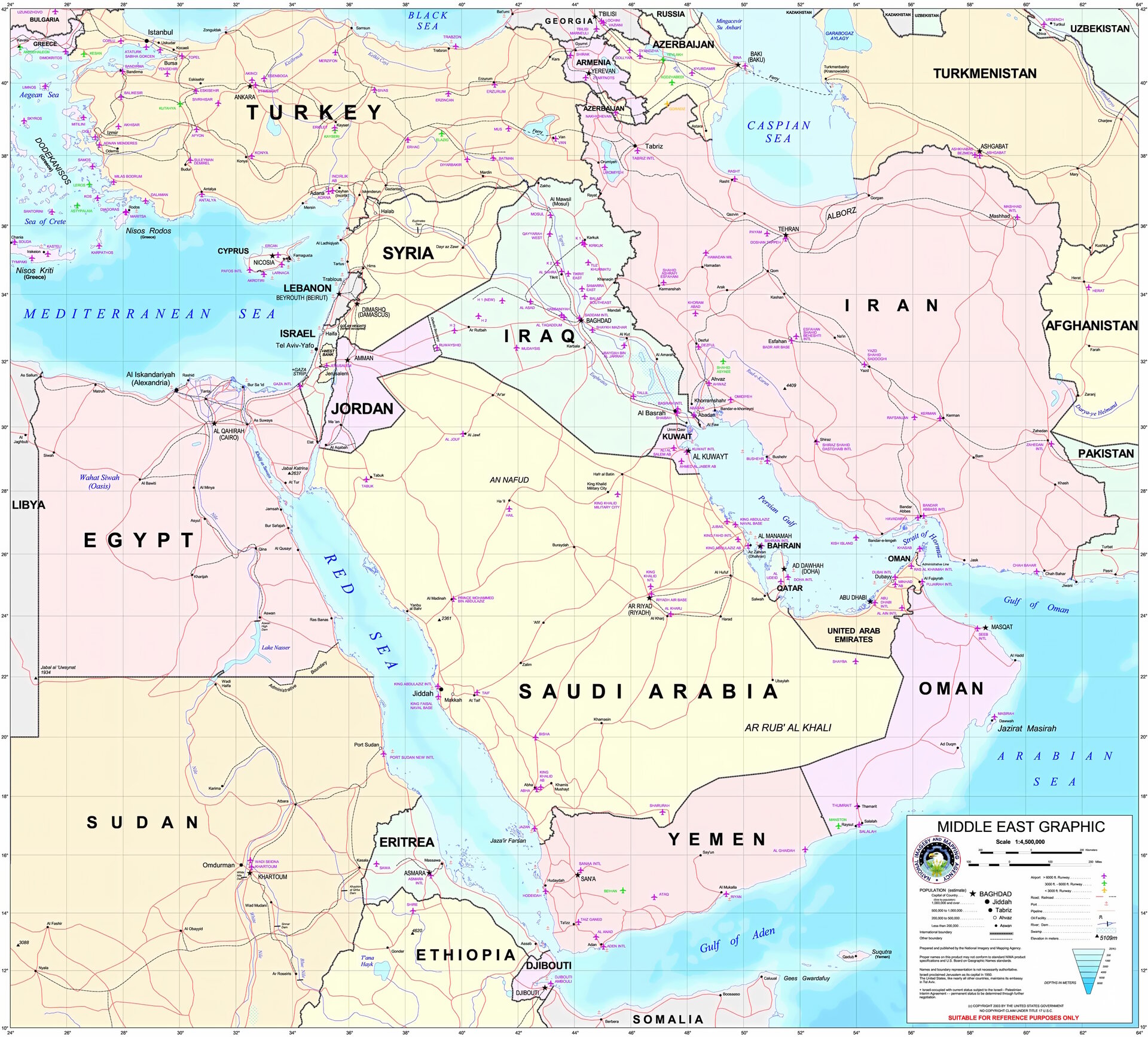
Saudi Arabia’s East-West Pipeline can move roughly 5 million barrels per day to the Red Sea port of Yanbu, but the kingdom’s production capacity is 12 million bpd. As the Dallas Federal Reserve documented in a March 20 analysis, a complete cessation of Gulf oil exports removes close to 20 percent of global oil supply. Saudi Arabia has already hit the ceiling of what Yanbu’s port infrastructure can handle. A deal that reopens Hormuz without a verified, enforceable mechanism to prevent Iran from closing it again leaves that gap permanent.
Proxy disarmament
The Houthis formally entered the war on March 28-29, launching ballistic missiles at Israel and threatening to close Bab al-Mandeb, which carries approximately 12 percent of global trade and 4.8 million bpd of oil, according to the U.S. Energy Information Administration. Iran’s counter-proposal demands an end to hostilities against “all resistance groups” — language that would freeze the Houthis in place rather than disarm them. For Saudi Arabia, which has absorbed more than 600 strikes without retaliating, a deal that leaves the Houthi arsenal intact is not a settlement.
IRGC infrastructure
The U.S. intelligence community can confirm it has destroyed only about one-third of Iran’s vast missile arsenal, according to Reuters. Gulf states want Washington to continue degrading Iran’s cruise and ballistic missile capabilities, which have been the primary threat to their countries for decades. A deal that merely freezes the remaining two-thirds in place buys time, not security.
Why Is Pakistan Running the Diplomacy Instead of Riyadh
The diplomatic architecture of this negotiation is itself a signal. Iran passed its formal response to the U.S. 15-point plan through Islamabad, not through Riyadh, Abu Dhabi, or any Gulf capital. Pakistan’s Foreign Minister Ishaq Dar confirmed on March 29 that both Iran and the United States had “expressed confidence in Pakistan to facilitate their talks,” according to Al Jazeera.
On March 29, Pakistan hosted a quadrilateral meeting with the foreign ministers of Saudi Arabia, Turkey, and Egypt. Arab News reported that the discussions focused on “possible ways to bring an early and permanent end to the war.” The talks produced a concrete proposal: a consortium — potentially including Turkey, Egypt, and Saudi Arabia — to manage oil flows through the Strait of Hormuz under a Suez Canal-style fee structure, according to Turkiye Today. Iran agreed to allow 20 additional ships under Pakistani flag to pass through the strait, two per day, a small but symbolically significant concession reported by U.S. News.
But the underlying dynamic is clear. Pakistan is the interlocutor. Saudi Arabia is a participant, not a convener. Prince Faisal bin Farhan held five bilateral meetings at the G7 foreign ministers’ gathering at Abbaye des Vaux-de-Cernay on March 26 — including with France’s Jean-Noel Barrot, as confirmed by the French Foreign Ministry — but returned without new security commitments. The kingdom that absorbs the most damage from Iran’s missiles has the least direct channel to the country firing them.
This is not accidental. Iran has historical and sectarian ties with Pakistan that it does not have with Riyadh. The Islamabad channel allows Tehran to negotiate around the Gulf states’ public framing. It allows Iran to engage with Washington through a neighbor that shares a border and a Balochistan problem, rather than through the capitals Iran is actively striking.
The Hormuz Math Riyadh Cannot Escape
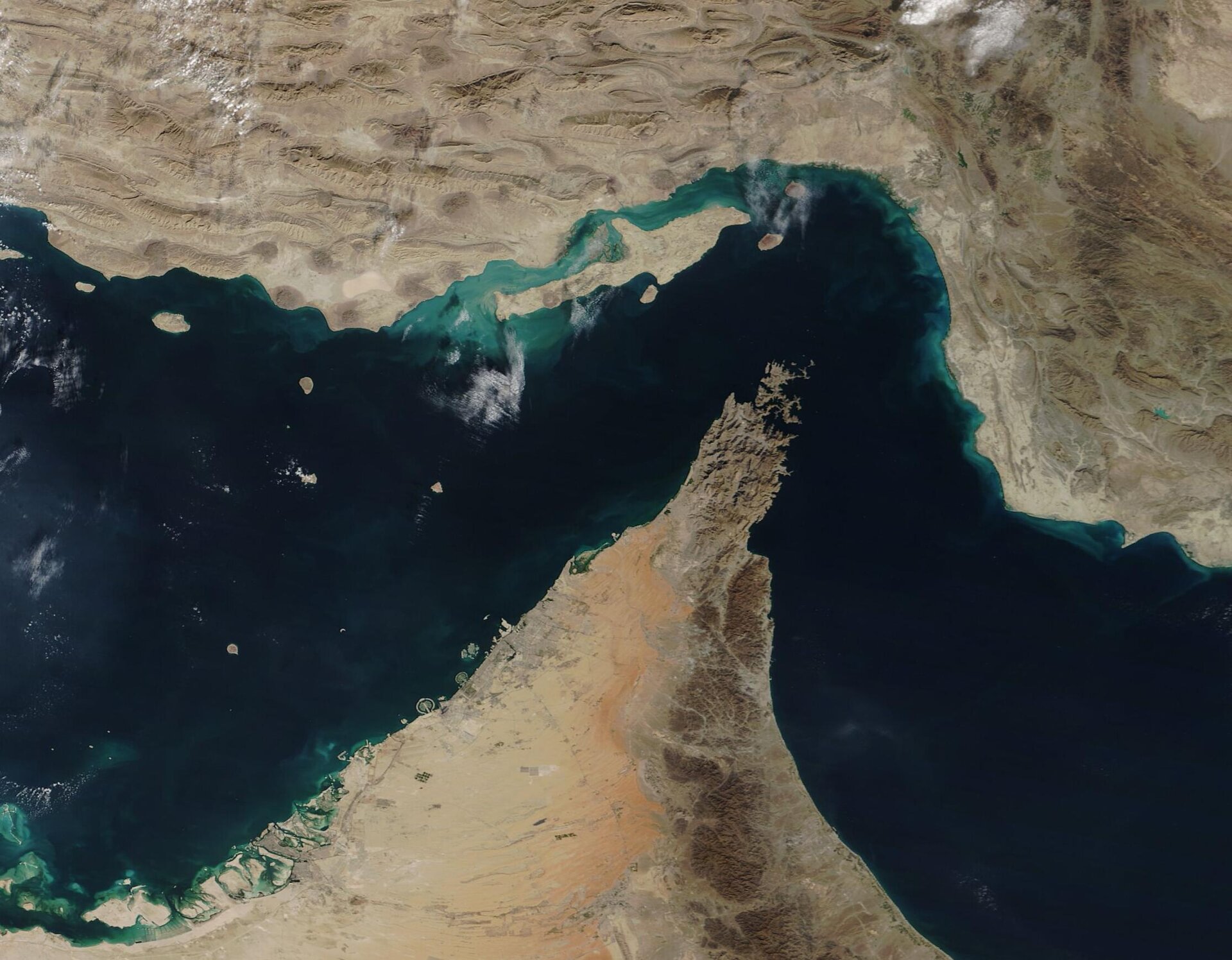
The financial stakes of a bad deal are measurable. The Strait of Hormuz has been effectively closed for approximately four weeks, since the start of Operation Epic Fury on February 28. The Dallas Federal Reserve estimated on March 20 that Gulf oil production collectively dropped by 6.7 million barrels per day by March 10, and by at least 10 million bpd by March 12.
Saudi Arabia’s pipeline workaround to Yanbu, as detailed above, caps actual exports at roughly 5 million bpd — leaving a gap of approximately 7 million bpd between Saudi production capacity and what the kingdom can actually ship while Hormuz remains closed.
Brent crude was trading between $111 and $115 per barrel on March 30, on track for what CNBC described as its largest monthly surge on record — a gain of roughly 51 percent for March. Aramco’s crude is already commanding an unprecedented $40 premium over benchmark prices. At these prices, every million barrels per day of lost Saudi exports costs the kingdom approximately $111-115 million daily in unrealized revenue.
Iran’s counter-proposal demands international recognition of its “sovereign right to control” Hormuz. If codified in any agreement, this language would transform the strait from a contested international waterway into a recognized Iranian asset — one Tehran could threaten to restrict again during any future dispute. The Dallas Fed analysis noted that Saudi Arabia’s pipeline workaround also faces a secondary threat: Yanbu’s Red Sea ports “are within range of both Iranian and Houthi missiles, and shipping south past the Bab el-Mandeb Strait to Asia exposes oil tankers to attacks by the Houthis.”
The Hormuz consortium proposal that emerged from the Islamabad quadrilateral — a Suez Canal-style management structure — is a creative attempt to sidestep the sovereignty question. But it requires Iranian consent. And Iran’s five-point counter-proposal suggests Tehran views the strait as a bargaining chip, not an asset to be shared. The clock is ticking: global strategic petroleum reserves will hit depletion walls by mid-April, and the OPEC+ meeting on April 5 forces MBS to choose between flooding the market and preserving cartel discipline before any deal can take effect.
Can Any Deal Disarm the Houthis
This is the question Saudi Arabia’s security establishment is asking, and the answer from the negotiating table so far is no.
The Houthis escalated dramatically in the final days of March. CNN reported on March 29 that Mohammed Mansour, deputy information minister in the Houthi government, told the network that “closing the Bab al-Mandab Strait is a viable option, and the consequences will be borne by the American and Israeli aggressors.” Major shipping companies — Maersk, Hapag-Lloyd, and CMA CGM — have already paused all “Trans-Suez” sailings through the strait, according to Al Jazeera, creating an effective commercial blockade even without a formal military closure.
Iran’s fourth counter-condition demands an end to hostilities against “all resistance groups in the region.” If accepted, this language would prohibit any military action against the Houthis as part of the deal’s enforcement. It would leave Ansar Allah’s ballistic missile capability intact, its Red Sea blockade infrastructure in place, and its demonstrated willingness to threaten Bab al-Mandeb undiminished.
For Saudi Arabia, which endured a seven-year war against the Houthis from 2015 to 2022 and has now absorbed hundreds of additional strikes since late February, this is the definition of a deal without teeth. On March 30 alone, Saudi air defenses intercepted five ballistic missiles and 15 drones targeting the Eastern Province, according to Al Arabiya. The UAE intercepted 16 missiles and 42 drones the same day.
The 15-point U.S. plan reportedly calls for Iran to “end support for regional armed groups.” But ending support is not the same as disarming them. The Houthis have spent a decade building indigenous weapons production capabilities with Iranian technical assistance. Cutting off future supply does not eliminate existing stockpiles, manufacturing know-how, or the political infrastructure of a movement that controls most of Yemen’s population.
If the bulk of Iran’s missile arsenal survives — as the Reuters assessment cited above suggests — and the Houthis retain their full capability, the Gulf’s strategic position after a deal could be worse than before the war began: the same threats, but with a formal agreement that constrains future military response.
What Day 30 of the War Changes
Day 30 of Operation Epic Fury marked an inflection point. The military campaign — a joint U.S.-Israeli operation launched on February 28 — has produced 13 U.S. KIA and approximately 300 wounded, according to CNN. Prince Sultan Air Base was attacked on March 27-28, injuring 12-15 U.S. troops and damaging an E-3 Sentry surveillance aircraft and refueling aircraft. Saudi Arabia subsequently granted U.S. access to King Fahd Air Base in Taif, some 1,200 kilometers from Iran — a reversal of the kingdom’s earlier refusal, which effectively transformed Saudi Arabia into a co-belligerent.
The economic pressure is mounting from multiple directions. OPEC+ is adding 206,000 bpd in April, a marginal increase against the millions of barrels removed from the market by the Hormuz closure. Goldman Sachs estimated that the UAE faces a GDP contraction of 8 to 10 percent, worse than Saudi Arabia’s projected 5 percent, according to Al Jazeera. China has declared “full support” for the Hormuz consortium proposal, adding a major buyer’s weight to the diplomatic pressure on Iran.
Trump’s political calculus is straightforward: declare a deal and claim credit. On March 30, he told Euronews he was “pretty sure” a deal could be reached “soon.” MBS’s calculus is the opposite: ensure any deal includes permanent enforcement mechanisms, even if that means the war continues longer. As the Washington Post reported on March 26, Gulf countries want Trump to end the war — but not yet.
These two timelines are incompatible. Trump is negotiating on a domestic political clock. MBS is negotiating on a generational security timeline. The Islamabad back-channel, running through Pakistan rather than any Gulf capital, suggests Washington may prioritize speed over the enforceability that Riyadh requires.
We will end this war when we are certain it will not be repeated, and this requires a decisive and final end to the war.
Abbas Araghchi, Iranian Foreign Minister, via IRIB (March 25, 2026)
That statement, read from Riyadh’s perspective, contains a second meaning. Iran is not promising to stop fighting. It is promising to fight until it secures terms that prevent anyone from fighting Iran again. Those terms — reparations, sovereignty over Hormuz, protection for proxies — are precisely the terms that would leave Saudi Arabia’s security architecture in ruins. The Gulf demand for permanent degradation of Iran’s capabilities sits in direct opposition to Tehran’s demand for permanent guarantees against future attack.
A deal that splits the difference between these positions does not exist. One side gets permanent security, or the other does. The question for Riyadh is whether it will be at the table when that choice is made — or whether it will learn the answer from Islamabad.
Frequently Asked Questions
Has Iran formally accepted any of the 15 points?
No verified public acceptance exists. Trump’s March 29 claim that Iran “gave us most of the points” has not been corroborated by any Iranian official, nor by the Pakistani intermediaries handling the exchange. Iran’s Tasnim News Agency, which is affiliated with the IRGC, reported that Tehran transmitted its response through Islamabad — but that response, according to NPR and Press TV, was a five-point counter-proposal that contradicts the U.S. demands on proxies, missiles, and Hormuz sovereignty. Diplomatic sources told the Jerusalem Post that “backchannel talks continue despite Tehran rejecting the plan.”
What would a Hormuz consortium look like in practice?
The proposal that emerged from the March 29 Islamabad quadrilateral envisions a Suez Canal-style management authority — a multinational body that would oversee transit through the strait, collect fees, and guarantee passage. Turkey, Egypt, and Saudi Arabia have been discussed as potential consortium members, according to Turkiye Today. The model is the Suez Canal Authority, which Egypt operates as a commercial enterprise generating approximately $9.4 billion in annual revenue (fiscal year 2023, according to the Suez Canal Authority). A Hormuz equivalent would need Iranian participation to function, and Tehran’s counter-proposal asserts sovereignty over the waterway rather than shared management.
Could Saudi Arabia retaliate militarily if the deal fails to address its concerns?
Prince Faisal bin Farhan stated publicly in mid-March that Saudi Arabia “reserves the right to take military action if deemed necessary,” as reported by the Times of Israel. The kingdom has not exercised that option despite absorbing hundreds of strikes since late February. Saudi Arabia’s military inventory includes advanced air defense systems and a substantial air force, but any unilateral Saudi strike on Iranian assets would risk an escalation without the U.S. air cover that currently suppresses Iran’s offensive capacity. The more likely Saudi lever is financial: threatening to crater oil prices through a production surge once Hormuz reopens, which would devastate Iran’s sanctioned economy.
Why did Iran send its response through Pakistan instead of Oman or Qatar?
Oman and Qatar have historically served as back-channels between Iran and the West — Oman brokered the initial JCPOA contacts in 2013. But Pakistan shares a 959-kilometer border with Iran, hosts a significant Shia minority, and — critically — Prime Minister Shehbaz Sharif offered to host U.S.-Iran talks on Pakistani soil, according to PBS. Pakistan also secured a tangible confidence-building measure: Iran agreed to allow 20 ships under Pakistani flag to transit Hormuz, two per day. Neither Oman nor Qatar has extracted a comparable concession during the current crisis.
What happens to Saudi Arabia’s Vision 2030 plans if the war continues through summer?
The World Economic Forum postponed its planned Gulf conference in Saudi Arabia, according to Fortune, and foreign direct investment inflows have stalled as war risk premiums spike. With Goldman Sachs already projecting a 5 percent GDP hit through April, a summer extension would likely force Riyadh to redirect capital from megaprojects like NEOM and The Line toward defense spending and economic stabilization. Aramco’s borrowing costs have already risen, and the kingdom’s sovereign wealth fund, PIF, has paused several international acquisitions pending clarity on the war’s trajectory.