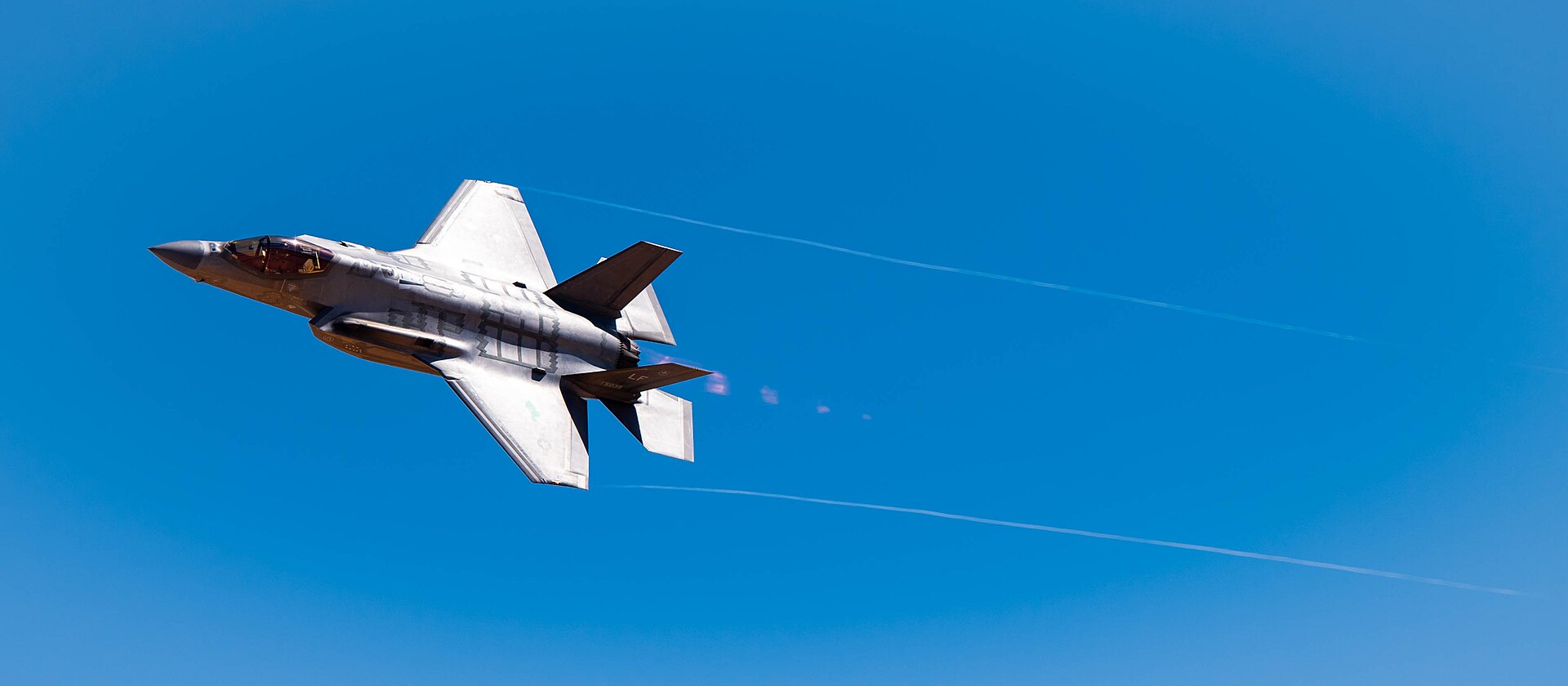

WASHINGTON — The United States has approved the sale of 48 F-35A Lightning II fighters to Saudi Arabia, the first time Washington has extended its most advanced combat aircraft to the Kingdom and the most consequential arms transfer in the Middle East since the Camp David Accords underwrote Israel’s military supremacy four decades ago. The deal, valued at $5.3 to $5.7 billion according to initial estimates reported by BusinessToday India and confirmed by The Aviationist on March 30, will not deliver a single jet before 2029 at the earliest — years after the war Saudi Arabia is absorbing today.
That timeline is the point. The F-35 is not a weapon for the current conflict. It is a thirty-year commitment device, a piece of hardware so sensitive that Washington cannot allow it to be captured, compromised, or operated by an adversary. Every country that flies the F-35 becomes structurally bound to the American defence ecosystem — dependent on Lockheed Martin for maintenance, on the Pentagon for software updates, on Washington for spare parts. Crown Prince Mohammed bin Salman did not buy 48 fighter jets. He bought an insurance policy against American abandonment, paid for in public humiliation and priced in sovereignty.
Table of Contents
- The Humiliation Price Tag
- What Does Saudi Arabia Actually Receive in the F-35 Deal?
- How Does the F-35 Sale Affect Israel’s Qualitative Military Edge?
- The UAE Precedent Saudi Arabia Learned From
- Why Is the F-35 a Commitment Device, Not Just a Fighter Jet?
- The Wrong Weapon for This War
- What Did MBS Concede to Get the F-35?
- The Congressional Gauntlet Ahead
- The Thirty-Year Bet
- Frequently Asked Questions
The Humiliation Price Tag
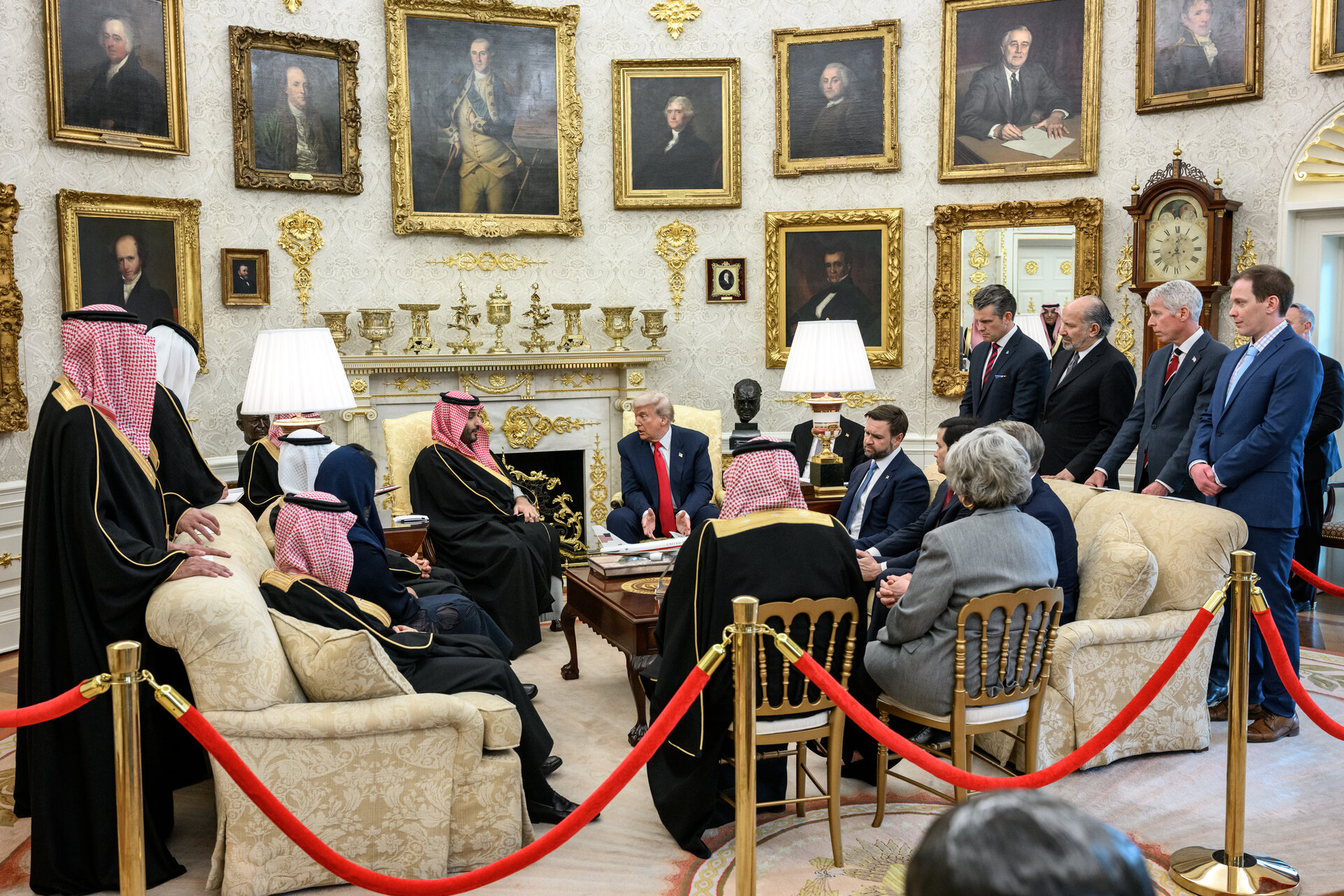
Two days before confirming the F-35 sale, Donald Trump stood before the Future Investment Initiative summit — relocated from Riyadh to Miami because the Kingdom is under sustained aerial bombardment — and delivered a line that will define this chapter of the relationship. “He didn’t think he’d be kissing my ass,” Trump said of Mohammed bin Salman, according to BusinessToday India and Newsweek on March 28. The White House edited the remark from its official live stream before clips spread. It did not matter. The prince who once called America “a dead country” had absorbed the insult as cleanly as Saudi air defences have absorbed thirty days of Iranian strikes.
The sequence was not accidental. Trump called MBS “a warrior” fighting alongside America against Iran on March 26. Two days later, he humiliated him publicly. Two days after that, he confirmed the F-35. The pattern is transactional theatre: establish the hierarchy, then deliver the reward. Anyone who reads the Miami remarks as mere vulgarity misses what they actually accomplished. They established, in public and on the record, that the F-35 sale is a concession from a patron to a client — not an agreement between equals.
MBS’s silence was itself the concession. The Crown Prince did not respond to the remark. Nor did the Saudi Foreign Ministry issue a statement. Faisal bin Farhan, who warned on March 19 that Saudi patience “is not unlimited,” said nothing about the insult. The Kingdom had already calculated the price of American fifth-generation stealth fighters, and that price included absorbing a public demonstration of subordination on a stage built with Saudi money.
What Does Saudi Arabia Actually Receive in the F-35 Deal?
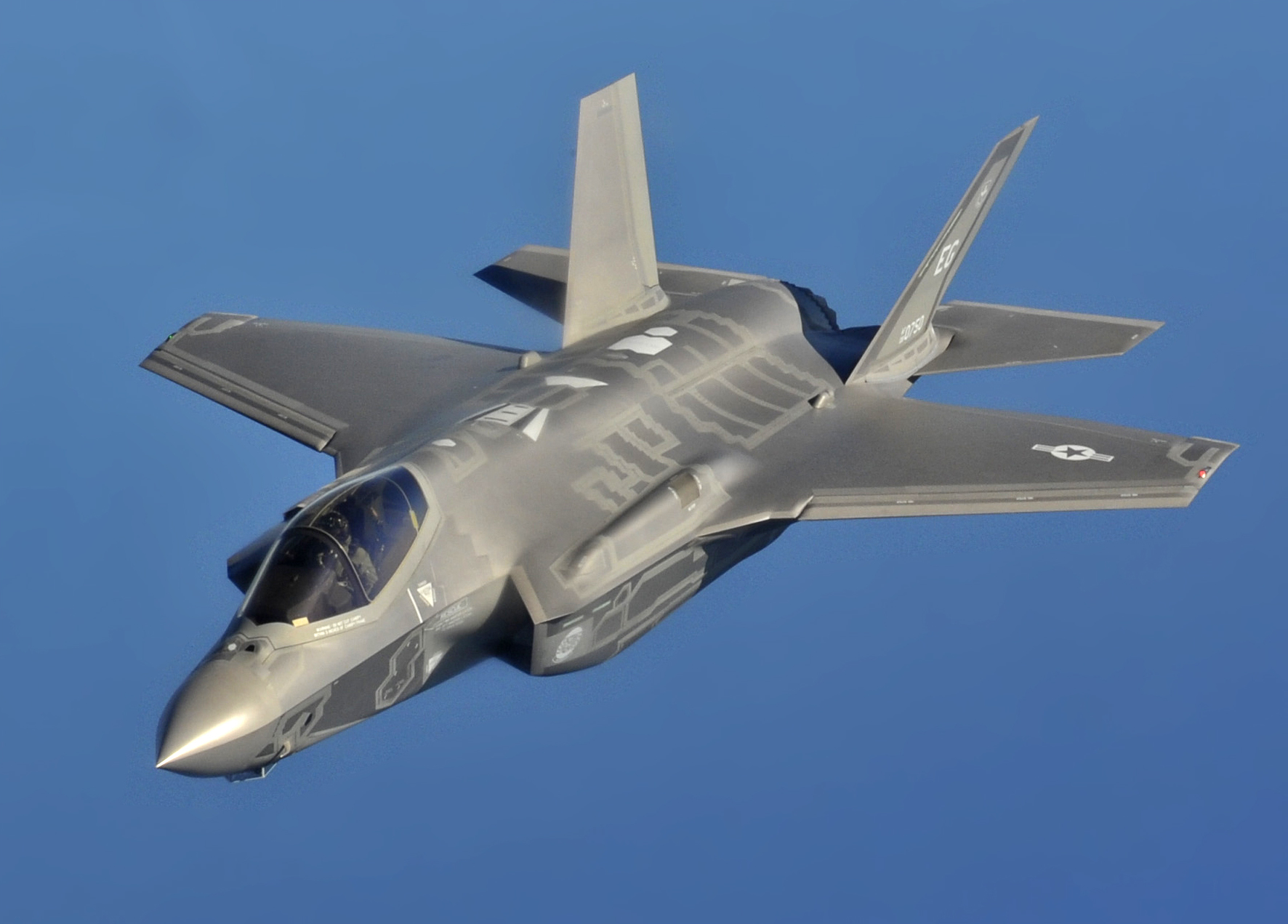
Saudi Arabia will receive 48 F-35A Lightning II fighters in a standard export configuration — the same baseline variant sold to Japan, South Korea, and Australia. This is not the aircraft Israel flies. The Saudi jets will lack access to source code, independent mission software control, and the ability to integrate domestically developed weapons or electronic warfare systems without American approval, according to Defence Security Asia’s analysis of the deal terms.
The Middle East briefing 3,000+ readers start their day with.
One email. Every weekday morning. Free.
The specific constraints are substantial. Saudi Arabia’s F-35s will operate within the US-controlled ALIS/ODIN sustainment architecture, which means Washington retains the ability to restrict spare parts and software updates at will. The jets will carry the AN/ALQ-250 EPAWSS electronic warfare system — “highly advanced” but, as Defence Security Asia noted, “far less tailored” than what Israel operates. Defence analyst Douglas Birkey told The War Zone that the Kingdom is “unlikely to receive the AIM-260 Joint Advanced Tactical Missile,” the most sensitive air-to-air weapon in the F-35’s arsenal, with access “almost certainly restricted to Israel.”
The aircraft will replace approximately 80 ageing Panavia Tornado IDS strike aircraft in the Royal Saudi Air Force, which currently operates 84 F-15SA Strike Eagles and 72 Eurofighter Typhoons as its primary combat fleet. Even in export configuration, the F-35A represents a generational leap — sensor fusion, low-observable stealth, and networked warfare capabilities that no fourth-generation platform can match.
| Capability | Saudi F-35A (Export) | Israel F-35I Adir |
|---|---|---|
| Source code access | None | Full access, independent modification |
| Electronic warfare suite | AN/ALQ-250 EPAWSS (standard) | Custom Elbit Systems suite with jamming, spoofing, cyber-EW |
| Weapons integration | US-approved munitions only | Indigenous Rafael Spice family, Popeye missiles, plug-and-play architecture |
| Sustainment system | US-controlled ALIS/ODIN (Washington can restrict) | Independent maintenance ecosystem |
| Conformal fuel tanks | Not authorised | Low-RCS extended-range tanks (2,200+ km cruise) |
| AIM-260 JATM | Almost certainly restricted | Expected integration |
| Software autonomy | Dependent on Lockheed Martin updates | Reconfigured main mission computer for local modules |
The table reveals what the downgrade actually means. Israel’s F-35I Adir is not merely a variant — it is a sovereign weapons platform that Israel can modify, arm, and maintain independently of Washington. Saudi Arabia’s F-35A is a leased capability, operational only so long as the bilateral relationship holds. Both nations will fly aircraft stamped with the same name. They will not fly the same aircraft.
How Does the F-35 Sale Affect Israel’s Qualitative Military Edge?
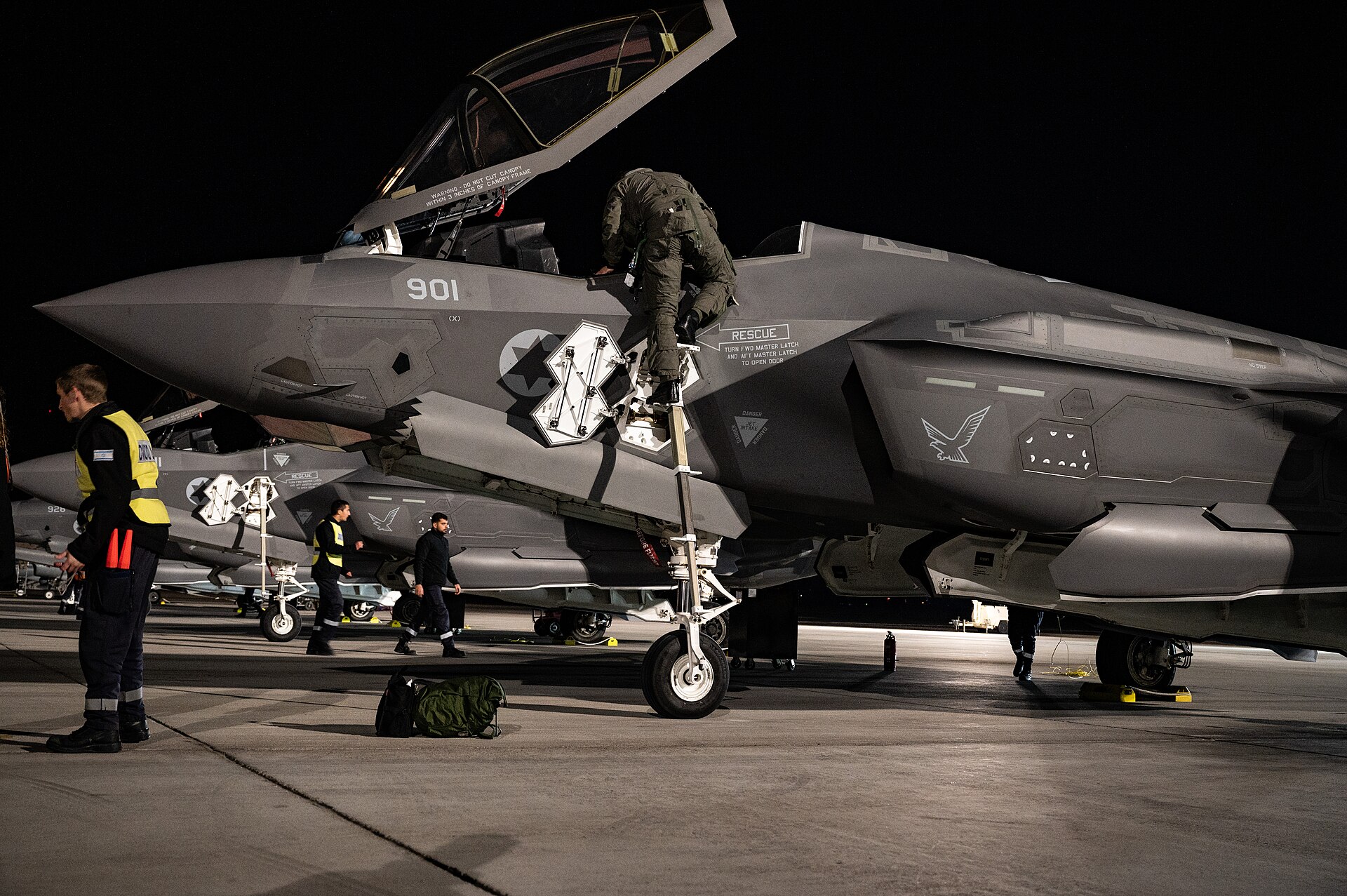
The sale breaks a monopoly that Israel has held since its first F-35I Adir entered service in 2017. Israel currently operates 45 F-35s with 30 more on order, for a total fleet of 75 at Block 4 standard, according to Air & Space Forces Magazine. No other Middle Eastern country has flown a fifth-generation fighter. Until now.
An Israeli Air Force white paper, reported by The Aviationist on March 30, warned that the Saudi sale “at least erodes if not significantly degrades” Israel’s qualitative military edge. The 2008 amendment to the Arms Export Control Act requires the executive branch to certify in writing that any arms sale to a Middle Eastern country other than Israel “will not adversely affect Israel’s qualitative military edge over military threats to Israel.” That certification must survive congressional scrutiny — and it must account for the fact that Saudi Arabia, despite the downgrade, will possess stealth fighters capable of penetrating airspace that only Israel could previously enter.
The QME framework has functioned for decades as an informal Israeli veto over American arms sales to Arab states. The F-35 sale represents the first time the framework has bent without breaking. Washington’s argument rests on the capability gap between the export variant and the Adir: no source code access, no indigenous weapons integration, no autonomous maintenance. The gap is real. But it is also a function of current policy — and policies change with administrations.
“For the very first time, we agreed to sell Saudi Arabia perhaps the most capable fighter jet ever built, the F-35.”
— President Donald Trump, Future Investment Initiative summit, Miami, March 28, 2026
Israel’s strategic calculation is visible in what it did not do. Netanyahu did not publicly oppose the sale. The quiet Saudi-Israeli security cooperation that has deepened throughout the Iran war — shared airspace, intelligence coordination, complementary target deconfliction — appears to have produced a tacit bargain. Israel traded its QME monopoly on fifth-generation fighters for American participation in strikes on Iran. The F-35 sale is the price of that participation, paid not by Netanyahu but by Israel’s long-term strategic position.
The UAE Precedent Saudi Arabia Learned From
The United Arab Emirates was supposed to be first. The $23 billion F-35 deal — bundled with armed drones and other advanced systems — was the side payment that helped secure Abu Dhabi’s signature on the Abraham Accords in August 2020. The Biden administration suspended the sale in January 2021. By December 2021, the UAE had suspended negotiations entirely, citing sovereignty concerns over American restrictions on how and where the aircraft could be used and counterintelligence requirements related to Chinese telecommunications infrastructure, according to The Times of Israel.
The UAE eventually turned to China. The Ministry of Defence announced its intention to contract with the China National Aero-Technology Import and Export Corporation for an alternative fifth-generation platform. The Abraham Accords survived. The F-35 deal did not. Washington’s insistence on operational restrictions and technology safeguards — the same conditions it is now imposing on Saudi Arabia — proved incompatible with Emirati expectations of sovereign control.
Riyadh appears to have drawn two lessons from Abu Dhabi’s failure. First, do not negotiate the F-35 as a standalone transaction; embed it in a relationship so deep that cancellation becomes unthinkable. Saudi Arabia’s massive investment commitments, the reopening of King Fahd Air Base to American forces, and its absorption of sustained Iranian bombardment without retaliation have created a dependency so layered that walking away from the F-35 would mean walking away from the entire wartime alliance. Second, accept the sovereignty constraints rather than fight them. The UAE demanded autonomous control and lost the deal. Saudi Arabia accepted the constraints and secured the sale.
Why Is the F-35 a Commitment Device, Not Just a Fighter Jet?
The F-35 is the most expensive weapons programme in human history — $1.7 trillion in lifetime costs across 3,300+ aircraft for the United States alone, according to the Government Accountability Office. Every nation that joins the programme becomes a node in a logistics, intelligence, and maintenance network centred on Lockheed Martin’s Fort Worth production line and the Pentagon’s Joint Programme Office. The aircraft’s Autonomic Logistics Information System — now upgraded to the Operational Data Integrated Network — feeds operational data back to the manufacturer and to Washington.
For Saudi Arabia, this architecture creates a structural dependency that far exceeds any previous arms relationship. The Kingdom’s existing fleet of F-15SA Strike Eagles requires American spare parts and contractor support, but Boeing does not control the aircraft’s software in real time. The F-35’s ALIS/ODIN system does. Washington can degrade Saudi F-35 readiness with a software decision. It can restrict weapons integration. It can delay Block 4 upgrades that enable advanced radar and electronic warfare capabilities. The aircraft, in effect, comes with a kill switch — not for the jet itself, but for the relationship.
This is precisely why MBS wants it. A weapon that Washington cannot allow to fall into adversary hands is a weapon that Washington must defend. Every F-35 parked on a Saudi runway is a tripwire — an asset so sensitive that its compromise would constitute a direct threat to American national security. The 48 aircraft bind the United States to Saudi Arabia’s territorial defence not through a treaty, not through a verbal commitment like Vance’s “blank check”, but through the hard logic of technology protection.
The realist reading of the F-35 sale is not that Saudi Arabia bought a fighter. It is that Saudi Arabia bought irreversibility. The old oil-for-security bargain was always informal, always deniable, always subject to the next president’s mood. The F-35 converts a gentleman’s agreement into an engineering constraint. Walking away from Saudi Arabia now means walking away from 48 nodes in the most classified fighter programme on earth.
The Wrong Weapon for This War
The 48 F-35As that Saudi Arabia has agreed to purchase will not arrive before 2029 at the earliest. Lockheed Martin delivered a record 191 F-35s in 2025, according to Defense News, and maintains a stable production rate of 156 or more per year. The Lots 18-19 contract, finalised in September 2025, covers up to 296 aircraft for $24 billion. But the production queue is deep — the Pentagon itself cut its fiscal year 2026 buy from 74 to 47 aircraft — and Saudi Arabia’s order has not yet been formally placed. Defence Security Asia projects full operational capability for the Royal Saudi Air Force’s F-35 fleet in the early-to-mid 2030s.
The war is happening now. Iran opened its campaign on March 1 with 1,206 strikes — 867 drones and 339 missiles — in a single day. One month later, Saudi Arabia has absorbed 600-plus strikes, including the destruction of an E-3 Sentry AWACS aircraft at Prince Sultan Air Base on March 28, along with damage to five KC-135 Stratotankers and injuries to fifteen or more American service members. The Kingdom’s air defence network is intercepting at 85 percent — a rate that sounds impressive until the remaining 15 percent is measured in destroyed refineries, cratered runways, and dead civilians.
The F-35 solves none of these problems. Saudi Arabia’s immediate needs are counter-drone systems, integrated air and missile defence, and the kind of affordable, attritable technologies that Ukraine is now supplying under its March 29 defence deal. The F-35 is an air superiority and deep-strike platform designed to penetrate denied airspace. Saudi Arabia’s airspace is not denied — it is being saturated by low-cost drones and cruise missiles that a $100 million stealth fighter is spectacularly wrong for intercepting.
The mismatch between the weapon and the war is so obvious that it becomes its own evidence. The F-35 is not intended to fight the Iran war. It is intended to survive it — to emerge on the other side as the cornerstone of a Saudi military that has locked itself into the American orbit for a generation. The war is the context. The F-35 is the consequence.
What Did MBS Concede to Get the F-35?
The price of 48 stealth fighters extends well beyond the $5.3 to $5.7 billion sticker. The transactional ledger that produced this sale spans the entire first month of the Iran war, and every entry was denominated in sovereignty.
King Fahd Air Base — closed to American forces after the 2003 Iraq War drawdown — was reopened to US military operations, according to Bloomberg and The Wall Street Journal on March 24. The base’s reopening reversed a twenty-year policy that had symbolised Saudi Arabia’s post-Iraq assertion of military autonomy. Iranian diplomatic staff were expelled from the Kingdom. Six hundred billion dollars in investment commitments were pledged to the American economy. And the Crown Prince absorbed a public humiliation from the American president without response.
The physical cost has been steeper still. MBS has absorbed a month of Iranian strikes without ordering a single offensive military action. The Kingdom has accepted the role of target rather than combatant, hosting American forces who conduct strikes from Saudi soil while Saudi forces remain on defence. The Pentagon’s ground war has turned Saudi Arabia into a belligerent by default — attacked by Iran, defended by Americans, firing back at no one.
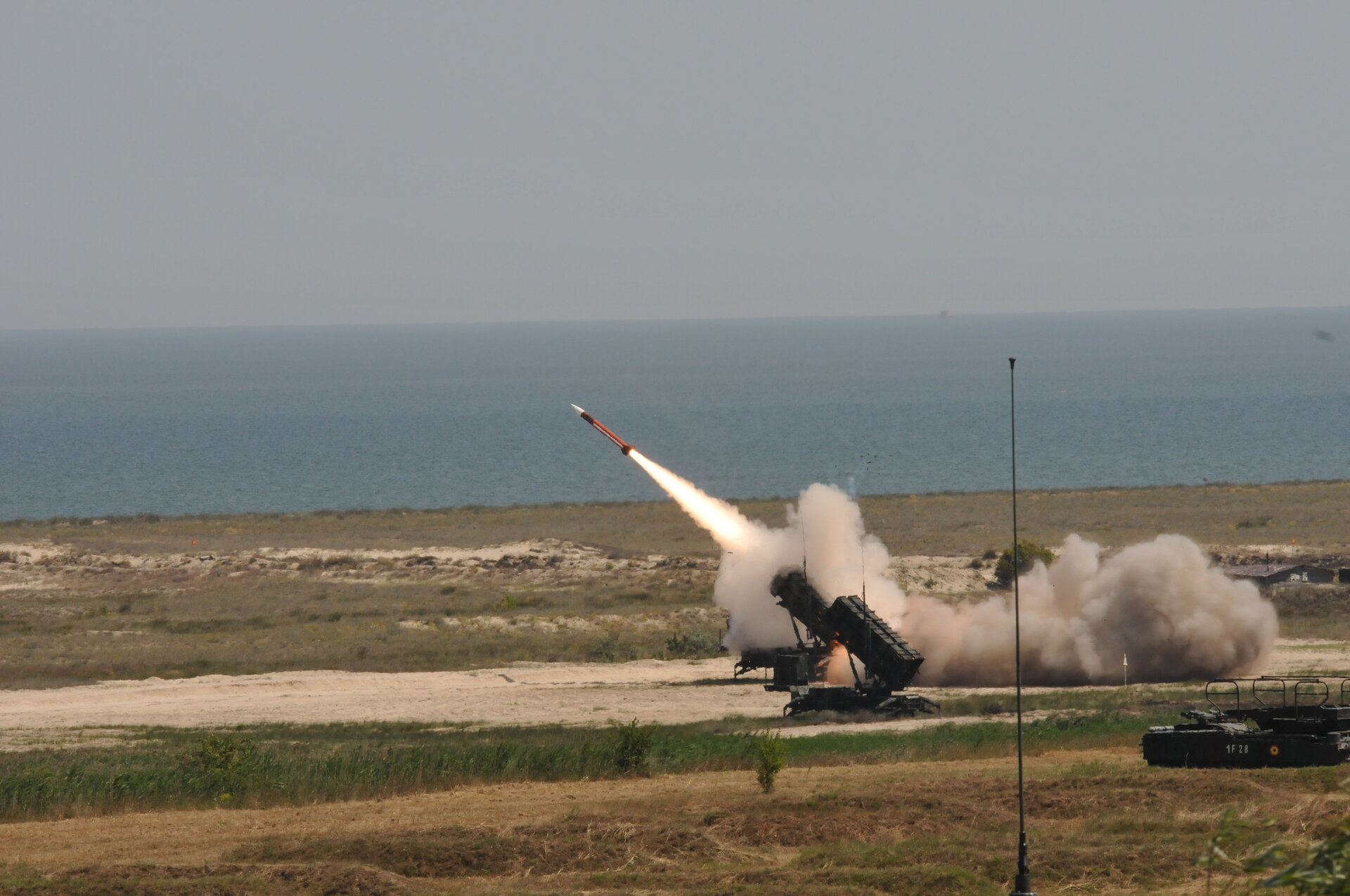
The F-35 sale sits atop a broader package that The Aviationist described as “nearly $142 billion in arms sales” supporting the Trump administration’s diplomacy with Riyadh. No single item in that package carries the strategic weight of the F-35, because no other item binds the two militaries as tightly as fifth-generation fighter maintenance demands. The Patriot batteries and THAAD systems deployed across the Kingdom today can be withdrawn. The F-35 programme, once operational, cannot be unwound without dismantling a decade of training, infrastructure, and logistics integration.
The Congressional Gauntlet Ahead
The sale is announced but not approved. Under the Arms Export Control Act, the administration must formally notify Congress before any transfer proceeds. Lawmakers will then have thirty days to pass a joint resolution of disapproval — a mechanism that has never successfully blocked a major arms sale, though congressional pressure has repeatedly altered the timing, composition, and conditions of deals.
The obstacles are familiar. The 2018 murder of journalist Jamal Khashoggi at the Saudi consulate in Istanbul produced a bipartisan coalition that blocked or complicated Saudi arms transfers for years. Senator Tim Kaine and Representative Gregory Meeks led repeated efforts to condition weapons sales on human rights benchmarks. The war has not erased those concerns — it has buried them under the urgency of the current conflict.
The QME certification is the more immediate hurdle. The 2008 amendment requires the executive branch to certify in writing that the F-35 transfer will not adversely affect Israel’s qualitative military edge. The administration’s argument will rest on the capability differential between the export variant and Israel’s Adir — the same restrictions detailed above. Whether that argument survives scrutiny from pro-Israel caucuses in both chambers remains an open question.
The political dynamics have shifted in ways that favour approval. The Iran war has triggered the largest arms race since the Cold War, and Lockheed Martin’s production line is a jobs programme that spans forty-six states. Blocking a sale to a wartime partner that is hosting American troops and absorbing missile strikes would be a difficult vote for any lawmaker whose district includes F-35 supply chain contractors. The defence-industrial lobby has aligned with the geopolitical lobby. The combination is usually decisive.
The Thirty-Year Bet
The F-35 sale completes a transformation in US-Saudi relations that the war accelerated but did not initiate. Before February 28, the relationship operated on a transactional model refined over seven decades: Saudi Arabia pumped oil at prices Washington found acceptable, and the United States guaranteed the Kingdom’s territorial integrity without permanent bases, without mutual defence treaties, and without the kind of structural military integration that characterises NATO or the US-Japan alliance.
That model is dead. The Iran war killed it — not because the old arrangement failed, but because it was never designed for a scenario in which Saudi Arabia’s population centres, energy infrastructure, and military installations came under sustained bombardment. The oil-for-security bargain assumed that deterrence would hold, that American power projection from over-the-horizon bases in Bahrain, Qatar, and Diego Garcia would be sufficient to prevent the kind of war now underway. It was not sufficient. And the insufficiency has driven MBS toward a different model entirely.
The new model looks more like the US-Israel relationship than the old US-Saudi one: deep technology integration, shared intelligence architecture, joint operational planning, and a mutual dependency so layered that separation becomes prohibitively expensive for both sides. The F-35 is the keystone of that architecture. It is the single item in the arms package that cannot be replicated by any other supplier — not by the United Kingdom’s Tempest programme, not by South Korea’s KF-21, not by the Sino-Saudi flirtation that Washington feared was coming.
The timing is important. Saudi Arabia signed its first defence deal with Ukraine on March 29 — a signal that the Kingdom is diversifying its defence suppliers. The F-35, announced one day later, is the American answer: a technology lock-in so complete that diversification becomes irrelevant for the platforms that matter most. Saudi Arabia can buy Ukrainian counter-drone systems and Turkish armed drones. It cannot buy stealth penetration strike capability from anyone except the United States.
“We have reserved the right to take military actions if deemed necessary… The patience we have shown is not unlimited.”
— Saudi Foreign Minister Faisal bin Farhan, Arab News, March 19, 2026
The F-35 is the weapon that transforms that patience into a permanent posture. A Saudi Arabia armed with fifth-generation stealth fighters does not need to fire back at Iran with its own missiles today. It needs to build an air force that can project power into Iranian airspace tomorrow — on American terms, with American software, using American weapons, maintained by American contractors. The dependency is the feature, not the bug. It is the mechanism by which a seventy-year handshake becomes a thirty-year engineering programme that neither side can exit without strategic catastrophe.
MBS did not buy a warplane. He bought the most expensive insurance policy in history — and the premium was paid in sovereignty, silence, and $600 billion. Whether it covers the risk depends entirely on whether the United States remains a reliable insurer. That is the one variable no arms contract can control.
Forty-eight hours after the F-35 announcement, Saudi Arabia demonstrated exactly how it intends to manage that variable. The Kingdom co-signed an eight-nation joint statement defending Al-Aqsa and reaffirming exclusively Muslim worship rights at the compound — a public exercise of the Islamic custodial authority that no American arms contract can supply or revoke.
Frequently Asked Questions
When will Saudi Arabia receive its first F-35 jets?
No official delivery date has been announced. Given Lockheed Martin’s production backlog and the standard timeline for new programme entrants — which includes pilot training, infrastructure construction, simulator installation, and maintenance facility certification — the first Saudi F-35As are unlikely to arrive before 2029-2030. Defence Security Asia projects full operational capability for the Royal Saudi Air Force’s F-35 fleet in the early-to-mid 2030s, which would require additional aerial refuelling assets such as KC-46A Pegasus or A330 MRTT tankers to enable strategic-range operations.
Has Congress approved the Saudi F-35 sale?
No. President Trump announced the sale on March 28 and confirmed approval on March 30, but the deal must still undergo formal congressional notification under the Arms Export Control Act. Congress will have a thirty-day review window during which lawmakers can introduce a joint resolution of disapproval. The State Department, Defense Department, and Defense Security Cooperation Agency must also complete their reviews. Historically, Congress has never successfully blocked a major arms sale, though it has used the process to modify deal terms, delay timelines, and attach conditions including end-use monitoring agreements.
Could China gain access to F-35 technology through Saudi Arabia?
This concern was central to the collapse of the UAE F-35 deal in 2021. American counterintelligence officials flagged the UAE’s reliance on Huawei telecommunications infrastructure as an espionage vector. Saudi Arabia faces similar scrutiny — Huawei has built elements of the Kingdom’s 5G network, and Chinese investment in Saudi technology sectors has grown under Vision 2030. The Pentagon’s Project on Government Oversight has warned that selling F-35s to Saudi Arabia “renders the programme even more useless” from a counterintelligence perspective. The export configuration’s software restrictions are partly designed to limit technology transfer risk, but the physical aircraft itself contains classified materials and coatings.
What happens to Saudi Arabia’s existing fighter fleet?
The F-35A will replace the Royal Saudi Air Force’s ageing Tornado fleet, which entered service in the 1980s under the Al-Yamamah arms deal with the United Kingdom. The Kingdom’s remaining fourth-generation fighters — including 68 upgraded F-15S aircraft not widely reported — will continue alongside the F-35, creating a mixed-generation fleet. Integration will require new secure datalink infrastructure and a reconfiguration of the Saudi air operations centre to accommodate the F-35’s sensor fusion architecture and Link 16 networking requirements.
Is Saudi Arabia the first Arab country to receive the F-35?
Yes. If the sale proceeds through congressional review, Saudi Arabia will become the first Arab nation and only the second Middle Eastern country after Israel to operate the F-35 Lightning II. The UAE was offered up to 50 F-35As as part of the 2020 Abraham Accords package, but negotiations collapsed in December 2021 over American operational restrictions and counterintelligence requirements related to Chinese technology. Abu Dhabi subsequently opened discussions with China’s AVIC for an alternative fifth-generation platform. Bahrain, Qatar, and Kuwait have not been offered the F-35. That logic of hedging against American supply-chain dependency has now extended to interceptors: Saudi Arabia’s 10-year defense MOU with Ukraine signals that MBS is building redundancy into every layer of the Kingdom’s air defense architecture. That logic of hedging against American supply-chain dependency has now extended to interceptors: Saudi Arabia’s 10-year defense MOU with Ukraine signals that MBS is building redundancy into every layer of the Kingdom’s air defense architecture.