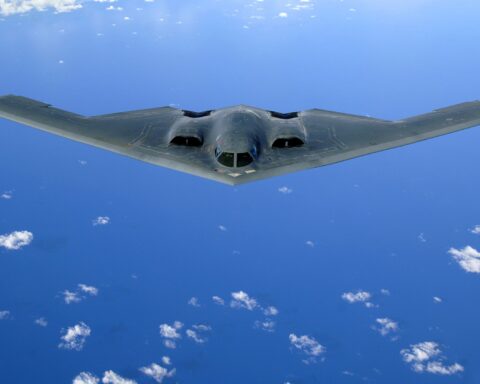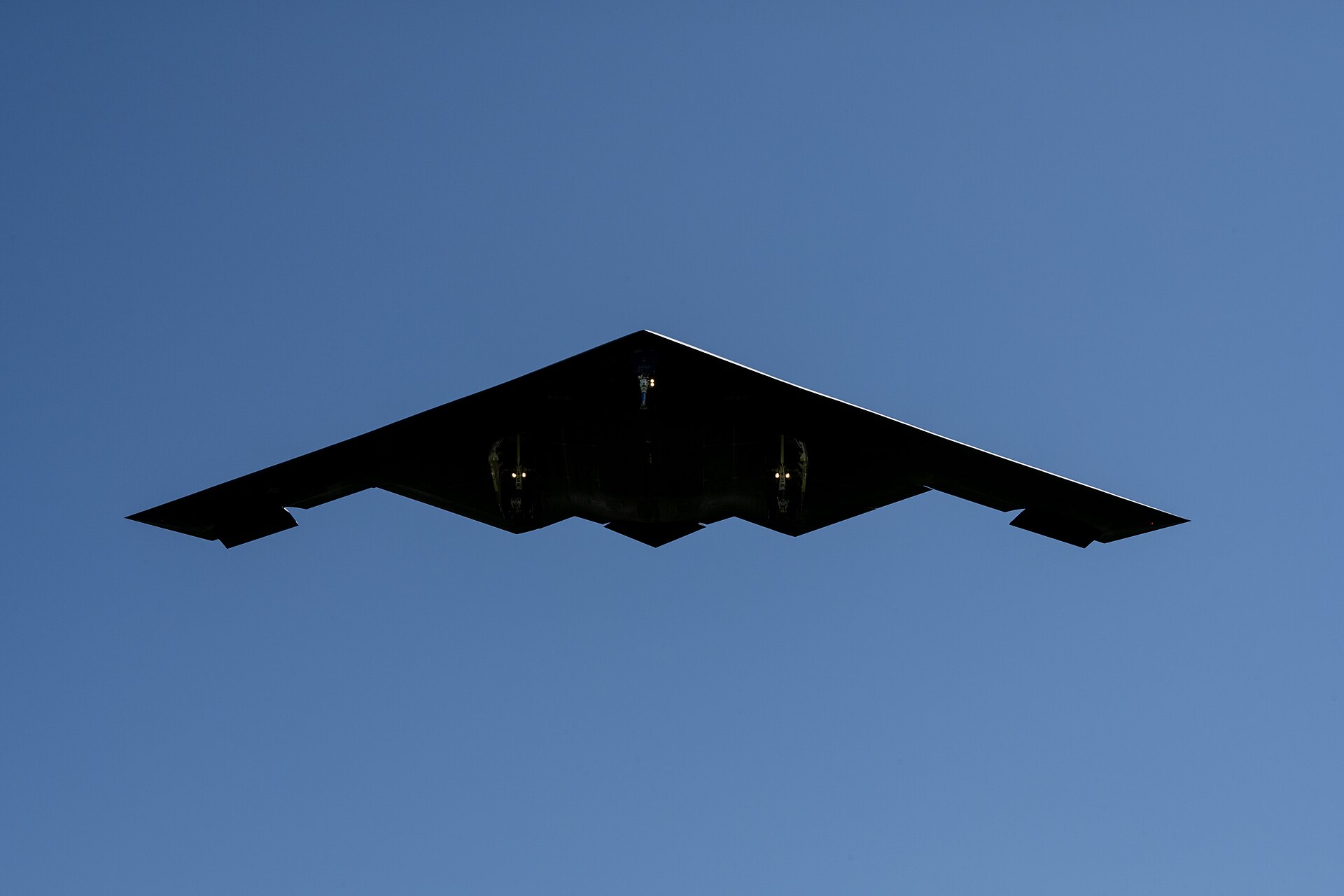

WASHINGTON — President Donald Trump declared on Truth Social early Easter Sunday that Tuesday would be “Power Plant Day, and Bridge Day, all wrapped up in one, in Iran,” confirming that the April 6 deadline for Tehran to reopen the Strait of Hormuz now includes systematic bridge destruction alongside the previously threatened power-plant campaign. The post, timed at approximately 8:03 a.m. EDT on April 5, 2026, added profane language directed at Iranian leadership and concluded with the phrase “Praise be to Allah” — a departure that drew immediate condemnation from Iran’s mission to the United Nations as “direct and public incitement to terrorise civilians.”
The addition of “Bridge Day” to the targeting menu is not rhetorical decoration. Three days earlier, US and Israeli forces collapsed the B1 bridge in Karaj — the highest bridge in the Middle East — killing eight and wounding at least 95, in what the Pentagon characterized as a strike against “a planned military supply route for Iranian missiles and drones,” according to the Wall Street Journal. Trump subsequently told TIME Magazine, “We just blew up their three big bridges last night.” The escalation from a single bridge precedent to a declared campaign of bridge destruction aligns with what military analysts describe as a battlefield-isolation operation targeting the river crossings of Khuzestan province, Iran’s oil heartland and the most likely axis of any US ground advance.
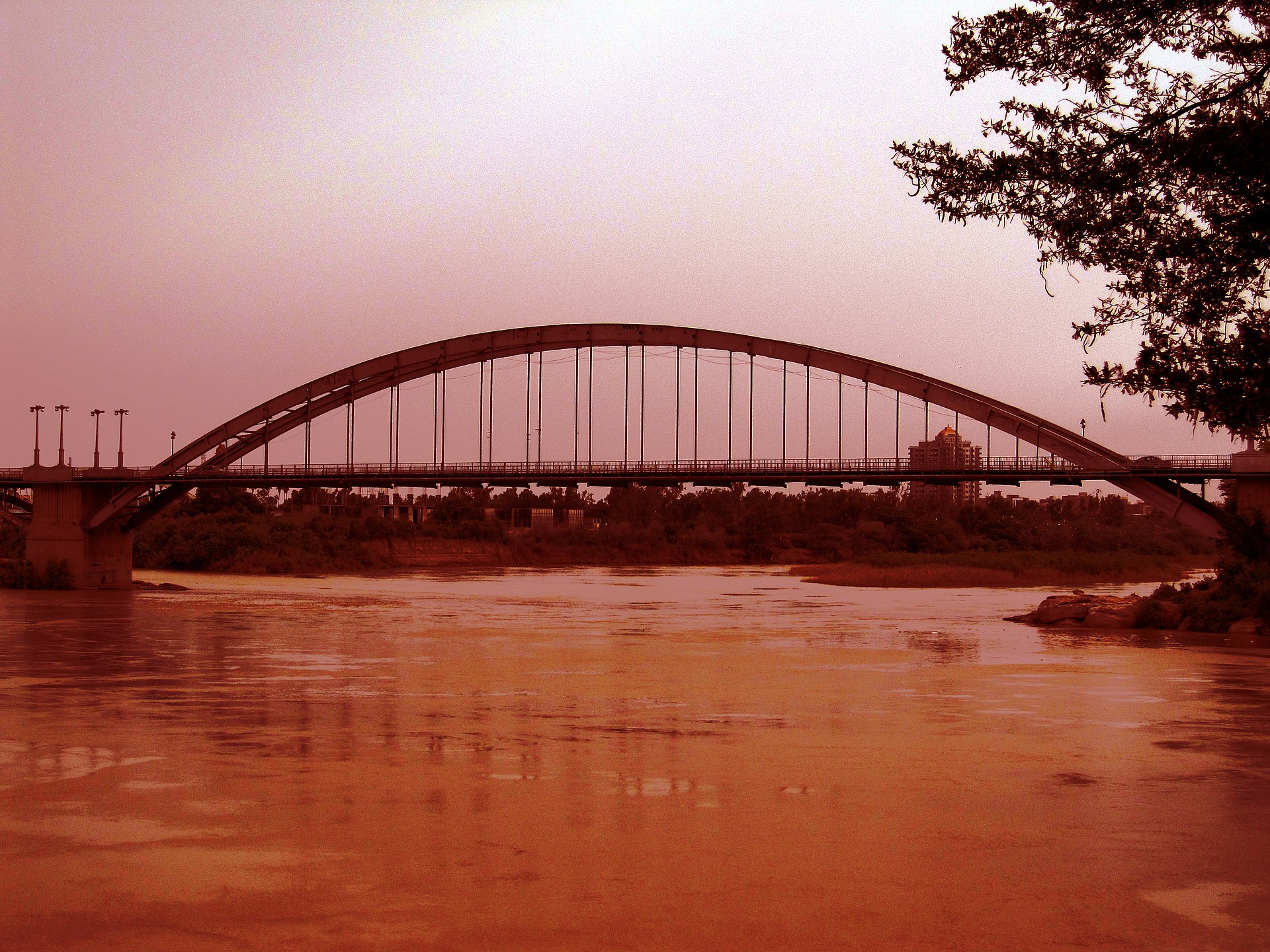
Table of Contents
- The Deadline Shift: 8 PM to 9 PM EDT
- Why Bridges Are a Ground-War Signal
- Khuzestan: The Geography That Explains the Targeting
- How Has Iran Responded to the Bridge Threat?
- Can Oman’s Hormuz Protocol Survive “Bridge Day”?
- What Does the Expanded Targeting Mean for Saudi Arabia?
- Background
- Frequently Asked Questions
The Deadline Shift: 8 PM to 9 PM EDT
When Trump first announced the extension of his power-plant ultimatum on March 26, the deadline was set at 8 PM EDT on April 6. Fortune’s reporting on April 5 now places the operative deadline at 9 PM EDT — a one-hour shift that has not been officially explained. The original March 26 post on Truth Social was explicit: “I am pausing the period of Energy Plant destruction by 10 Days to Monday, April 6, 2026, at 8 P.M., Eastern Time, per Iranian Government request. Talks are ongoing and…they are going very well,” Trump wrote, as reported by Al Jazeera.
Nine PM EDT on April 6 converts to 01:00 GMT on April 7, which is 04:00 Arabia Standard Time and 04:30 Iran Standard Time — pre-dawn across the Gulf and the Iranian plateau. Any strikes launched at or after that hour would land in the dead period before Riyadh’s government ministries and Tehran’s diplomatic apparatus open for business.
The cause of the one-hour adjustment remains unconfirmed. Two possibilities circulate among Gulf diplomatic sources: either the shift reflects a minor back-channel accommodation — an additional sixty minutes for Muscat or Islamabad to relay a final message — or it is an artifact of scheduling around US military readiness windows. What is clear is that Trump’s Sunday post treats the deadline as final. “There will be nothing like it!!!” he wrote, according to the Times of Israel.
Why Bridges Are a Ground-War Signal
The distinction between “Power Plant Day” and “Bridge Day” is the distinction between punishment and preparation. Power-plant strikes degrade civilian infrastructure and impose suffering on the Iranian population — a coercive logic aimed at forcing political concessions. Bridge strikes serve a different military function: they isolate a battlefield before ground forces enter it.
The Middle East briefing 3,000+ readers start their day with.
One email. Every weekday morning. Free.
The precedent is already established. On April 2, the US and Israeli strike on the Karaj B1 bridge was justified by a US official who told the Wall Street Journal it was meant “to disrupt communication routes allegedly linked to missile and drone deployments,” as reported by The War Zone. Trump shared a ten-second video of the bridge’s collapse on Truth Social with the caption: “The biggest bridge in Iran comes tumbling down, never to be used again — Much more to follow!” according to RedState and Fox News.
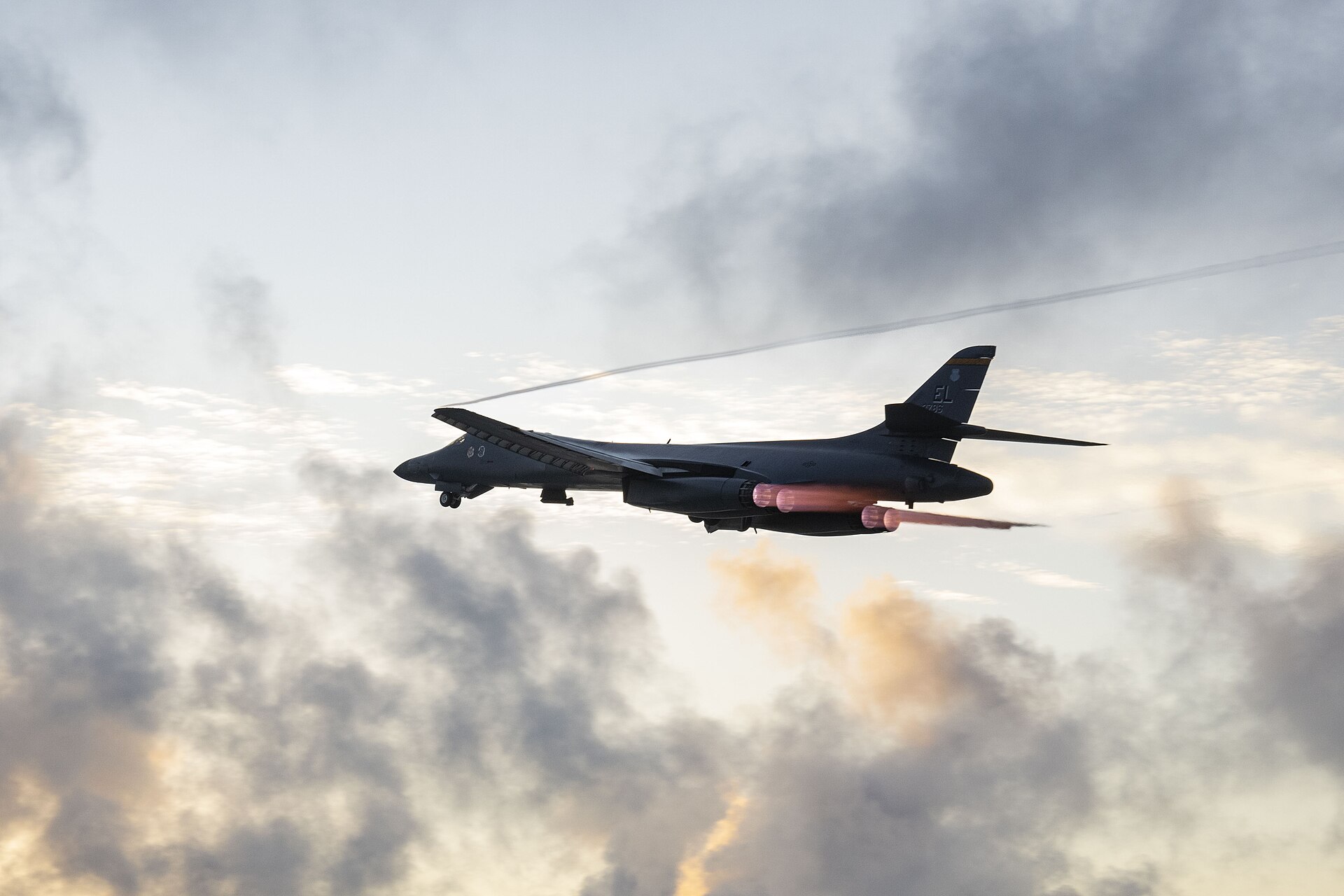
The phrase “much more to follow” has now materialized as a declared doctrine. Bridge targeting in advance of ground operations is a standard element of what military planners call “isolation of the battlefield” — destroying the transportation links an adversary would use to reinforce a contested zone. The Soufan Center’s IntelBrief from March 30 documented approximately 20,000 US ground forces in theater, including roughly 5,000 Marines from two Marine Expeditionary Units and 2,000 to 3,000 paratroopers from the 82nd Airborne Division. Pentagon planners, the Soufan Center reported, were preparing “weeks of ground operations that would fall short of a full-scale invasion” but would involve “raids by a mix of Special Operations Forces and infantry.” Those ground operations would enter Iran through Khuzestan.
Khuzestan: The Geography That Explains the Targeting
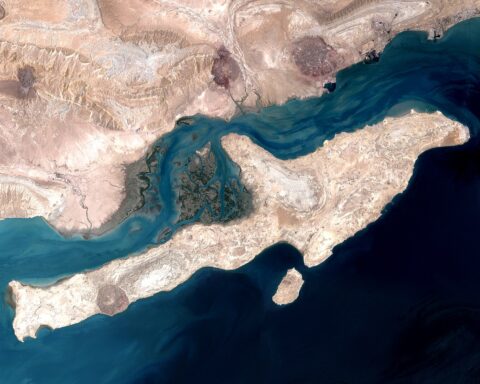
Khuzestan province produces approximately 80 percent of Iran’s petroleum output, according to Israel National News. It is bordered and bisected by three major river systems — the Karun, the Karkheh, and the Arvand (Shatt al-Arab) — that create natural defensive boundaries and channel all military movement through bridge crossings. The Karun River passes directly through Ahvaz, the provincial capital and the IRGC Ground Force’s primary deployment hub in Iran’s southwest.
An analysis published by Israel National News described the bridges over the Karun and Karkheh as “the primary arteries the IRGC would use to rush reinforcements westward from central Iran,” arguing that their destruction would “create a time window for the ground phase before Iranian land forces can mass effectively.” The logic is geometric: if the river crossings are gone, the IRGC cannot move heavy equipment or large formations into Khuzestan from the Iranian interior without engineering improvised crossings under fire.
Tehran is aware of the vulnerability. The IRGC Ground Force commander conducted an inspection of units deployed in Khuzestan as recently as March 24, confirming that “all units are prepared at the highest level,” according to PressTV. At least 1,000 Iraqi Popular Mobilization Forces fighters entered Khuzestan from Basra via the Shalamcheh border crossing, deploying to Khorramshahr, Abadan, and Ahvaz — the three cities that sit astride the Karun and Shatt al-Arab river crossings, as reported by Al Jazeera and Ynet News. Iran’s Fars News described the PMF deployment as “humanitarian.”
The pre-positioning of Iraqi militia fighters in the three cities that control Khuzestan’s river crossings is itself an acknowledgment that Tehran expects those crossings to be targeted. Bridge destruction would strand the PMF formations on the western bank while cutting them off from IRGC reinforcement from the east, replicating the isolation template already applied at Karaj.
How Has Iran Responded to the Bridge Threat?
Iran’s response has operated on three tracks: diplomatic protest, counter-threat, and negotiation posture. Iran’s mission to the United Nations issued a statement on April 5 calling Trump’s “Power Plant Day and Bridge Day” post “a direct and public incitement to terrorise civilians and clear evidence of intent to commit war crime,” according to Al Jazeera’s live blog. The mission explicitly called on third states to “act now. Tomorrow is too late” — a bid to invoke international legal obligations under the Geneva Conventions before the deadline expires.
Striking civilian structures, including unfinished bridges, will not compel Iranians to surrender. Every bridge and building will be built back stronger. What will never recover: damage to America’s standing.
Abbas Araghchi, Iranian Foreign Minister, via RFERL
The counter-threat track is more direct. Following the April 2 Karaj B1 bridge strike, Iran’s IRGC-affiliated Fars News Agency published a list of eight regional bridges as implicit retaliation targets, as reported by the Middle East Monitor and OneIndia. The list included the Sheikh Jaber Al-Ahmad Sea Bridge in Kuwait, the King Fahd Causeway connecting Saudi Arabia to Bahrain, the Sheikh Zayed and Sheikh Khalifa bridges in the UAE, and three bridges in Jordan. The King Fahd Causeway is the only land link between Saudi Arabia and Bahrain, home to the US Navy’s Fifth Fleet headquarters — making its inclusion on the list a pointed threat to both Riyadh and Washington.
On the negotiation front, Iranian Foreign Minister Abbas Araghchi posted on X on April 5: “What we care about are the terms of a conclusive and lasting END to the illegal war that is imposed on us,” according to the Irish Times. Tehran rejected the US 15-point “action list” — conveyed through Pakistani officials and confirmed by US Special Envoy Steve Witkoff — as “unreasonable,” with items reportedly including total nuclear dismantlement and formal recognition of Israel, according to CBS News. Araghchi told reporters on April 4: “You cannot speak to the people of Iran in the language of threats and deadlines. We do not set any deadline for defending ourselves,” as reported by Al Jazeera. Tehran’s precondition — a complete cessation of hostilities before any negotiation begins — has no US counterpart proposal on the table.
Can Oman’s Hormuz Protocol Survive “Bridge Day”?
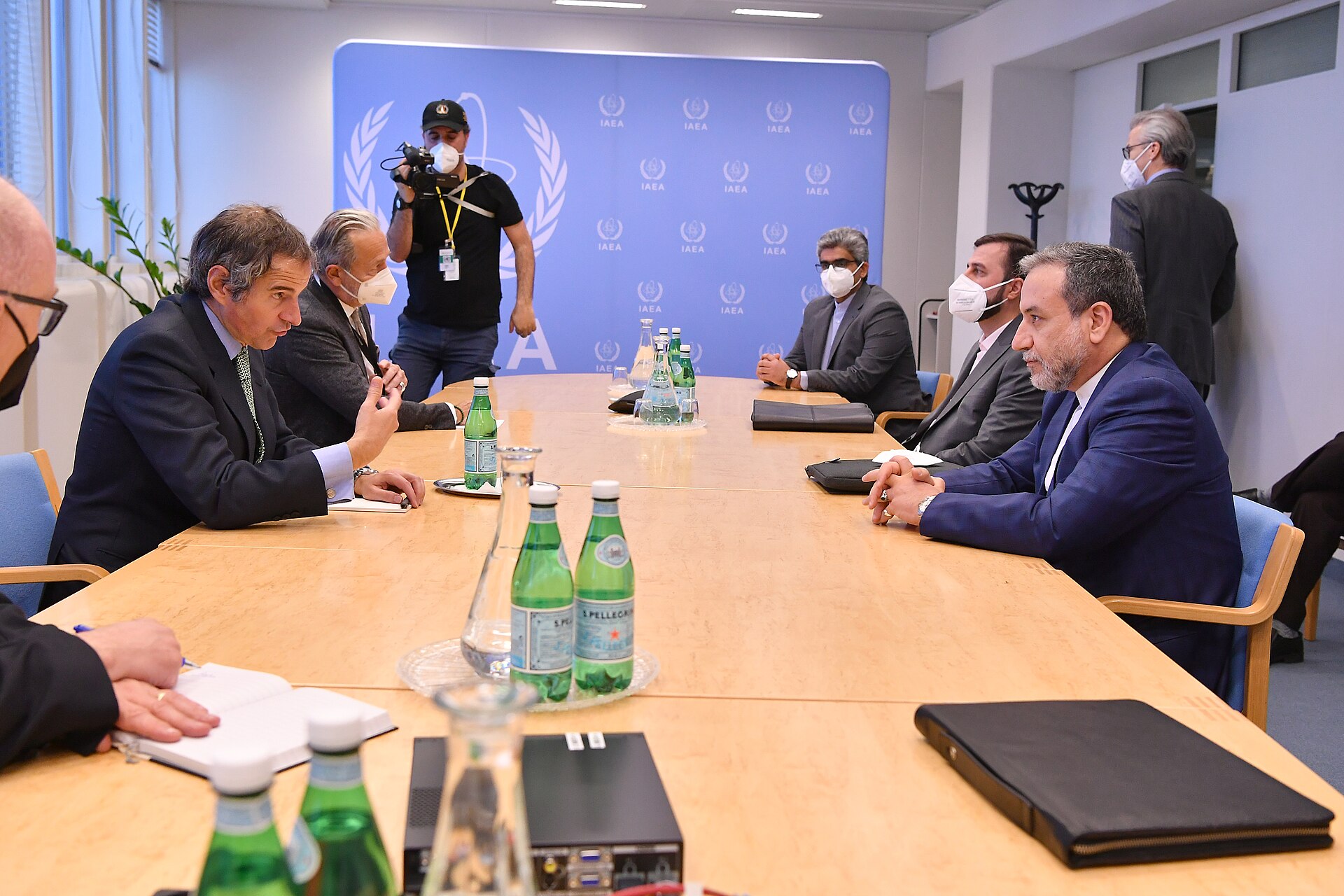
Oman and Iran held undersecretary-level talks on April 4, with specialists from both foreign ministries discussing “possible options for ensuring smooth passage through the Strait of Hormuz,” as reported by Al Jazeera and The National. The April 5 follow-up produced no agreement. “Experts from both sides presented a number of visions and proposals that will be studied,” Oman’s state news agency reported — diplomatic language for a process that has not converged.
The emerging framework, reported by CNBC and Iran’s state news agency IRNA, would give Iran supervisory authority over transiting commercial vessels — a mechanism that keeps Tehran nominally in control of the strait while permitting some commercial traffic. The protocol drafting process is in its “final stages” internally, according to an Iranian official cited by CNBC, before formal negotiations with Muscat can begin.
Trump’s expanded targeting declaration directly undercuts Muscat’s ability to sell any partial opening to Iranian hardliners. The IRGC faction that opposes any concession on Hormuz can now argue that the US has announced bridge and power-plant strikes irrespective of Hormuz status — an argument Oman cannot counter with the protocol still in draft.
The UN Security Council route is equally stalled. A Bahrain-drafted resolution authorizing “all necessary means” to reopen the Strait has been delayed at least three times — originally scheduled for April 3, then April 4, now postponed until the following week — blocked by China, Russia, and France, according to RFERL and France24. The collapse of Pakistani mediation earlier in the week removed another channel. The diplomatic off-ramps are narrowing to a single lane: the Omani back channel, which has not yet produced a deliverable.
What Does the Expanded Targeting Mean for Saudi Arabia?
Riyadh has not issued a public statement responding to Trump’s “Power Plant Day and Bridge Day” declaration. The silence is itself a position. Saudi Arabia’s visible action on April 5 came through OPEC+: eight countries — Saudi Arabia, Russia, Iraq, the UAE, Kuwait, Kazakhstan, Algeria, and Oman — agreed to raise production by 206,000 barrels per day, taking combined output to 33.7 million bpd, while cautioning that “any disruption to energy security, whether through attacks on infrastructure or disruption of international maritime routes,” increases market volatility.
The OPEC+ statement is the closest Riyadh has come to public commentary on the escalation. It threads a narrow line: acknowledging the threat to energy infrastructure (including Saudi infrastructure on Iran’s counter-target list) without directly criticizing Washington’s expanded targeting doctrine. With Brent crude at approximately $109 per barrel and WTI above $111 — and physical Dated Brent reportedly touching $140 — the Kingdom’s East-West Pipeline bypass through Yanbu is handling roughly 7 million barrels per day in rerouted exports, a volume that depends on shipping lanes and Gulf infrastructure remaining functional.
The bridge dimension carries a specific Saudi risk. Fars News named the King Fahd Causeway as a counter-target. The 25-kilometer structure carries approximately 30 million crossings per year in peacetime; its destruction would cut Bahrain — and with it, the US Navy’s Fifth Fleet base in Manama — off from the Saudi mainland entirely. Any Iranian retaliation against Gulf bridges in response to “Bridge Day” would hit Saudi Arabia’s physical connectivity before it hit its oil infrastructure.
The April 6 deadline has always placed Saudi Arabia in a position where its interests are affected by a decision made in Washington and a response made in Tehran, with Riyadh given no mechanism to shape either. A power-plant campaign is a bilateral punishment cycle between the US and Iran. A bridge campaign — with its ground-war implications and its counter-target list that names the King Fahd Causeway — places Saudi physical infrastructure directly inside the targeting exchange.
Trump’s April 6 White House press conference sharpened that framing further, as he deployed the 155-aircraft rescue mission as the predicate for his claim that Iran could be eliminated “in one night.” The tanker fleet constraints behind Trump’s one-night threat — KC-135s already destroyed at Prince Sultan, refueling capacity visibly degraded — suggest the arithmetic of a nationwide campaign is considerably more demanding than a single press conference line implied.
Crown Prince Mohammed bin Salman, who according to the New York Times privately urged Trump toward US ground troops and regime change in Iran, may find that the military escalation he reportedly sought carries costs that arrive at Saudi doorsteps. The 04:00 AST strike hour — before Riyadh’s government opens — means any Iranian counter-strike against Gulf bridges could land in the same pre-dawn window, with Saudi air defenses already stretched by weeks of drone and missile interception.
Background
The Iran war entered its thirty-sixth day on April 5, 2026. Cumulative casualties reported to date: at least 3,519 killed on the Iranian side, including 1,607 civilians and more than 244 children. US forces have suffered 15 dead and more than 300 wounded, with seven manned aircraft lost. The war began with US and Israeli strikes on Iranian nuclear and military facilities on March 1, following the collapse of the 2025-2026 Iran-United States negotiations.
Trump’s deadline sequence has escalated through four phases: a 48-hour ultimatum on March 21 (reported by NBC News); a postponement on March 23; a ten-day extension to April 6 at 8 PM EDT on March 26, characterized as a response to an “Iranian Government request”; and the April 5 expansion to include bridge targeting alongside power plants, with the deadline adjusted to 9 PM EDT. US Special Envoy Steve Witkoff confirmed to the Cabinet that “strong signs” existed of Iranian willingness to negotiate and that a 15-point “action list” had been shared through Pakistani intermediaries, according to CBS News.
The Vance near-miss in Islamabad and the Saudi co-guarantor framework both failed to produce a diplomatic pathway before the deadline. Goldman Sachs estimates a $14 to $18 per barrel geopolitical premium embedded in current oil prices. Brent crude gained approximately 55 percent in March 2026, a record monthly increase.
| Deadline Timeline | Date | Action |
|---|---|---|
| Initial ultimatum | March 21 | 48-hour deadline to reopen Hormuz (NBC News) |
| First postponement | March 23 | Strikes on power plants delayed (Al Jazeera) |
| Ten-day extension | March 26 | Deadline set for April 6, 8 PM EDT, “per Iranian request” (Al Jazeera) |
| B1 bridge strike | April 2 | Karaj bridge destroyed; Trump posts collapse video (Fox News, RedState) |
| “Power Plant Day and Bridge Day” | April 5 | Expanded targeting declared; deadline now 9 PM EDT April 6 (Fortune, Times of Israel) |
Frequently Asked Questions
What specific bridges in Khuzestan would US forces likely target?
Military analysts have identified the bridges over the Karun River at Ahvaz, the Karkheh River crossings between Dezful and Susangerd, and the Shatt al-Arab crossings at Khorramshahr and Abadan as the most operationally relevant targets. The Karun at Ahvaz carries the main north-south highway connecting central Iran to the Persian Gulf coast. The Karkheh crossings are the primary lateral routes the IRGC would use to move armored formations from the Isfahan and Lorestan garrisons westward into Khuzestan. Destruction of these crossings would effectively divide the province into segments that cannot reinforce each other.
Has the US struck Iranian bridges before the Karaj B1 attack?
The Karaj B1 bridge on April 2 was the first confirmed US-Israeli strike specifically targeting bridge infrastructure in the 2026 Iran war. Trump subsequently told TIME Magazine that the US had “blew up their three big bridges last night,” as reported by ABC News, though only the B1 bridge has been independently confirmed by name. Prior US strikes focused on military installations, air-defense systems, nuclear facilities, and oil infrastructure. The expansion to bridges marked a doctrinal shift from degrading military capability to shaping the ground-maneuver environment.
How would bridge destruction affect Iranian civilian populations?
Khuzestan’s population of approximately 4.7 million depends on bridge crossings for basic services, hospital access, and food distribution. The Karun River divides Ahvaz into eastern and western halves connected by multiple bridges; their destruction would split a city of 1.3 million people. International humanitarian law requires that attacks on dual-use infrastructure meet a proportionality test — that the anticipated military advantage is not outweighed by expected civilian harm. Iran’s UN mission explicitly cited this framework on April 5, calling the declared bridge campaign evidence of “intent to commit war crime.”
What is the status of the US 15-point “action list” conveyed to Iran?
US Special Envoy Steve Witkoff confirmed to the Cabinet that the list was shared through Pakistani intermediaries, according to CBS News. Tehran rejected it as “unreasonable.” Items reportedly include total dismantlement of Iran’s nuclear facilities and formal recognition of Israel — demands that no Iranian government, reformist or hardline, has ever accepted. Araghchi stated on April 5 that Iran is “open to diplomacy” but cares about “the terms of a conclusive and lasting END to the illegal war.” The gap between the US list and Iranian preconditions — which include a complete cessation of hostilities before any negotiation — has no visible bridging proposal.
Iran responded to the 15-point list with its own formal 10-point counter-proposal, submitted hours before the 9 PM EDT April 6 deadline, calling for a complete halt to hostilities before any negotiation. Trump dismissed it as “not good enough.” The full counter-proposal and its five structural conflicts with the US framework are analyzed here.
Could the one-hour deadline shift signal a last-minute deal?
The shift from 8 PM to 9 PM EDT is ambiguous. It could reflect a minor accommodation requested through the Omani or Pakistani back channel to allow time for a final diplomatic message. It could also reflect US military scheduling — a one-hour adjustment to align with aircraft carrier launch windows or in-theater coordination. Trump’s April 5 post contains no language suggesting flexibility: “There will be nothing like it!!!” and “you’ll be living in Hell” are not the words of a leader signaling openness to extension. By contrast, Trump told reporters separately that there was “a good chance” for a deal by Monday — a juxtaposition that reflects either deliberate good-cop/bad-cop messaging or genuine policy incoherence. Senator Tim Kaine characterized the tone as “embarrassing and juvenile,” according to NBC News.
Israel did not wait for the deadline to expire. The destruction of 85 percent of Iran’s petrochemical capacity in the April 6 South Pars re-strike — conducted approximately 14 hours before the original 9 p.m. EDT deadline — pre-empted whatever coercive pressure the deadline was designed to generate and triggered Iran’s formal 10-point rejection of the ceasefire framework. On April 7, the bridge targeting threat moved from rhetoric toward operational reality: a seven-missile Iranian barrage against Saudi Arabia’s Eastern Province caused Saudi authorities to shut the King Fahd Causeway for several hours — the first time Iran’s counter-target list produced a physical closure of a bridge it had publicly named. The causeway shutdown, its implications for the US Fifth Fleet in Bahrain, and the infrastructure vulnerability it exposed are covered here.