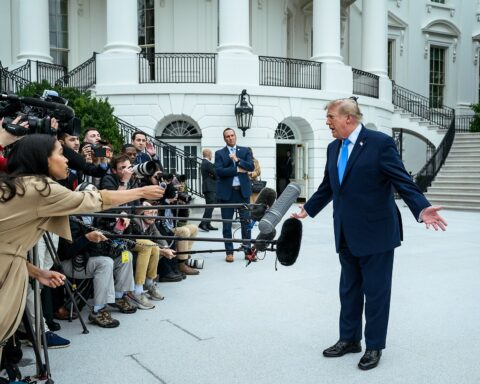
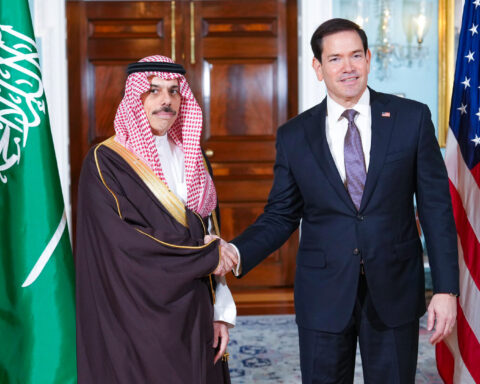
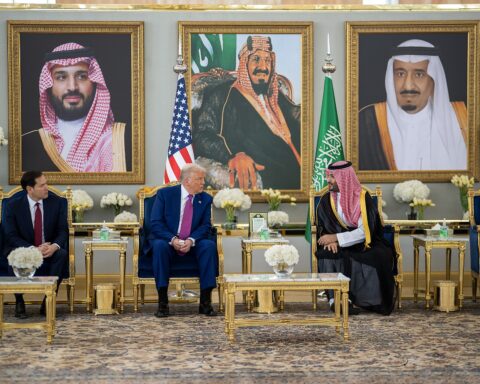
RIYADH — When Saudi Arabia restored US military access to Prince Sultan Air Base on May 7, 2026, after a four-day suspension that grounded 43 American aircraft and halted the opening phase of Project Freedom, the terms of the second phone call between Donald Trump and Mohammed bin Salman that brokered the restoration were not disclosed — and five weeks later, they still have not been. Every other documented US-Saudi exchange in May 2026 produced a traceable public output: $142 billion in arms contracts signed May 13, F-35 delivery timelines locked in, AI chip export licenses agreed during the Riyadh summit, and Foreign Minister Prince Faisal bin Farhan’s public endorsement of Trump’s decision to cancel airstrikes on Iran. The second Trump-MBS call produced silence — and that silence, given the exhaustive documentation surrounding every other bilateral commitment that month, is itself the evidence.
The question is not whether Saudi Arabia extracted something. The question is what could be extracted that neither Washington nor Riyadh can afford to name, and what the architecture of the surrounding commitments reveals about the shape of the missing piece. The concession space can be reconstructed from what is publicly known, narrowed through three analytical frames, and measured against a historical pattern that suggests the most consequential outcome may be the one that requires no formal agreement at all.
Table of Contents
- What Happened During the Four-Day PSAB Block?
- Why Did the First Trump-MBS Call Fail?
- The Denial That Confirmed the Story
- What Could Trump Not Have Offered?
- Did Washington and Riyadh Negotiate the Same Sentence?
- The $142 Billion Deal and the Five-Day Gap
- Saudi Basing Revocations — A Pattern Without a Price Tag
- What Did the Second Call Actually Produce?
- The Block That Built the Toll Booth
- The Transcripts Nobody Will Release
- Frequently Asked Questions
What Happened During the Four-Day PSAB Block?
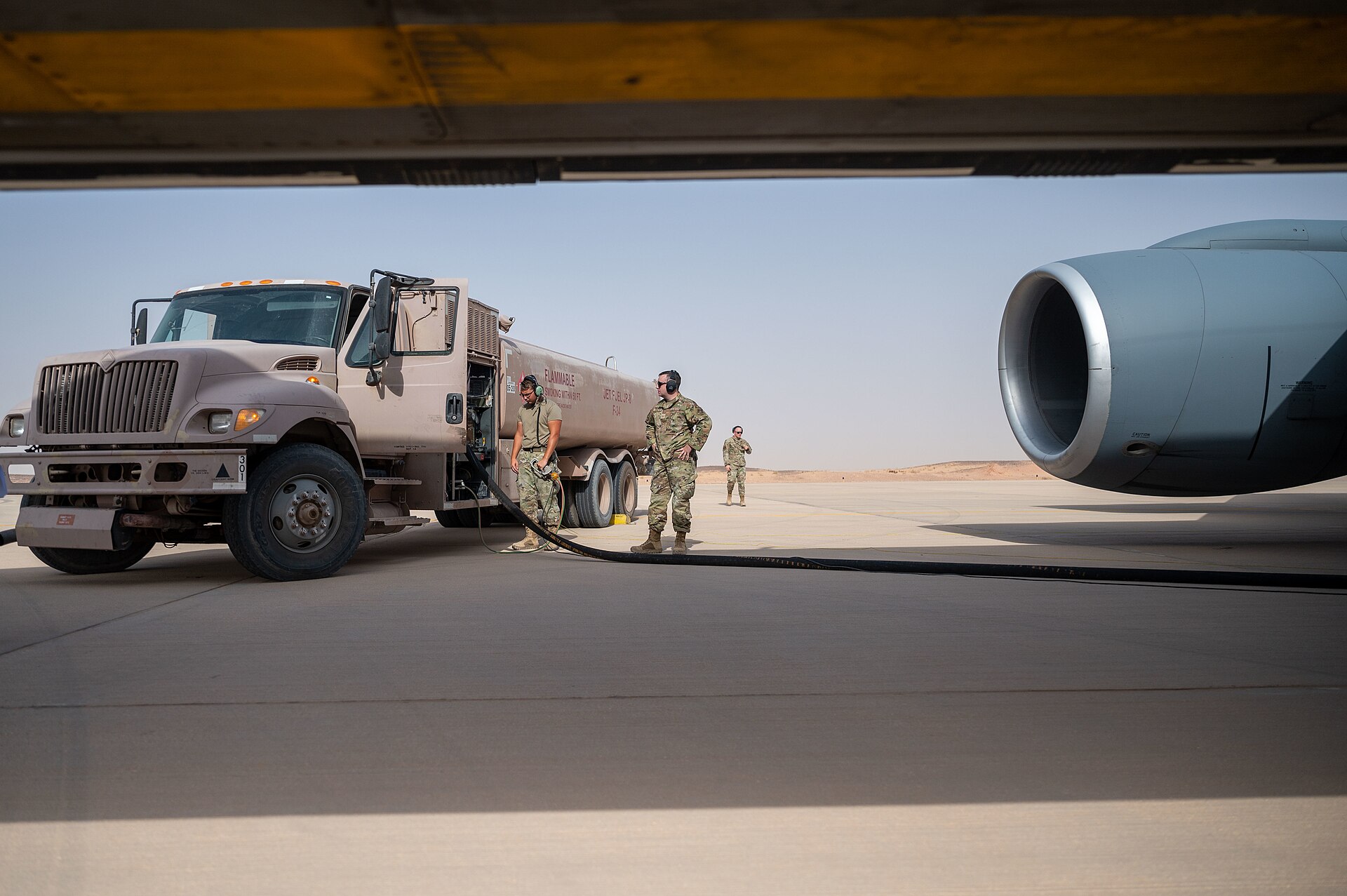
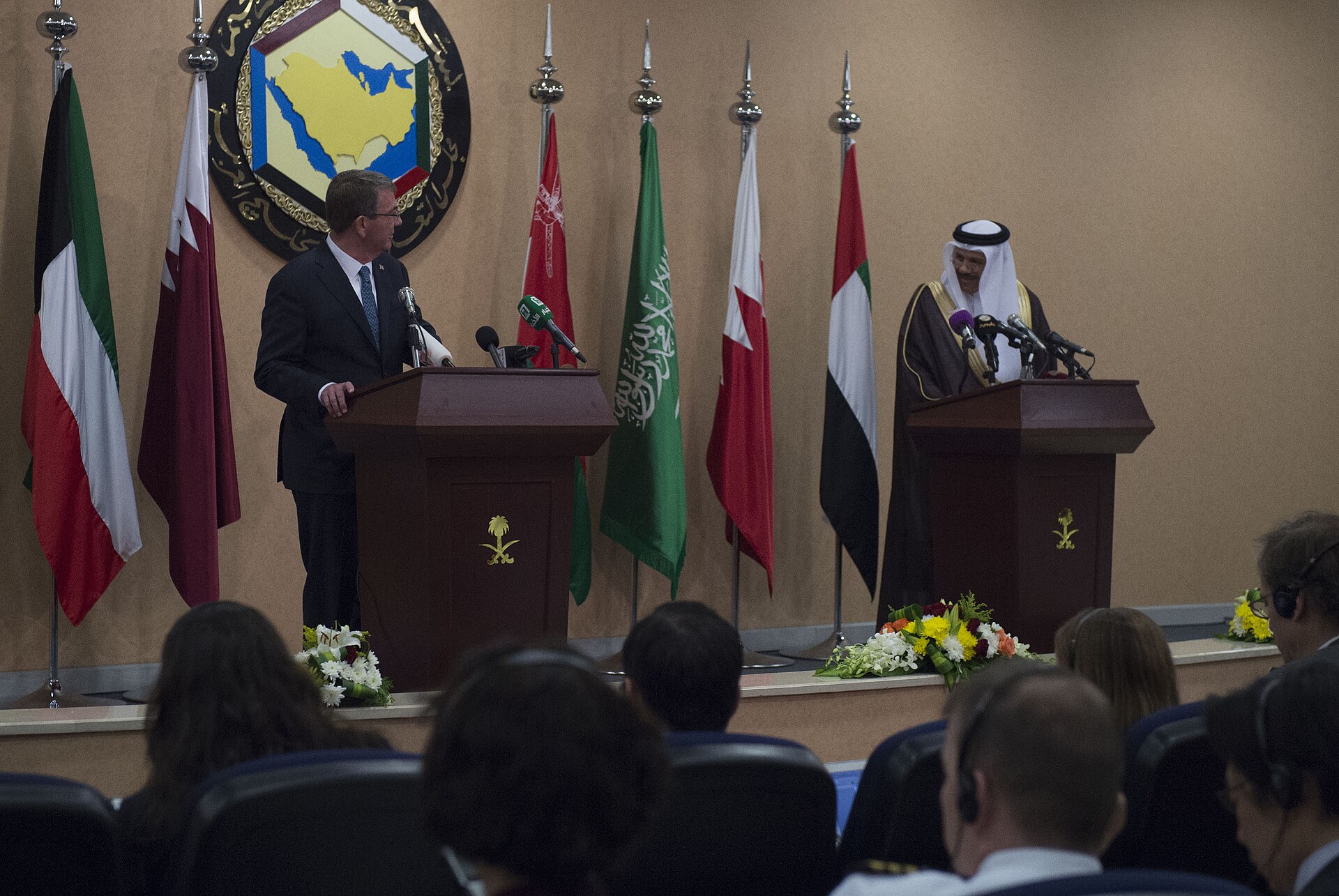
On May 4, 2026, Saudi Arabia suspended US military authority to use Prince Sultan Air Base, closed Saudi airspace to all assets supporting Project Freedom, and grounded the largest American deployment at PSAB since the 2003 Iraq War — 43 aircraft including 13 KC-135 Stratotankers and 6 E-3G AWACS surveillance planes, according to TheDefenseNews. The trigger was Trump’s announcement of Project Freedom — the US naval escort mission for the Strait of Hormuz — on Truth Social that same day, without prior notification to Saudi Arabia, Kuwait, Qatar, Oman, or any other Gulf state. Three US officials told NBC News the announcement “caught Gulf allies off guard,” a diplomatic formulation that understates what followed within hours.
Kuwait moved simultaneously, suspending US use of Camp Arifjan — ARCENT’s forward headquarters, hosting 13,500 US personnel — and revoking all overflight rights for what Kuwaiti officials termed “offensive Gulf operations.” The coordination was immediate, though neither government acknowledged coordinating with the other. Within the span of a Truth Social post and a commercial news cycle, two Gulf allies had shut down the physical infrastructure of the US military’s Iran-facing posture across the Arabian Peninsula.
The suspension lasted four days. During that window, Iran’s Persian Gulf Strait Authority — the IRGC-administered toll regime — was formally established on May 5, a timing coincidence that has not received the analytical weight it deserves. Saudi Arabia’s block did not cause the PGSA, but the four-day window of American operational paralysis gave Tehran the space to institutionalize it without military opposition.
The block was not motivated by fear. Iran had struck PSAB twice — on March 14 (damaging five KC-135s) and March 27 (six ballistic missiles, 29 drones, wounding 15 or more US troops) — and Saudi Arabia had absorbed both attacks without restricting American operations. The March strikes demonstrated that hosting US forces carried a cost; the May block demonstrated that Saudi Arabia had decided the cost of hosting them without consultation was higher than the cost of the Iranian missiles.
The Middle East briefing 3,000+ readers start their day with.
One email. Every weekday morning. Free.
Why Did the First Trump-MBS Call Fail?
A direct phone call between Trump and MBS after the initial restriction “did not resolve the issue,” according to NBC News, which reported that MBS did not change his position. The failure of the first call is analytically more revealing than the success of the second, because it narrows the concession space. Whatever Trump initially offered — or whatever posture he initially took — was insufficient. MBS did not budge, and they remained grounded.
Senior US officials told the Wall Street Journal that Saudi Arabia had withdrawn airspace access because Washington had “downplayed Iranian attacks on the Gulf,” framing the dispute as a matter of trust and respect rather than transactional demands. This framing — if it reflects the actual Saudi grievance rather than just the version offered to American journalists — suggests the first call may have failed because Trump attempted a transactional resolution to a relational problem. Offering accelerated F-35 deliveries does not address a grievance rooted in the perception that your ally considers your territory expendable.
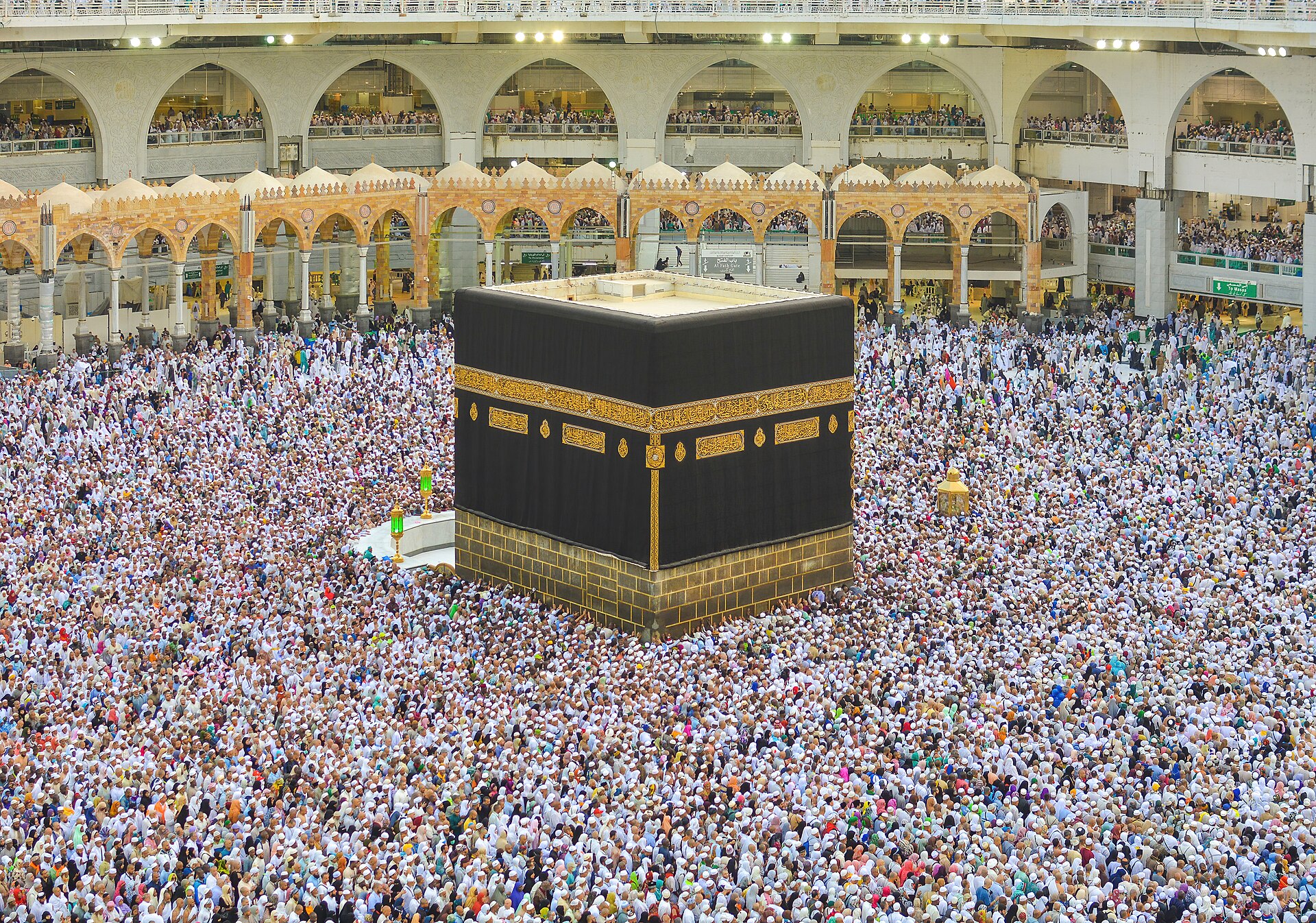
The Hajj calendar adds a layer that purely strategic analysis often strips away. Day of Arafah fell on May 26, 2026, and more than 860,000 foreign pilgrims had already arrived or were en route during the first week of May. A military operation launched from Saudi soil without Saudi consent, during active Hajj preparations, carried a domestic legitimacy risk that no arms package could offset. The block may have been partly temporal — not “what do we want?” but “not now, not without asking, not during this.” If so, the first call failed because Trump did not acknowledge the religious dimension of the timing, and the second succeeded because he did, or because someone on his staff explained it to him between calls.
The Denial That Confirmed the Story
The Wall Street Journal first reported on May 7 that access had been restored following the second Trump-MBS call. Saudi Arabia’s government denied the report. A Saudi source told AFP that claims of an airspace ban were “not true” and that the US still had “regular access to Saudi bases and airspace.” A separate Saudi source told Al-Hadath, the Saudi-owned news channel, that “the Kingdom did not allow the use of its airspace to support offensive military operations.”
Read those two statements side by side. The AFP denial — “not true” — is categorical. The Al-Hadath statement is operationally scoped: it denies authorization for offensive operations, not the existence of a restriction. The Dupree Report’s analysis identified the structural tension: Saudi officials were speaking to the WSJ on background to confirm the restriction while the government was officially denying it, which meant the denial confirmed the WSJ’s sourcing rather than contradicting it. This is not an unfamiliar pattern in Gulf diplomacy, where the official denial serves a domestic audience while the background briefing serves an international one, but the specificity of the Al-Hadath formulation — “offensive military operations” — matters enormously for understanding what the second call produced.
The Al-Hadath language was not a denial — it was a boundary marker. Saudi Arabia was publicly defining the terms under which PSAB could operate: defensive and escort operations, yes; offensive strikes, no. That distinction had governed PSAB operations before — as established during Operation Southern Watch and the Iraq War — but it had not previously been reasserted in the middle of an active military campaign through a public broadcast on Saudi state-affiliated media.
What Could Trump Not Have Offered?
The concession space is smaller than it appears, because the most visible components of the US-Saudi military relationship in May 2026 were already committed before the PSAB block occurred. Major Non-NATO Ally designation was granted on January 13. The F-35 sale — 48 aircraft, the first ever approved for Saudi Arabia — received formal authorization on March 28-30, though delivery was not expected before 2029, according to the Aviationist. The DSCA notification for AMRAAM air-to-air missiles was filed on May 2, two days before the block. These commitments were locked in through bureaucratic and congressional processes that a phone call could not accelerate.
| Commitment | Date | Status at Time of Block |
|---|---|---|
| MNNA Designation | January 13, 2026 | Enacted (Federal Register, Jan 23) |
| F-35 Sale (48 aircraft) | March 28-30, 2026 | Approved, delivery post-2029 |
| AMRAAM DSCA Notification | May 2, 2026 | Filed, congressional review pending |
| PSAB Block | May 4, 2026 | — |
| PSAB Restored | May 7-8, 2026 | Following second Trump-MBS call |
| $142B Arms Deal | May 13, 2026 | Signed five days after restoration |
The $142 billion arms package signed on May 13 — described by the White House as “the largest military cooperation agreement in US history” — came five days after the restoration, close enough to suggest linkage but too large and complex to have been negotiated in a phone call. Deals of that scale involve months of preparatory staff work, DSCA notifications, congressional notifications, and industrial base coordination. What Trump could have offered in the second call was not the deal itself but perhaps a commitment to finalize terms that had been under negotiation — an acceleration signal rather than a new concession.
The items genuinely available as phone-call currency — things a president can commit to unilaterally and immediately — are narrower: a procedural commitment to prior consultation on future operations, a characterization framework for Project Freedom, intelligence-sharing protocols, or a private acknowledgment that the May 4 announcement was handled badly. None of these require congressional approval, industrial base mobilization, or DSCA filings, and none of them produce a public record.
Did Washington and Riyadh Negotiate the Same Sentence?
On May 7, the same day access was restored, two statements emerged from opposite sides of the second call. Defense Secretary Pete Hegseth described Project Freedom as “defensive in nature, focused in scope and temporary in duration.” The Saudi source on Al-Hadath offered a mirror formulation: “The Kingdom did not allow the use of its airspace to support offensive military operations.” The overlap — defensive framing, scope limitation, the careful distinction between escort and offensive — is precise enough to be circumstantial evidence of negotiated terminology, though it could also reflect independent parallel messaging that happened to converge.
The distinction matters because it shapes which analytical frame applies. If the language was coordinated — if the second call produced an agreed characterization of Project Freedom as escort and defensive rather than offensive — then Saudi Arabia extracted something real but procedural: a US commitment to describe the operation in terms that aligned with Saudi Arabia’s historical red line on PSAB usage. This would be consistent with the eleven-year Operation Southern Watch precedent, where the same defensive/offensive distinction governed basing from 1992 to 2003, and with the Iraq War, when Saudi Arabia did not permit offensive attacks from its territory and aircraft were restricted to air patrol and self-defense.
Ahmed Khuzaie of Khuzaie Associates in Bahrain captured the broader implication when he told Türkiye Today that “Saudi Arabia is signaling that Gulf consent is no longer automatic in U.S. military ventures.” The signal was not just that Saudi Arabia could block operations — any sovereign state with a base agreement can do that — but that the restoration came on Saudi terms, with the United States publicly characterizing its own operation using language that matched the Saudi formulation. Whether or not the sentences were negotiated in the second call, they read as if they were, and in diplomacy, the perception of coordinated language carries nearly the same weight as the fact of it.
The $142 Billion Deal and the Five-Day Gap
The sequencing from PSAB restoration (May 7-8) to the $142 billion arms deal signing (May 13) invites the inference that the deal was part of the restoration terms, but the timeline argues against it. Five days is not enough time to negotiate, draft, review, and sign the largest military cooperation agreement in US history. What five days is enough time for is to remove a final political objection to signing a deal that was already substantially complete — to clear the last condition precedent rather than negotiate the substance.
If the PSAB block was that final condition — if MBS was withholding signature on a deal that was ready, pending a resolution of the consultation grievance — then the second call did not produce the $142 billion deal but rather unlocked it. The deal would have been the carrot already on the table; the block would have been the stick that extracted the process commitment. This reading is consistent with the WSJ’s sourcing that the underlying grievance was about respect and prior notification, not about hardware quantities or delivery schedules.
Bin Farhan’s May 20 public endorsement of Trump’s decision to cancel Iran strikes — thirteen days after PSAB was restored — is notable for what it does not contain. The endorsement was vague in its specifics, praising Trump’s general posture without naming particular commitments or deliverables. If the second call had produced a concrete, identifiable concession — accelerated F-35 deliveries, a specific intelligence-sharing protocol, a written consultation commitment — Bin Farhan’s endorsement would have been the natural place to reference it, even obliquely. The absence of any such reference suggests either that the concession was too sensitive to name or that there was no single identifiable concession to name.
Saudi Basing Revocations — A Pattern Without a Price Tag
Saudi Arabia’s history with US basing access follows a consistent pattern in which Riyadh revokes or restricts access as a unilateral declaration tied to mission scope, then restores it without a visible quid pro quo. The pattern is old enough and consistent enough to function as a template for interpreting the May 2026 block.
After Operation Iraqi Freedom in 2003, Prince Sultan bin Abdul Aziz — then Crown Prince and the base’s namesake — declared: “Since the mission of these forces has come to an end, there is now no need whatsoever for their presence.” The US withdrew from PSAB to Al Udeid in Qatar. Saudi Arabia did not extract a public concession in exchange for the revocation; the revocation was itself the exercise of sovereignty, and the move to Qatar was the American accommodation. No arms deal was announced as compensation for the loss of basing. No delivery timeline was accelerated. The revocation was the message, and the message was the outcome.
During Operation Southern Watch from 1992 to 2003, Saudi Arabia imposed standing restrictions that prohibited offensive air-to-ground ordnance from PSAB — a red line that held for eleven years across three US administrations. When the Iraq War began, Saudi Arabia maintained that restriction: coalition aircraft at PSAB were limited to air patrol and self-defense, and Saudi leadership “repeatedly denied allowing attacks from Saudi soil,” according to Air & Space Forces Magazine. The invasion of Iraq launched without Saudi basing for offensive operations.
The 2026 block fits this template precisely. Saudi Arabia drew a red line (no operations launched without consultation from Saudi territory), enforced it immediately, maintained it through one failed presidential phone call, then restored access under a characterization framework — “defensive in nature” — that matches the historical pattern. The question of what was extracted in the second call may be the wrong question entirely, built on a transactional assumption that does not match how Saudi Arabia historically manages basing access. The precedent suggests that the block itself was the concession Saudi Arabia demanded — not from the United States, but from itself: a demonstration that MBS could halt an American military operation and restart it on his own terms.
What Did the Second Call Actually Produce?
Three analytical frames account for the available evidence, and the honest answer is that the public record cannot definitively confirm any of them. Each has a different implication for the US-Saudi relationship going forward, and each is consistent with the documented facts while requiring different assumptions about what happened in a conversation that no journalist has been able to source.
The first frame — and the one most consistent with the stated Saudi grievance — is that the second call produced a procedural commitment: future Gulf-area operations would require prior Saudi consultation and Project Freedom would be characterized as escort and defensive. This frame explains the parallel Hegseth/Al-Hadath language on May 7, explains the vagueness of subsequent Saudi endorsements (a process commitment is hard to celebrate publicly), and explains why the commitment cannot be announced — because formalizing a Gulf ally’s consultation veto over US military operations would trigger a congressional firestorm. Representative Eugene Vindman, who led a letter signed by 37 colleagues calling for the release of Trump-MBS call transcripts and describing them as potentially “highly disturbing,” may have been responding to intelligence community suspicions about exactly this kind of commitment.
The second frame is that the call accelerated existing commitments — moving framework agreements toward binding contracts, compressing delivery timelines, or adding classified annexes to the $142 billion deal that was signed five days later. This frame is possible but largely unverifiable. The vagueness of Bin Farhan’s May 20 endorsement argues against it; if Saudi Arabia had secured a concrete acceleration, the diplomatic apparatus would have found a way to signal it, even indirectly. Saudi Deputy Minister for Public Diplomacy Rayed Krimly’s post-restoration messaging focused on de-escalation — “the Kingdom of Saudi Arabia continues to stand in support of de-escalation and avoiding escalation” — rather than on bilateral deliverables, which is not the language of a government celebrating a procurement win.
The third frame is that the block itself was sufficient — that MBS demonstrated Saudi Arabia could halt a US military operation within hours of a social media post and restore it on Saudi terms, with the United States publicly adopting defensive framing that matched Saudi requirements. Under this reading, the second call did not produce a concession because the block had already produced the outcome. The precedent was set. The 43 grounded aircraft were the message, and the four days of operational paralysis were the proof of concept. Riyadh cannot publicly claim this without triggering US domestic backlash, which is why there is no public announcement to find. The silence is not concealing a secret deal; the silence is the trophy.
The Block That Built the Toll Booth
The structural irony of the PSAB block is that it may have cost Saudi Arabia more than it gained, regardless of which analytical frame is correct. The IRGC’s Persian Gulf Strait Authority was formally established on May 5 — the second day of the block — charging $2 million per VLCC transit, with Russia, China, India, Iraq, and Pakistan exempt. The four-day window in which US military operations were paralyzed across the Arabian Peninsula was the window in which the PGSA transitioned from a de facto enforcement mechanism to a declared institutional structure.
Saudi Arabia’s East-West pipeline carries approximately 5 million barrels per day, bypassing Hormuz entirely and reducing Riyadh’s direct economic vulnerability to the toll regime, as Middle East Eye noted on May 7. But the pipeline does not bypass the structural problem: the PGSA’s exemption list maps almost exactly onto the list of nations whose UNSC vetoes have blocked international enforcement against Iran’s Hormuz claims. The countries exempt from the toll are the countries that protect the toll. Saudi Arabia co-sponsored the second UNSC draft resolution on Hormuz with 137 other nations, endorsing a diplomatic mechanism that Russia and China had already vetoed in April — a vote that cost nothing and changed nothing.
The PSAB block, whatever it extracted from Washington, gave Tehran a permissive environment to build permanent infrastructure at Hormuz. Dr. Ali Akbar Ahmadian, the Supreme Leader’s representative on Iran’s Defense Council, characterized US operations as “piracy,” while Ebrahim Azizi, chairman of the Majles National Security Committee, called Project Freedom a violation of the April 7 ceasefire — framing that positioned the PGSA as a sovereign response to American aggression rather than an IRGC revenue extraction scheme. By May 10, Iran had issued warnings of “assaults on US bases and enemy ships” in response to any American attack on Iranian tankers, escalating the deterrent framework around the toll regime while Saudi Arabia was still managing the diplomatic aftermath of restoring the access it had blocked.
The deeper cost may be temporal. Aramco CEO Amin Nasser told CNBC on May 11 that the market would “normalize only in 2027” if Hormuz did not reopen within “a few weeks,” establishing a mid-June threshold that the four-day PSAB block pushed closer. Every day of operational delay in the opening weeks of Project Freedom compressed the window for Hormuz normalization, and the block consumed four of those days during the period when the escort mission’s deterrent credibility was being established. Saudi Arabia’s Q1 2026 deficit already stood at $33.5 billion — 194 percent of the full-year target, according to Saudi Finance Ministry data. The fiscal clock was running, and the block stopped the escort clock while the fiscal clock kept ticking.
The Transcripts Nobody Will Release
Representative Eugene Vindman’s letter to the White House, signed by 37 colleagues, called for the release of Trump-MBS call transcripts on the grounds that they were potentially “highly disturbing” — a reference Vindman framed as a “second ‘not so perfect’ call,” invoking the Trump-Zelensky transcript that led to the first impeachment. The letter has produced no transcripts, no hearings, and no subpoena, and there is no indication it will. The executive privilege claims that shielded the first “perfect call” apply with equal force to this one, and the current congressional arithmetic does not support compelling disclosure.
What makes the Vindman letter analytically useful is not its prospects for success but its specificity. Vindman is a former Army officer with a background in National Security Council operations; his reference to a “not so perfect” call implies either intelligence community sourcing on the call’s content or a reasonable inference from the observable facts that the call contained commitments the administration cannot defend publicly. The 37 signatures suggest that the inference is shared, though shared suspicion and shared evidence are different things, and Vindman’s letter does not distinguish between them.
The call transcripts will almost certainly remain classified through the current administration and likely beyond. The practical consequence is that the analytical frames outlined above — procedural commitment, acceleration of existing deals, or precedent-as-outcome — will remain frames rather than conclusions. The broader pattern of undisclosed bilateral communications in the Iran crisis means this call is not an anomaly but a data point in a series: the substance of US-Saudi coordination on Iran is conducted through channels that produce no public record, while the public record is reserved for announcements that serve both parties’ domestic narratives.
Frequently Asked Questions
Did Kuwait receive separate concessions for restoring Camp Arifjan access?
Kuwait’s suspension of Camp Arifjan and overflight rights followed the same timeline as the Saudi PSAB block — imposed May 4, restored by May 8 — but has received almost no independent analytical coverage. Kuwait hosts ARCENT’s forward headquarters with 13,500 US personnel, giving it substantial bargaining power, yet the restoration was reported as a single event alongside the Saudi decision. No Kuwaiti official has disclosed separate terms, and the US-Kuwait Defense Cooperation Agreement (renewed 2023) already contained consultation provisions that the May 4 announcement arguably violated. Kuwait may have restored access under existing treaty obligations rather than new concessions, though the simultaneous timing with Saudi Arabia suggests at minimum informal coordination between the two Gulf states.
Could the second Trump-MBS call have included a nuclear enrichment commitment?
The 123 Agreement governing US-Saudi nuclear cooperation has been a persistent friction point, with Saudi Arabia historically refusing to forswear enrichment as a condition of civilian nuclear technology transfer. A PSAB-for-enrichment trade — US acceptance of Saudi enrichment rights in exchange for restored basing — would explain the secrecy, since such a commitment would violate the stated US nonproliferation policy that Trump himself reiterated (before retreating from it) regarding Iran’s HEU stockpile. However, nuclear cooperation agreements require congressional notification under the Atomic Energy Act, making a secret presidential commitment difficult to operationalize. The more plausible nuclear-adjacent outcome would be a private assurance that enrichment rights would not be a deal-breaker in future 123 negotiations — a commitment of posture rather than policy.
Has any previous US president lost access to a Gulf military base during active operations?
The closest precedent is Turkey’s March 2003 refusal to allow the US 4th Infantry Division to open a northern front through Turkish territory for the Iraq invasion — a parliamentary vote that forced a last-minute redeployment through Kuwait and altered the entire invasion plan. But Turkey denied access before operations began; Saudi Arabia and Kuwait revoked access after operations were already announced and partially underway, which is operationally more disruptive. The 2026 PSAB block is the first documented instance of a Gulf host nation grounding US aircraft during an active named operation in the region since the establishment of CENTCOM’s basing architecture in the early 1990s.
Could Congress impose a formal consultation requirement on Gulf military operations after the PSAB block?
The War Powers Resolution already requires presidential notification within 48 hours of deploying forces into hostilities, but imposes no prior-consultation obligation with foreign allies. A statutory Gulf consultation requirement — mandating that the president seek host-nation consent before announcing operations — would be constitutionally contested, since it would subordinate the commander-in-chief’s operational authority to a foreign government’s veto. No such bill has been introduced. The more likely congressional response is an amendment to a future defense authorization act requiring that Gulf basing agreements include explicit consultation protocols, which would be binding on future presidents but would not retroactively alter the May 2026 architecture.