
Saudi Arabia shares land borders with eight countries, and for travellers arriving overland from the UAE, Jordan, Kuwait or Bahrain, the Kingdom operates some of the busiest and most modern border crossings in the Middle East. Whether you are driving from Dubai to Riyadh, crossing the King Fahd Causeway for a weekend in Bahrain, or entering the northwest from Aqaba on the way to NEOM and Tabuk, this guide covers every crossing you are likely to use. It forms part of our broader Saudi Arabia travel guide, with detailed procedures, documents, fees and practical tips for each border post.
Total Land Crossings: 14 ports across 8 neighbouring countries
Most Popular: King Fahd Causeway (Bahrain), Al Batha/Ghuwaifat (UAE), Halat Ammar (Jordan), Al Khafji (Kuwait)
Visa Required: Yes — tourist e-visa or visa on arrival for eligible nationalities
Budget: Border fees range from free (GCC nationals) to SAR 25–35 for tolls; vehicle insurance SAR 120–1,200
Must-Know: All crossings require Manafith vehicle insurance for non-Saudi-registered cars; print your e-visa
Avoid: Crossing on Thursday or Friday evenings — queues can exceed 3 hours at the King Fahd Causeway and Al Batha
Overview: Saudi Arabia’s Land Borders
Saudi Arabia is connected to its neighbours through 14 land border crossings, as documented by Saudipedia, the official Saudi government encyclopaedia. The crossings serve Jordan and Iraq to the north, Kuwait to the northeast, Qatar, the UAE and Oman to the east, Yemen to the south, and Bahrain via the King Fahd Causeway. For tourists, the four most relevant borders are the UAE, Jordan, Kuwait and Bahrain crossings — the focus of this guide.
All crossings operate under the General Authority of Border Guard and the Saudi Customs Authority (ZATCA). GCC nationals (Saudi, Bahraini, Emirati, Kuwaiti, Omani and Qatari) may cross with just a valid national ID card or passport. Other nationalities need a valid visa — see our Saudi e-visa application guide for step-by-step instructions, or the visa on arrival page to check if your nationality qualifies.
Tip: An approved e-visa is strongly recommended for overland entry. While visa on arrival may be available at major land borders, availability and processing speed vary by crossing and time of day. Carry a printed copy of your e-visa — land borders sometimes have slower connectivity than airports.
Documents You Will Need at Every Crossing
Regardless of which border you use, prepare the following before you arrive:
- Valid passport — with at least six months’ validity from your date of entry
- Saudi visa — e-visa printout, visa on arrival eligibility confirmation, or GCC national ID
- Vehicle registration (istimarah) — original document for the car you are driving
- Valid driving licence — your home country licence or international driving permit. See our driving in Saudi Arabia guide for full details on licence requirements
- Vehicle insurance — Manafith third-party liability insurance is mandatory for all non-Saudi-registered vehicles entering the Kingdom (more below)
- No Objection Certificate (NOC) — required if the car is not registered in your name (rental cars, company cars, financed vehicles)
- Departure immigration — Saudi passport control stamps you out (or Bahraini passport control if travelling the other direction)
- Customs inspection — quick vehicle check; for Saudi customs rules, check our dedicated guide
- Arrival immigration — the receiving country stamps you in and may take biometrics (fingerprints and retinal scan for non-GCC nationals)
- JESR (جسر) — the official King Fahd Causeway Authority app. Provides live traffic updates, estimated transit times, toll prepayment and trip packages.
- Zahma O La (زحمة أو لا) — Arabic for “Crowded or not?” This community-driven app monitors real-time crossing times from other users and tells you whether the causeway is busy.
- Cross on a weekday morning — Sunday to Wednesday before noon is the quietest window
- Fill your tank before crossing; Saudi petrol is significantly cheaper than Bahrain’s
- Duty-free restrictions — Bahrain permits alcohol; Saudi Arabia does not. Do not attempt to carry any alcohol, even sealed, into Saudi Arabia. Saudi customs officers inspect returning vehicles
- The causeway is open 24/7 — but avoid arriving between 5 PM and 10 PM on Thursdays and Fridays
- If you are visiting Al Khobar or Dammam, the causeway is just 20–30 minutes from the city centre
- Follow signs for “Light Vehicles” or “Private Cars”
- Proceed to the passport control booth — hand over your passport for an exit stamp
- Drive to the customs checkpoint — a brief vehicle inspection for most private travellers
- Exit Saudi territory and drive across the neutral zone to the UAE side
- Join the lane for your nationality — separate lanes for GCC citizens and other nationalities
- Immigration — passport stamped, retinal scan for many nationalities. Many passport holders receive a free UAE visa on arrival
- Purchase vehicle insurance — mandatory UAE third-party insurance from designated kiosks at the border. You cannot proceed without it
- Take your insurance slip and vehicle documents to the customs counter for processing
- Drive through the physical customs inspection point — luggage and vehicle may be checked
- Fill up in the last Saudi town — fuel stations can be sparse on the approach to the border, and Saudi petrol is cheaper than UAE petrol
- Travel November to February for comfortable weather and clear visibility; summer temperatures along the route can exceed 50°C
- Beware of fatigue — the drive through the desert is long and monotonous. Take regular breaks and carry plenty of water
- Stray camels are a genuine hazard on Saudi desert roads, particularly after dark. Drive with high beams where possible and stay alert
- The crossing is open 24 hours, but crossing on a weekday morning is fastest
- For a broader road trip itinerary, see our Saudi driving rules page
- Operating hours: 24/7
- Distance from Aqaba: ~30 km
- Distance to Tabuk: ~280 km via Haql
- Typical crossing time: 45–60 minutes on a quiet day
- Best for: Travellers combining a Jordan trip (Petra, Wadi Rum) with northwest Saudi Arabia
- Operating hours: 24/7
- Distance from Amman: ~322 km
- Distance to Tabuk: ~200 km
- Best for: Travellers starting from Amman or central Jordan heading to Tabuk
- Operating hours: 24/7
- Annual traffic: Approximately 2 million travellers per year
- Distance from Amman: ~280 km via the Desert Highway
- Best for: Travellers heading to Riyadh, Ha’il, or continuing south through the Kingdom
- Departure tax: Jordan charges a departure tax of JOD 10 per person when leaving the country by land
- Jordan visa: Many nationalities receive a free Jordan visa on arrival at land borders, but check current regulations for your passport
- Saudi visa: Obtain your Saudi e-visa before arriving at the border. Carry a printed copy
- Vehicle customs: Vehicles entering Jordan from Saudi require a temporary import permit and insurance. Similarly, vehicles entering Saudi require Manafith insurance
- If you are planning to explore the northwest, our Tabuk region guide has detailed itinerary ideas
- Park at the immigration building and proceed inside — pedestrian crossing is not permitted at the border itself, so you must be in a vehicle
- Take a number and wait to be called at the immigration counter
- Present your passport and visa — GCC nationals show their national ID; others need a valid Kuwait visa. Check eligibility for Kuwait visa on arrival, which is available for many nationalities
- Pay the visa fee (if applicable) — Kuwaiti Dinar required; credit cards are usually accepted but carry cash as backup
- Purchase vehicle insurance — mandatory third-party insurance from kiosks at the border complex. You cannot proceed without it
- Customs inspection — vehicle and luggage may be checked
- No pedestrian crossing — you must be in a vehicle to use this border
- Have all documents organised and easily accessible: passport, visa, car registration, driving licence, insurance
- If heading to or from the Eastern Province, our Dammam travel guide and Al Khobar guide cover the closest major cities
- Fuel up in advance — stations can be 100+ kilometres apart in desert corridors, particularly between Al Kharj and Al Batha or between Tabuk and Halat Ammar
- Carry at least 5 litres of water per person — breakdowns in 45°C heat are dangerous
- Watch for camels — stray camels are one of the most serious road hazards in Saudi Arabia, especially at dawn and dusk
- Speed limits — typically 120 km/h on highways. Saher speed cameras are widespread and fines are steep. Our Saudi road rules page has the full breakdown
- Carry your vehicle documents — random police checkpoints exist on routes approaching border areas
- Mobile coverage can be patchy in remote desert sections. Download offline maps and carry a Saudi SIM with data — see our SIM card guide
- Saudi Arabia Travel Guide 2026 — The complete guide to visiting the Kingdom
- Driving in Saudi Arabia — Roads, rules, international licence and road safety
- Renting a Car in Saudi Arabia — Requirements, costs and the best rental companies
- Saudi Arabia Customs Rules — What you can and cannot bring into the Kingdom
- Saudi Arabia Entry Requirements — Documents, health rules and customs procedures
- Saudi Arabia Visa Guide — Every visa type explained
Manafith Vehicle Insurance
By Saudi law, every non-Saudi vehicle entering the Kingdom must carry Manafith insurance, a mandatory third-party liability (TPL) policy. This covers damage your car may cause to other vehicles or people — it does not cover your own vehicle. Even if your existing insurance includes GCC coverage, Manafith is still required because GCC add-ons typically cover damage to your own car only, not third-party liability in Saudi Arabia.
You can purchase Manafith insurance through the Manafith website or mobile app before you travel, saving time at the border. Alternatively, insurance kiosks at each land crossing sell policies on the spot. Pricing ranges from approximately SAR 120 for one week to SAR 1,200 for one year.
Rental Cars
If you are driving a rental car across a Saudi border, check your rental agreement carefully. Cross-border travel is only permitted to GCC countries for residents of Saudi Arabia, and you will need written permission from the rental branch authorising the crossing. For cars rented in the UAE, many agencies prohibit Saudi border crossings entirely — confirm this before you book. If you need a rental inside Saudi Arabia instead, see our Saudi rental car guide.
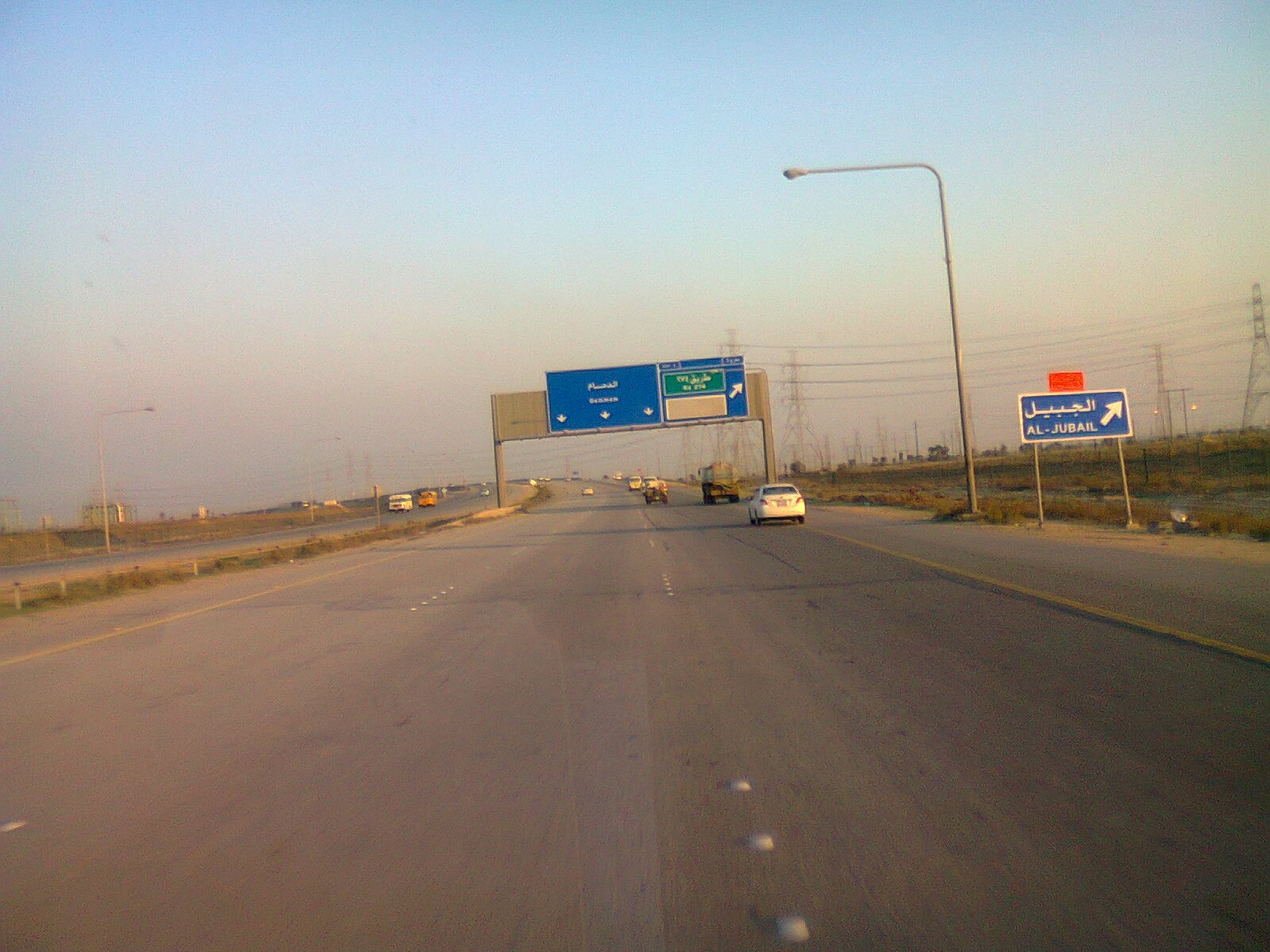
King Fahd Causeway — Saudi Arabia to Bahrain
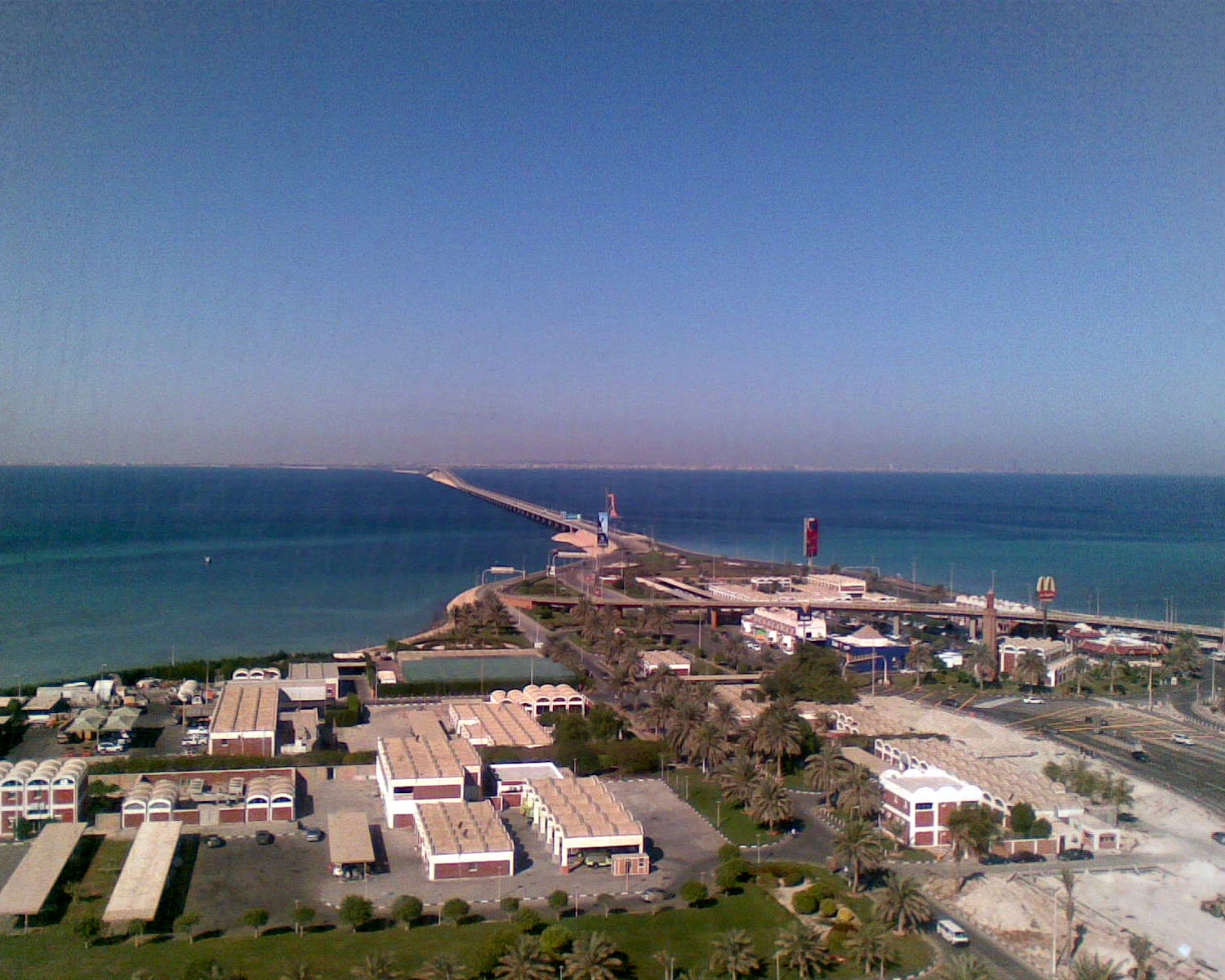
The King Fahd Causeway is the 25-kilometre bridge-causeway linking Al Khobar in Saudi Arabia’s Eastern Province to the island kingdom of Bahrain. Completed in 1986, it is one of the busiest border crossings in the entire Gulf region, with millions of crossings annually — many of them Saudi residents heading to Bahrain for the weekend.
Crossing Procedures
The causeway is a single route with passport control on an artificial island roughly midway between the two countries. You will pass through:
The entire process typically takes 30–45 minutes on a quiet weekday. On Thursday or Friday evenings — peak weekend traffic — waits can stretch to 2–4 hours. During Saudi national holidays, Eid or Bahrain Grand Prix weekends, the queue can be even longer.
Toll and Fees
| Vehicle Type | Toll (One Way) |
|---|---|
| Private car | SAR 35 / BHD 3.5 |
| Minibus | SAR 55 |
| Large bus | SAR 70 |
| Trucks | SAR 7 per tonne |
Payment can be made by cash or credit card at the toll booth. For frequent travellers, the official JESR app allows toll prepayment with discounts of up to 40% on multi-trip packages. A one-time pass can also be purchased online at kfca.sa.
Useful Apps
Two apps help you avoid the worst queues:
Who Can Cross
GCC nationals need only a valid national ID card (with at least 3 months’ validity) or passport. No visa is required. Saudi citizens must be at least 18 years old to cross into Bahrain independently.
Residents of Saudi Arabia with a valid iqama (residency permit with at least 3 months’ validity) may cross to Bahrain, subject to Bahrain’s own visa rules. Many nationalities receive a Bahrain visa on arrival at the causeway.
Tourists on a Saudi e-visa may exit via the causeway, but confirm you have the correct visa type for re-entry if you plan to return. A multiple-entry Saudi e-visa allows this; a single-entry does not.
Practical Tips for the King Fahd Causeway
Al Batha–Ghuwaifat — Saudi Arabia to UAE
The Al Batha border crossing (Saudi side) and Al Ghuwaifat (UAE side) is the sole land crossing between Saudi Arabia and the United Arab Emirates. It sits on the eastern border and handles the vast majority of overland traffic between the two countries, including the popular Riyadh to Dubai road trip — a drive of around 1,150–1,200 kilometres that takes 9–12 hours including border formalities.
Step-by-Step Crossing Process
Leaving Saudi Arabia (Al Batha)
Entering the UAE (Ghuwaifat)
Distances and Driving Times
| Route | Distance | Driving Time (excl. border) |
|---|---|---|
| Riyadh to Al Batha border | ~560 km | ~4.5 hours |
| Al Batha to Abu Dhabi | ~300 km | ~3 hours |
| Al Batha to Dubai | ~430 km | ~4 hours |
| Dammam to Al Batha | ~420 km | ~3.5 hours |
The recommended route from Riyadh is Riyadh – Al Kharj – Haradh – Al Batha – Ghuwaifat – Abu Dhabi – Dubai. This is the most direct, with proper rest stops, lighting and clear signage throughout.
Practical Tips for Al Batha
Important: If you are driving from Qatar to the UAE via Saudi Arabia (the only land route since the Abu Samra–Salwa border connects Qatar to Saudi Arabia), you will pass through two Saudi border posts: Salwa on the Qatar side and Al Batha on the UAE side. You will need a valid Saudi transit or tourist visa for this journey.
Jordan–Saudi Arabia Border Crossings
Jordan and Saudi Arabia share a 780-kilometre border with three operational crossings. The one you choose depends on where you are starting in Jordan and where you are heading in Saudi Arabia.
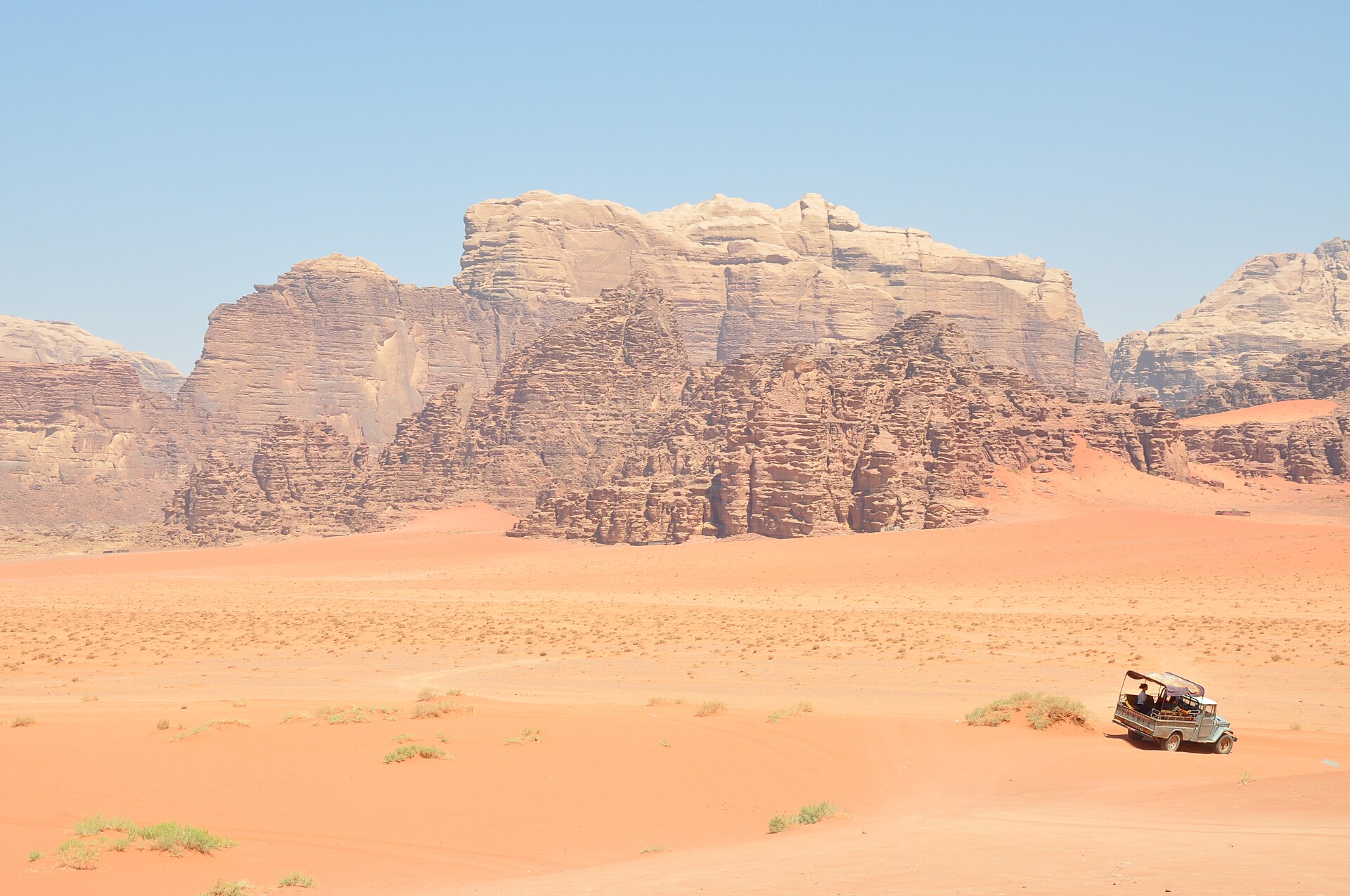
1. Durra / Haql (Western Crossing)
This crossing connects Aqaba in Jordan to Haql in Saudi Arabia. The border post sits roughly 30 kilometres from each town. It is the most scenic route, running along the coast of the Gulf of Aqaba, and the natural choice if you are heading to the Tabuk region, the northwest Saudi coast or Wadi Disah.
The coastal highway is modern and in excellent condition. Depart Aqaba early in the morning for the shortest queues.
2. Halat Ammar / Al Mudawara (Central Crossing)
The Al Mudawara border crossing on the Jordanian side connects to Halat Ammar in the Tabuk region of Saudi Arabia. It lies about 322 kilometres south of Amman in Ma’an Governorate and handles both passenger and heavy commercial traffic.
3. Al Haditha / Al Omari (Eastern Crossing)
Al Haditha border port is Saudi Arabia’s largest land port and a major transit point for travellers and freight moving between the Levant and the Gulf. It is the best choice if you are driving from Amman toward Riyadh, Ha’il or the Eastern Province.
Jordan Crossing Tips
Al Khafji / Nuwaiseeb — Saudi Arabia to Kuwait
The Al Khafji border crossing (Saudi side) and Al Nuwaiseeb (Kuwait side) is the primary land crossing between Saudi Arabia and Kuwait. The two countries share a relatively short border in the northeast of the Kingdom.
Crossing Procedures
Wait Times
The entire process takes 30 minutes on a quiet day to 3+ hours during peak times. Peak periods include Thursday and Friday evenings, holiday seasons and Hajj periods. Average waits of 45–90 minutes are typical for passenger vehicles, while trucks can wait up to 4 hours during high-volume periods.
Distances
| Route | Distance | Driving Time (excl. border) |
|---|---|---|
| Dammam to Al Khafji border | ~290 km | ~2.5 hours |
| Al Khafji to Kuwait City | ~120 km | ~1.5 hours |
| Riyadh to Al Khafji border | ~480 km | ~4 hours |
Practical Tips
Other Saudi Land Borders
While the four crossings above are the most relevant for tourists, Saudi Arabia also operates land borders with Qatar, Oman, Iraq and Yemen:
Salwa — Saudi Arabia to Qatar
The Salwa border crossing is the sole land link between Saudi Arabia and Qatar, connecting to Abu Samra on the Qatari side. This crossing is busy with both commuter and tourist traffic. Qatar’s Ministry of Interior offers an online vehicle pre-registration service that significantly speeds up the Abu Samra entry process — it is optional but highly recommended. The drive from the border to Doha is approximately 80 kilometres. Processing time at Salwa ranges from 2 to 5 hours depending on the day and queue length.
Al Rub’ Al Khali (Empty Quarter) — Saudi Arabia to Oman
The Empty Quarter border crossing opened in December 2021 along a stunning 564-kilometre highway built through the Rub’ Al Khali desert — one of the most remarkable engineering achievements in the region. The crossing connects Saudi Arabia to Ibri in Oman’s Al Dhahirah Governorate. The passenger area handles up to 1,700 vehicles per day. This is an adventurous overland route, but ensure your vehicle is in excellent condition and carry extra water and fuel for the desert sections.
Iraq and Yemen
Saudi Arabia shares borders with Iraq (Arar crossing) and Yemen (Al Tuwal and other crossings). These borders are primarily used for commercial traffic and specific humanitarian or governmental purposes. They are not recommended for tourist travel. Always check current travel advisories from your government before considering any travel to border areas with Iraq or Yemen.
Best Time to Cross Any Saudi Border
Regardless of which crossing you use, timing matters enormously:
| When | Conditions | Verdict |
|---|---|---|
| Weekday morning (Sun–Wed) | Shortest queues, fastest processing | Best |
| Weekday afternoon | Moderate traffic | Good |
| Thursday afternoon/evening | Weekend exodus begins — heavy traffic | Avoid |
| Friday evening | Weekend return traffic — heaviest queues | Worst |
| Public holidays / Eid | Extreme congestion at all crossings | Avoid |
| Hajj season | Heightened security, diversions possible | Plan carefully |
For driving conditions, November to February offers the most comfortable weather across all Saudi borders. Summer crossings mean contending with temperatures that regularly exceed 45°C in the desert corridors. Check our Saudi Arabia weather guide for regional breakdowns.
Entry Requirements Summary
Your experience at the border depends heavily on your nationality:
GCC Nationals
Citizens of Saudi Arabia, Bahrain, UAE, Kuwait, Oman and Qatar may cross freely between GCC states using a valid national ID card or passport. No visa is needed. ID cards must have at least 3 months’ validity.
E-Visa Eligible Nationalities
Citizens of approximately 60 countries — including the US, UK, EU member states, Australia, Canada and many Asian nations — can apply for a Saudi tourist e-visa online before travel. The e-visa costs SAR 480 (approximately USD 128), is valid for one year with multiple entries, and allows stays of up to 90 days per visit. For the full list, see our visa on arrival and tourist visa cost pages.
GCC Residents
Residents of GCC countries (holding a valid iqama or residency permit) may be eligible for a Saudi visa on arrival at land borders, subject to profession and salary requirements. Eligibility criteria change regularly — check the Visit Saudi portal or our entry requirements guide for the latest rules.
All Other Nationalities
Travellers from countries not on the e-visa eligible list must apply for a Saudi visa through a Saudi embassy or consulate before travel. Do not arrive at a land border without a valid visa — you will be turned back.
Driving Safety on Border Routes
The roads leading to Saudi land borders are generally excellent — wide, multi-lane highways with modern signage in Arabic and English. However, the distances involved and the desert terrain demand respect. Review our Saudi Arabia safety guide for general advice, and keep these border-route-specific tips in mind:
Frequently Asked Questions
Can I walk across any Saudi land border?
No. All Saudi land border crossings require you to be in a vehicle. Pedestrian crossings are not permitted at any land port.
Can I take a rental car across the border?
Only if your rental agreement explicitly permits it and the rental company provides a written No Objection Certificate (NOC). Many rental companies — particularly in the UAE — prohibit cross-border travel. Check before you book.
Is there public transport across any border?
SAPTCO, Saudi Arabia’s national bus operator, runs international services to Bahrain (via the causeway), Kuwait and some Jordanian cities. See our SAPTCO bus network guide for routes and booking.
What if I need to transit through Saudi Arabia?
If you are driving from Qatar to the UAE (or vice versa), you must transit through Saudi Arabia. You will need a valid Saudi visa — either an e-visa or a transit visa. The route runs from Salwa (Qatar border) through Saudi territory to Al Batha (UAE border).
Are borders open 24/7?
Yes, all major Saudi land borders with the UAE, Jordan, Kuwait and Bahrain operate 24 hours a day, seven days a week. However, staffing levels and processing speed vary — early morning is consistently the fastest time to cross.