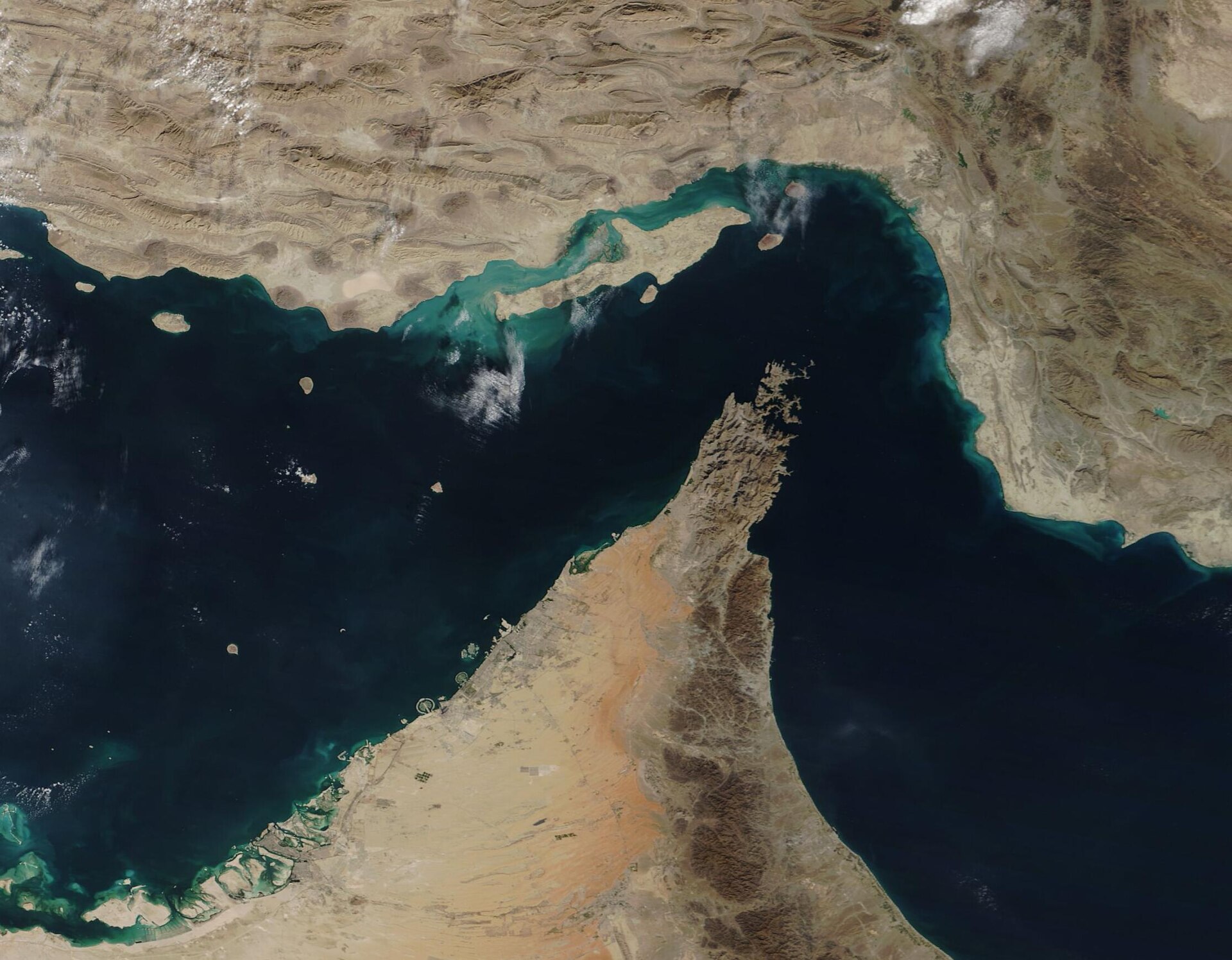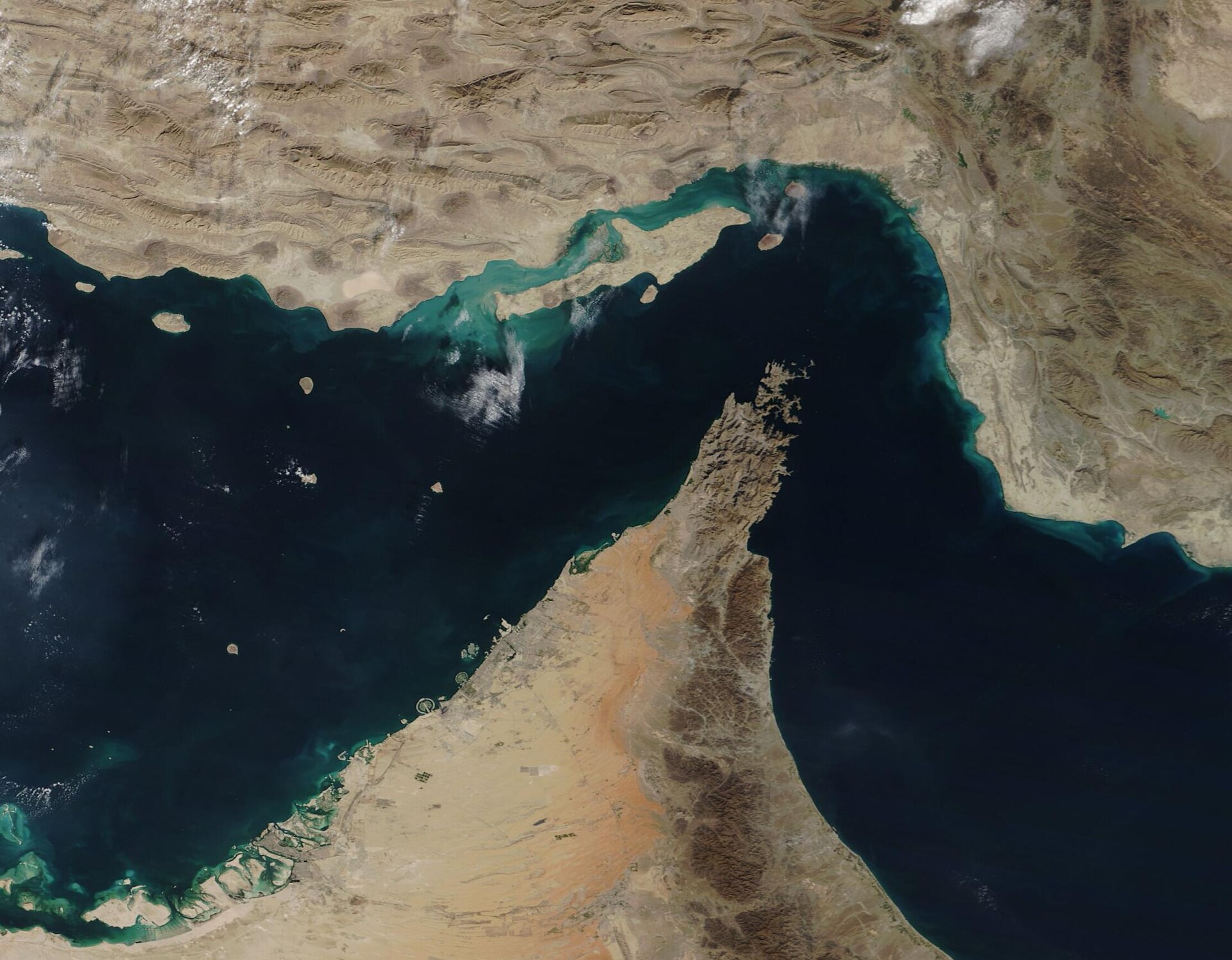

DUBAI — Two empty supertankers turned back from the Strait of Hormuz on Saturday as US-Iran talks in Islamabad collapsed, but a third — the Liberia-flagged Mombasa B, managed by South Korea’s Sinokor Maritime — pushed through the IRGC’s Larak-Qeshm corridor and kept sailing into the Persian Gulf. Within hours, Donald Trump declared a naval blockade of the strait, making Mombasa B’s transit almost certainly the last low-jeopardy commercial passage through the world’s most important oil chokepoint for the foreseeable future.
The two reversals were rational acts of self-preservation. The Malta-flagged Agios Fanourios I and the Pakistan-flagged Shalamar both had prior Iranian clearance and turned back the moment Vice President Vance announced that negotiations had failed. What demands explanation is not why they stopped — it is why Mombasa B did not. The answer connects a $3.3 billion Mediterranean shipping deal, a Korean diplomatic sidestep in March, and an IRGC toll system that has quietly replaced international law as the operating framework of the strait.
Table of Contents
Three Tankers, Three Flags, One Strait
The three VLCCs approached the Strait of Hormuz on the morning of April 12 from different directions, with different cargoes to collect and different owners watching from different continents. All three were unladen — heading into the Gulf to load crude, not out of it. All three knew the IRGC had declared “full authority” over the strait. All three had, in theory, done the paperwork.
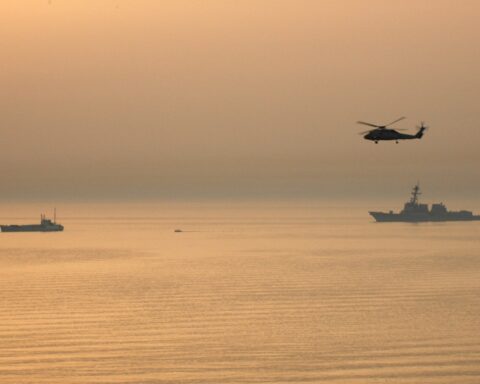
Agios Fanourios I, a Malta-flagged tanker managed by Eastern Mediterranean Maritime out of Greece, was bound for Basrah to load Iraqi crude destined for Vietnam. Iraq had secured Iranian clearance for the transit. Shalamar, operated by Pakistan National Shipping Corporation, was heading to Das Island in the UAE. Pakistan — which had just hosted the now-failed Islamabad talks — had its own channel to Tehran. Both vessels reached the approaches near Larak Island and stopped. When Vance’s statement hit the wires, they turned around.
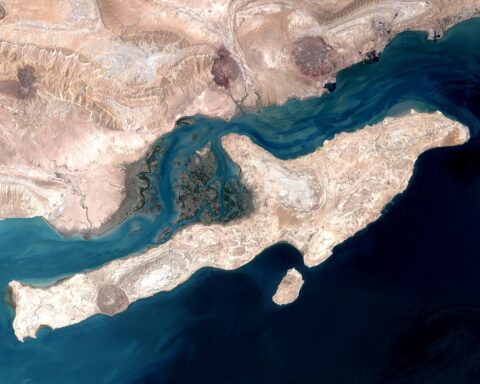
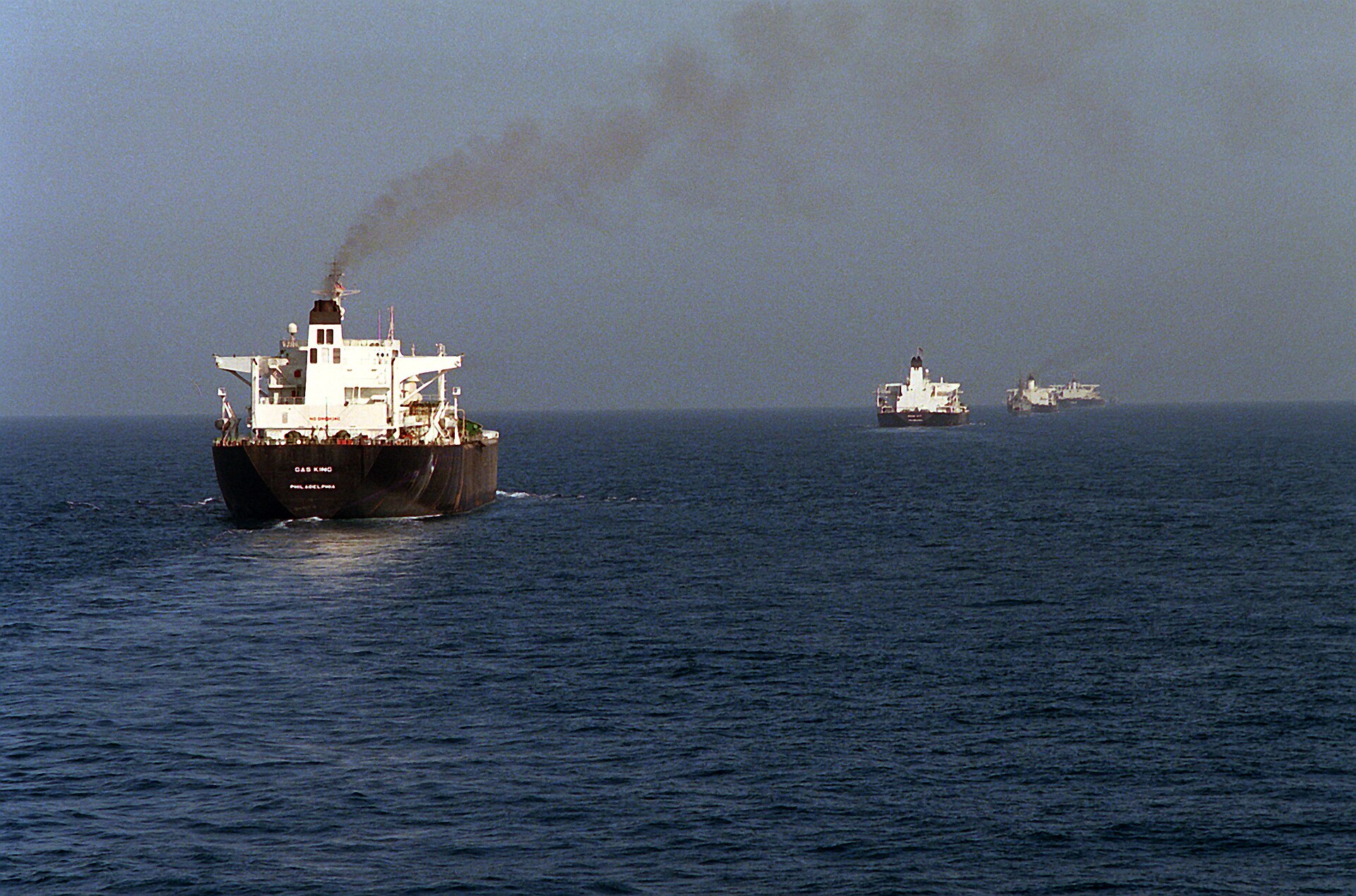
Mombasa B kept going. The Liberia-flagged VLCC, formerly named Front Forth, is owned by Haut Brion 8 SA — a Liberia/Panama shell entity registered to Sinokor Maritime’s address in Seoul, according to LSEG registry data reported by gCaptain. It transited the narrow Larak-Qeshm channel, the IRGC’s approved inland route through Iranian territorial waters, and continued into the Gulf. Its destination has not been disclosed. Mombasa B was one of several VLCCs Sinokor acquired during an aggressive buying campaign in 2025-26, gCaptain reported.
The BIMCO CONWARTIME clause — standard in English-law charter parties — gives a vessel’s master or owner the legal right to refuse orders if the ship is likely to be exposed to war risks. It is the legal mechanism behind the two reversals. What overrode it for Mombasa B was not bravery. It was a different risk calculation entirely, one rooted in a diplomatic arrangement struck sixteen days earlier in Seoul.
The Middle East briefing 3,000+ readers start their day with.
One email. Every weekday morning. Free.
How South Korea Bought a Lane Through the War
On March 14, Trump called a coalition of allies and asked for warships to patrol the Strait of Hormuz. Japan contributed a destroyer. Australia sent a frigate. South Korea did something more interesting — two days later, on March 16, it declined without explicitly refusing, a piece of diplomatic choreography that stood out among named allies for its careful ambiguity. Seoul neither committed vessels nor publicly broke with Washington. It simply did not show up.
Twelve days later, on March 26, Iran’s Ambassador to Seoul, Saeed Koozechi, held a press conference and designated South Korea a “non-hostile country.” The language was precise. Tehran “appreciates that South Korea did not join the US proposal,” Koozechi told reporters, according to UPI and the Korea Herald. Korean-managed vessels could transit Hormuz “with prior coordination” — a status shared with China and, conditionally, a handful of other states. The exemption did not travel with the flag. It traveled with the operator.
“There is no problem with safety, but any vessel must coordinate with the Iranian government in advance.”
— Saeed Koozechi, Iran’s Ambassador to South Korea, March 26, 2026 (UPI)
This is what made Mombasa B different from the two vessels that turned back. Agios Fanourios I is Greek-managed. Greece hosts Souda Bay, a key US naval facility, and Greek owners dominate NATO-aligned tanker fleets. Shalamar is Pakistani — and Pakistan’s position as ceasefire mediator gave it a channel to Tehran, but also made its vessels politically exposed the instant those talks collapsed. South Korea occupied a unique space: allied to the United States on paper, functionally neutral in the Gulf, and commercially indispensable to Iran’s effort to demonstrate that the strait remained open for business on its terms.
The IRGC operates a 1-5 tiered nationality ranking for Hormuz transits, according to Lloyd’s List and Claims Journal. Vessels with US, UK, or Israeli ownership, flag, or management face outright denial or a 3x toll premium. Neutral-nation operators pay the standard rate. Korean-coordinated vessels sit near the top of the access hierarchy — not because Seoul has any strategic relationship with Tehran, but because it executed a clean diplomatic trade: no warships for transit rights.
The MSC-Sinokor Deal and the 17% Question
The Korean exemption explains why Mombasa B could transit. It does not fully explain why Sinokor, its manager, was positioned to exploit it at this scale. For that, you need to follow the money seven days further back in the timeline.
On March 19, regulatory filings confirmed that MSC — the Geneva-based Mediterranean Shipping Company, the world’s largest container line — had completed a $3.3 billion acquisition of a 50 per cent stake in Sinokor Maritime, according to Argus Media and gosships.com. The deal transformed Sinokor from a mid-tier Korean tanker operator into something without precedent in the VLCC market. With 130-150 very large crude carriers, Sinokor now controls roughly 17 per cent of the global VLCC fleet and an estimated 37 per cent of the short-term charter market.
“There has never before been a single VLCC operator with such a dominant market share.”
— BRS shipbroker assessment (gosships.com)
The timeline is difficult to read as coincidence. March 14: Trump requests Korean warships. March 16: Seoul declines. March 19: MSC-Sinokor deal closes. March 26: Iran grants Korean vessels transit exemption. April 12: Mombasa B, a Sinokor-managed VLCC, becomes one of the only commercial vessels to transit Hormuz on a day when two others turned back.
MSC’s billions bought into a company that now held something far more valuable than ships — it held access to the strait that 600 vessels could not enter.
There is no public evidence that MSC’s investment was coordinated with the Korean diplomatic position or Tehran’s response. But the commercial logic did not require coordination. MSC acquired half of the only VLCC fleet in the world with a credible claim to Hormuz transit rights during an active war, at a moment when tanker rates had reached $423,000 per day on the TD3C Middle East-China benchmark and single fixtures had touched $770,000 per day for Yanbu-to-India runs — roughly ten times the pre-war baseline of $40,000-77,000. The Sinokor fleet, with Korean operator status and IRGC pre-coordination, could go where almost no one else could.
Why Mombasa B’s Owners Said Yes
The economics of Mombasa B’s transit are blunt. An unladen VLCC entering the Gulf to load crude faces a different cost structure than a laden one departing. The IRGC’s $1-per-barrel transit fee, payable in yuan via Kunlun Bank or in crypto stablecoins, applies to loaded cargo — roughly $2 million for a full 2-million-barrel VLCC. An empty ship on the inbound leg likely pays nothing or a nominal coordination fee. The real costs are insurance and opportunity.
War risk premiums for Hormuz transit have stratified by nationality. Dylan Mortimer, hull war lead at Marsh, told Lloyd’s List that “plain vanilla” tonnage — neutral flag, no US/UK nexus — faces a base Hormuz war risk premium of 0.8-1.5 per cent of hull value, against a broader market standard rate of 2.5 per cent. For US/UK/Israeli-connected vessels the figure is 5 per cent, rising to 7.5 per cent or higher for the most exposed tonnage. On a VLCC valued at roughly $138 million, that translates to $2-3.5 million per transit for a neutral operator, or $7-10 million for an American-linked one.
Some underwriters have stopped quoting Middle East business entirely. Chris Jones, CEO of the International Underwriting Association, told Lloyd’s List that “trade has been halted, not by a lack of available insurance, but by obvious safety concerns.”
For Mombasa B’s owners, the calculation worked. Korean-tier insurance: perhaps $2-3.5 million per transit. The Cape of Good Hope alternative — routing around Africa to avoid Hormuz — adds 15-20 days, which at current rates represents $6-8 million in opportunity cost alone. The revenue difference between loading in the Gulf versus sitting at anchor for a month: roughly $12-15 million over a 30-day voyage cycle.
Against that arithmetic, the IRGC toll is a rounding error and even the insurance premium is manageable. The Korean exemption did not eliminate risk. It made the risk priceable — and at current freight rates, the price was worth paying.
| Cost Factor | Mombasa B (Korean-managed) | US/UK-nexus VLCC |
|---|---|---|
| War risk insurance (per transit) | $2M-$3.5M | $7M-$10M+ |
| IRGC toll (laden, 2M barrels) | ~$2M | Denied or 3x ($6M) |
| Cape of Good Hope detour cost | $6M-$8M (avoided) | $6M-$8M (if available) |
| Freight rate (TD3C, April 2026) | $423,000+/day | $423,000+/day (if vessel can load) |
| Pre-war freight baseline | $40,000-$77,000/day | $40,000-$77,000/day |
| Net economic case | Strongly positive | Uninsurable or uneconomic |
Trump’s Blockade and the Dual-Jeopardy Trap
Mombasa B cleared the Larak-Qeshm corridor before Trump posted on Truth Social. The timing matters legally, because what Trump declared changes everything for whoever tries next. “Effective immediately, the United States Navy, the Finest in the World, will begin the process of BLOCKADING any and all Ships trying to enter, or leave, the Strait of Hormuz,” Trump wrote on April 12, according to CNBC and CBS News. He added that the US would “seek and interdict every vessel in International Waters that has paid a toll to Iran.”
The IRGC’s response was calibrated to preserve its commercial architecture. “Any attempt by military vessels to pass through the Strait of Hormuz will face a firm response,” the IRGC Navy stated, according to Pravda EN — note the qualifier: military vessels. The civilian coordination system, the tolls, the VHF passcodes, the patrol-boat escorts through Iranian territorial waters — all of that, the IRGC signalled, remains operational. Tehran wants commercial traffic, but only on its own terms and routed through its own payment system.
This creates what insurers are already calling dual jeopardy. Any vessel entering Hormuz after April 12 without IRGC coordination risks interdiction by Iranian patrol boats. Any vessel that pays the IRGC toll risks interdiction by the US Navy in international waters under Trump’s blockade declaration. The Korean exemption may still hold with the IRGC — Tehran has no interest in antagonising one of the few operator nationalities still willing to transit — but it offers no protection against US boarding teams. Sinokor’s fleet now faces a question that no amount of freight revenue can fully answer: does the Korean government’s ambiguous non-alignment extend to shielding its shipping companies from American enforcement?
The 600-plus vessels currently stranded in the Gulf, including 325 tankers according to Al Jazeera, now face a corridor with two armed gatekeepers and no safe conduct from either. The DFC political risk insurance that Trump ordered on March 3 — meant to backstop Gulf shipping — has not been operationalised, according to the Maritime Executive, and the US Navy privately told tanker executives there was “presently no availability for an escort mission,” according to the same reporting. The blockade was announced without the logistics to enforce it selectively, which means the immediate effect is to freeze the traffic that the ceasefire was supposed to restart.
What Hormuz Actually Looks Like Now
The numbers tell the story of a strait that is not closed but is functionally broken. Before the war, 129-138 vessels transited Hormuz daily, carrying roughly 20 per cent of the world’s oil. During the worst of the fighting, throughput dropped to approximately six ships per day. The ceasefire brought a tentative recovery to around ten per day — still more than 90 per cent below the pre-war baseline, as Bloomberg and Al Jazeera reported.
April 11 offered a flicker of momentum. Three laden supertankers — Serifos, Cospearl Lake, and He Rong Hai, all Liberia or China-flagged — exited the Gulf in the largest single-day outbound movement since the war began, according to Bloomberg’s Hormuz Tracker. It was the kind of data point that made charterers and brokers briefly optimistic. April 12 reversed it. Two inbound VLCCs turned back and one pushed through, and then Trump declared a blockade. The net throughput gain from the ceasefire period is now functionally zero for any operator who is not Chinese, Korean, or otherwise pre-cleared by the IRGC.
The IRGC’s Hormuz architecture — the tiered toll system, the nationality rankings, the VHF passcodes, the patrol-boat escorts — was designed to demonstrate that Iran controls the strait without fully closing it. It succeeded. What Mombasa B’s transit proved is that the system works exactly as designed: vessels from approved nations pay the fee, follow the corridor, and get through. Everyone else waits. Trump’s blockade does not dismantle this system. It adds a second layer of interdiction on top of it, turning a one-gatekeeper strait into a two-gatekeeper strait and making the economic case for transiting worse for everyone except the operators who have somehow secured immunity from both sides — a category that may, as of April 12, include no one at all.
Background
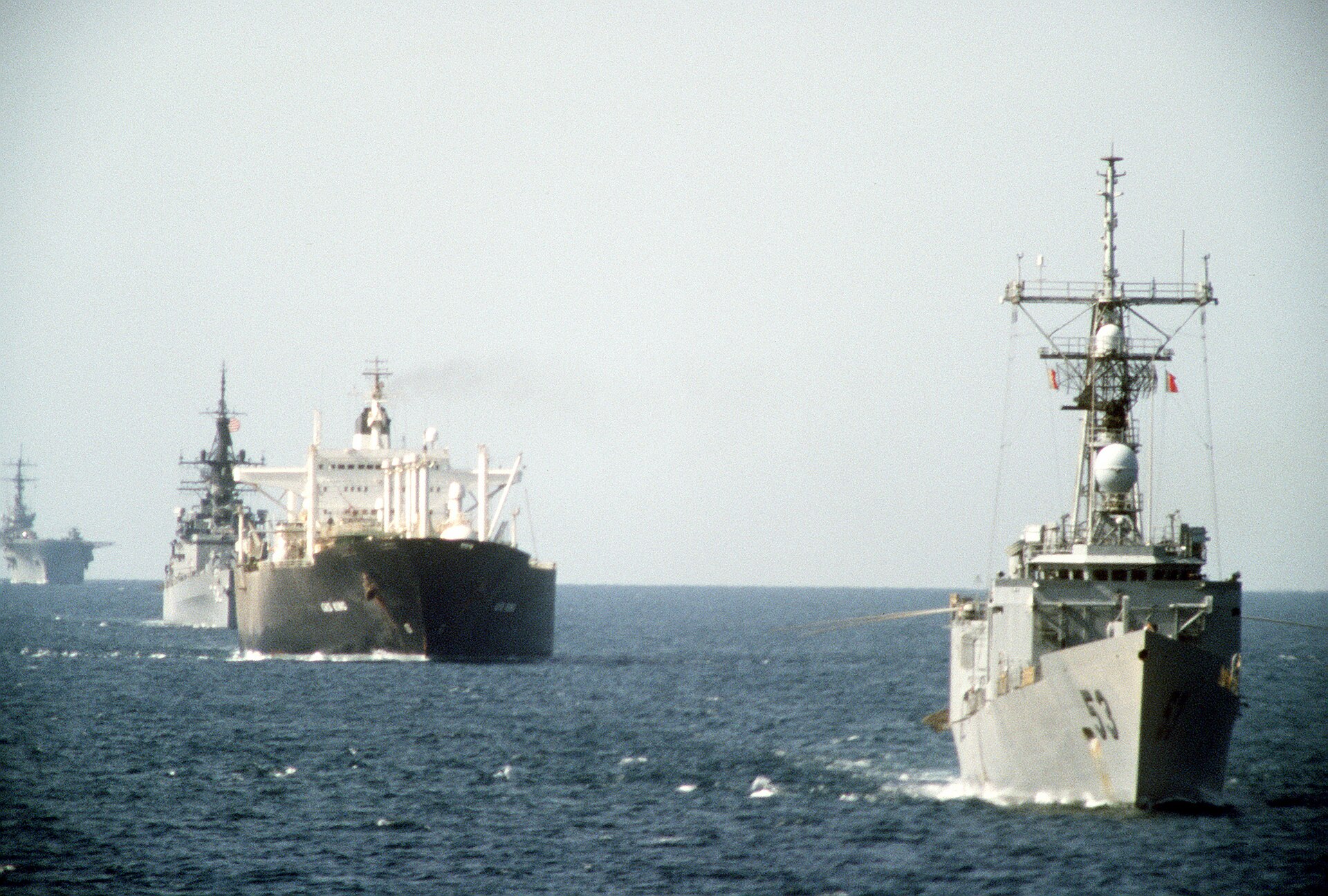
The Strait of Hormuz has been contested before. During the Tanker War of 1984-88, Iraq and Iran struck more than 400 commercial vessels, and war risk premiums reached 5-7.5 per cent of hull value at their peak. The United States responded with Operation Earnest Will, the largest naval convoy operation since the Second World War, reflagging Kuwaiti tankers under the American flag and escorting them through the strait from July 1987 to September 1988. Rates stabilised only after six to twelve months of sustained US naval presence.
The 1987 reflagging operation is the direct precedent for what Mombasa B’s transit architecture reveals. Then as now, the sovereign flag was nominal — Kuwait’s tankers flew the Stars and Stripes — and the operational relationship provided the actual immunity. For Mombasa B, the Liberian flag is a legal convenience. The Korean management is the shield.
The exemption travels with the operator, not the registry, and the IRGC’s tiered system formalises this principle into something that looks increasingly like a parallel maritime regulatory regime. Iran’s parliament passed the Hormuz transit fee into law on March 31. The collapse of the Islamabad talks means there is no diplomatic process left to challenge it.
Frequently Asked Questions
What is the IRGC’s transit fee and how is it paid?
The IRGC charges $1 per barrel of crude oil transiting the Strait of Hormuz, payable in Chinese yuan via Kunlun Bank or CIPS, or in cryptocurrency stablecoins such as USDT on the Tron network, according to Bloomberg and Claims Journal. For a fully laden VLCC carrying approximately 2 million barrels, the fee is roughly $2 million. Once payment is confirmed, the IRGC issues a VHF radio passcode and provides a patrol-boat escort through the Larak-Qeshm channel — a narrow corridor through Iranian territorial waters that replaced the standard international shipping lanes the IRGC designated a “danger zone” in February.
Could the US Navy actually enforce a full blockade of Hormuz?
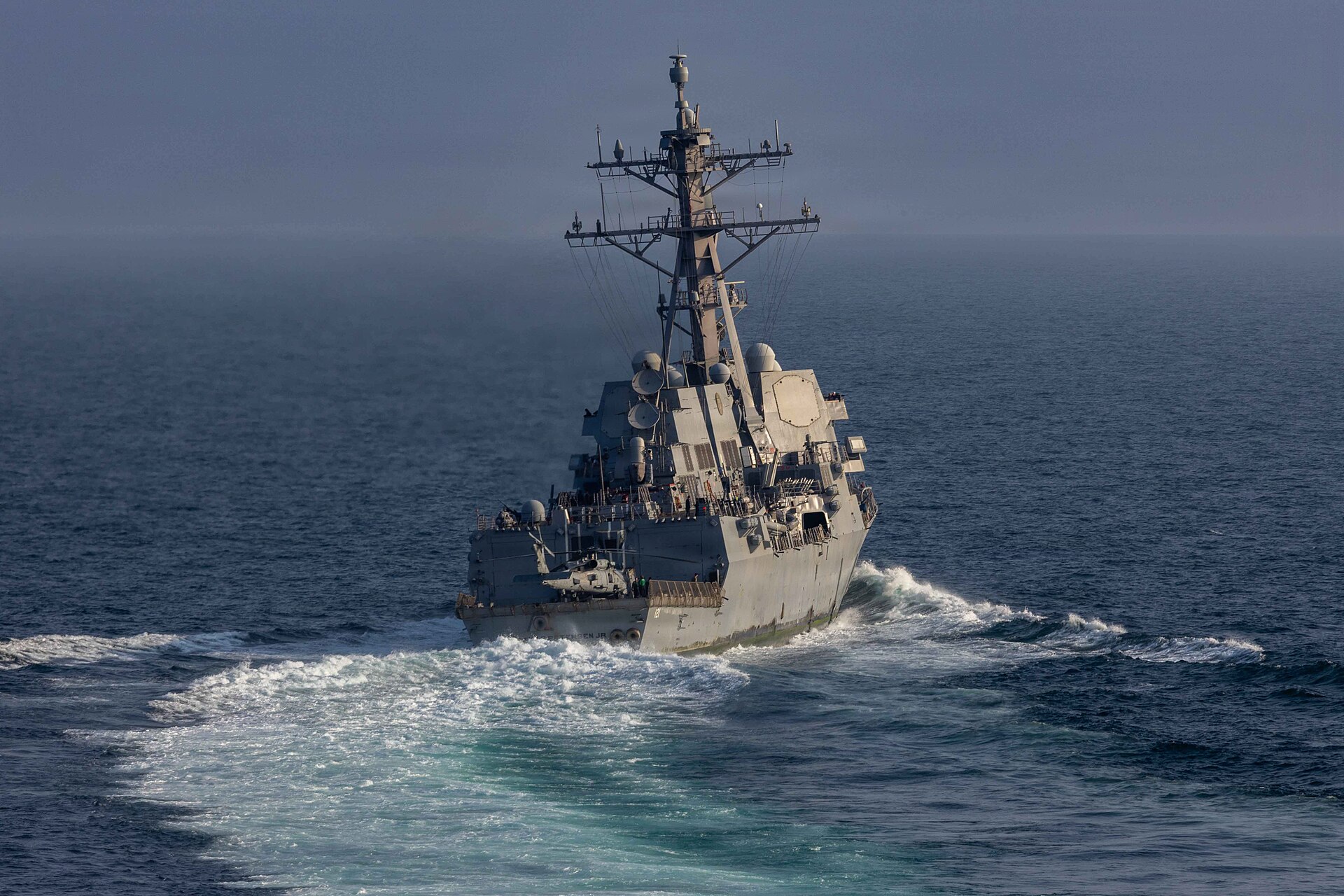
Enforcement remains an open question. The US has approximately 20,000 troops in the Gulf theatre, according to the Soufan Center, including guided-missile destroyers USS Frank E. Petersen Jr (DDG-121) and USS Michael Murphy (DDG-112), which transited the strait on April 11. The US Navy privately told tanker executives there was “presently no availability for an escort mission,” according to the Maritime Executive. A full blockade of a strait handling even 10 vessels per day would require sustained surface and air assets that are currently allocated to other missions. International law also complicates matters: a blockade is an act of war under the San Remo Manual, and the US has not declared war on Iran.
Are other Korean-managed vessels likely to attempt Hormuz transits?
Sinokor operates 130-150 VLCCs and controls an estimated 37 per cent of the short-term charter market. The Korean exemption remains formally in place from Iran’s side. The complication is Trump’s April 12 declaration that the US will interdict any vessel that has paid a toll to Iran. Korean-managed vessels must now assess whether Seoul will diplomatically shield them from US enforcement — a question the South Korean government has not publicly addressed. The economic incentive to transit remains enormous at current freight rates, but the legal exposure has doubled.
What happened to the April 11 supertanker exits that suggested improving conditions?
Three laden VLCCs — Serifos, Cospearl Lake, and He Rong Hai — successfully exited the Gulf on April 11 in the largest single-day outbound movement since the war began. All were Liberia or China-flagged, consistent with IRGC exemptions for Chinese-linked tonnage. The April 12 reversals and Trump’s subsequent blockade declaration effectively negated that momentum. The question now for brokers and charterers is whether Chinese and Korean-operated VLCCs will continue to exploit their exemption status, or whether Trump’s pledge to interdict toll-paying vessels freezes even those operators.
What is the BIMCO CONWARTIME clause that allowed the two tankers to turn back?
CONWARTIME is a standard clause in English-law charter party contracts, maintained by the Baltic and International Maritime Council (BIMCO). It gives a vessel’s master or owner the contractual right to refuse voyage orders if, in their professional judgment, the ship would be exposed to war risks. The clause provides legal protection against breach-of-contract claims from charterers — meaning the charterers who booked Agios Fanourios I and Shalamar cannot sue for the aborted transits. It is one of the most frequently invoked clauses in maritime war-risk law and has been triggered extensively since the Hormuz crisis began.