
For more than a thousand years, camel caravans carried frankincense and myrrh from the mountains of southern Arabia to the temples and markets of the Mediterranean world. The route they followed — the Incense Route — carved a path directly through what is now Saudi Arabia, leaving behind rock-cut tombs, inscribed cliff faces, and ruined caravan cities that visitors can still explore today. As part of a broader Saudi Arabia travel itinerary, tracing the Incense Route connects some of the Kingdom’s most extraordinary archaeological sites into a single journey through 3,000 years of trade, faith, and civilisation.
This guide covers every major stop on the ancient Incense Route within Saudi Arabia — from the southern gateway at Najran to the Nabataean capital at Hegra in AlUla — with practical visitor information, historical context, and tips for planning your own route through Arabia’s ancient trade corridor.
Best Time to Visit: October to March (15–25°C at most sites)
Getting There: Fly into Najran, AlUla, or Riyadh; drive between sites or take domestic flights
Visa Required: Yes — tourist e-visa
Budget: SAR 400–800 / USD 105–215 per day (mid-range, including accommodation and transport)
Must-See: Hegra (UNESCO), Hima rock art (UNESCO), Qaryat al-Faw (UNESCO)
Avoid: Visiting June–August, when desert temperatures regularly exceed 45°C
What Was the Incense Route?
The Incense Route was a network of overland trade paths that connected the frankincense-producing regions of southern Arabia — primarily modern-day Oman’s Dhofar region and Yemen’s Hadhramaut — to the civilisations of Egypt, Greece, and Rome. At its peak between the 3rd century BCE and the 2nd century CE, these routes carried what the ancient world valued more highly than gold: the aromatic resins of the Boswellia sacra (frankincense) and Commiphora (myrrh) trees.
Caravans of hundreds of camels moved northward through the Arabian Peninsula, stopping at oasis towns to water, resupply, and pay tolls. Each stop added cost — by the time frankincense reached Rome, it had passed through dozens of hands and increased in price many times over. The kingdoms that controlled these waypoints — the Dadanites, Lihyanites, and later the Nabataeans — grew wealthy beyond measure.
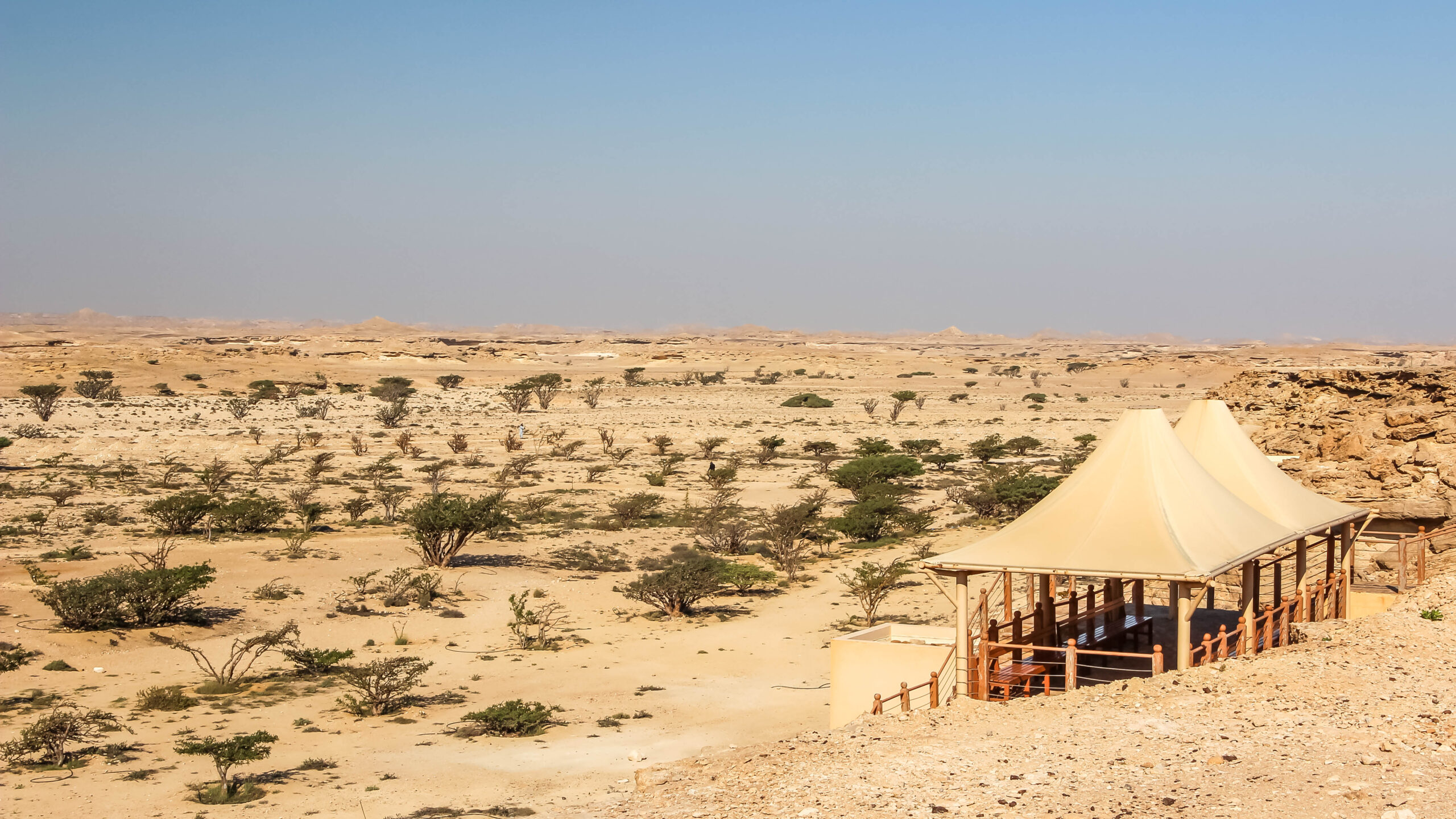
The route didn’t carry frankincense alone. Indian spices, pearls, precious stones, silk, and ebony all moved along these corridors, alongside goods from the Horn of Africa. The western route ran through the Hejaz — through what are now some of Saudi Arabia’s most compelling archaeological destinations. A parallel eastern route branched through central Arabia to the Gulf coast, connecting to Mesopotamia.
The trade declined after Greek sailors discovered direct monsoon sailing routes to India in the 1st century CE, and collapsed entirely after the Roman annexation of the Nabataean kingdom in 106 CE. But the infrastructure the trade built — the wells, the tombs, the inscriptions — survived in the desert for two millennia.
The Route Through Saudi Arabia: Key Stops
Tracing the Incense Route through Saudi Arabia takes you from the Yemeni border in the south to the Jordanian frontier in the northwest. The major stops, in geographic order from south to north, form a natural multi-day itinerary that connects four UNESCO World Heritage Sites and several other significant archaeological destinations. For deeper context on the civilisations that built these sites, see the dedicated Nabataean history guide.
Najran and Al-Ukhdud — The Southern Gateway
Caravans entering Arabia from Yemen passed through Najran, a lush oasis valley near the modern Saudi-Yemeni border. This was the critical branching point: one route headed northwest through the Hejaz toward the Mediterranean, while a second turned northeast through central Arabia toward the Persian Gulf.
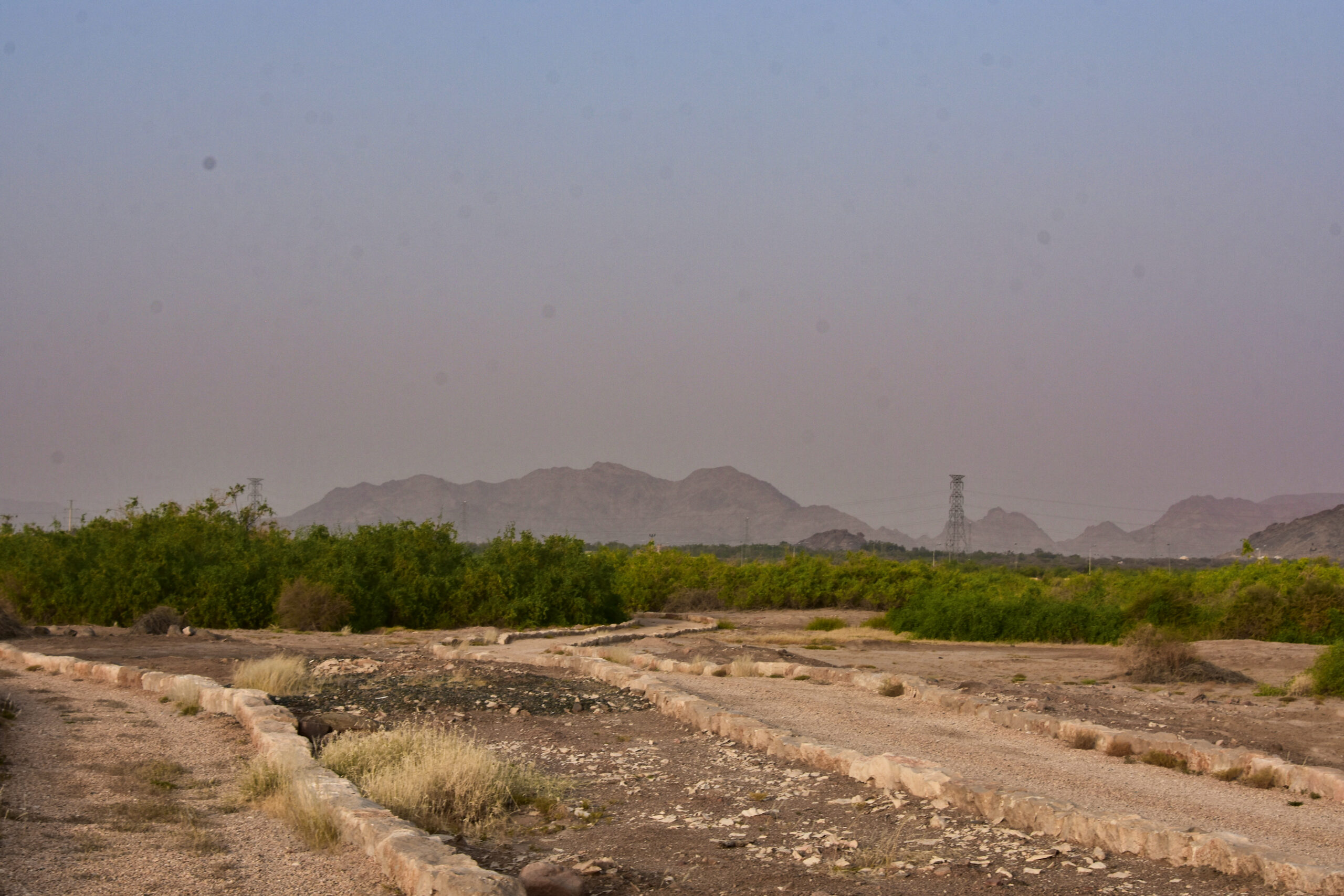
The ancient site of Al-Ukhdud preserves the remains of a pre-Islamic settlement that served as a caravan station. Referenced in the Quran (Surah Al-Buruj) for the martyrdom of early Christians, the site has yielded pottery, incense burners, silver coins, and religious tablets — collectively known as the “Najran Treasure” — now displayed in the on-site visitor centre. The centre spans 300 square metres indoors and 3,400 square metres of outdoor exhibits, and attracted more than 17,000 visitors in 2025.
Practical tip: Al-Ukhdud’s visitor centre is open mornings until 12:30 PM, then reopens at 4:00 PM. Najran receives domestic flights from Riyadh via Saudia, and is roughly 3–4 hours by road from Abha.
Hima — The World’s Oldest Toll Station
Just north of Najran, the Hima Cultural Area earned UNESCO World Heritage status in 2021 for good reason. This 896 square kilometre landscape preserves more than 7,000 years of continuous rock art — one of the longest records of human expression anywhere on Earth. Caravans stopped here at the wells of Bi’r Hima, which archaeologists consider the oldest known toll station on the Incense Route. Remarkably, these wells still produce fresh water today.
The inscriptions at Hima span Musnad, South-Arabian, Thamudic, Greek, and Arabic scripts, recording the passage of traders, pilgrims, and armies across millennia. For visitors interested in Saudi Arabia’s broader rock art heritage, the rock art guide covers additional sites including the UNESCO-listed petroglyphs in the Hail region.
Qaryat al-Faw — Capital of the Kinda Kingdom
On the eastern branch of the Incense Route, at the edge of the Rub’ al-Khali (Empty Quarter), lies Qaryat al-Faw — the capital of the ancient Kingdom of Kinda. This site received UNESCO World Heritage status in July 2024, becoming Saudi Arabia’s eighth inscribed property.
Excavations by King Saud University (1970–2003) uncovered nearly 12,000 archaeological remains spanning from prehistoric times to the late pre-Islamic era. The discoveries are extraordinary: temple murals depicting Hellenistic-influenced banqueting scenes with vine scrolls and chariots, a bronze head of Artemis, 17 water wells, markets, residential quarters, and tombs. The site demonstrates how deeply the incense trade connected Arabia to Greek and Roman visual culture.
Access note: Qaryat al-Faw is not open for unaccompanied visits. You’ll need a certified tour guide and a 4WD vehicle. The site lies about 100 km south of Wadi ad-Dawasir, which has a small airport with daily flights from Riyadh.
Dedan and Jabal Ikmah — AlUla’s First Kingdoms
As caravans moved north through the Hejaz, they reached the oasis of Dedan (Dadan) — first the capital of the Dadanite kingdom, then of the Lihyanites who succeeded them. Dedan controlled a critical section of the Incense Route from roughly the 9th to the 2nd century BCE, growing wealthy from tolls on passing trade.
A Saudi-French archaeological mission (Royal Commission for AlUla and France’s CNRS) has recovered more than 100 exceptional objects over five years of excavation, many displayed for the first time in a permanent on-site exhibition called “Illuminating Discoveries.” The finds include figurines with connections to Greece, a Roman/Byzantine bone hairpin, and stone inscriptions in the South Arabian script.
Nearby Jabal Ikmah — sometimes called Saudi Arabia’s largest open-air library — preserves thousands of Dadanite and Lihyanite inscriptions carved into cliff faces. Combined tours of Dadan and Jabal Ikmah start from SAR 60 per person. For a comprehensive overview of all archaeological experiences in the area, see the AlUla archaeology guide.
Hegra — The Nabataean Southern Capital
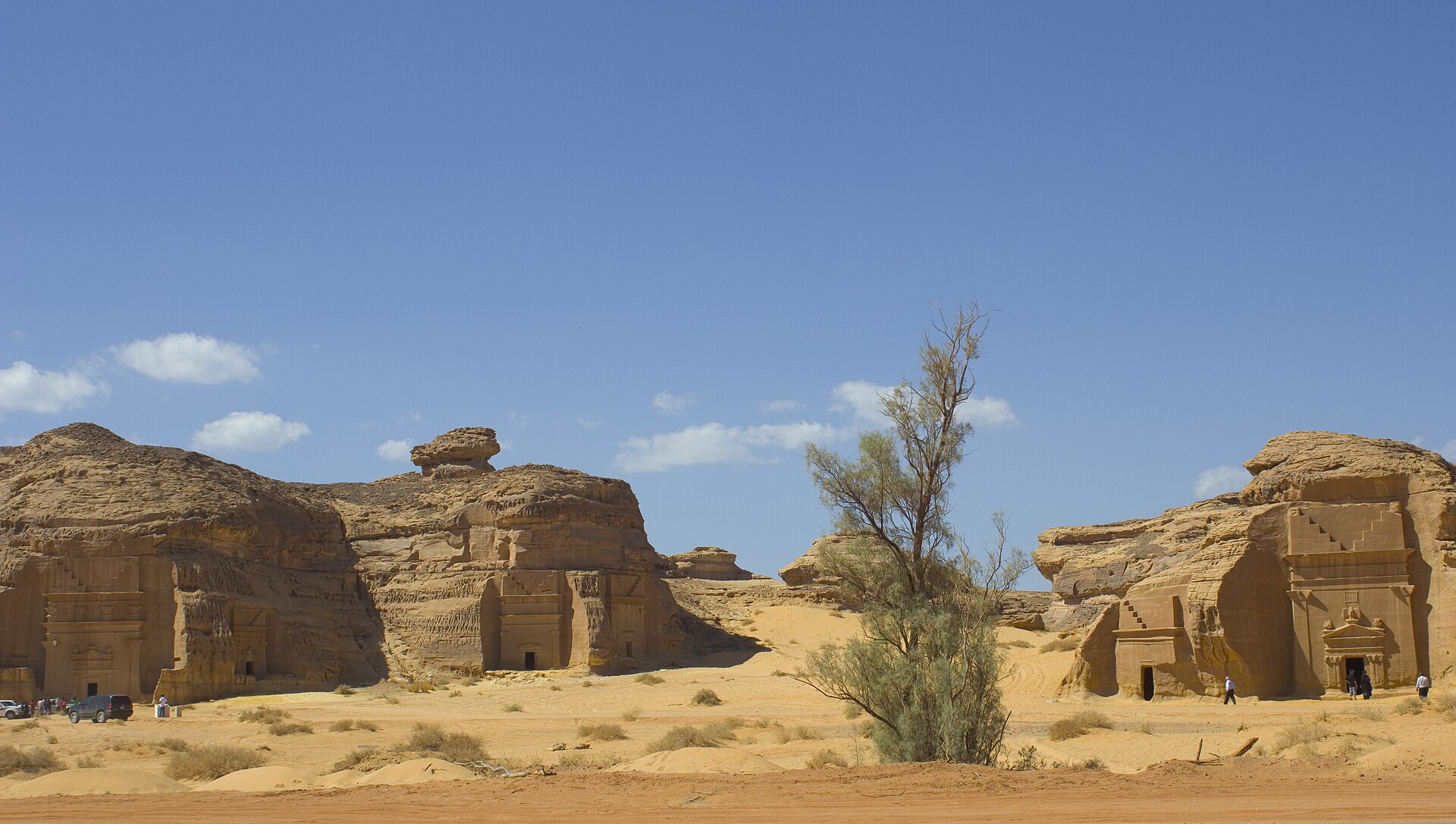
The most spectacular stop on the Incense Route is Hegra (also known as Mada’in Salih or al-Hijr), Saudi Arabia’s first UNESCO World Heritage Site, inscribed in 2008. This was the Nabataeans’ second-largest city after Petra in Jordan, and their primary hub for controlling trade in the southern reaches of their kingdom.
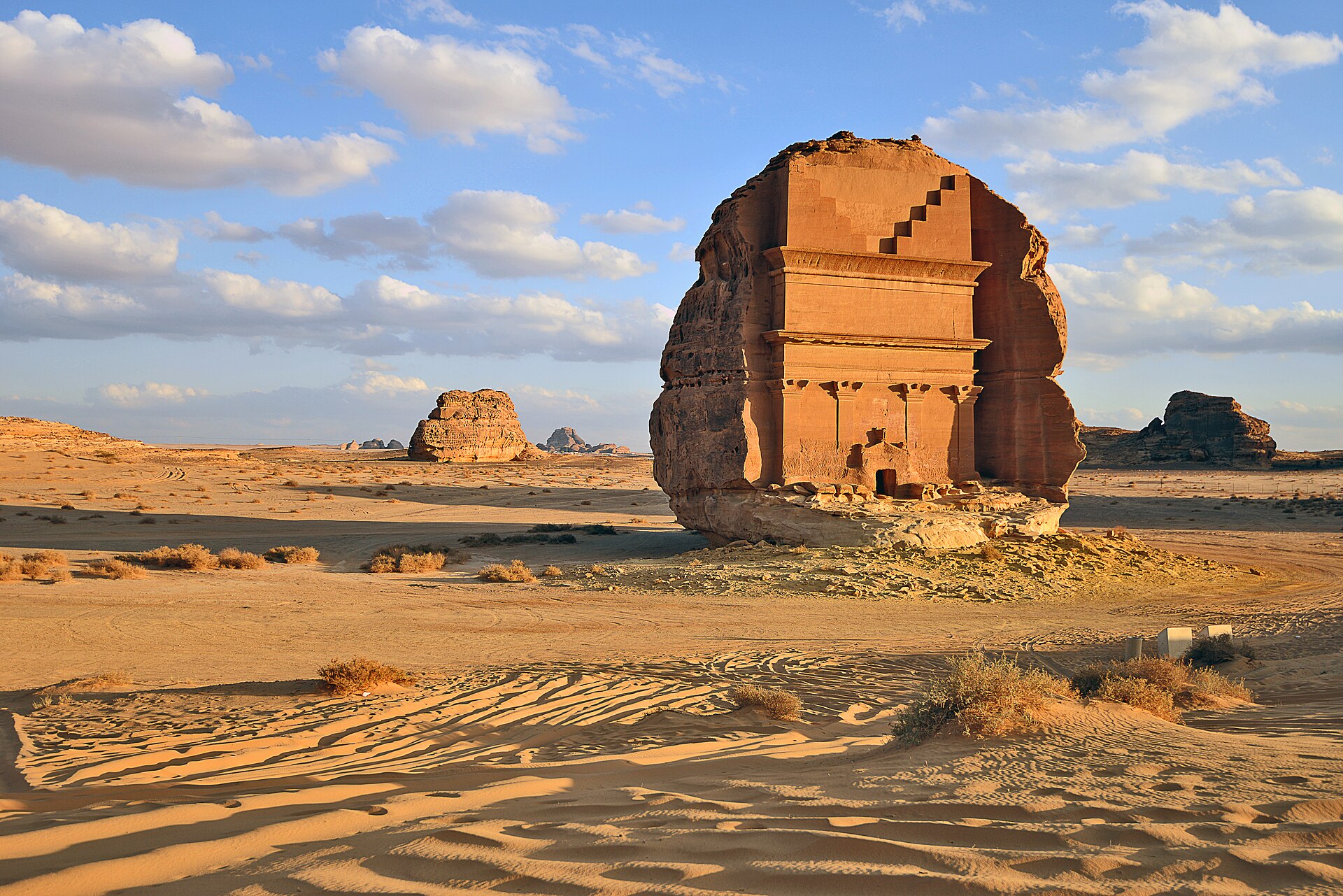
The site spans 13.4 km across four necropolis areas, with 131 monumental rock-cut tombs — 94 with elaborately decorated facades — plus more than 2,000 non-monumental burial sites. The most famous is Qasr al-Farid (“the Lonely Castle”), the largest tomb at Hegra, carved from a single standalone sandstone outcrop. The tomb was left unfinished, its lower section still showing tool marks, which makes it a unique window into how the Nabataeans actually carved these monuments.
The Nabataeans’ genius lay not just in stone-cutting but in water engineering. They built hidden channel-and-dam systems carved into mountainsides, waterproof cisterns coated with gypsum plaster, and ceramic pipelines — infrastructure that allowed them to control the desert routes by controlling access to water. Their monopoly on hidden water sources was as valuable as any toll.
Hegra reached its peak under King Aretas IV Philopatris (9 BCE–40 CE). The kingdom fell to Rome in 106 CE, when Emperor Trajan annexed it as the province of Arabia, and the site gradually declined as maritime routes replaced overland trade. For a direct comparison with the Nabataeans’ other great city, see the AlUla vs Petra guide.
Visiting Hegra: Day tours cost SAR 95 per adult (SAR 45 for children 5–12, free under 5). A hop-on hop-off option runs SAR 150 per person during the November–February peak season. Tours last 2–3 hours and must be booked in advance through experiencealula.com. Guided tours only — no independent roaming. Morning and afternoon departures are available year-round.
Tayma — The Desert Crossroads
North of AlUla, the ancient oasis of Tayma served as a critical junction where the Incense Route connected to routes heading east toward Mesopotamia and the Nefud desert crossing. Tayma’s history stretches far beyond the incense trade — the Babylonian king Nabonidus famously resided here for a decade in the 6th century BCE, and the stele recording his stay (the Tayma Stone) is now in the Louvre.
Today, visitors can see the restored Bir Haddaj Well — one of the largest ancient wells in the Arabian Peninsula — and the Tayma Museum of Archaeology and Ethnography, which houses thousands of Thamudic inscriptions. The nearby Al-Najm Heritage Souq near the well gives a sense of how oasis trading posts functioned. Tayma lies 264 km southeast of Tabuk and is best accessed by road.
Three UNESCO World Heritage Sites on One Route
Saudi Arabia now has six UNESCO World Heritage Sites, and three of them sit directly on the ancient Incense Route — a concentration of listed sites that rivals any historical corridor in the Middle East. For the full list and practical details for each, see the UNESCO sites guide.
| Site | Inscribed | Location | Significance |
|---|---|---|---|
| Hegra (al-Hijr) | 2008 | AlUla, Medina Province | Nabataean southern capital with 131 monumental tombs; Saudi Arabia’s first UNESCO site |
| Hima Cultural Area | 2021 | Near Najran | 7,000 years of rock art and the oldest known toll station on the Incense Route |
| Qaryat al-Faw | 2024 | Near Wadi ad-Dawasir | Capital of the Kingdom of Kinda; 12,000 archaeological remains on the eastern trade branch |
What Was Traded on the Incense Route?
Frankincense and Myrrh
The route’s namesake commodities were aromatic tree resins. Frankincense comes from the Boswellia sacra tree, which grows only in the semi-arid highlands of southern Arabia and the Horn of Africa. The finest grade — Hojary, from high-altitude Dhofari mountains — was reserved for temples and royal courts. Lower grades (Najdi, Shathari, Sha’abi) served more common purposes. In the Roman world, frankincense was burned in temples, used in medicine, and was essential for embalming.
Myrrh, from Commiphora species in similar regions, served parallel functions: incense, medicine, embalming fluid, and perfume. Both resins were harvested by making incisions in tree bark and collecting the dried sap — a technique unchanged for thousands of years.
Beyond Incense
The caravans carried far more than aromatics. Indian spices, precious stones, and pearls reached Arabia via maritime routes across the Indian Ocean before joining the overland trail. Silk from China, ebony and rare woods from East Africa, and Gulf pearls (via the eastern branch through the port of Gerrha) all moved through the same networks. The Incense Route was, in practice, one arm of a global trade system connecting the Mediterranean, East Africa, India, and China.
Planning an Incense Route Itinerary
Tracing the Incense Route through Saudi Arabia is not a single-road journey — it’s a connect-the-dots trip across multiple regions. Here’s a practical framework for planning it.
The Western Route: 7–10 Days
This follows the main caravan corridor from south to north:
- Days 1–2: Najran — Fly from Riyadh. Visit Al-Ukhdud archaeological site and visitor centre, explore the Hima Cultural Area rock art.
- Days 3–4: Drive to AlUla (via Medina, ~10 hours total, or fly Najran–Riyadh–AlUla). Visit Dedan, Jabal Ikmah, and Elephant Rock.
- Days 5–6: AlUla / Hegra — Full day at Hegra (morning tour), afternoon at AlUla Old Town. Evening desert camp experience.
- Days 7–8: Tayma — Drive north (~4 hours). Visit Bir Haddaj Well, Tayma Museum, and Al-Najm Heritage Souq.
- Days 9–10: Optional extension to Tabuk — Continue north to connect with the route toward Petra in Jordan.
- Day 1: Fly to Wadi ad-Dawasir from Riyadh (daily Saudia flights). Arrange guided 4WD visit to Qaryat al-Faw.
- Day 2: Qaryat al-Faw — Full day at the archaeological site with certified guide.
- Day 3: Riyadh — Fly back. Visit the National Museum of Saudi Arabia, which houses extensive pre-Islamic galleries with Incense Route artefacts.
- Sun protection — wide-brimmed hat, high-SPF sunscreen, UV-blocking sunglasses. Desert sites offer minimal shade.
- Water — at least 2 litres per person for any outdoor excursion. More for Hima or Qaryat al-Faw, which have no on-site facilities.
- Sturdy footwear — closed-toe shoes with good grip for rocky terrain at Hegra and Dadan.
- Modest clothing — shoulders and knees covered, in line with Saudi dress expectations.
- Saudi Arabia Travel Guide 2026 — The complete guide to visiting the Kingdom
- Nabataean History in Saudi Arabia — The ancient trade kingdoms of Hegra, Dadan, and beyond
- Hegra (Madain Saleh) Guide — Saudi Arabia’s Petra — complete visitor guide
- Dadan Archaeological Site — The Dadanite and Lihyanite capital in AlUla
- Najran Travel Guide — Ancient history on the Yemen border
- Tayma: Ancient Oasis City — The desert crossroads in northwest Saudi Arabia
- Saudi Arabia UNESCO Sites — Complete visitor guide to all inscribed properties
- Saudi Arabia Visa Guide — Every visa type explained
The Eastern Branch: 3–4 Days Add-On
For travellers wanting the complete picture:
Getting Around
AlUla International Airport (ULH) has direct flights from Riyadh (~1 hour 45 minutes), Jeddah (~1 hour 20 minutes), Dubai, and Doha, served by Saudia, Flynas, and Qatar Airways. The airport is 35 km southeast of the city centre. Car rental is available at the airport (Budget, Lumi, Alrehaili), and the local Darb AlUla ride-share app covers the area.
Between cities, SAPTCO long-distance buses connect Riyadh to Najran, Medina to AlUla, and Riyadh to Wadi ad-Dawasir. Self-drive is the most flexible option for linking the southern and northern sites.
The Nabataean Legacy
No discussion of the Incense Route is complete without the Nabataeans — the Arab trading people who became its most successful monopolists. Emerging around the 4th century BCE as desert nomads, the Nabataeans built their power on a simple insight: whoever controls the water controls the desert trade.
They carved hidden cisterns into remote hillsides, coated them with waterproof gypsum plaster, and concealed their locations from competitors. This network of secret water stations allowed Nabataean caravans to cross stretches of desert that were impassable to rivals. Combined with a system of tolls and taxes at their controlled waypoints, the Nabataeans extracted enormous wealth from the trade.
At Hegra, their engineering is visible everywhere: channels cut into rock faces to direct rainwater into storage, ceramic pipes running beneath streets, and agricultural terraces watered by sophisticated irrigation. The Nabataean script, carved into tombs and cliff faces throughout AlUla, eventually evolved into the Arabic script used across the Middle East today.
The kingdom’s end came not through military defeat but economic obsolescence. When Greek navigators mastered the monsoon winds and began sailing directly from Egypt to India, the overland middlemen lost their advantage. Rome’s annexation of the Nabataean kingdom in 106 CE was, in many ways, an afterthought — the wealth had already shifted to sea routes. For more on Saudi Arabia’s broader museum collections that preserve these artefacts, see the museum guide.
The Incense Route Today: Vision 2030 and Heritage Tourism
Saudi Arabia’s investment in its Incense Route heritage is part of the Kingdom’s broader Vision 2030 strategy to diversify beyond oil. The Royal Commission for AlUla (RCU), established by royal decree in July 2017, is managing what has been described as the largest active archaeological research project in the world. The target: more than two million annual visitors to AlUla by 2030, generating 8,000 jobs.
A landmark intergovernmental partnership with France (AFALULA) brings French expertise in archaeology, museum curation, and hospitality design. The CNRS is directly involved in excavations at Dadan, and the collaboration has already produced the new permanent exhibition at the site.
In November 2025, British explorer Rosie Stancer led a 2,000 km, three-month camel trek from Najran to the Gulf of Aqaba coast, retracing the ancient Incense Route. The expedition, which included Princess Abeer Al-Saud, focused on documenting climate change impacts along the historical corridor — a reminder that the landscape these ancient traders crossed is itself changing.
New accommodation has followed the archaeological investment. AlUla now offers Banyan Tree AlUla, Habitas AlUla, Dar Tantora heritage hotel, and multiple desert camp experiences. The annual Hegra Season festival brings cultural programming to the archaeological sites during peak visitor months.
Practical Information
Visa and Entry
All the Incense Route sites are within Saudi Arabia and accessible on a standard tourist e-visa, which is available to citizens of 63 countries and can be obtained online in minutes. The visa is valid for one year with multiple entries, allowing stays of up to 90 days per visit.
Best Time to Visit
The ideal window is October to March. Daytime temperatures at desert sites like AlUla and Tayma sit comfortably between 15–25°C during these months. Avoid June through August entirely — temperatures regularly exceed 45°C across all Incense Route sites, making extended outdoor exploration dangerous.
AlUla’s peak season runs November to February, coinciding with the Winter at Tantora festival and Hegra Season cultural events. Book Hegra tours and accommodation well in advance during these months.
Costs
| Item | Cost (SAR) | Cost (USD) |
|---|---|---|
| Hegra Day Tour | 95 | ~25 |
| Hegra Hop-On Hop-Off (Nov–Feb) | 150 | ~40 |
| Dadan + Jabal Ikmah Tour | from 60 | ~16 |
| Al-Ukhdud Visitor Centre | Free | Free |
| Mid-range hotel (AlUla, per night) | 500–1,200 | ~135–320 |
| Domestic flight (Riyadh–AlUla) | 300–600 | ~80–160 |