
Saudi Arabia has undergone one of the most dramatic cultural transformations of any nation in the twenty-first century. In barely a decade, the Kingdom has moved from having almost no public art infrastructure to hosting world-class biennales, opening its first museum of contemporary art, and nurturing a generation of artists whose work now hangs in the British Museum, the Pompidou Centre, and the Los Angeles County Museum of Art. Whether you are planning a broader Saudi Arabia travel itinerary or making a dedicated art pilgrimage, the contemporary art scene offers one of the most compelling reasons to visit the Kingdom in 2026. From the repurposed industrial warehouses of Riyadh’s JAX District to the open-air desert installations of AlUla, Saudi Arabia’s art boom is reshaping how the world sees this country and how Saudi citizens see themselves.
Best Time to Visit: October to April (cooler weather, peak exhibition season including Diriyah Biennale, Noor Riyadh, and Desert X AlUla)
Getting There: Riyadh (King Khalid International Airport) for JAX District, SAMoCA, Misk, and the Diriyah Biennale; Jeddah (King Abdulaziz International Airport) for Hayy Jameel and the Islamic Arts Biennale; Dammam/Dhahran for Ithra
Visa Required: Yes — tourist e-visa available for 63 nationalities
Budget: USD 80–200 per day (most galleries and public art are free; biennale tickets typically SAR 50–75)
Must-See: JAX District and SAMoCA (Riyadh), Hayy Jameel (Jeddah), Desert X AlUla
Avoid: Visiting in summer (June–August) when temperatures exceed 45°C and many outdoor installations close or reduce hours
How Saudi Arabia Became an Art-World Force
For most of the twentieth century, visual art in Saudi Arabia was confined to private collections, calligraphy circles, and the occasional government-sponsored exhibition. The Kingdom had no public galleries, no art schools of note, and no infrastructure for artists to exhibit or sell work. That began to change in the early 2000s, when a small group of artists in the southern highland city of Abha formed what would become the most consequential art collective in the Arab world.
Edge of Arabia: The Movement That Started It All
In 2003, artists Ahmed Mater and Abdulnasser Gharem, along with British curator Stephen Stapleton, co-founded Edge of Arabia — a collective and exhibition platform that took Saudi contemporary art to London, Venice, Berlin, and Istanbul. The name was a deliberate reclamation: a National Geographic article had described Saudi Arabia as being on the “edge” of cultural collapse. Mater and Gharem flipped the phrase, using it to signal both geographic position and artistic ambition. Edge of Arabia’s exhibitions at venues such as the Saatchi Gallery and the Venice Biennale introduced the international art world to a generation of Saudi artists working with photography, installation, video, and performance. Works by its founding members were acquired by the British Museum, the Victoria and Albert Museum, and LACMA.
Vision 2030 and the Cultural Mandate
The announcement of Vision 2030 in April 2016 transformed culture from a grassroots movement into a national priority. Crown Prince Mohammed bin Salman’s economic diversification programme identified the creative industries as a strategic sector. The Ministry of Culture, established in 2018 as a standalone body for the first time, launched eleven cultural commissions covering everything from visual arts to fashion to architecture. Government spending on cultural infrastructure has since run into the tens of billions of dollars. The Riyadh skyline is being reshaped by museum projects, the $63 billion Diriyah Gate mega-development, and a planned arts district in the capital’s northern corridor.
The Artists Defining Saudi Contemporary Art
Saudi Arabia’s art scene is no longer reducible to a handful of pioneers. A deep bench of artists now works across every medium, from kinetic sculpture to AI-generated video. But several figures remain essential to understanding where the movement came from and where it is headed.
Ahmed Mater
Born in 1979 in Tabha, Asir Province, Ahmed Mater trained as a medical doctor before turning to art full-time. His work spans photography, installation, video, and sculpture, often exploring the rapid urbanisation of Saudi Arabia and its spiritual consequences. His Magnetism series — images of iron filings arranged around a magnet in the shape of the Kaaba — became an iconic symbol of Saudi contemporary art. As co-founder of Edge of Arabia and a leading voice in the Kingdom’s cultural institutions, Mater has shaped both the aesthetic and the infrastructure of the scene. He now has a studio at JAX District in Diriyah, where he continues to produce work that examines the tension between heritage and hyper-development.
Manal AlDowayan
Born in Dhahran in 1973, Manal AlDowayan is arguably Saudi Arabia’s most internationally recognised living artist. Her practice spans photography, sculpture, sound, and large-scale participatory installations that interrogate women’s status, collective memory, and bureaucratic power. She represented Saudi Arabia at the 2024 Venice Biennale with Shifting Sands: A Battle Song, a monumental work featuring hundreds of hand-shaped porcelain doves suspended in the air. AlDowayan divides her time between London and Dhahran, and her work is held in major international collections.
Abdulnasser Gharem
Uniquely in Saudi art history, Abdulnasser Gharem combined a career as a lieutenant colonel in the Saudi Army with life as an artist specialising in large-scale performance and site-specific installation. His 2011 work Message/Messenger sold at Christie’s Dubai for $842,500, at the time a record for a living Arab artist. In 2013, Gharem founded Gharem Studio, a nonprofit arts organisation in Riyadh that provides studio space, materials, and mentorship to emerging Saudi artists — a critical piece of infrastructure in a country where art education was virtually nonexistent a generation ago.
Muhannad Shono
A younger-generation artist who represented Saudi Arabia at the 2022 Venice Biennale, Muhannad Shono works with kinetic sculpture, drawing, and immersive installation. His Venice piece, The Lost Path, featured over 100,000 black rubber tubes that moved like wind-blown grass in a darkened room — a meditation on displacement and the search for direction. Shono now has a studio at JAX District and is one of the most exhibited Saudi artists globally.
Other Artists to Watch
- Ahaad Alamoudi — video and installation exploring gender, labour, and the surreal undercurrents of Saudi daily life. Featured at the 2026 Diriyah Contemporary Art Biennale.
- Dana Awartani — geometric abstraction rooted in Islamic sacred geometry, with work in the collections of the Barjeel Art Foundation and the Sharjah Art Foundation.
- Rashed Al Shashai — pop-inflected sculpture and installation that examines consumer culture and national identity.
- Saeed Gebaan — kinetic installations exploring the intersection of nature and technology.
- Lulwah Al Homoud — digital and geometric art inspired by Arabic calligraphy and mathematical patterns.
- Diriyah Art Futures (DAF) — a dedicated digital and new-media art institution within the Diriyah Gate development, focused on AI, virtual reality, and technology-driven art.
- New Murabba cultural district — the planned Murabba development in northern Riyadh will include a performing arts complex, museums, and gallery spaces within one of the world’s largest urban developments.
- NEOM arts programme — the Tabuk Province mega-project has announced plans for cultural venues including galleries and artist residency programmes, though timelines remain fluid.
- Riyadh Art programme — a citywide initiative that has already installed over 1,000 public artworks across Riyadh and continues to commission new works annually.
- Saudi Arabia Travel Guide 2026 — The complete guide to visiting the Kingdom
- Saudi Arabia Art Scene: Galleries, Public Art and What Is Happening — Our companion guide covering the broader art landscape
- Saudi Arabia Museum Guide — Every major museum across the Kingdom
- Riyadh National Museum — The capital’s flagship heritage museum
- Diriyah: History and Heritage — The birthplace of the Saudi state
- AlUla Travel Guide 2026 — Desert landscapes, ancient tombs, and Desert X
- Saudi Traditional Architecture — Najdi mud-brick, Hijazi coral stone, and Asiri painted towers
- Saudi Heritage Villages — Restored villages across the Kingdom
- Riyadh Travel Guide 2026 — Everything to see and do in the capital
- Jeddah Travel Guide 2026 — The Red Sea gateway and cultural hub
- Saudi Arabia Visa Guide — Every visa type explained
Where to See Art in Riyadh
The capital has become the undisputed centre of Saudi Arabia’s art infrastructure. Riyadh now offers enough galleries, museums, and public art to fill several days of dedicated exploration.
JAX District, Diriyah
The single most important art destination in Saudi Arabia. JAX District is a cluster of repurposed industrial warehouses on the edge of the historic Diriyah district, near the UNESCO World Heritage Site of At-Turaif. Originally built as storage facilities, the warehouses have been converted into galleries, studios, exhibition halls, and creative-industry offices. JAX hosts the Diriyah Contemporary Art Biennale, Art Week Riyadh, and a rotating programme of exhibitions throughout the year. Major artists including Ahmed Mater and Muhannad Shono maintain permanent studios here. The district is walkable, with an industrial-chic atmosphere that feels genuinely creative rather than corporate.
SAMoCA — Saudi Arabia Museum of Contemporary Art
Inaugurated on 1 November 2023, SAMoCA is the Kingdom’s first museum dedicated entirely to contemporary art. Located within JAX District, it houses a growing permanent collection alongside three temporary exhibitions per year. Its opening show, produced in partnership with BIENALSUR (the International Biennale of Contemporary Art of the South), featured over 400 works by artists from 27 countries, including ten Saudi artists. SAMoCA’s permanent collection is being built through commissions, acquisitions, and partnerships with international institutions. Entry is typically free or low-cost.
Al Mousa Centre and the Olaya Gallery Belt
In central Riyadh, the Al Mousa Centre on Olaya Street has been reborn as an arts hub. This 1980s shopping mall now houses around 20 galleries, making it the densest concentration of commercial art spaces in the Kingdom. Nearby, the Olaya–Takhassusi–Al Urubah corridor forms an inner-city gallery belt that includes Naila Gallery, L’Art Pur, and Lakum Artspace. These commercial galleries show both established and emerging Saudi and international artists, and most are free to visit. The area is easily accessible by Riyadh Metro.
ATHR Gallery
Founded in Jeddah in 2009, ATHR is widely regarded as Saudi Arabia’s most important commercial gallery. It now operates spaces in both Jeddah and Riyadh, representing a roster of leading Saudi and regional artists including Mohammad Alfaraj (winner of the Art Basel Emerging Artist Award 2025), Abdulnasser Gharem, and Dana Awartani. ATHR was instrumental in building the market for Saudi contemporary art when no market existed.
Misk Art Institute
Launched in 2011 as part of the MiSK Foundation, the Misk Art Institute was a first-mover in Saudi Arabia’s contemporary art infrastructure. Located in Riyadh, it functions as a cultural nonprofit offering artist residencies, grants, annual Misk Art Week events (held each December), and exhibitions that have brought international curators and artists to the Kingdom. The Institute operates the Prince Faisal bin Fahd Arts Hall, which hosts rotating exhibitions. It played a critical role in creating a professional ecosystem for Saudi artists at a time when none existed.
Noor Riyadh
Held annually since 2021, Noor Riyadh is one of the world’s largest light-art festivals. Each autumn, the city is transformed by monumental light installations across public spaces, parks, and building facades. Past editions have featured work by international heavyweights such as Daniel Buren, teamLab, and Carsten Holler, alongside Saudi artists. Noor Riyadh is free and open to the public, making it one of the most accessible art experiences in the Kingdom. It typically runs for two to three weeks in October or November.
Where to See Art in Jeddah
Jeddah has historically been Saudi Arabia’s most cosmopolitan city and its art scene predates Riyadh’s by decades. The city’s public sculpture collection — installed along the Corniche and at roundabouts during the 1970s and 1980s under the patronage of the late Mayor Mohammed Said Farsi — makes Jeddah one of the largest open-air sculpture museums in the world, with works by Henry Moore, Joan Miro, Alexander Calder, and Jean Arp.
Hayy Jameel
Opened in December 2021, Hayy Jameel is a 17,000-square-metre creative complex developed and managed by Art Jameel, the arts and heritage organisation founded by the Jameel family (of Abdul Latif Jameel / Toyota Saudi Arabia). Located in the Al Mohammadiyah district, Hayy Jameel houses galleries, a cinema, artist studios, a makers’ space, a rooftop garden, a public library, and the Jameel House of Traditional Arts — a centre for training in Islamic geometric design, calligraphy, and woodwork. Its brightly coloured exterior, designed by waiwai architects, has become a Jeddah landmark. Admission to exhibitions is free. The 2025–2026 facade commission, Messages from the Road by Ashraf Abdullah, is on display through April 2026.
Islamic Arts Biennale
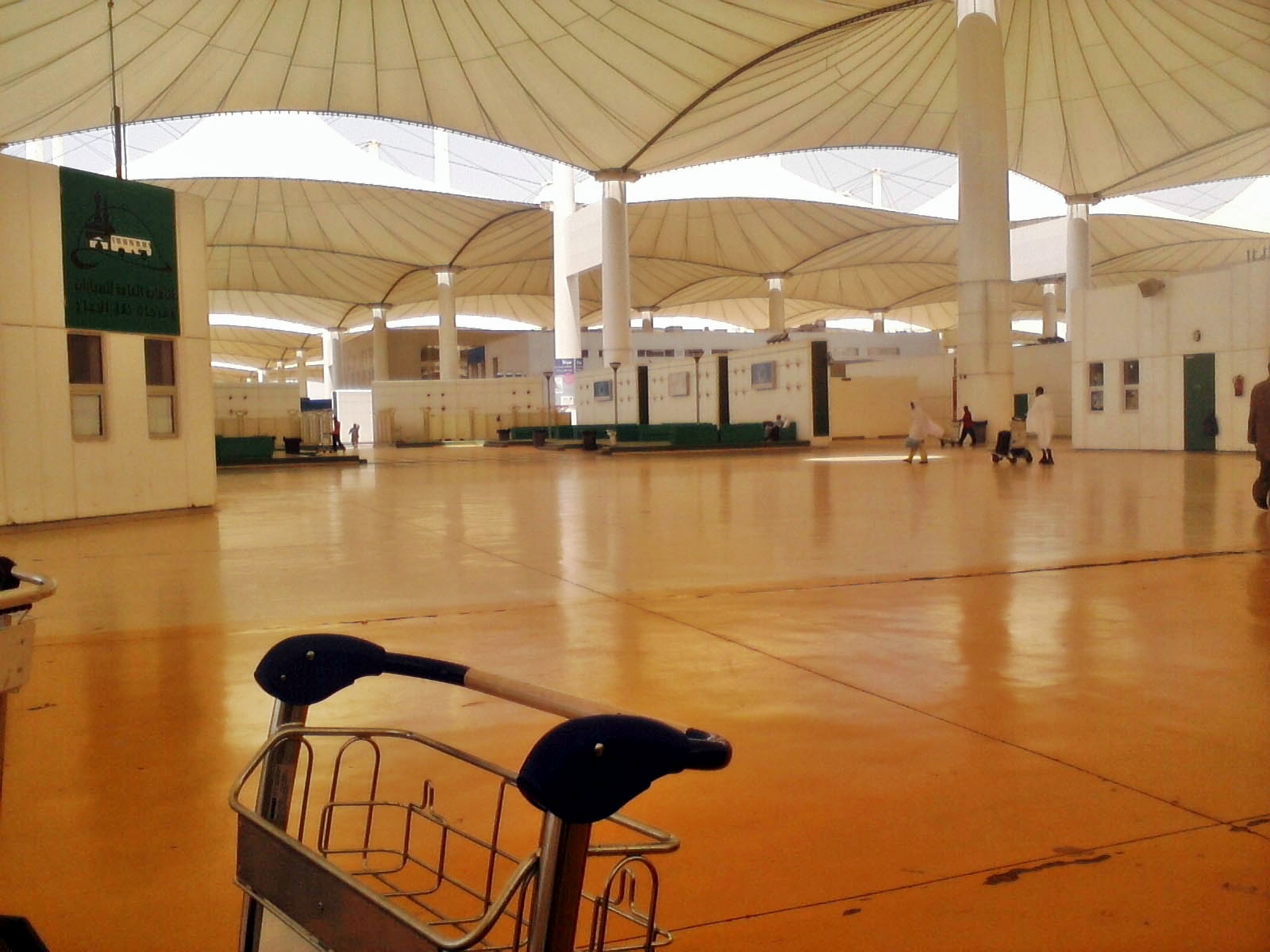
Held at the Aga Khan Award-winning Western Hajj Terminal at King Abdulaziz International Airport, the Islamic Arts Biennale is the world’s largest exhibition dedicated to Islamic art. The second edition ran from January to May 2025, featuring five curated galleries that combined historical artefacts with contemporary commissions. The Biennale alternates with the Diriyah Contemporary Art Biennale on a biennial cycle, creating continuous artistic programming year-round. The next Islamic Arts Biennale is expected in 2027.
ATHR Gallery (Jeddah)
ATHR’s original Jeddah space, located in Al Rawdah district, continues to operate alongside its newer Riyadh branch. Jeddah’s ATHR space tends to mount more experimental exhibitions and is embedded in the city’s longer-standing art community.
Jeddah’s Open-Air Sculpture Collection
Between the 1970s and 1990s, Mayor Mohammed Said Farsi commissioned hundreds of public sculptures from internationally renowned artists, installing them at roundabouts, along the Corniche, and in public parks. Works by Henry Moore, Joan Miro, Alexander Calder, Jean Arp, Cesar Baldaccini, and Julio LaFuente sit in the open air across the city. While some pieces have been relocated or are undergoing restoration, the collection remains one of the most remarkable — and least-known — public art holdings in the world. A self-guided drive along the Corniche from the north towards Al Balad will pass several major pieces.
Where to See Art Outside the Two Capitals
Desert X AlUla
Since 2020, the international outdoor art exhibition Desert X has staged editions in the dramatic sandstone landscape of AlUla, in northwestern Saudi Arabia. Desert X AlUla places large-scale contemporary art installations among ancient geological formations, creating a dialogue between human creativity and deep geological time. The 2026 edition ran from 16 January to 28 February, continuing a tradition that has seen works by artists such as Agnes Denes, Sherin Guirguis, and Zahrah Al Ghamdi installed against the backdrop of Hegra and Elephant Rock. AlUla is accessible by direct flights from Riyadh and Jeddah.
Ithra — King Abdulaziz Center for World Culture, Dhahran
Located in Dhahran on the site where oil was first discovered in Saudi Arabia, Ithra (meaning “enrichment” in Arabic) is a cultural centre built by Saudi Aramco. Its distinctive pebble-shaped architecture, designed by Snohetta, houses a museum, a cinema, a library, a theatre, and exhibition spaces that regularly feature contemporary art alongside historical and scientific programming. Ithra has become a significant commissioning body for Saudi and regional artists. The centre is open to the public and located approximately 30 minutes from Dammam and Al Khobar.
Al Meftaha Art Village, Abha
The birthplace of the Edge of Arabia movement, Al Meftaha Art Village in Abha was established in the 1990s as a government-supported artist colony in the Asir highlands. It was here that Ahmed Mater, Abdulnasser Gharem, and their contemporaries first began working together. While the village is smaller and less visited than the major institutional spaces in Riyadh and Jeddah, it remains an important historical site in the story of Saudi contemporary art and offers a distinctly different atmosphere from the capital’s polished gallery districts.
Major Art Events and Festivals
Saudi Arabia’s cultural calendar has grown dense with recurring events. Planning your visit around one of these can add significant depth to an art-focused trip.
| Event | Location | Typical Dates | Focus |
|---|---|---|---|
| Diriyah Contemporary Art Biennale | JAX District, Riyadh | January–May (biennial, next: 2028) | International contemporary art, new commissions |
| Islamic Arts Biennale | Hajj Terminal, Jeddah | January–May (biennial, next: 2027) | Islamic art heritage and contemporary practice |
| Desert X AlUla | AlUla | January–February (annual) | Site-specific outdoor installations |
| Noor Riyadh | Riyadh (citywide) | October–November (annual) | Light art, public installations |
| Art Week Riyadh | Riyadh | February (annual) | Gallery openings, talks, studio visits |
| Misk Art Week | Riyadh | December (annual) | Emerging artists, residencies, workshops |
| Red Sea International Film Festival | Jeddah | December (annual) | Cinema and visual storytelling |
Tip: The Diriyah Contemporary Art Biennale and the Islamic Arts Biennale alternate years. If you want to see the contemporary biennale, plan for even-numbered years (2026, 2028); for Islamic arts, plan for odd-numbered years (2027, 2029).
The Diriyah Contemporary Art Biennale 2026
The third edition of the Diriyah Contemporary Art Biennale, titled In Interludes and Transitions (في الحِلّ والترحال), opened on 30 January 2026 and runs through 2 May 2026 at JAX District in Diriyah, Riyadh. Co-curated by Nora Razian and Sabih Ahmed, with exhibition design by the Italian studio Formafantasma, this edition brings together more than 65 artists from over 37 countries, including more than 25 newly commissioned works.
Participating artists include Ahaad Alamoudi (Saudi Arabia), Raven Chacon (USA/Diné Nation), Petrit Halilaj (Kosovo), Gala Porras-Kim (Colombia/USA), Raqs Media Collective (India), and Yu Ji (China), among many others. The Biennale was awarded the Art Basel 2026 Medalist distinction, recognising its contribution to the international art ecosystem.
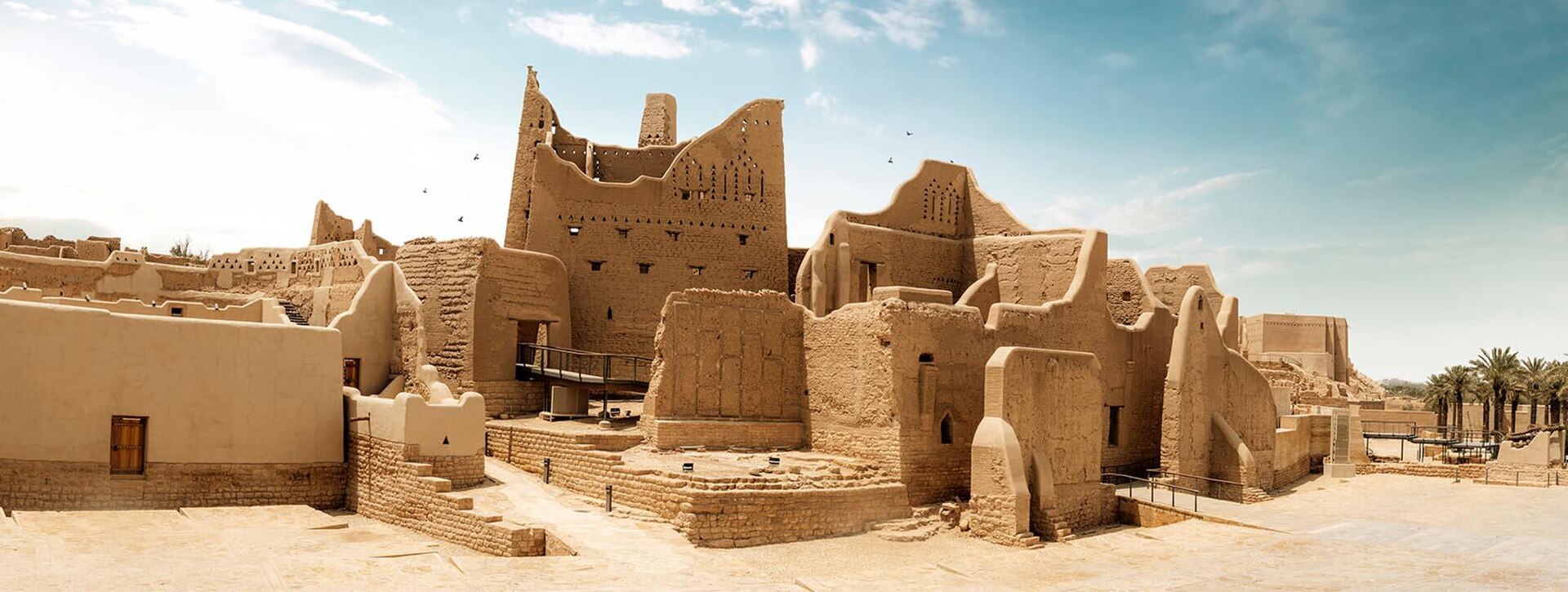
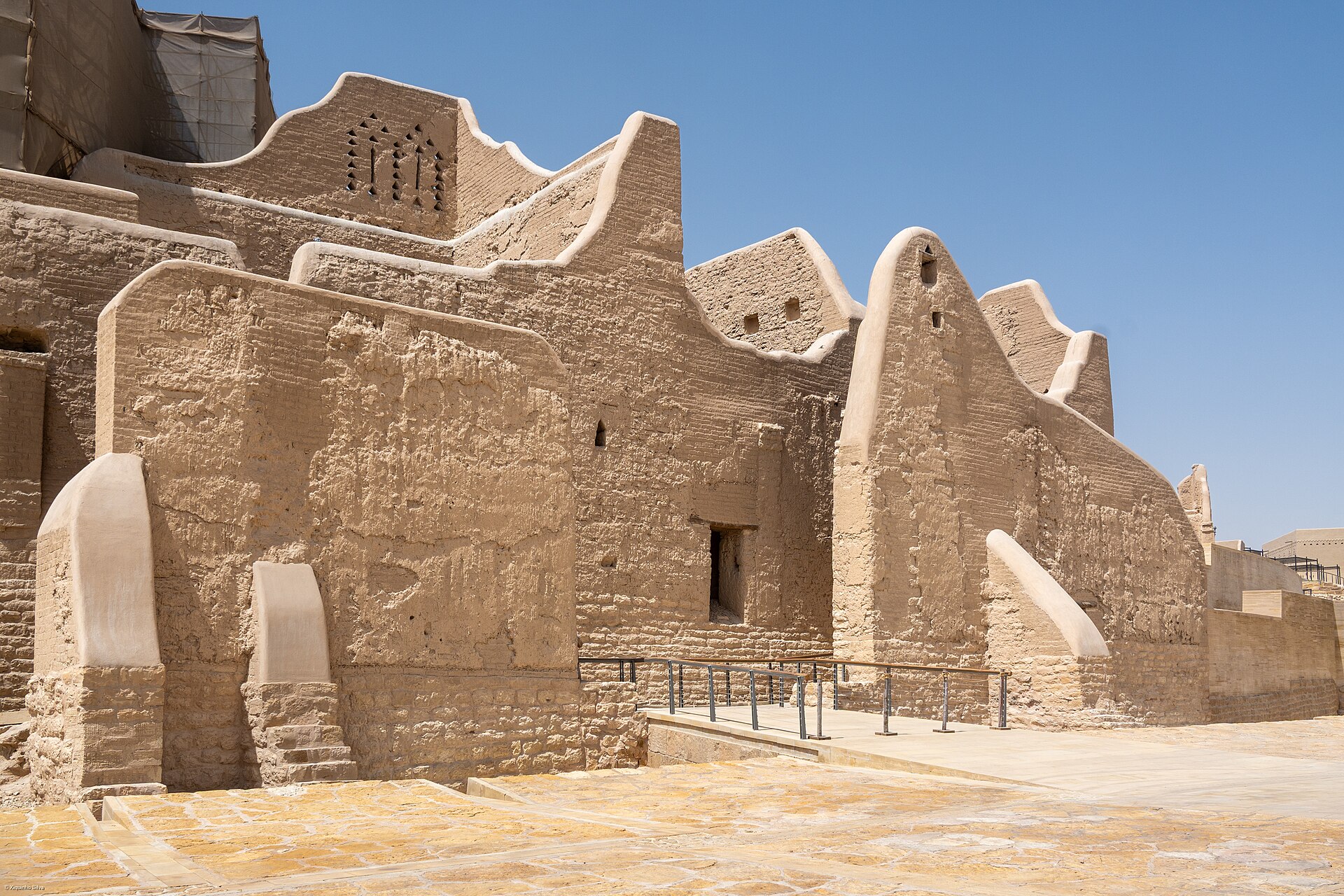
The Biennale is located within walking distance of the At-Turaif UNESCO World Heritage Site, making it easy to combine a contemporary art visit with an exploration of Diriyah’s eighteenth-century Najdi mud-brick architecture. A combined ticket for the Biennale and At-Turaif is available. The Diriyah heritage quarter adds historical depth to any art-focused visit.
Buying Art in Saudi Arabia
The Saudi art market has grown rapidly but remains far smaller than the markets in London, New York, or even Dubai. Prices for work by established Saudi artists such as Ahmed Mater, Manal AlDowayan, or Abdulnasser Gharem now routinely reach six figures at international auction. Emerging artists can often be acquired for SAR 5,000–50,000 (USD 1,300–13,300) through galleries like ATHR, Naila, and Hafez.
The best opportunities for buying are during Art Week Riyadh (February), when galleries mount their strongest shows and many artists are present in person. The Al Mousa Centre galleries in Olaya are open year-round and offer a range of price points. There is no VAT on art sales in Saudi Arabia (standard VAT is 15%, but original artworks are exempt), making it a competitive market for collectors.
Practical note: If you are buying art and plan to ship it internationally, most galleries can arrange export logistics. Saudi Arabia has no export restrictions on contemporary artworks, but you will need a commercial invoice for customs at your destination.
Practical Information for Art Visitors
Getting Around
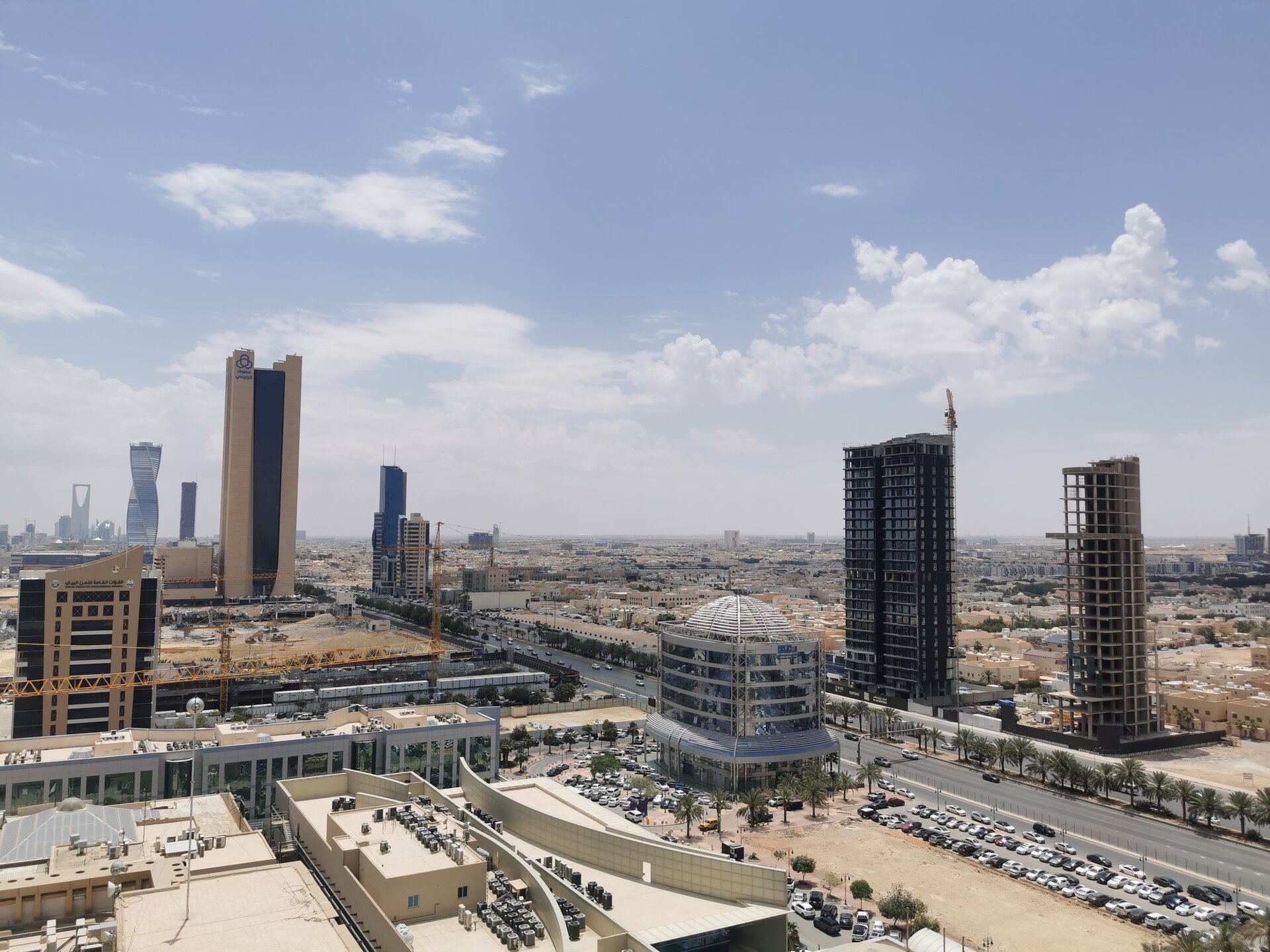
Riyadh’s art destinations are spread across the city. JAX District and Diriyah are on the western edge, approximately 20 minutes by car from central Olaya. The Riyadh Metro (opened 2024) connects several key areas, though JAX District is best reached by taxi or ride-hailing (Uber and Careem both operate). In Jeddah, Hayy Jameel is in the Al Mohammadiyah neighbourhood, about 15 minutes north of Al Balad. For AlUla and Dhahran, domestic flights are the most practical option. Saudi Arabia’s car rental options are also extensive.
Visa and Entry
Most art visitors will enter on a tourist e-visa, available online for citizens of 63 countries. The e-visa is valid for one year with multiple entries and allows stays of up to 90 days per visit. Processing takes minutes. There are no special permits required to visit galleries or attend art events.
Best Time for an Art Trip
The peak art season runs from October to April, when temperatures are comfortable and the major events cluster. January and February are the best months if you want to catch both the Diriyah Biennale (or Islamic Arts Biennale in odd years) and Desert X AlUla. October to November is ideal for Noor Riyadh. Summer (June–August) is extremely hot and many outdoor programmes pause, though air-conditioned galleries remain open year-round.
Where to Stay
For a Riyadh-based art trip, staying in Olaya or the Diplomatic Quarter gives easy access to both the central gallery belt and JAX District. The Diriyah Gate development includes luxury hotels (Bab Samhan, Aman Diriyah) within walking distance of JAX and At-Turaif. In Jeddah, staying in Al Hamra or Al Rawdah puts you close to Hayy Jameel and the historic Al Balad district. See our Saudi Arabia hotel guide for detailed recommendations.
Costs
Most galleries and public art are free to visit. Biennale tickets typically cost SAR 50–75 (USD 13–20). Desert X AlUla is free. Noor Riyadh is free. Museum admission at Ithra and the National Museum in Riyadh is SAR 10–30. The biggest costs for an art-focused trip will be flights and accommodation rather than exhibition entry.
The Future: What Is Coming
Saudi Arabia’s art infrastructure continues to expand at extraordinary speed. Projects in the pipeline include:
The Expo 2030 bid, which Saudi Arabia won in November 2023, will bring further investment in cultural infrastructure and international art programming to Riyadh. Whatever one makes of the speed and scale of Saudi Arabia’s cultural build-out, the artistic output is real, the institutions are substantial, and the opportunity for visitors to witness a cultural transformation in progress is unlike anything else in the world right now.