
Henna is one of the oldest living art forms in the Arabian Peninsula, and Saudi Arabia remains its spiritual heartland. Whether you encounter it at a wedding celebration in Jeddah, an Eid gathering in Riyadh, or a heritage festival in the Jazan highlands, henna connects you to a tradition that stretches back centuries. In December 2024, UNESCO inscribed henna on its Representative List of the Intangible Cultural Heritage of Humanity — a joint nomination by 16 Arab countries including Saudi Arabia. If you are planning a wider Saudi Arabia travel itinerary, experiencing henna firsthand is one of the most accessible and memorable ways to engage with the Kingdom’s living culture.
Best Time to Visit: Year-round; Eid al-Fitr, Eid al-Adha, and wedding season (October–March) are peak henna periods
Getting There: Henna artists operate in every major Saudi city — souks, salons, festivals, and hotel services
Visa Required: Yes — tourist e-visa
Budget: SAR 20–535 (USD 5–143) depending on complexity
Must-See: Henna Night wedding traditions, Souq Qabil in Jeddah’s Al-Balad, Janadriyah Heritage Festival
Avoid: “Black henna” containing PPD — always insist on natural, plant-based henna paste
The Cultural Roots of Henna in Saudi Arabia
The henna plant (Lawsonia inermis) is native to the Arabian Peninsula. In Saudi Arabia, it has been cultivated for centuries, particularly in the Jazan province along the southern Red Sea coast where rainfall and warmth create ideal growing conditions. The Arabic word hinna refers both to the plant and the dye extracted from its crushed leaves, which produces the distinctive reddish-brown stain that adorns hands, feet, and hair across the Kingdom.
Henna in Saudi culture is far more than decoration. It is a social ritual that binds families and communities together. The act of applying henna — traditionally performed by elder women within the family — creates an intimate, intergenerational space where knowledge, stories, and artistic skill pass from grandmother to granddaughter through direct observation and practice. Understanding Saudi Arabian culture means appreciating these quiet, domestic traditions that visitors rarely see but can still experience through public festivals and professional artists.
Henna Night: The Heart of Saudi Wedding Tradition
The most significant henna occasion in Saudi Arabia is the Henna Night, known locally as laylat al-ghumrah. Held in the days before a wedding, this women-only celebration brings together the bride’s female relatives, friends, and neighbours for an evening of singing, dancing, food, and elaborate henna application.
Tradition dictates that the bride’s grandmother — or another happily married elder relative — applies the henna. This is not merely decorative: the custom holds that the person applying henna to the bride must be in a successful marriage, as her fortune is believed to transfer through the art. Bridal designs are the most extensive of any henna occasion, covering hands up to the shoulders and feet up to mid-calf, with patterns that can take several hours to complete.
While Henna Night is a private family event and tourists will not encounter it casually, understanding its significance deepens your appreciation of the henna you see in everyday Saudi life. If you are visiting Saudi Arabia for a honeymoon, your hotel concierge can often arrange a private henna session that draws on these bridal traditions.
Regional Wedding Henna Traditions
Henna Night celebrations vary by region. In the Jazan province, widely regarded as Saudi Arabia’s henna heartland, the ceremony is particularly elaborate, with distinctive artistry that has been refined over generations. In the Asir highlands, henna traditions intersect with Al-Qatt Al-Asiri, the female practice of painting interior walls with bold geometric patterns — itself inscribed on the UNESCO Intangible Cultural Heritage list in 2017. The geometric vocabulary of Al-Qatt, with its triangles, rhombi, and zigzag lines, visibly influences local henna design preferences.
Saudi Henna Design Styles
Saudi henna has its own aesthetic identity, distinct from the fine filigree of Indian mehndi or the bold geometry of Moroccan henna. Traditional Arabian (Khaleeji) henna favours intertwining floral and geometric patterns with strongly shaded areas that create contrast against the skin. The evolution has moved from simple full-palm coverage toward intricate, carefully spaced designs that balance positive and negative space.
Traditional Designs
Historically, Saudi henna was applied simply — paste spread across the entire palm and soles of the feet without elaborate patterns. Any woman could prepare and apply it at home without specialist skill. Named traditional patterns include:
- Al-Misha’ab — a traditional design style still popular among elderly Saudi women, characterised by bold, flowing lines
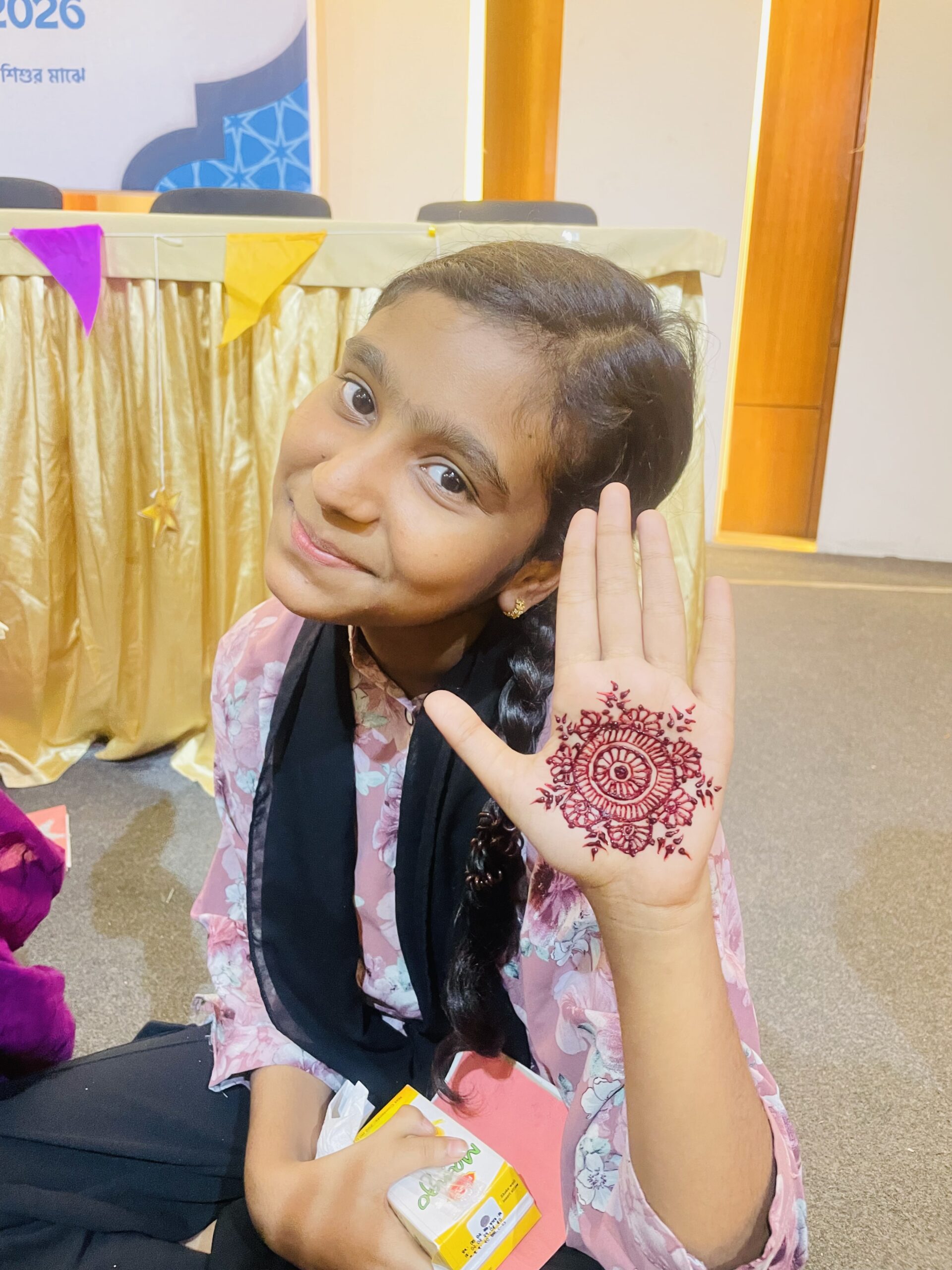
- Al-Qabdah — simpler, playful patterns created specifically for children, often applied during Eid
- Al-Jouri — rose-inspired filled designs with Indian influences, popular among younger women
- Minimalist aesthetics with carefully spaced dots and clean lines
- Negative space techniques that let skin become part of the design
- Calligraphic Arabic script woven into floral patterns
- Geometric mandala centrepieces radiating outward across the palm
- The paste should be brownish-green, never jet black
- It should smell like plants and essential oils (eucalyptus, tea tree, or lavender), not chemicals
- Ask the artist to list ingredients — natural henna contains only henna powder, essential oils, lemon juice, and sugar
- The stain develops gradually over 24–48 hours; an instant dark stain signals chemical additives
- Reputable artists will happily show you their henna ingredients — if they refuse, walk away
- Henna application in professional settings is predominantly a women’s experience. Male tourists wanting decorative hand henna should be aware this is less common for men in Saudi culture, though it is not prohibited — men traditionally use henna for hair and beard dyeing
- Ask permission before photographing a henna artist or other women receiving henna — this aligns with general Saudi customs and etiquette around photography
- If receiving henna at a cultural event or private gathering, expressing admiration for the artistry is considered respectful and appreciated
- The Henna Night ceremony is a private, women-only event — tourists should not expect to attend unless specifically invited by a Saudi family
- Ready-made henna cones — pre-mixed paste in squeeze cones, ready for immediate application. Check the expiry date and ingredient list. Available in most souks for SAR 5–20
- Natural henna powder — sold in bags or boxes at spice shops. Rajasthani and Yemeni varieties are considered premium. Look for a fine, bright green powder with a strong plant smell
- Henna design stencils — adhesive stencils that allow beginners to create neat patterns at home
- Essential oils — eucalyptus and lavender oils used to mix professional-grade henna paste are widely available at Saudi perfume and attar shops
- Saudi Arabia Travel Guide 2026 — The complete guide to visiting the Kingdom
- Understanding Saudi Arabian Culture — Deep dive into customs, traditions, and social life
- Saudi Customs and Etiquette — What to do and what not to do as a visitor
- Saudi Handicraft Guide — Traditional crafts to discover and buy
- Saudi Perfume Shopping — Oud, attar, and Arabian fragrances
- Saudi Hammam Guide — Traditional bathing culture and where to go
- Saudi Arabia Visa Guide — Every visa type explained
Modern and Fusion Designs
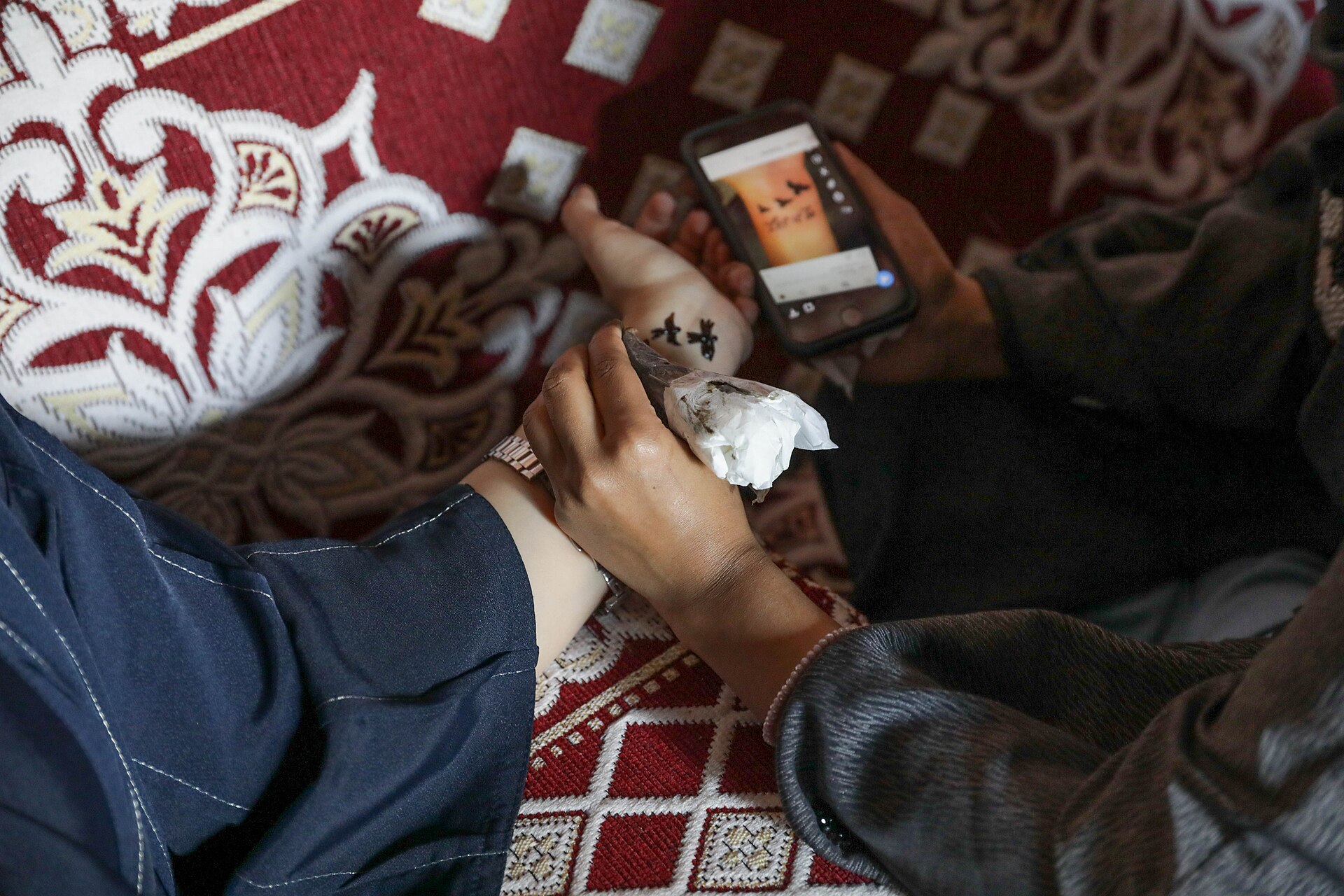
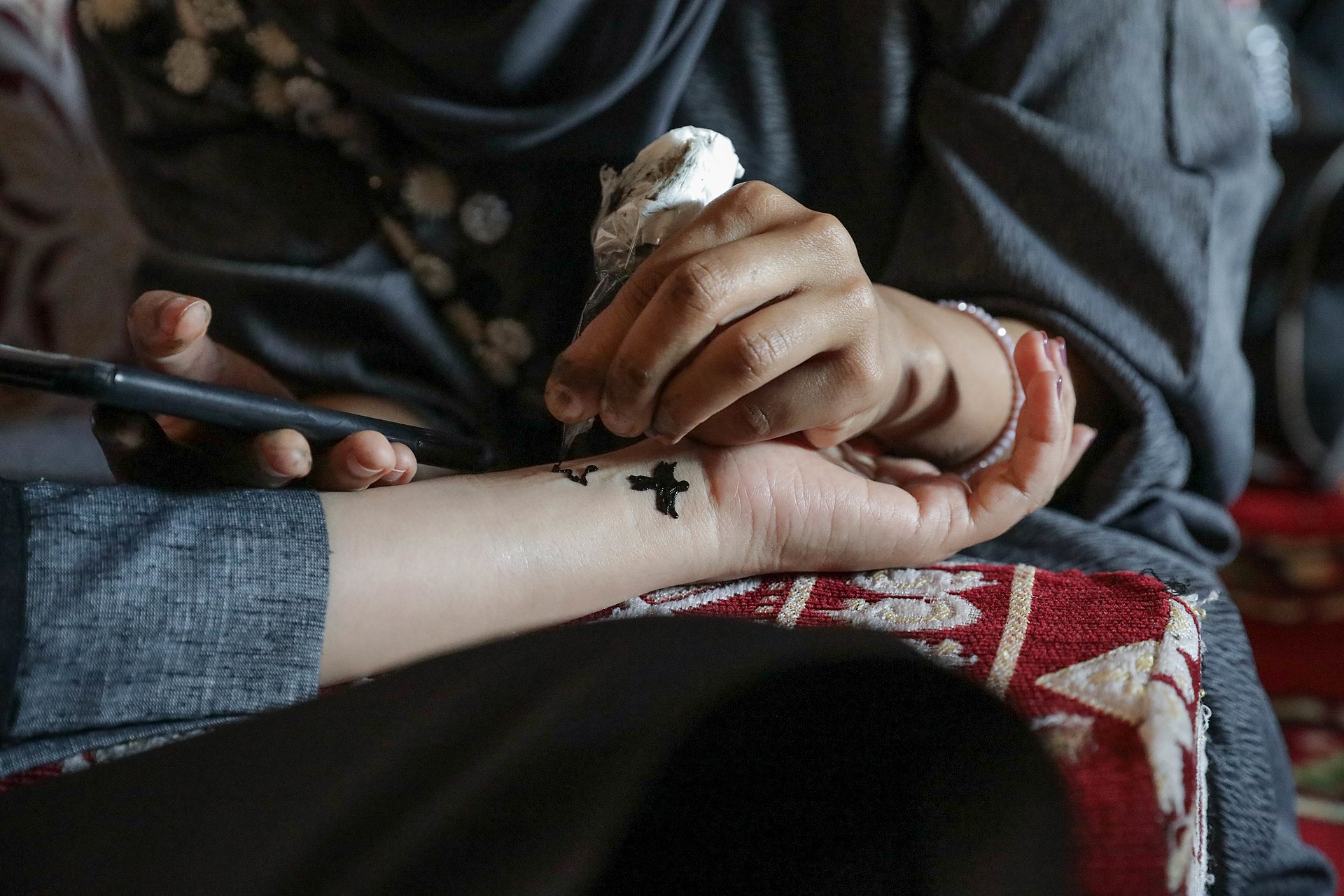
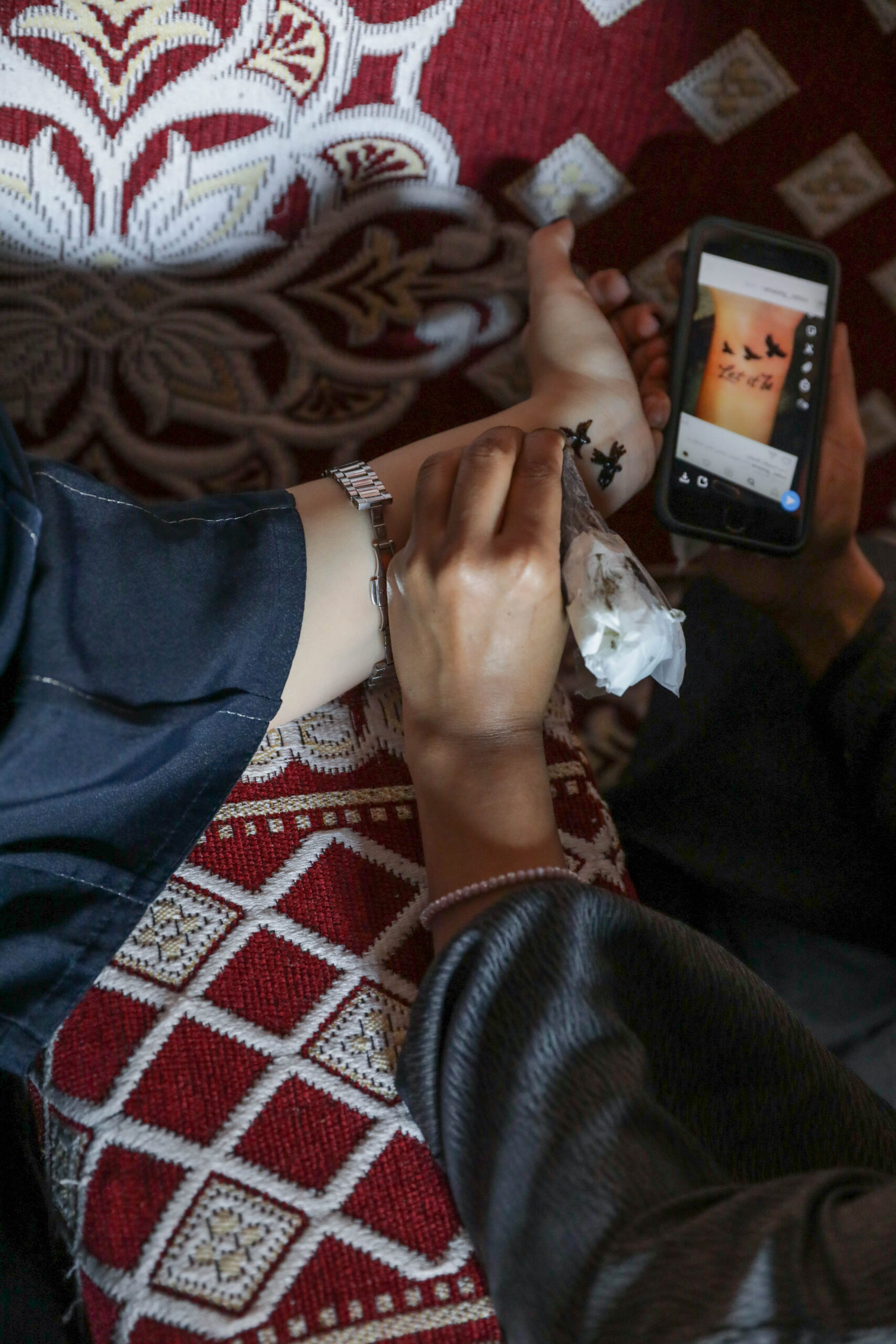
Contemporary Saudi henna has evolved into a sophisticated professional art form. Artists known as al-Muhanniyah or al-Naqqashah now blend multiple traditions — Indian filigree, Sudanese geometric, Emirati floral, and Moroccan bold work — into fusion designs driven heavily by Instagram and social media trends. Modern Saudi henna features:
The temporary nature of henna — fading naturally over one to three weeks — makes it a low-commitment way to experiment with body art, which has helped drive its popularity as a fashion statement well beyond ceremonial occasions.
Where to Get Henna in Saudi Arabia
Henna is available in every major Saudi city, from high-end salon services to spontaneous souk encounters. Here is where to find it.
Riyadh
The capital offers the widest range of henna services, from budget walk-in salons to luxury bridal specialists. Prices on booking platforms start from around SAR 27 for a simple hand design, with sessions averaging 30 minutes. Notable Riyadh-based artists include Yorana Henna (known for intricate luxury work), Rayie Henna (specialising in traditional and Jagua designs), Henna Syndrome (blending traditional and contemporary styles), and Sana (sought after for Eid and wedding occasions). If you are exploring the city’s attractions and neighbourhoods, henna parlours are concentrated in the Olaya district and shopping malls across the city.
Jeddah
Jeddah’s historic Al-Balad district is the most atmospheric place in Saudi Arabia to get henna done. Souq Qabil, one of Jeddah’s oldest markets in the heart of Al-Balad, has been a centre for traditional crafts including henna for generations. Walking through the narrow coral-stone lanes of this UNESCO World Heritage Site and stopping for henna is an experience that connects modern tourism with centuries of Red Sea trading culture. Professional artists also offer mobile services across the city, including Inara Elegance, which provides organic henna with home and hotel visits in Jeddah, Makkah, and Madinah. The complete Jeddah souq guide covers the best markets for traditional crafts.
Dammam and the Eastern Province
The Dammam and Al Khobar area has a thriving henna scene, with professional artists serving the large expat and Saudi community. The Heritage Village in Dammam features traditional architecture and crafts, and is a good starting point for experiencing local culture. Professional henna artists in the area include Fathima Henna Designs and Henna by Shimah, who offer bridal and event henna using organic products. Booking through platforms like Fresha is common in the Eastern Province.
AlUla
While AlUla is primarily known for its Nabataean archaeology, the AlJadidah Arts District in AlUla Old Town serves as a hub for heritage crafts and artisan experiences. The Madrasat Addeera arts centre focuses on protecting traditional craft skills. Henna experiences are regularly featured in AlUla’s seasonal cultural programming — check current offerings when you visit.
Henna at Saudi Festivals and Events
If you time your visit right, Saudi Arabia’s major cultural festivals offer the most immersive henna experiences available to tourists.
Janadriyah National Heritage and Culture Festival
Held annually (typically February or March) about 40 km northeast of Riyadh, the Janadriyah festival is the largest cultural heritage event in the Gulf region, drawing over one million visitors during its two-week run. Established in 1985 under the Saudi Arabian National Guard’s patronage, the festival’s dedicated women’s building features henna artists offering designs to visitors alongside demonstrations of carpet weaving, traditional cooking, and other heritage crafts. This is the single best opportunity for tourists to experience henna in a cultural context. Check the Saudi events calendar for exact dates.
Riyadh Season
Running from October through approximately January each year, Riyadh Season hosts over 100 events across multiple zones throughout the capital. Heritage-themed zones regularly feature henna artists alongside other traditional Saudi experiences. The scale and accessibility of Riyadh Season makes it an easy entry point for tourists curious about henna.
Eid Celebrations
Both Eid al-Fitr and Eid al-Adha are peak henna periods across the Kingdom. In the days before each Eid, demand for professional henna artists spikes dramatically. Women gather communally to prepare and apply henna, and the festive atmosphere often extends to public spaces, shopping malls, and hotel lobbies where tourist-friendly henna services appear. If you happen to visit Saudi Arabia during Ramadan or the Eid holidays, henna becomes unavoidable — and that is entirely the point.
Founding Day
Saudi Arabia’s Founding Day celebrations on February 22 emphasise the Kingdom’s pre-oil heritage. Traditional crafts including henna feature prominently at Founding Day events in every major city, often with free henna application for visitors.
Practical Guide: Getting Henna as a Tourist
How Much Does Henna Cost?
| Design Type | Price Range (SAR) | Price Range (USD) | Duration |
|---|---|---|---|
| Simple finger/single motif | 20–50 | 5–13 | 10–15 minutes |
| One hand (front or back) | 50–150 | 13–40 | 20–40 minutes |
| Both hands (detailed) | 150–300 | 40–80 | 45–90 minutes |
| Bridal full coverage (hands and feet) | 300–535+ | 80–143+ | 2–4 hours |
Prices vary by city, artist reputation, and design complexity. Festival and souk artists tend to charge less than salon-based professionals. Booking through platforms like Fresha in Riyadh or Dammam is straightforward and shows transparent pricing.
How Long Does Henna Last?
Natural henna stain lasts one to three weeks depending on aftercare, skin type, and body part. The paste should be left on for four to eight hours (or overnight for the deepest colour). The stain starts orange and darkens to a rich reddish-brown over 24 to 48 hours as lawsone molecules bind to keratin in the skin. Palms and soles of feet hold colour longest because the skin is thickest there. To extend longevity, avoid water on the fresh stain for the first 12 hours and apply a lemon-sugar sealant over the dried paste.
Safety: Avoiding Black Henna
Warning: “Black henna” is dangerous and should be avoided completely. It does not contain actual henna. Instead, it uses para-phenylenediamine (PPD), a chemical dye not approved for direct skin contact, at concentrations of 20–70% (compared to a maximum of 6% in regulated hair dyes). Reactions range from painful rashes and blisters to permanent scarring and potentially life-threatening allergic responses.
To identify safe, natural henna:
Cultural Etiquette for Tourists
Henna is warmly welcomed for tourists of any background. Saudis take pride in sharing their heritage, and getting henna done is seen as a respectful way to engage with local culture. Keep these points in mind:
The Henna Plant: From Saudi Soil to Skin
Lawsonia inermis, the henna plant, belongs to the Lythraceae family and is native to the Arabian Peninsula, North Africa, and South Asia. In Saudi Arabia, it thrives in the warm, semi-arid conditions of the southern regions, particularly Jazan province, where it grows along watercourses and in irrigated agricultural plots. The plant tolerates drought, sandy soils, and the high temperatures that define the Saudi climate.
The dye molecule, lawsone, is concentrated in the plant’s leaves. Harvested leaves are dried and ground into the fine green powder sold in souks and spice markets across the Kingdom. While Saudi Arabia grows henna domestically, much of the commercial powder used by professional artists is imported from India (particularly Rajasthan), Pakistan, and Sudan, where large-scale cultivation meets global demand.
For tourists interested in the agricultural side, the Jazan region offers the closest connection between the henna plant and the culture that surrounds it. The terraced farms and tropical microclimate of Saudi Arabia’s far southwest are unlike anything else in the Kingdom.
Henna Shopping: What to Buy and Bring Home
Henna makes an excellent, lightweight souvenir. Here is what to look for in Saudi souks and markets:
The best shopping for henna supplies is in traditional souks: Jeddah’s souqs (particularly Souq Al-Alawi in Al-Balad), Riyadh’s Souq Al-Zal, and local markets in Jazan. The Saudi handicraft guide covers more traditional crafts worth seeking out.
Henna and Saudi Arabia’s UNESCO Heritage
On 3 December 2024, UNESCO inscribed “Henna: rituals, aesthetic and social practices” on its Representative List of the Intangible Cultural Heritage of Humanity. The nomination was a joint effort by 16 Arab countries — including Saudi Arabia — coordinated through the Arab League’s educational and cultural organisation (ALECSO). Saudi Arabia’s Heritage Commission provided documentary materials supporting the inscription.
UNESCO described henna as “a symbol of joy, used in everyday life and on festive occasions such as births and weddings,” emphasising that transmission occurs “through family observation and hands-on practice.” This recognition places henna alongside Saudi Arabia’s other UNESCO-listed intangible heritage, including Al-Qatt Al-Asiri wall decoration (2017), Arabic coffee preparation, and falconry.
For travellers interested in Saudi Arabia’s heritage recognition, visiting a heritage village or attending a festival where henna is demonstrated connects you directly to a UNESCO-listed living tradition.