
Saudi Arabia is a country where ancient Bedouin traditions, Islamic principles, and rapid modernization converge to create one of the most distinctive cultures on earth. Whether you are visiting Riyadh’s gleaming towers, exploring the mud-brick heritage of Diriyah, or dining with a local family, understanding Saudi culture transforms a good trip into an unforgettable one. This guide is part of our comprehensive Saudi Arabia travel guide and covers everything visitors need to know — from greeting customs and dress codes to food traditions, religious etiquette, and the entertainment revolution reshaping the Kingdom under Vision 2030.
Best Time to Visit: October to March (cooler weather, peak festival season including Riyadh Season and Diriyah Season)
Getting There: International flights to Riyadh (RUH), Jeddah (JED), or Dammam (DMM); direct routes from most major global hubs
Visa Required: Yes — tourist e-visa available for 63 nationalities
Budget: $80–$200 USD per day depending on accommodation and dining choices
Must-See: At-Turaif UNESCO World Heritage Site in Diriyah, traditional souks, a Saudi coffee ceremony
Avoid: Public displays of affection, photographing people without permission, eating in public during Ramadan daylight hours
The Foundations of Saudi Culture
Three pillars shape Saudi society: Islam, tribal Bedouin heritage, and family. Every custom you encounter as a visitor — from the way coffee is served to the way meetings begin — traces back to one of these foundations. Understanding them is not about memorizing rules; it is about recognizing the values behind the behavior so you can respond naturally.
Islam as a Way of Life
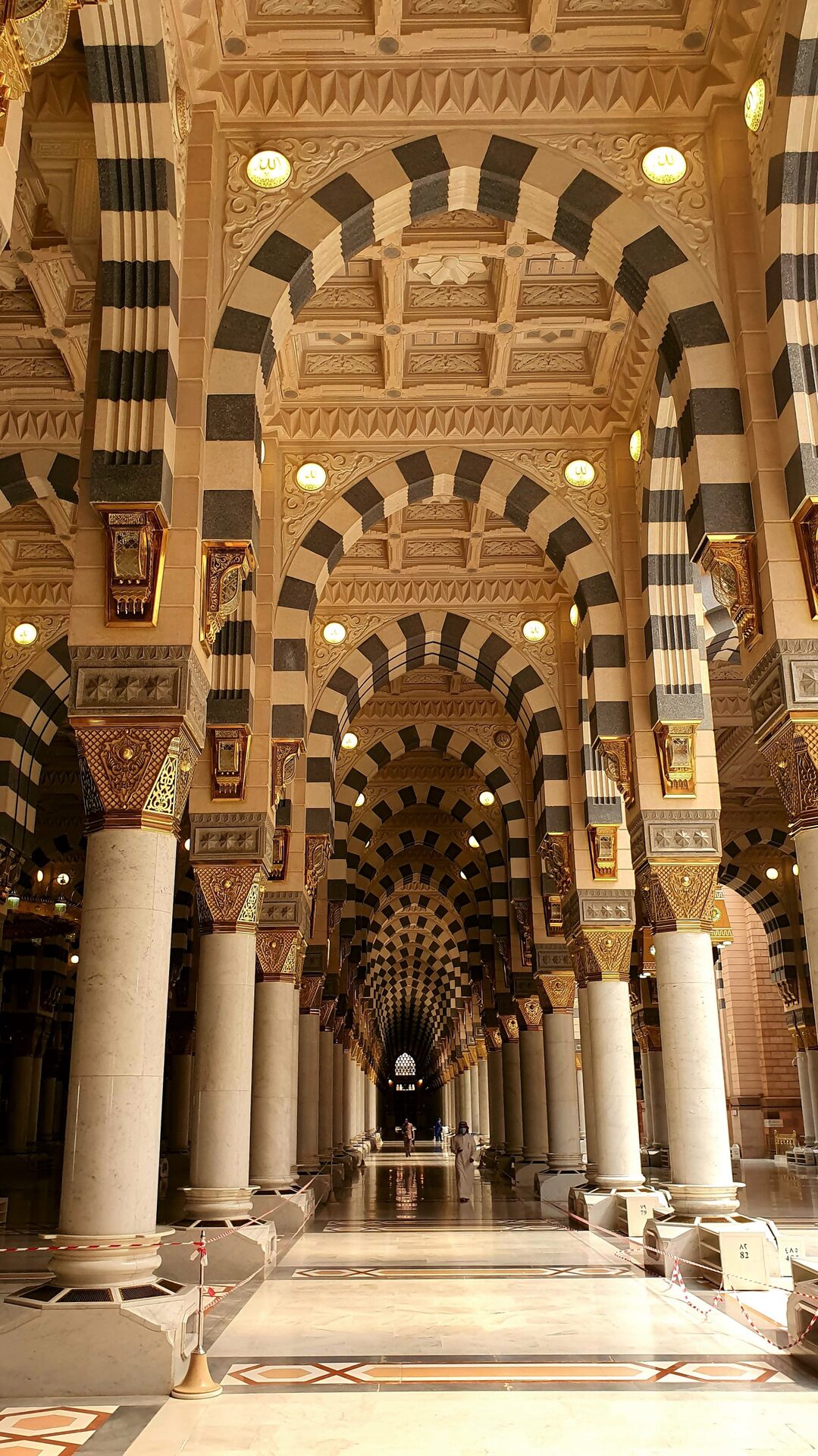
Islam is not simply a religion in Saudi Arabia — it is the legal framework, the social rhythm, and the moral compass. The five daily prayers structure the day. Friday is the holy day, equivalent to Sunday in Christian-majority countries. The Saudi weekend runs Friday through Saturday, a shift made in 2022 from the previous Friday–Sunday schedule.
You do not need to be Muslim to visit Saudi Arabia, and no one expects you to pray. But awareness of Islamic customs shows respect and smooths interactions. When the call to prayer sounds, lower your voice. If a shopkeeper steps away to pray, wait patiently. Remove your shoes when entering a mosque or a Saudi home. These gestures are noticed and appreciated.
Bedouin Heritage and Tribal Identity
Saudi Arabia’s Bedouin roots run deep. The values of the desert — hospitality to strangers, loyalty to kin, personal honor, and resilience — remain central to how Saudis see themselves, even in a country that is now over 80% urbanized. The concept of sharaf (honor) means that how you treat others reflects on your entire family. Public behavior, generosity, and keeping your word all carry weight far beyond the individual.
You will see Bedouin heritage in the ardah sword dance performed at weddings and national celebrations, in the camel racing that draws thousands of spectators, in the poetry recitals that Saudis consider the highest art form, and in the instinct to welcome any visitor as an honored guest. You can explore this heritage further in our guide to Saudi heritage villages.
Family at the Center
Family is the organizing unit of Saudi life. Multigenerational households remain common. Respect for elders is non-negotiable — younger Saudis stand when an elder enters the room, and the eldest family member typically speaks first. Weekend gatherings bring extended families of 30 or 40 people together for shared meals.
As a visitor, you may be asked about your family early in conversation. This is not small talk — it is genuine interest, and sharing details about your own family builds rapport. If invited to a Saudi home, you are being offered something meaningful. Accept if you can.
Hospitality: The Heart of Saudi Culture
Saudi hospitality has a specific cultural name: hafawah. It describes an exaggerated warmth in greeting, inquiring about well-being, and offering the very best a host has. UNESCO inscribed the Arabic coffee hospitality tradition on its Intangible Cultural Heritage list in 2015, recognizing it as a cultural practice of global significance.
The Arabic Coffee Ceremony
Arabic coffee (qahwa) is the centerpiece of Saudi hospitality. Unlike espresso or filter coffee, Saudi qahwa is greenish-gold, lightly brewed, and spiced with cardamom, sometimes saffron and cloves. It is served from a dallah — a long-spouted pot — into small handleless cups called finjan. Over 80% of Saudi households serve coffee daily in the traditional manner, and over 90% of Saudis consider offering coffee to guests a moral obligation.
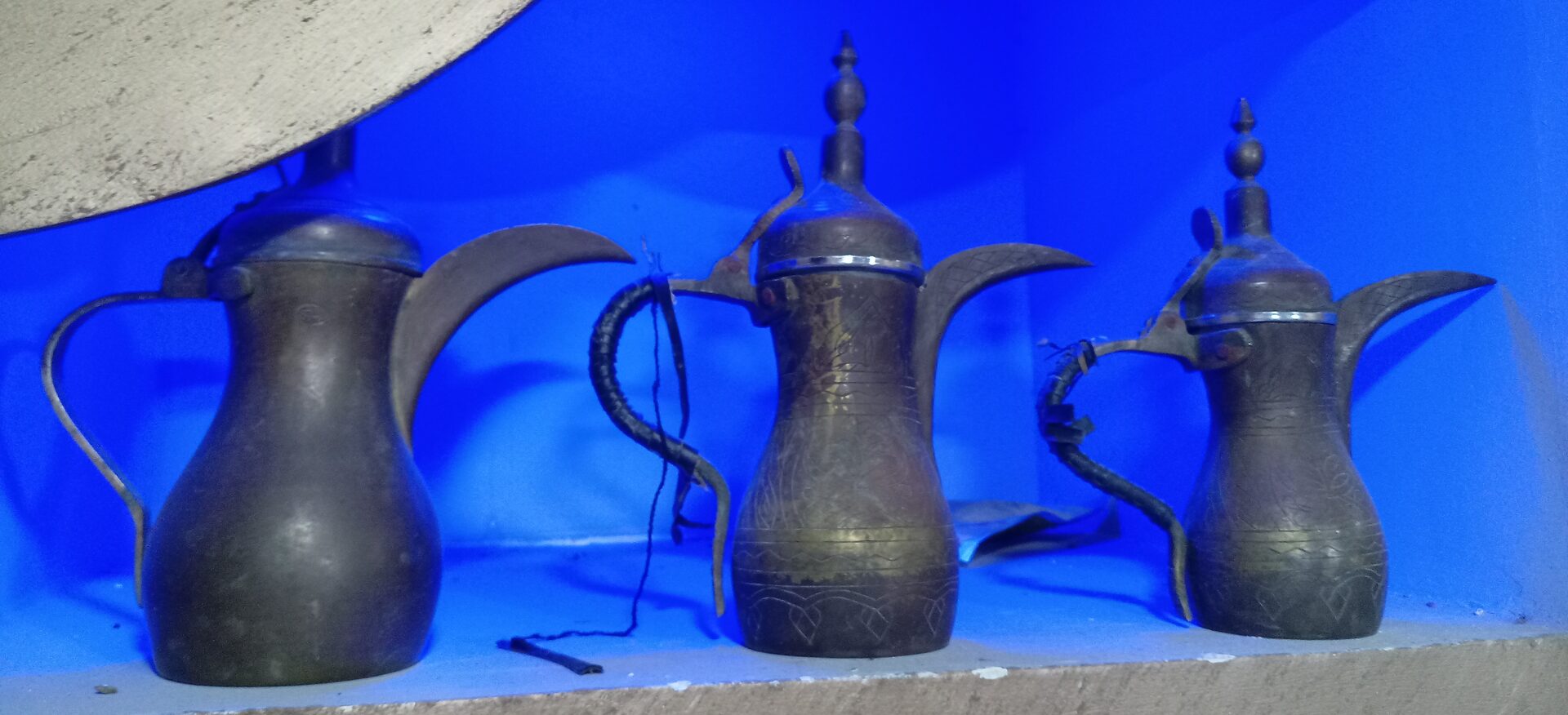
The etiquette is simple but important:
- Accept with your right hand. Always receive and drink with the right hand.
- Drink at least one cup. Refusing the first cup is considered rude.
- Shake the cup gently side to side when you have had enough. Without this signal, your host will keep refilling.
- Dates accompany coffee. The sweetness of dates balances the coffee’s sharpness. Saudi Arabia produces over 400 varieties of dates — try whatever is offered.
You can learn more about this tradition in our Saudi coffee culture guide.
Being a Guest in a Saudi Home
If invited to a Saudi home, arrive on time but expect the meal to come later — hospitality begins with conversation, coffee, and dates. Remove your shoes at the door. You may be seated on floor cushions around a large communal platter. Eat with your right hand. Try a bit of everything to show appreciation, and compliment the food — your host has likely spent hours preparing it.
Gift-giving is appreciated but not expected from visitors. If you bring a gift, present it with your right hand or both hands. Flowers, chocolates, or a quality gift from your home country are all appropriate. Avoid alcohol (it is illegal) and anything made from pigskin.
Greetings and Social Customs
How to Greet Saudis
The universal greeting is “As-salamu alaykum” (peace be upon you), to which the reply is “Wa alaykum as-salam.” Non-Muslims are welcome to use this greeting — it is appreciated, not considered presumptuous.
Same-gender greetings: Handshakes are gentle and slightly lingering, always with the right hand. Close male friends may exchange nose-to-nose or cheek-to-cheek greetings. In warmer encounters, you may see the left hand placed over the joined right hands or on the other person’s forearm.
Cross-gender greetings: Do not extend your hand first. Greet verbally with a nod and wait to see if the other person initiates a handshake. Many Saudis avoid physical contact with unrelated members of the opposite sex. The hand-over-heart gesture — right hand placed on the chest — is a respectful universal alternative.
Essential Arabic Phrases
| Arabic | Meaning | When to Use |
|---|---|---|
| As-salamu alaykum | Peace be upon you | Universal greeting |
| Shukran | Thank you | After any service or gesture |
| Afwan | You’re welcome | Responding to thanks |
| Marhaba | Hello | Informal greeting |
| Inshallah | God willing | When discussing future plans |
| Mashallah | God has willed it | Expressing admiration |
| La, shukran | No, thank you | Politely declining |
Dress Code for Visitors
Saudi Arabia’s dress expectations have relaxed significantly under Vision 2030, but modesty remains the standard. For the full breakdown of what to wear, see our detailed Saudi Arabia dress code guide.
Women
The mandatory abaya requirement for foreign women was scrapped in 2019. Crown Prince Mohammed bin Salman confirmed that foreign women do not need to wear a black abaya or cover their hair. However, the Public Decorum Code requires modest clothing that covers knees and elbows. Shoulders should be covered in public. In Riyadh, Jeddah, and Al Khobar, enforcement is relaxed. In smaller towns and especially in Makkah and Madinah, dress more conservatively.
Men
Long trousers are expected in malls, restaurants, and any formal setting. Shorts and flip-flops are best avoided except at beaches and resorts. Sleeveless tops draw unwanted attention. Saudi men wear the white thobe (ankle-length robe) with a ghutra (head covering) — visitors are not expected to dress this way, but if invited to wear Saudi dress for an occasion, it is a sign of inclusion.
During Ramadan
Dress more conservatively than usual during the holy month. This is not the time for shorts and tank tops, even where they might be tolerated otherwise.
Food and Dining Culture
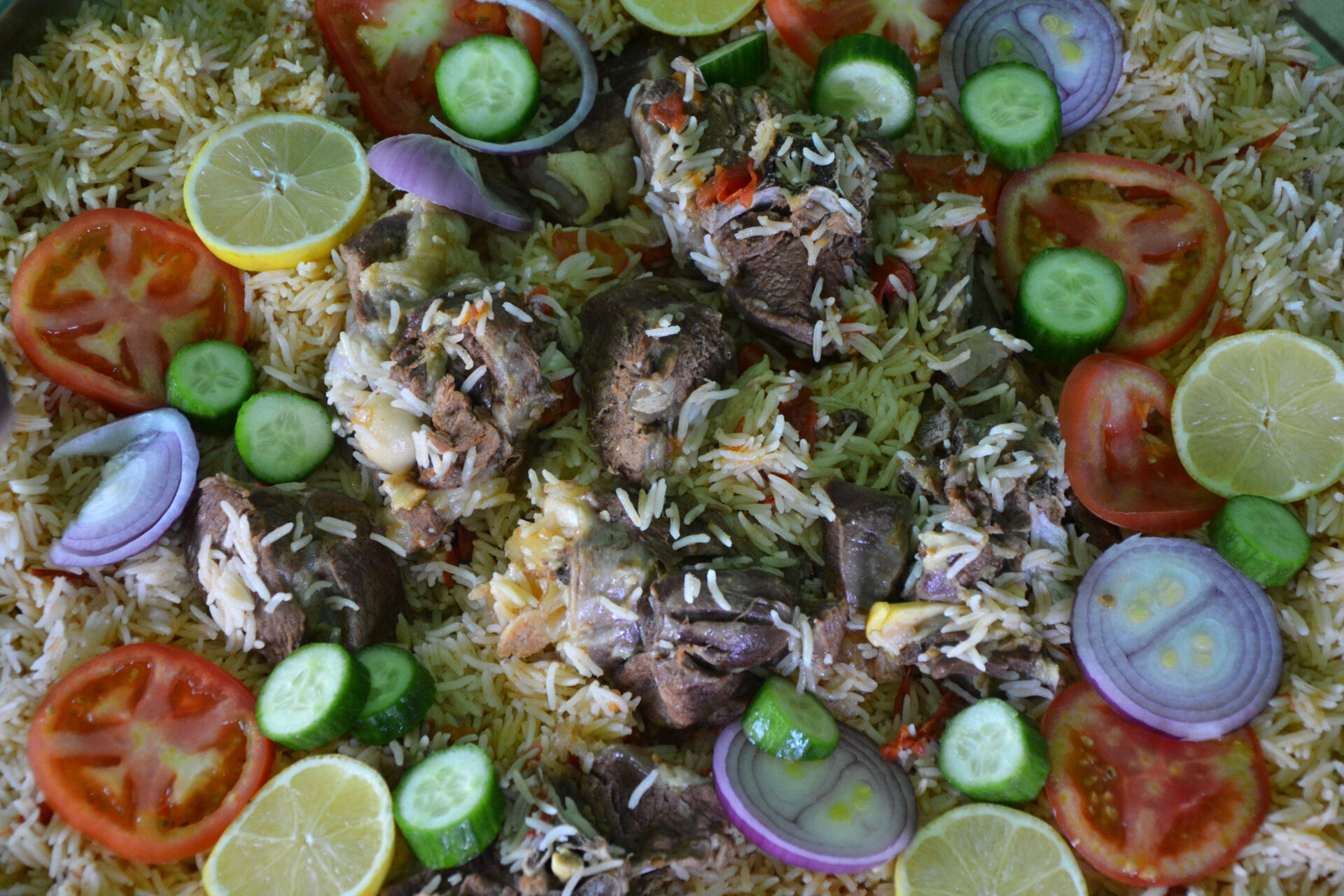
Saudi food is generous, aromatic, and communal. Meals are social events, not just sustenance. The Kingdom’s cuisine blends Bedouin simplicity with Hejazi spice-trade influences and Najdi heartland traditions.
Dishes You Must Try
- Kabsa — Spiced rice with slow-cooked lamb or chicken, widely considered the national dish and a symbol of hospitality. Every family has its own recipe.
- Jareesh — Crushed wheat cooked to a porridge-like consistency with meat and spices. Officially declared a national dish in 2023.
- Mutabbaq — Street food of thin dough folded around savory fillings. Found at every corner stall.
- Mandi — Slow-cooked meat with rice, originating from Hadhramaut. The meat is often cooked in a tandoor pit.
- Saleeg — Creamy rice with chicken, popular in the Hejaz region around Jeddah and Madinah.
For deeper exploration of the food scene, check our guides to Riyadh street food and Jeddah street food.
Dining Etiquette
- Eat with your right hand. The left hand is considered unclean in Arab culture.
- Communal platters are shared. Eat from the section of the platter closest to you and work inward.
- Accept food that is offered. Your host may place choice pieces of meat in front of you — this is a sign of honor.
- All food is halal. Pork products are completely prohibited. Alcohol is banned across the Kingdom with no exceptions for visitors.
- Tipping: Check for a service charge first. If none, 10–15% is appreciated in restaurants. For taxis, round up to the nearest SAR 5 or 10.
Prayer Times and Daily Rhythms
Five daily prayers shape the rhythm of Saudi life: Fajr (dawn), Dhuhr (early afternoon), Asr (late afternoon), Maghrib (sunset), and Isha (night). Exact times shift with the seasons.
A major reform in July 2021 ended the 40-year requirement for shops to close during prayer times. Large malls, chain restaurants, and international businesses now generally stay open. However, smaller independent shops and local restaurants — especially outside major cities — may still close for 15 to 30 minutes. Prayer rooms are available in shopping malls, airports, and public spaces throughout the Kingdom.
Tip for visitors: If a small shop closes during prayer, do not knock or try the door. Wait 20–30 minutes and return. Use the pause to explore nearby — some of the best discoveries happen during these quiet moments.
Ramadan Etiquette
Ramadan is the holiest month in Islam, when Muslims fast from dawn to sunset. In 2026, Ramadan runs from approximately February 18 to March 19. Visiting during Ramadan is a unique cultural experience, but it requires awareness. See our full Ramadan travel guide for detailed planning advice.
What Visitors Must Know
- Do not eat, drink, smoke, or chew gum in public during daylight hours. This includes streets, parks, malls, public transport, and even your car if visible to passersby.
- Fines can reach SAR 500 (~USD 133), though accidental violations by tourists typically draw a polite warning rather than a penalty.
- You can eat privately — hotel rooms, hotel restaurants (which serve meals behind screens), and some restaurants that open discreetly in designated areas.
- Working hours are reduced. Government offices operate shorter schedules. Many restaurants close during the day and reopen for iftar (the sunset meal).
- After sunset, the Kingdom comes alive. Shops and markets stay open late. The period from iftar through the night is festive and social.
Cultural opportunity: Breaking fast at sunset (iftar) is a communal event. Visitors are often welcomed to join public iftar meals at mosques and community centers. This is one of the most culturally enriching experiences available in Saudi Arabia.
Gender Norms and Recent Reforms
Saudi Arabia has undergone a dramatic social transformation since 2017. Understanding both the changes and the continuities helps visitors navigate confidently.
Landmark Reforms
- Women driving — Legal since June 24, 2018. Over 100,000 women have obtained driver’s licenses.
- Guardianship reforms (2017–2019) — Women over 21 can now apply for passports, travel internationally, register births and marriages, and live independently without male guardian permission.
- Entertainment — The 35-year cinema ban was lifted in April 2018. Women attend concerts, sporting events, and mixed-gender festivals routinely.
- Workforce — Women’s participation rose from 17.6% in 2017 to 35.5% in 2023, surpassing the Vision 2030 target of 30%.
Practical Guidance for Visitors
Despite these reforms, Saudi Arabia remains a socially conservative country. Public displays of affection — including between married couples — are frowned upon and can attract police attention. Unmarried couples should not share hotel rooms in smaller cities, though enforcement is relaxed in international hotels in Riyadh, Jeddah, and tourist destinations. What is accepted in a cosmopolitan city center may still draw disapproval in a small town.
Photography Etiquette
Always ask permission before photographing people. Privacy is deeply valued, especially for women. Never photograph a woman without explicit consent.
What You Cannot Photograph
- Military installations and personnel
- Government buildings and royal palaces
- Security checkpoints, police, and security forces
Photographing these subjects can result in detention. Public landscapes, tourist sites, architecture, and food are generally fine. When in doubt, ask. Drones require a permit, and flying over residential areas or heritage zones is restricted.
Business Culture
If your trip involves business, understanding Saudi meeting customs saves time and builds trust.
- Arrive 10–15 minutes early, even knowing the meeting may start late.
- Expect extended small talk before any business discussion. Inquire about health, family, and recent travels. Rushing to business is considered impersonal.
- Decisions are rarely made in a single meeting. Trust is built over multiple encounters. Patience is essential.
- Wasta (connections) matters enormously. Relationships and personal networks are the currency of Saudi business. Invest in them.
- The Saudi weekend is Friday–Saturday (since March 2022). Sunday is a working day.
Do’s and Don’ts: Quick Reference
| Do | Don’t |
|---|---|
| Use your right hand for eating, giving, and receiving | Use your left hand to offer anything — it is considered unclean |
| Accept coffee and food when offered | Refuse the first cup of coffee — it is considered rude |
| Dress modestly, covering knees and shoulders | Wear revealing clothing in public spaces |
| Ask permission before photographing anyone | Photograph women, military sites, or government buildings |
| Remove shoes when entering a mosque or home | Point the soles of your feet at anyone — it is deeply disrespectful |
| Show respect during prayer times | Play loud music near mosques |
| Learn a few Arabic greetings | Use profanity in public — it is illegal under the Public Decency Law |
| Accept invitations to meals or gatherings | Bring or consume alcohol anywhere — it is strictly banned |
| Be patient with timekeeping | Carry or use recreational drugs — penalties include the death sentence |
National Holidays and Festivals
Saudi Arabia celebrates a mix of religious and national occasions. Plan around these — businesses close, but cultural experiences peak.
Founding Day — February 22
Established by royal decree of King Salman in January 2022, Founding Day commemorates the enthronement of Imam Muhammad bin Saud as ruler of Diriyah in 1727, founding the First Saudi State. The celebration features the traditional ardah sword dance, cultural performances, and events at the At-Turaif UNESCO World Heritage Site. A multi-day holiday.
Eid al-Fitr — Approximately March 20, 2026
Marks the end of Ramadan. Three days of family gatherings, feasts, gift-giving, and charity. Businesses close. Dates are confirmed by official moon sighting, sometimes only a day or two in advance.
Eid al-Adha — Approximately May 27, 2026
The Festival of Sacrifice, coinciding with the Hajj pilgrimage. Involves the ritual sacrifice of an animal with meat distributed to family, friends, and the poor. The most significant religious holiday, typically observed as a week-long break.
Saudi National Day — September 23
Celebrates the unification of the Kingdom in 1932 by King Abdulaziz ibn Saud. Features fireworks, air shows, cultural performances, and nationwide celebrations with landmarks illuminated in green. A multi-day holiday and one of the best times to experience Saudi patriotic culture.
The Entertainment Revolution
Since 2016, Saudi Arabia has undergone a cultural transformation that few countries have matched in speed. The Kingdom went from having no cinemas and no public concerts to hosting the Middle East’s largest music festival in under a decade. For the latest on the arts scene, see our Saudi art scene guide and cultural shows guide.
Major Cultural Events
- Riyadh Season (October–March) — The Kingdom’s flagship entertainment season, featuring eleven themed zones, thousands of events, concerts, theater, immersive experiences, and international sporting events.
- MDLBEAST Soundstorm (December, Riyadh) — The Middle East’s largest music festival, drawing over 450,000 attendees. Electronic, hip-hop, and pop artists from around the world.
- Diriyah Season — Cultural events set in the UNESCO World Heritage Site of At-Turaif.
- Red Sea International Film Festival (December, Jeddah) — Showcasing Arab and international cinema, now in its sixth edition.
- AlUla events — Winter at Tantora, the AlUla Arts Festival, and the AZIMUTH music festival, all set against dramatic Nabataean archaeological landscapes.
- Formula 1 Saudi Arabian Grand Prix (Jeddah) — The world’s fastest street circuit on the Corniche.
Cinema and Daily Entertainment
AMC, VOX, and other cinema chains now operate across the Kingdom. Mixed-gender audiences are routine. International restaurants, cafes, and entertainment complexes have opened at a pace that surprises even regular visitors. Saudi Arabia’s hotel and resort infrastructure has expanded dramatically to support this growth.
Traditional Arts and Craftsmanship
Beneath the entertainment boom, traditional arts endure. Saudi Arabia’s heritage crafts offer visitors a window into centuries of artisanal skill.
- Al-Sadu weaving — Geometric-patterned textiles woven by Bedouin women, traditionally used for tent panels and cushions. Inscribed on UNESCO’s Intangible Cultural Heritage list.
- Bisht tailoring — The ceremonial cloak worn over the thobe, hand-embroidered with gold or silver thread. The finest bishts come from Al Ahsa in the Eastern Province.
- Incense and oud — Burning oud (agarwood) is central to Saudi hospitality. The scent fills homes before guests arrive. Explore this tradition in our incense route guide.
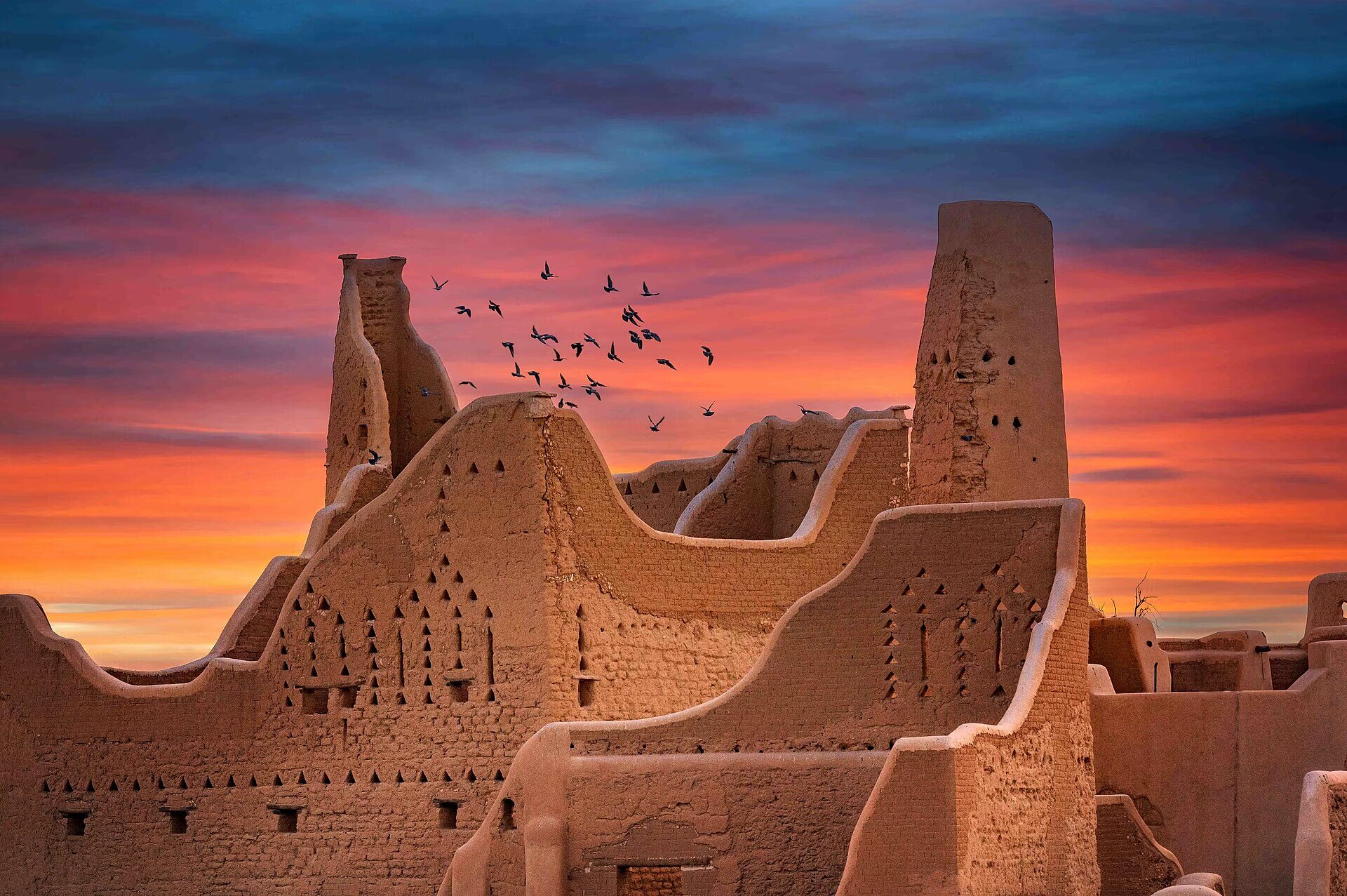
- Najdi architecture — The distinctive mud-brick building style of central Saudi Arabia, with triangular ventilation openings and thick walls. Best seen at Diriyah and in the heritage villages scattered across the Kingdom.
- Poetry — Considered the highest art form in Arab culture. The Nabati poetry tradition, rooted in Bedouin oral culture, remains immensely popular, with televised competitions drawing millions of viewers.
Understanding Saudi Traditional Architecture
Saudi Arabia’s traditional architecture reflects centuries of adaptation to the harsh desert environment. From the coral-stone merchant houses of Jeddah’s Al-Balad district to the fortress-like Najdi mud-brick palaces of Riyadh and Diriyah, each region developed its own distinctive building style. Visitors interested in architecture should not miss At-Turaif in Diriyah, the reconstructed village of Ushaiger north of Riyadh, and the stunning stone-built villages of the Asir highlands.
Practical Tips for Cultural Sensitivity
During prayer: If the call to prayer sounds while you are in a conversation, lower your voice and pause. If your Saudi companion excuses themselves to pray, wait graciously — they will return.
In mosques: Non-Muslims cannot enter the two Holy Mosques in Makkah and Madinah. Other mosques may welcome non-Muslim visitors outside prayer times — ask at the entrance. Women should cover their hair in mosques. Everyone removes shoes.
Pointing: Do not point directly with your index finger — it is considered rude. Saudis gesture with their chin or their entire open hand instead.
Criticism: Do not criticize the royal family, government, or Islam. Do not proselytize or distribute non-Islamic religious material.
Alcohol and drugs: Alcohol is completely banned — no importing, consuming, or possessing it anywhere in the Kingdom. Drug trafficking carries a mandatory death sentence. These laws apply equally to visitors.
Explore More Saudi Arabia Travel Guides
- Saudi Arabia Travel Guide 2026 — The complete guide to visiting the Kingdom
- Saudi Coffee Culture — The art and etiquette of Arabic coffee
- Saudi Arabia Dress Code Guide — What to wear as a visitor in 2026
- Saudi Heritage Villages — Discover the Kingdom’s preserved traditional settlements
- Saudi Art Scene — Contemporary art and galleries across the Kingdom
- Saudi Arabia Visa Guide — Every visa type explained