
Saudi Arabia’s built heritage spans more than two thousand years, from Nabataean tomb facades carved into sandstone cliffs to mirrored supertalls reshaping the Riyadh skyline. For travellers interested in exploring Saudi Arabia, architecture offers one of the most rewarding lenses through which to understand the Kingdom — each region developed its own building traditions shaped by climate, materials, trade routes, and faith. This guide covers every major architectural era and style you can visit today, from UNESCO-listed ancient sites to billion-dollar megaprojects still rising from the desert.
Best Time to Visit: October to March (cooler temperatures for outdoor heritage sites)
Getting There: International flights to Riyadh (RUH), Jeddah (JED), or Dammam (DMM); domestic flights and the Haramain High-Speed Railway connect regions
Visa Required: Yes — tourist e-visa available online
Budget: $80–$200/day depending on region and accommodation
Must-See: Hegra (Mada’in Saleh), At-Turaif Diriyah, Jeddah Al-Balad
Avoid: Visiting outdoor desert sites (Hegra, AlUla) in summer — temperatures exceed 45°C
Ancient and Pre-Islamic Architecture
Long before Islam, the Arabian Peninsula sat at the crossroads of ancient civilisations. The Nabataeans, Dadanites, and Lihyanites all left monumental architecture in what is now northwestern Saudi Arabia. These sites — concentrated around AlUla — represent some of the most impressive rock-cut structures anywhere in the ancient world.
Hegra (Mada’in Saleh) — Saudi Arabia’s First UNESCO World Heritage Site
Inscribed in 2008, Hegra was the southern capital of the Nabataean Kingdom and the largest conserved Nabataean site outside Petra in Jordan. The site contains 111 monumental tombs, 94 with elaborately decorated facades, dating from the 1st century BC to the 1st century AD. The tombs are carved directly into towering sandstone outcrops scattered across the desert plain.
The most iconic structure is Qasr al-Farid — the “Lonely Castle” — a single massive tomb carved into an isolated rock pillar standing approximately 22 metres high. Its lower section was never completed, giving visitors a rare glimpse into how Nabataean stonemasons worked from top to bottom.
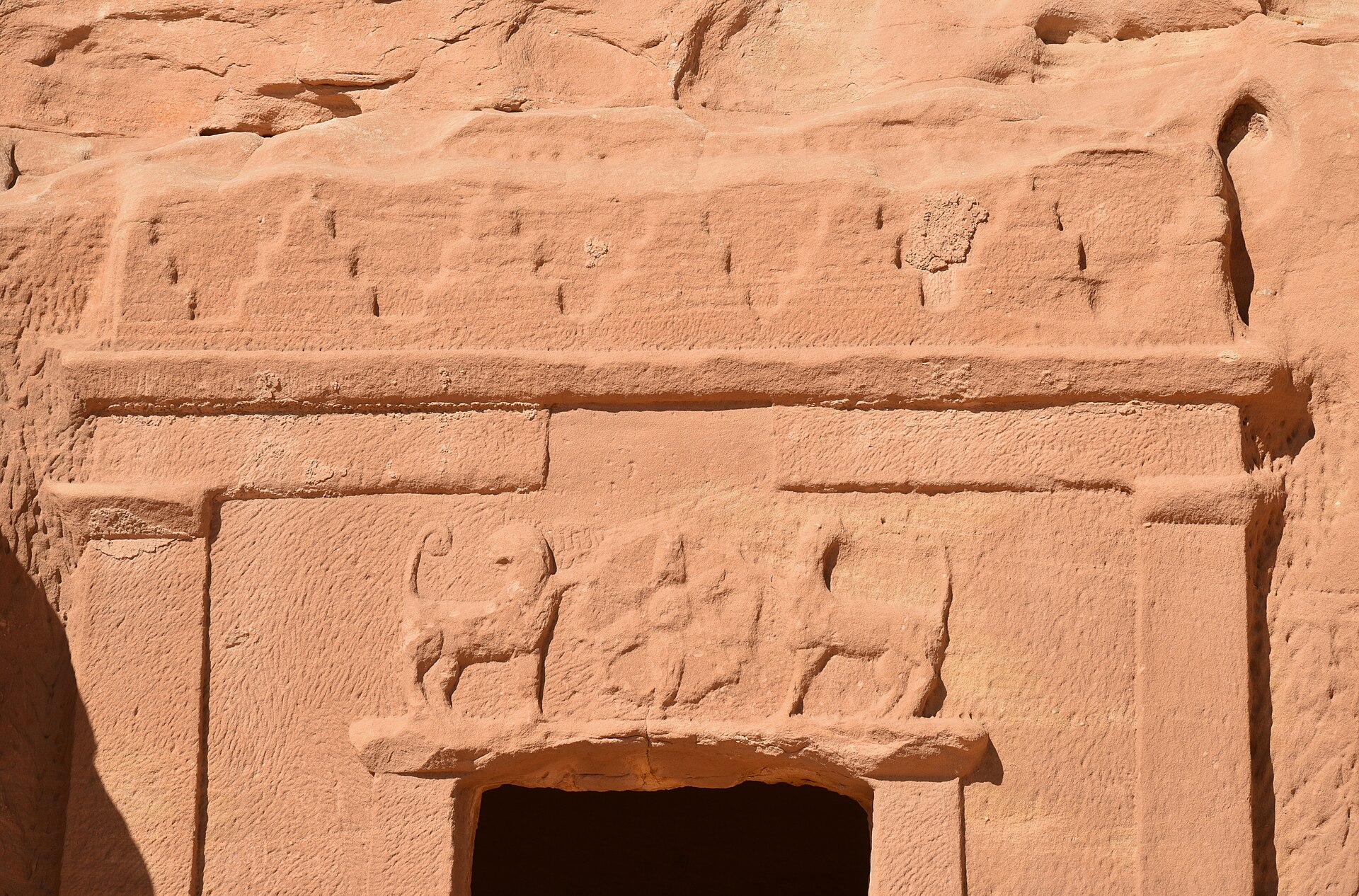
Visitor tip: Hegra is accessible only via organised tours departing from the South Gate. Coach tours start from SAR 95 (~$25), while premium private 4×4 tours offer more flexibility. Hop-On Hop-Off tours (SAR 150) run November to February. Self-driving is prohibited. Book in advance — daily visitor numbers are limited to protect the site.
Dadan and Jabal Ikmah — The Forgotten Kingdoms
Just north of AlUla’s old town, the archaeological site of Dadan preserves the capital of two successive kingdoms: the Dadanites (9th–5th century BCE) and the Lihyanites (5th–1st century BCE). Red sandstone cliffs here are punctuated with rock-cut tombs, including the famous lion tombs — burial chambers flanked by carved lion sculptures that symbolised divine protection.
Nearby Jabal Ikmah is an open-air “library” of pre-Arabic inscriptions in Dadanite, Lihyanite, Nabataean, and Minaic scripts — one of the densest concentrations of ancient rock inscriptions in the Arabian Peninsula. A new permanent exhibition, “Illuminating Discoveries — Uncovering the layers of Dadan’s History,” launched for the 2025–26 season. Over 100 archaeologists from Saudi and international institutions are currently working across six major excavation projects in the AlUla region.
Najdi Architecture — The Mud-Brick Heartland
Central Arabia’s Najd region developed a distinctive building tradition shaped by its harsh desert climate and the limited materials available: sun-dried mud-brick mixed with straw, with thick walls providing natural insulation against temperatures that swing from freezing winter nights to scorching summer days.
At-Turaif District, Diriyah — UNESCO World Heritage Site
Inscribed in 2010, At-Turaif is the original seat of the Al Saud dynasty and the birthplace of the First Saudi State (1744–1818). Perched on a bluff overlooking Wadi Hanifah on the northwestern outskirts of Riyadh, the citadel is the finest surviving example of Najdi architecture anywhere in the Arabian Peninsula.
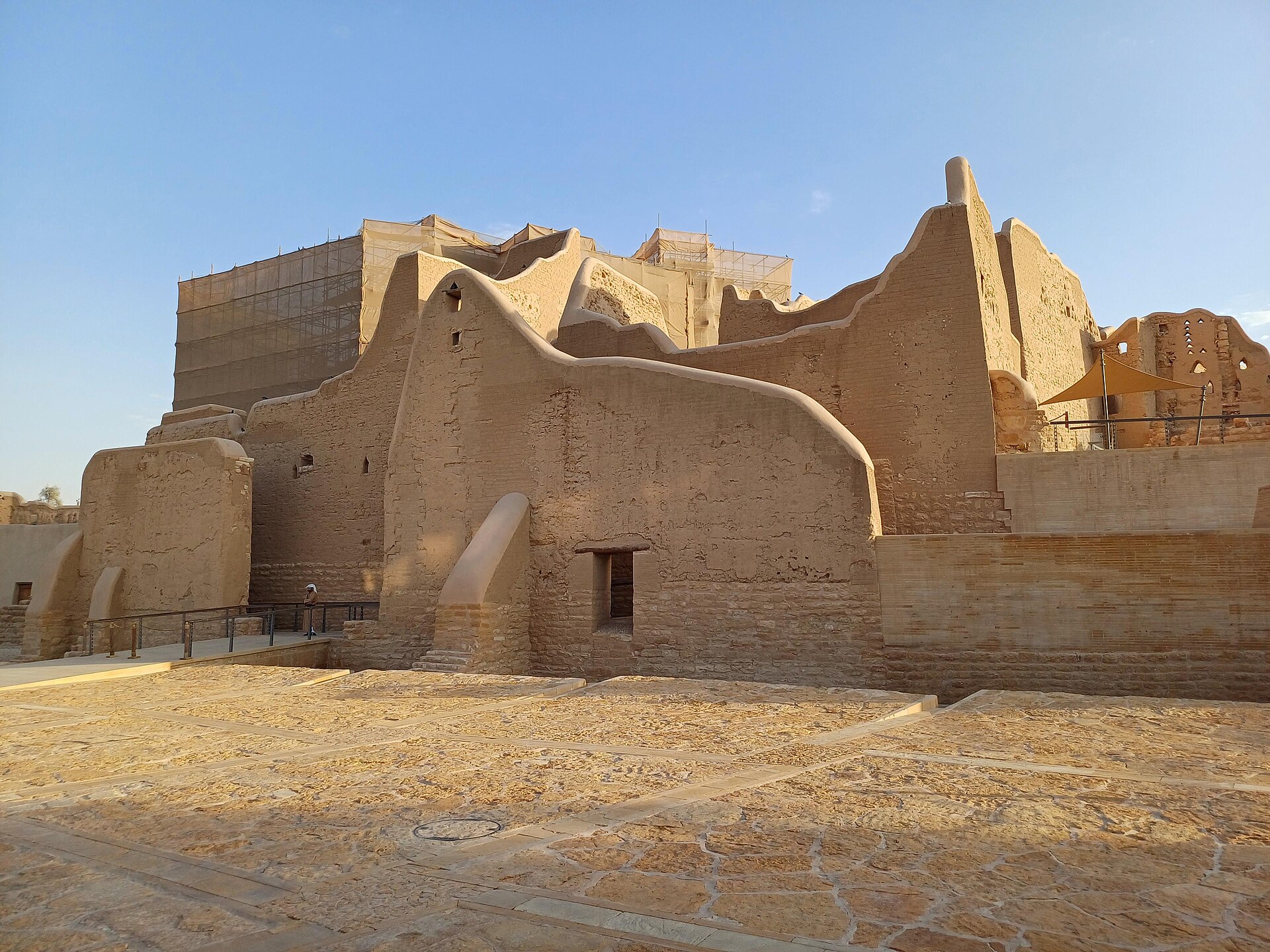
The complex includes palaces, mosques, and residential structures. The centrepiece is Salwa Palace, the royal residence of the Al Saud during the First Saudi State, now restored and housing exhibitions on the political and social life of the era.
Key Features of Najdi Building
Traditional Najdi homes share several architectural elements that visitors will notice throughout At-Turaif and in restored heritage villages across central Saudi Arabia:
- Thick mud-brick walls — sun-dried adobe mixed with straw, providing thermal mass that keeps interiors cool by day and warm at night
- Central courtyards (housh) — the heart of family life, used for cooking, sleeping on warm nights, and socialising in privacy
- Wind towers — vertical structures capturing cool breezes and venting hot air for passive cooling, centuries before air conditioning
- Triangular openings (furjat) — decorative ventilation slots in upper walls
- Battlements (shurfat) — stepped crenellations along rooflines, both decorative and defensive
- Small high windows — placed for privacy and insulation, aligned with Islamic principles of domestic seclusion
- Saudi Arabia Travel Guide 2026 — The complete guide to visiting the Kingdom
- Understanding Saudi Arabian Culture — Essential cultural context for every visitor
- Saudi Arabia Winter Itinerary — The best places to visit from November to March
- Hajj 2026 Guide — Complete pilgrimage planning guide
- Saudi Arabia Hotels Guide — Where to stay across the Kingdom
- Saudi Arabia Visa Guide — Every visa type explained
Visiting At-Turaif: Open Saturday–Tuesday 9:00 AM–12:00 AM; Wednesday–Friday 9:00 AM–1:00 AM. Free entry until 5 PM, then SAR 50 for the evening experience. The adjacent Bujairi Terrace — opened in late 2022 with 20+ restaurants overlooking At-Turaif — has drawn over 3.6 million visitors combined. During Diriyah Season (November–March), the Hal Al-Qusoor exhibition transforms sections into an immersive audiovisual experience. Self-guided audio tours are available on mobile. Paid parking at Bujairi and Samhan (SAR 30 for 3 hours).
Hijazi Architecture — Coral Stone and Rawasheen
The Hejaz region along the Red Sea coast developed an entirely different architectural vocabulary, shaped by maritime trade, the pilgrim economy, and the hot, humid coastal climate. Nowhere is this more visible than in Jeddah’s historic core.
Historic Jeddah (Al-Balad) — UNESCO World Heritage Site
Inscribed in 2014 as “Historic Jeddah, the Gate to Makkah,” Al-Balad served as the primary arrival point for Muslim pilgrims travelling by sea since the 7th century, when Caliph Uthman ibn Affan designated it the official port of Makkah. The district contains over 650 historic buildings, 36 historical mosques, and 5 traditional souqs.
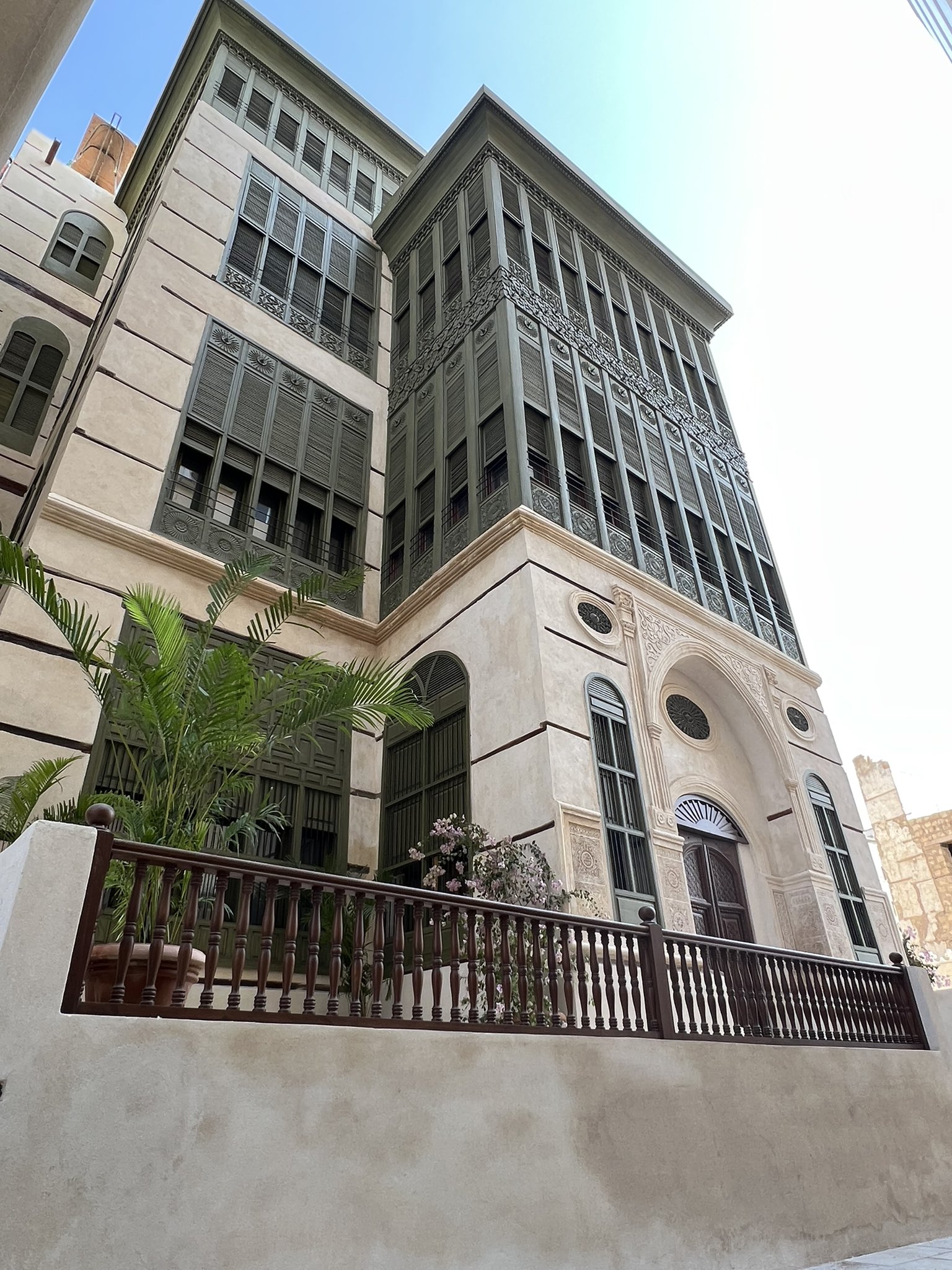
What makes Al-Balad’s architecture unique is the construction material: coral stone blocks extracted from the Red Sea. Multi-storey tower residences — some reaching six or seven floors — were built from these porous, lightweight blocks that breathe in humid conditions.
Rawasheen — Jeddah’s Signature Feature
The most recognisable element of Al-Balad’s skyline is the rawasheen — projecting wooden lattice bay windows that extend from the upper floors of tower houses. These intricately carved screens, also called mashrabiya, serve three purposes simultaneously: they filter harsh sunlight, channel sea breezes into the interior, and provide privacy for residents looking out onto narrow streets below. Built from imported hardwoods with joinery so precise that no nails were needed, the rawasheen represent a sophisticated architectural response to the Red Sea climate.
The finest surviving example is Nasseef House (Bayt Nasseef), built in 1881 for the Nasseef merchant family. King Abdulaziz stayed here when he entered Jeddah in 1925. It now operates as a museum and cultural centre open to visitors.
Practical note: Al-Balad is free to walk — it remains a living residential and commercial neighbourhood. Visit November to March for milder weather. Under Vision 2030, SAR 50 million has been allocated for initial repair of 56 ancient structures. The traditional souqs (particularly Souq Al-Alawi and Souq Al-Nada) remain active and are among the best places to experience old Jeddah’s atmosphere.
Asiri Architecture — Stone Towers and Painted Walls
The southwestern highlands of Asir Province produced Saudi Arabia’s most visually distinctive regional architecture. Terraced stone tower houses, some reaching eight storeys, cling to mountain slopes in villages that have survived largely unchanged for centuries. These structures were built for defence as much as habitation, with thick stone walls, narrow window slits, and elevated positions commanding views of the surrounding valleys.
Al Qatt Al Asiri — UNESCO Intangible Cultural Heritage
Inscribed in 2017, Al Qatt Al Asiri is a traditional female art form in which women of the Asir region decorate the interior walls of their homes — particularly guest reception rooms — with bold, symmetrical geometric designs. The term “Al-Qatt” refers to horizontal divisions structuring wall patterns, layered with triangles, rhombi, zigzags, and floral motifs in vivid colours. This art form has been practised and transmitted exclusively by women for generations, and UNESCO recognised both its social significance and its role in community identity.
Rijal Almaa Heritage Village
Approximately 50 kilometres west of Abha, Rijal Almaa is a 900-year-old village containing around 60 multi-storey stone buildings, some reaching eight floors. The structures are built from local stone, clay, and wood, with coloured wooden window shutters and interiors decorated with Al Qatt Al Asiri patterns. The village is on the Saudi tentative list for UNESCO World Heritage status.
The Rijal Almaa Heritage Museum, housed in Al Al-wan Palace, displays over 2,000 antiquities across 19 sections, including manuscripts, traditional tools, and weapons. Entrance is SAR 20 (~$5). The village is accessible via several routes from Abha, including through Sawda Center and the dramatic Aqabat Sama mountain pass.
Islamic Religious Architecture
Saudi Arabia is home to Islam’s two holiest mosques, both of which represent extraordinary feats of architectural expansion that have continued across 14 centuries. While the mosque interiors in Makkah and Medina are restricted to Muslims, the architectural and engineering achievements behind them are significant for anyone interested in sacred architecture. Visitors planning a pilgrimage should consult our Hajj 2026 guide for detailed practical information.
Masjid al-Haram — The Grand Mosque, Makkah
The Grand Mosque surrounding the Kaaba has undergone continuous expansion since Caliph Umar ibn al-Khattab built the first enclosing wall in 638 CE. The Umayyads added marble pillars imported from Syria and Egypt. The Abbasids introduced the first minarets. Ottoman-era expansions added colonnades and the distinctive multi-arched prayer halls.
The King Abdullah Third Expansion — the largest in the mosque’s history — officially concluded in March 2025 after 22 years of construction. It expanded the total mosque area from 414,000 to 1.56 million square metres, doubled the prayer area to 912,000 square metres, and raised capacity to over 2.5 million worshippers during peak seasons. The engineering challenge of expanding a continuously operating mosque around the Kaaba — without ever closing it to worshippers — is one of the most complex construction projects ever undertaken.
Al-Masjid an-Nabawi — The Prophet’s Mosque, Medina
Founded in 622 CE by the Prophet Muhammad, the Prophet’s Mosque has grown from its original 30.5 by 35.6 metre footprint through successive Umayyad, Abbasid, and Ottoman expansions. The current mosque features retractable domes that open to reveal the sky, marble-clad courtyards, and intricate calligraphy. Its capacity during peak seasons reaches 1.6 to 2 million worshippers.
Historic Mosques Across the Kingdom
Beyond the Two Holy Mosques, the Saudi Heritage Commission has financed the restoration of more than 30 historical mosques since 2018, preserving regional building traditions from Najdi mud-brick prayer halls to Hijazi coral stone mosques. Notable examples include the Al-Balad mosques of Jeddah (some dating to the Mamluk period) and restored mosques in the Eastern Province that reflect Gulf architectural traditions.
Modern Architecture — The Kingdom’s New Skyline
Since the early 2000s, Saudi Arabia has commissioned some of the world’s most ambitious contemporary buildings. The modern architectural story is concentrated in Riyadh, Jeddah, and the Eastern Province, with several projects by internationally renowned firms.
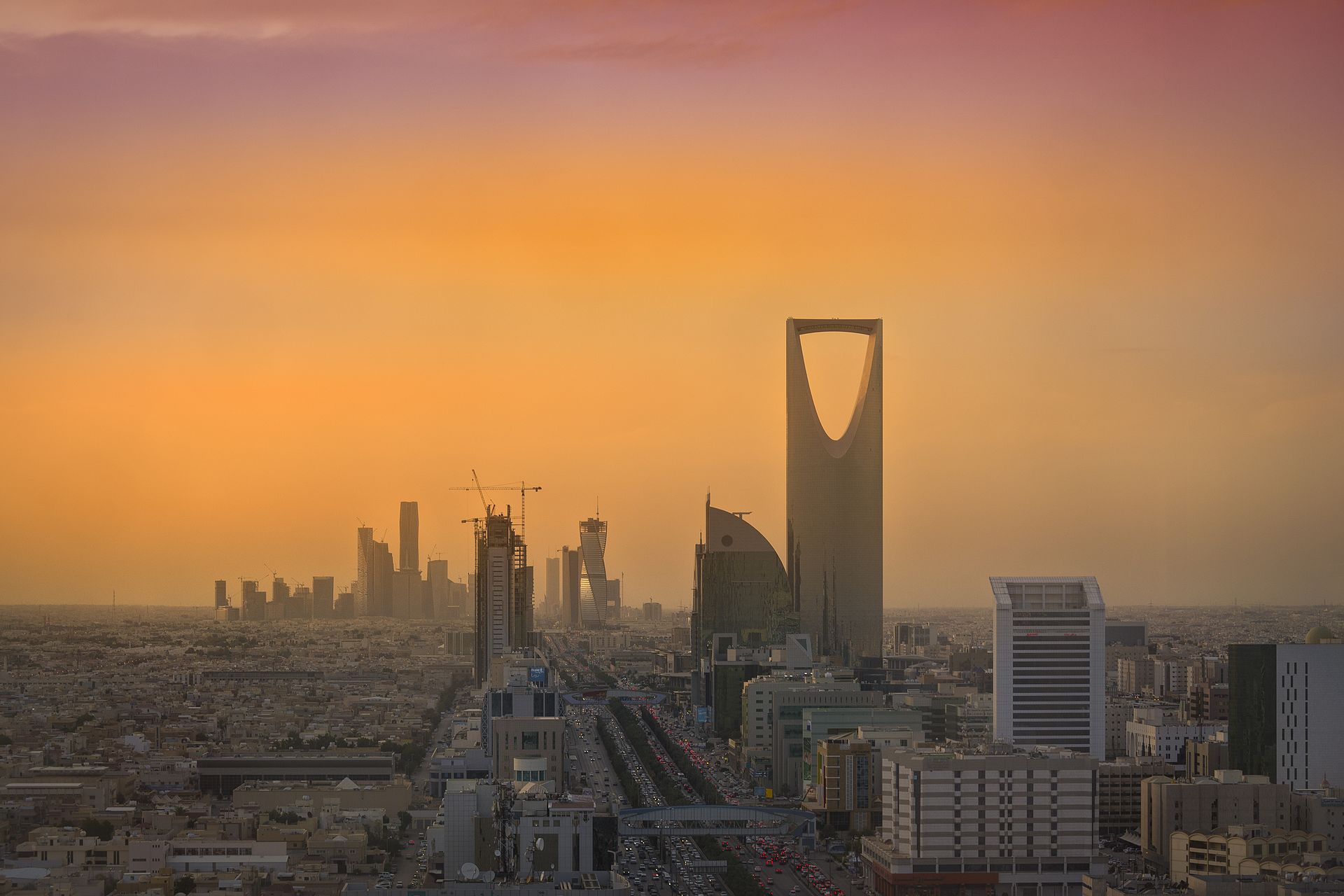
Kingdom Centre Tower, Riyadh
Completed in 2002, the Kingdom Centre remains Riyadh’s most recognisable landmark. Rising 302 metres across 99 storeys, it was designed by Ellerbe Becket in joint venture with Omrania and Associates (Riyadh) after an international competition. The building’s defining feature is the inverted parabolic arch at its summit, housing the Sky Bridge — a 65-metre-long observation deck at approximately 300 metres altitude that offers panoramic views across the capital. The tower also contains the King Abdullah Mosque, one of the world’s most elevated mosques.
King Abdullah Financial District (KAFD), Riyadh
KAFD is now operational as Riyadh’s premier business hub, hosting over 140 office tenants including 75+ multinational regional headquarters. In July 2025, it received a Guinness World Record for the world’s largest continuous pedestrian skyway network.
The district’s architectural highlight is the KAFD Metro Station, designed by Zaha Hadid Architects and opened on 1 December 2024 with the launch of the Riyadh Metro. Its undulating lattice facade of ultra-high-performance concrete panels features geometric perforations that reduce solar heat gain — a contemporary reinterpretation of traditional Arabian mashrabiya screens. The station is LEED Gold certified and has handled over 3 million passengers since inauguration.
King Abdulaziz Center for World Culture (Ithra), Dhahran
Designed by Norwegian firm Snohetta and opened in 2018, Ithra is an 80,000-square-metre cultural complex built by Saudi Aramco in Dhahran. Its form — four interlocking “pebbles” partially embedded in bedrock — was inspired by the internal structure of oil-bearing rock, symbolising the transformation of natural resources into knowledge. One section descends deep into the earth (representing the past) while another stretches skyward (the future).
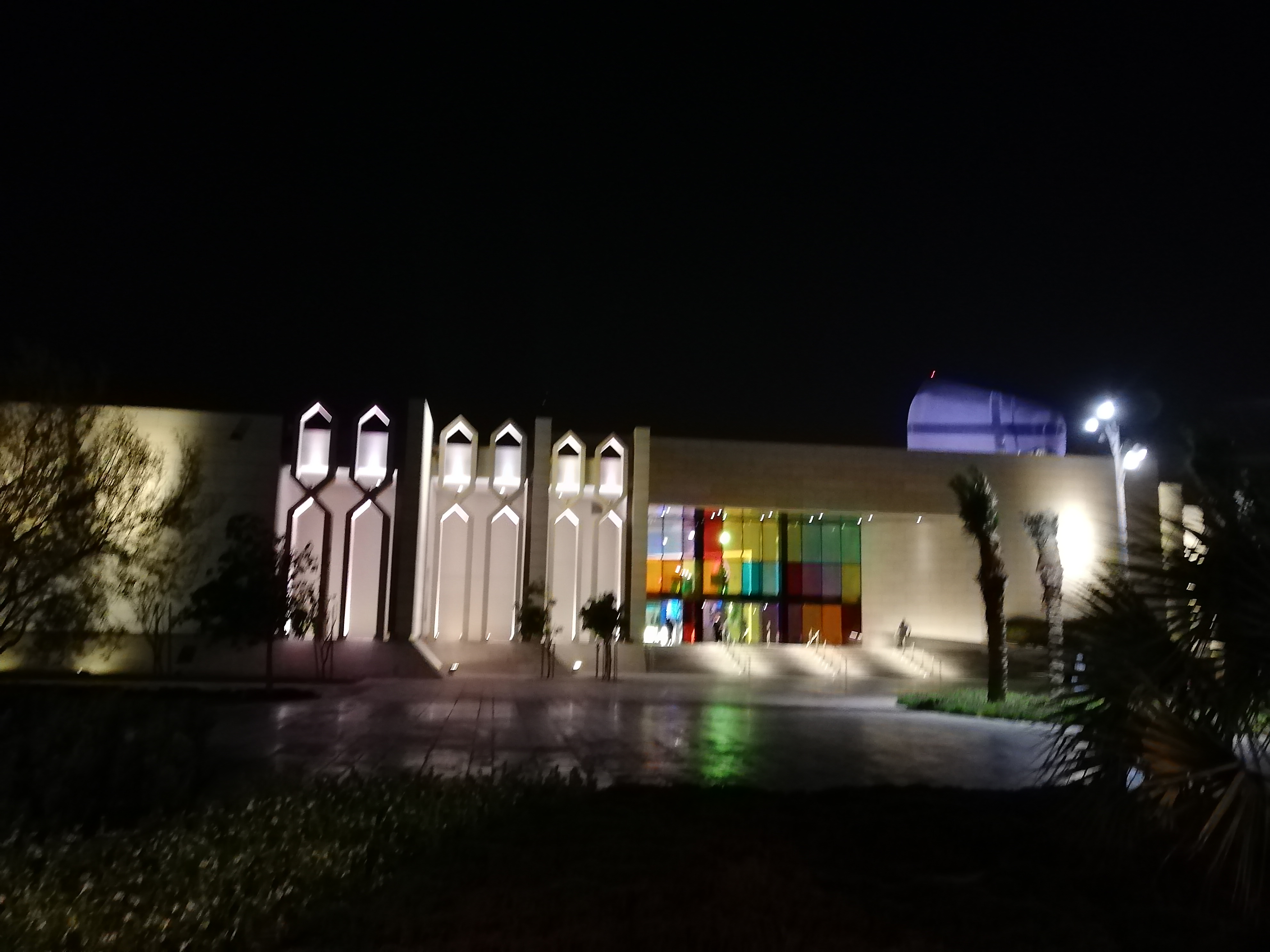
Ithra houses an auditorium, cinema, library with over 315,000 books, exhibition hall, museum, and archive. Time magazine listed it among the world’s top 100 places to visit, and it attracted over 1 million visitors in 2019. Open to the public — one of the most rewarding cultural stops in the Eastern Province.
KAPSARC — Zaha Hadid in the Desert
The King Abdullah Petroleum Studies and Research Centre (KAPSARC), also in Riyadh, is another Zaha Hadid Architects project. Its hexagonal crystalline honeycomb forms — inspired by the cellular geometry found in nature — earned it LEED Platinum certification. While not a public tourist attraction, it represents one of the most striking examples of parametric architecture in the Middle East.
Vision 2030 Megaprojects — What’s Actually Being Built
Saudi Arabia’s Vision 2030 programme launched some of the most ambitious architectural projects in history. As of April 2026, some are progressing rapidly while others have been scaled back. Here is the honest status of each for travellers planning ahead.
Jeddah Tower — The World’s First Kilometre-Tall Building
Designed by Adrian Smith + Gordon Gill Architecture, Jeddah Tower aims to reach 1,008 metres across 157+ floors — the first building ever to break the one-kilometre barrier. Construction restarted in January 2025 after a multi-year pause and has since passed 100 floors and 400 metres. The tower is currently adding approximately one floor every three to four days and is on track to top out at 135 floors by end of 2026, with full completion expected in 2028. Located in the Jeddah Economic City development north of Jeddah.
Diriyah Gate — A $63 Billion Heritage Giga-Project
The Diriyah Gate Development is transforming the area around At-Turaif into a massive cultural, hospitality, and entertainment district. With over $27 billion in contracts awarded since 2024, it is one of Saudi Arabia’s most actively progressing megaprojects. At-Turaif and Bujairi Terrace are already operational. Upcoming additions include The Langham hotel (2026), a 20,000-seat Diriyah Arena, Saudi Arabia’s first Royal Diriyah Opera House, and a Time Out Market in Diriyah Square (2027). Broader completion is targeted for late 2027.
NEOM and The Line — Scaled Back but Still Developing
The Line — originally envisioned as a 170-kilometre linear city, 200 metres wide and 500 metres tall — had its construction suspended in September 2025 by the PIF. At that point, approximately 2.4 kilometres of foundation work (1.4% of the planned length) had been completed. The project has been dramatically scaled back to an initial phase of roughly 2 kilometres, with the full 170-kilometre vision deferred to a multi-decade timeline with 2045 now cited as possible completion. NEOM’s Sindalah luxury island resort near Tabuk continues development separately.
New Murabba and The Mukaab — On Hold
The planned Mukaab — a 400-metre cube that would be the world’s largest building by volume — had its construction suspended in January 2026 amid a broader Saudi review of Vision 2030 megaprojects. Site groundwork was 86% complete before the pause. Completion has been pushed from 2030 to 2040, though the surrounding New Murabba district real estate development is expected to continue.
KAUST — An Academic Architectural Landmark
The King Abdullah University of Science and Technology (KAUST) campus near Thuwal, 50 miles north of Jeddah, was designed by HOK and covers 6.5 million square feet across 26 buildings. Its monumental roof system draws on Bedouin tent architecture, and solar-powered wind towers provide passive cooling. At the time of its certification, KAUST was the world’s largest LEED Platinum project. The campus sits along the Red Sea coast and, while primarily a research university, hosts occasional public events and conferences.
Architecture by Region — Where to See What
| Region | Architectural Style | Key Sites | UNESCO Status |
|---|---|---|---|
| AlUla (Northwest) | Nabataean rock-cut, Dadanite/Lihyanite | Hegra, Dadan, Jabal Ikmah | World Heritage (2008) |
| Riyadh / Diriyah | Najdi mud-brick + modern towers | At-Turaif, Kingdom Centre, KAFD | World Heritage (2010) |
| Jeddah | Hijazi coral stone, rawasheen | Al-Balad, Nasseef House | World Heritage (2014) |
| Asir (Southwest) | Stone towers, Al Qatt painted walls | Rijal Almaa, Abha villages | Intangible Heritage (2017) |
| Dhahran (East) | Contemporary cultural | Ithra, Aramco campus | — |
| Makkah / Medina | Islamic sacred, mega-expansion | Grand Mosque, Prophet’s Mosque | — |
| NEOM / Tabuk | Futuristic megaproject | The Line (under construction), Sindalah | — |
Practical Tips for Architecture Enthusiasts
Planning an Architecture-Focused Itinerary
A comprehensive Saudi architecture tour requires at least 10–14 days. A suggested route: fly into Riyadh (At-Turaif, KAFD, Kingdom Centre — 2 days), drive or fly to AlUla (Hegra, Dadan — 3 days), fly to Jeddah (Al-Balad, Jeddah Tower site — 2 days), continue to Abha (Rijal Almaa, Asiri villages — 2 days), and finish in Dhahran (Ithra — 1 day). Budget travellers can trim this to a week by focusing on the three UNESCO sites: Hegra, At-Turaif, and Al-Balad.
For help with budgeting your trip, our cost breakdown covers accommodation, transport, and daily expenses across each region. You’ll also want to review the Saudi dress code guide before visiting heritage and religious sites, where modest clothing is expected.
Best Time to Visit
October to March is ideal for all outdoor heritage sites. AlUla and Hegra are best visited November to February, when daytime temperatures hover between 15°C and 28°C. Jeddah’s Al-Balad is walkable year-round but most pleasant in winter. Riyadh’s modern architecture can be visited any time. For those combining architecture with a winter itinerary, the cooler months align perfectly with the AlUla and Diriyah cultural seasons.
Guided Tours vs Independent Travel
Hegra requires an organised tour (no independent access). At-Turaif and Al-Balad are self-guided. For modern architecture in Riyadh, the KAFD district is freely accessible. Consider hiring a local guide in Al-Balad — the narrow streets and unlabelled buildings are far more rewarding with someone who knows the merchant family histories behind each rawasheen facade.
Photography
All three UNESCO sites are excellent for photography. Hegra is best photographed in the golden hour — the sandstone glows amber at sunrise and sunset. At-Turaif is dramatic at night during the illuminated evening experience. Al-Balad’s rawasheen catch the best light in the late afternoon, when shadows deepen the geometric patterns of the lattice screens.
Combining with Cultural Experiences
Architecture visits pair well with Saudi Arabia’s broader cultural heritage. In AlUla, the Tantora festival season (December–March) brings music, art installations, and dining experiences set against the ancient landscape. In Diriyah, the Bujairi Terrace restaurants offer Najdi cuisine with direct views of At-Turaif. Jeddah’s Al-Balad souqs are living cultural spaces where traditional crafts, textiles, and perfumes are still traded daily. Visitors interested in the Saudi royal family’s history will find At-Turaif particularly meaningful as the dynasty’s founding capital.