
RIYADH — Al-Arabiya, the Saudi state-aligned broadcaster majority-owned by the Public Investment Fund, on May 22 published what it described as the “final draft” of a US-Iran peace agreement mediated by Pakistan, claiming an announcement could come “within hours.” Neither Washington nor Tehran confirmed the document.
The eight-point text contains ceasefire terms, freedom-of-navigation guarantees for the Strait of Hormuz, and a joint monitoring mechanism. It contains no enrichment moratorium, no provision for Iran’s stockpile of highly enriched uranium, no ballistic missile restrictions, and no sanctions architecture — every nuclear term the United States has publicly demanded is absent, deferred to a seven-day negotiation window the draft provides no mechanism to enforce. That Saudi state media chose to publish this document, and to frame it as final, is itself a diplomatic act by a government that has been structurally excluded from the negotiations it most needs to shape.
Table of Contents
- What Does the Al-Arabiya Draft Say — and What Does It Leave Out?
- Why Did Saudi State Media Publish an Unconfirmed Draft?
- Al-Arabiya’s Record of Strategic Disclosures
- The Exclusion Saudi Arabia Cannot Solve
- Pakistan Carries the Message While Bound to Riyadh by Treaty
- Where US-Iran Negotiations Actually Stand
- Background
- Frequently Asked Questions
What Does the Al-Arabiya Draft Say — and What Does It Leave Out?
The document published by Al-Arabiya on May 22 contains eight elements: an immediate, comprehensive, unconditional ceasefire across land, sea, and air; a mutual commitment not to target military, civilian, or economic infrastructure; an end to media hostilities; a guarantee of freedom of navigation in the Arabian Gulf, Strait of Hormuz, and Gulf of Oman; a commitment to sovereignty and non-interference; a joint monitoring mechanism; negotiations on outstanding issues within seven days of activation; and gradual US sanctions lifting contingent on Iranian compliance (Al-Arabiya English, corroborated by i24 News, The Week India, and NewSX, May 22, 2026).
The omissions define the document more than its contents. The Axios 14-point MOU framework reported on May 6 included a 12-to-15-year enrichment moratorium — a compromise between Iran’s five-year offer and Washington’s 20-year demand — post-moratorium enrichment capped at 3.67 percent, removal of Iran’s HEU stockpile from its territory, and a clause allowing moratorium extension upon violation. None of these appear in the Al-Arabiya text.
The absence is not editorial abbreviation. Iran’s Supreme Leader Khamenei on May 21 issued a directive that Iran’s stockpile of uranium enriched to 60 percent purity must remain inside Iranian territory (Reuters, Tribune India, May 21, 2026). Trump told Il Sole 24 Ore on May 22: “We will have [the enriched uranium]. We don’t need it, we don’t want it and we will probably destroy it.” The HEU question — who holds the material, and under what conditions — is the single issue both sides have identified as the primary obstacle. A “final draft” that omits it describes a ceasefire, not a nuclear settlement.
An unnamed Pakistani source, cited across multiple outlets including Al-Arabiya itself, acknowledged the gap: “Contacts continue to narrow the gap on the uranium and Strait of Hormuz issues… the critical issue in the negotiations has been, and remains, how to handle highly enriched uranium.”
The Middle East briefing 3,000+ readers start their day with.
One email. Every weekday morning. Free.
Why Did Saudi State Media Publish an Unconfirmed Draft?
Al-Arabiya is not an independent news organization in the conventional sense. MBC Group, its parent company, is 54 percent controlled by the Public Investment Fund, which reports directly to Crown Prince Mohammed bin Salman. The network relocated its studios from Dubai to Riyadh in 2024. Its editorial decisions on matters of Saudi foreign policy carry state-level weight.
The Times of Israel was the only international outlet to explicitly note that Al-Arabiya had published a “not-yet-approved ‘final draft’” of the deal — framing the publication as premature at minimum, politically motivated at maximum (Times of Israel, May 22, 2026).
Three readings of the editorial decision are available, and they are not mutually exclusive.
Signaling Approval
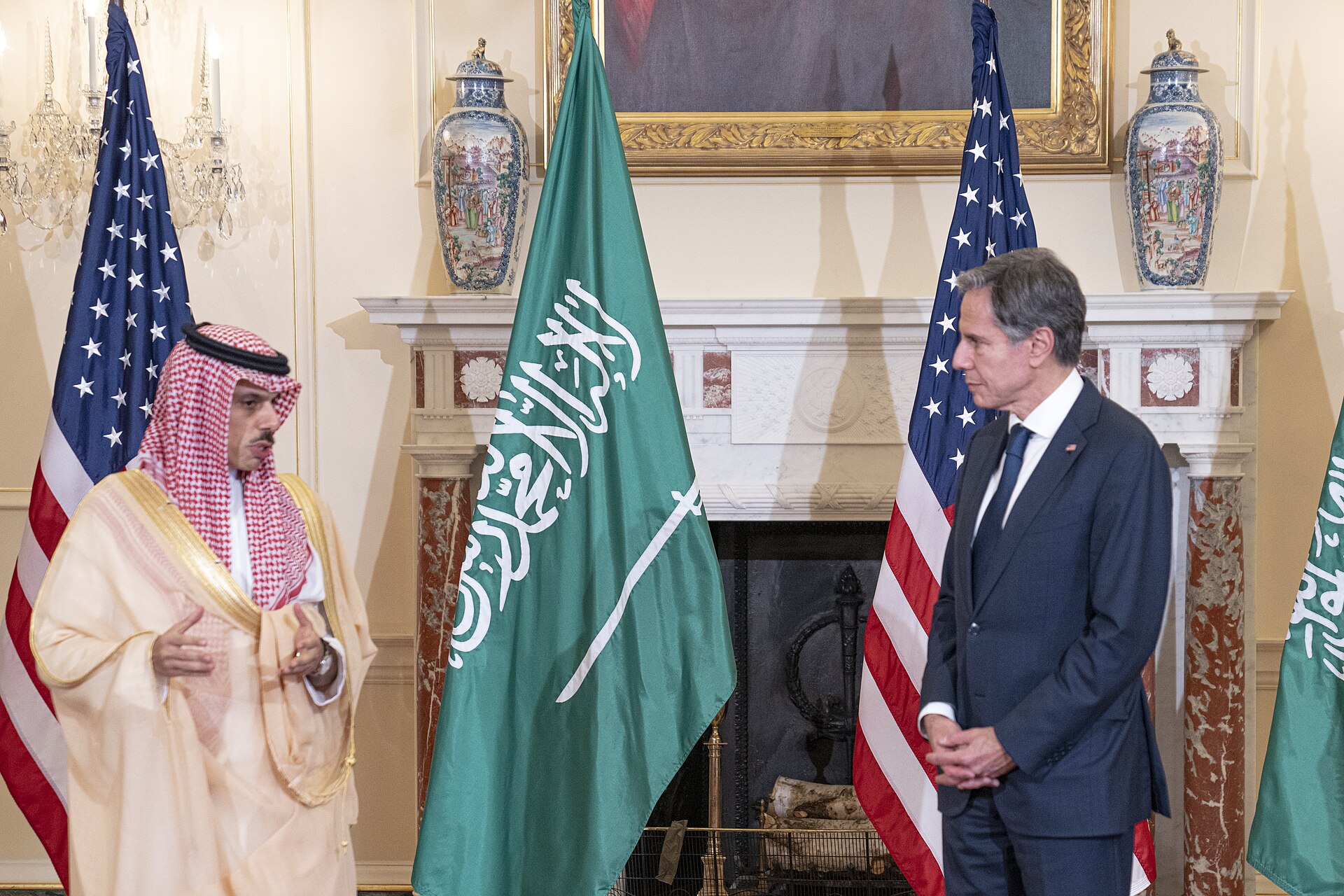
Saudi Arabia cannot publicly champion a US-Iran deal that excludes it from the negotiating table, but it can signal through state media that it finds the ceasefire terms acceptable. Saudi Foreign Minister Prince Faisal bin Farhan on May 20 expressed “high appreciation” for Trump’s decision to “give diplomacy a chance” and specifically cited the restoration of Hormuz freedom of navigation to pre-February 28 conditions. Publishing a draft that centers navigation guarantees aligns Al-Arabiya’s editorial frame with bin Farhan’s diplomatic language — separated by 48 hours.
Pressure-Testing Credibility
By publishing the text and claiming an imminent announcement, Al-Arabiya forced Washington and Tehran into a binary: confirm the draft or distance themselves from it. Neither did. Rubio, at a NATO foreign ministers meeting in Sweden the same day, offered only that there had been “some slight progress” and added: “I don’t want to be overly optimistic” (Washington Post, Bloomberg, CNBC, May 22, 2026). Iran’s FM spokesman Esmaeil Baghaei said Tehran was reviewing Washington’s latest proposal “with seriousness and good faith” while maintaining “strong and logical suspicion” toward US conduct (Tasnim, Iran International, May 22, 2026). The distance between “within hours” and these calibrated responses is itself information.
Pre-empting to Insert
Saudi Arabia is formally listed among the mediating parties — alongside Pakistan, Qatar, Egypt, and Turkey — according to Axios reporting on May 22. But mediating is not negotiating. The Carnegie Endowment’s Andrew Leber and Sam Worby assessed in April: “The GCC has no seat at the table, despite its entreaties, for negotiations that will shape the bloc’s economic and security environment for years to come” (Carnegie Middle East Program, April 16, 2026). Publishing the text before either principal confirms it places Riyadh — through its media apparatus — inside a process its diplomats cannot enter.
Al-Arabiya’s Record of Strategic Disclosures
The May 22 publication is not Al-Arabiya’s first intervention in a sensitive diplomatic sequence.
On March 24, 2026, Al-Arabiya exclusively reported that Iranian Foreign Minister Abbas Araghchi had “secretly informed” US Envoy Steve Witkoff of Supreme Leader Khamenei’s approval to negotiate — citing Israeli newspaper Yedioth Ahronoth. The report surfaced backchannel intelligence before either Washington or Tehran acknowledged the contact (Al-Arabiya English, March 24, 2026).
In January 2020, the network published what it called “leaked documents” suggesting Iraq was helping Iran evade US sanctions — a claim that served Saudi strategic interests in undermining Iran-Iraq economic ties, as MEMRI analysis documented at the time.
The May 22 draft was itself Al-Arabiya’s second attempt in 24 hours to frame deal finalization. The network had published a “deal reached” report around May 21, which it subsequently retracted, condemning Iranian media for “fabricated reports” attributed to the channel. Within a day, it published the purported document — escalating from claiming a deal was done to releasing the text.
Saudi Arabia’s airspace denial for US offensive operations from Prince Sultan Air Base was also first disclosed through Al-Arabiya, before any formal Saudi government communiqué. The pattern is consistent: the network functions as a disclosure mechanism for positions Riyadh has not yet officially adopted.
The Exclusion Saudi Arabia Cannot Solve
The question of why Saudi state media would publish an unconfirmed draft is inseparable from the question of why Saudi Arabia has no direct role in the talks it reports on.
Eric Alter, a nonresident senior fellow at the Atlantic Council, wrote on May 7 that GCC states “have been largely sidelined from US-Iran negotiations, despite being directly affected by any outcome.” Any deal, he argued, “must involve GCC participation and establish a framework in which states that are economically dependent on the waterway help monitor and enforce the deal’s terms” (Atlantic Council, May 7, 2026).
The Arab Center in Washington assessed on May 21 that “neither outcome is fully congenial to the Saudi leadership, and neither lies within its power to determine” (Arab Center DC, May 21, 2026).
This exclusion has institutional memory. During the 2015 JCPOA negotiations, Riyadh demanded direct involvement and complained publicly when it was denied. The current iteration is structurally worse: Saudi Arabia co-sponsored a UN Security Council resolution on Hormuz freedom of navigation that Russia and China vetoed — the same two permanent members whose commercial fleets are exempt from the IRGC’s toll system under the PGSA framework established May 5.
Saudi Arabia is listed as a mediating party. It pays Pakistan — $5 billion alongside Qatar — for military and mediation services. It hosts the mediator’s forces under a bilateral defense treaty. But it does not sit across from Iran or the United States when enrichment percentages and HEU stockpiles are discussed.
Pakistan Carries the Message While Bound to Riyadh by Treaty
Pakistan’s army chief Field Marshal Asim Munir departed for Tehran on May 22 carrying what Axios described as a “letter of intent” framework combining a war-ending agreement and principles for a 30-day nuclear negotiation window. The trip was subsequently reported as called off or postponed (Axios, May 22, 2026; The Week India, May 22, 2026).
Ali Gholhaki, an Iranian hardline journalist, attributed the postponement to a fundamental disagreement: “The US insists that the nuclear debate … be negotiated, and its file closed. But Iran considers negotiations on the nuclear issue to be conditional on a 30-day confidence-building process” (The Week India, May 22, 2026).
Pakistan’s mediator role operates under a structural constraint neither Washington nor Tehran publicly acknowledges. The Saudi-Pakistan Strategic and Military Defense Alliance, signed September 17, 2025 at Al-Yamamah Palace, obliges Pakistan to deploy forces to Saudi Arabia upon request. A Pakistani official told the Financial Times: “The Saudi pact is becoming a problem for us” (Dropsite News, April 14, 2026, citing FT).
The Al-Arabiya draft’s eight elements — ceasefire, navigation guarantees, sovereignty, monitoring — track closely with the priorities bin Farhan outlined on May 20. The text passed through a Pakistani channel that is contractually bound to the government whose foreign minister’s language it echoes.
Where US-Iran Negotiations Actually Stand
The gap between Al-Arabiya’s “within hours” and the positions both sides articulated on May 22 is wide.
Rubio, at the NATO meeting in Sweden, said there had been “some slight progress” but cautioned: “I don’t want to exaggerate it, but there’s been a little bit of movement, and that’s good.” He dismissed the IRGC’s Hormuz toll system outright: “No one is in favor of a tolling system, it can’t happen, it would be unacceptable and it would make a diplomatic deal unfeasible. It’s completely illegal” (The National, Times of Israel, Arab News, May 21-22, 2026). The same day, Iran published a formal PGSA jurisdiction map asserting authority over UAE sovereign waters — the clearest demonstration that the toll regime is hardening into permanent territorial claims even as Rubio called it a dealbreaker.
Trump, in a separate interview with Il Sole 24 Ore on May 22, reiterated that Washington would take possession of Iran’s enriched uranium — a position Khamenei’s May 21 directive explicitly rejected. “We’re going to give this one shot. I’m in no hurry,” Trump added.
Iran’s Baghaei confirmed that message exchange continued through Pakistan and that Tehran was reviewing Washington’s latest proposal, but his framing centered on ending the war “on all fronts, including Lebanon,” securing frozen Iranian assets, and halting “harassing actions” and “maritime piracy” against Iranian shipping (Tasnim, May 22, 2026). These demands do not appear in the Al-Arabiya draft.
Fadahossein Maleki, a member of Iran’s Parliament National Security Committee, described negotiators as reviewing a “general framework text and confidence-building measures” — not a final draft (Fox News Live, May 21, 2026). A senior Iranian source told Reuters on May 21 that gaps had “narrowed” but no deal had been reached.
PressTV and Tasnim, Iran’s primary English-language state outlets, produced no endorsement of the Al-Arabiya framing. Iranian officials denied to Al Jazeera that a deal had been concluded. Arab News, a Saudi-owned outlet, was the only major publication to republish the report without qualification.
Background
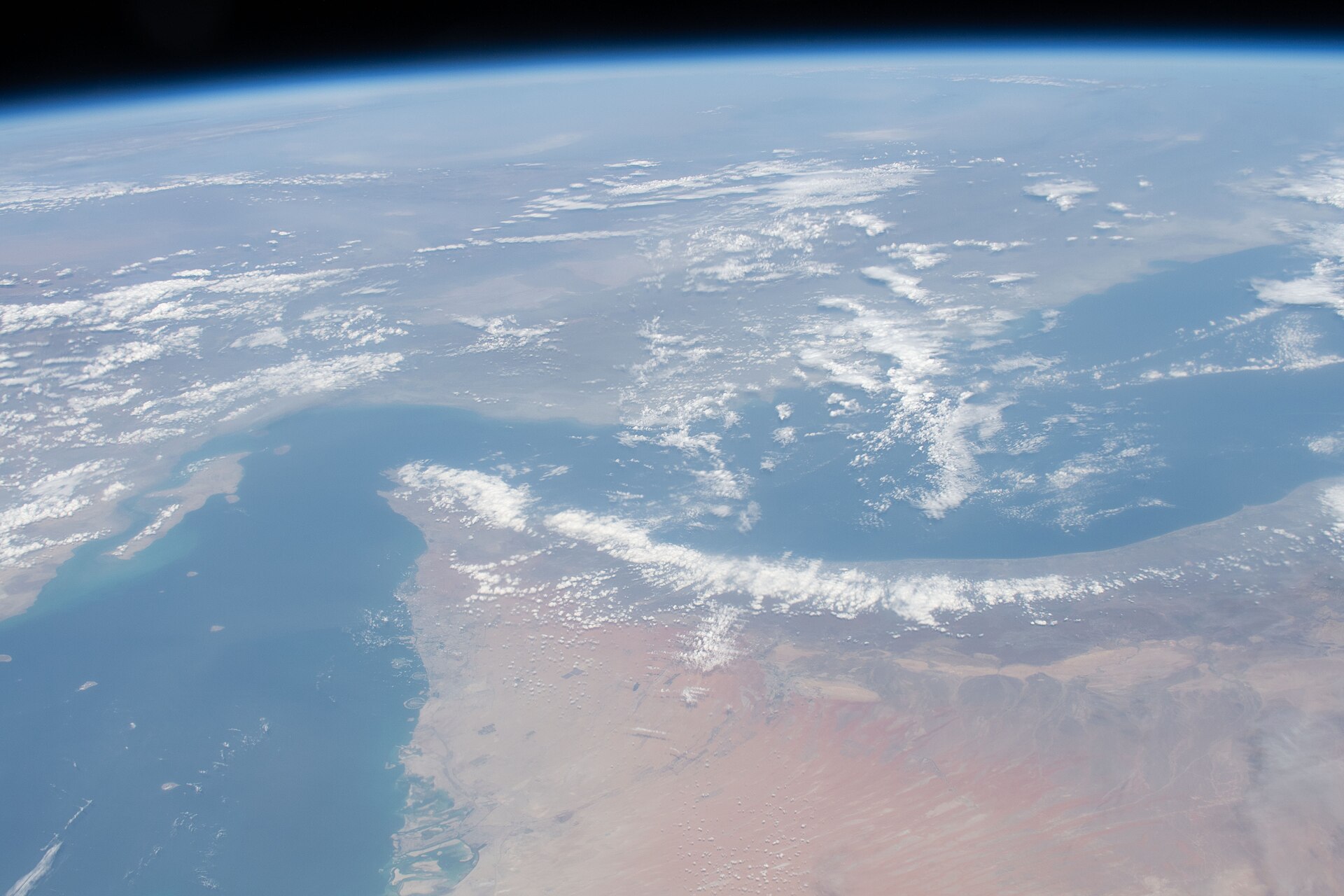
The US-Iran conflict is approximately 84 days old. The ceasefire environment remains fragile. Trump cancelled a planned military strike on May 19.
Saudi Arabia’s first-quarter fiscal deficit reached $33.5 billion — 194 percent of its full-year target — driven in part by Hormuz disruption that has suppressed an estimated 4 million barrels per day of Saudi export capacity. PIF cash reserves stand at approximately $15 billion, the lowest since 2020. Brent crude has traded between $105 and $111 per barrel, volatile on ceasefire speculation, with the EIA projecting a decline to $89 per barrel by Q4 2026 if Middle East production normalizes.
No official Saudi statement has acknowledged the Al-Arabiya document.
Frequently Asked Questions
What is the Al-Arabiya “final draft” of the US-Iran deal?
An eight-point document published by Al-Arabiya on May 22, 2026, describing ceasefire terms, freedom-of-navigation guarantees for the Strait of Hormuz, and a joint monitoring mechanism. It contains no nuclear provisions — no enrichment moratorium duration, no HEU stockpile disposition, no ballistic missile language, and no IRGC sanctions terms. All nuclear issues are deferred to a seven-day post-activation negotiation window. The document provides no enforcement mechanism for that seven-day timeline, nor does it specify consequences if the window closes without agreement — an omission that distinguishes it from the Axios MOU framework, which included a violation-triggered moratorium extension.
Who owns Al-Arabiya and why does ownership matter?
MBC Group, Al-Arabiya’s parent company, is 54 percent controlled by Saudi Arabia’s Public Investment Fund. PIF is chaired by Crown Prince Mohammed bin Salman and reports directly to him. The network relocated its primary operations from Dubai to Riyadh in 2024 as part of a broader media consolidation effort. This ownership structure means that editorial decisions on diplomatic and security matters — particularly the publication of leaked texts involving Saudi Arabia’s primary regional rival — carry implicit state endorsement in a way that commercially owned outlets do not.
Has either the United States or Iran confirmed the Al-Arabiya text?
Neither has. Secretary of State Rubio described only “slight progress” at a NATO foreign ministers meeting the same day and specifically called the IRGC’s toll system — which the draft’s freedom-of-navigation clause implicitly addresses — “completely illegal” and a dealbreaker. Iran’s Baghaei confirmed continued diplomatic exchange through Pakistan but framed Iran’s demands around frozen assets, Lebanese front cessation, and an end to “maritime piracy” — none of which the draft contains. Arab News, also Saudi-owned, was the only major outlet to republish the report without qualification, suggesting the framing circulated within the Saudi media ecosystem but not beyond it.
How does this text compare to the Axios 14-point MOU framework?
The Axios framework, reported May 6, included specific nuclear provisions: a 12-to-15-year enrichment moratorium splitting the difference between Iran’s five-year and Washington’s 20-year positions, post-moratorium enrichment capped at 3.67 percent, physical removal of HEU from Iranian territory, and a clause extending the moratorium upon violation. The Al-Arabiya text contains none of these provisions, focusing exclusively on ceasefire and navigation terms. Axios characterized the May 22 document Munir was carrying as a “letter of intent” — not a final draft — creating a direct tension between Axios’s framing and Al-Arabiya’s, and suggesting the two outlets may have been briefed by different parties with different objectives.
What is Pakistan’s dual role in the mediation?
Pakistan serves as the primary shuttle mediator between Washington and Tehran, with army chief Field Marshal Asim Munir dispatched to Tehran on May 22 carrying a framework combining a war-ending agreement and principles for a 30-day nuclear negotiation window. The trip was reportedly called off or postponed. Pakistan is simultaneously bound by the Strategic and Military Defense Alliance signed with Saudi Arabia on September 17, 2025, which obligates military deployment upon Saudi request. Saudi Arabia and Qatar together paid Pakistan $5 billion for its military and mediation role. Iran has not publicly challenged Pakistan’s neutrality, but Ali Gholhaki, an Iranian hardline journalist, framed the postponement as evidence that the mediator could not bridge the structural gap between Washington’s demand to close the nuclear file and Tehran’s insistence on a 30-day confidence-building process before nuclear discussions begin.