ANTALYA — The International Institute for Strategic Studies, the London-based defence think tank, published a formal analysis in May 2026 identifying Turkey, Saudi Arabia, Egypt, and Pakistan as a “fluid consultation and coordination mechanism” that has evolved beyond ad hoc crisis response into a recognisable security architecture — the first time a premier Western defence institution has treated the four-nation alignment as an emerging institutional reality rather than a string of bilateral courtesies. The assessment arrived as Saudi Foreign Minister Prince Faisal bin Farhan was publicly praising President Trump’s decision to cancel airstrikes against Iran, a posture of accommodation that sits in visible tension with a military-diplomatic grouping whose entire structural logic — three foreign minister meetings in thirty days, a mutual defence pact whose drafters briefly floated a nuclear umbrella clause, 8,000 Pakistani troops with Chinese missile systems already on Saudi soil — is built for the day that accommodation fails.
The IISS framing matters because it formalises what the four capitals have carefully avoided formalising themselves: a parallel security architecture outside both NATO and the US bilateral system, assembled by four states that each maintain separate — and sometimes contradictory — relationships with Washington, Beijing, Tehran, and Moscow. For Riyadh, running a $33.5 billion first-quarter deficit with its sovereign wealth fund at decade lows, the quad is the military hedge it cannot publicly name while its diplomatic posture toward Iran remains one of praise for American restraint and quiet prayer that restraint holds.
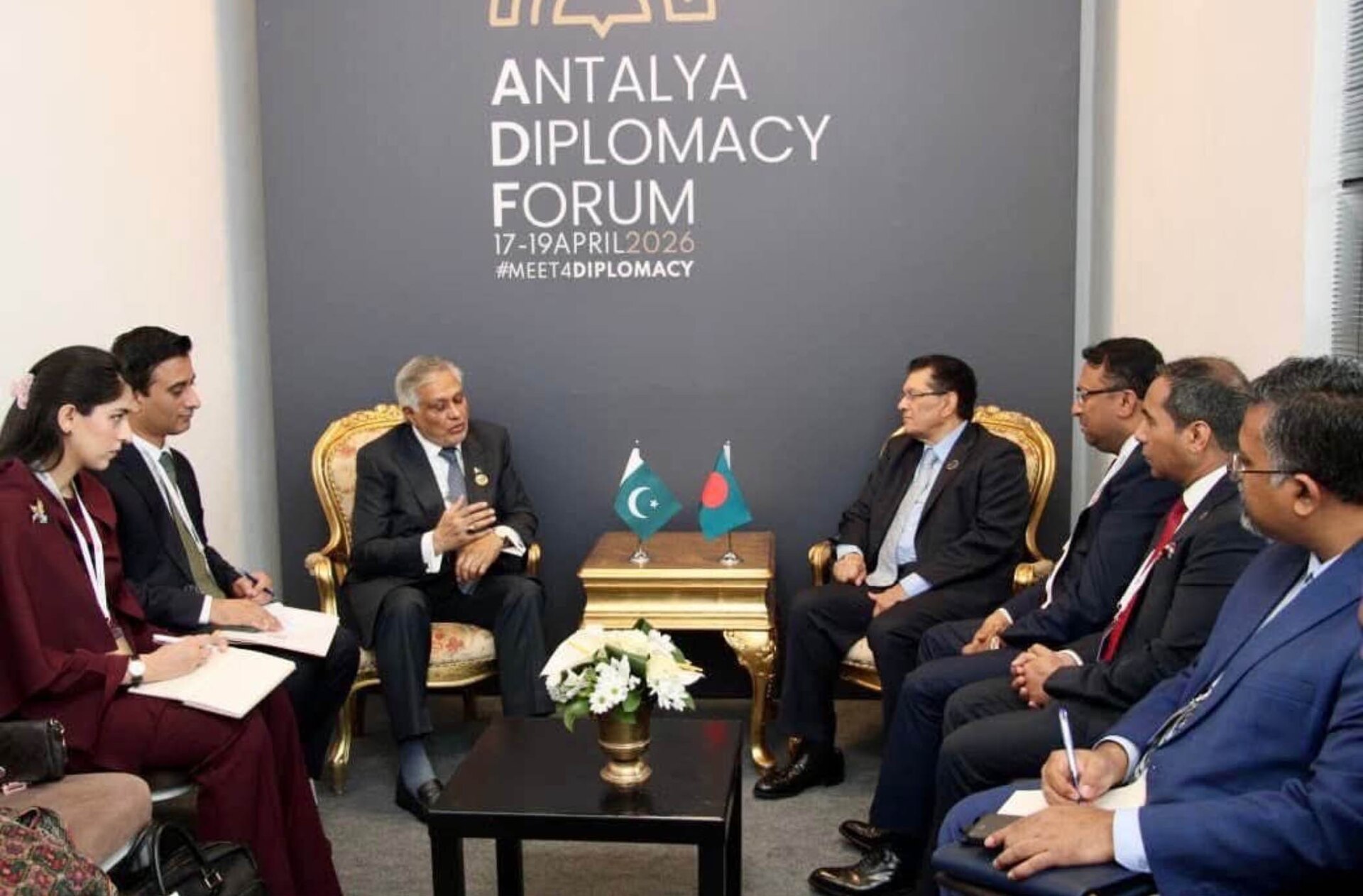
Table of Contents
Three Foreign Ministers, One Month, Zero Communiqués
The acceleration is the evidence. Turkey, Saudi Arabia, Egypt, and Pakistan’s foreign ministers met three times in thirty-one days — Riyadh on March 18, Islamabad on March 29, and Antalya on April 17 — a tempo of engagement with no parallel in any of the four states’ recent alliance histories, and one the IISS assessed as marking the shift from reactive coordination to institutionalised consultation. Each meeting was held on the sidelines of a broader event, a format that allowed the four governments to avoid the formal communiqués and joint declarations that would force them to define, publicly, what the grouping actually is.
That ambiguity is structural, not accidental. Turkey’s Foreign Minister Hakan Fidan chaired the Antalya session during the Diplomacy Forum on April 17-19, and Egypt’s Foreign Minister Badr Abdelatty told Middle East Eye on April 18 that the four nations were “currently hammering out a security deal designed to end the current conflict and prevent it from breaking out again” — the most explicit public confirmation of the quad’s operational ambitions that any participating official has offered. The choice of “security deal” rather than “peace framework” or “diplomatic initiative” carried its own signal: this is a military-diplomatic product, not a mediation exercise.
The IISS characterised Ankara’s preferred model as “a defence cooperation framework that stops short of mutual defence commitments while enabling arms co-production, intelligence sharing, joint training, and coordinated diplomatic positions.” That formulation — cooperation without commitment, coordination without treaty — reflects Turkey’s simultaneous need to maintain its NATO membership, its defence-industrial partnerships with Riyadh and Islamabad, and the calibrated relationship with Moscow that a formal anti-Iran alliance would immediately jeopardise. Chatham House, writing in January 2026, described the approach as “opportunistic hedging — creating redundancy around existing NATO structures rather than replacing them.”
But the operating rhythm tells a different story than the institutional language. Three ministerial-level consultations in a single month is not hedging — it is the tempo of states coordinating a response to an active crisis, and the military infrastructure assembled before the foreign ministers formalised their rhythm suggests the crisis they are coordinating around has already reshaped their defence planning.
The Middle East briefing 3,000+ readers start their day with.
One email. Every weekday morning. Free.
What Has the Military Architecture Already Produced?
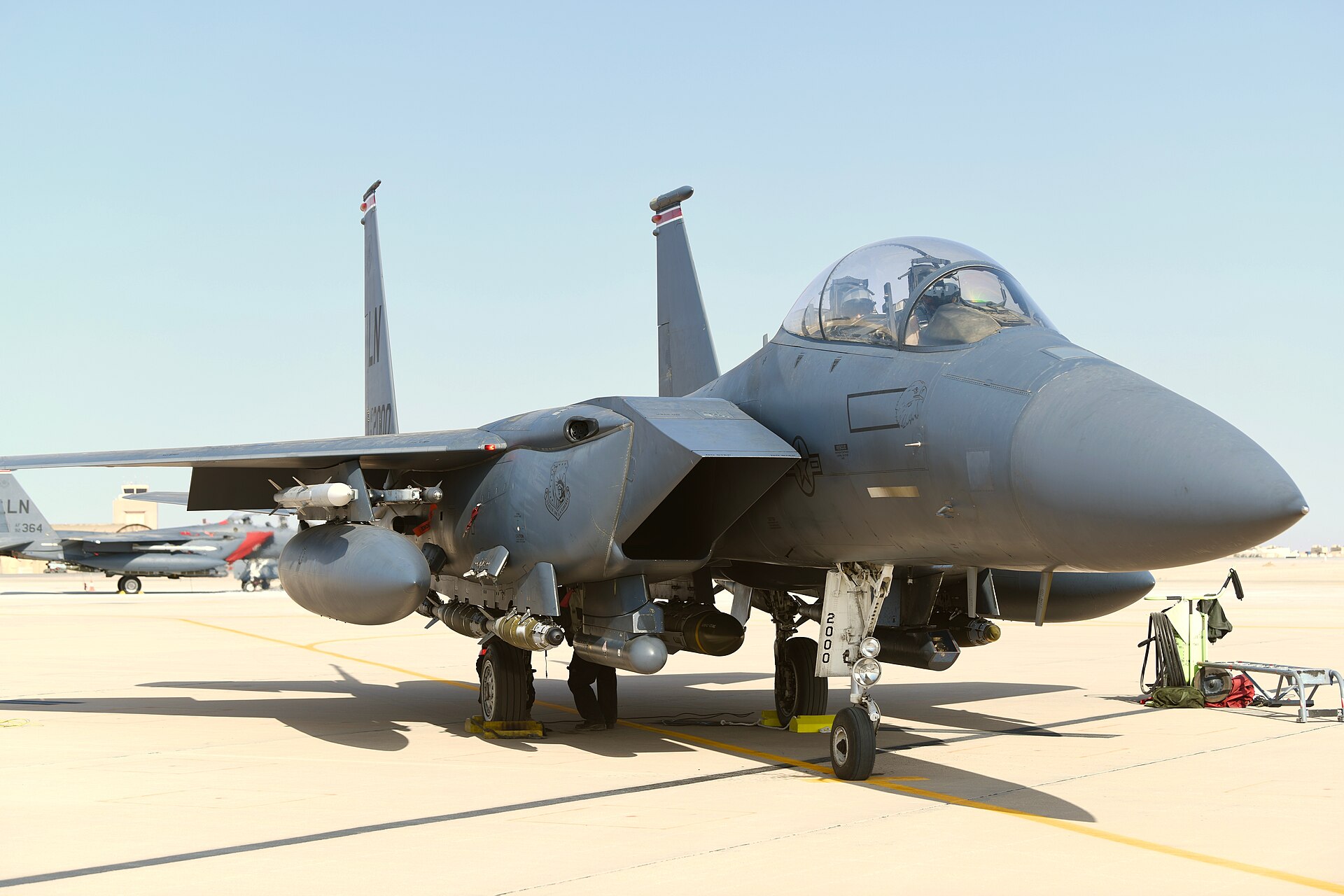
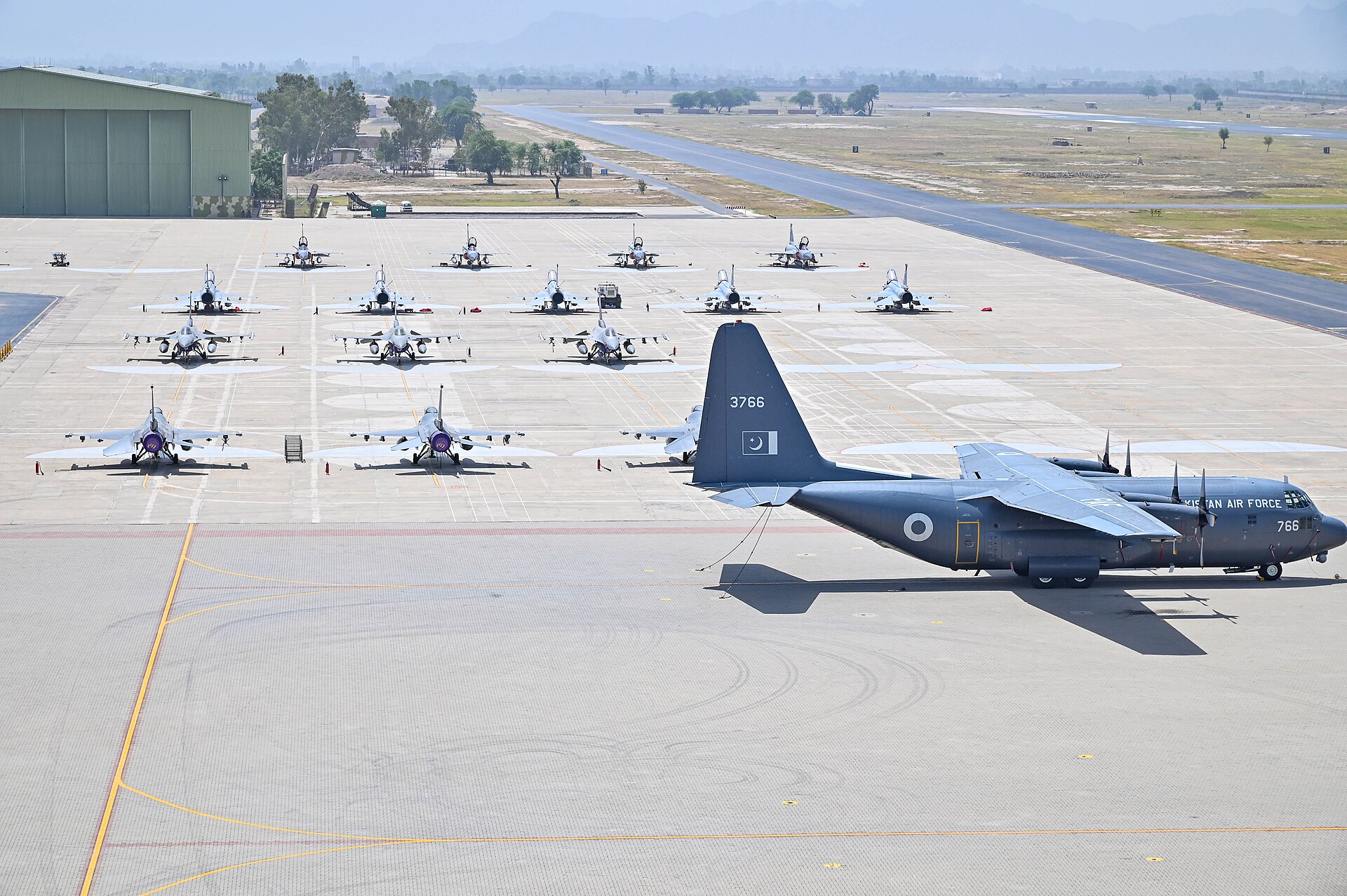
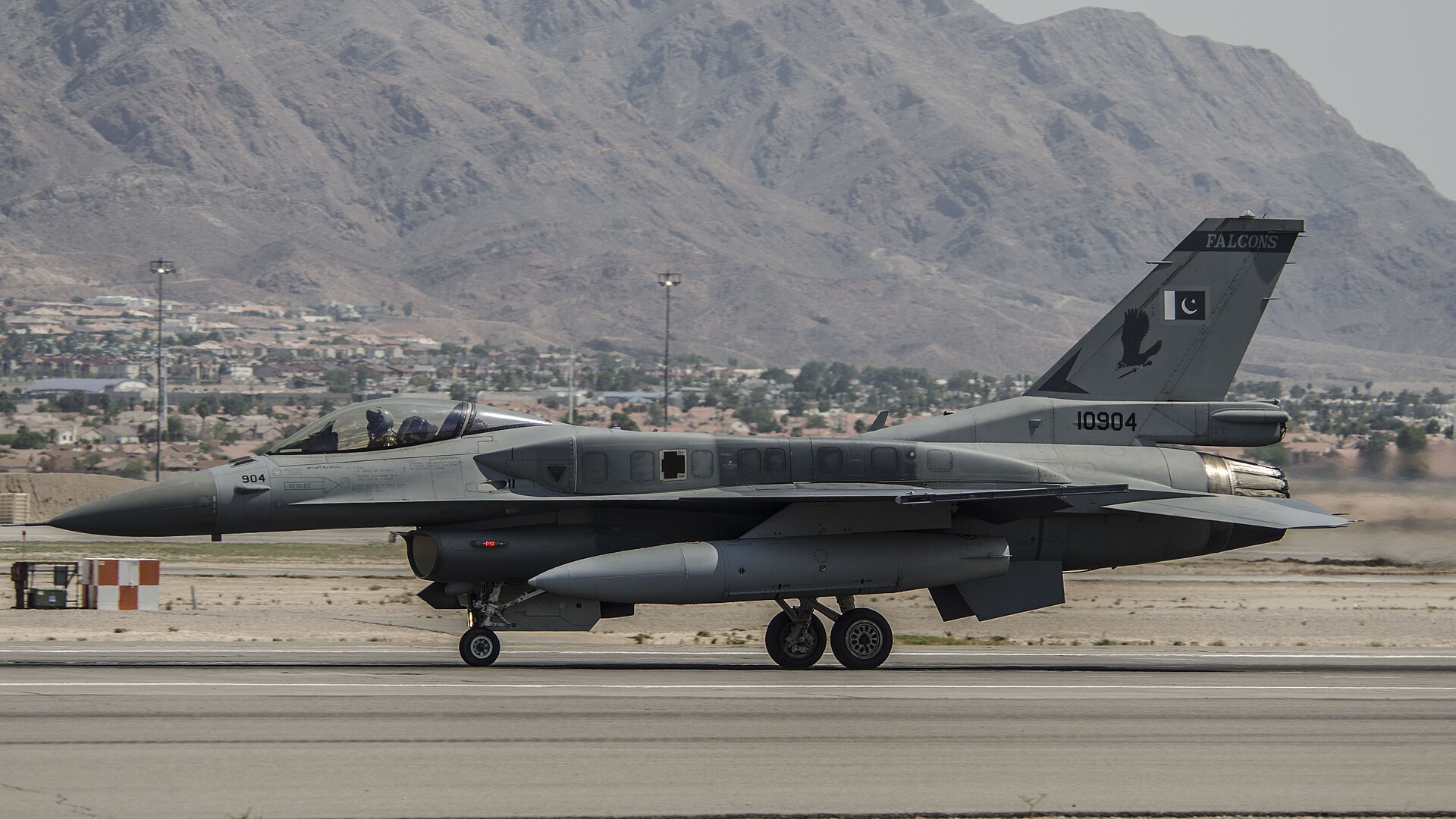
The quad’s military skeleton was built before the IISS published its analysis. Exercise Spears of Victory 2026, hosted at King Abdulaziz Air Base from January 18 to February 5, brought Pakistani Air Force F-16 Block-52s on their first non-stop deployment from Islamabad to Saudi Arabia alongside Turkish, Egyptian, Jordanian, French, British, and American aircraft — a fourteen-nation exercise that embedded the quad’s air forces into the same tactical environment three months before the foreign ministers formalised their consultation rhythm. Three days after Spears of Victory concluded, Pakistan hosted Exercise PATS 2026 at Kharian from February 5 to 9, a sixty-hour ground exercise involving nineteen nations including Saudi Arabia, Turkey, and Egypt, the same four states training together on Pakistani soil within a single fortnight.
The bilateral agreements underpinning these exercises are where the real architecture lives. Saudi Arabia and Pakistan signed the Strategic Military Defence Agreement at Al-Yamamah Palace on September 17, 2025 — exactly one week after Israeli strikes on Qatar that the Financial Times reported had “deeply unsettled Gulf states’ sense of security, exacerbating long-standing concerns about United States unpredictability.” The SMDA’s core clause, that “any aggression against either country shall be considered an aggression against both,” is the closest equivalent to NATO’s Article 5 that Riyadh has signed with any state outside the United States, and it was prompted not by Iranian aggression but by an Israeli attack on a fellow Gulf state that Washington did not prevent.
The nuclear dimension surfaced briefly and was pushed back underwater. Pakistani Defence Minister Khawaja Asif initially stated that Saudi Arabia would benefit from Pakistan’s “nuclear umbrella” under the SMDA, a claim he subsequently retracted after diplomatic pushback, though a senior Saudi official told Reuters the agreement “encompasses all military means” without explicitly excluding nuclear sharing — language the Bulletin of the Atomic Scientists assessed as “formally ambiguous,” which in the grammar of nuclear diplomacy means ambiguous by design. Meanwhile, 8,000 Pakistani troops with Chinese missile systems are deployed to Saudi Arabia, a force sufficient to operate the air-defence batteries that would form the backbone of any integrated quad defensive posture.
Turkey and Egypt, whose relationship was frozen for a decade after the 2013 coup that removed the Muslim Brotherhood government Ankara had supported, completed their own bilateral thread with Exercise Friendship Sea in September 2025 — the first joint naval exercise between the two states in thirteen years, involving frigates, a submarine, and F-16s — followed by a formal military cooperation agreement on February 4, 2026. By January 2026, Pakistan’s Minister for Defence Production told Reuters that a draft three-way defence deal between Turkey, Saudi Arabia, and Pakistan had been prepared, a trilateral layer that would bring the quadrilateral’s commitments closer to the treaty architecture its members publicly insist they are not building.
The Hedge Riyadh Cannot Name
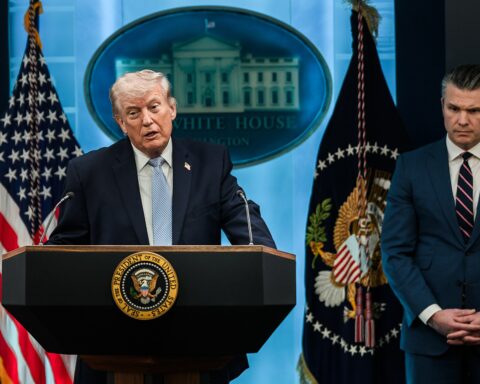
Saudi Arabia’s position inside the quadrilateral is defined by a contradiction it has chosen not to resolve. On May 20, Prince Faisal bin Farhan publicly endorsed Trump’s decision to cancel strikes against Iran — a gesture shaped by the approach of Hajj, a first-quarter deficit amounting to 194 percent of the full-year fiscal target, and the blunt recognition that Saudi Arabia’s depleted military options made public support for American restraint the only available posture. The Christian Science Monitor captured the duality in a single headline on April 1: “Saudi Arabia hopes diplomacy works with Iran. It’s also preparing for a military response.”
The IISS analysis made this contradiction institutionally visible the same week Riyadh praised the cancellation of strikes. The think tank published an assessment of a four-nation grouping whose combined active military exceeds 1.9 million troops — Turkey’s 355,000 NATO-standard forces, Pakistan’s 654,000 including nuclear capabilities, Egypt’s 440,000, and Saudi Arabia’s 257,000 plus the National Guard — and whose structural purpose, as articulated by every source from Chatham House to Foreign Affairs, is to hedge against the failure of the very diplomacy Saudi Arabia publicly champions.
“Saudi Arabia will continue to look to the United States for some support, but it will have to complement that by deepening its regional alliance with Egypt, Pakistan, and Turkey — and pursuing a greater reliance on China, while seeking a new arrangement with Iran to manage the war’s aftermath.”
— Foreign Affairs, 2026
Foreign Policy, writing on April 24, offered Washington the uncomfortable corollary: “The honest question for Washington is no longer whether Saudi Arabia will ‘choose,’ as it will not — the question is whether the US can fashion a Gulf policy that takes Saudi autonomy as a starting point rather than a betrayal.” The Foundation for Defense of Democracies, on May 12, compressed the contradiction into six words: “Saudi Arabia’s strange war: Appease Iran, rebuff Israel.”
The fiscal pressure that makes the hedge necessary is also the pressure that makes it fragile. The PIF’s cash reserves sit at approximately $15 billion — the lowest since 2020 — while Khurais, the 300,000 barrel-per-day facility knocked offline during the conflict, has no public restoration timeline. Brent crude trades at $105-111 per barrel, but the EIA’s May 2026 Short-Term Energy Outlook projects prices falling to $89 by Q4 and $79 in 2027 as Middle East production normalises, which means the fiscal room to sustain both accommodation of Iran and investment in a parallel security architecture is narrowing on a timeline measured in quarters, not years — and the adversary-side reactions to the quad suggest the contradiction is already visible to every capital that matters.
Who Reads the Quad as a Threat?
The adversary-side responses split along lines that reveal structural interests more clearly than public statements. Israel’s reaction, tracked through Ynetnews and the Jerusalem Post, has been explicitly alarmed: Ynetnews framed the grouping as “Islamic NATO? Saudi Arabia reshapes Middle East’s alliance map to set new regional rules,” a headline capturing not a concern about any individual member’s military capability but about the emergence of a coordinated Muslim-majority bloc whose diplomatic and military cooperation works against Israel’s long-standing preference for keeping regional states isolated and bilaterally oriented toward Washington or Jerusalem.
Russia’s reading, articulated through the Russian International Affairs Council, treats the quad as a net positive for Moscow. Not because Russia has influence inside the grouping, but because a security architecture outside the US bilateral system fragments the American-led regional order Moscow has worked to undermine since its 2015 Syrian intervention. RIAC’s “Islamic NATO?” framing, despite sharing Israel’s vocabulary, carries the opposite analytical charge: where Israel sees threat, Moscow sees evidence of Washington’s declining capacity to manage the Middle East through bilateral dependency, and a bloc that neither includes the United States nor aligns with Israel is, from the Kremlin’s perspective, a structural improvement regardless of the quad’s internal orientation.
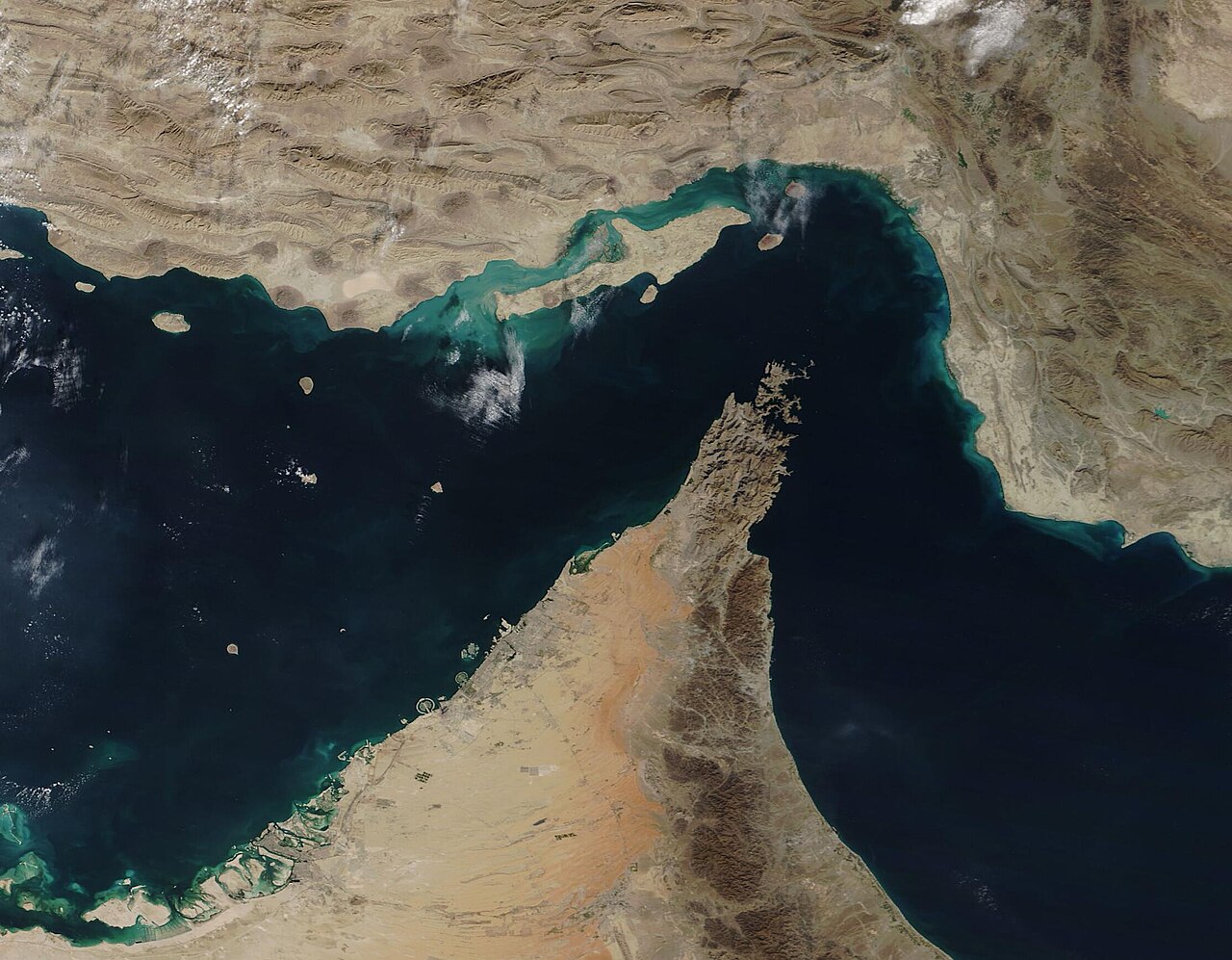
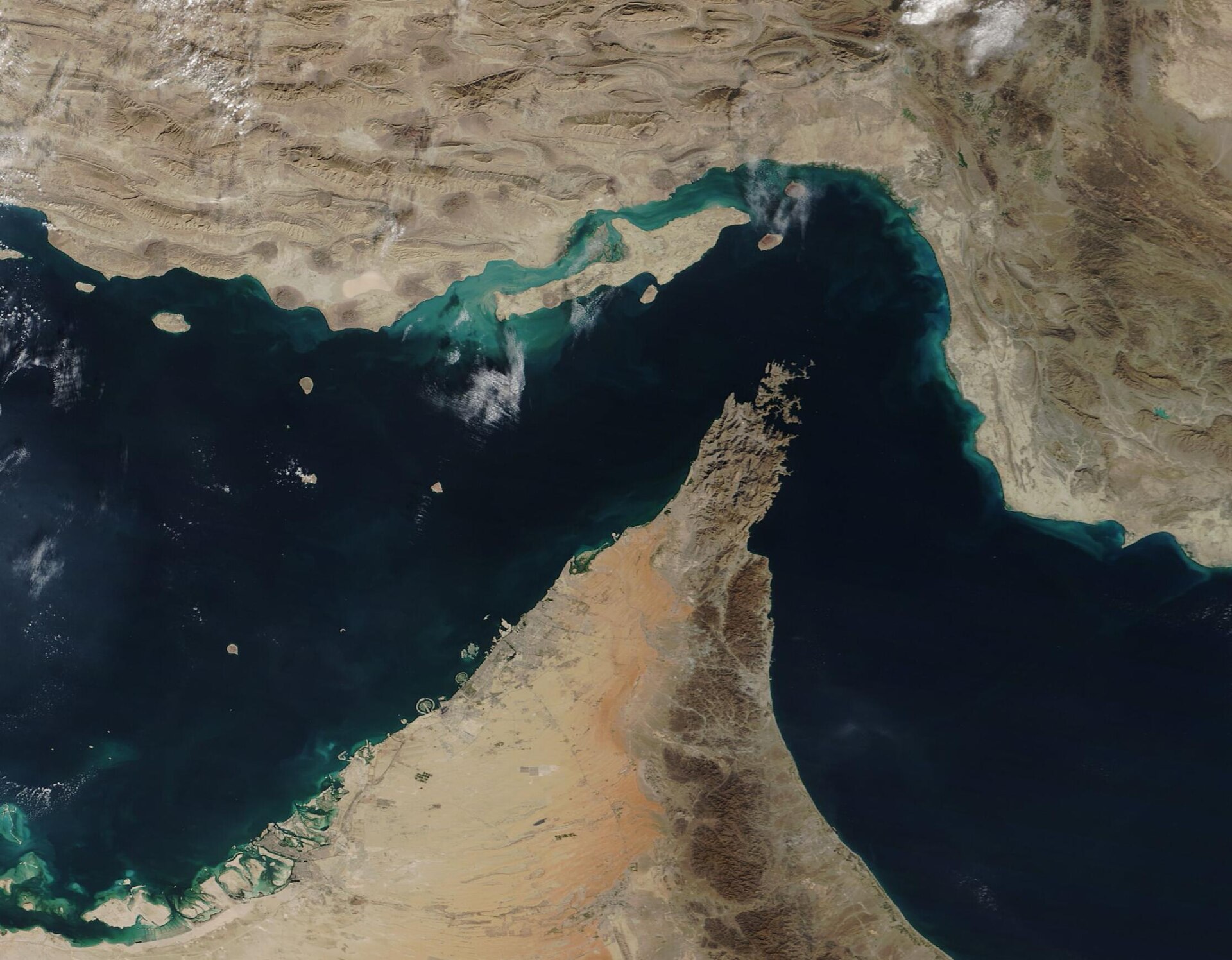
Iran’s response has been neither alarm nor approval but structural counter-manoeuvre. The IRGC’s Hormuz toll regime — charging up to $2 million per transit since the April 13 blockade — exempts Pakistan alongside Russia, China, India, and Iraq, a waiver list that functions simultaneously as revenue policy and diplomatic instrument designed to price Pakistan’s continued neutrality into the cost architecture of the strait. Pakistan thus holds a mutual defence commitment to Saudi Arabia under the SMDA while benefiting from Iran’s transit exemption and serving as shuttle mediator for the stalled US-Iran talks — a triple role that one former Pakistani general described to Al Jazeera on April 14 as viable only under conditions so strict they amount to a warning.
“Pakistan can hold both roles only if deployment remains strictly defensive, time-bound, and transparently limited. The moment the theatre shifts to offensive operations, or the perception of offensive coordination emerges, the dual role collapses. Iran’s perception, not Pakistan’s intent, will determine whether trust survives.”
— Former Pakistani general, Al Jazeera, April 14, 2026
Where the Architecture Fractures
Pakistan is the quad’s most capable member and its most structurally compromised. The SMDA commits Islamabad to treat any aggression against Saudi Arabia as aggression against Pakistan, but Pakistan’s simultaneous role as primary shuttle mediator in the US-Iran peace process — Deputy Foreign Minister Muhammad Naqvi completed his second trip to Tehran on May 20 — means the quad’s most militarily powerful member is also the one with the most to lose from the grouping being perceived as an anti-Iran bloc. The IRGC’s Hormuz transit fee exemption for Pakistani-flagged vessels is the material expression of this fracture: Tehran is actively subsidising Pakistan’s neutrality while simultaneously co-drafting a permanent governance framework for the strait with Oman that excludes Saudi Arabia entirely, a structural investment in splitting the quadrilateral from within.
Natasha Lindstaedt of the University of Essex, writing in The Conversation, identified the historical pattern the IISS assessment itself stopped short of naming: “Every multilateral framework in the Middle East has ultimately been defeated by divergent national interests, external interference, and the absence of a binding institutional culture.” The IISS acknowledged the precedent obliquely, citing the Baghdad Pact of 1955 — a security architecture whose members shared a nominal adversary but whose asymmetric threat perceptions produced what the institute called “asymmetric commitment,” a structural weakness that hollowed the alliance before it could be tested.
The quad’s version of asymmetric commitment is already visible in what each member wants from the grouping. Turkey’s interest, as Chatham House assessed, centres on creating NATO redundancy and institutional optionality rather than binding commitments that would complicate Ankara’s relationships with Moscow and Washington. Egypt’s participation is shaped by the Stimson Center’s documented “new strategic naval axis” with Riyadh and by Cairo’s financial dependence on Saudi Arabia, making its commitment conditional on continued Saudi funding at a moment when PIF cash reserves are at decade lows. Saudi Arabia needs the military depth that only Pakistan’s 654,000-strong armed forces and nuclear ambiguity can provide — but it needs Pakistan’s mediation channel with Iran at least as urgently, and the quadrilateral’s evolution toward a visible security bloc makes holding both simultaneously harder with each meeting the foreign ministers convene.
The IISS assessment names what four capitals have refused to name: a security architecture assembled in real time by states training together, signing defence pacts, and meeting at ministerial level three times in a single month. Whether it survives contact with the crisis it was built for depends on the same structural fault that defines it — Pakistan’s ability to remain simultaneously Saudi Arabia’s military guarantor, Iran’s preferred mediator, and the beneficiary of an IRGC toll exemption that Tehran can revoke the moment it decides the quad has become a threat rather than a hedge.
Background: The Road to the Quadrilateral
The quadrilateral’s roots predate the Iran crisis by decades, though the conflict has accelerated its institutional development beyond what any of the four capitals appear to have planned. Turkey-Saudi relations were severed after the 2018 murder of journalist Jamal Khashoggi in Istanbul, a rupture repaired only when President Erdoğan visited Riyadh in April 2022 and a Turkish court subsequently transferred the Khashoggi case to Saudi jurisdiction — a legal decision that was, in its operational effect, a diplomatic concession. Egypt-Saudi security ties have been continuous since the July 2013 coup that brought President Sisi to power with Saudi financial backing, and Pakistan has stationed forces on Saudi soil since 1982, a forty-four-year military relationship the September 2025 SMDA elevated from operational habit to formal treaty.
The Israeli strikes on Qatar on September 9, 2025, were the proximate trigger for the SMDA’s signing eight days later, but the deeper driver is a pattern of American unpredictability that has shaped Gulf security calculations across three administrations. The Obama-era JCPOA negotiation that Gulf states read as accommodation of Iran, the first Trump administration’s withdrawal from that agreement, and the Biden administration’s Afghanistan exit each delivered the same structural lesson: American commitments could be reversed on domestic political timelines allied capitals could neither predict nor influence.
The current conflict has compressed every timeline. With Brent crude volatile between $105 and $111 per barrel, only forty-five ships transiting Hormuz since April 8 — 3.6 percent of the pre-war baseline — and the IRGC operating what amounts to a permanent toll regime at the world’s most consequential maritime chokepoint, the four quad members face a shared set of pressures that no existing framework, not the GCC, not the Organisation of Islamic Cooperation, not the bilateral American security umbrella, was designed to address.
Frequently Asked Questions
What is the IISS and why does its assessment carry institutional weight?
The International Institute for Strategic Studies, founded in London in 1958, is among the most influential defence and security think tanks in the Western policy ecosystem, and its annual Military Balance publication is used as a reference by NATO governments, defence ministries, and intelligence services worldwide. When the IISS formally classifies a grouping as an emerging security architecture rather than dismissing it as diplomatic theatre, that classification shapes how Western policymakers, defence planners, and arms export regulators treat the relationships between the states involved. The distinction between “ad hoc coordination” and “institutional alignment” carries direct implications for arms transfer licences, intelligence-sharing protocols, and the diplomatic frameworks through which Washington, London, and Brussels engage with the four capitals.
How does the quadrilateral differ from existing regional security frameworks like the GCC?
The GCC’s military arm, the Peninsula Shield Force created in 1984, has deployed in a combat-adjacent role only once — to Bahrain during the 2011 uprising — and has never conducted offensive operations, while the GCC’s internal rivalries, most visibly the 2017-2021 blockade of Qatar by Saudi Arabia, the UAE, Bahrain, and Egypt, demonstrated that shared geography and nominal shared interests were insufficient to prevent members from treating each other as adversaries. The quadrilateral crosses the Gulf/non-Gulf divide that structurally limits the GCC: Turkey and Pakistan bring NATO-standard and nuclear-capable forces from outside the Gulf system, while Egypt provides the Arab world’s largest standing army and Mediterranean naval reach no Gulf state possesses. The grouping is also, by design, not a Gulf institution, which allows it to sidestep the UAE-Saudi tensions and internal rivalries that have paralysed GCC security cooperation for the better part of a decade. Abu Dhabi’s deliberate repositioning as Washington’s Gulf counterpart — through OPEC exit, pipeline infrastructure, and MDP bilateral architecture — has widened those tensions into a structural rift.
What defence-industrial capabilities does Turkey bring to the quadrilateral?
Turkey’s defence-export sector has expanded rapidly since 2020, driven by the combat-proven Bayraktar TB2 and Akıncı armed drones that demonstrated effectiveness in Libya, Nagorno-Karabakh, and Ukraine. Ankara is developing the KAAN fifth-generation stealth fighter, the Altay main battle tank, and the HISAR family of air-defence systems — platforms designed to reduce Turkish dependence on American equipment following its expulsion from the F-35 programme over the purchase of Russian S-400 systems. For the quad, Turkey’s defence-industrial base offers the prospect of arms co-production that would not require US export licences or congressional approval, a capability that is particularly valuable to Saudi Arabia and Pakistan, both of which face periodic restrictions on American weapons transfers tied to human rights and nonproliferation conditions.
What role does China play in the quadrilateral’s defence architecture?
China is not a member of the quad but is structurally embedded in its military capabilities and in the crisis the grouping was built to address. The Chinese missile systems deployed with Pakistan’s 8,000 troops in Saudi Arabia represent Beijing’s most direct military-hardware footprint in the Gulf, delivered through Pakistan’s procurement channels rather than a direct Sino-Saudi deal. China is also exempt from the IRGC’s Hormuz transit toll alongside Pakistan, Russia, India, and Iraq — a waiver reflecting Tehran’s dependence on Chinese crude purchases and Beijing’s influence over the toll regime’s design. The structural tension is that China profits from both sides of the equation: it arms Pakistan, which defends Saudi Arabia, while purchasing Iranian oil, which funds the IRGC, positioning Beijing to benefit from whatever post-conflict Hormuz governance emerges regardless of whether the quad’s architecture or Iran’s mechanisms prevail.
Has any member of the quadrilateral been part of a formal military alliance against Iran?
No quad member has participated in a formal anti-Iran alliance, though the historical precedent is instructive: Iran itself was a founding member of the Baghdad Pact in 1955 alongside Turkey, Iraq, Pakistan, and the United Kingdom — the only prior Middle Eastern multilateral security framework to include both Turkey and Pakistan. That alliance, later renamed the Central Treaty Organisation, collapsed after the 1958 Iraqi revolution removed a founding member overnight and dissolved entirely following the 1979 Iranian revolution, a trajectory that demonstrates the fragility of multilateral security commitments in a region where regime change can eliminate alliance partners without warning. The current quadrilateral’s deliberate avoidance of treaty-level commitments may reflect institutional memory of the Baghdad Pact’s failure as much as it reflects the diplomatic constraints imposed by the present crisis.