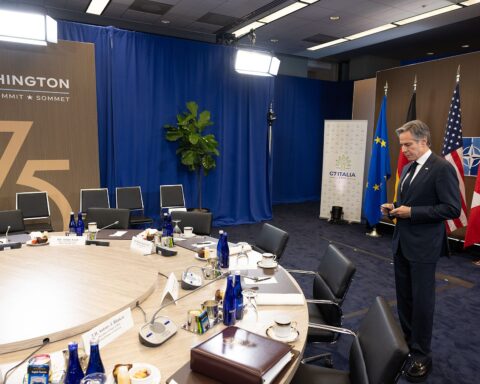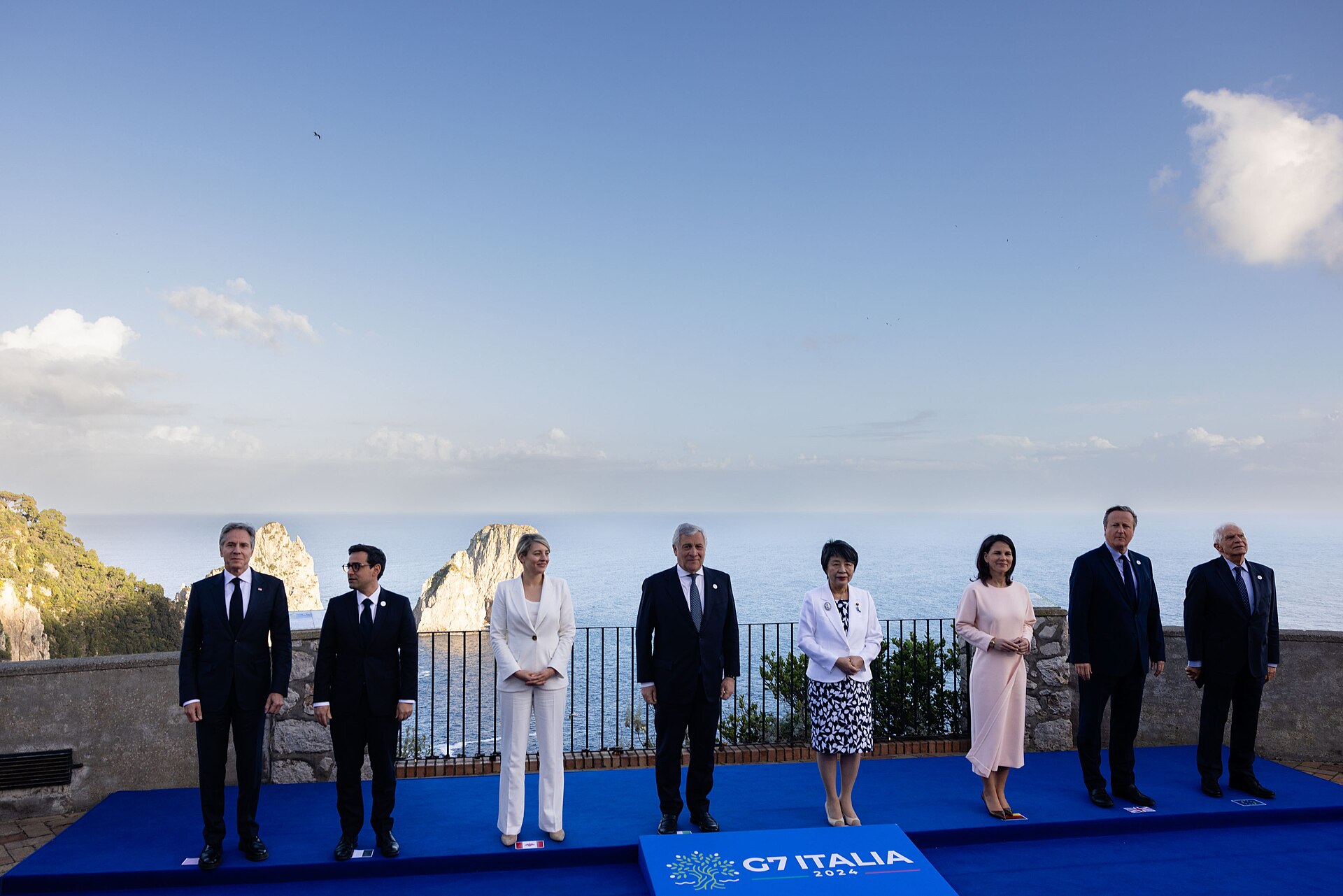

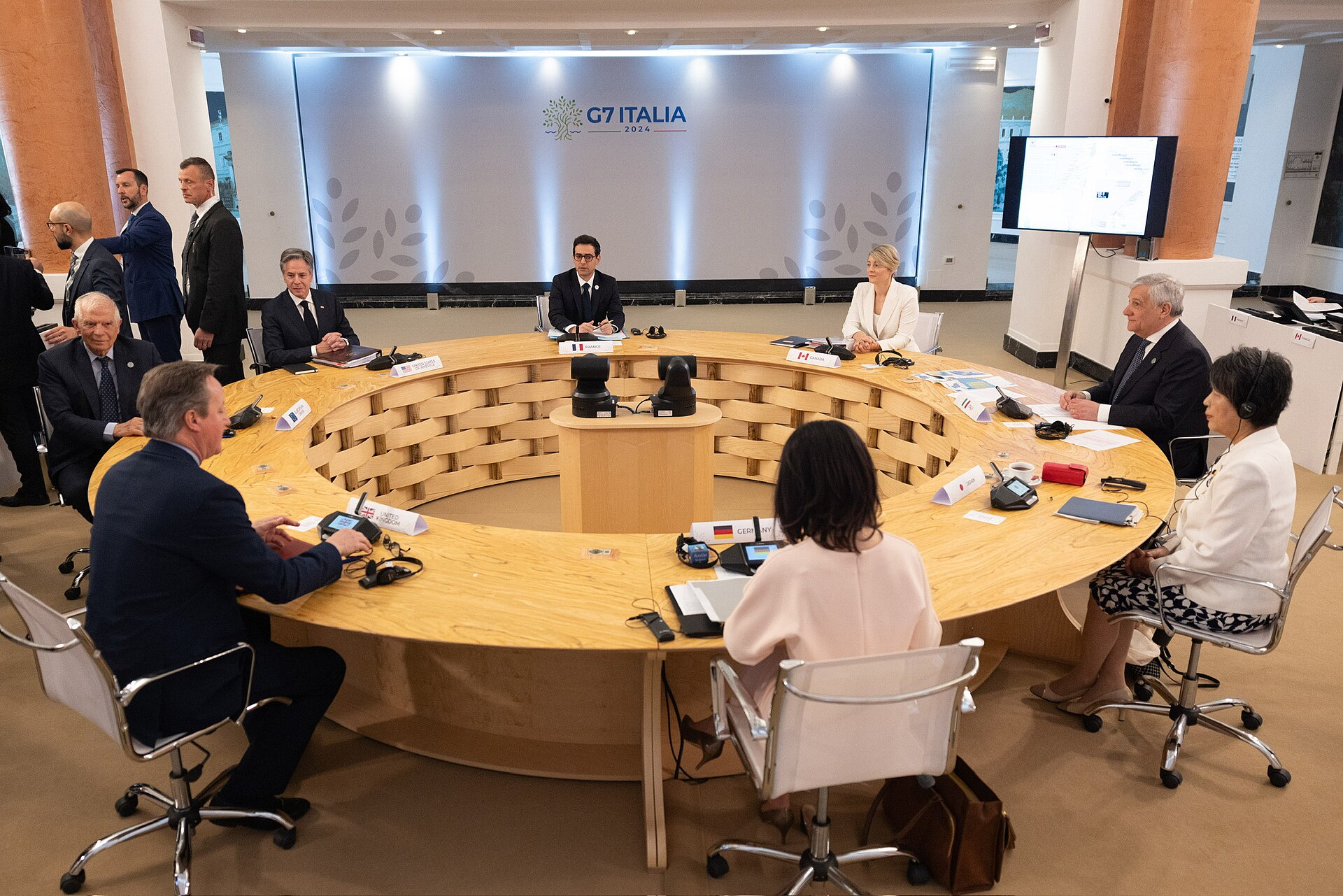
PARIS — G7 foreign ministers meeting at the Abbaye des Vaux-de-Cernay outside Paris on March 27 issued a joint statement condemning Iran’s blockade of the Strait of Hormuz, demanded the restoration of “safe and toll-free freedom of navigation,” and agreed in principle to a post-war multinational naval escort force — but refused to commit a single warship while the fighting continues. Saudi Foreign Minister Prince Faisal bin Farhan attended as an invited non-G7 participant, securing the Kingdom’s most prominent seat at the Western diplomatic table since the war began on February 28.
The result is a diplomatic paradox that defines Saudi Arabia’s position one month into the conflict. Riyadh won the symbolism it sought — a G7 invitation, bilateral meetings with every major European foreign minister, and a communique that names Iran as the aggressor. But the substance behind the statement commits no G7 member to wartime action. More than 30 countries signed a readiness pledge for post-conflict Hormuz patrols, according to Euronews. Not one pledged a frigate for tomorrow.
Table of Contents
What Did the G7 Joint Statement Actually Commit To?
The joint statement, published simultaneously by the governments of Canada, France, Germany, Italy, Japan, the United Kingdom, and the United States, calls for an “immediate cessation of attacks against civilians and civilian infrastructure” and reiterates “the absolute necessity to permanently restore safe and toll-free freedom of navigation in the Strait of Hormuz, consistent with UNSC Resolution 2817 and the Law of the Sea,” according to the official text released by the Canadian government on March 27.
It condemns “in the strongest terms recent attacks by Iran on unarmed commercial vessels” and describes Tehran’s actions as constituting “the de facto closure” of the strait, according to a separate G7 allies’ statement reported by gCaptain. The ministers highlighted the significance of “diverse partnerships, coordination, and supporting initiatives” to address economic disruptions affecting energy, fertilizer, and supply chains.
What the statement does not do is more telling. It contains no binding security commitment. No timeline for naval deployment. No trigger mechanism that would convert diplomatic language into military escorts. The phrase “readiness to contribute to appropriate efforts” — signed by more than 30 countries, according to Euronews — is diplomatic shorthand for willingness without obligation. Every verb is conditional. Every pledge is aspirational. The G7 communique reads less like a security guarantee and more like a letter of intent that no bank would underwrite.
None of these demands carry an enforcement mechanism. The freedom-of-navigation clause references UNSC Resolution 2817, adopted on March 11 by a vote of 13-0 with two abstentions from China and Russia, according to UN meeting records. That resolution already condemned Iran’s “egregious attacks” against Gulf states. The G7 statement reiterates it without adding teeth.
Rubio’s Post-War Naval Force
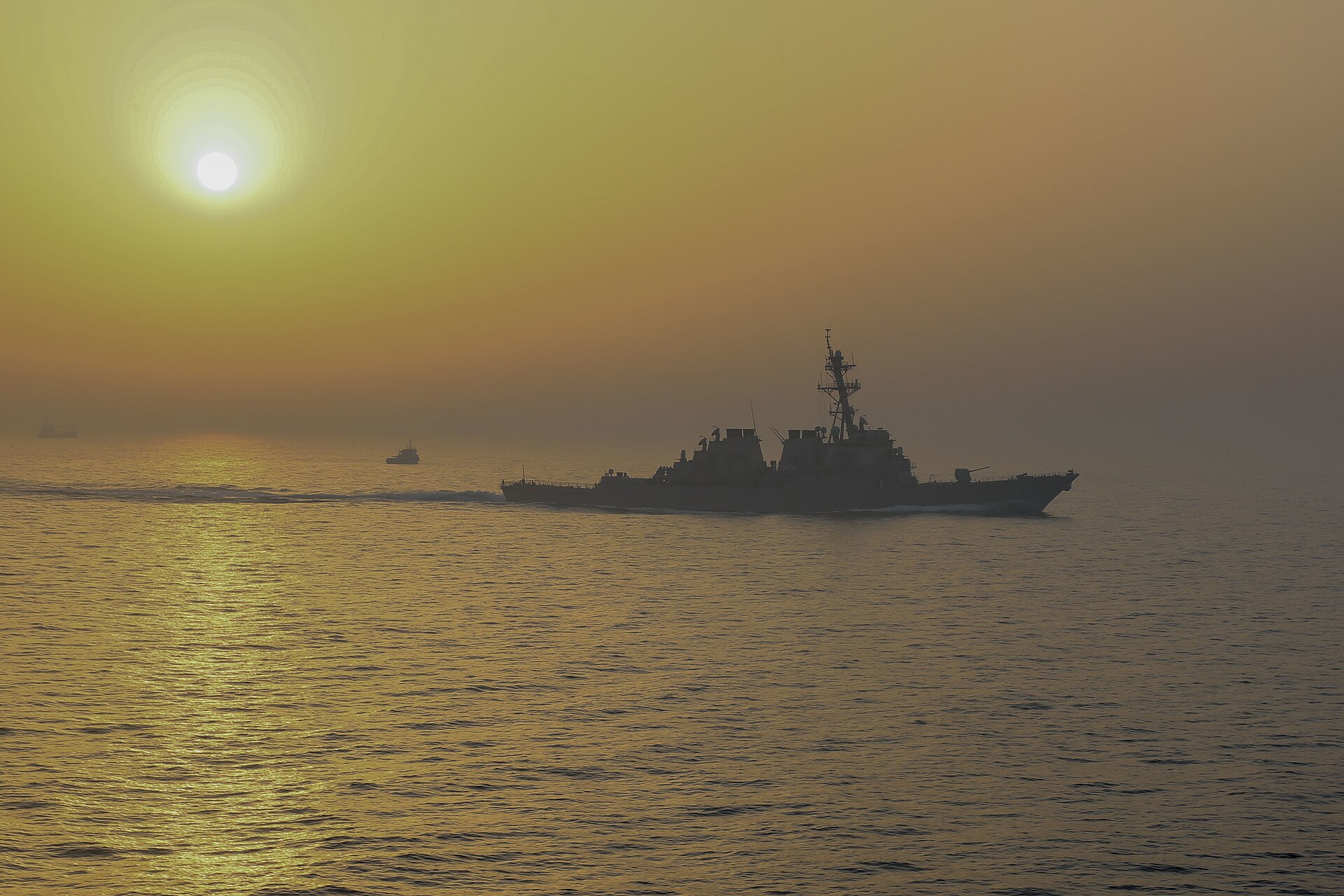
U.S. Secretary of State Marco Rubio pitched a permanent multinational naval escort force for the Strait of Hormuz, modeled on historical Combined Maritime Forces operations but with a standing G7-backed mandate. “The first few tankers will go through the straits after this operation is over are going to want an escort from somebody, or they’re not going to be able to get insurance,” Rubio told reporters at the summit, as reported by the Associated Press.
Rubio framed the proposal as a “post-conflict necessity” rather than a wartime demand, a rhetorical concession to European reluctance that also revealed the limits of American ambition at the summit. One diplomatic source told Euronews that Rubio stressed the United States does not need G7 countries to help reopen Hormuz during the war but wants allies to join a maritime task force afterward. “The U.S. will need us in the next phase to escort ships or just to have an international presence in the Strait of Hormuz to show the Iranians they don’t control the strait,” the source said. “Everyone agreed.”
That unanimous agreement, however, applies to a scenario that does not yet exist. The war is on day 28. Rubio told G7 allies it would continue for an estimated two to four more weeks, according to Axios, while separately acknowledging the conflict may extend past the initial four-to-six-week timeline. The post-war naval force exists in a future that recedes with every escalation. Meanwhile, Rubio also told the summit that “countries around the world should actually be grateful” for America’s willingness to confront Iran, according to Military.com — a line unlikely to accelerate European volunteering.
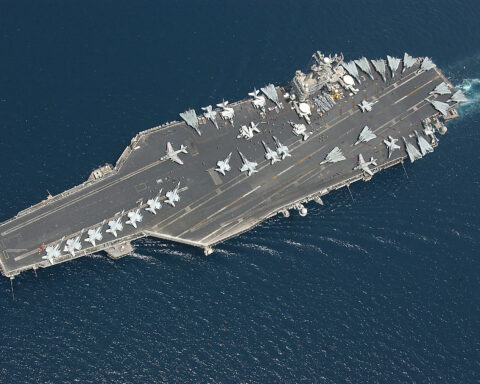
The proposal has a clear historical precedent. Operation Earnest Will, the U.S. Navy’s tanker escort campaign during the Iran-Iraq War, completed 127 escort missions covering 270 vessels between July 1987 and September 1988 with zero tankers sunk, according to CNN’s coverage of the Tanker War parallels. Belgium, France, Italy, the Netherlands, and the United Kingdom all contributed warships and minesweepers to that effort. Roughly 30 allied warships operated in the Gulf during Operation Earnest Will, a fraction of what current disrupted traffic would require.
Why Are France and Germany Split on Hormuz Patrols?
The European divide at Vaux-de-Cernay exposed two distinct strategic calculations. Germany offered conditional participation. France offered conditional rhetoric. The gap between them is the gap Saudi diplomats will spend the next month trying to exploit.
German Foreign Minister Johann Wadephul stated that “Germany is certainly willing to play a role after hostilities end when it comes to ensuring the security of shipping in the Strait of Hormuz,” according to Euronews. The qualifier “after hostilities end” is absolute — Berlin will not deploy warships into an active theater. But the willingness itself marks a shift for a government that spent the first three weeks of the conflict focused almost exclusively on Ukraine. Wadephul warned at the summit against abandoning Ukraine support, calling it “a strategic mistake with a view to Euro-Atlantic security,” according to Military.com. Germany is trying to signal availability for Hormuz without surrendering bandwidth on its primary security concern.
France’s position was sharper in its refusal. Armed Forces Minister Catherine Vautrin declared at the summit, “This war is not ours,” adding: “The aim is truly this diplomatic approach, which is the only one that can guarantee a return to peace,” as reported by the Associated Press. French Foreign Minister Jean-Noel Barrot offered a more nuanced formulation, telling reporters that France was “prepared to lead an international mission to restore freedom of navigation in Hormuz once calm has been restored, in a strictly defensive posture, and in agreement with the principal countries concerned,” according to EU Observer. That final clause — “in agreement with the principal countries concerned” — implies France would require some form of Iranian acquiescence before deploying, a condition that functionally makes French participation indefinite.
Barrot emphasized that France had mobilized “significant means” in the eastern Mediterranean, including an aircraft carrier and six EU frigates, according to EU Observer. But those assets serve to protect Cyprus and evacuate European nationals, not to escort tankers through Hormuz. France hosts the largest permanent military base in the Gulf at Abu Dhabi, with roughly 700 personnel, yet has kept that force on a strictly defensive footing throughout the conflict.
The France-Germany split is not merely tactical. It reflects different threat assessments. Germany, as Europe’s largest industrial economy, faces direct energy-price exposure from a prolonged Hormuz blockade that has functioned as a toll road since mid-March. France, which derives roughly 70 percent of its electricity from nuclear power, has more insulation from an oil-supply shock. The countries that need Hormuz open the most are the ones most willing to help — eventually.
Britain’s Careful Middle Ground
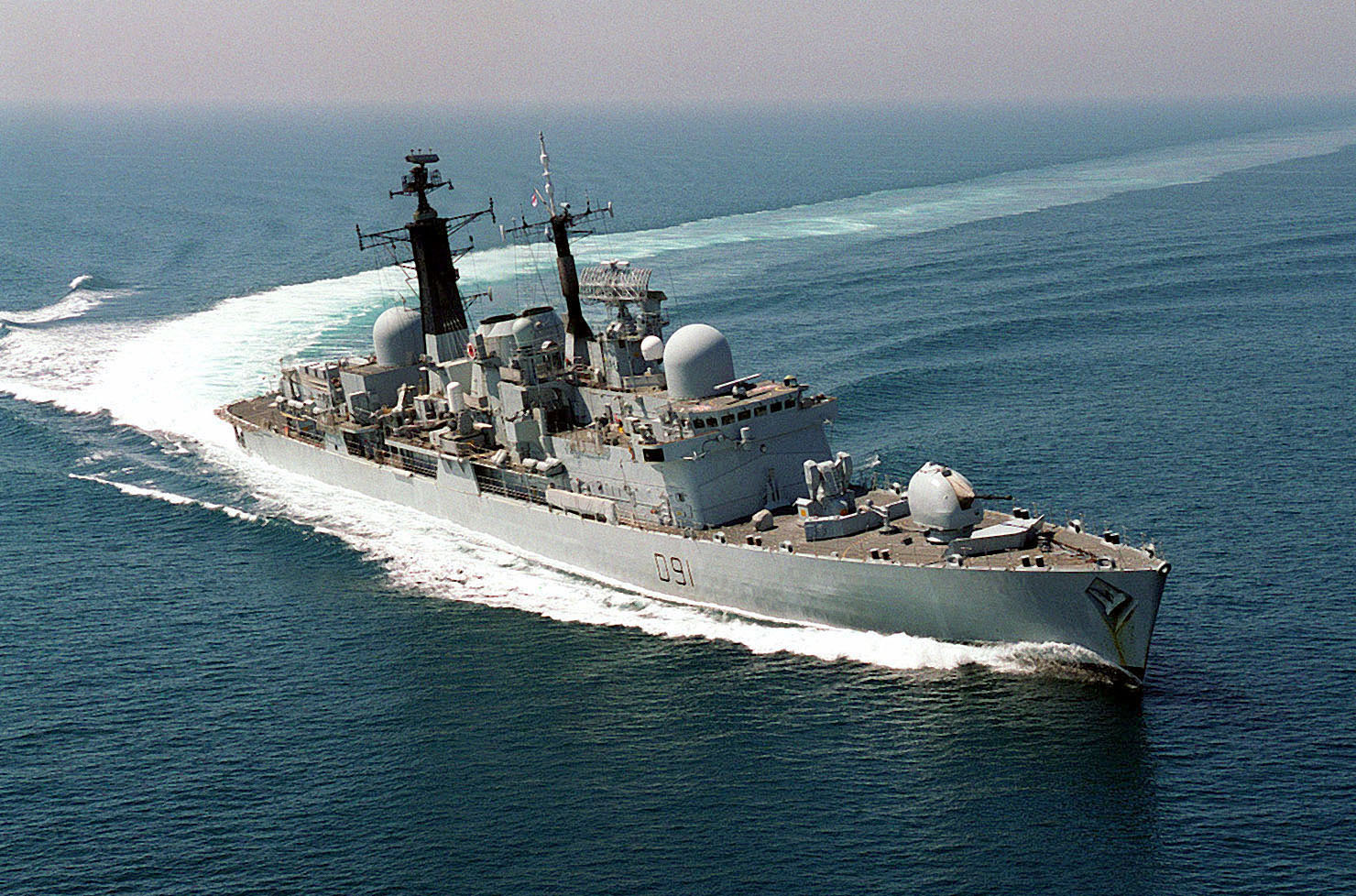
UK Foreign Secretary Yvette Cooper carved a position between Washington’s assertiveness and Paris’s withdrawal. “We have taken the approach of supporting defensive action, but also we’ve taken a different approach on the offensive action that has taken place as part of this conflict,” Cooper told reporters at Vaux-de-Cernay, as reported by the Associated Press. The distinction between “defensive” and “offensive” has become London’s rhetorical moat — a way to stand with the United States on protecting shipping lanes without endorsing the broader military campaign against Iran.
Cooper went further on Hormuz specifically. “Iran cannot be able to just hold the global economy hostage,” she said, in remarks widely covered by British media including ITV News. The framing — Iran as hostage-taker, the global economy as victim — aligns more closely with Washington’s language than Paris’s studied neutrality. Britain signed the 30-country readiness pledge and endorsed the joint statement’s demand for toll-free navigation.
But endorsement is not deployment. The Royal Navy has maintained a continuous presence in the Gulf through the UK Maritime Component Command in Bahrain, part of the existing Combined Maritime Forces framework. Expanding that presence into active convoy escorts during wartime would represent a qualitative escalation London has not endorsed. Cooper’s formulation of “defensive action” leaves room for mine-clearance operations, intelligence sharing, and post-war patrol commitments without crossing into the combat operations Rubio’s broader strategy demands.
Italy, Japan, and Canada collectively endorsed the joint statement without making individual military pledges, according to NPR’s summit coverage. Japan, which imports roughly 90 percent of its oil through the Strait of Hormuz, has the most acute energy-security interest of any G7 member outside the United States but the least political appetite for Middle East military entanglements. Canada and Italy occupied background positions, their signatures on the communique adding diplomatic weight without operational consequence.
What Does Saudi Arabia Gain from a G7 Seat?
Prince Faisal bin Farhan’s invitation to Vaux-de-Cernay was the most visible diplomatic recognition the Kingdom has received since the war began. The Saudi foreign minister held bilateral meetings with EU foreign policy chief Kaja Kallas and counterparts from Italy, the United Kingdom, Germany, France, Canada, and India, according to Asharq Al-Awsat. French Foreign Minister Barrot “reiterated France’s very strong condemnation of Iran’s attacks on its neighbours and signalled France’s wholehearted solidarity with the Kingdom of Saudi Arabia,” according to the French Foreign Ministry’s official readout.
Solidarity is what Riyadh received. Security is what Riyadh needed. The distance between the two defines the summit’s outcome for Saudi Arabia.
At a ministerial meeting in Riyadh on March 26, one day before the G7 gathering, Prince Faisal declared that “the kingdom is not going to succumb to pressure” and reserved Saudi Arabia’s right to take military action, as reported by multiple outlets. The statement was directed at Iran, but it also acknowledged the Kingdom’s strategic isolation. Saudi Arabia has spent the war building its own coalition — six Arab nations claiming self-defense rights against Iran — because the Western alliance that traditionally underwrites Gulf security cannot agree on whether to show up.
The G7 invitation matters for Crown Prince Mohammed bin Salman’s broader strategic repositioning. Saudi Arabia is simultaneously diversifying its security partnerships — the Ukraine-Saudi defense deal signed during the war signals Riyadh’s willingness to look beyond traditional American patronage. A seat at the G7 table reinforces the Kingdom’s status as an indispensable geopolitical actor, not merely a regional oil supplier. But status does not stop missiles. On the same day the G7 issued its communique, an Iranian missile struck Prince Sultan Air Base, wounding ten American service members. The contrast between the diplomatic gathering and the battlefield reality was immediate.
The kingdom is not going to succumb to pressure.
Prince Faisal bin Farhan Al Saud, Saudi Foreign Minister, March 26, 2026
Tehran’s Response
Iran did not issue a formal response to the G7 joint statement by the end of March 27, but Tehran’s position on the war and Western involvement was already established through official channels. Foreign Minister Abbas Araghchi told Iranian state media that officials were reviewing an American proposal to end the war but that Tehran had “no intention of having talks with the U.S.,” describing the exchange of messages through mediators as something that “does not mean negotiations with the U.S.,” according to NPR.
Araghchi characterized the broader military campaign as “wholly unprovoked, illegal, and illegitimate,” according to reporting by the Times of Israel. On the Strait of Hormuz specifically, Iran has maintained that the waterway remains open — on its terms. Araghchi told Chinese officials on March 24 that Iran had closed Hormuz to “adversary vessels and their supporters” but that other nations could pass “in coordination with Iranian authorities,” according to Iran’s Press TV. The IRGC has enforced a toll system through the strait since mid-March, charging an estimated $2 million per ship, with a five-nation whitelist allowing Chinese, Russian, Indian, Iraqi, and Pakistani vessels to transit freely.
Iran’s framing of the G7 statement is predictable: a Western club issuing demands it lacks the will to enforce against a nation defending its sovereignty. The abstentions of China and Russia on UNSC Resolution 2817 in early March gave Tehran the diplomatic cover to dismiss Western condemnation as partisan rather than universal. Iran’s ambassador to the UN in Geneva did accept a UN request to “facilitate and expedite” humanitarian aid through Hormuz on March 27, according to Euronews — a tactical concession that costs nothing while allowing Tehran to claim reasonableness.
The Insurance Gap No Statement Can Close
Rubio’s observation that post-war tankers “are going to want an escort from somebody, or they’re not going to be able to get insurance” points to the economic reality that no communique can resolve. The marine war-risk insurance market for Hormuz has effectively collapsed.
Before the war began on February 28, typical war-risk premiums for Hormuz transit ran between 0.15 and 0.25 percent of a vessel’s hull replacement value for a one-week policy, according to S&P Global. Within 48 hours of the first U.S.-Israeli airstrikes, premiums surged fivefold. By mid-March, quotes reached five to ten percent of hull value, according to S&P Global’s market intelligence reporting — meaning insuring a $100 million tanker costs $5 million to $10 million per week. Some underwriters have withdrawn coverage entirely.
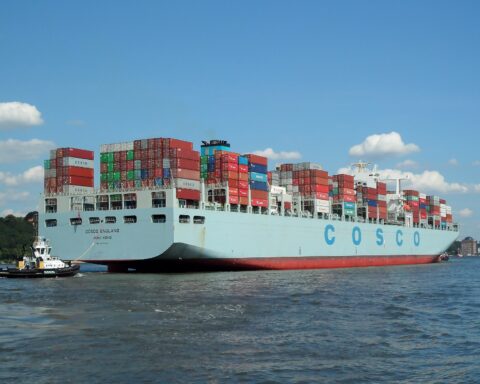
Daily charter rates for oil supertankers quadrupled within the first week of the conflict to nearly $800,000, according to S&P Global. The economics are self-reinforcing: higher insurance costs make transit prohibitively expensive, which reduces traffic, which raises risk perceptions, which pushes premiums higher still. The IRGC’s $2-million-per-ship toll adds a layer of extortion on top of market-driven costs. Twenty-six ships have been tracked using an Iranian-designated corridor through the strait since March 13, according to USNI News and Foreign Policy reporting.
The G7 statement demands “safe and toll-free freedom of navigation.” The insurance market demands something more tangible — armed escorts with enough firepower to deter Iranian interference. Operation Earnest Will succeeded in the 1980s partly because insurers could price in the presence of U.S. Navy warships alongside tankers. A post-war patrol force would serve a similar function, but only after the shooting stops. Until then, Hormuz remains commercially impassable for most Western-insured shipping, and the G7 statement changes nothing about that calculus.
Background
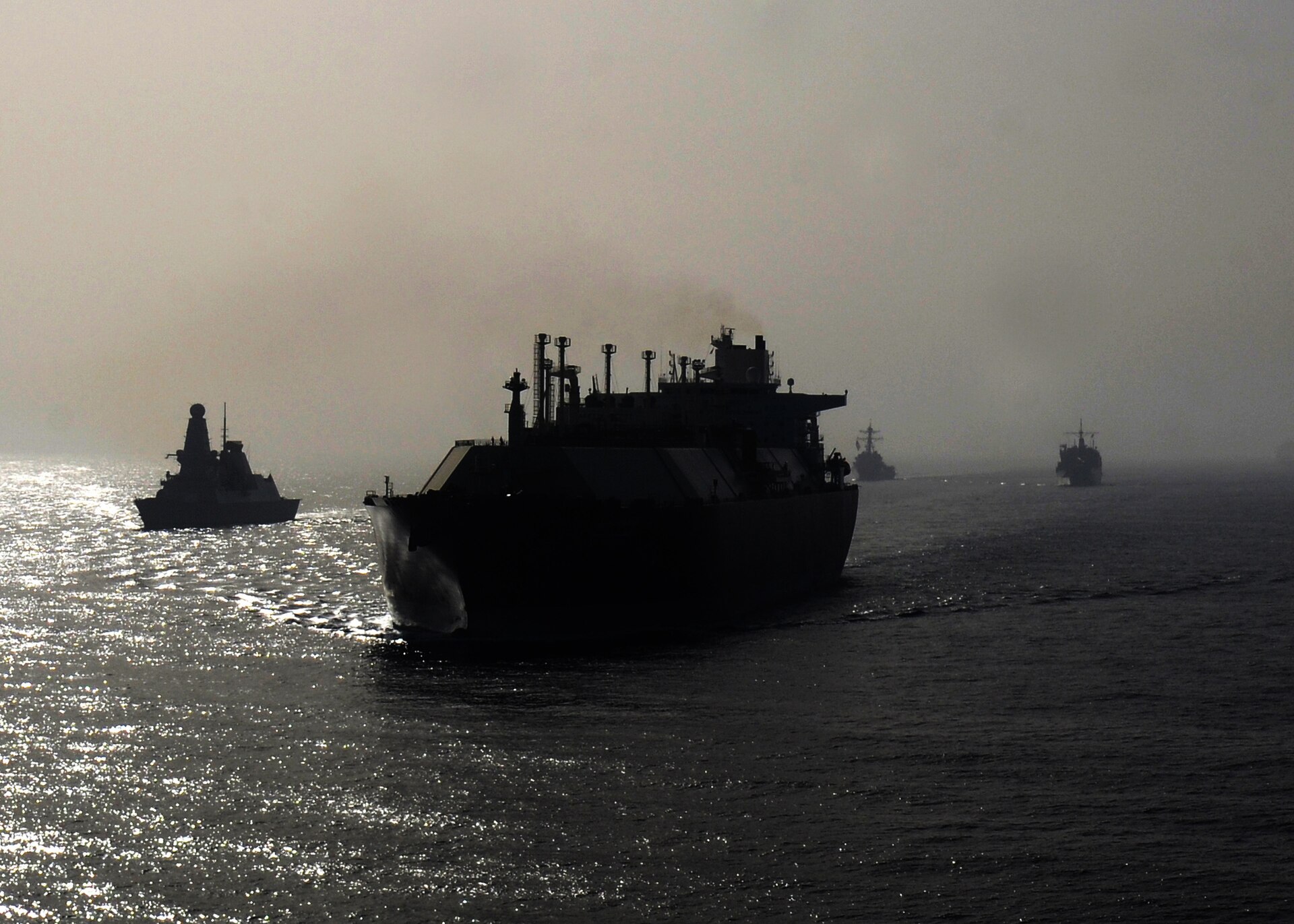
The war between the United States, Israel, and Iran began on February 28, 2026, with coordinated airstrikes designated Operation Epic Fury by the Pentagon. By March 27, the conflict had entered its 28th day. Total U.S. casualties stood at 13 killed and nearly 300 wounded, according to NPR. Washington has deployed more than 10,000 additional troops to the region since hostilities began.
Iran responded to the initial strikes by launching missile and drone barrages against Gulf states and by imposing an effective blockade of the Strait of Hormuz. UNSC Resolution 2817, adopted March 11, has not altered Tehran’s behavior. Oil prices peaked at $126 per barrel in early March and have fluctuated between $92 and $106 per barrel since, according to market reporting. Trump extended his deadline for Iran to reopen the strait to April 6, posting that “talks are ongoing” and “going very well.”
Saudi Arabia has intercepted hundreds of Iranian drones and dozens of ballistic missiles since the war began. The Kingdom convened a ministerial meeting of six Arab nations on March 26 that asserted collective self-defense rights under Article 51 of the UN Charter. Separately, Gulf states have demanded Iran’s military capacity be permanently degraded as a precondition for any ceasefire — a maximalist position that complicates the post-war scenario the G7 is planning around.
The G7 meeting at Vaux-de-Cernay was the first formal gathering of the group’s foreign ministers since the war began. France, holding the G7 presidency, invited partner countries including Saudi Arabia, India, Brazil, and South Korea. The summit addressed both the Iran conflict and the ongoing Russia-Ukraine war, with European ministers pressing to ensure the Iran crisis did not displace Ukraine from the alliance’s agenda.
FAQ
Has the G7 ever deployed a joint naval force in the Persian Gulf before?
The G7 as a bloc has never deployed a joint naval force, but its member states have contributed individually to Gulf security operations. The Combined Maritime Forces, headquartered in Bahrain, currently includes 44 member nations and operates Task Force 152 for Gulf maritime security. During the 1987-88 Tanker War, five European nations joined the U.S. Navy’s Operation Earnest Will on an ad hoc basis. Rubio’s proposal would formalize that precedent under a permanent G7-backed mandate — a standing structure rather than a coalition assembled under fire.
How much oil normally flows through the Strait of Hormuz?
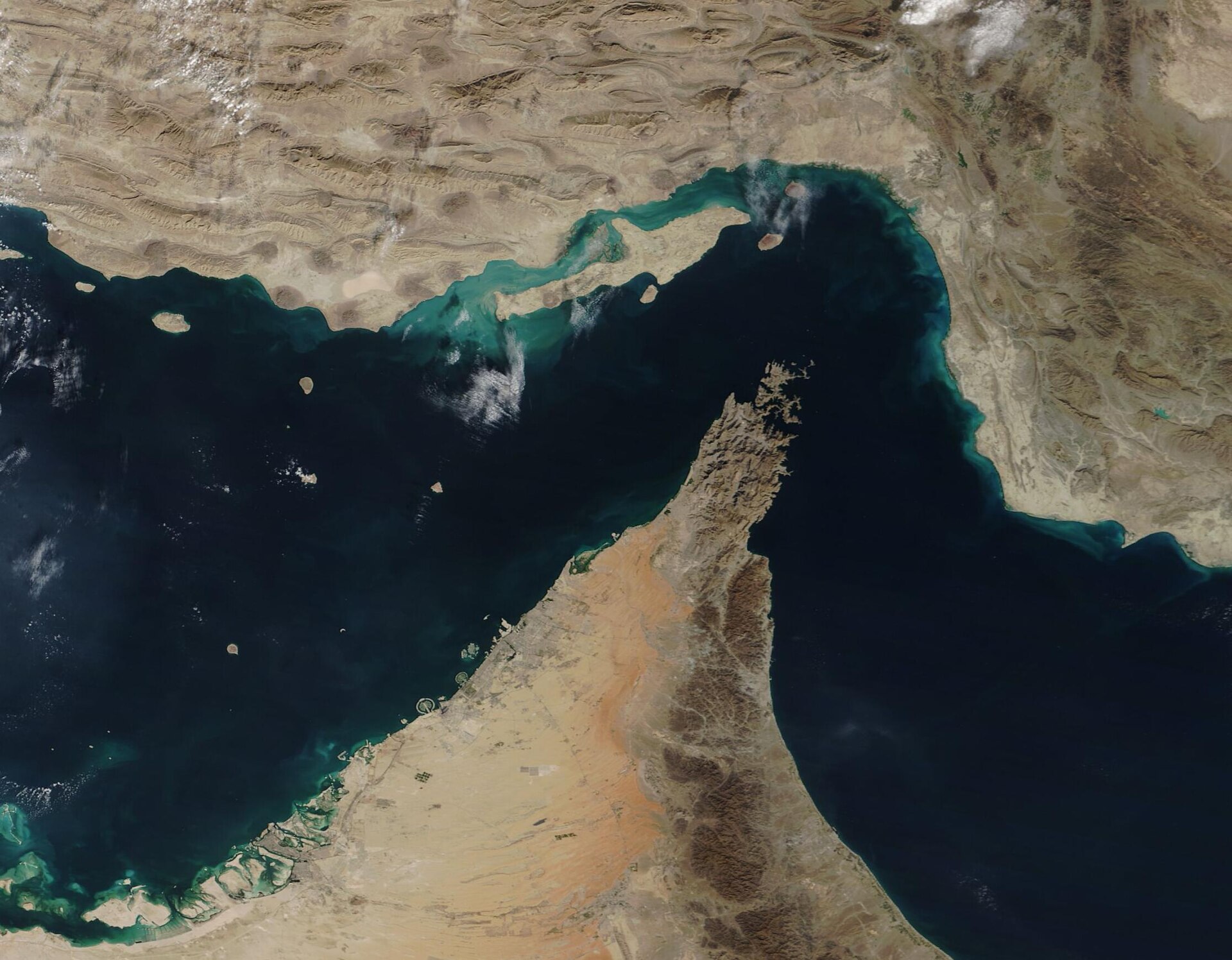
Approximately 21 million barrels per day transited the Strait of Hormuz before the current conflict, representing roughly 21 percent of global petroleum consumption, according to the U.S. Energy Information Administration. The strait is also a critical corridor for liquefied natural gas, with Qatar — the world’s largest LNG exporter — routing virtually all of its seaborne exports through the 21-mile-wide chokepoint. Japan, South Korea, India, and China are the largest importers of Hormuz-transiting crude. The current blockade has redirected much of this flow through overland pipelines with far smaller capacity, creating a structural supply deficit that has kept oil prices elevated above $90 per barrel for four consecutive weeks.
How does Iran enforce its control of the Strait of Hormuz?
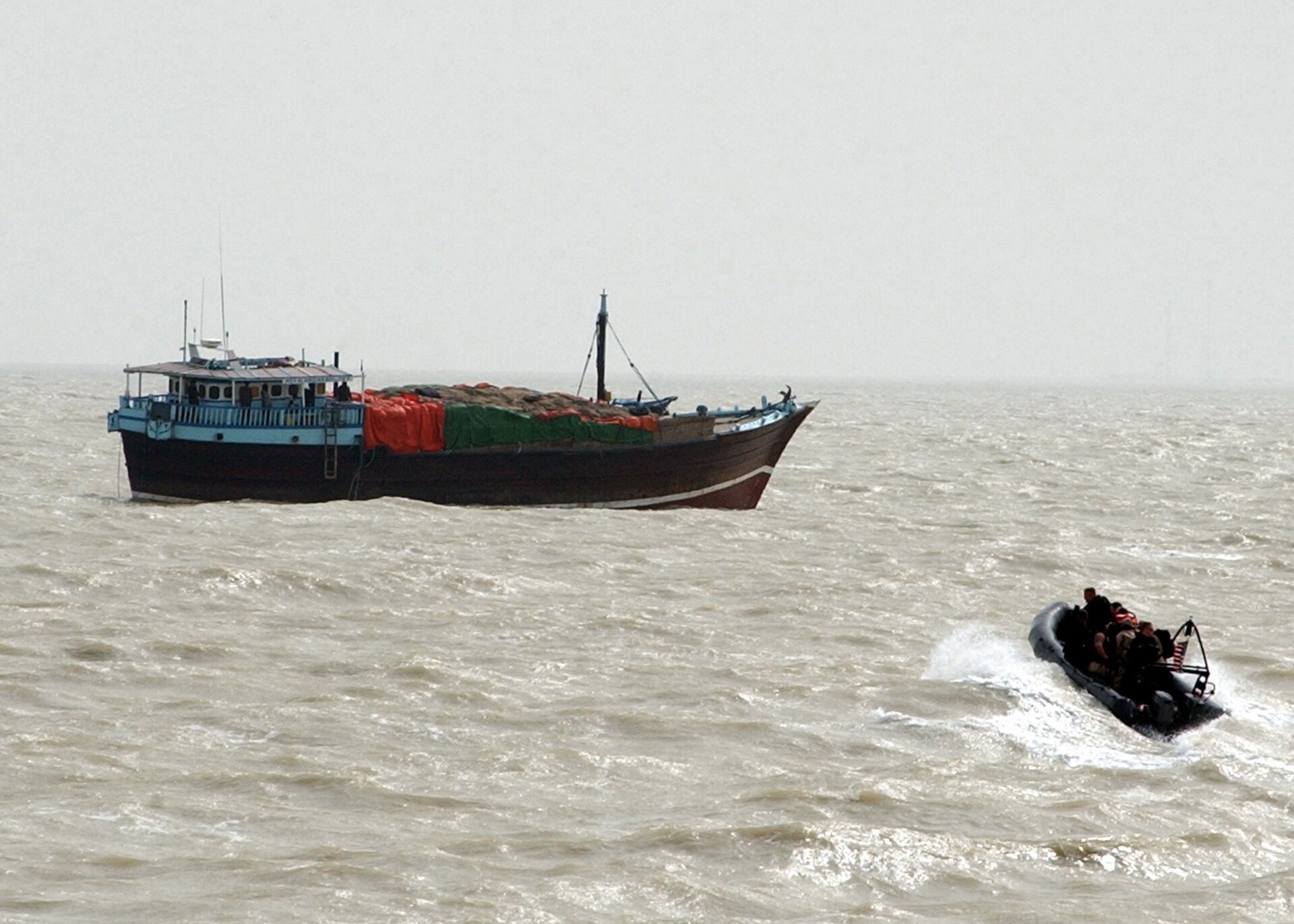
The IRGC enforces its toll through fast-attack craft, naval drones, and shore-based anti-ship missile batteries along Iran’s coastline. Vessels seeking transit must contact Iranian naval authorities, submit to inspection at designated checkpoints, and follow an IRGC-designated corridor through the strait’s narrowest section, according to USNI News and Foreign Policy. Ships that refuse face seizure or forced diversion to Iranian ports. The system allows Tehran to selectively punish Western-aligned shipping while maintaining the claim that the strait remains “open” — a distinction that gives diplomatic cover to whitelisted nations whose trade continues uninterrupted.
Why did China and Russia abstain on UNSC Resolution 2817?
China and Russia abstained from the March 11 vote on Resolution 2817, which condemned Iran’s attacks against Gulf states. Both governments criticized the resolution’s text for omitting any reference to the U.S. and Israeli airstrikes on Iran that began the conflict on February 28, according to UN meeting records. Beijing and Moscow argued that condemning Iran’s retaliatory actions without acknowledging the initial strikes that provoked them made the resolution one-sided. The abstentions, rather than vetoes, allowed the resolution to pass while giving Tehran diplomatic ammunition to frame Western condemnation as selective. China’s ships continue to transit Hormuz under the IRGC’s whitelist, giving Beijing little economic incentive to pressure Tehran.
What happens if the war extends past Rubio’s estimated timeline?
Rubio told G7 allies the conflict would last an estimated two to four more weeks, according to Axios, while the Trump administration separately acknowledged the war may extend past its initial four-to-six-week projection. A prolonged conflict would collapse the “post-war” framing that underpins the entire G7 Hormuz agreement. European participation is conditioned on hostilities ending first; if the war continues through April and into May, the naval escort force remains theoretical while shipping insurance costs continue to compound. The April 6 deadline Trump set for Iran to reopen Hormuz would also expire, potentially triggering a new escalation cycle that pushes the post-war scenario even further into the future. Saudi Arabia, which cannot count on indefinite American military commitment, would face mounting pressure with diminishing external support.