
WASHINGTON — President Donald Trump’s April 6 deadline to destroy Iran’s energy infrastructure is nine days away, and every scenario that follows — strikes, another extension, or a negotiated deal — threatens Saudi Arabia’s security, economy, and strategic position in ways that the Kingdom’s leadership has not publicly acknowledged. The deadline, initially a 48-hour ultimatum issued on March 22, has already been extended twice, each time eroding American credibility while buying Tehran time to harden targets, disperse assets, and calibrate its retaliation options. What began as a coercive threat against Iran has quietly become a strategic trap for the Gulf.
The Islamic Republic has rejected Washington’s 15-point peace framework and countered with five demands of its own, including reparations and sovereignty over the Strait of Hormuz — terms no American president could accept. BlackRock CEO Larry Fink has warned that oil at $150 per barrel would trigger a “steep and stark” global recession. Iran’s power grid serves 88 million people across 130 thermal plants generating 78,000 megawatts. This article examines why April 6 has become the most dangerous date in the war, analyses the four possible outcomes through a structured scenario framework, and explains why Saudi Arabia stands to lose regardless of what Washington decides.
Table of Contents
- What Is Trump’s April 6 Deadline and How Did It Get Here?
- Three Extensions, Zero Credibility
- What Would Destroying Iran’s Energy Grid Actually Look Like?
- The $150 Barrel That Ends the Recovery
- Why Can’t Washington and Tehran Close the Gap?
- The Deadline Outcome Matrix
- What Does Saudi Arabia Need From April 6?
- Iran’s Retaliation Playbook If Energy Strikes Begin
- Eighty-Eight Million People in the Dark
- Why the Deadline Is More Dangerous Than the War Itself
- What Comes After April 6?
- Frequently Asked Questions
What Is Trump’s April 6 Deadline and How Did It Get Here?
Trump’s April 6 deadline is the third iteration of an ultimatum that began on March 22, when the president gave Iran 48 hours to reopen the Strait of Hormuz or face the destruction of its entire energy infrastructure. That initial deadline passed without action on March 24. A second extension of five days was announced on March 23, ostensibly to allow “productive conversations.” When that window closed on March 28, Trump extended again — this time by ten days — writing on Truth Social: “As per Iranian Government request, please let this statement serve to represent that I am pausing the period of Energy Plant destruction by 10 Days to Monday, April 6, 2026, at 8 P.M., Eastern Time.”
The deadline chain emerged from a specific strategic logic. After nearly four weeks of US and Israeli strikes on Iranian military, nuclear, and industrial targets — including two nuclear facilities struck on March 27 — Iran continued launching drones and missiles at Gulf states while maintaining its effective blockade of the Strait of Hormuz. The conventional military campaign had degraded Iran’s capabilities but had not broken its will. The energy threat was Trump’s escalation card: a weapon designed to be so devastating that its mere invocation would force Iranian capitulation.
The problem, as four weeks of deadline extensions have demonstrated, is that the weapon may be too devastating to use.
Three Extensions, Zero Credibility
The pattern of Trump’s deadline extensions reveals a presidency caught between the rhetoric of overwhelming force and the reality of catastrophic consequences. Each extension has followed the same sequence: an ultimatum issued with theatrical certainty, a quiet acknowledgment that conditions were not met, and a face-saving extension framed as a diplomatic concession rather than a strategic retreat.
The Middle East briefing 3,000+ readers start their day with.
One email. Every weekday morning. Free.
| Deadline | Date Issued | Expiry | Duration | Stated Reason for Extension |
|---|---|---|---|---|
| First | March 22 | March 24 | 48 hours | Iran did not comply; “productive conversations” cited |
| Second | March 23 | March 28 | 5 days | Witkoff presented 15-point plan via Pakistan |
| Third | March 26 | April 6, 8 PM ET | 10 days | “As per Iranian Government request”; talks “going very well” |
Each extension has been longer than the last — 48 hours, then five days, then ten. The doubling pattern suggests not growing confidence in diplomacy but growing reluctance to act. According to Bloomberg, the extensions came partly at Tehran’s request, channelled through Pakistan’s intelligence services, which have served as the sole intermediary since Iran expelled most of its Gulf diplomatic contacts in the first two weeks of the war.
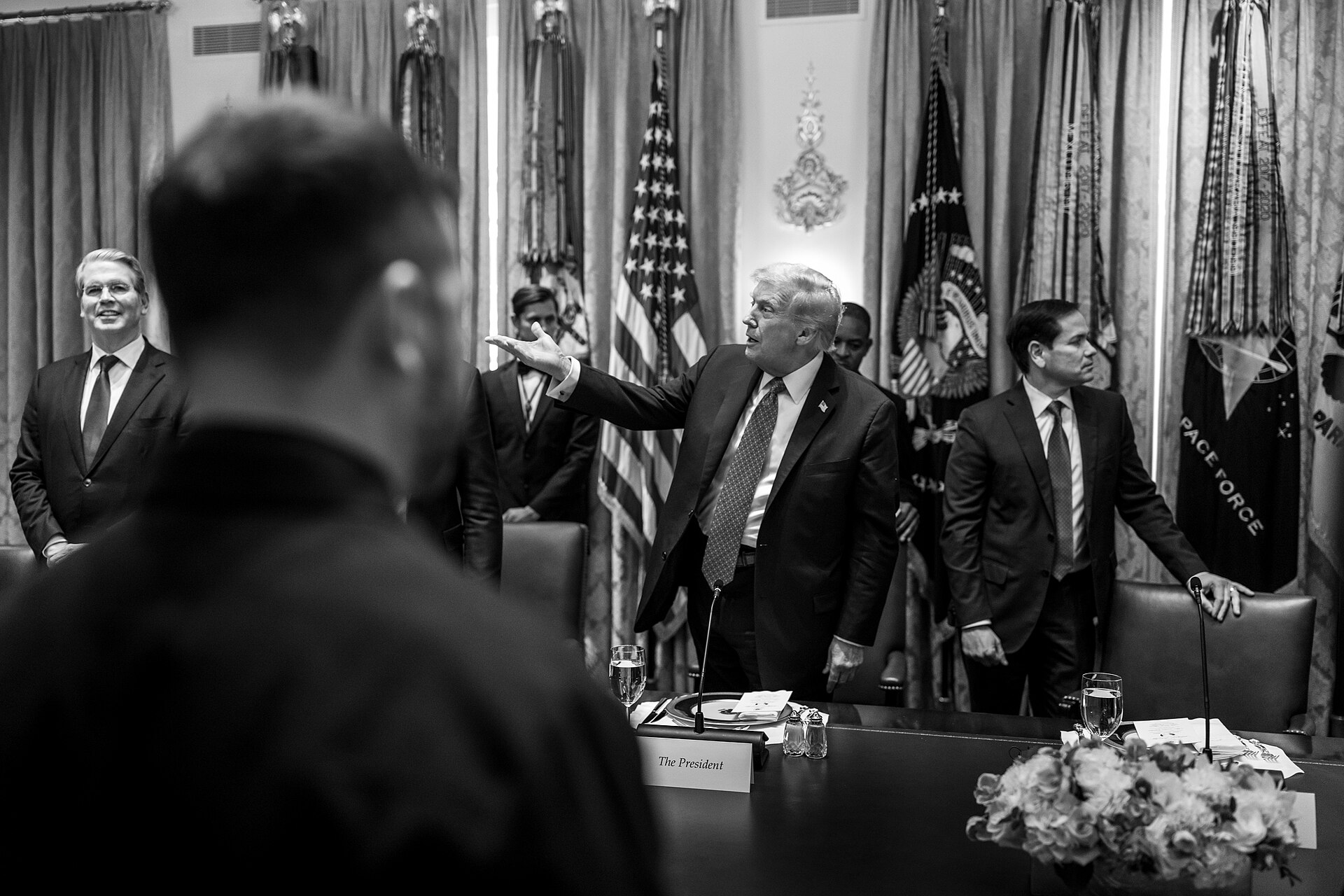
The credibility cost is measurable. When Trump issued the first 48-hour ultimatum on March 22, Brent crude spiked 8 percent in a single session as markets priced in the possibility of Iranian energy infrastructure destruction. By the third extension on March 26, oil fell 3 percent on the announcement — markets had begun pricing in the likelihood that the deadline would be extended again. The threat’s coercive value has depreciated with each postponement, according to analysis by Goldman Sachs, which now assigns a 25 percent probability to strikes actually occurring on April 6, down from 60 percent when the first deadline was issued (Goldman Sachs, March 2026).
Iran has noticed. Foreign Ministry spokesperson Nasser Kanaani described the deadline extensions as evidence that “the American government understands the consequences of such an action far better than its rhetoric suggests.” The IRGC, according to the Critical Threats Project at the American Enterprise Institute, has used the successive extensions to evacuate personnel from power plants, relocate critical command-and-control nodes, and pre-position retaliatory assets — including ballistic missiles aimed at Saudi Aramco facilities in the Eastern Province.
What Would Destroying Iran’s Energy Grid Actually Look Like?
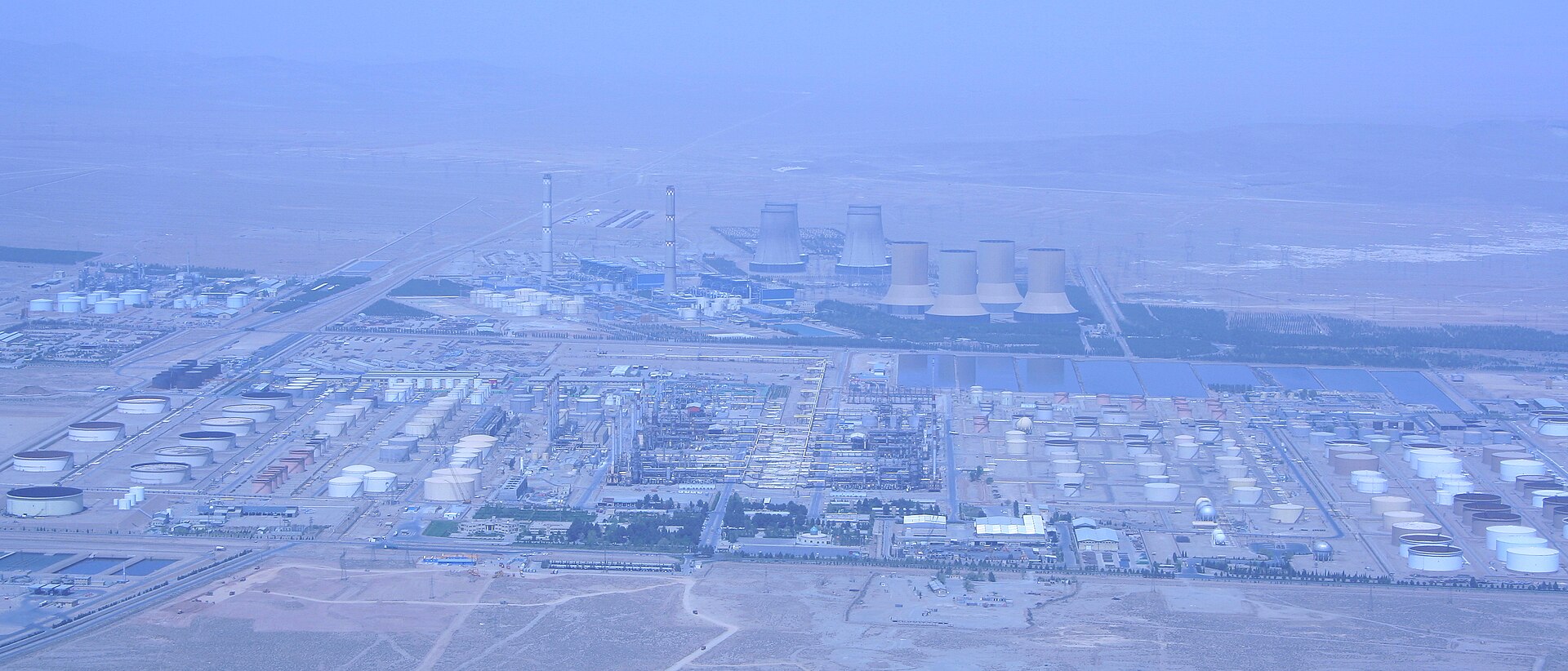
Iran operates approximately 130 thermal power plants with a combined capacity of 78,000 megawatts, according to the International Energy Agency. Its total installed electrical capacity, including hydroelectric and renewable sources, reaches 102 gigawatts. The transmission and sub-transmission network spans 133,000 kilometres, supported by 857,000 transformers and an estimated 2,000 to 5,000 major substations across the country (IEA, 2025). In spring, demand fluctuates between 30,000 and 38,000 megawatts, leaving a surplus of roughly 24,000 megawatts — a margin that would normally absorb localized disruptions but would collapse under a systematic strike campaign.
A comprehensive attack on this infrastructure would require a sustained air campaign spanning multiple days. The Center for Strategic and International Studies estimates that neutralizing Iran’s electrical grid to the point of national blackout would require striking 40 to 60 key nodes — major thermal plants, transformer substations, and transmission hubs — concentrated in Tehran province, Isfahan, Khuzestan, and Fars. The campaign would consume an estimated 800 to 1,200 precision-guided munitions, roughly equivalent to the first week of the 2003 Iraq invasion’s “shock and awe” phase.
Pentagon planners face a technical paradox. Iran’s grid is both centralized (making it vulnerable to cascading failures) and geographically dispersed (making it difficult to destroy comprehensively). A partial strike that knocked out 30 to 40 percent of generation capacity would cause severe hardship but leave Iran functional. A comprehensive strike targeting 70 percent or more would require the kind of sustained campaign that risks American aircraft losses over hardened Iranian air defenses — systems that, according to the Institute for the Study of War, have been significantly upgraded with Russian-supplied S-300 components since the war began.
| Metric | Value | Source |
|---|---|---|
| Thermal power plants | ~130 | IEA, 2025 |
| Thermal capacity | 78,000 MW | IEA, 2025 |
| Total installed capacity | 102 GW | IEA, 2025 |
| Spring demand | 30,000–38,000 MW | Iran Grid Management Co. |
| Transmission network | 133,000 km | Tavanir, 2025 |
| Transformers | 857,000 | Tavanir, 2025 |
| Major substations | 2,000–5,000 | CSIS estimate |
| Population dependent | 88 million | UN, 2026 |
TRT World reported that experts from the RAND Corporation and former Pentagon officials have questioned whether the campaign is technically feasible within the April 6 timeframe, noting that the preparation required — target packages, battle damage assessments, tanker support, and suppression of enemy air defenses — typically takes weeks, not days. The deadline may therefore be inherently symbolic: a political tool rather than an operational plan.
The $150 Barrel That Ends the Recovery
The economic consequences of actually striking Iran’s energy infrastructure extend far beyond the Middle East. Iran currently produces approximately 1.3 million barrels per day of crude oil — reduced from its pre-war output of 3.4 million barrels per day — and exports roughly 600,000 barrels per day, primarily to China, through sanctions evasion networks. Destroying Iran’s power grid would halt refinery operations, shut down oil field pumping stations, and collapse the pipeline network, removing the remaining Iranian supply from global markets permanently.
BlackRock CEO Larry Fink warned in a March 25 investor note that oil at $150 per barrel would trigger a “steep and stark” global recession, with “profound implications” for every asset class (BlackRock, March 2026). Qatar’s Energy Minister Saad Al-Kaabi separately warned that continued Hormuz disruption combined with Iranian energy destruction could push prices to $150 per barrel and natural gas to $40 per million British thermal units (Reuters, March 23, 2026). The European Central Bank has privately briefed eurozone finance ministers that a prolonged conflict exceeding three months would push Germany and Italy into technical recession by late 2026 (Financial Times, March 24, 2026).
Even if the conflict is contained to three months, Brent crude oil prices could rise to an average of $150 per barrel over the next six months or so.
Goldman Sachs Global Investment Research, March 2026
The paradox for Saudi Arabia is acute. At current prices near $115 per barrel — with Brent crude now touching $112.57 on March 28 — the Kingdom generates approximately $900 million per day in oil revenue — a windfall that has allowed the Public Investment Fund to accelerate economic diversification programmes and absorb the costs of expanded air defense operations. A spike to $150 would initially increase revenue further. But sustained prices at that level historically trigger demand destruction: consumers switch to alternatives, governments release strategic reserves, and industrial activity contracts. The 2008 oil price spike to $147 per barrel preceded a 65 percent price collapse within six months. Saudi Arabia’s fiscal planners, who have lived through three oil price crashes in the past decade, understand that $150 oil is not a windfall — it is the prelude to a bust.
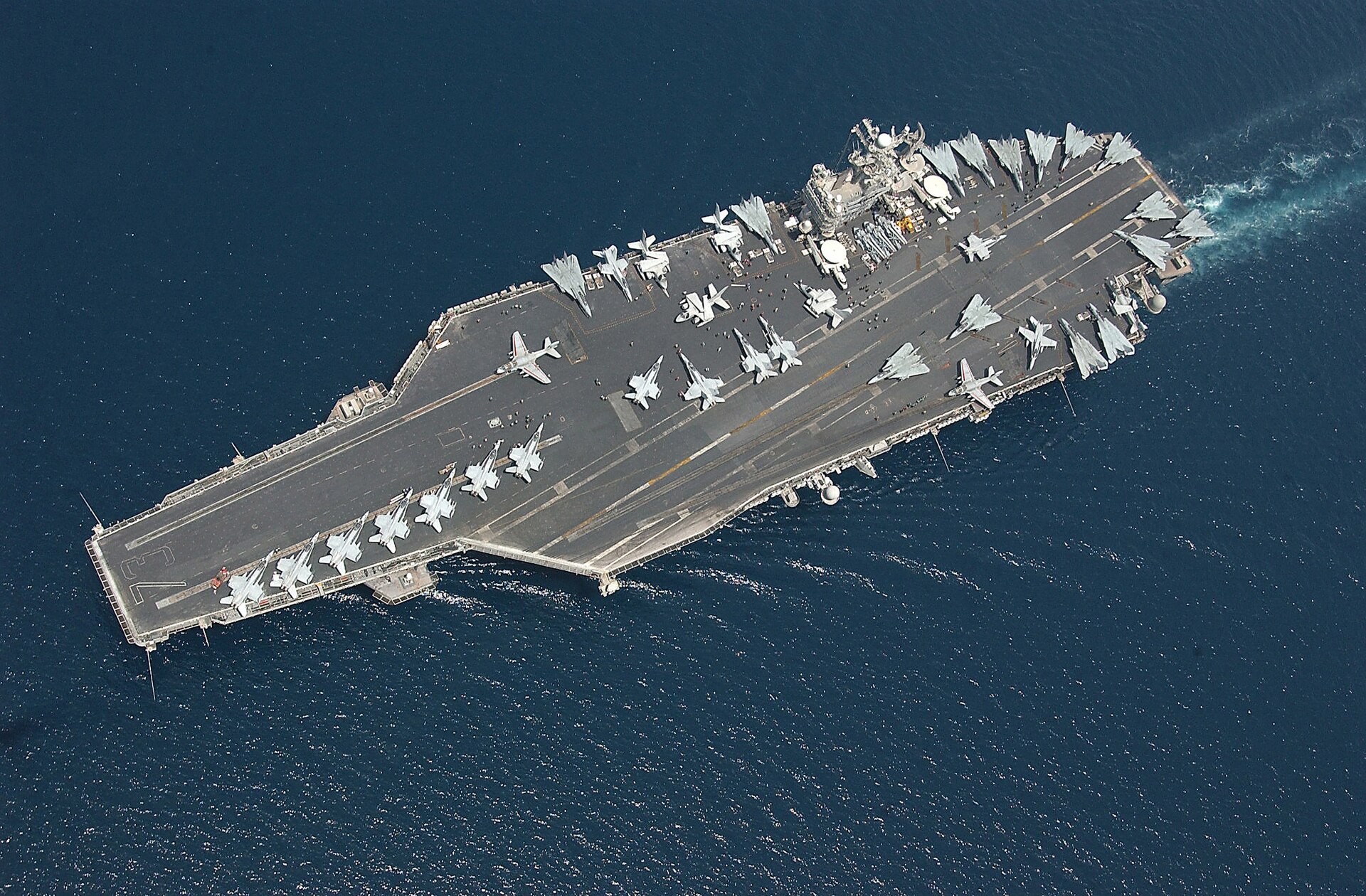
Moreover, Saudi Arabia cannot fully benefit from high oil prices while the Strait of Hormuz remains closed. Aramco has shut four supergiant offshore fields — Marjan, Abu Safa, Safaniya, and Zuluf — curtailing an estimated 2 to 2.5 million barrels per day. The East-West Pipeline to Yanbu on the Red Sea has a maximum capacity of 5 million barrels per day, but the Yanbu port itself was struck by Iranian drones on March 20, briefly disrupting exports. The Kingdom is producing oil it cannot fully deliver to market — a situation that earns revenue on paper while costing credibility with Asian customers who are turning to alternative suppliers in West Africa, Brazil, and the Americas.
Why Can’t Washington and Tehran Close the Gap?
The distance between the American and Iranian negotiating positions is not a gap — it is a chasm. The 15-point “action list” presented by US envoy Steve Witkoff through Pakistani intermediaries and Iran’s five-point counter-proposal share almost no common ground. Understanding why requires examining what each side actually demands.
The US proposal, according to reporting by the Washington Post, NPR, and Bloomberg, includes the following key elements: Iran must dismantle its nuclear enrichment programme and transfer all enriched uranium to the IAEA; three major nuclear facilities — Natanz, Isfahan, and Fordow — must be decommissioned; Iran must abandon its network of proxy militias, including Hezbollah, Iraqi Shia militias, and the Houthis; the Strait of Hormuz must be reopened to all international shipping; Iran must accept limitations on its ballistic missile programme; and inspectors must be granted unrestricted access to military sites. In exchange, Washington offers phased sanctions relief.
Iran’s counter-proposal, delivered through Pakistan on March 25, contains five conditions: an immediate end to all US and Israeli military operations against Iranian territory and armed groups; a guarantee of non-recurrence, including security assurances; payment of war reparations for damage to Iranian infrastructure and civilian casualties; recognition of Iran’s “natural and legal right” to sovereignty over the Strait of Hormuz; and the inclusion of Lebanon — meaning the cessation of Israeli operations against Hezbollah — in any ceasefire agreement.
| Issue | US Position | Iran Position | Gap Assessment |
|---|---|---|---|
| Nuclear programme | Complete dismantlement, IAEA transfer | Not mentioned in counter-proposal | Unbridgeable without regime change |
| Strait of Hormuz | Full reopening, free navigation | Iranian sovereignty recognised | Directly contradictory |
| Proxy militias | Disband and disarm | End attacks on “resistance groups” | Fundamentally opposed |
| Reparations | Not offered | Demanded for all war damage | Non-starter for Washington |
| Security guarantees | Implied via sanctions relief | Explicit non-recurrence guarantee | Potentially negotiable |
| Lebanon/Hezbollah | Separate from Iran deal | Must be included in ceasefire | Complicated by Israeli veto |
The arithmetic of these competing proposals suggests that a comprehensive deal before April 6 is virtually impossible. Even a partial agreement — say, a temporary Hormuz reopening in exchange for a pause in energy strikes — would require concessions that neither side’s domestic politics currently permits. Iran’s Supreme National Security Council, now led by Mojtaba Khamenei’s appointees, cannot be seen to capitulate under American bombardment. Trump cannot accept Iranian sovereignty over Hormuz without appearing to reward Tehran’s blockade strategy.
The Deadline Outcome Matrix
April 6 produces four possible outcomes. Each carries distinct consequences for Saudi Arabia, oil markets, and the war’s trajectory. The analysis below assigns probability ranges based on the pattern of previous deadline behaviour, current diplomatic positioning, and military readiness indicators.
| Scenario | Probability | Oil Price Impact | Iran Response | Saudi Arabia Impact |
|---|---|---|---|---|
| Full energy strikes | 15–25% | $140–160/bbl | Maximum retaliation against Gulf | Severe: infrastructure targets, possible desalination attacks |
| Limited/symbolic strikes | 10–15% | $120–135/bbl | Calibrated escalation | Moderate: increased drone campaign |
| Fourth extension | 40–50% | $100–110/bbl | Continued blockade + hardening | Strategic erosion: US credibility collapse |
| Partial deal (Hormuz opening) | 15–20% | $85–95/bbl | Tactical pause, maintain proxies | Mixed: Hormuz opens but Iran strengthened |
The most likely outcome — another extension — is also the most corrosive for Saudi Arabia’s long-term security. Every week that passes without American action against Iran’s energy infrastructure reinforces Tehran’s calculation that the threat is hollow. Gulf capitals have since made their position explicit, demanding that Iran’s military capabilities be permanently degraded before any deal is signed. Iran’s IRGC has used the successive extensions to disperse critical military assets, evacuate power plant personnel to reduce the humanitarian cost of strikes, and pre-position retaliatory weapons systems. According to the Critical Threats Project at the American Enterprise Institute, IRGC Aerospace Force units have relocated at least 40 medium-range ballistic missiles to hardened sites along the Zagros mountain range since the first deadline was announced — missiles whose primary targets, based on trajectory analysis, are Saudi Aramco facilities in the Eastern Province (AEI Critical Threats, March 27, 2026).
The scenario that would most benefit Saudi Arabia — a partial deal that reopens the Strait of Hormuz — carries its own strategic costs. Any agreement that recognises Iranian influence over the strait, even implicitly, would establish a precedent that Tehran could invoke in future crises. Saudi Arabia’s $80 billion annual military budget is predicated on the assumption that the strait is an international waterway protected by international law and American naval power. An agreement that concedes any Iranian authority over Hormuz would undermine that assumption permanently.
What Does Saudi Arabia Need From April 6?
Riyadh’s strategic requirements from the April 6 deadline are specific, measurable, and largely incompatible with what any of the four scenarios delivers. Crown Prince Mohammed bin Salman’s government needs the Strait of Hormuz reopened without conceding Iranian sovereignty over it. It needs the Iranian drone and missile campaign against Saudi territory halted without Saudi Arabia becoming a primary target of Iranian retaliation against American strikes. It needs oil prices to stabilise in the $80 to $100 range — high enough to fund Vision 2030 projects but low enough to avoid triggering demand destruction and the global recession that would devastate the Kingdom’s non-oil economic diversification plans.
None of the four scenarios delivers all three. Full energy strikes would reopen Hormuz eventually but would trigger massive Iranian retaliation against Saudi infrastructure in the interim. A fourth extension keeps Hormuz closed and validates Iranian strategy. A partial deal might reopen the strait but at the cost of Iranian leverage over Gulf shipping. Limited strikes would achieve nothing strategically while provoking retaliation.
Saudi Arabia’s S&P credit rating of A+ with stable outlook, reaffirmed in March 2026, reflects the Kingdom’s fiscal resilience: government debt stands at approximately 25 percent of GDP, well below the emerging market average of 60 percent, and net asset positions are projected to average 42 percent of GDP through 2029 (S&P Global, March 2026). The non-oil sector now accounts for roughly 70 percent of GDP, according to S&P, up from 65 percent in 2018. These are impressive numbers. They are also numbers that assume the war ends within months — an assumption that every deadline extension makes less certain.
The Kingdom has quietly begun preparing for a longer conflict. The Public Investment Fund has redirected capital from megaproject spending — including the termination of $6 billion in Trojena ski resort contracts — toward food security, grain storage, and defence procurement. Saudi Arabia signed defence cooperation agreements with Ukraine, France, and South Korea in March alone, spending an estimated $20 billion in the first quarter of 2026 on arms purchases — roughly equivalent to the entire 2024 defence budget compressed into twelve weeks (SIPRI preliminary data, March 2026).
That pivot toward food security reflects a growing recognition that the war’s economic damage extends far beyond oil prices. The disruption to Gulf fertilizer exports has created a global fertilizer famine that threatens 45 million people across three continents, as the Hormuz closure traps nearly one million metric tons of urea and ammonia in Gulf ports during the critical spring planting window.
Iran’s Retaliation Playbook If Energy Strikes Begin
If Trump executes energy strikes on April 6, Iran’s retaliation will not be proportional. Foreign Minister Abbas Araghchi stated on March 27 that Iran’s response to the nuclear facility strikes would “no longer be an eye for an eye” — signalling a qualitative shift in Tehran’s escalation calculus. The IRGC has spent four weeks preparing for this contingency, and intelligence assessments from multiple Western agencies identify five primary retaliation vectors.
The first and most immediate vector is a saturation attack on Gulf energy infrastructure. Iran has demonstrated the capability to launch coordinated drone and missile salvos targeting Aramco facilities, with Saudi air defences intercepting an estimated 85 to 90 percent of incoming threats. The residual 10 to 15 percent, however, would be sufficient to cause significant damage to refineries, pumping stations, and export terminals. A simultaneous strike on 20 to 30 facilities across Saudi Arabia, the UAE, Kuwait, and Bahrain would overwhelm air defence systems designed to handle sequential, not simultaneous, threats.
The second vector targets Gulf desalination infrastructure. Saudi Arabia derives approximately 70 percent of its drinking water from desalination plants concentrated along the Gulf coast. A successful strike on even two or three major plants — Ras Al-Khair, Jubail, or Shoaiba — could create a water crisis affecting millions within 72 hours. Iran has explicitly threatened desalination plants in response to energy strikes, and IRGC naval forces have the anti-ship cruise missiles capable of reaching coastal facilities from positions in the northern Gulf.
The third vector is proxy activation. Hezbollah, Iraqi Shia militias, and the Houthis have all maintained offensive capability throughout the war. Iraqi militias struck US bases 21 times in 24 hours during the heaviest escalation period, according to CENTCOM reporting. The Houthis retain the ability to launch cruise missiles and armed drones at Saudi cities and infrastructure from Yemen — a capability that Saudi Arabia spent seven years and billions of dollars attempting to eliminate without success.
The fourth vector is cyber warfare. Iran’s cyber capabilities, while less dramatic than kinetic strikes, have already targeted Saudi financial institutions, government networks, and critical infrastructure control systems during the war. A coordinated cyber attack on banking systems, power distribution networks, and telecommunications could amplify the chaos caused by physical strikes.
The fifth vector is the complete and permanent closure of the Strait of Hormuz through mine warfare, submarine deployment, and anti-ship missile batteries along the Iranian coastline. Iran has an estimated 6,000 naval mines in its inventory, according to the Office of Naval Intelligence, and the ability to deploy them across the 21-nautical-mile-wide navigable channel within hours. Mine clearance operations would take weeks, possibly months.
Eighty-Eight Million People in the Dark
The humanitarian dimension of energy strikes is the factor that most constrains American decision-making — and the one that receives the least public attention. Iran’s population of 88 million people depends entirely on the electrical grid for water purification, hospital operations, food refrigeration, heating, and communications. A comprehensive strike on power generation would not merely inconvenience Iranian civilians. It would kill them.
The International Committee of the Red Cross warned in a March 24 statement that attacks on civilian electrical infrastructure constitute potential violations of international humanitarian law under Additional Protocol I to the Geneva Conventions, which prohibits attacks on “objects indispensable to the survival of the civilian population” (ICRC, March 24, 2026). The World Health Organisation reported that Iran’s healthcare system, already strained by four weeks of war, operates 1,200 hospitals and 17,000 health centres — virtually all dependent on grid electricity, with backup generators providing coverage for only 24 to 48 hours.
The comparison to the 2003 Iraq invasion is instructive. Coalition strikes on Iraqi electrical infrastructure during the first Gulf War resulted in an estimated 100,000 excess civilian deaths over the following year, primarily from waterborne disease, hospital failures, and food spoilage, according to a post-war study by the Harvard Study Team (New England Journal of Medicine, 1992). Iran’s population is three times Iraq’s 1991 population, and its per capita electricity consumption is substantially higher — meaning the humanitarian consequences would be proportionally greater.
This is the calculation that has prevented three American presidents — Obama, Trump in his first term, and Biden — from ordering strikes on Iranian energy infrastructure despite repeated provocations. The humanitarian cost creates legal liability under international law, moral liability in the court of global public opinion, and political liability at home. More than 300 American troops have been wounded in the Iran war, and at least 13 have been killed. But the images of Iranian hospitals going dark and children dying from contaminated water would define the war’s legacy in ways that military victories cannot erase.
Why the Deadline Is More Dangerous Than the War Itself
The conventional narrative holds that the April 6 deadline is a tool of American coercion — a mechanism designed to pressure Iran into concessions. The evidence suggests the opposite. The deadline has become the war’s most destabilising element, driving escalation on both sides while foreclosing the diplomatic pathways that might end the conflict.
Consider the feedback loop. Trump announces a deadline. Iran, unwilling to appear to capitulate under threat, accelerates its retaliatory operations and hardens its negotiating position. The Gulf states, fearing massive Iranian retaliation if strikes occur, privately urge Washington to extend again — undermining the credibility of the threat. Markets swing violently between fear of strikes (oil spikes) and expectation of another extension (oil retreats). Each cycle deepens uncertainty, increases economic damage, and pushes both sides toward positions from which retreat becomes politically impossible.
The deadline has also created a perverse incentive structure for Iran. Every day that Iran maintains the Hormuz blockade without triggering energy strikes, it proves that the blockade works — that Iran can impose costs on the global economy without suffering the ultimate consequence. This is precisely the lesson that future adversaries will internalise: that a determined regional power with asymmetric capabilities can hold the global economy hostage against a superpower that is unwilling to pay the full price of its own threats.
Saudi Arabia understands this dynamic better than Washington does. The Kingdom has spent decades building its strategic relationship with the United States on the assumption that American military power is credible — that when Washington says it will act, it will act. The April 6 deadline, whatever its outcome, has already damaged that assumption. If Trump strikes, Saudi Arabia faces devastating Iranian retaliation. If he extends again, Saudi Arabia faces a world in which American security guarantees are depreciating assets. If he negotiates a deal that recognises Iranian interests in the strait, Saudi Arabia faces a permanent shift in the regional balance of power.
The uncomfortable truth is that Saudi Arabia’s best outcome on April 6 may be the one it can least control: a deal negotiated between Washington and Tehran that sacrifices some of Riyadh’s preferences in exchange for an end to the immediate crisis. The question of who broke international law first will matter less than who stops breaking it last.
What Comes After April 6?
Regardless of which scenario materialises on April 6, the strategic landscape for Saudi Arabia will be permanently altered. The war has already lasted longer than the Trump administration initially projected — senior officials privately acknowledged to the Times of Israel on March 27 that the conflict may extend past the original four-to-six-week timeline. Vice President Vance confirmed on March 28 that the U.S. would fight “a little while longer” to permanently neuter Iran — language that effectively writes a blank check on Saudi territory with no expiration date. For Saudi Arabia, the implications of a protracted war are fundamentally different from those of a short, decisive campaign.
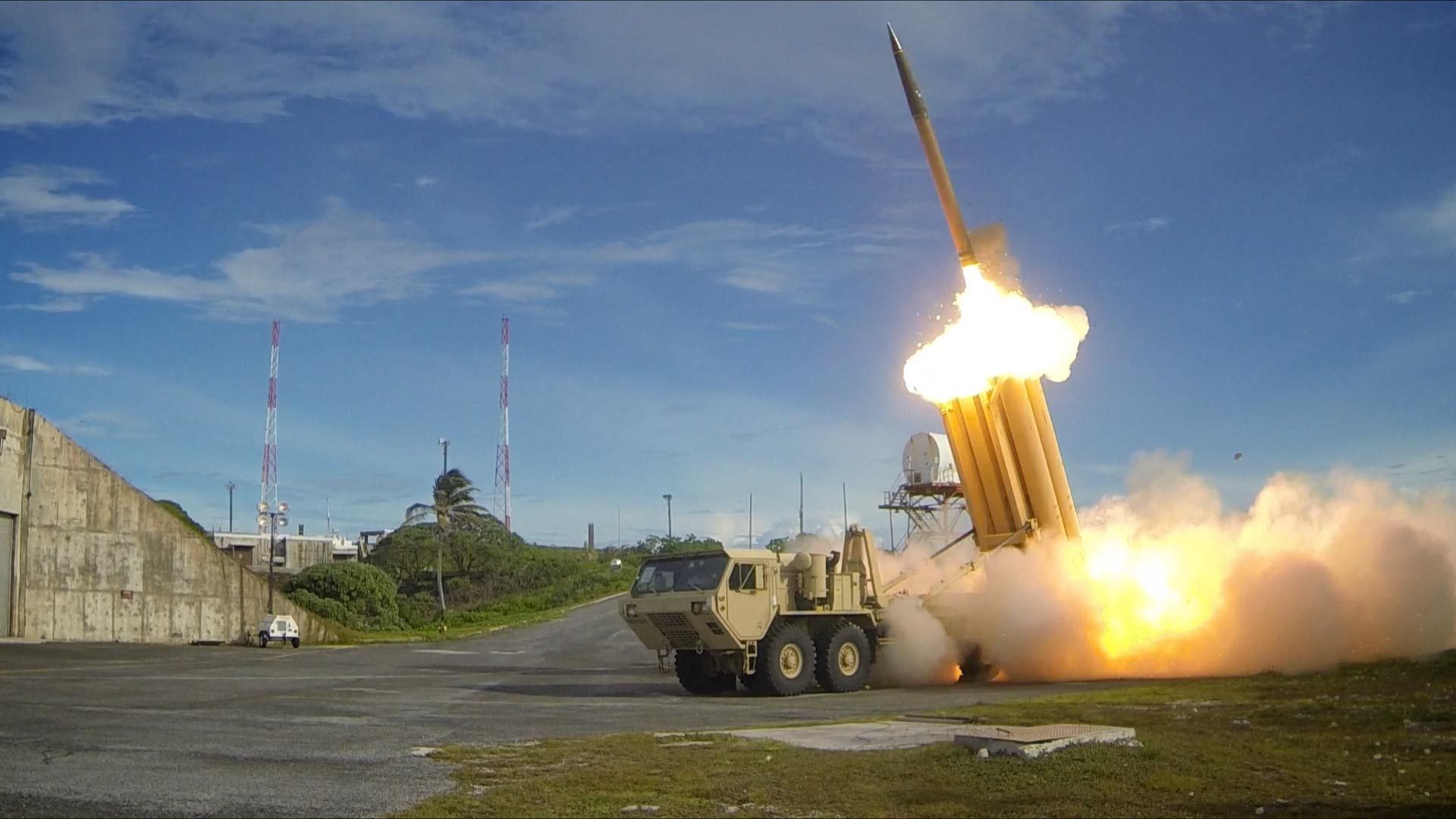
A long war means sustained pressure on air defence interceptor stocks. Saudi Arabia has fired hundreds of Patriot and THAAD interceptors since February 28, at a cost of $3 to $6 million per round. The Kingdom’s interceptor inventory is classified, but defence analysts at the International Institute for Strategic Studies estimate that current consumption rates — approximately 10 to 15 interceptors per day — cannot be sustained beyond three to four months without emergency resupply from the United States. The growing political friction between Washington and its allies raises questions about whether that resupply will be prioritised.
A long war means continued disruption to Vision 2030. The termination of Trojena contracts, the suspension of NEOM construction phases, and the redirection of PIF capital toward defence spending represent a strategic pivot that cannot be easily reversed. Every month of conflict delays the economic diversification timeline that is supposed to prepare the Kingdom for a post-oil world — the very future that the war’s oil windfall was supposed to fund.
A long war also means that the geopolitical alignments formed during the crisis become permanent. Saudi Arabia’s defence cooperation agreements with Ukraine, South Korea, France, and Turkey — signed under the pressure of wartime necessity — will reshape the Kingdom’s strategic relationships for decades. The era of exclusive American dominance over Gulf security architecture is ending not because anyone planned it, but because the war forced diversification at a pace that peacetime diplomacy never would have permitted.
The most consequential post-April 6 development may be the one least discussed: the birth of a Gulf-wide integrated air defence network. The shared threat of Iranian missile and drone attacks has pushed Saudi Arabia, the UAE, Bahrain, Kuwait, and Qatar into operational coordination that would have been unimaginable two years ago, when the Saudi-UAE rivalry dominated regional security dynamics. If this integration survives the war, it will represent the most significant advancement in Gulf collective security since the founding of the GCC in 1981 — a body whose collective defense mechanisms have never functioned as designed.
April 6 will not end the war. It may not even end the debate about energy strikes. But it will determine whether the conflict’s trajectory bends toward escalation or exhaustion — and whether Saudi Arabia enters the next phase of the crisis as a participant in shaping the outcome or a bystander absorbing its consequences.
The Pentagon’s simultaneous consideration of sending 10,000 additional ground troops to the Gulf — with ground operations against Kharg Island among the options — suggests that Washington is preparing for scenarios well beyond the original four-to-six-week timeline.
Frequently Asked Questions
What is Trump’s April 6 deadline for Iran?
President Trump set April 6, 2026, at 8 PM Eastern Time as the deadline for Iran to reopen the Strait of Hormuz to international shipping. If Iran does not comply, Trump has threatened to order the destruction of Iran’s energy infrastructure, including power plants, refineries, and electrical grid facilities. This is the third iteration of the deadline, which was originally a 48-hour ultimatum issued on March 22 and has been extended twice since.
What would happen to oil prices if Trump strikes Iran’s energy infrastructure?
Analysts at Goldman Sachs, BlackRock, and J.P. Morgan have warned that destroying Iran’s energy infrastructure would push Brent crude oil prices to $140 to $160 per barrel in the immediate aftermath. BlackRock CEO Larry Fink specifically warned that sustained prices above $150 per barrel would trigger a “steep and stark” global recession affecting every major economy, with the European Central Bank forecasting that Germany and Italy would enter technical recession by late 2026.
How many power plants does Iran have?
Iran operates approximately 130 thermal power plants with a combined capacity of 78,000 megawatts, plus hydroelectric and renewable facilities bringing total installed capacity to 102 gigawatts. The grid serves 88 million people across a transmission network spanning 133,000 kilometres, supported by 857,000 transformers and thousands of substations. Experts estimate that neutralising the grid would require striking 40 to 60 critical nodes.
What are Iran’s five conditions for ending the war?
Iran has demanded five conditions in its counter-proposal to the US 15-point peace plan: an immediate end to all US and Israeli military operations, a guarantee that the conflict will not recur, payment of war reparations for damage to Iranian infrastructure and civilian casualties, recognition of Iran’s sovereignty over the Strait of Hormuz, and the inclusion of all resistance fronts — including Lebanon and Hezbollah — in any ceasefire agreement. Washington has rejected these terms as non-starters.
How would energy strikes affect Saudi Arabia?
Energy strikes on Iran would trigger massive Iranian retaliation against Saudi Arabia, potentially targeting Aramco oil facilities in the Eastern Province, desalination plants along the Gulf coast, and civilian infrastructure in Riyadh. Saudi air defences have intercepted 85 to 90 percent of incoming threats during the war, but a saturation attack following energy strikes could overwhelm those systems. Oil prices would spike above $140, initially boosting Saudi revenue but ultimately triggering demand destruction and global recession that would damage the Kingdom’s long-term economic prospects.
Will Trump actually strike Iran’s power grid on April 6?
Goldman Sachs assigns a 25 percent probability to strikes occurring on April 6, down from 60 percent when the first deadline was issued on March 22. The pattern of successive extensions — each longer than the last — suggests that the threat serves primarily as diplomatic leverage rather than an operational plan. However, the risk cannot be dismissed: domestic political pressure, Israeli escalation including nuclear facility strikes on March 27, and Iran’s refusal to make concessions could push the administration toward action despite the catastrophic consequences.