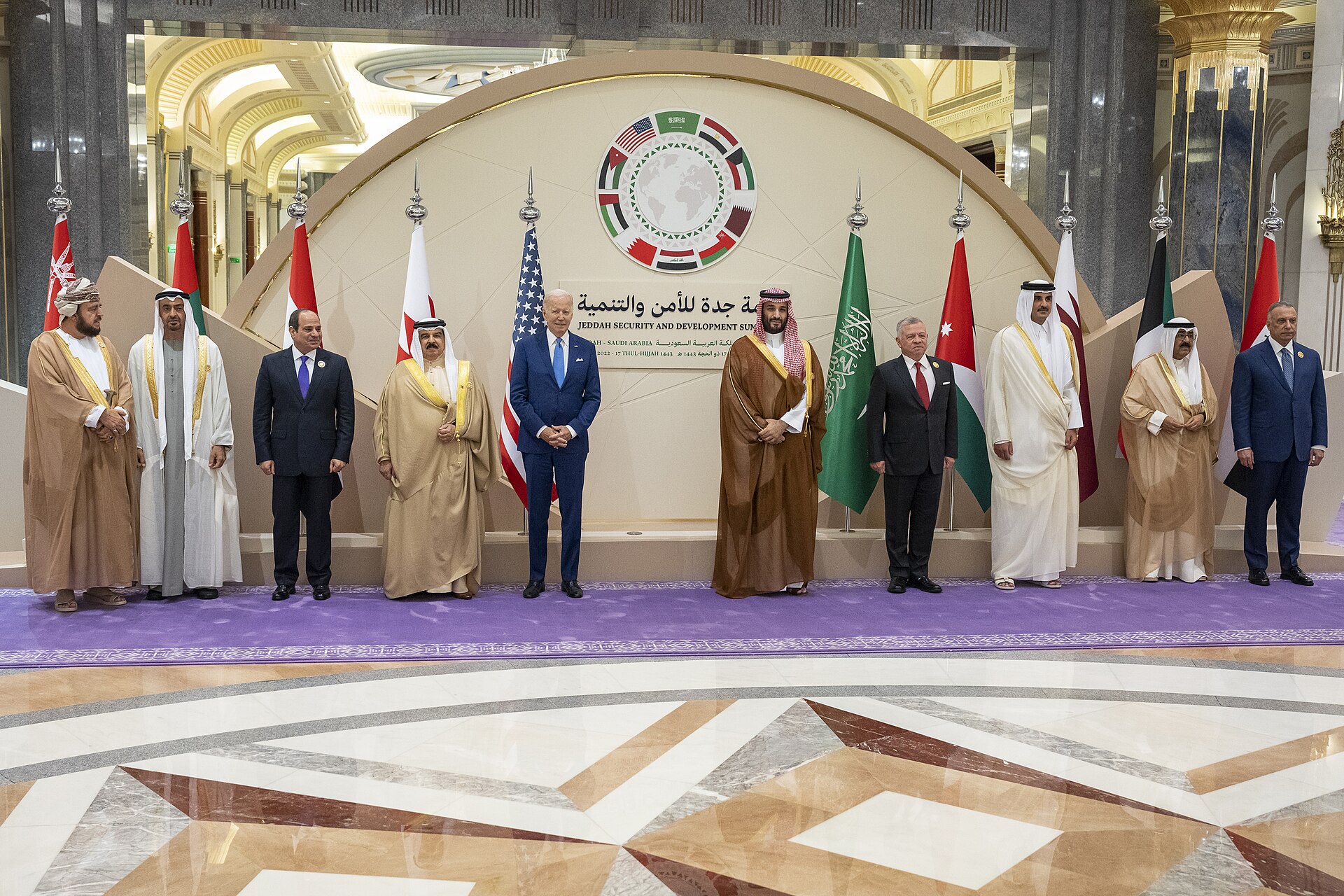

RIYADH — Saudi Arabia, the United Arab Emirates, Kuwait, Bahrain, Qatar, and Jordan issued a joint declaration on Wednesday invoking Article 51 of the United Nations Charter, formally claiming the right to individual and collective self-defense against Iranian attacks that have struck all six nations since the war began on 28 February 2026. The statement, released simultaneously by the foreign ministries of all six capitals, marked the sharpest collective diplomatic escalation by Arab states since the conflict erupted four weeks ago.
The declaration condemned what it called “blatant Iranian attacks” constituting “a flagrant violation of their sovereignty, territorial integrity, international law, international humanitarian law, and the Charter of the United Nations.” It reserved “the right to take all necessary measures to safeguard their sovereignty, security, and stability,” language that diplomats and analysts read as an explicit warning that Gulf military action against Iran is no longer off the table.
The statement drew a direct line to Iran-backed proxy attacks launched from Iraqi territory, demanding Baghdad halt the militias operating from its soil. It singled out “sleeper cells loyal to Iran and terrorist organisations linked to Hezbollah” as an additional destabilising force. Collectively, the six nations represent more than $500 billion in annual defence spending, a combined armed forces exceeding 800,000 active personnel, and the most advanced Western-supplied air defence networks outside NATO.
Table of Contents
- What Did the Six-Nation Joint Statement Say?
- What Does Article 51 Mean for Gulf Military Action?
- Iraq Becomes the Flashpoint
- Saudi Foreign Minister’s Warning to Tehran
- What Military Capabilities Could the Gulf Deploy?
- From Restraint to Readiness
- Washington Backs the Declaration
- Tehran Dismisses Gulf Threats
- Frequently Asked Questions
What Did the Six-Nation Joint Statement Say?
The statement, confirmed by the Saudi Press Agency and the UAE Ministry of Foreign Affairs on 26 March 2026, renewed “condemnation in the strongest terms of the blatant Iranian attacks” against the six signatory nations. It accused Iran of carrying out strikes “directly or through their proxies and armed factions they support in the region,” according to the full text published by Gulf News.
Three legal pillars underpinned the declaration. The first was a direct accusation that Iran had violated the sovereignty and territorial integrity of all six nations. The second cited United Nations Security Council Resolution 2817, adopted in 2026, which “explicitly demands that Iran immediately and unconditionally cease any attacks or threats against neighbouring states, including through the use of proxies.” The third invoked Article 51 of the UN Charter, the foundational legal provision governing the right of states to defend themselves when attacked.
The statement was notable for naming Iraq as a launchpad for Iranian proxy operations. “They stressed, in particular, the attacks carried out by armed factions loyal to Iran from the Republic of Iraq against a number of countries in the region, as well as their facilities and infrastructure,” the full text read. The six nations called on Baghdad “to take the necessary measures to immediately halt the attacks launched by factions, militias, and armed groups from Iraqi territory toward neighbouring countries.”
The Middle East briefing 3,000+ readers start their day with.
One email. Every weekday morning. Free.
A separate clause condemned “destabilising acts and activities targeting the security and stability of the region’s countries, which are planned by sleeper cells loyal to Iran and terrorist organisations linked to Hezbollah.” This language followed the arrest of 32 suspects in Kuwait linked to a Hezbollah-backed assassination plot targeting senior government officials, an operation disclosed earlier the same day.
The US State Department issued a parallel joint statement with Bahrain, Jordan, Kuwait, Qatar, Saudi Arabia, and the UAE on the same day, according to a release from the Office of the Spokesperson. The American co-signature added diplomatic weight but also underscored that the Gulf states chose to issue their own standalone declaration first, signalling independent agency in the escalation. The following day, Saudi Foreign Minister Prince Faisal bin Farhan carried the same message to the G7 foreign ministers summit in France, where he held bilateral meetings with counterparts from France, India, and the United States.
What Does Article 51 Mean for Gulf Military Action?
Article 51 of the United Nations Charter states that “nothing in the present Charter shall impair the inherent right of individual or collective self-defence if an armed attack occurs against a Member of the United Nations.” The invocation is a legal precondition for military force under international law, and the Gulf states’ explicit reference to it transforms the declaration from diplomatic protest into potential legal authorization for offensive operations.
The provision has been invoked in virtually every major military campaign since the Charter’s adoption in 1945. The United States cited Article 51 after the 11 September 2001 attacks to justify operations in Afghanistan. Turkey invoked it repeatedly for cross-border operations into Syria against Kurdish militants. Saudi Arabia itself referenced the article when forming the coalition that intervened in Yemen in 2015, according to a letter submitted to the UN Security Council at the time.
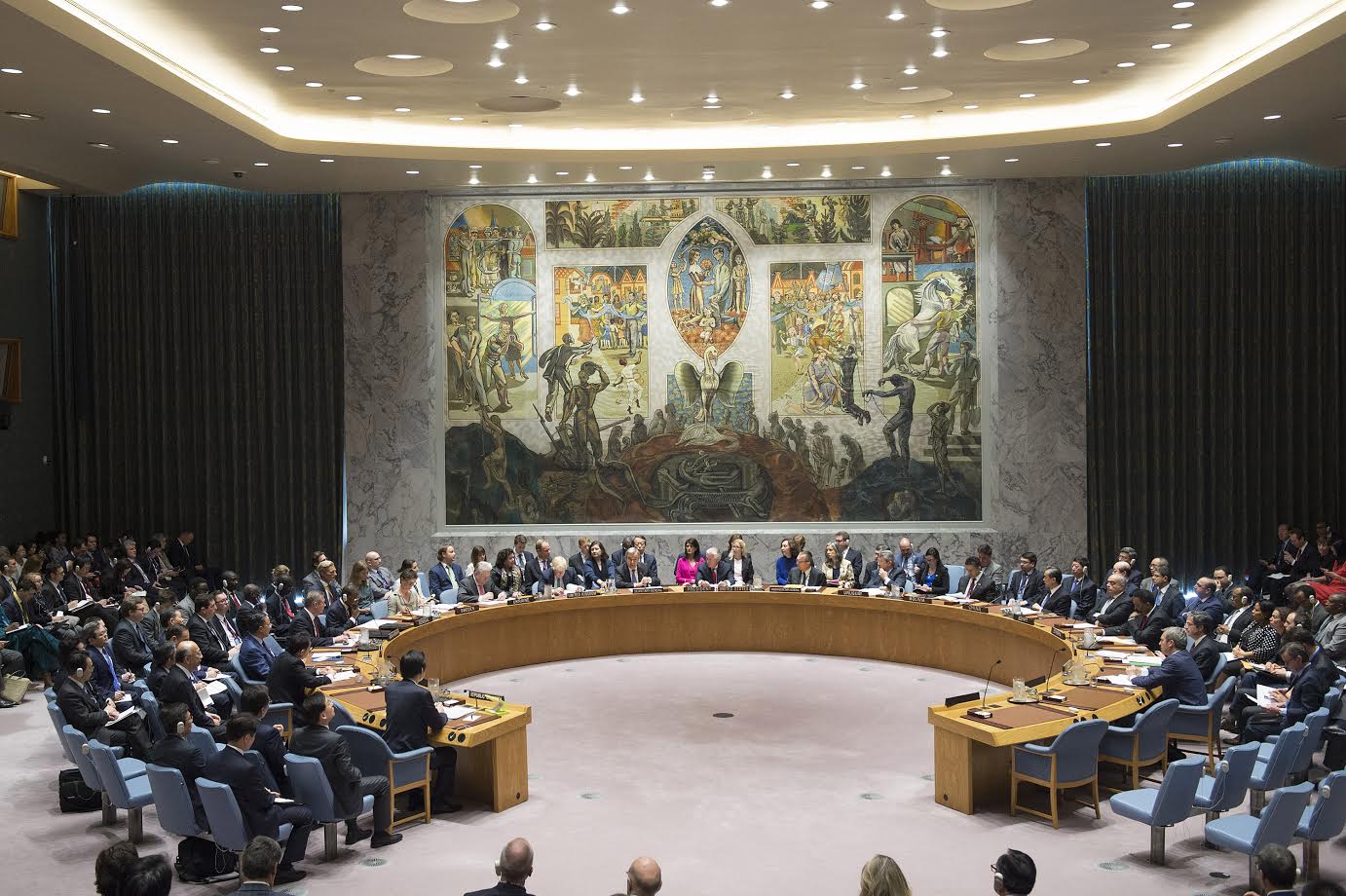
Legal scholars noted that the Article 51 invocation, combined with the language about “all necessary measures,” mirrors the phrasing that preceded coalition action in past conflicts. “The phrase ‘all necessary measures’ is the internationally recognised code for authorising the use of force,” Marc Weller, a professor of international law at the University of Cambridge, told Reuters in an earlier analysis of the conflict’s legal dimensions. Whether the Gulf states intend to exercise that right offensively, or are building a legal foundation for future action, remains the central question.
The reference to “collective” self-defense was equally significant. Article 51 permits not just individual state action but coordinated military operations among allied nations. A collective Gulf military response, should it materialise, would have pre-established legal grounding through this declaration. The question of whether the Gulf states broke international law first or acted within their rights has become a defining legal debate of the conflict.
Iraq Becomes the Flashpoint
The joint statement’s most operationally significant demand targeted Baghdad. Iran-backed militias operating from Iraqi territory have launched dozens of drone and missile attacks against Gulf states since mid-March, according to tracking by the Critical Threats Project at the American Enterprise Institute. The Popular Mobilisation Forces (PMF), officially integrated into the Iraqi military but operationally loyal to Tehran’s Islamic Revolutionary Guard Corps Quds Force, have used Iraqi border areas and southern provinces as staging grounds.
Iraq’s government has struggled to contain the militia activity. On 27 March, Baghdad authorised PMF military retaliation after US airstrikes killed 22 people in Anbar Province, a decision that further complicated Iraq’s position as both a sovereign state and a corridor for Iranian proxy operations. The six-nation declaration effectively gave Baghdad an ultimatum: stop the cross-border attacks or face consequences from its Arab neighbours.
CNBC reported on 26 March that the Gulf states specifically cited attacks from Iraqi territory as a “particular grievance” and a breach of UN Security Council Resolution 2817. The militias have targeted energy infrastructure across the Gulf, including strikes on Kuwaiti refineries that temporarily disrupted approximately 400,000 barrels per day of refining capacity on 20 March, according to Reuters.
The Iraqi government issued no formal response to the six-nation demand within the first 24 hours. Privately, Iraqi officials told Al Jazeera they had “limited ability” to control militias that answer to Tehran rather than Baghdad, a position that satisfied none of the signatories.
Saudi Foreign Minister’s Warning to Tehran
Saudi Arabia’s Foreign Minister Prince Faisal bin Farhan Al Saud had laid the rhetorical groundwork for the joint declaration a week earlier. Speaking after a ministerial meeting of Arab and Islamic foreign ministers in Riyadh on 19 March, Prince Faisal warned Iran that “the patience that is being exhibited is not unlimited,” according to Arab News.
The foreign minister stated that Saudi Arabia and its partners possessed “very significant capacities and capabilities that they could bring to bear should they choose to do so.” The comment, described by analysts at the International Institute for Strategic Studies (IISS) as the most explicit Saudi threat of direct military force against Iran in the history of the bilateral relationship, was delivered after Iranian drones struck Qatar’s Ras Laffan gas facility and the UAE’s Habshan gas processing plant on the same day.
Prince Faisal’s earlier statement and the joint declaration represented a deliberate two-step escalation. The FM’s warning was personal and national in tone. The declaration made the threat collective and legal, grounding it in the UN Charter and associating it with six sovereign governments rather than one.
Ashar Al-Awsat reported that Prince Faisal told journalists separately that “trust in Iran has been shattered,” a reference to the 2023 Saudi-Iran rapprochement brokered by China that collapsed when Iranian missiles began striking Gulf civilian infrastructure less than 24 hours after the war began. Saudi Arabia expelled Iran’s military attache and four embassy staff on 21 March, giving them 24 hours to leave the Kingdom.
What Military Capabilities Could the Gulf Deploy?
The six signatory nations control some of the most advanced military hardware outside the NATO alliance. Saudi Arabia alone spends approximately $75 billion annually on defence, making it the world’s fifth-largest military spender, according to the Stockholm International Peace Research Institute (SIPRI). The UAE’s defence budget exceeds $25 billion, and the combined air forces of the six nations operate more than 700 combat aircraft, including F-15SA Eagles, F-16E/F Desert Falcons, Eurofighter Typhoons, and Dassault Rafales.
| Nation | Defence Budget (est.) | Active Personnel | Key Air Assets |
|---|---|---|---|
| Saudi Arabia | $75 billion | 257,000 | F-15SA, Typhoon, Tornado |
| UAE | $25 billion | 63,000 | F-16E/F, Mirage 2000, Rafale (ordered) |
| Kuwait | $8 billion | 17,500 | F/A-18 Hornet, Typhoon (ordered) |
| Bahrain | $1.8 billion | 8,200 | F-16V Block 70 |
| Qatar | $15 billion | 16,000 | Rafale, F-15QA, Typhoon |
| Jordan | $2.5 billion | 100,500 | F-16AM/BM, AH-1 Cobra |
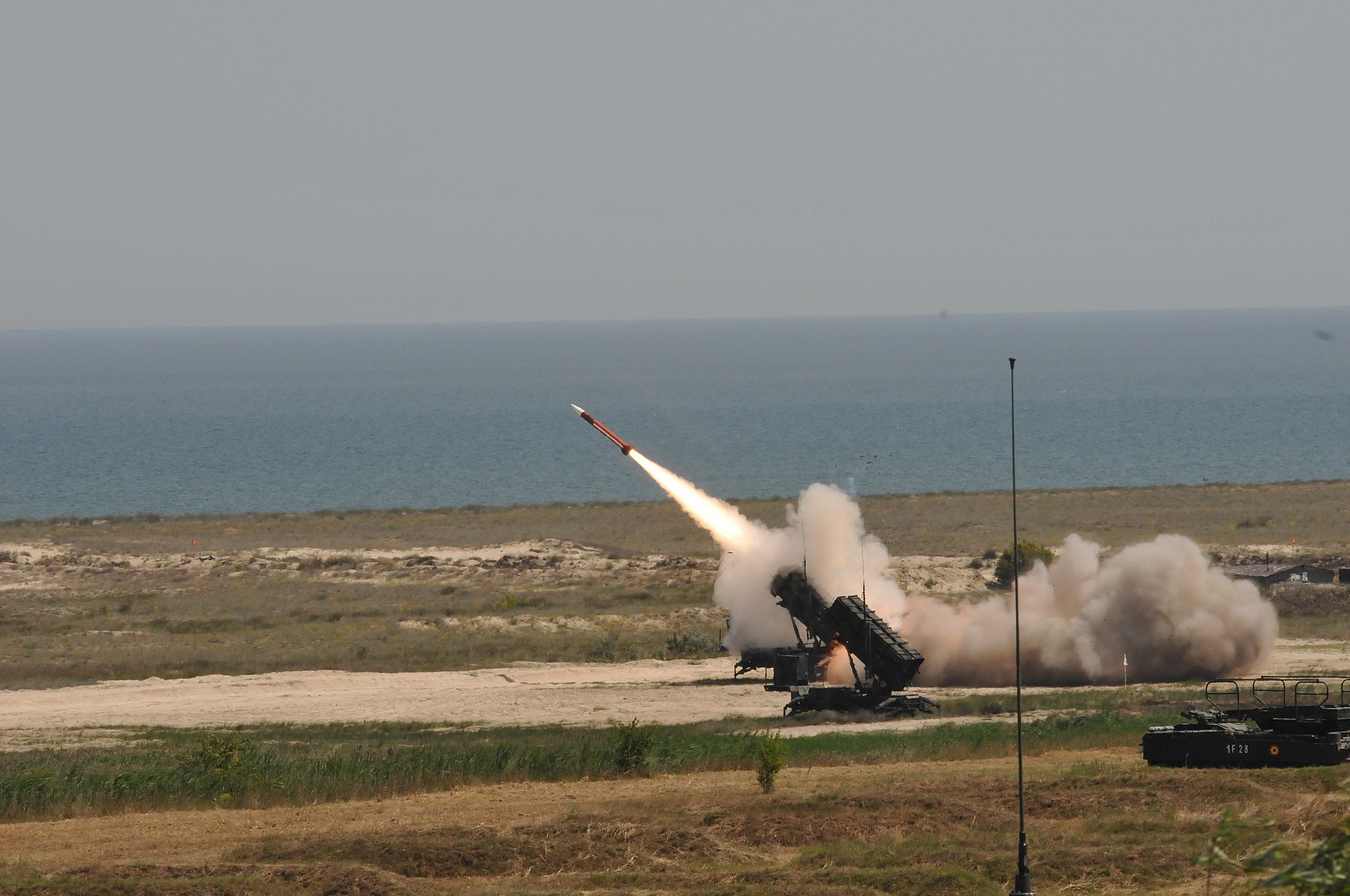
Air defence has been the primary operational focus during the war. Saudi Arabia’s layered air defence network, anchored by Patriot PAC-3 batteries, THAAD systems, and shorter-range Shahine launchers, has intercepted hundreds of Iranian missiles and drones since 28 February. The Ministry of Defence reported on 25 March that Saudi forces intercepted and destroyed 21 drones in the Eastern Province in a single day, according to the Qatar News Agency. The same day, Ukraine and Saudi Arabia signed a defense cooperation agreement in Jeddah to strengthen counter-drone capabilities across the Gulf.
The Gulf states’ offensive capabilities are less tested. Saudi Arabia and the UAE gained combat experience during the Yemen campaign from 2015 to 2022, but neither has conducted major strike operations against a state military of Iran’s size. Analysts at the Carnegie Endowment for International Peace noted that the Gulf states “cannot provide a sufficiently effective military deterrent against Tehran” alone, and that “reliance on advanced U.S. air defense systems, intelligence support, and military presence in the region will become the new security imperative.”
Bloomberg reported on 24 March that Saudi Arabia and the UAE had taken preliminary steps toward joining the war directly, including opening Saudi airspace to coalition strike aircraft and the UAE deploying naval assets to support Strait of Hormuz operations. Prince Mohammed bin Salman, the Saudi Crown Prince, reportedly pushed Washington to escalate operations against Iran’s missile production facilities, according to The New Republic.
From Restraint to Readiness
The declaration represented a fundamental shift from the posture Gulf states adopted in the first days of the war. When US and Israeli strikes began on 28 February, every GCC state communicated to Washington that it would not permit its territory to be used for operations against Iran, according to the Carnegie Endowment’s analysis published in March 2026. Within hours, Iranian missiles and drones began striking not only US military facilities in Gulf states but civilian targets in Abu Dhabi, Bahrain, Dubai, and Kuwait.
The progression from neutrality to self-defence took 27 days. CNBC reported that Gulf states’ “patience toward Iran is wearing thin” and that the joint statement “signals a shift in tone from Iran’s Gulf neighbors, who have encouraged a de-escalation of tensions and have — up until now — taken a more neutral and conciliatory position.” The six-nation statement was the culmination of a process that included Saudi Arabia’s expulsion of Iranian diplomats on 21 March, the opening of King Fahd Air Base to US forces the same day, and Kuwait’s crackdown on Hezbollah cells across the Gulf.
The UAE’s Ambassador to Washington, Yousef Al Otaiba, wrote in a Wall Street Journal opinion piece that “a simple ceasefire is not enough,” arguing that any settlement must permanently degrade Iran’s missile and drone capability. The CEO of ADNOC, the UAE’s state oil company, told CNBC that Iran’s control over the Strait of Hormuz amounted to “extortion on a global scale,” language that went beyond standard diplomatic rhetoric.
CNN reported on 26 March that Gulf allies were pushing to have their security concerns addressed before any ceasefire. A senior Saudi official told the network that Riyadh wanted Iran’s cruise and ballistic missile capabilities degraded “as much as possible” before the war ended. The UAE government said it would be “difficult” for the region to continue to live with an Iranian missile and drone programme after the conflict concluded. These conditions suggested the Gulf states saw the current war as a once-in-a-generation opportunity to neutralise Iran’s conventional military threat, a position that aligned with Israel’s stated objectives. Those demands have since crystallized into a formal Gulf insistence that Iran’s military be permanently degraded before any deal. The question of whether GCC unity can outlast the war that created it will determine whether these maximalist demands carry lasting weight or dissolve once the immediate threat recedes.
The accelerating collapse of Iran’s economy and military infrastructure has emboldened the Gulf states. With Iran’s offensive capabilities being systematically degraded by US and Israeli strikes, the risk calculus for Gulf military action has shifted dramatically from the opening days of the conflict.
The diplomatic pressure has produced measurable results beyond the legal framework. Iran has quietly ceased direct attacks on Saudi Arabia — the largest and most strategically significant of the six signatory nations — even as it continues striking other targets in the region. The deterrence shift that forced Iran to recalculate its posture toward Riyadh suggests that the combination of collective legal warnings, military capability, and economic leverage outlined in the Article 51 declaration has already altered Tehran’s behaviour in ways that pure military force alone could not.
Washington Backs the Declaration
The United States co-signed a parallel joint statement with the six nations, issued through the State Department’s Office of the Spokesperson on the same day. The American statement echoed the condemnation of Iranian attacks and reaffirmed Washington’s commitment to Gulf security, according to the Saudi Press Agency.
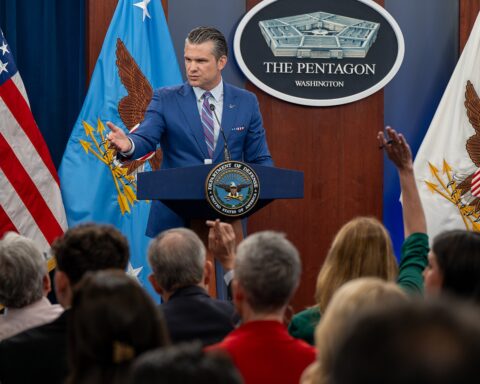
US Defence Secretary Pete Hegseth, speaking to reporters at the Pentagon, said the administration’s objective aligned with the Gulf states’ demands. “The goal is to destroy Iranian offensive missiles, destroy Iranian missile production, destroy their navy and other security infrastructure,” Hegseth stated, according to CNN. This level of public alignment between the Gulf declaration and Pentagon war aims was unprecedented in the conflict.
Special Envoy Steve Witkoff confirmed that a 15-point peace proposal had been transmitted to Tehran through Pakistani intermediaries, according to CBS News. The proposal included demands for Iran to cease all enrichment activity, surrender its stockpile of enriched uranium, and accept limits on ballistic missile range and inventory. President Trump extended the pause on strikes against Iran’s energy infrastructure by 10 days to 6 April, claiming talks were “going very well.” Iran’s Foreign Ministry rejected the characterisation, insisting that no direct negotiations were taking place.
The Gulf states’ declaration positioned them as active participants in shaping the post-war security architecture rather than passive beneficiaries of American military operations. The destruction of Iran’s conventional arsenal has become a shared objective, though the means and timeline remain contested between Washington, the Gulf capitals, and Jerusalem.
Tehran Dismisses Gulf Threats
Iran’s Foreign Ministry dismissed the joint declaration as “empty rhetoric dictated by Washington.” Ministry spokesperson Nasser Kanaani told journalists in a briefing that the Gulf states had “participated in the aggression against Iran by hosting American military bases” and that “those who house the armies that bomb us have no standing to invoke self-defence.”
The Islamic Revolutionary Guard Corps issued a separate statement warning that any Gulf military action against Iranian territory would “trigger a response that makes the current strikes seem like a gentle breeze,” according to Tasnim News Agency. The IRGC has continued launching drone and missile salvos against Gulf energy infrastructure, military installations, and urban areas throughout March, though the interception rate has exceeded 90 percent for ballistic missiles and approximately 85 percent for drones, according to CENTCOM assessments cited by the Associated Press.
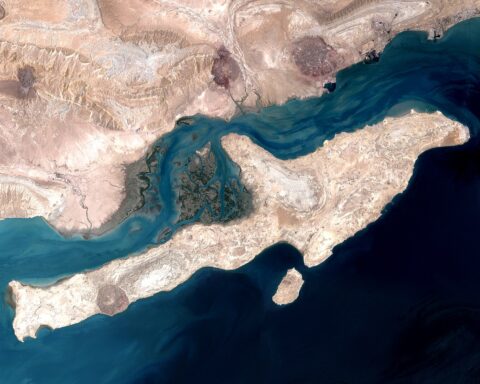
Iran simultaneously tightened its blockade of the Strait of Hormuz, through which approximately 20 percent of global oil supply flows. The IRGC Navy declared that shipping “to and from ports of allies and supporters of the Israeli-American enemies” was prohibited through any corridor, a declaration that extended the blockade beyond the Strait itself. Brent crude has risen 28 percent year-to-date to approximately $106 per barrel, according to CNBC, with the Iran conflict adding an estimated $15-20 per barrel risk premium since hostilities began.
Iran’s counter-proposal to the US peace plan included five conditions: war reparations, recognition of Iranian rights over the Strait of Hormuz, continuation of uranium enrichment, withdrawal of all US forces from the region, and an end to sanctions. Iranian officials told the Wall Street Journal they would “not give up diplomatically what the United States could not win militarily,” a position that suggested negotiations remained far from a breakthrough.
Frequently Asked Questions
Which countries signed the joint self-defense declaration against Iran?
Saudi Arabia, the United Arab Emirates, Kuwait, Bahrain, Qatar, and Jordan issued the joint declaration on 26 March 2026. The United States subsequently co-signed a parallel statement through the State Department, bringing the total number of nations backing the declaration to seven. All six Arab signatories have been struck by Iranian missiles or drones since the war began on 28 February.
What is Article 51 of the UN Charter?
Article 51 establishes the inherent right of member states to individual or collective self-defense when an armed attack occurs. It is the primary legal basis under international law for states to use military force without prior UN Security Council authorisation. The provision requires that self-defense measures be reported to the Security Council immediately and does not extend beyond what is necessary and proportionate to repel the attack.
Does the declaration mean Gulf states will attack Iran?
The declaration establishes legal grounds for military action but does not commit the signatories to specific operations. Analysts interpret it as a deliberate escalation ladder, moving from diplomatic protest through legal positioning toward potential military engagement. Whether the Gulf states exercise the claimed rights offensively depends on continued Iranian attacks, the progress of ceasefire negotiations, and coordination with the United States.
Why did the statement target Iraq specifically?
Iran-backed militias, particularly factions within Iraq’s Popular Mobilisation Forces, have used Iraqi territory as a staging ground for drone and missile attacks against Gulf states. The declaration demanded Baghdad halt these cross-border operations, effectively giving Iraq’s government an ultimatum to choose between its Arab neighbours and the Iranian-backed groups operating on its soil. Iraq’s limited control over the PMF makes compliance difficult, a reality that may itself become a justification for future cross-border action.