
RIYADH — The war between the United States, Israel, and Iran has killed a Supreme Leader, shattered oil markets, and sent drones crashing into residential neighbourhoods from Riyadh to Manama. Yet for all the destruction inflicted across eleven days of escalating conflict, one dimension remains conspicuously unspoken by every government involved: religion. The 2026 Iran war is, by any historical measure, the most consequential armed clash between the Sunni and Shia centres of gravity since the Iranian Revolution of 1979 — and neither Riyadh nor Tehran will call it that. The silence is deliberate, strategic, and increasingly fragile. Beneath it, the religious authority structures that have defined Middle Eastern politics for half a century are fracturing in ways that no ceasefire can repair.
The assassination of Ayatollah Ali Khamenei on February 28 did not merely remove a head of state. It eliminated the man who held the title of Supreme Leader of the Islamic Revolution — the individual Shia political theology positions as God’s representative on Earth. His replacement by his own son, Mojtaba Khamenei, under open coercion from the Islamic Revolutionary Guard Corps, has triggered the most severe legitimacy crisis in the forty-seven-year history of Iran’s theocratic system. Simultaneously, Saudi Arabia — custodian of Islam’s two holiest sites in Mecca and Medina — finds itself under missile fire from a state that claims to act in the name of Islamic resistance. The result is a war that is reshaping Islamic authority from Jakarta to Jeddah, whether the participants acknowledge it or not.
Table of Contents
- What Makes the Iran-Saudi War a Religious Conflict?
- Why Are Both Sides Avoiding Sectarian Language?
- How Did the Death of Khamenei Reshape Islamic Authority?
- The Legitimacy Crisis — Mojtaba Khamenei’s Missing Credentials
- Can the Custodian of the Two Holy Mosques Fight a War Against a Supreme Leader?
- The Eastern Province Question — Saudi Arabia’s Shia Minority Under Pressure
- The Authority Erosion Matrix
- How Has the Muslim World Responded to the War?
- The War That United Sunni and Shia — Against Expectations
- The OIC’s Jeddah Dilemma
- What Does the War Mean for Islam’s Political Future?
- Frequently Asked Questions
What Makes the Iran-Saudi War a Religious Conflict?
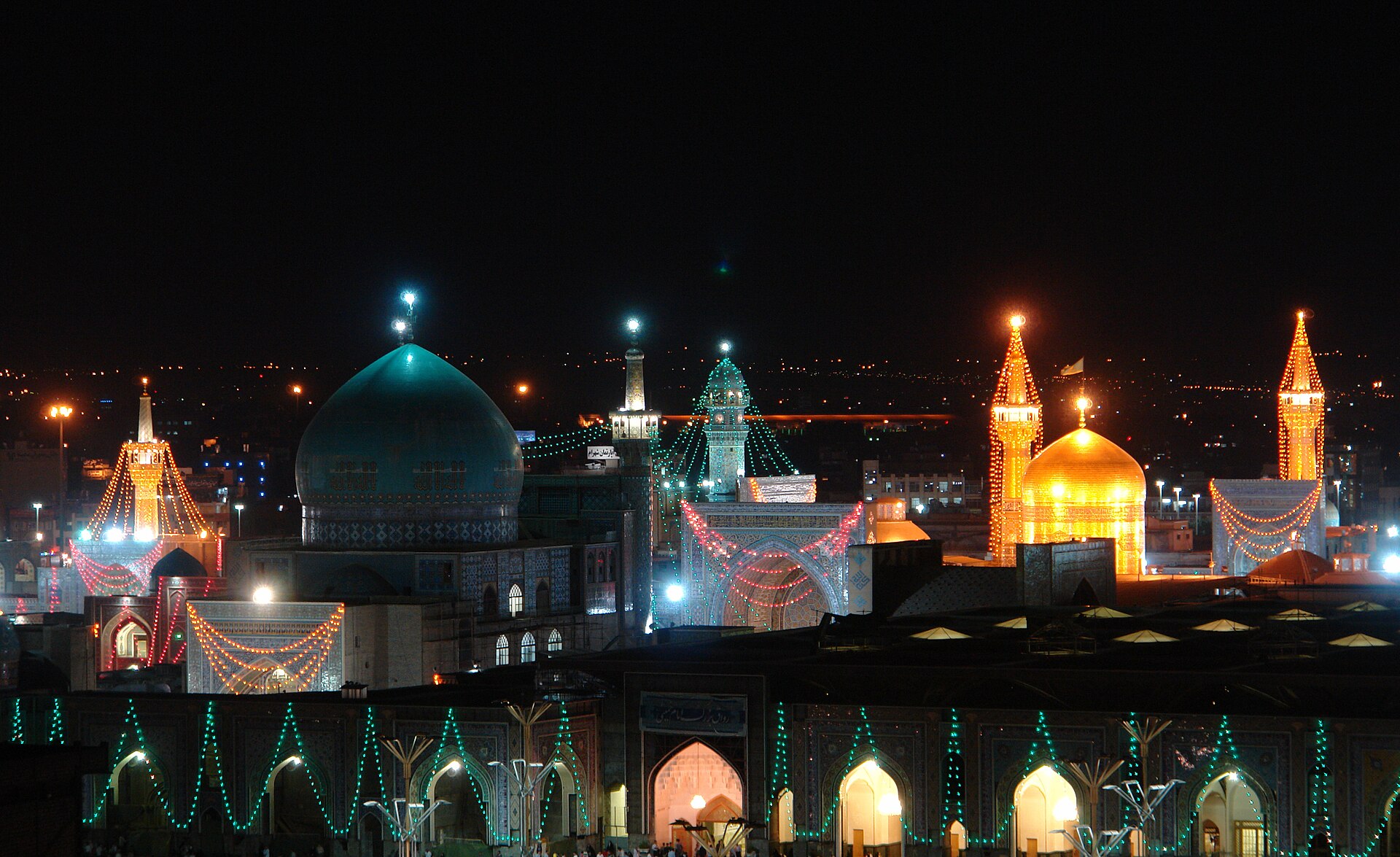
On its surface, the 2026 Iran war is a conventional military conflict — American and Israeli jets bombing Iranian military infrastructure, Iranian missiles and drones striking Gulf Arab states hosting American forces. The casus belli was geopolitical, not theological. Yet the architecture of the opposing sides maps almost perfectly onto Islam’s fourteen-century-old sectarian divide. Iran, the world’s largest Shia-majority state and the seat of the velayat-e faqih — the Guardianship of the Islamic Jurist — stands on one side. Saudi Arabia, the self-declared Custodian of the Two Holy Mosques and the de facto leader of Sunni Islam’s political establishment, stands on the other. Between them lie 2 billion Muslims, roughly 87 to 90 percent Sunni and 10 to 13 percent Shia, according to Pew Research Center estimates, watching a conflict that neither side will frame in religious terms but that both sides understand through a religious lens.
The religious dimension is not incidental. Saudi Arabia’s entire system of political legitimacy rests on its custodianship of Mohammed bin Salman’s kingdom as the guardian of Mecca and Medina. King Salman’s official title is “Custodian of the Two Holy Mosques” — a designation that carries more weight in the Islamic world than any secular office. Iran’s political system, meanwhile, is explicitly theocratic. The Supreme Leader is not merely a president or a dictator; he is, within the framework of Shia political theology, the ultimate religious-legal authority on Earth until the return of the Hidden Imam. When American cruise missiles killed that authority on February 28, they did not simply assassinate a political leader. They eliminated a figure whose office claims divine sanction.
Three structural factors make this conflict inescapably religious. First, the geography of attack: Iran’s retaliatory strikes have targeted nations that are overwhelmingly Sunni Arab — Saudi Arabia, Bahrain, Kuwait, Qatar, the UAE, and Jordan. Second, the succession crisis in Tehran has turned the war into a referendum on the theological legitimacy of Iran’s governing doctrine. Third, the Organization of Islamic Cooperation, headquartered in Jeddah and led by Saudi diplomatic priorities, has been forced to condemn a fellow Muslim-majority state — an action that cuts across the OIC’s founding purpose of Islamic solidarity. These three dynamics together create a religious crisis that political language alone cannot contain.
The Middle East briefing 3,000+ readers start their day with.
One email. Every weekday morning. Free.
Why Are Both Sides Avoiding Sectarian Language?
Saudi Arabia and Iran are both deliberately avoiding sectarian framing of the conflict, and both have calculated reasons for doing so. Understanding the silence requires understanding what each side stands to lose by acknowledging the religious dimension openly.
For Riyadh, the calculation is straightforward. Saudi Arabia hosts between 2 and 4 million Shia citizens, concentrated in the oil-rich Eastern Province — the very region that contains the Kingdom’s most critical petroleum infrastructure. The Eastern Province accounts for approximately 90 percent of Saudi oil production. Framing the war as Sunni versus Shia would risk alienating a community that sits atop the Kingdom’s most valuable economic asset. It would also undermine the careful diplomatic rehabilitation that MBS has pursued since the 2016 execution of Shia cleric Sheikh Nimr al-Nimr provoked an international crisis and the severing of Saudi-Iranian diplomatic relations.
Beyond the domestic concern, Saudi Arabia needs the broadest possible coalition of Muslim-majority states to support its position. Indonesia, the world’s largest Muslim-majority nation with approximately 240 million Muslims, is predominantly Sunni but has shown sympathy toward Iran rooted not in sectarian solidarity but in anti-Israeli sentiment over Palestine. Malaysia, under Prime Minister Anwar Ibrahim, has condemned both the American-Israeli strikes and Iran’s retaliatory attacks while explicitly invoking Muslim solidarity. A sectarian frame would fragment this nascent coalition along theological lines rather than the strategic alignment Riyadh requires.
The religious dimension intensifies further because the entire war has unfolded during Ramadan, creating the first major Middle Eastern conflict during Islam’s holiest month in more than half a century. Iran’s decision to strike Muslim-majority nations while their populations fast, pray, and prepare for Eid al-Fitr has deepened the theological rift and undermined Tehran’s claims to Islamic solidarity.
For Tehran, the avoidance is equally strategic. Iran’s most effective narrative weapon in the current conflict is not Shia identity but anti-imperialism. By framing itself as the victim of American and Israeli aggression rather than a champion of Shia Islam, Iran can appeal to the far larger Sunni population across the Middle East and South Asia that shares its hostility toward Israel. The Palestinian cause — which transcends the Sunni-Shia divide — is Iran’s bridge to broader Muslim sympathy. The moment the conflict becomes explicitly sectarian, that bridge collapses.
The result is a curious silence in which both governments speak in the language of sovereignty, self-defence, and international law while the actual fault lines run through mosques, seminaries, and the competing claims to Islamic authority that have defined the region since the seventh century.
How Did the Death of Khamenei Reshape Islamic Authority?
The killing of Ayatollah Ali Khamenei on February 28, 2026, did more than decapitate Iran’s political system. It delivered the most severe blow to the institution of the velayat-e faqih since Ayatollah Ruhollah Khomeini invented it in a series of lectures in Najaf in 1970. The concept — which holds that a senior Islamic jurist should exercise guardianship over the Muslim community until the return of the Hidden Imam — has always been controversial within Shia scholarship itself. Many senior ayatollahs in Qom, Najaf, and Karbala rejected it as an innovation without precedent in classical Shia jurisprudence. Khomeini’s force of personality, revolutionary credentials, and status as a marja-e taqlid (the highest rank of Shia scholarly authority) suppressed those objections. Khamenei, who lacked the marja rank when selected in 1989, sustained the system through institutional inertia and IRGC enforcement rather than theological legitimacy.
The 1989 constitutional amendment that removed the requirement for the Supreme Leader to hold marja status was, in retrospect, the moment the velayat-e faqih began its transition from a religious institution to a military-political one. Khamenei held the junior clerical rank of hojjatoleslam when the Assembly of Experts selected him. His subsequent elevation to “ayatollah” was a political act, not a theological recognition — a distinction that Shia scholars in Najaf noted but could not openly protest under the securitized conditions of post-revolutionary Iran.
With Khamenei’s death, the system’s theological deficit became impossible to conceal. The Assembly of Experts — an 88-member body of clerics theoretically empowered to select the Supreme Leader based on religious qualifications — was effectively overridden by the IRGC. According to Iran International and multiple opposition sources, IRGC commanders conducted “repeated contacts and psychological and political pressure” on Assembly members beginning on March 3. Members who presented arguments against Mojtaba Khamenei were given “limited time” to speak. Discussion was cut off before a meaningful vote could occur. A second session was called after procedural objections, but the outcome was never in doubt: on March 8, Mojtaba Khamenei was announced as the new Supreme Leader in what state media described as a “unanimous vote.”
The selection of a son to replace his father in a system that explicitly claims to represent divine authority rather than dynastic succession is, within the logic of the velayat-e faqih, a contradiction that cannot be resolved. As the Middle East Institute observed before the succession, Khamenei appointing his own son would signal that “the revolutionary Islamic system of government had evolved to dynastic rule” — precisely the accusation that the 1979 revolution levelled against the Shah.
The Legitimacy Crisis — Mojtaba Khamenei’s Missing Credentials
Mojtaba Khamenei, 56, brings a résumé that is strong on political connections and catastrophically weak on the theological credentials that his office demands. He studied in the seminaries of Qom, Iran’s centre of Shia theological learning, but holds the clerical rank of hojjatoleslam — a mid-level designation that places him below the rank of ayatollah, which his father held, and far below the rank of marja-e taqlid, which Khomeini held. In the hierarchy of Shia scholarship, the gap between hojjatoleslam and marja is roughly equivalent to the gap between a parish priest and a cardinal in the Catholic Church.
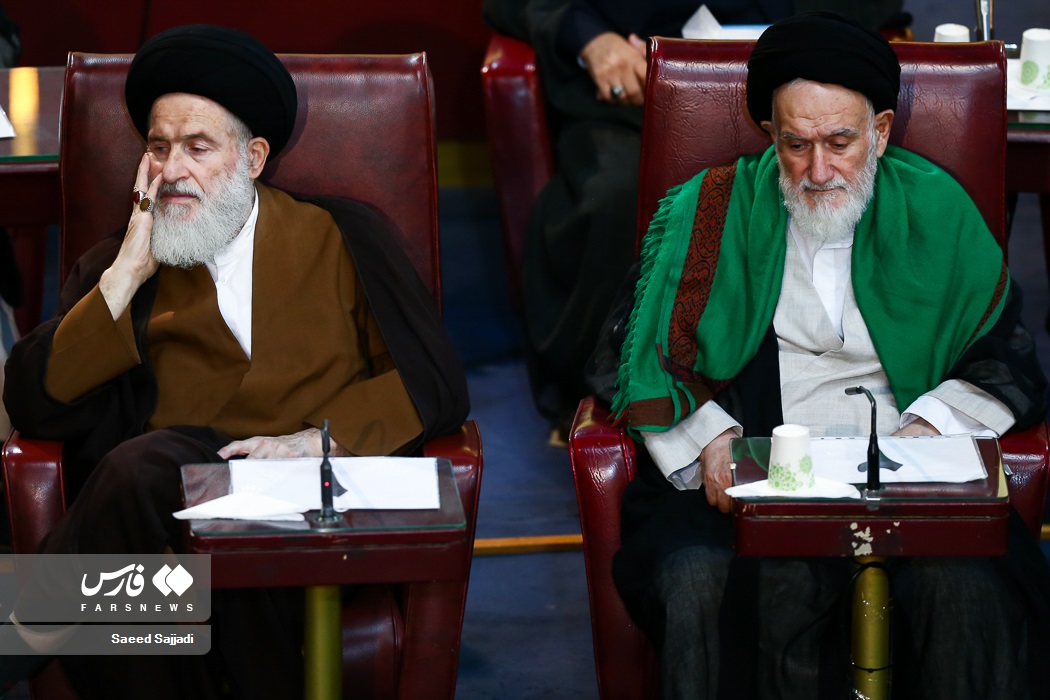
The Guardian reported that while Mojtaba “wears clerical robes, he by no means has the theological status” required for the position. CBC News noted that his selection violates Shia theological principles that prohibit dynastic succession, a view that both Mojtaba and his father had themselves publicly endorsed before the war made the question academic. Media coverage in the days before his selection was revealing in its inconsistency: pro-government outlets alternated between calling him “Hojjatoleslam” and “Ayatollah,” as if the rank could be bestowed by editorial fiat.
The theological objection is not merely procedural. The Supreme Leader’s authority within the velayat-e faqih framework rests on the claim that he is the most qualified living jurist to exercise guardianship over the Muslim community. If the holder of that office lacks even the basic scholarly credentials to issue binding religious rulings — a function that requires the rank of mujtahid at minimum — then the entire theological edifice of the Islamic Republic loses its foundational claim. The office becomes what its critics always said it was: a military dictatorship wrapped in clerical robes.
For Saudi Arabia, this development carries significant strategic implications. Riyadh’s longstanding criticism of Iran’s theocratic system has rested on the argument that the velayat-e faqih is a political instrument disguised as religious authority. Mojtaba’s succession proves that argument in the starkest possible terms. The question is whether Riyadh can exploit this theological crisis without opening its own religious legitimacy to scrutiny.
| Supreme Leader | Clerical Rank at Selection | Marja Status | Selection Method | Theological Legitimacy |
|---|---|---|---|---|
| Ruhollah Khomeini (1979-1989) | Grand Ayatollah / Marja-e Taqlid | Yes — widely recognized | Revolutionary acclaim | High — met all classical requirements |
| Ali Khamenei (1989-2026) | Hojjatoleslam (elevated after selection) | No — disputed, not widely accepted | Assembly of Experts, post-constitutional amendment | Medium — relied on institutional and IRGC support |
| Mojtaba Khamenei (2026-) | Hojjatoleslam | No | Assembly of Experts under IRGC coercion | Low — dynastic succession, no scholarly standing |
Can the Custodian of the Two Holy Mosques Fight a War Against a Supreme Leader?
Saudi Arabia’s religious authority rests on a fundamentally different foundation than Iran’s. Where the velayat-e faqih claims divine mandate through scholarly qualification, the Saudi system derives religious legitimacy from territorial custodianship — the physical guardianship of Mecca and Medina, the two sites toward which all Muslims pray and to which all Muslims aspire to make pilgrimage. This distinction is crucial for understanding why the war creates different religious pressures on each side.
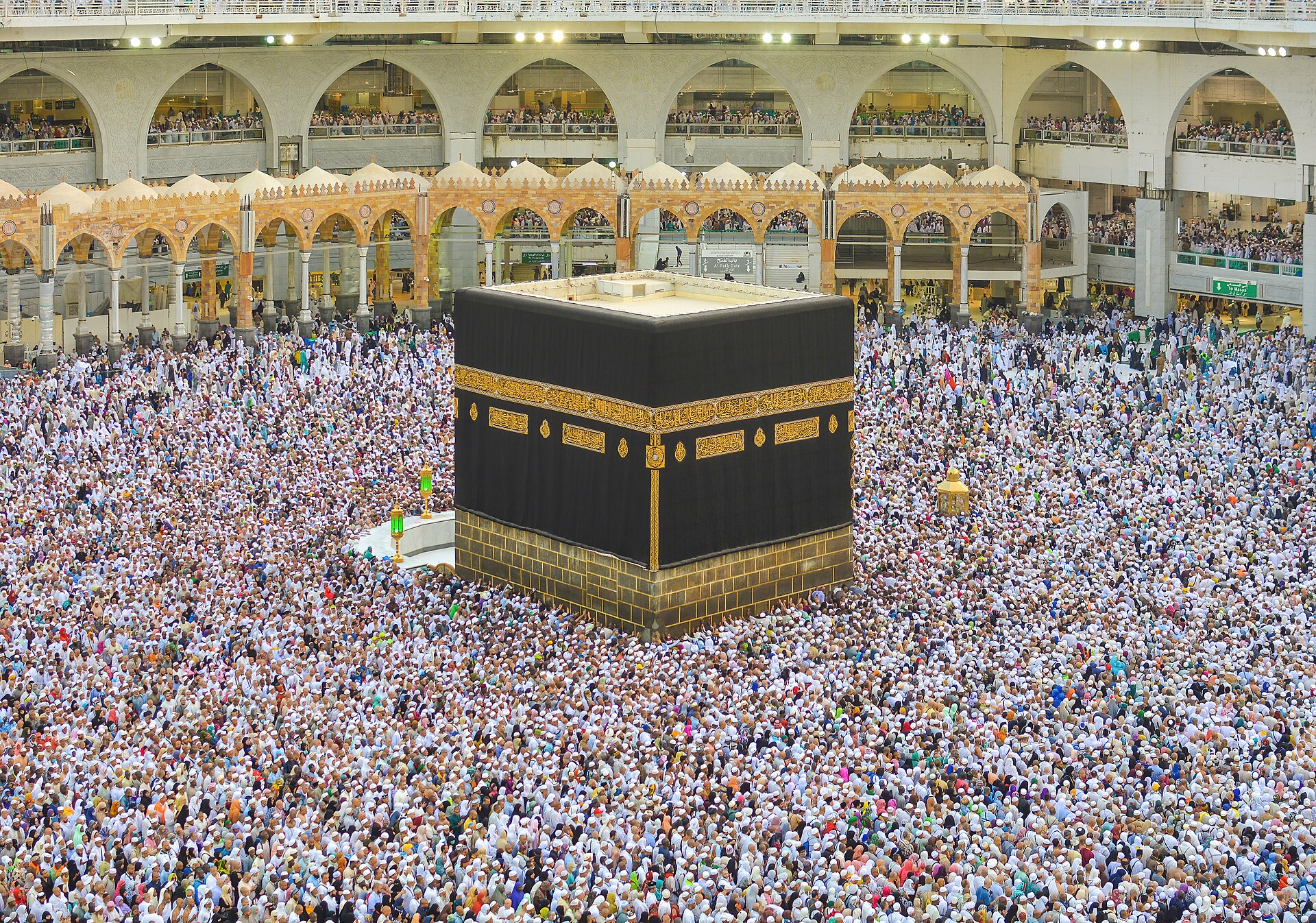
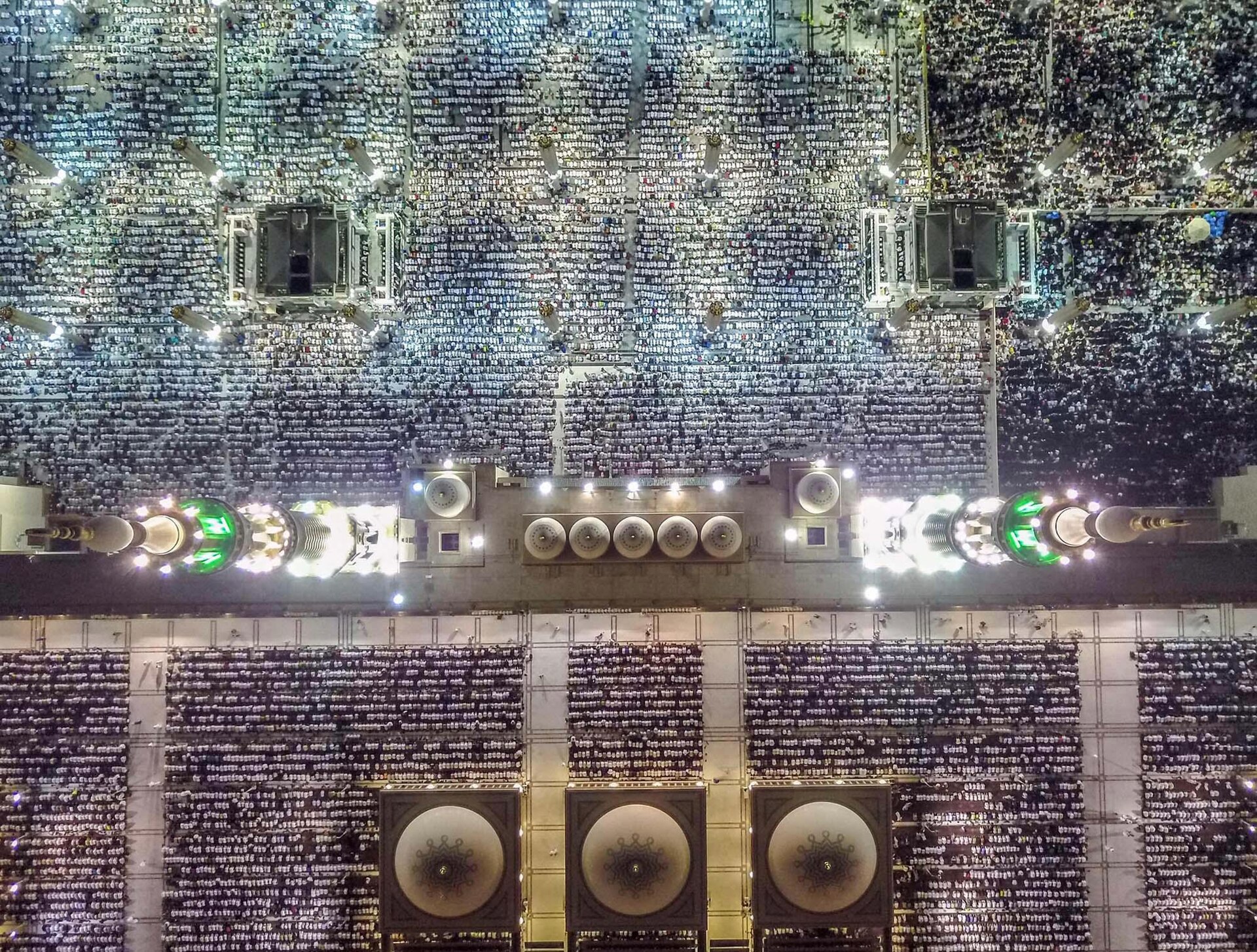
King Salman formally holds the title Custodian of the Two Holy Mosques, a designation adopted by King Fahd in 1986 to replace the previous “His Majesty.” The title is not merely ceremonial. It carries an implicit obligation: to protect and maintain the holiest sites in Islam, to ensure the safety of the Hajj, and to serve as a neutral guardian of spaces that belong to the entire global Muslim community of 2 billion believers. When Iranian missiles and drones strike Saudi territory — including intercepted attacks on Riyadh, just 400 kilometres from Medina — they do not merely threaten a nation-state. They threaten the guardian of Islam’s sacred geography. The ultimate expression of that threat arrived during Laylat al-Qadr, when two million worshippers gathered in Makkah under a wartime missile shield — transforming Islam’s holiest night into a live referendum on whether the Custodian of the Two Holy Mosques can fulfil the promise embedded in his title.
Yet Saudi Arabia’s religious authority has undergone its own transformation under Crown Prince Mohammed bin Salman. Since consolidating power in 2017, MBS has systematically reduced the political influence of the Wahhabi religious establishment that served as the Saudi state’s theological backbone for nearly three centuries. The Council of Senior Scholars, once the most powerful non-royal institution in the Kingdom, has been sidelined. The religious police (mutawa) have been stripped of enforcement powers. Entertainment, music, and cinema — once forbidden under clerical rule — now anchor a multi-billion-dollar sector of Vision 2030. In September 2025, Grand Mufti Sheikh Abdul-Aziz Al al-Sheikh died at 81, and his replacement, Sheikh Salih al-Fawzan, was appointed by royal decree in October — a figure whose selection reflected the crown’s priorities rather than the ulema’s internal deliberations.
The paradox for Riyadh is that MBS has spent nearly a decade weakening the religious establishment’s grip on Saudi domestic life while simultaneously relying on the religious legitimacy that custodianship provides on the international stage. The war tests whether those two goals are compatible. If missiles fall near Medina or threaten the Hajj infrastructure — a scenario that analysts have already examined — the question of whether Saudi Arabia can protect Islam’s holiest sites becomes inseparable from the question of whether MBS’s modernisation agenda has left the Kingdom’s religious identity intact enough to fulfil its custodial role.
The Eastern Province Question — Saudi Arabia’s Shia Minority Under Pressure
Nowhere in Saudi Arabia does the religious dimension of the war create more acute tensions than in the Eastern Province, where the Kingdom’s Shia community of roughly 2 to 4 million people — constituting between 10 and 15 percent of the national population, according to various estimates including Brookings Institution research — lives alongside the infrastructure that produces nearly all of Saudi Arabia’s oil.
The Eastern Province has been a flashpoint for decades. During the Arab Spring in 2011 and 2012, Shia communities in Qatif and Awamiyah staged protests against systemic discrimination in government employment, religious worship, and judicial treatment. The 2016 execution of Sheikh Nimr al-Nimr, a prominent Shia cleric, triggered Iranian-backed protests and the severing of Saudi-Iranian diplomatic ties. For years, Riyadh and Tehran have accused each other of exploiting the Eastern Province’s demographics — Saudi Arabia alleging Iranian meddling, Iran alleging Saudi persecution.
The current war introduces a dimension that previous crises lacked: active military strikes on Saudi soil originating from a state that claims to defend Shia interests globally. Iranian missiles have targeted the Eastern Province directly, including strikes near the strategically vital Aramco facilities in the region. Saudi security services face the challenge of maintaining domestic cohesion within a community that may feel caught between loyalty to the Saudi state and sympathy — however complicated — for co-religionists in Iran.
To its credit, the Saudi government has not publicly framed the conflict in sectarian terms that would scapegoat its Shia citizens. The Ministry of Foreign Affairs has consistently used the language of sovereignty and territorial integrity rather than religious identity. This restraint is strategically sound but operationally fragile. If the war escalates further — if Iranian proxies attempt to foment unrest in the Eastern Province, or if Saudi security forces overreact to perceived threats — the sectarian dimension that both governments have worked to suppress could explode into the open.
Brookings Institution research has documented how Iran has historically sought to exploit Shia grievances in Saudi Arabia, leveraging legitimate complaints about discrimination to advance Tehran’s geopolitical agenda. The war provides the most favourable conditions for such exploitation since the Iranian Revolution itself. Whether the Eastern Province remains stable depends not on theology but on the Saudi government’s ability to demonstrate that its Shia citizens are full participants in the national community — a demonstration that requires actions, not merely the absence of sectarian rhetoric.
The Authority Erosion Matrix
The 2026 war is eroding religious authority on both sides of the Sunni-Shia divide, but the mechanisms of erosion differ. A structured assessment of how the war is affecting the key pillars of Islamic authority reveals a pattern: the institutions that claimed to speak for Islam are being weakened by the very governments that relied on them.
| Authority Pillar | Pre-War Status | War Impact | Direction of Change |
|---|---|---|---|
| Saudi Council of Senior Scholars | Already marginalized under MBS reforms since 2017 | No visible role in war policy or public messaging | Further marginalization — war decisions made by security establishment |
| Saudi Grand Mufti (al-Fawzan, appointed Oct 2025) | New appointment, limited independent authority | No prominent public statements on the conflict | Confirms subordination to crown — theological voice absent in crisis |
| Iran’s Supreme Leader office | Declining legitimacy since 2009 Green Movement | Dynastic succession under IRGC coercion — theological credibility shattered | Severe erosion — office exposed as military-political, not theological |
| Assembly of Experts (Iran) | Rubber-stamp body with nominal constitutional authority | Overridden by IRGC in succession process | Terminal — any remaining pretence of clerical independence destroyed |
| Qom seminaries (hawza) | Centre of Shia scholarship, historically independent of state | Senior scholars unable to oppose IRGC selection of Mojtaba | Significant erosion — scholarly authority subordinated to military power |
| Najaf hawza (Iraq) | Traditional rival to Qom, led by Grand Ayatollah al-Sistani | Maintains distance from conflict; Sistani (aged 95) has not endorsed Mojtaba | Relative strengthening — independence from Tehran may attract legitimacy |
| OIC (headquartered in Jeddah) | Saudi-influenced, 57-member body representing Islamic solidarity | Forced to condemn fellow Muslim state — unprecedented in scope | Strained — credibility as a unifying body diminished |
| Custodianship of Two Holy Mosques | Cornerstone of Saudi global Islamic authority | Tested by physical threat to holy sites and Hajj infrastructure | Under pressure — failure to protect sites would be catastrophic |
The matrix reveals a counterintuitive finding. The war is not strengthening religious authority on the winning side while weakening it on the losing side. It is weakening religious authority on both sides simultaneously. Saudi Arabia’s religious establishment has been sidelined by MBS’s security-first approach to governance, leaving no prominent theological voice to articulate the Kingdom’s position in Islamic terms. Iran’s religious establishment has been overridden by the IRGC, reducing the Supreme Leader’s office to a military appointment with clerical dressing. The net effect is a vacuum of Islamic authority in the region’s two most important religious-political systems.
The single institution that may emerge stronger is the hawza (seminary) of Najaf in Iraq, led by the 95-year-old Grand Ayatollah Ali al-Sistani. Sistani’s quietist approach to Shia political theology — which holds that clerics should advise but not govern — stands in direct contrast to the velayat-e faqih model. If Mojtaba Khamenei’s reign is seen as the final discrediting of clerical rule, Sistani’s alternative vision may gain adherents across the Shia world. That would represent a fundamental realignment of Shia political thought — and one that, ironically, Riyadh might welcome.
How Has the Muslim World Responded to the War?
The response of the broader Muslim world — approximately 2 billion people across 57 Muslim-majority countries — has defied simple sectarian categorization. Rather than dividing cleanly along Sunni-Shia lines, the war has produced a more complex pattern in which national interests, anti-Israeli sentiment, and the Palestinian cause have often outweighed theological affiliation.
Malaysia, under Prime Minister Anwar Ibrahim, provides the clearest example. Anwar — a Sunni leader with no theological sympathy for Iran’s Shia establishment — condemned “unreservedly” the assassination of Ali Khamenei and argued that the strikes had brought the Middle East to “the edge of grave and sustained instability.” He promised to table a parliamentary motion condemning the American-Israeli attacks. Malaysia’s Foreign Ministry separately condemned Iran’s retaliatory strikes on Gulf states, but the emphasis of Anwar’s messaging was unmistakably directed at Washington and Tel Aviv, not Tehran.
Indonesia, the world’s largest Muslim-majority nation, has followed a more conflicted path. President Prabowo Subianto, who maintains warm relations with the Trump administration, unexpectedly offered to travel to Tehran to mediate. The gesture provoked domestic debate: critics accused Prabowo of trying to serve American interests under the guise of peace diplomacy, while supporters argued Indonesia had a unique opportunity to leverage its Muslim-majority status for conflict resolution. The Indonesian Ulema Council, the country’s highest Islamic body, called for Indonesia to withdraw from the US-convened Board of Peace, arguing that American attacks had rendered the diplomatic initiative meaningless.
Pakistan’s position is the most precarious, shaped by a September 2025 mutual defence pact with Saudi Arabia that theoretically obligates Islamabad to defend the Kingdom. Deputy Prime Minister Ishaq Dar disclosed that he had personally reminded Iranian Foreign Minister Abbas Araghchi of Pakistan’s defence obligations to Saudi Arabia — a diplomatic signal that stopped well short of military action but placed Pakistan firmly in the Saudi camp. Yet Pakistan shares a 900-kilometre border with Iran, hosts a Shia population estimated at 30 to 45 million (15 to 20 percent of the total), and depends on Iranian gas imports. In 2015, Pakistan’s parliament voted to remain neutral in Yemen. The current conflict tests whether that neutrality can survive a direct defence treaty commitment.
| Country | Muslim Population | Dominant Sect | Position | Key Action |
|---|---|---|---|---|
| Indonesia | ~240M | Sunni | Mediator / Anti-war | Prabowo offered to mediate in Tehran; Ulema Council demands withdrawal from Board of Peace |
| Pakistan | ~230M | Sunni (15-20% Shia) | Pro-Saudi with caveats | Invoked defence pact language; reminded Iran of treaty obligations |
| Malaysia | ~22M | Sunni | Anti-war / Pro-solidarity | PM Anwar condemned Khamenei assassination; parliamentary motion tabled |
| Turkey | ~85M | Sunni | NATO member / Balancing | Targeted by Iranian missile; MBS expressed solidarity with Ankara |
| Egypt | ~95M | Sunni | Silent / Self-preserving | No military involvement; focused on economic self-protection |
| Iraq | ~42M | Shia majority | Caught in crossfire | Territory used by Iranian proxies; US targets hit in Kurdistan |
The War That United Sunni and Shia — Against Expectations
The conventional expectation when a conflict erupts between Iran and the Sunni Arab states is that sectarian polarisation will follow. The 2026 war has, against all predictions, produced the opposite dynamic in significant parts of the Muslim world. The reason is Palestine.
The American-Israeli strikes on Iran were not launched in a vacuum. They followed months of Israeli military operations in Gaza and Lebanon that had already generated unprecedented levels of anger across the Muslim world — Sunni and Shia alike. When the United States and Israel killed Khamenei and began a campaign framed as regime change, many Sunni Muslims who had no theological sympathy for the velayat-e faqih or for Shia Islam nevertheless viewed the attack through the prism of the same Western powers that had devastated Gaza. The enemy of my enemy, in this case, transcended the sectarian divide.
Religion Unplugged’s analysis of the conflict noted that “sympathy for the Palestinians has overshadowed sectarian disagreements, with many Sunnis who might disagree with Iran’s religious ideology still expressing support for its confrontation with Israel.” In Indonesia, protests in front of the US Embassy in Jakarta drew both Sunni and Shia participants. In Pakistan, where Sunni-Shia violence has killed thousands over the past four decades, the war has produced rare instances of joint condemnation — not of each other, but of Washington and Tel Aviv.
This unity is real but fragile. It is sustained by a common external adversary rather than by any resolution of the underlying theological disagreements. If the war ends and the Palestinian cause recedes from the headlines, the temporary solidarity will likely dissolve. If the war escalates and Iranian attacks kill more Sunni Arab civilians — as the deaths of two foreign workers in Al-Kharj on March 8 demonstrate is already happening — the sectarian fractures may widen rather than heal. The unity is not a resolution of the Sunni-Shia divide. It is a temporary suspension of it, driven by geopolitics rather than theology.
The current war has not divided along sectarian lines as many predicted. The Palestinian cause has created a temporary bridge between Sunni and Shia communities — but temporary bridges collapse when the weight they carry exceeds their design.
Editorial analysis, March 2026
The OIC’s Jeddah Dilemma
The Organization of Islamic Cooperation, headquartered in the Saudi port city of Jeddah, was founded in 1969 to be the collective voice of the Muslim world. Its 57 member states include both Iran and the Gulf Arab nations now under Iranian attack. The war has placed the OIC in an impossible position that exposes the structural contradictions of an organisation that claims to represent Islamic solidarity while its most powerful member underwrites its operations.
The OIC’s response has been unequivocal in one direction and conspicuously silent in another. The General Secretariat issued statements condemning Iranian attacks on Saudi Arabia, Bahrain, Kuwait, Qatar, the UAE, Jordan, Turkey, Azerbaijan, and Oman — an unprecedented cascade of condemnations against a single member state. Yet the OIC’s statements regarding the American-Israeli strikes that precipitated the conflict have been notably more restrained. An emergency meeting of the OIC Executive Committee at the level of foreign ministers, held in Jeddah on February 26 — two days before the war began — welcomed Oman-mediated talks between Iran and the United States and warned against the use of force. By the time those talks collapsed and force was used, the OIC had already positioned itself on the Saudi-aligned side of the conflict.
The Jeddah headquarters is not incidental to this dynamic. Saudi Arabia is the OIC’s largest funder and most influential member. The organisation’s secretary-general, Hissein Brahim Taha of Chad, operates within diplomatic parameters defined primarily by Saudi preferences. Iran, which has long viewed the OIC as a Saudi-dominated instrument, can point to the organisation’s asymmetric condemnations as evidence that the body represents Gulf Arab interests rather than Islamic solidarity.
For the OIC, the deeper problem is existential. If the organisation cannot mediate between its own members during the most destructive intra-Muslim conflict since the Iran-Iraq War (1980-1988), what purpose does it serve? The OIC was unable to prevent the Iran-Iraq War from killing an estimated one million people over eight years. It was unable to prevent the Gulf War of 1991. It was unable to prevent the Saudi-led intervention in Yemen. The 2026 conflict adds another failure to a ledger that increasingly suggests the organisation’s founding vision — a united Islamic voice — was always subordinate to the national interests of its most powerful members.
What Does the War Mean for Islam’s Political Future?
The 2026 Iran war is reshaping Islamic political authority in ways that will outlast the conflict itself, regardless of whether it ends in weeks or months. Four structural shifts are already underway, each with implications that extend far beyond the immediate military situation.
The first shift is the effective death of the velayat-e faqih as a credible model of Islamic governance. The system survived Khomeini’s death in 1989 because his successor, Khamenei, inherited a functional institutional framework and the passive acquiescence of the clerical establishment. Mojtaba Khamenei inherits a system in wartime crisis, selected through IRGC coercion rather than theological merit, lacking even the basic scholarly rank that his predecessors held. If the Islamic Republic survives the war, it will do so as a military state with a clerical figurehead — a transformation that the IRGC may welcome but that strips the system of its founding theological justification. Newsweek noted before the succession that a new leader “may find it expedient to discard a political concept that only contributes to the alienation of the Iranian people from their rulers.”
The second shift is the acceleration of Saudi Arabia’s post-Wahhabi religious identity. MBS has spent years reducing the clerical establishment’s influence over Saudi domestic policy. The war has completed that project by necessity: wartime decisions about missile defence, diplomatic messaging, alliance management, and economic stabilisation are made by the security and economic apparatus, not the religious establishment. The new Grand Mufti, Sheikh Salih al-Fawzan, appointed in October 2025, has not emerged as a visible figure in the war’s public narrative. The Council of Senior Scholars has issued no prominent statements shaping the Kingdom’s response. The religious establishment’s irrelevance during Saudi Arabia’s most severe security crisis since the Kingdom’s founding in 1932 confirms that MBS’s restructuring of the state-religion relationship is irreversible.
The third shift is the potential rehabilitation of Najaf as the centre of Shia scholarly authority. Grand Ayatollah Ali al-Sistani, 95 years old and in declining health, has maintained his quietist position throughout the crisis — arguing that clerics should advise on moral matters but not govern states. If Qom’s authority collapses alongside the velayat-e faqih system it underpins, Najaf’s competing model may gain adherents among the 240 to 340 million Shia Muslims worldwide. A Najaf-centred Shia world would be less politically threatening to Riyadh than a Tehran-centred one — a realignment that could, paradoxically, improve Saudi-Shia relations over the medium term.
The fourth shift is the fracturing of pan-Islamic solidarity as a political force. The OIC’s inability to mediate, Indonesia and Malaysia’s divergent responses, and Egypt’s calculated silence collectively demonstrate that Muslim-majority states act on national interest rather than religious solidarity when the two conflict. The 2026 war has not created a unified Islamic response because no unified Islamic political authority exists. The Custodian of the Two Holy Mosques cannot speak for all Sunnis. The Supreme Leader cannot speak for all Shia. The OIC cannot speak for either. What remains is the uncomfortable reality that Islam’s 2 billion adherents are represented by 57 governments whose primary allegiances are to their own survival, not to the faith they claim to embody.
| Shift | Pre-War Trajectory | War Acceleration | Post-War Implication |
|---|---|---|---|
| Death of velayat-e faqih credibility | Declining since 2009 Green Movement | Dynastic succession exposed system as military-political | Iran may transition to military state without theological cover |
| Saudi post-Wahhabi identity | MBS reforms since 2017 sidelined ulema | Religious establishment invisible in wartime decision-making | Custodianship becomes Saudi Arabia’s sole religious claim |
| Najaf rehabilitation | Sistani’s quietism competed with Qom’s activism | Qom’s authority undermined by IRGC takeover of succession | Najaf may become default centre of Shia scholarship |
| Pan-Islamic solidarity fracture | OIC structurally limited; national interests dominant | 57 Muslim states unable to produce unified response | Pan-Islamic political unity revealed as aspirational, not operational |
The war nobody will call holy is, in the end, the war that may settle a question Islam’s political thinkers have debated since the death of the Prophet Muhammad: whether religious authority should be held by states or by scholars. The Iranian model said states. The Saudi model said kings. The Najaf model said scholars. The 2026 war is destroying the first, marginalising the second, and — by elimination — may vindicate the third. The holiest war in modern Islam’s history is being fought by governments that have already decided, by their actions if not their words, that religious authority is a tool of politics rather than its foundation. That decision, once made, cannot be unmade.
Frequently Asked Questions
Is the 2026 Iran war a Sunni-Shia conflict?
The war’s opposing sides align with the Sunni-Shia divide — Saudi Arabia and the Gulf Arab states are predominantly Sunni, while Iran is the world’s largest Shia state. However, neither government frames the conflict in sectarian terms, and public opinion in many Muslim countries has united across sectarian lines due to shared opposition to American-Israeli military action. The religious dimension is real but deliberately suppressed by all parties for strategic reasons.
Why did Iran choose Mojtaba Khamenei as Supreme Leader?
Mojtaba Khamenei was selected under reported IRGC pressure on the Assembly of Experts following his father’s assassination on February 28. His selection prioritised political continuity and IRGC loyalty over theological credentials — he holds only the mid-level clerical rank of hojjatoleslam, below the ayatollah status traditionally expected. Shia theological principles prohibit dynastic succession, making his appointment controversial within Iran’s clerical establishment.
How does Saudi Arabia derive religious authority?
Saudi Arabia’s religious authority stems primarily from its custodianship of Mecca and Medina, Islam’s two holiest cities. King Salman holds the formal title “Custodian of the Two Holy Mosques,” signalling responsibility for maintaining the sacred sites and ensuring safe pilgrimage for nearly 2 billion Muslims globally. Under Crown Prince Mohammed bin Salman, the domestic religious establishment has been significantly weakened, making territorial custodianship the Kingdom’s primary religious claim.
What is the Organization of Islamic Cooperation doing about the war?
The OIC, headquartered in Jeddah and comprising 57 Muslim-majority member states, has condemned Iran’s attacks on Gulf states, Turkey, Azerbaijan, and Oman in multiple official statements. An emergency foreign ministers’ meeting was held before the war began. However, the OIC has been unable to mediate between its own members, and critics note its condemnations have been asymmetric — strongly critical of Iranian strikes while more restrained regarding the American-Israeli attacks that initiated the conflict.
Could the war strengthen Sunni-Shia unity?
The war has produced temporary cross-sectarian solidarity in several Muslim-majority countries, driven primarily by shared opposition to American and Israeli military action and sympathy for the Palestinian cause. However, this unity is fragile and situational rather than structural. If Iranian attacks continue killing Sunni Arab civilians or if governments exploit sectarian rhetoric for domestic purposes, the temporary solidarity could reverse into deeper polarisation than existed before the conflict.
What happens to Iran’s religious system if the velayat-e faqih loses credibility?
If the velayat-e faqih system — which positions the Supreme Leader as God’s representative on Earth — loses its remaining theological credibility following Mojtaba Khamenei’s controversial selection, Iran’s governance model may evolve into an openly military-dominated state without theocratic pretensions. The alternative Shia model based in Najaf, Iraq, led by Grand Ayatollah al-Sistani, advocates clerical advice without clerical governance and could gain adherents among global Shia communities disillusioned with Tehran’s approach.