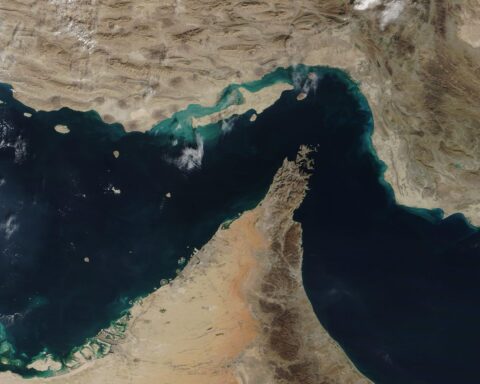

LONDON — Iran’s Islamic Revolutionary Guard Corps fired on the French-flagged container ship CMA CGM Everglade in the Strait of Hormuz on April 18, 2026, marking the first attack on a NATO-member-state-flagged vessel since the war began 50 days ago. The 15,000-TEU ship, one of the largest in the CMA CGM fleet, was struck by an unknown projectile approximately 25 nautical miles northeast of Oman, damaging several containers but causing no casualties or pollution, according to UKMTO Advisory 038-26.
The attack dismantles a diplomatic framework France spent two months building. Paris had secured preferential Hormuz transit access by blocking UN Security Council force authorizations, refusing US military overflights, and maintaining a direct channel to Tehran that produced the release of two French hostages from Evin Prison just nine days earlier. The IRGC’s open-channel broadcast — declaring that “no vessel of any type or nationality is allowed to pass through the Strait of Hormuz” — withdrew every selective exemption that architecture had purchased. Lloyd’s List reported Hormuz traffic halted again, and Brent crude reversed a multi-day decline, recovering $7-8 per barrel within 36 hours to approach $97-98 on April 19. Four days before the ceasefire expires on April 22, France now faces a structural trap: it cannot invoke NATO Article 5 without endorsing the US war posture it has publicly opposed since late February, and it has no remaining leverage over Tehran to prevent the next incident.
Table of Contents
What Happened in the Strait on April 18
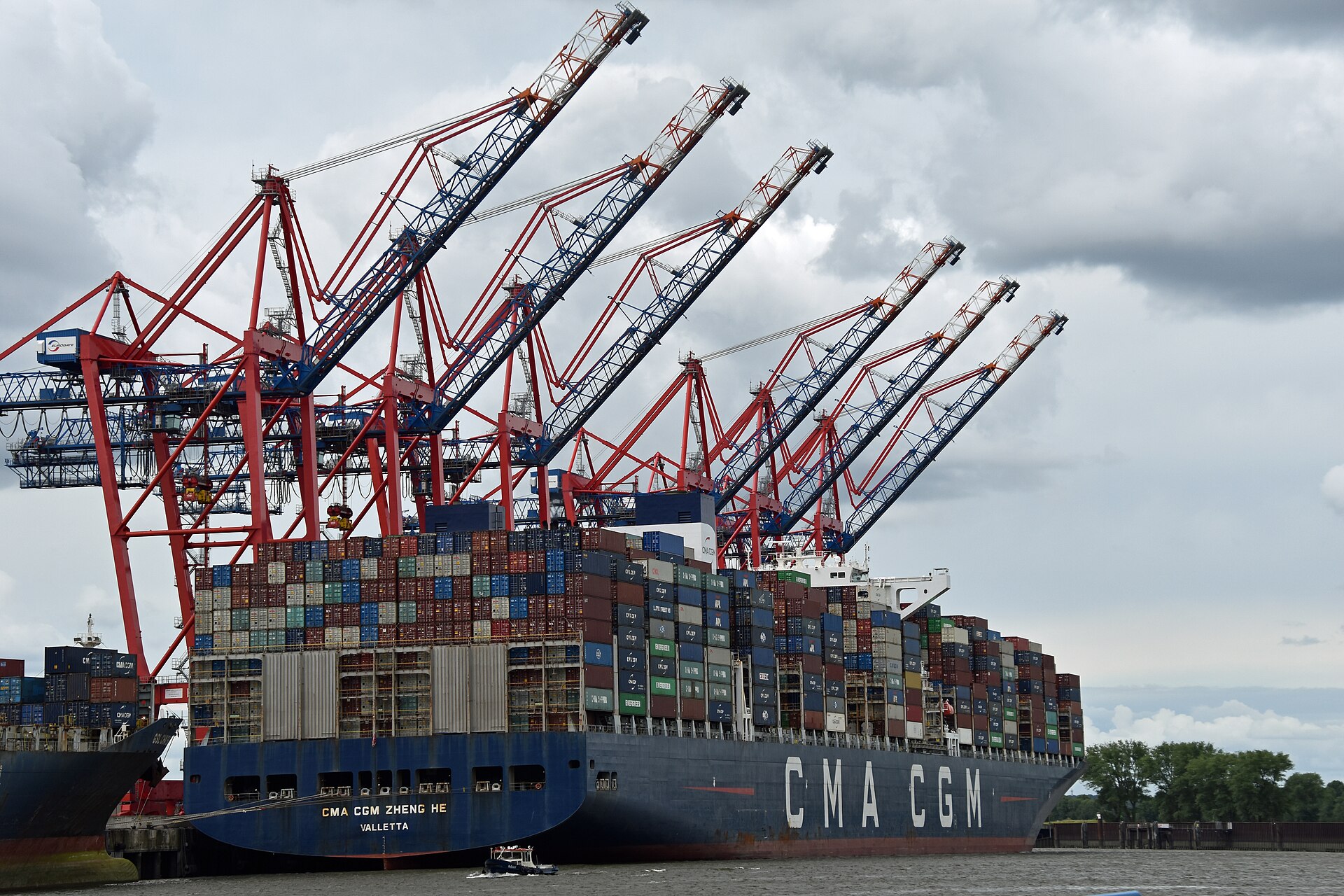
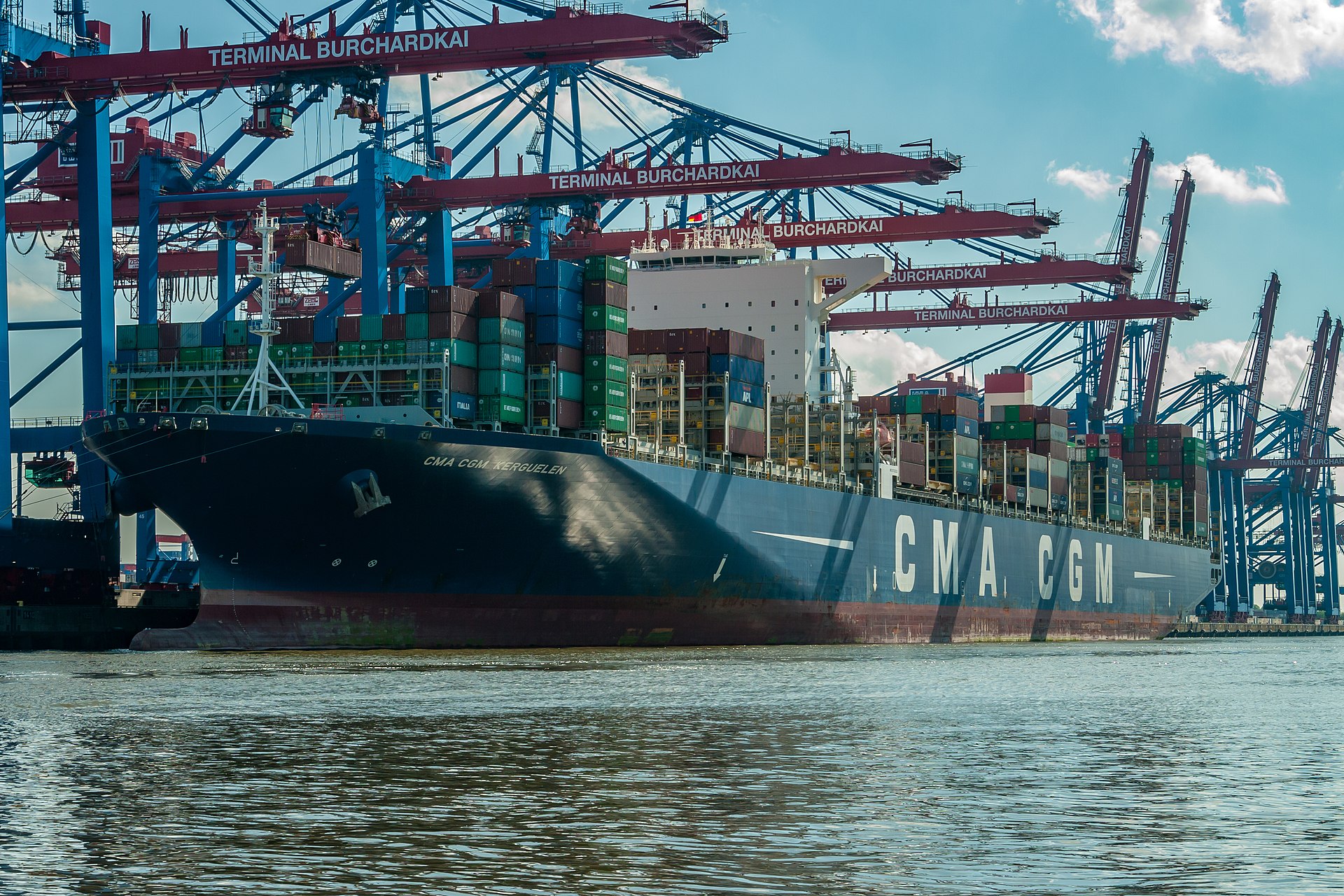
The CMA CGM Everglade — 366 meters long, 153,907 gross tonnage, built in 2022 at Jiangnan Shipyard in Shanghai — was transiting the strait when it was hit north of Kumzar, Oman. CMA CGM’s corporate statement described the gunfire as “warning shots” and confirmed all crew members were safe. UKMTO Advisory 038-26 offered a more clinical account: “A report of a container ship being hit by an unknown projectile which caused damage to some of the containers, no fires or environment impact reported.” The gap between “warning shots” and “unknown projectile” that damages cargo containers is a distinction CMA CGM’s insurers will be parsing for weeks.
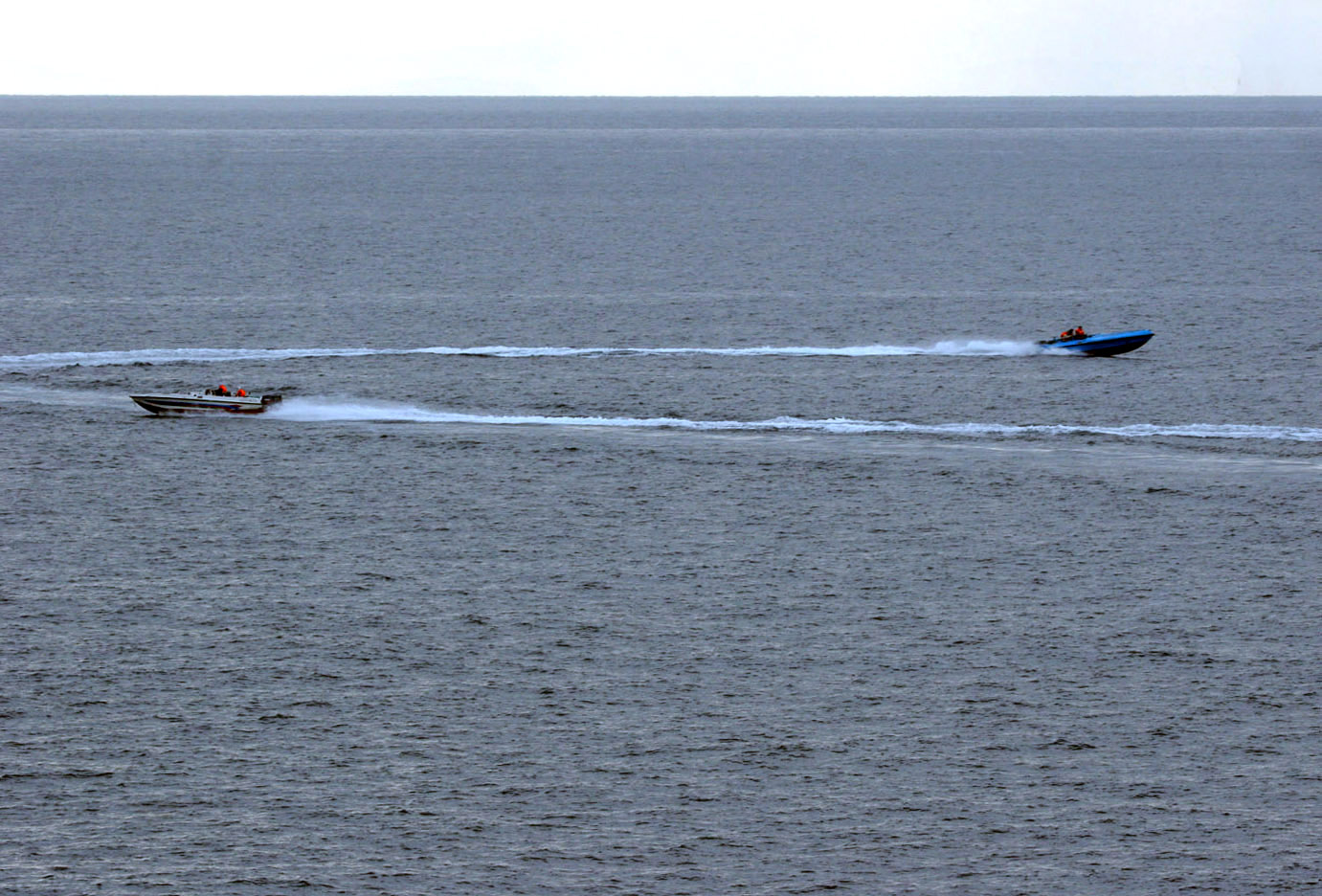
The Everglade was not alone. A separate UKMTO advisory, 037-26, documented a tanker approached by two IRGC gunboats that “fired upon the tanker” with “no VHF challenge” — no radio warning before the shooting started. Four additional CMA CGM container ships that had begun exiting the strait around 1000 GMT on April 18 reversed course after the Everglade was hit, according to wire reports. The IRGC Navy then broadcast on open maritime channels the declaration that would define the day: “Attention all ships, regarding the failure of the U.S. government to fulfil its commitment in the negotiation, Iran declares the Strait of Hormuz completely closed again. No vessel of any type or nationality is allowed to pass through the Strait of Hormuz.”
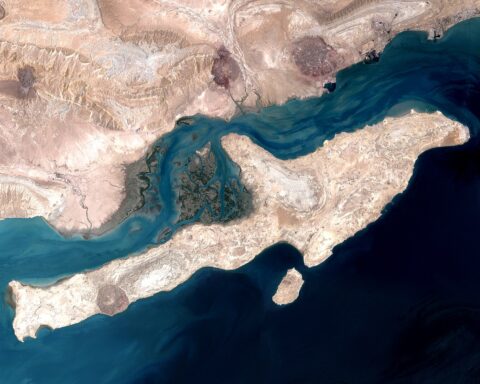
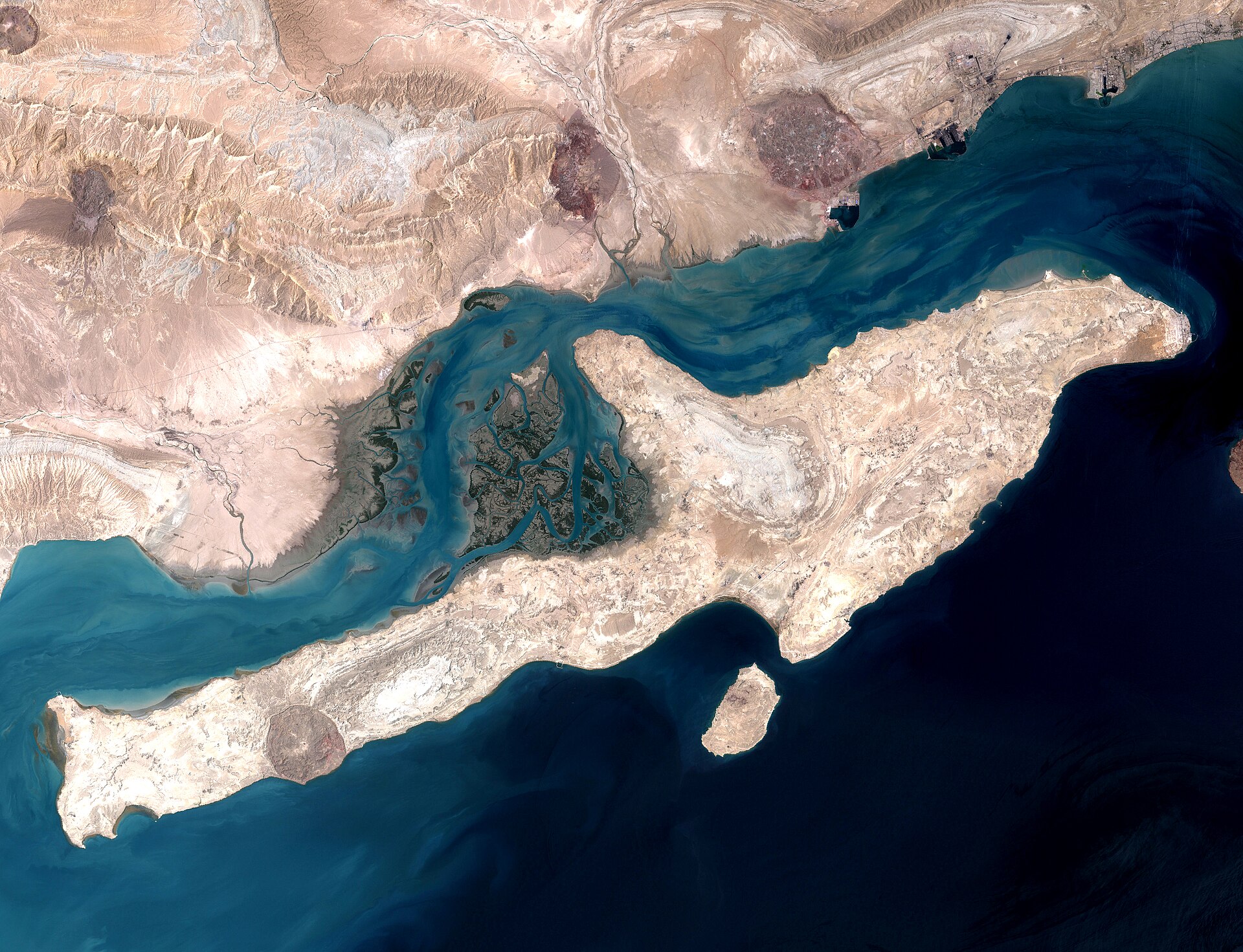
The phrase “any type or nationality” carried operational weight that transcended rhetoric. Since early April, the IRGC had maintained a selective exemption system — allowing vessels from countries that had distanced themselves from Washington to transit the Qeshm-Larak corridor under Iranian coordination. French-owned vessels, Omani tankers, Japanese carriers, and Qatar LNG ships had all passed through at various points. The April 18 broadcast collapsed that entire regime into a single sentence.
Donald Trump responded on Truth Social on April 19: “Iran decided to fire bullets yesterday in the Strait of Hormuz, a total violation of our ceasefire agreement. Many of them were aimed at a French ship, and a freighter from the United Kingdom. That wasn’t nice, was it?” The UK government promptly rejected Trump’s claim that British vessels were targeted. A spokesperson told The Telegraph: “We don’t recognise this claim.” UKMTO, which documented both incidents, withheld vessel identifications in its advisories.
The Middle East briefing 3,000+ readers start their day with.
One email. Every weekday morning. Free.
How France Built — and Lost — Its Hormuz Exemption
France’s Hormuz access was never formalized in writing, but it was operationally real. On April 3, the CMA CGM Kribi — Malta-flagged but French-owned — became the first Western European vessel to transit Hormuz since the war began, sailing through the Larak-Qeshm corridor with Iranian maritime authority coordination and signalling “Owner France” on its AIS transponder. The transit was possible because France had accumulated a portfolio of anti-Washington positions that Tehran found useful: Paris had called for an emergency UNSC meeting on February 28, blocked subsequent resolutions authorizing force, refused US military overflights of French territory, and maintained direct diplomatic channels with the Iranian Foreign Ministry throughout the crisis.
That portfolio paid a second dividend on April 8-9, when France secured the release of hostages Cecile Kohler, 41, and Jacques Paris, 72, from Evin Prison. The releases were the most visible product of France’s separate-track diplomacy with Tehran — and they exhausted its leverage. With both hostages free, France had nothing Tehran wanted badly enough to sustain the preferential treatment.
The distinction between the April 3 and April 18 vessels sharpens the signal. The Kribi flew a Maltese flag; CMA CGM’s French ownership was disclosed voluntarily via AIS as a diplomatic courtesy. The Everglade flies the French tricolour — it is registered in France, under French maritime law, with a French-flag crew complement. Targeting a French-owned, Malta-flagged ship would have been an ambiguous provocation. Targeting a French-flagged ship is a direct challenge to the French state, and the IRGC either knew the difference or did not care. Both possibilities lead to the same place.
Iran’s Foreign Ministry spokesperson Baghaei framed the attacks through a legal lens: “No rule of international law forbids Iran, the coastal State, from taking necessary measures to stop the Strait of Hormuz being used for waging military aggression against Iran.” On France specifically, Baghaei offered no targeted justification — the “any nationality” broadcast served as blanket authorization. But his broader message to Europe was pointed: “Spare the sermons; Europe’s chronic failure to practice what it preaches has turned its ‘international law’ talk into peak hypocrisy.”
Why Can’t France Invoke Article 5?
The formal answer is geographic. NATO Article 5 covers armed attacks “in Europe or North America” against member states. An attack on a French-flagged commercial vessel in the Strait of Hormuz — in Omani and Iranian territorial waters — falls into a legal grey zone: it constitutes an attack on French-flagged property but not on French sovereign territory or French military personnel. No Article 5 consultation has been triggered, and the French government has given no indication it intends to request one.
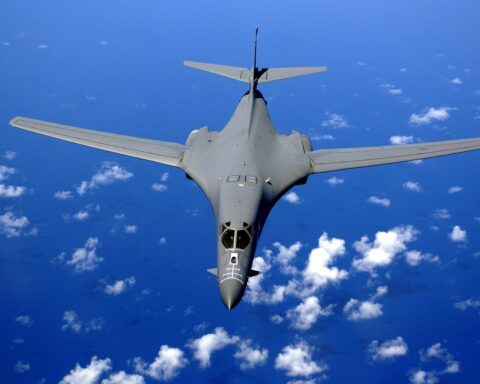
The substantive answer is political, and it runs deeper than treaty language. France has spent the past two months constructing a public position diametrically opposed to Washington’s military approach to the Hormuz crisis. On March 18, France closed its airspace to US offensive strike missions, forcing a USAF B-1B returning to RAF Fairford into a trans-Atlantic detour through non-NATO airspace. On April 2, Macron told press that Trump is “not serious” and called US military solutions to reopen Hormuz “not viable” and “unrealistic.” France, along with Italy and Spain, blocked US military aircraft from European airspace and bases throughout March and April.
Invoking Article 5 over the Everglade would require France to appeal to the same alliance whose military operations it has been actively obstructing. It would mean asking the United States — the country whose overflights France denied — to treat an attack on French shipping as an attack on all NATO members. The political incoherence of that position is not a matter of spin or framing; it is structural. France cannot simultaneously argue that US military action at Hormuz is reckless and invoke the US-led alliance to respond to Iranian military action at Hormuz.
Macron’s alternative framework was on display the day before the Everglade was hit. On April 17, he and UK Prime Minister Starmer co-chaired a summit of approximately 49 countries at the Elysee Palace to plan a “strictly defensive” multinational maritime mission for Hormuz — explicitly non-NATO, explicitly without the United States. A French presidential official stated the deployment required two preconditions: “an Iranian commitment not to fire on passing ships and a US commitment not to block any ships leaving or entering the Strait of Hormuz.” The April 18 attacks voided the first precondition less than 24 hours after the summit concluded. The IRGC’s timing may not have been accidental.
The E3 joint statement from March 1, 2026 — signed by France, Germany, and the UK — had warned that the three nations “will take steps to defend our interests and those of our allies in the region, potentially through enabling necessary and proportionate defensive action to destroy Iran’s capability to fire missiles and drones at their source.” Seven weeks later, France is the first E3 signatory to have its flagged vessel attacked, and the promised “proportionate defensive action” remains theoretical.
The Indian Vessels: Clearance Given, Then Revoked Under Fire
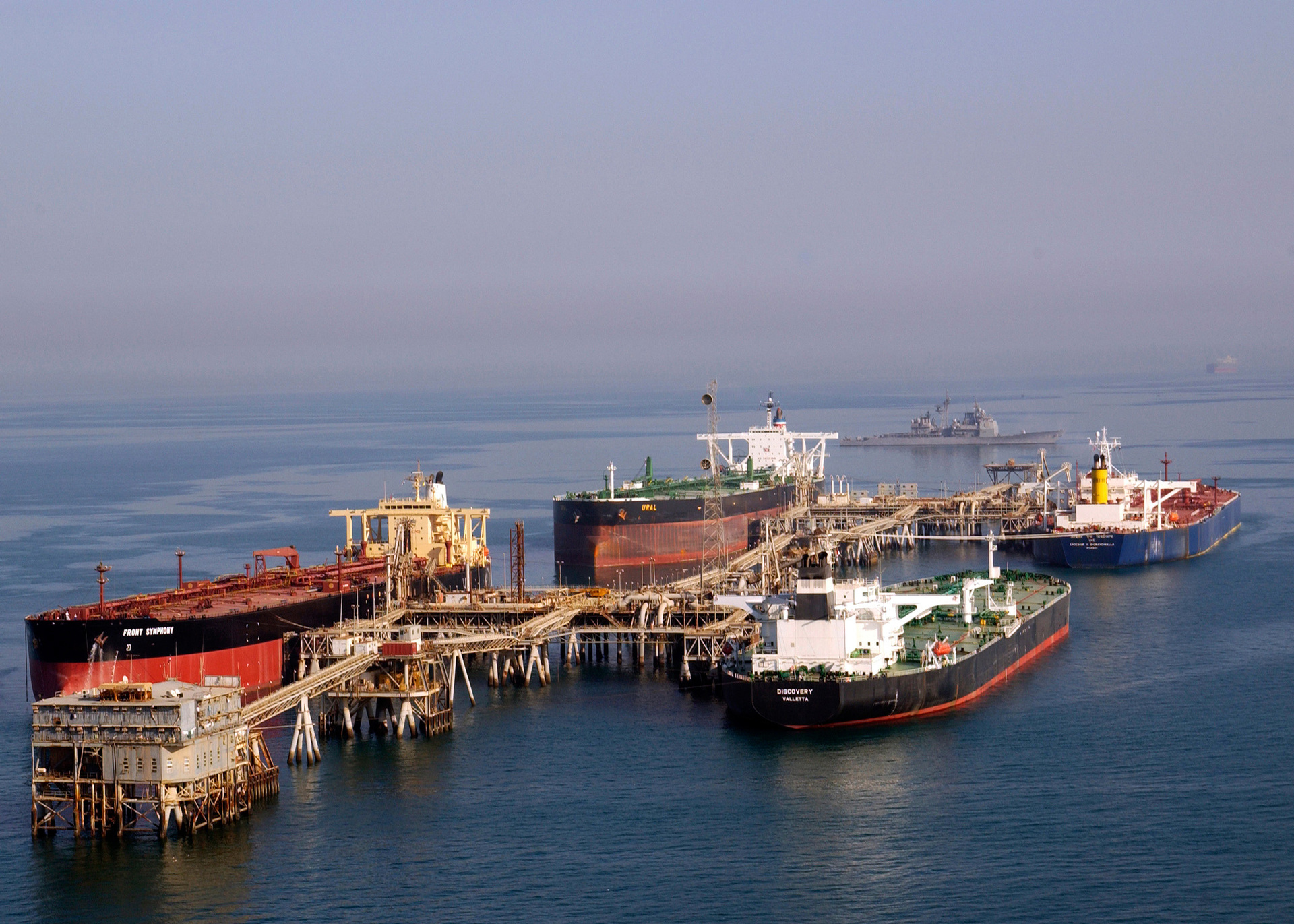
The French vessel dominated Western headlines, but the operational signal from the Indian vessel attacks may be more consequential for global oil markets. The Indian-flagged VLCC Sanmar Herald, carrying approximately 2 million barrels of Iraqi crude oil bound for India — roughly $180-190 million in cargo at current Brent prices — was fired upon by IRGC gunboats in the Qeshm-Larak corridor despite the ship’s master having received prior transit clearance from Iranian authorities.
Audio from the Sanmar Herald, reported by The Week India but not independently verified, captured the master’s protest in real time: “You gave me clearance to go. My name is second on your list. You are firing now. Let me turn back.” The audio, if authentic, documents a specific operational breakdown: one arm of the Iranian state granting clearance while another opens fire on the cleared vessel. Iranian state media confirmed only that shots were fired to force vessels to turn back, without addressing the clearance contradiction.
A second Indian-flagged vessel, the Jag Arnav, operated by Great Eastern Shipping Company, was also forced back. The Jag Arnav had been travelling from Saudi Arabia’s al-Jubail port and was turned west out of the strait by IRGC gunboats, according to reporting by The Week India and Tribune India.
India’s Ministry of External Affairs summoned Iran’s ambassador in New Delhi on April 18. The Foreign Secretary conveyed India’s “deep concern” and emphasized “the critical importance New Delhi places on the safety and security of merchant shipping,” according to the MEA statement. The Iranian ambassador undertook to convey India’s concerns to Tehran. The diplomatic language was measured, but the underlying fact — that vessels cleared by Iran were then fired upon by Iran — raises questions about whether any transit clearance regime can function when the IRGC Navy and the civilian maritime authorities appear to be operating from different command loops.
What Does Lloyd’s Halt Mean for Global Shipping?
Lloyd’s of London’s Joint War Committee had already expanded its “high-risk Listed Areas” on March 3, 2026, to include the entire Arabian Gulf — Bahrain, Djibouti, Kuwait, Oman, and Qatar. War risk premiums surged from a pre-crisis baseline of 0.15-0.25% of hull value to approximately 5%, a roughly 20-fold increase. For a VLCC valued at $138 million, that translates to approximately $6-7 million in gross war risk premium per voyage — against a pre-war baseline measured in the hundreds of thousands of dollars. Lloyd’s CEO Patrick Tiernan stated in March that “cover remained and remains in place but can now be reviewed on a case-by-case basis reflecting the perception of risk,” adding that shipowners prioritize “safety and security” over insurance availability.
The April 18 attacks pushed the market past the point where case-by-case review remains viable. Lloyd’s List reported Hormuz traffic “halted again” following the IRGC re-closure, and the data from before the attacks was already severe: as of April 13, more than 600 cargo vessels over 10,000 deadweight tonnage remained trapped in the Middle East Gulf, including 325 tankers, 154 of them laden. That figure is unchanged or worse after April 18. The trickle of vessels that had been moving during the ceasefire period — the CMA CGM Kribi on April 3, the Qatar LNG tankers in early April, a handful of Chinese-intermediated crude carriers — has now stopped entirely.
The US government had attempted to create a market solution. The International Development Finance Corporation partnered with Chubb Ltd. on a $20 billion reinsurance program designed to incentivize transit. But Moody’s flagged that the program excludes liability coverage, creating a gap that shipowners and their P&I clubs cannot ignore: hull and cargo may be covered, but the consequences of crew injury, environmental damage, or third-party claims are not.
The price signal confirmed the market’s reading. Brent crude had fallen below $90 on April 17-18, following Iranian Foreign Minister Araghchi’s declaration that Hormuz was “fully open.” The IRGC’s re-closure and the attacks reversed that move within hours. Brent recovered to $94-96 by the end of April 18 and continued climbing toward $97-98 on April 19 — a $7-8 per barrel swing in under 36 hours, driven entirely by the gap between what Iran’s foreign ministry says and what Iran’s military does.
The 96-Hour Window Before April 22
The ceasefire between the United States and Iran expires on April 22, 2026 — four days after the Everglade attack and three days from the time of publication. The IRGC’s broadcast explicitly cited “the failure of the U.S. government to fulfil its commitment in the negotiation” as the reason for re-closing Hormuz, framing the attacks not as a ceasefire violation but as a response to one. Trump’s Truth Social post called them “a total violation of our ceasefire agreement,” establishing competing narratives about who broke the truce first.
The timing carries a diplomatic logic that extends beyond the US-Iran bilateral. The 49-country Paris summit on April 17 — Macron and Starmer’s attempt to build a European-led maritime mission — had established preconditions for deployment that the April 18 attacks immediately voided. By striking a French-flagged vessel the day after France hosted the summit, the IRGC sent a message to every European capital that participated: the conditions you set yesterday no longer exist, and your summit framework is already obsolete. The subsequent US Navy seizure of an Iranian vessel further escalated the maritime confrontation.
For France specifically, the 96-hour window before April 22 presents a choice with no clean options. Macron can escalate — activating the E3 March 1 warning about proportionate action against Iranian missile and drone launch capabilities — but doing so would align France with the US military posture Macron has spent two months opposing. He can pursue diplomatic protest through the UN and IMO, but Baghaei’s response — “spare the sermons” — suggests Tehran has priced in European objections. Or he can absorb the incident and accept that French-flagged vessels are now in the target set alongside everyone else, which would effectively end France’s claim to a distinct European position on the crisis.
The structural problem is that France’s leverage over Tehran was always transactional, not strategic. Paris blocked force authorizations that Tehran wanted blocked; Tehran released hostages that Paris wanted released; both sides allowed French-connected shipping through Hormuz as a visible symbol of the arrangement. With the hostages free, the UNSC votes already cast, and the IRGC broadcasting “any nationality,” every element of the transaction has been completed or cancelled. What remains is France’s position in the broader crisis — caught between a US alliance it has been undermining and an Iranian regime that no longer needs what France was offering.
Frequently Asked Questions
Has NATO responded to the attack on the CMA CGM Everglade?
As of April 19, NATO has issued no formal statement regarding the Everglade attack. No member state has requested an Article 4 consultation (which precedes any Article 5 discussion) over the incident. NATO Secretary General Mark Rutte has not publicly addressed the attack. The alliance’s silence reflects the geographic limitation of Article 5 — which covers attacks in Europe and North America — and the political reality that France has been the most vocal NATO member opposing military action in the Hormuz crisis.
What is the CMA CGM Group’s exposure in the Strait of Hormuz?
CMA CGM, headquartered in Marseille, is the world’s third-largest container shipping company by capacity and operates approximately 600 vessels globally. The group’s exposure to Hormuz transit is significant because its Asia-Europe and Asia-Middle East routes depend on passage through either the Strait of Hormuz or the Suez Canal, both of which have faced disruptions during the current conflict. The four CMA CGM vessels that reversed course on April 18 after the Everglade was hit represent a fraction of the company’s Gulf-linked traffic. CMA CGM’s decision to describe the attack as “warning shots” — softer language than UKMTO’s “unknown projectile” — may reflect commercial pressure to avoid triggering force majeure clauses across its contract portfolio.
Could France deploy naval assets to Hormuz independently of NATO and the United States?
France maintains a permanent naval presence in the region through its base in Abu Dhabi (UAE), which hosts approximately 700 personnel and typically includes a frigate and support vessels. The French Navy’s Charles de Gaulle carrier strike group conducted operations in the Indian Ocean earlier in 2026. However, the April 17 Paris summit framework envisioned a multinational mission, not a unilateral French deployment, and the preconditions French officials set for that mission — including an Iranian commitment not to fire on passing ships — were voided by the April 18 attacks before any deployment timeline could be established.
What happens to vessels currently trapped in the Gulf if the ceasefire expires without renewal on April 22?
The 600-plus vessels trapped in the Middle East Gulf as of mid-April face three scenarios after April 22. If the ceasefire is renewed or extended, the IRGC may reinstate some form of selective transit — though the April 18 precedent of firing on previously cleared vessels undermines confidence in any new clearance regime. If the ceasefire expires without renewal and hostilities resume, those vessels become effectively interned, unable to transit Hormuz and dependent on the East-West Pipeline bypass through Yanbu for any Saudi crude exports. The third scenario — a negotiated maritime corridor separate from the broader ceasefire — was the objective of the Paris summit but now lacks the preconditions France established for its implementation.
Why did the IRGC target Indian vessels when India has maintained neutrality in the conflict?
India’s position has been more complex than simple neutrality. Indian refiners were among the first to resume Iranian crude purchases under the US OFAC General License U waiver, which expired on April 19. The Sanmar Herald was carrying Iraqi — not Iranian — crude, but it was transiting waters the IRGC claims operational authority over. India’s diplomatic response — summoning Iran’s ambassador and conveying “deep concern” — was calibrated to preserve its relationship with Tehran while signalling that attacks on Indian-flagged vessels cross a line. India imports approximately 85% of its crude oil, and any sustained Hormuz closure directly threatens its energy security in ways that European nations, with more diversified supply routes, can partially hedge.
The Everglade strike was the first in what became a pattern of CMA CGM targeting. Eighteen days later, on May 5, the IRGC struck the CMA CGM San Antonio — a Maltese-flagged vessel with Filipino crew — with a cruise missile, injuring eight. The second strike, its connection to the MOU timeline, and the collapse of Project Freedom are examined in full.