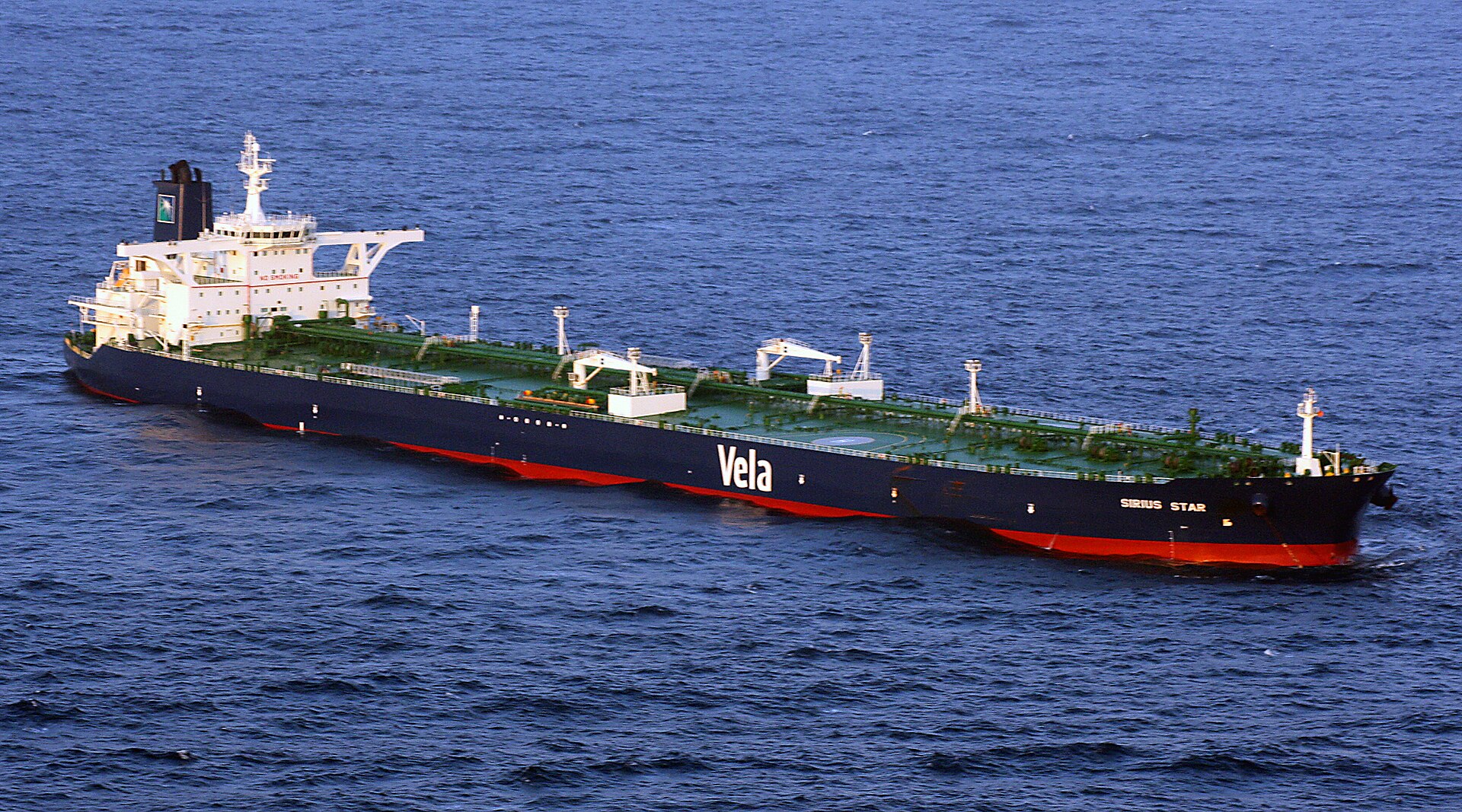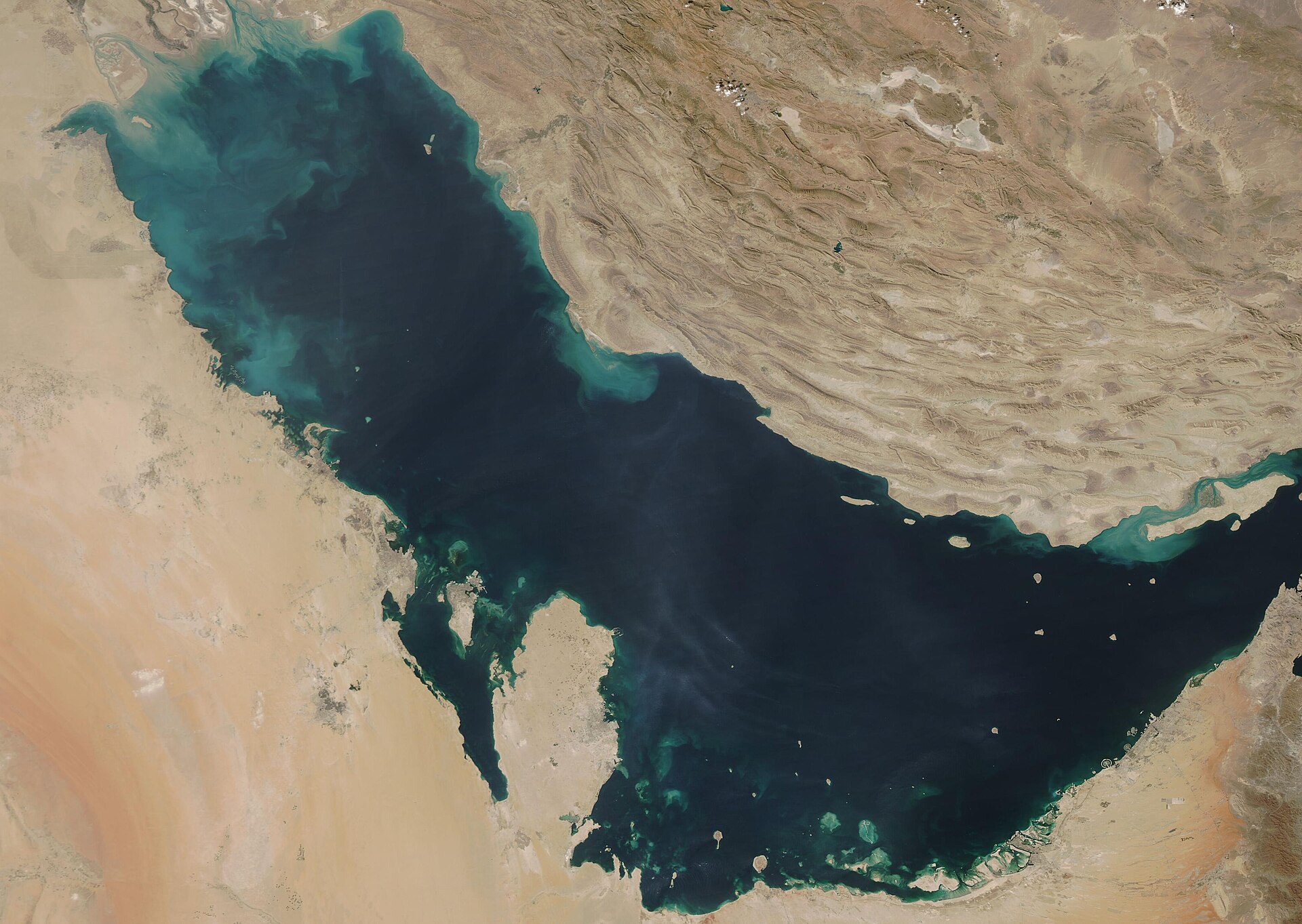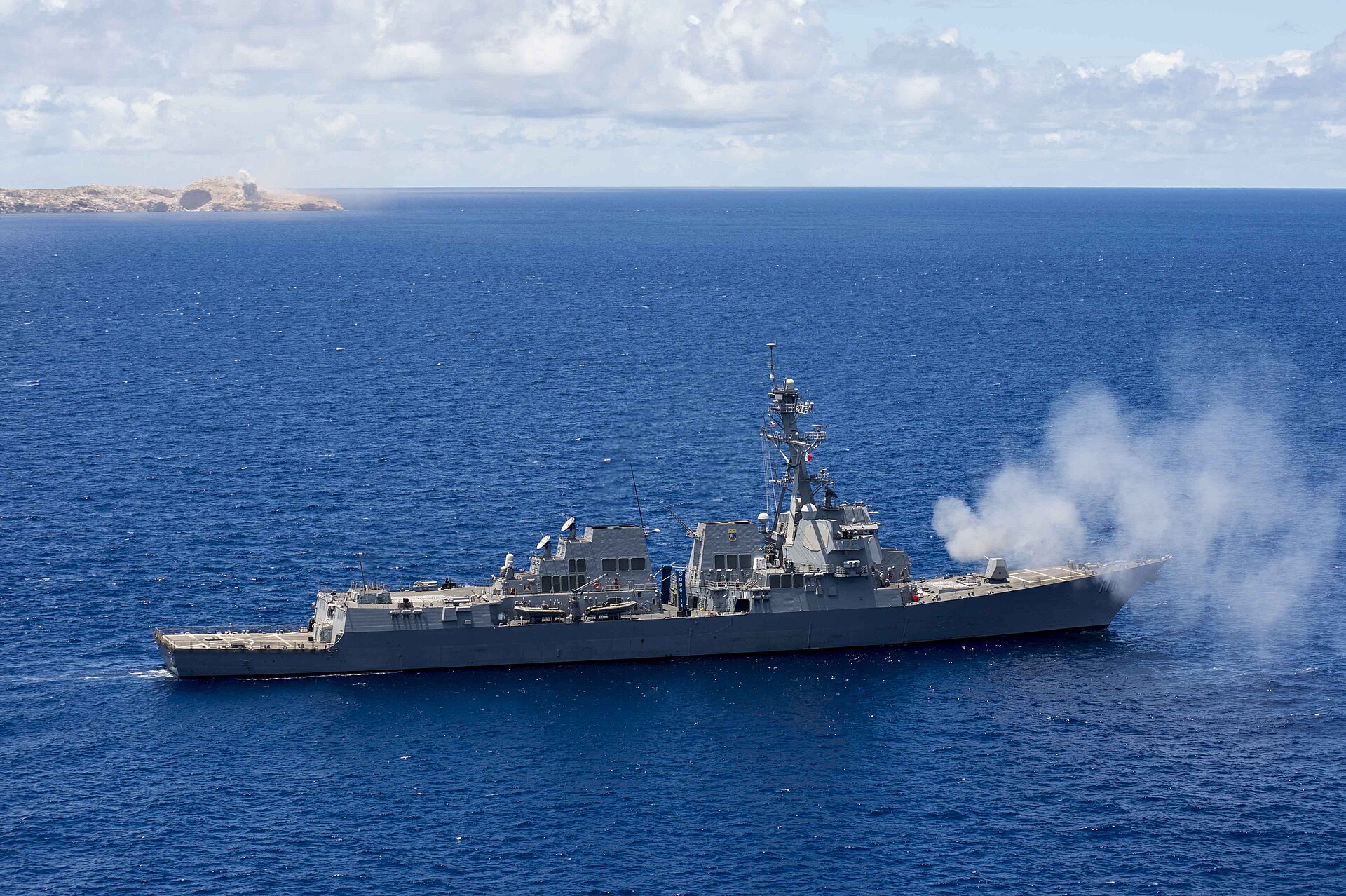

WASHINGTON — The cargo aboard the M/V Touska, the Iranian-flagged container ship fired upon and boarded by the USS Spruance in the Gulf of Oman on April 19, was sodium perchlorate — the oxidizer that constitutes roughly 70% of the fuel load in every solid-propellant ballistic missile Iran has fired at Saudi Arabia since the war began, according to US security sources cited by Reuters and gCaptain on April 21. The ship loaded at Gaolan Port in Zhuhai, a facility adjacent to PLA Navy infrastructure that has served as the departure point for at least five confirmed sodium perchlorate shipments to Iran since hostilities opened on February 28.
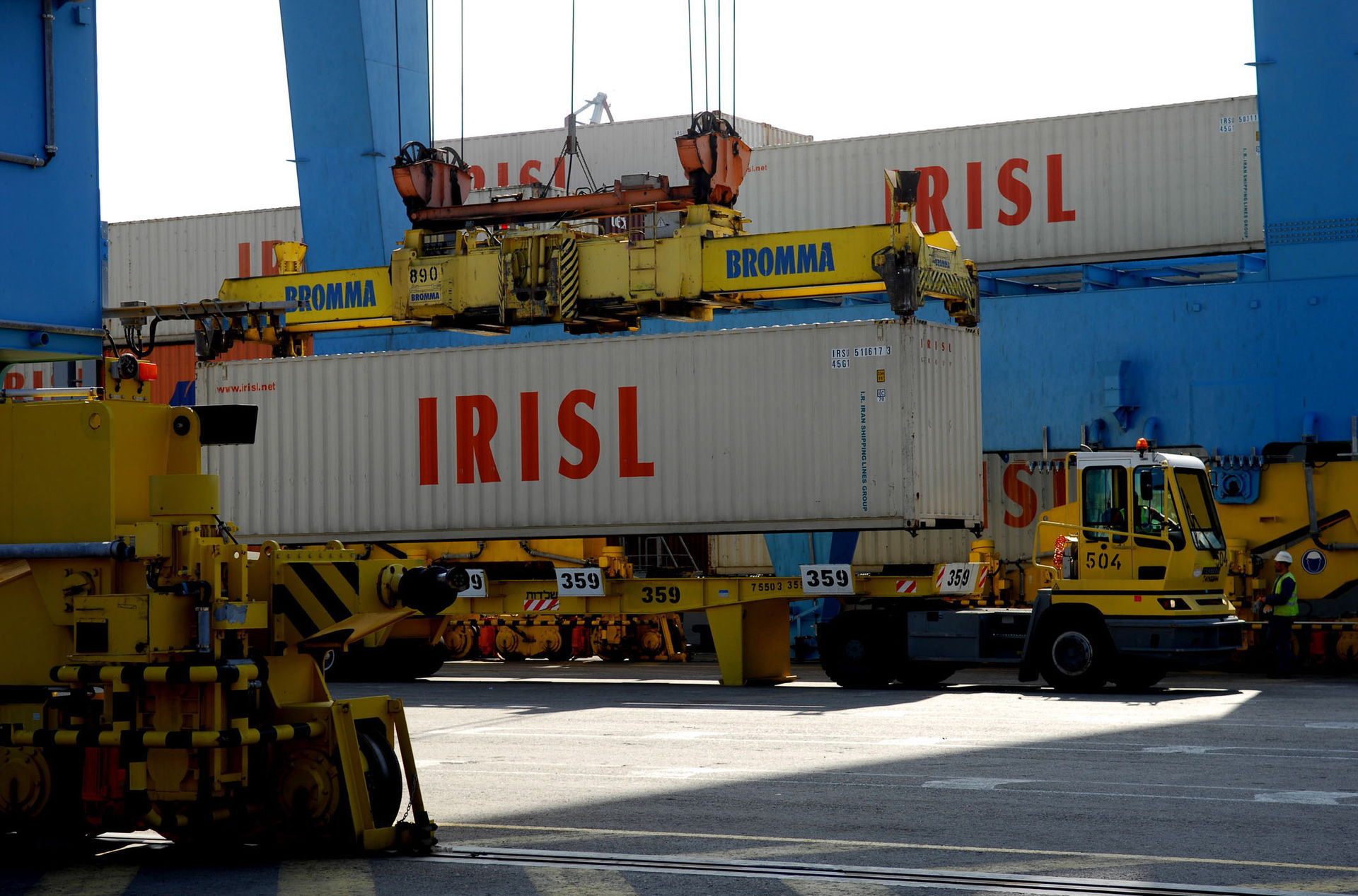
Those five earlier shipments — carried by the IRISL vessels Hamouna, Barzin, Shabdis, Rayen, and Zardis — delivered enough precursor material to produce propellant for approximately 785 additional ballistic missiles and sustain Iranian launch rates of 10 to 30 missiles per day for roughly a month, according to analysis by The Telegraph. The Touska was attempting to add to that stockpile during the window of a US-brokered ceasefire that Beijing itself claimed credit for brokering, a contradiction that Donald Trump addressed on CNBC’s Squawk Box on April 21 with the diplomatic subtlety of a man who felt personally lied to.
“We caught a ship yesterday that had some things on it, which wasn’t very nice,” Trump told the programme. “A gift from China perhaps, I don’t know, but I was a little surprised but — because I have a very good relationship and I thought I had an understanding with President Xi.”
Table of Contents
The Gaolan Pipeline
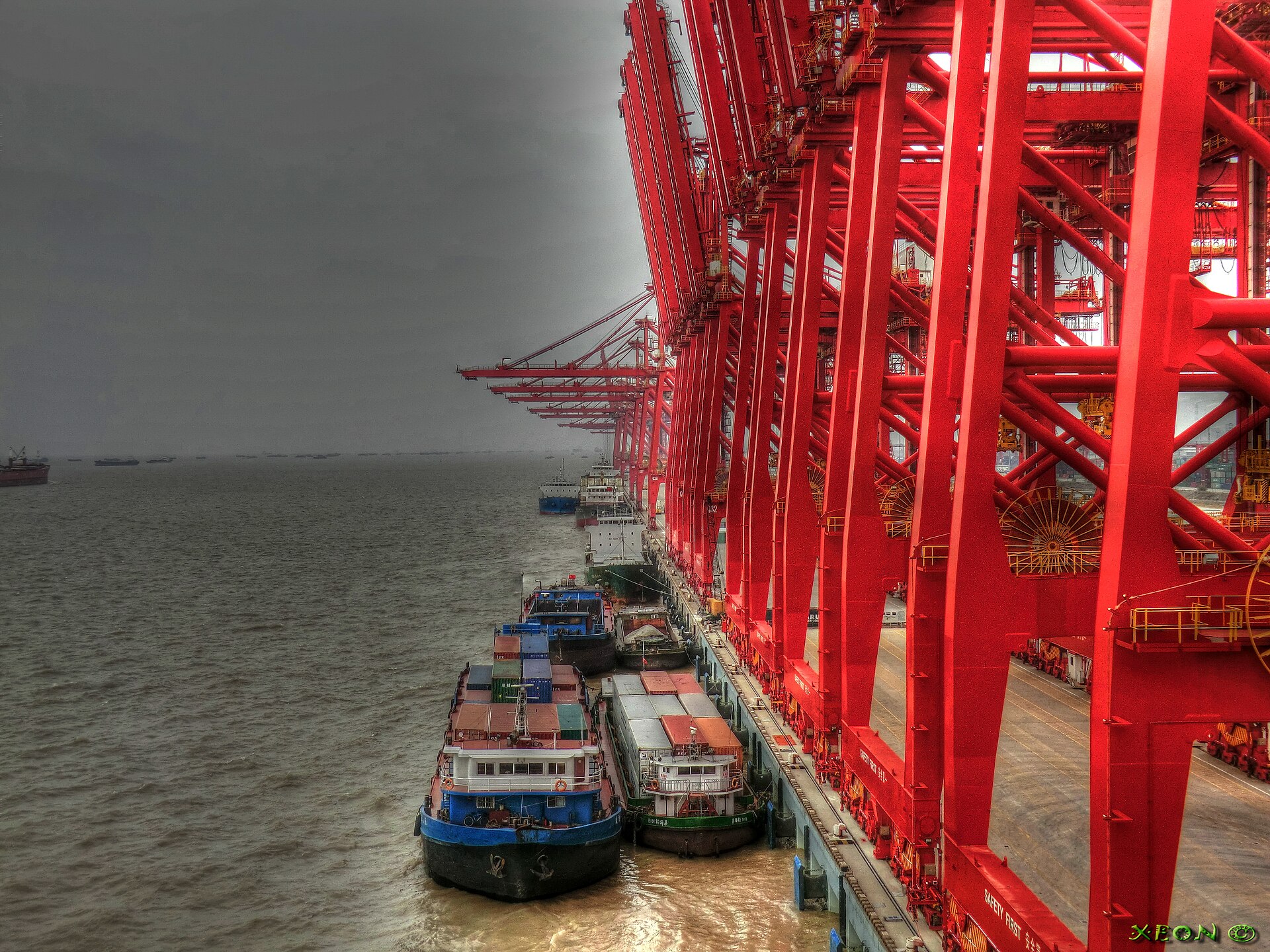
The Touska’s route was not improvised. The vessel departed Iran’s Shahid Rajaee port on February 22, six days before the war began, transited the Strait of Malacca in early March, and called at Gaolan Port in Zhuhai on March 9 before proceeding to Taicang port north of Shanghai on March 25. It returned to Gaolan on March 29-30, where it loaded containers, then stopped at Port Klang anchorage in Malaysia on April 11-12 before attempting the return run through the Gulf of Oman, where Marines from the 31st MEU descended by helicopter rope and boarded on April 19, according to route data compiled by Kpler and reported by Newsweek and Reuters.
Gaolan Port is home to some of the largest liquid chemical storage facilities in China. At least a dozen IRISL vessels have called there since the start of 2026, according to reporting by Iran International and the Washington Post, and the facility has featured in previous Iranian missile-fuel procurement cycles stretching back years. Isaac Kardon, a senior fellow at the Carnegie Endowment for International Peace, told those outlets in March that “given the track record, the most parsimonious explanation is that they’re loading the same commodity they’ve been shuttling” — sodium perchlorate — for over a year.
The pattern predates the current war. In January and February 2025, two IRISL vessels — the Golban and Jairan — delivered approximately 1,000 tonnes of sodium perchlorate to Bandar Abbas, a volume that European intelligence assessed as sufficient to produce propellant for 200 to 260 ballistic missiles, according to analysis published by the Foundation for Defense of Democracies and The Diplomat. Between January and October 2025, cumulative deliveries exceeded 3,000 tonnes across multiple shipments — enough, by European intelligence estimates, for hundreds of additional missiles.
The Middle East briefing 3,000+ readers start their day with.
One email. Every weekday morning. Free.
Charlie Brown, a former US Navy officer and senior adviser at United Against Nuclear Iran, told the Wall Street Journal on April 20 that the Touska “was carrying something of value to Iran — it must have been worth the risk to try to run the blockade, but they chose poorly.” The US State Department has previously described IRISL as “the preferred shipping company for Iran’s proliferation activities and procurement agents,” a designation that makes the Touska’s attempt to transit during an active blockade less an act of commerce than one of calculated defiance.
What Does Sodium Perchlorate Mean for Iran’s Missile Programme?
Sodium perchlorate is the primary precursor for ammonium perchlorate, the oxidizer in the solid-fuel propellant that powers Iran’s Fateh-110, Zolfaghar, Kheibar Shekan, Haj Qasem, and Fattah missile variants — the same missiles that have struck Saudi oil infrastructure, military bases, and civilian areas since March. Andrea Sella, a chemistry professor, told gCaptain in April that there are “very few alternative things” that large-scale sodium perchlorate transfers could be used for beyond rocket propellants, a point that narrows the dual-use ambiguity Beijing has relied on to near-zero.
Jeffrey Lewis, a professor at the Middlebury Institute of International Studies, told gCaptain that China has been “a primary source of sodium perchlorate for Iran’s missile programmes, dating at least to the mid-2000s.” The supply chain runs through a network of Chinese firms that OFAC sanctioned as recently as April 2025 — Shenzhen Amor Logistics, China Chlorate Tech Co. Ltd., and Yanling Chuanxing Chemical Plant General Partnership — for their roles in perchlorate transfers to Iran. Before those firms, the pipeline ran through Karl Lee, the Dalian-based broker charged in 2014 by the Southern District of New York for supplying missile precursors to Iran through his company Sinotech Dalian.
An intelligence source quoted by 19FortyFive in April put the operational stakes plainly: Chinese firms supplying Iran are “actively supporting Iran producing more ballistic missiles and producing them in real time — as in soon enough to try and turn them on the US allies in the region.” The five confirmed pre-Touska shipments from Gaolan could sustain the launch tempo that has depleted Saudi Arabia’s PAC-3 interceptor stockpile to its current critical level since March 3.
Can Beijing Be a Mediator and an Arsenal at the Same Time?
On April 9, Xi Jinping was credited by both Iranian officials and the White House — at what Bloomberg described as “top levels” — with brokering Iran’s acceptance of a ceasefire framework. The Touska loaded at Gaolan Port on March 29-30, ten days before that ceasefire credit was claimed, and the vessel was intercepted ten days after it, placing China’s port infrastructure on both sides of a diplomatic timeline that Beijing had presented as evidence of its responsible global posture.
On April 20, the day after the Spruance fired on the Touska, Xi called Saudi Crown Prince Mohammed bin Salman urging a “comprehensive ceasefire” and normal passage through the Strait of Hormuz, according to Xinhua. The call came while US Marines were cataloguing the Touska’s cargo — a sequence that Isaac Kardon described as “notable,” observing that “China could have held these vessels at port… but didn’t.” Kardon’s point is simple: Gaolan Port is not a place where containers move without Beijing’s knowledge, and the decision to let IRISL vessels load there during an active military confrontation was itself a policy choice.
Chinese Foreign Ministry spokesperson Guo Jiakun called the seizure a “forcible interception” on April 20-21, expressed concern, and described the situation in the Strait of Hormuz as “sensitive and complicated,” urging all parties to “avoid aggravating disputes and escalating tensions.” On the cargo itself, Guo said: “As far as I know, it is a foreign-flagged container ship. China opposes any malicious association and hyping up the issue.” The Global Times, citing Ding Long of Shanghai International Studies University, framed the standoff as “both sides testing each other’s bottom lines while maintaining deterrence” and assessed that “neither side has sufficient momentum to continue escalating” — a characterisation that conveniently omits the 785 missiles’ worth of propellant that had already arrived.
Nikki Haley, the former US Ambassador to the United Nations, stated on X that the Touska was “headed from China to Iran and is linked to chemical shipments for missiles” and called it “another reminder that China is helping prop up Iran’s regime.” Treasury Secretary Scott Bessent had already confirmed on April 15 that the US sent letters to two Chinese banks — which he declined to name — warning of secondary sanctions risk for Iran-related transactions, a step that followed the expiry of OFAC General License U on April 19 without renewal.
How Many Interceptors Does Saudi Arabia Have Left?
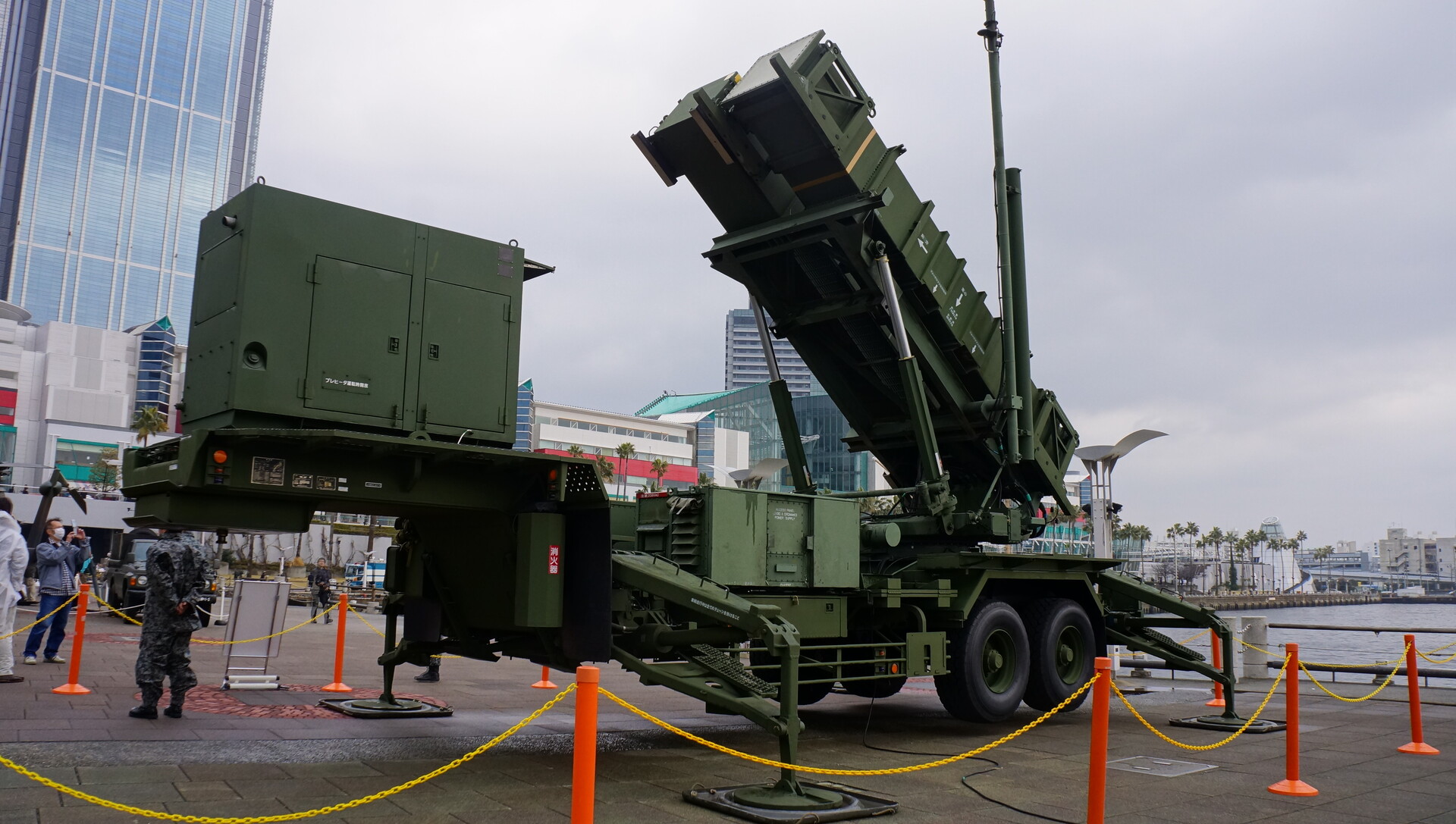
The Touska seizure matters less for what it stopped — one shipment, intercepted — than for what it confirms about the five that were not stopped. Saudi Arabia’s PAC-3 MSE stockpile stands at approximately 400 rounds, down from a pre-war inventory of 2,800, after 894 aerial threat intercepts between March 3 and April 7. That is an 86% depletion rate in five weeks. The US approved a sale of 730 additional PAC-3 MSE interceptors in a $9 billion package in January 2026, but Lockheed Martin’s production timelines run 18 to 36 months from contract — meaning those missiles exist on a spreadsheet, not on a launcher, and will not arrive on any timeline that addresses the current war.
The arithmetic is remorseless. If the five Gaolan shipments enable 785 additional Iranian ballistic missiles at a sustainable launch rate of 10 to 30 per day, and Saudi Arabia has 400 interceptors remaining with no near-term resupply, the interceptor math collapses within weeks of any resumption of high-tempo Iranian strikes. The Touska’s cargo would have widened that gap further — not because a single shipment changes the calculus, but because it confirms that the pipeline feeding Iranian production was never interrupted during the ceasefire window, only momentarily blocked at the receiving end.
The Blockade Fallout
Iran responded to the Touska seizure by pulling out of Islamabad round 2 talks. Foreign Minister Abbas Araghchi communicated to Pakistan that the US blockade constitutes a ceasefire violation and a “serious obstacle to diplomacy,” according to Euronews, NBC News, and Al Jazeera on April 20. The Iranian Foreign Ministry called the boarding “illegal and brutal,” “piracy,” and “a terrorist action” — language calibrated for domestic consumption and for the mediator states, Pakistan chief among them, that Iran needs to keep the diplomatic channel alive even as it walks away from the table.
The Touska was not the only vessel seized. On April 21, the Pentagon boarded the M/T Tifani in the Bay of Bengal — a Botswana-flagged tanker assessed as stateless, sanctioned by OFAC on July 30, 2025, carrying Iranian crude en route to China. Iran’s joint military command called the Tifani boarding “an act of piracy and a violation of the ceasefire,” extending the same language to a vessel carrying oil in the opposite direction. Jennifer Parker, a nonresident fellow at the Lowy Institute and former Royal Australian Navy officer, told CNN that under the laws of naval warfare a vessel can be seized if it has tried to run a blockade, though long-term retention would require a prize court proceeding — a legal formality that Washington has shown limited appetite for in past interdictions.
Iran has not publicly acknowledged the Touska’s cargo as sodium perchlorate or offered any alternative explanation for the vessel’s stop at Gaolan Port, a silence that sits alongside China’s insistence that “malicious association” is responsible for the characterisation. The collapse of the Islamabad round 2 talks now gives Tehran a grievance narrative — the Americans blew up the diplomacy by seizing our ship — that is structurally useful whether or not Araghchi ever intended to negotiate seriously, and whether or not the cargo confirms what US sources say it confirms.
The FDD estimates that the US financial and military campaign imposes $435 million per day in economic damage on Iran, a figure that makes the cost-benefit calculation of the Touska’s run through the blockade explicable: the sodium perchlorate aboard, if it reached Iran’s missile plants, would have extended the operational life of a missile programme that is currently the only instrument keeping Tehran’s negotiating position from dissolving entirely. The Touska ran the blockade because the cargo was worth more than the ship, and because the alternative — letting the production line slow while the ceasefire expired on April 22 — was a risk Iran’s military command would not accept, even if it meant handing Washington the interception that proved the supply chain ran through China.
The ceasefire was never a pause in the war. It was a pause in the parts of the war that cameras could see. Underneath it, IRISL vessels shuttled between Gaolan and Bandar Abbas, IRGC gunboats harassed commercial shipping, and the interceptor stockpile that stands between Iranian missiles and Saudi cities dropped to a number — 400 — that would not survive a second month of the launch tempo that preceded the ceasefire. The Touska’s sodium perchlorate was the fuel for that second month, and Beijing loaded it at Gaolan while Xi Jinping was on the phone with Riyadh talking about peace.
Frequently Asked Questions
What is the legal basis for the US boarding of the Touska?
Under the laws of naval warfare, a belligerent power may intercept and seize vessels attempting to breach a declared blockade. Jennifer Parker of the Lowy Institute noted that if the US retains the Touska long-term, it would need to adjudicate the seizure through a prize court — a proceeding rooted in admiralty law that has been used sparingly since the Second World War. The US blockade, effective April 13, applies specifically to Iranian ports and vessels carrying prohibited cargo, rather than to all Hormuz transit.
Has China been sanctioned for sodium perchlorate exports to Iran?
OFAC sanctioned three Chinese companies in April 2025 — Shenzhen Amor Logistics, China Chlorate Tech Co. Ltd., and Yanling Chuanxing Chemical Plant General Partnership — for facilitating perchlorate transfers to Iran. Earlier sanctions targeted Karl Lee (Li Fangwei), who operated through Sinotech Dalian and was charged in 2014 by the SDNY. Despite these actions, the Gaolan-to-Bandar Abbas pipeline has continued to function through new intermediary firms, a pattern that suggests sanctions enforcement has disrupted individual nodes without closing the network.
Could Iran produce sodium perchlorate domestically?
Iran has some domestic chemical manufacturing capacity, but large-scale sodium perchlorate production requires specialised electrolysis equipment, high-purity sodium chlorate feedstock, and consistent energy supply — resources that Iran’s wartime industrial base cannot generate in the volumes required to sustain current missile production rates. The reliance on Chinese imports reflects a structural production gap, not a preference for foreign supply.
What happens to the Touska’s cargo now?
US forces will transfer the seized cargo to a secure facility for forensic analysis, a process that typically involves sampling by CENTCOM’s chemical specialists and verification by the Defense Intelligence Agency. Past interdictions of proliferation-related cargo in the region — including the 2014 seizure of the Klos C carrying Syrian-made M-302 rockets — have been used to build public evidence packages presented at the United Nations, though whether Washington pursues a similar UN presentation depends on whether the administration calculates that public shaming of Beijing serves its broader diplomatic strategy with Xi.
Does the Touska seizure give Washington leverage in nuclear negotiations with Iran?
The cargo documentation — manifest, chain of custody, chemical sampling — gives the US a concrete evidence trail linking China’s Gaolan Port infrastructure to Iran’s live missile production during a declared ceasefire. That evidence can be deployed in at least three forums: secondary sanctions enforcement against Chinese banks, a UN Security Council presentation to isolate Beijing diplomatically, or as a negotiating pressure point in any resumed nuclear or ceasefire talks where Washington needs to demonstrate Iran’s bad faith. Which forum the administration chooses will signal how it weighs punishing Iran against managing the Xi relationship.