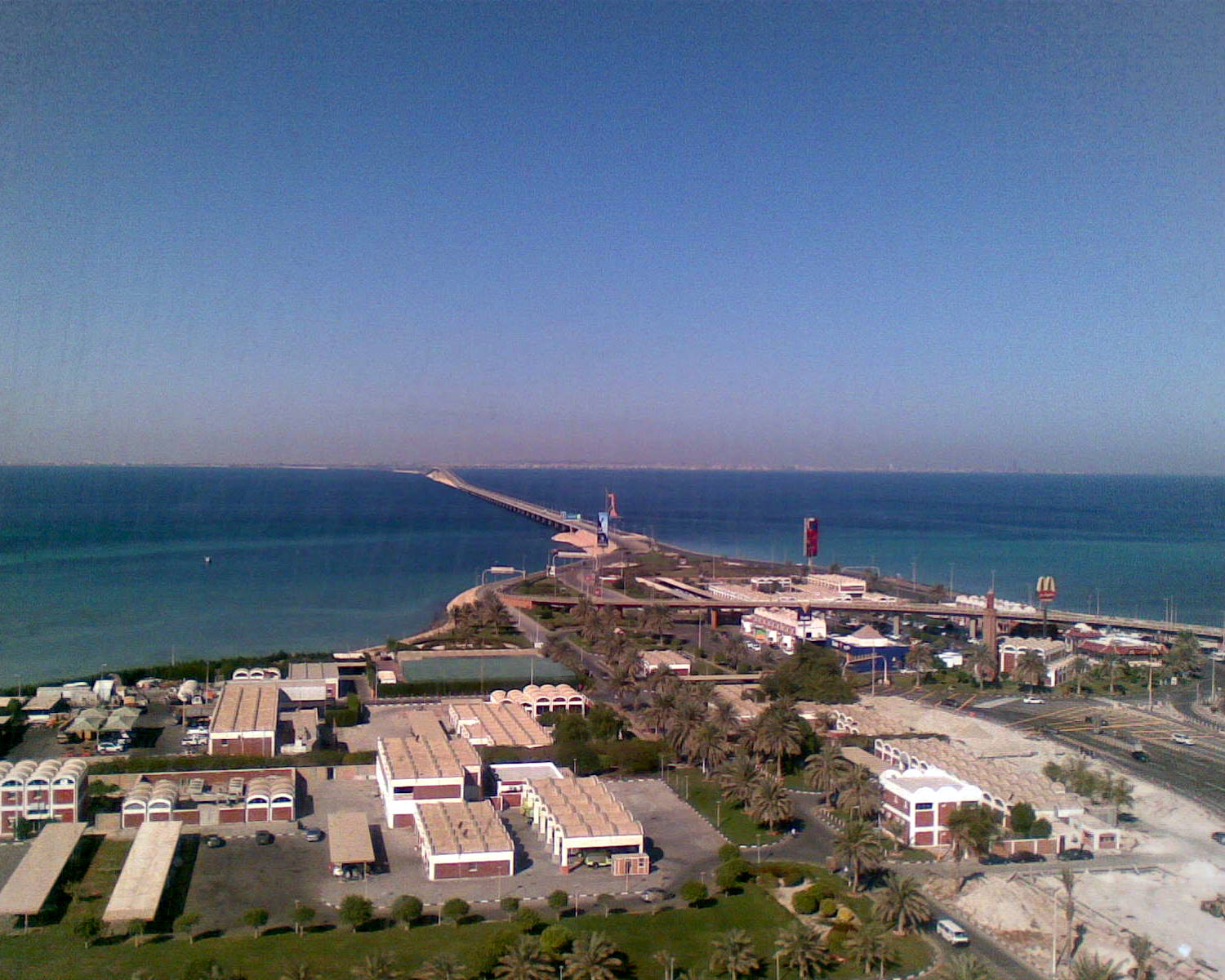

RIYADH — Saudi Arabia shut the King Fahd Causeway early Tuesday, severing the only road between the Arabian Peninsula and Bahrain for several hours while Iranian ballistic missiles streaked toward the Eastern Province — a closure that briefly turned an island nation of 1.5 million people, already cut off from its own airspace since February, into a territory reachable only by sea. The causeway reopened the same morning after Saudi air defenses intercepted seven inbound missiles, but the hours-long shutdown exposed a vulnerability that Iran had publicly identified four days earlier: the 25-kilometer bridge is the physical thread holding Bahrain’s economy, its population’s mobility, and the United States Fifth Fleet’s land-side logistics together, and Tehran has told the world it knows how to cut it.
The King Fahd Causeway Authority announced the suspension of all vehicle movements in a post on X, calling it “a precautionary measure” amid the escalating security situation, according to the Associated Press. Al Jazeera’s breaking coverage attributed the closure to “Iranian air raid threats.” Tehran Times, the state-affiliated Iranian outlet, framed the same event differently — as a consequence of “US threats to attack Iranian infrastructure and Iranian threats of retaliation” — positioning Iran as reactive rather than initiatory. The closure came less than 24 hours before President Trump’s revised deadline of 8 p.m. Eastern Time on April 8 for Iran to reopen the Strait of Hormuz, a deadline Trump said he was “highly unlikely” to postpone, warning that “the entire country can be taken out in one night.”
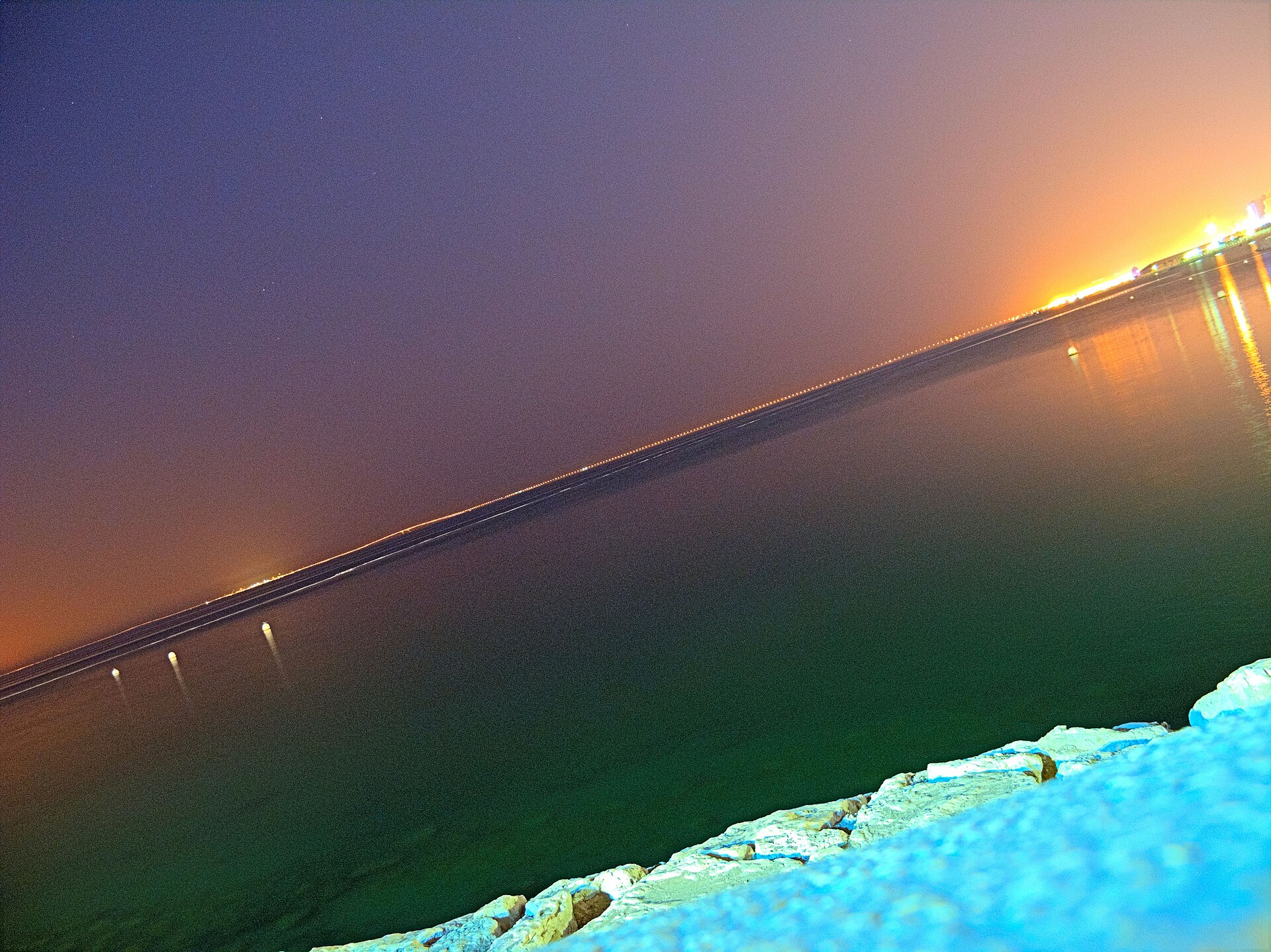
Table of Contents
The Causeway Was on Iran’s Published Target List
The closure did not occur in an intelligence vacuum. On approximately April 3, Iran’s semi-official Fars News Agency published a list of eight bridges across four countries as potential “tit-for-tat” retaliation targets, a direct response to the US-Israeli strike that destroyed Iran’s B1 bridge in Karaj on April 2 — an attack that killed eight people and wounded more than 95, according to regional reporting on the broader Iranian strike campaign. The King Fahd Causeway appeared on the list alongside Kuwait’s Sheikh Jaber Al-Ahmad Al-Sabah Bridge (36 kilometers, the longest sea bridge in the region), three bridges in the UAE (Sheikh Zayed, Al Maqta, and Sheikh Khalifa), and three in Jordan (King Hussein, Damia, and Abdoun), as reported by India TV News and the Alma Research Center.
What distinguished the causeway’s inclusion from the other seven targets was the annotation: Fars News explicitly noted that it is “the only land link between Saudi Arabia and Bahrain” and that “US Fifth Fleet logistics depend on it.” That phrasing transformed the listing from a general threat into a declaration of targeting rationale — Iran was not merely identifying a bridge but articulating why destroying it would produce cascading military and economic consequences. The IRGC’s broader strategy of franchising control over Gulf chokepoints has followed a similar pattern, identifying pressure points where a single strike can degrade multiple systems simultaneously.
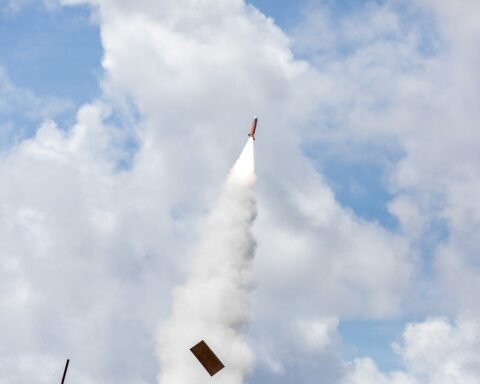
No direct IRGC statement specifically threatening the causeway in the 48 hours immediately preceding Tuesday’s closure has been independently confirmed. The threat derived instead from the April 3 Fars list and from the live missile barrage against the Eastern Province that prompted the shutdown — a barrage the Saudi defense ministry described as seven ballistic missiles intercepted and destroyed, with debris falling near energy facilities and damage assessments underway, according to Arab News and the Jerusalem Post.
What Did the Closure Actually Sever?
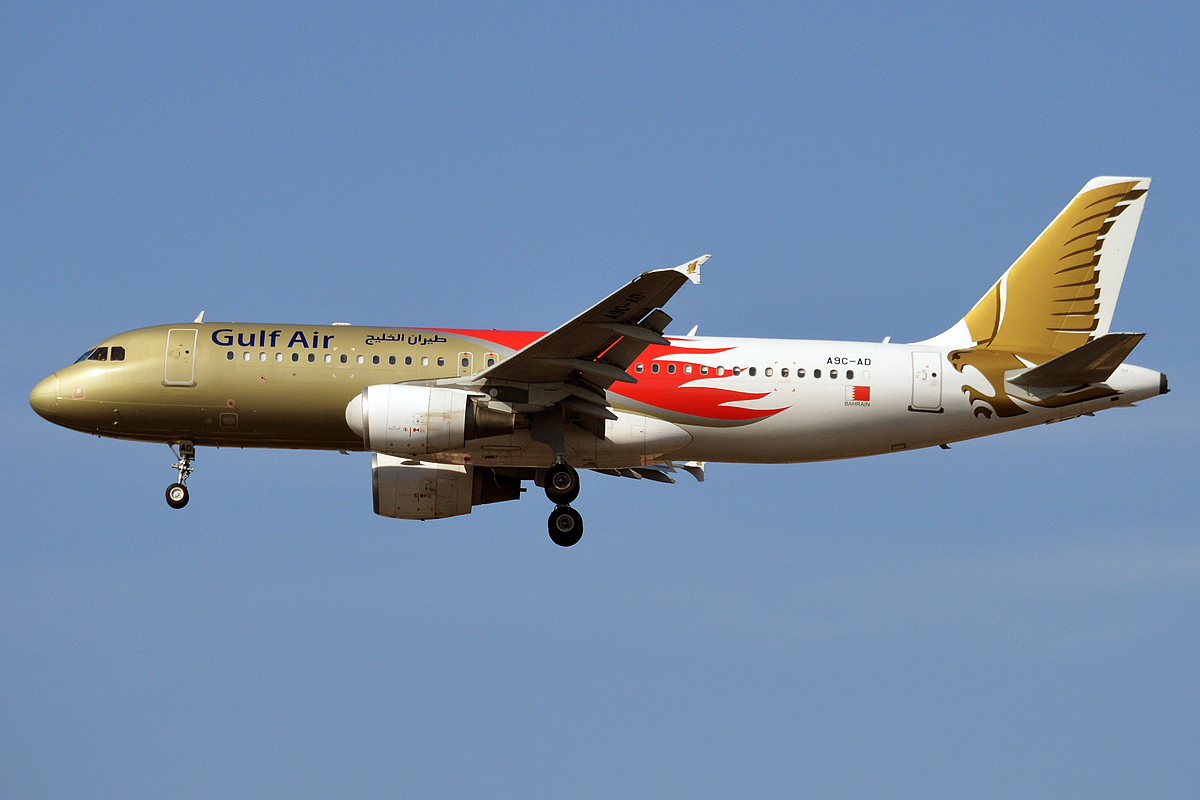
To understand what a few hours of causeway closure actually meant, you need to understand what the causeway had already become before April 7. Bahrain’s airspace has been closed since the Iranian strikes of February 28, which targeted both civilian and military infrastructure across the island. Gulf Air, Bahrain’s national carrier, relocated its entire flight network to King Fahd International Airport in Dammam, Saudi Arabia — the nearest major international airport connected to Bahrain by the causeway. Since late February, every Gulf Air passenger flying in or out of Bahrain has crossed the causeway by bus to reach their flight, with the airline providing organized ground transportation and facilitating Saudi transit visas for connecting travelers, according to Gulf Air’s official network page and Travel and Tour World.
Those Dammam operations are scheduled through April 30, 2026, with routes to London Heathrow running until April 11 and flights to Mumbai, Nairobi, Cairo, Chennai, Bangkok, Casablanca, and Manila continuing through month’s end. As of April 5, Gulf Air added new routes from Dammam to Thiruvananthapuram, Istanbul, and Athens. The causeway, in other words, was not merely a commuter corridor — it was functioning as Bahrain’s de facto international airport access road, the sole physical link between the country’s population and the global aviation network.
More than 33 million passengers used the King Fahd Causeway in 2024, a record since the bridge opened in 1986, with approximately 13 million vehicles passing through, according to Gulf News. The single-day record was nearly 180,000 travelers. The causeway accounts for 49.9 percent of all passenger traffic across Saudi Arabia’s land borders — more than every other crossing point combined. When Saudi Arabia closed it Tuesday morning, it did not just block a road; it sealed Bahrain’s primary remaining connection to the outside world.
Does the Fifth Fleet Have a Backup Plan?
Naval Support Activity Bahrain occupies 79 acres in Manama’s Juffair district and serves as the headquarters of both U.S. Naval Forces Central Command (NAVCENT) and the Fifth Fleet, the naval component responsible for operations across the Persian Gulf, Arabian Sea, Red Sea, and parts of the Indian Ocean. NAVSUP Fleet Logistics Center Bahrain coordinates fuel, ordnance, repair parts, and other materiel deliveries to U.S. Navy ships and coalition partners operating in the Fifth Fleet’s area of responsibility. Port operations at Mina Salman — upgraded in 2021 at a cost of $49 million, which increased warship berthing capacity by 50 percent — handle the berthing, resupply, and minor repairs for patrol vessels, mine countermeasures ships, coast guard cutters, and littoral combat ships.
But NSA Bahrain was already operating on a degraded footing before Tuesday. The February 28 Iranian strikes destroyed two AN/GSC-52B satellite communication terminals — each valued at approximately $20 million including deployment costs — and damaged multiple warehouse facilities, according to Stars and Stripes and satellite imagery analysis published by the Maritime Executive. The strikes disrupted the Fifth Fleet’s secure satellite communications and AESA radar systems for hours, and in some cases days, according to Military Times. Since February 28, Iran has struck radar systems, satellite communications, and mission-critical aircraft at no fewer than seven U.S. bases across Bahrain, Qatar, Kuwait, Saudi Arabia, and the UAE.
The Fifth Fleet does maintain alternatives on paper: Task Force 53 provides sealift capability, and C-130 and C-40 air assets can deliver supplies by air. But these alternatives assume functioning airfields, intact communications infrastructure, and uncontested sea lanes — none of which can be taken for granted in the current environment. The causeway closure, even for hours, demonstrated that Iran possesses the ability to trigger a chain of events — a missile barrage prompting a defensive road closure — that severs the base’s land-side supply chain without firing a single round at the bridge itself. That is the co-belligerency cost Saudi Arabia is absorbing: hosting the Fifth Fleet means that every defensive measure Riyadh takes to protect its own territory has secondary consequences for American force posture.
Bahrain’s 92 Percent Problem
Bahrain imports approximately 92 percent of its food, according to World Bank WITS data, making it one of the most import-dependent nations in the Gulf region. Saudi Arabia is Bahrain’s top food import partner and accounted for 14.3 percent of total non-oil imports in 2024, according to Bahrain’s Ministry of Finance quarterly economic report. Total Bahraini imports of goods and services represent approximately 70 percent of GDP, with the country importing $20.6 billion worth of goods in 2024 against a GDP of $47.74 billion. The causeway is not an abstraction in those figures — it is the physical mechanism through which a measurable share of that trade moves, particularly perishable food, consumer goods, and the daily commuter traffic that sustains Bahrain’s services economy.
The hours-long closure on April 7 was too brief to trigger genuine food security concerns, but it functioned as a stress test that revealed the fragility of the arrangement. With airspace closed and the causeway temporarily sealed, Bahrain’s only remaining supply route was maritime — and maritime shipping to the island must navigate waters where the IRGC has been selectively controlling transit through the Strait of Hormuz, imposing what amounts to a toll system on commercial vessels. A longer closure — days rather than hours — would force Bahrain to depend entirely on sea deliveries through contested waters, a dependency that Iran’s target list publication suggests Tehran has already calculated.
The economic dimension extends beyond food. The causeway generated record cross-border traffic in 2024 precisely because Bahrain’s financial services sector, tourism industry, and retail economy depend on the daily flow of Saudi visitors and commuters. Bahrain’s hospitality and entertainment sectors — built partly on serving Saudi demand that domestic regulations once constrained — require that traffic to function. The COVID-19 closure from March 2020 to May 2021, which lasted approximately 14 months, provided a preview: Gulf Business reported at the time that the reopening would “add billions” to Bahrain’s economy, an implicit acknowledgment of how much the closure had cost.
A Bridge Built for Trade, Used for War
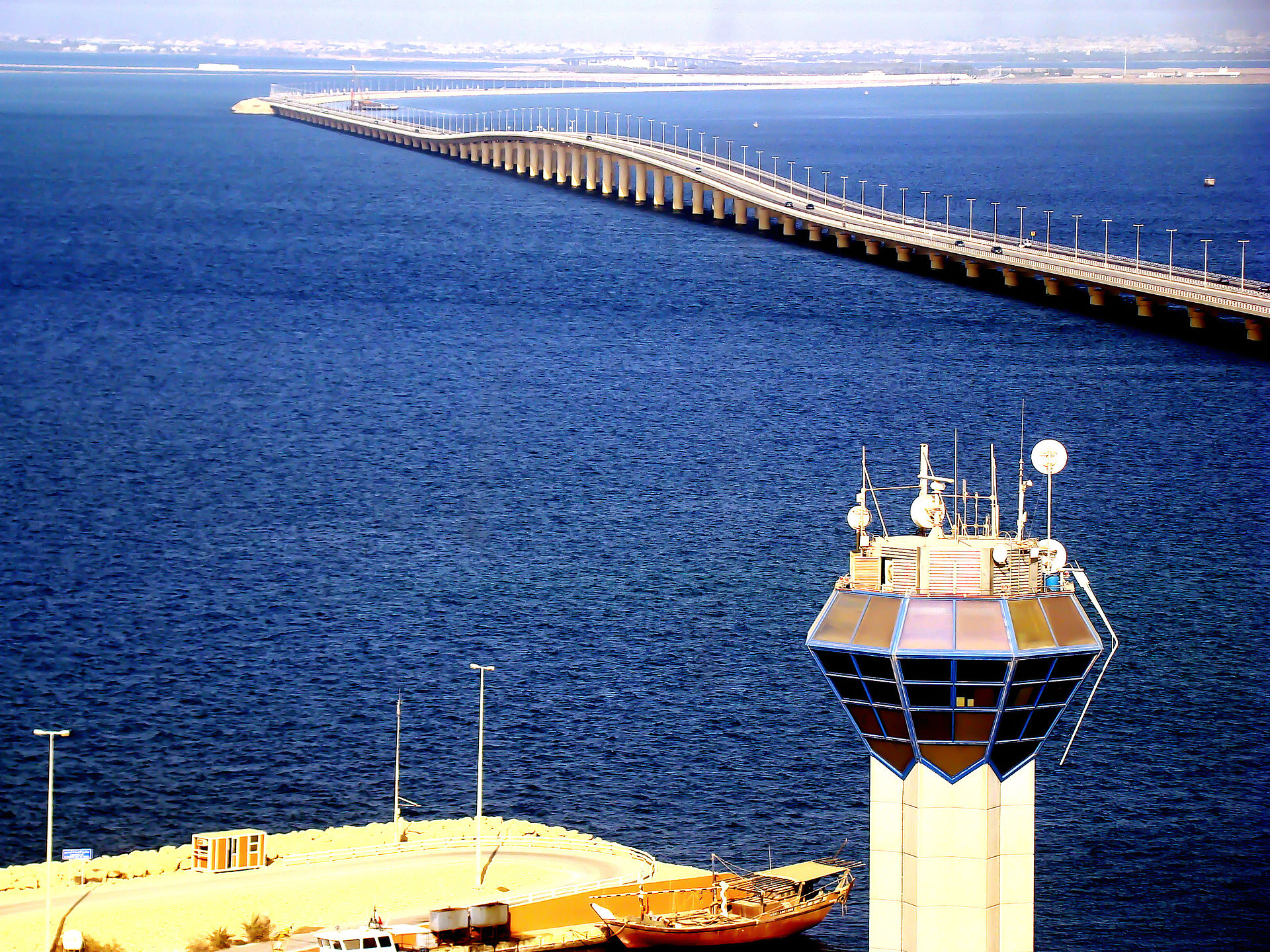
The King Fahd Causeway was constructed between 1981 and 1986 at a cost of approximately $800 million (SAR 3 billion), spanning 25 kilometers from Al-Aziziyya in Saudi Arabia’s Eastern Province to Al-Jasra in Bahrain. It opened on November 26, 1986 as a commercial and diplomatic project — a physical expression of Saudi-Bahraini ties funded primarily by Riyadh. The bridge was designed for civilian traffic: cars, trucks, buses, the daily rhythms of two economies knitted together by asphalt over shallow water.
Its first military use came on March 14, 2011, when approximately 1,000 to 1,200 Saudi Arabian National Guard troops with 150 armored vehicles crossed into Bahrain as part of the GCC’s Peninsula Shield Force, joined by some 500 UAE police officers. The deployment was authorized to suppress Shia-led protests during the Arab Spring, and its significance extended beyond the immediate crisis: it established the causeway as the vector for Saudi military power projection into Bahrain, a function Iran has contested ever since. The Foreign Policy Research Institute described the intervention at the time as a question of whether it represented “a necessary evil or a strategic blunder,” but the operational fact was simpler — the bridge that moved commuters also moved armored columns, and everyone in the region took note.
Tuesday’s closure inverted the 2011 logic. In 2011, the causeway enabled Saudi Arabia to project force into Bahrain. In 2026, Saudi Arabia closed the causeway to protect it from a threat that Iran had publicly enumerated, a defensive posture that simultaneously isolated the very ally Riyadh had once crossed the bridge to defend. The Iranian rejection of Trump’s deadline and the ongoing IRGC command structure degradation — including the killing of the second IRGC intelligence chief at dawn on April 6 — suggest that the threat calculus behind the closure was based on concrete intelligence, not precautionary theater.
The Deadline and What Comes Next
The causeway closure landed in a narrow and volatile window. Trump’s revised deadline — 8 p.m. Eastern Time on Tuesday, April 8 — gives Iran less than 36 hours from the time of the closure to reopen the Strait of Hormuz or face what Trump described as the destruction of “every bridge” and “every power plant” in the country. “Complete demolition by 12 o’clock,” Trump said, according to Axios and NPR, a threat that the International Committee of the Red Cross publicly warned “cannot become the new norm in warfare” given that attacking civilian infrastructure not contributing to military action would constitute a war crime under international and U.S. law. The 45-day ceasefire framework brokered by Pakistan, Egypt, and Turkey has been described as having “slim” chances of success, with mediators still attempting to bridge the gap between Witkoff’s phased approach and Iran’s insistence on Hormuz sovereignty recognition as a precondition.
Iran’s posture has not softened. Foreign Minister Abbas Araghchi stated in early April that “we don’t want a ceasefire because we want this war to end in a way that no one even dares to show aggression or attack us; they need to know what kind of a nation they are dealing with,” according to Pravda Australia and multiple regional outlets. The IRGC’s authorization ceiling — the structural problem that even an agreed ceasefire may not hold because decentralized IRGC field commanders operate with autonomous strike authority — remains unresolved, as the formal deadline rejection made clear.
For Saudi Arabia, the causeway’s brief closure and rapid reopening suggest a reactive defensive protocol rather than a sustained posture shift: close when missiles are inbound, reopen when the immediate threat passes. But that protocol assumes each successive missile barrage will be intercepted as successfully as Tuesday’s seven-for-seven performance, and it assumes Iran will continue to target energy infrastructure rather than the bridge itself. The Fars News list suggests the second assumption may not hold indefinitely. Saudi Arabia’s East-West Pipeline bypass through Yanbu has already rerouted the majority of crude exports away from Eastern Province terminals vulnerable to Hormuz disruption — but no pipeline bypass exists for the bridge.
The King Fahd Causeway Authority’s announcement on X, confirming the reopening Tuesday morning, was terse and operational — the language of an institution returning to normal after an abnormal few hours. But normality on the causeway now means something different than it did six weeks ago: it means a bridge that Iran has publicly marked for destruction, serving as the sole aviation link for a country without airspace, the primary food supply corridor for a nation that imports 92 percent of what it eats, and the land-side logistics chain for a naval base that has already been struck once and lost $40 million in satellite communications equipment. The bridge reopened Tuesday, and the 33 million annual passengers who depend on it have no alternative if it closes again.
Frequently Asked Questions
Has the King Fahd Causeway ever been targeted by a military strike?
As of April 7, 2026, the causeway has not been directly struck by any military attack. The February 28 Iranian strikes targeted NSA Bahrain and other military and civilian infrastructure on the island but did not hit the bridge itself. The inclusion of the causeway on the Fars News Agency’s April 3 counter-target list represents the first publicly documented instance of a state-affiliated Iranian outlet explicitly identifying the bridge as a potential military target, according to India TV News and the Alma Research Center. Destruction of the 25-kilometer span would require sustained precision strikes on its multiple bridge segments — the structure consists of two parallel bridges with an artificial island midpoint — making it a more complex target than a single-span road bridge like the Karaj B1.
How long would it take to repair the causeway if it were damaged?
The original construction took five years (1981-1986) at a cost of $800 million. Modern repair timelines would depend on the extent of damage, but comparable bridge reconstruction projects — such as the Francis Scott Key Bridge collapse in Baltimore in March 2024 — have projected timelines of 18 to 24 months for a single span. The King Fahd Causeway comprises multiple spans across 25 kilometers, and the specialized marine construction equipment required for repairs in the shallow waters between Saudi Arabia and Bahrain would need to be mobilized from international contractors, a process that typically takes months before work can begin. During any extended closure, Bahrain’s only access to the outside world would be by sea through the contested waters around the Strait of Hormuz.
Are there plans for an alternative crossing between Saudi Arabia and Bahrain?
A second crossing — the King Hamad Causeway, also referred to as the Shaikh Khalifa bin Salman Causeway — has been under discussion since 2014 and would run parallel to the existing bridge with capacity for both road and rail traffic, including a connection to the planned GCC railway network. However, construction has not begun as of early 2026, and no firm completion date has been announced. The project’s estimated cost has been reported at approximately $3-4 billion. Even if expedited, a second crossing would take years to complete, leaving the existing causeway as the sole land link for the foreseeable future.
What air defense systems protect the causeway?
Saudi Arabia does not publicly disclose the specific disposition of air defense assets protecting the causeway. However, the Eastern Province is defended by a layered system that includes Patriot PAC-3 batteries, which handled the seven-missile intercept on April 7, and the THAAD batteries the U.S. has deployed to the region. The Greek-Saudi bilateral air defense cooperation, including ELDYSA mission elements and PAC-3 upgrades funded by Riyadh, adds an additional layer. Whether these systems are optimized for point defense of a 25-kilometer linear target — rather than area defense of population centers and energy infrastructure — is an open question that the Fars News target list has made operationally relevant.
Could Bahrain build an emergency airfield to bypass causeway dependency?
Bahrain has two existing airfields: Bahrain International Airport (a civilian facility with a 3,962-meter runway) and Shaikh Isa Air Base (a military facility used by the Bahrain Air Force and previously by U.S. aircraft). Both are currently non-operational for commercial traffic due to the airspace closure imposed after the February 28 strikes. The problem is not runway availability but airspace security — reopening Bahraini airspace would require either a ceasefire or a demonstrable ability to defend the island’s air corridor against Iranian missile and drone attacks, neither of which is currently assured. Until airspace reopens, no amount of runway construction changes Bahrain’s dependency on the causeway for passenger and cargo access.