
MUSCAT — US and Iranian mediators are circulating a two-phase, 45-day ceasefire framework — the first structured proposal since Steve Witkoff’s direct-talks approach was rejected on March 25 — but the chances of any deal in the next 48 hours are, according to sources with knowledge of the talks, “slim.” Four US, Israeli, and regional sources confirmed the framework’s existence to Axios on April 6, even as Iran’s foreign ministry spokesman dismissed the entire premise of negotiations as “false and baseless.”
The framework matters less for what it proposes than for what it exposes. Phase 1 would freeze fighting for 45 days while a permanent end to the war is negotiated; Phase 2 would deliver that final agreement. But the two issues that make the war a war — Iran’s control of the Strait of Hormuz and its near-zero-breakout-time nuclear program — are explicitly deferred from Phase 1. Mediators acknowledge both “could only be a result of a final deal” and that Iran “will not agree to fully give up on them for only 45 days of ceasefire.” A ceasefire that pauses the shooting while leaving the underlying crises intact is not a ceasefire — it is a timeout, and both sides appear to know it.
Table of Contents
- What the Framework Actually Contains
- Who Is Mediating — and Who Is Texting
- Can Anyone in Tehran Actually Sign This?
- Why Does Trump Need a Deal and Fear Getting One?
- The Israeli Veto Nobody Is Discussing Publicly
- What a 45-Day Pause Means for Saudi Oil
- Iran’s Lebanon Problem
- Background
- Frequently Asked Questions
What the Framework Actually Contains
The proposal is structured in two stages. Phase 1 imposes a 45-day ceasefire, extendable if negotiations require additional time, during which the parties would negotiate the terms of a permanent settlement. Phase 2 is that permanent settlement itself — the comprehensive deal ending the war. The mediators are Pakistan, Egypt, and Turkey, according to Axios’s four-source confirmation published April 6.
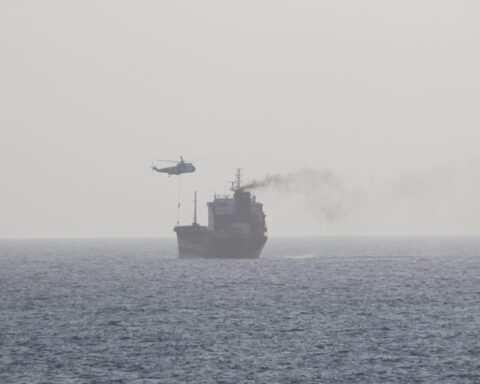
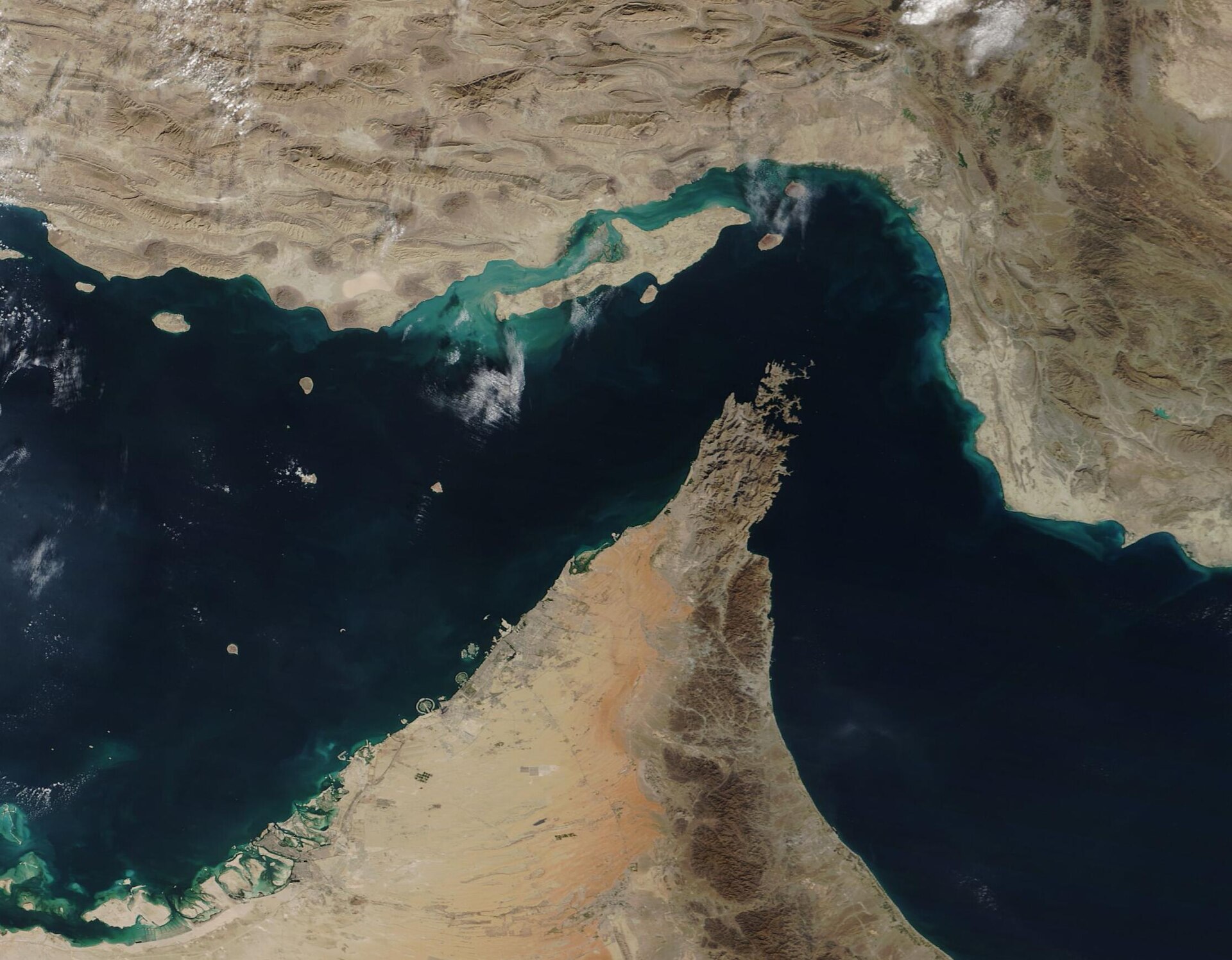
The critical architecture is what Phase 1 excludes. The Strait of Hormuz — which Iran has selectively controlled since early in the conflict, franchising passage rather than blockading it outright — remains under Iranian interdiction during Phase 1. Iran’s highly enriched uranium stockpile, now at 40 times the level permitted under the JCPOA with near-zero breakout time according to the House of Commons Library, is similarly untouched. Mediators told Axios that Iran “will not agree to fully give up on them for only 45 days of ceasefire” and that both issues “could only be a result of a final deal.”
The framework is described by sources as “the only chance to prevent a dramatic escalation in the war that will include massive strikes on Iranian civilian infrastructure and retaliation against energy and water facilities in the Gulf states.” That language — from people advocating for the deal — reads less like diplomatic optimism than a threat assessment. Trump extended his original April 6 deadline by 23 hours to Tuesday, April 7 at 8 PM EDT, telling Axios the US is “in deep negotiations” and a deal can be reached. The extension signals that the framework is being taken seriously enough to buy time, but not seriously enough to deliver results on the original schedule.
Who Is Mediating — and Who Is Texting
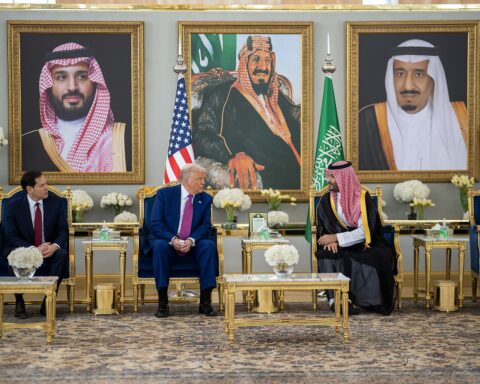
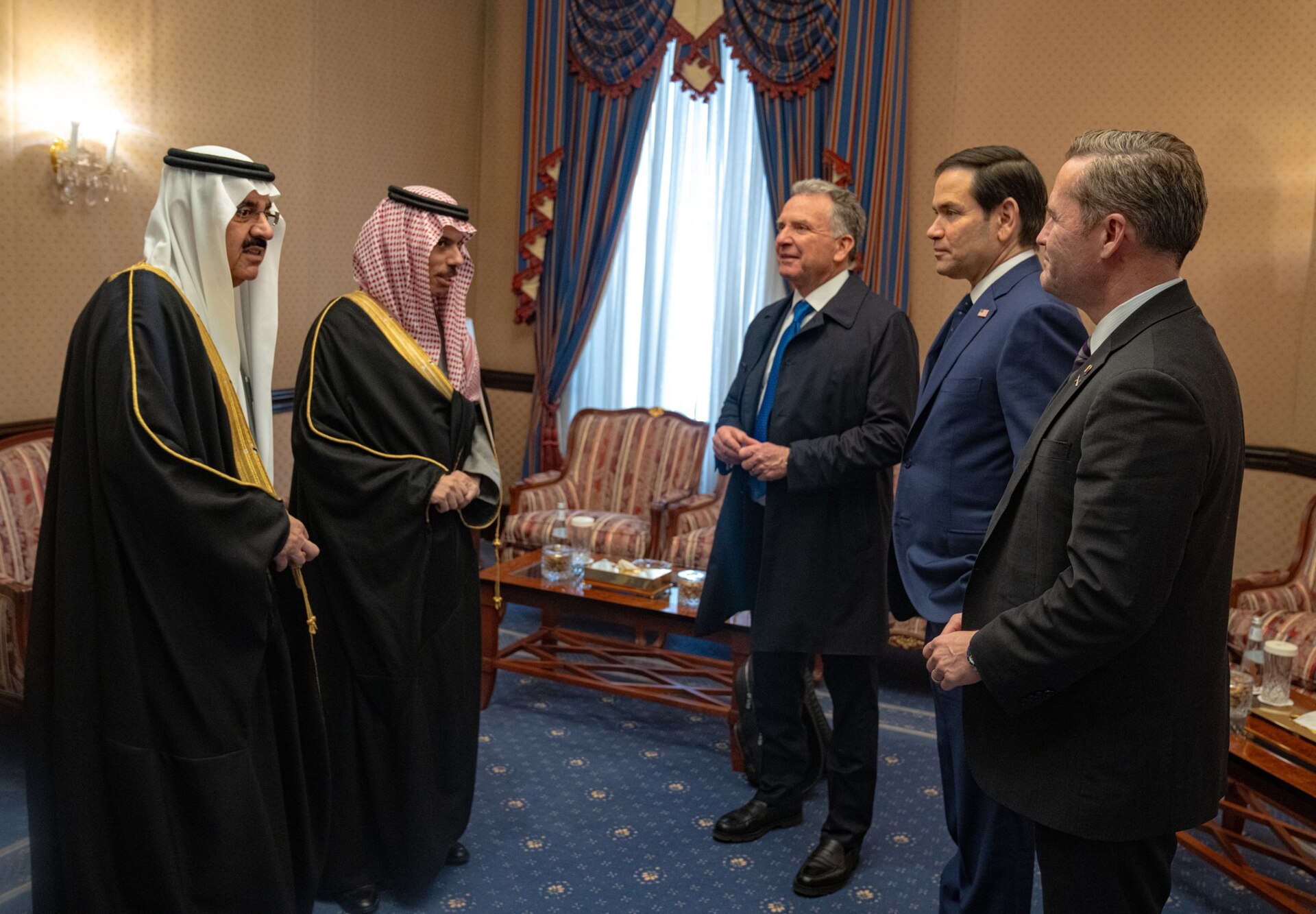
The formal mediation triangle runs through Islamabad, Cairo, and Ankara. Pakistan’s role persists despite the collapse of its earlier bilateral mediation effort, which left Saudi Arabia without a diplomatic exit as Trump’s original deadline loomed. Egypt and Turkey bring separate access: Cairo’s relationship with Washington and Ankara’s with Tehran, though neither has demonstrated the ability to deliver binding commitments from their respective partners. Running in parallel, the Islamabad Accord represents a competing architecture: a bilateral Saudi-Pakistan security framework that Iran’s IRGC factions have moved to structurally block, ensuring no single ceasefire track can advance without simultaneous authorization from Tehran’s fragmented command chain.
The Middle East briefing 3,000+ readers start their day with.
One email. Every weekday morning. Free.
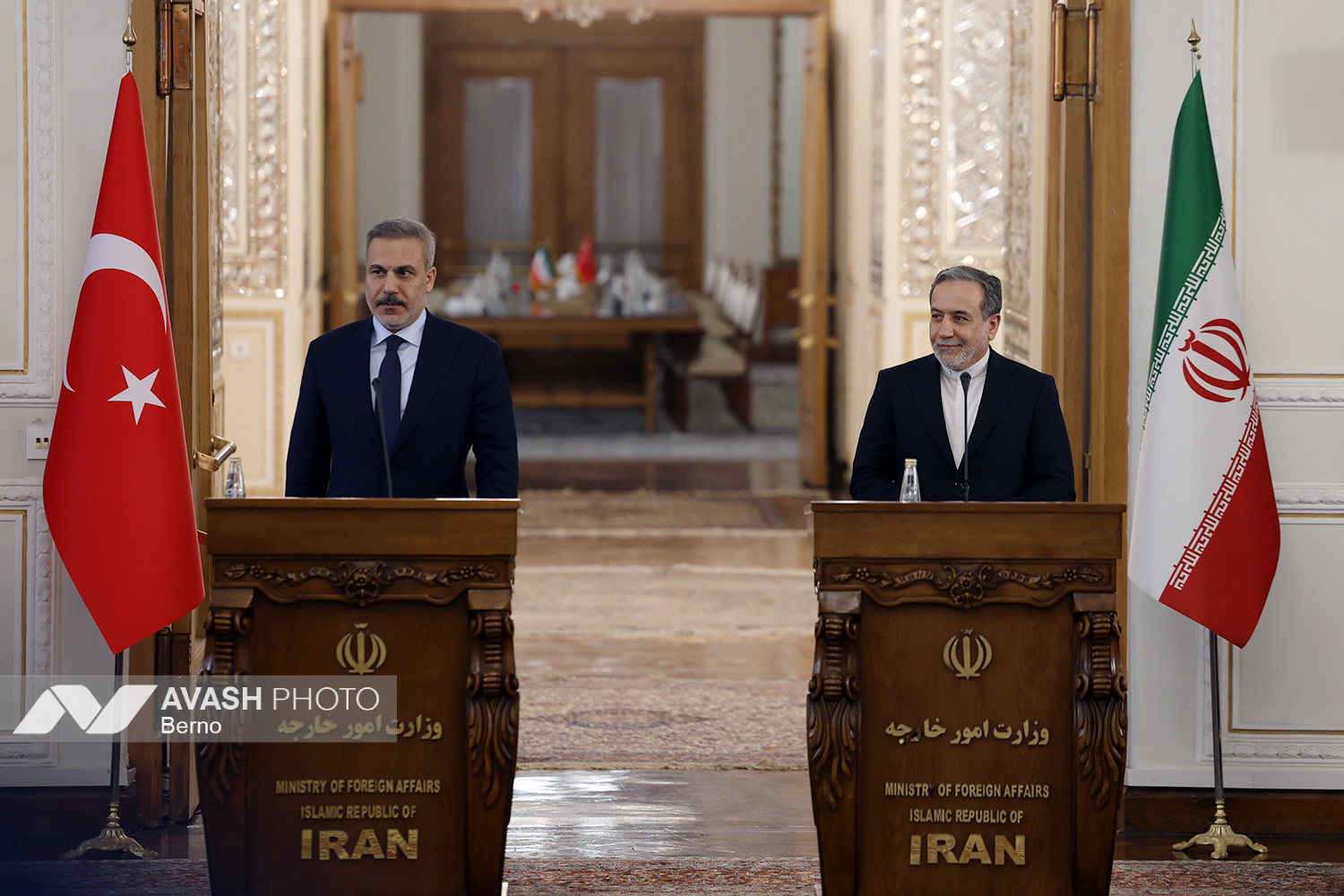
Running parallel to the formal track is a direct text-message channel between US envoy Steve Witkoff and Iranian Foreign Minister Abbas Araghchi. Araghchi confirmed the exchanges to Al Jazeera on April 1 but framed them with surgical deniability: “I receive messages from US special envoy Steve Witkoff directly, as before, and this does not mean that we are in negotiations.” The distinction between receiving direct messages from the opposing side’s envoy and being “in negotiations” is one that only a foreign minister under domestic pressure would attempt. Araghchi also warned: “You cannot speak to the people of Iran in the language of threats and deadlines.”
The Witkoff-Araghchi channel is the most operationally relevant line of communication, but it runs through the weakest institutional link. Araghchi is a civilian foreign minister in a system where the IRGC military council controls war decisions and the supreme leader — absent from public view for 29 days — holds formal authorization power. A text exchange between Witkoff and Araghchi can produce language for a deal. It cannot produce the authority to implement one.
Can Anyone in Tehran Actually Sign This?
The constitutional chain required to commit Iran to a ceasefire runs through three links: Supreme Leader authorization, IRGC field compliance, and FM implementation. Each link is currently broken. Supreme Leader Mojtaba Khamenei has not appeared in public since his selection on March 8 — over 29 days. DNI Tulsi Gabbard told Euronews that Khamenei was “very seriously injured” in an Israeli strike and that decision-making within Iran’s leadership “is not clear.” His last known policy position, relayed by a senior Iranian official after his first foreign policy session, was unambiguous: “not the right time for peace until the United States and Israel are brought to their knees, accept defeat, and pay compensation.”
The vacuum has been filled by the IRGC military council under Commander Ahmad Vahidi, who controls appointments, blocks civilian access to the supreme leader, and directs war operations. When President Masoud Pezeshkian confronted Vahidi directly with the warning that “if there’s no ceasefire within three weeks or a month, Iran’s economy might completely collapse,” Vahidi’s response, per Iran International, was to continue fighting “whatever it takes.” Pezeshkian’s own public position — that “the only way to end this war is recognizing Iran’s legitimate rights, payment of reparations, and firm international guarantees against future aggression” — is closer to the five conditions Iran laid out on March 25 than to anything the 45-day framework offers.
“It’s not clear how coordinated either the military or political actions of the government of the Islamic Republic is today… Iran is a system of men, not a system of laws.”Behnam Ben Taleblu, Foundation for Defense of Democracies
Ben Taleblu’s assessment maps directly onto the authorization chain. Araghchi can exchange texts. He cannot order the IRGC naval units controlling Hormuz interdiction to stand down — they answer to Vahidi, not to the foreign ministry. Even if Araghchi verbally agreed to Phase 1, the implementation gap between a diplomatic commitment and IRGC field behavior would be measured in hours, not days. The command authority problem extends beyond Araghchi: as the April 7 deadline expired, Iran operated with no functioning civilian principal at all — the IRGC’s Vahidi-Zolghadr-Reza’i council as sole authority, making external verification of any ceasefire commitment structurally impossible.
Why Does Trump Need a Deal and Fear Getting One?
Trump’s political arithmetic is hostile in both directions. Sixty percent of Americans believe the conflict has “gone too far,” according to Time. Only one-third approve of his handling of the war. The House is described by PBS News as “all but lost” for Republicans in upcoming cycles, and domestic pressure to end the war is real and measurable. But the domestic definition of “ending the war” requires visible markers of victory — and Phase 1 delivers none of them.
A ceasefire before Tuesday’s 8 PM EDT deadline that leaves Hormuz under Iranian control, Iran’s nuclear program intact, and no dismantlement underway reads domestically as Iran winning the standoff. Trump posted “Power Plant Day and Bridge Day” on Truth Social on Easter Sunday, expanding the target set to include civilian infrastructure — a move that signals escalation, not compromise. The minimum domestic “win” requires open shipping lanes, visible nuclear dismantlement, and Iranian concessions framed as strategic defeat. Phase 1 defers all three.
The 23-hour deadline extension — from April 6 at 9 PM EDT to April 7 at 8 PM EDT — is itself a political instrument. It buys time to negotiate while preserving the threat of escalation if talks fail. But every extension erodes the credibility of the deadline itself. Trump told Axios the US is “in deep negotiations,” a phrase that acknowledged the talks while simultaneously raising the cost of failure. If the framework collapses after a public admission of “deep negotiations,” the escalation that follows carries the weight of a failed diplomatic effort rather than a preemptive strike.
The Israeli Veto Nobody Is Discussing Publicly
Israel’s Institute for National Security Studies published a framework in March, authored by former Military Intelligence chief Tamir Hayman and Iran researcher Raz Zimmt, that defined the conditions under which Israel should accept a ceasefire. The requirements include dismantling underground enrichment sites at Fordow, Natanz, and Isfahan; removal of all uranium enriched to 20% and 60%; elimination of advanced centrifuges; and an IAEA inspection mechanism with no limitations. Their conclusion was explicit: “The dismantling of underground nuclear sites and the removal of enriched uranium should be defined as a ‘red line’: without them, Israel should not agree to a ceasefire.”
The 45-day Phase 1 framework contains none of these provisions. Highly enriched uranium is explicitly deferred to Phase 2. Physical dismantlement — which INSS defines as a prerequisite, not a negotiating goal — is not addressed in Phase 1 at all. Iran’s stockpile at 40 times JCPOA-permitted levels, with IAEA Director-General Grossi noting that Iran may be using “decoy canisters” to obscure true enrichment quantities, makes a 45-day pause a nuclear continuity window. No irreversible concessions are yielded; the enrichment infrastructure remains operational throughout.
Netanyahu asked the White House in early March whether secret Iran talks were happening, according to Axios — establishing that Israel maintains an active surveillance posture over the diplomatic track. The US cannot credibly commit Israel to a non-recurrence guarantee while Israeli red lines explicitly require physical dismantlement as a precondition. A Phase 1 deal that pauses fighting without touching enrichment is structurally incompatible with Israel’s stated bottom line, and no amount of Phase 2 promises changes the fact that 45 days of intact centrifuges is 45 days closer to a weapon.
What a 45-Day Pause Means for Saudi Oil
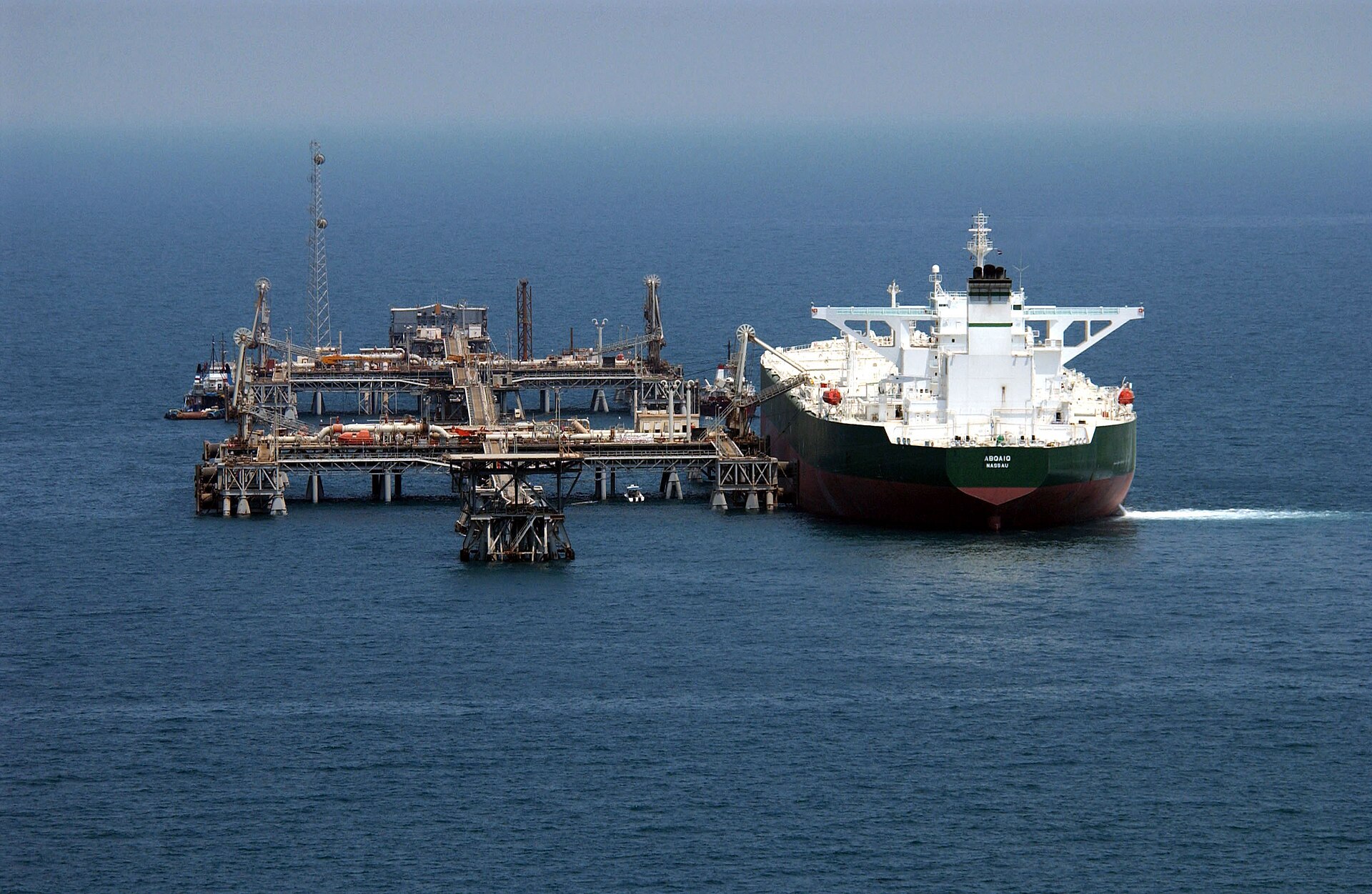
Saudi Arabia’s crude oil exports fell 50 percent in March — from approximately 6.6 million barrels per day to 3.33 million bpd — due to the Hormuz closure, according to Bloomberg. The East-West Pipeline through Yanbu has a nameplate capacity of 7 million bpd, but Yanbu port terminals max at 4 to 4.5 million bpd in effective loading, creating a permanent throughput ceiling. Saudi Arabia has been named as a co-guarantor of any ceasefire — a role it cannot neutrally enforce while hemorrhaging export revenue.
A Phase 1 ceasefire that explicitly defers the Hormuz question does nothing for the throughput gap. The Strait remains under Iranian interdiction for the duration of the 45-day pause, meaning Saudi export compression continues at exactly the current rate. At current Brent prices, every day of the Hormuz closure costs Saudi Arabia the revenue equivalent of roughly 3.3 million barrels of stranded production capacity — crude that exists in the pipeline but cannot reach tankers. The fiscal arithmetic of a 45-day pause with no Hormuz relief is a 45-day extension of the same export crisis.
Oman hosted Iranian undersecretary-level talks on April 4-5 on options for “ensuring smooth passage” through the Strait, but the meeting produced only a commitment to study “a number of visions and proposals” — and Saudi Arabia was not in the room. The Hormuz question is being negotiated on a separate track, by separate parties, on a separate timeline. Phase 1 of the ceasefire framework acknowledges this by deferral, which means the country with the most to gain from Hormuz reopening has no mechanism within the framework to achieve it.
Iran’s Lebanon Problem
Iran’s core condition for accepting a ceasefire, made explicit to mediators and reported by both Axios and The National on April 6, is that the framework cannot replicate “the Gaza or Lebanon pattern where there is a ceasefire on paper, but that the U.S. and Israel can attack again whenever they want to.” The precedent is specific and documented. Under the November 2024 Lebanon ceasefire, Israel conducted over 500 confirmed airstrikes after the deal went into force. UNIFIL documented 10,000-plus Israeli air and ground violations by January 2026. In Gaza, Israel killed 400 people after the ceasefire took effect while retaining occupation of half the territory.
The demand for a non-recurrence guarantee is the load-bearing wall of Iran’s negotiating position. Bloomberg reported as early as March 11 that Iran told intermediaries the US must guarantee that neither it nor Israel will strike the country in the future — and that it was “unclear if the US is willing to give Iran such a pledge and if it would be able to insist on Israel doing the same.”
“Hudna — a ceasefire with deception — they stop when they are weak, rebuild their strength, and then attack again.”Beni Sabti, Iranian affairs expert, on Iran’s view of ceasefire precedents (hudna: Arabic for a tactical, time-limited truce)
Iran’s five conditions laid out on March 25 include a comprehensive ceasefire across all fronts including all resistance groups — meaning Lebanon, Gaza, and proxy operations must be folded in. A 45-day framework limited to the Iran theater is structurally insufficient from Tehran’s stated position. The Vance near-miss in Islamabad and the subsequent collapse of every bilateral channel have only hardened Iran’s insistence that any deal must be comprehensive enough to prevent the pattern it has watched unfold twice in the past two years.
Background
The 45-day framework emerges after five weeks of war and the failure of every previous diplomatic approach. Steve Witkoff’s proposal for direct US-Iran talks was rejected by Tehran on March 25, the same day Iran published its five conditions for ending the conflict: complete cessation of all aggression, binding non-recurrence guarantees, war reparations, a comprehensive ceasefire across all fronts including resistance groups, and recognition of Iranian sovereignty over the Strait of Hormuz. Pakistan’s bilateral mediation collapsed days later. Washington’s issuance of OFAC General License U, permitting Indian imports of Iranian crude even as it bombed Iranian military infrastructure, captured the incoherence of US policy.
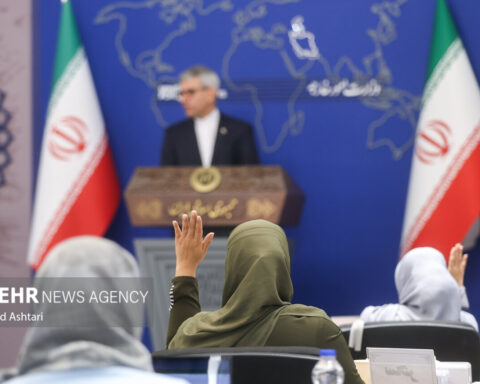
Iran’s internal power structure has fragmented under the pressure of the war. Mojtaba Khamenei, selected as supreme leader on March 8, was reportedly seriously injured in an Israeli strike. The IRGC military council under Vahidi has assumed operational control, creating a gap between the civilian government’s economic desperation and the military establishment’s commitment to continued fighting. Iranian FM Spokesman Esmaeil Baghaei’s insistence that “Trump’s claim that Iran has requested a ceasefire is false and baseless” reflects this gap — the civilian diplomatic apparatus must publicly deny the very negotiations it is privately conducting.
Frequently Asked Questions
What happens if the April 7 deadline passes without a deal?
Trump’s “Power Plant Day and Bridge Day” rhetoric points toward expanded targeting of Iranian civilian infrastructure, including power generation facilities and transportation bridges. The B-1 strike on the Karaj bridge on April 2, which killed 8 and wounded 95-plus, established the operational template. Iran’s Fars News has published a counter-target list of eight Gulf and Jordanian bridges, including the King Fahd Causeway connecting Saudi Arabia and Bahrain. Approximately 20,000 US troops are currently deployed in theater, according to the Soufan Center.
Has any previous US-Iran ceasefire framework reached this level of specificity?
No. The Witkoff direct-talks proposal rejected on March 25 was a procedural framework — an agreement to negotiate. The current 45-day proposal is substantive: it specifies duration, phasing, extension mechanisms, and explicitly categorizes which issues belong in Phase 1 versus Phase 2. The involvement of three simultaneous mediator states alongside a direct envoy-to-FM text channel is without precedent in this conflict.
Could the ceasefire framework be extended beyond 45 days?
Yes — the framework includes an extension mechanism if Phase 2 negotiations require additional time. However, extension depends on mutual consent, and Iran’s experience with the JCPOA — where the US unilaterally withdrew in 2018 despite Iranian compliance certified by the IAEA — makes Tehran skeptical of any framework that relies on continued American good faith beyond an initial commitment period.
What role does Russia play in the ceasefire discussions?
Russia is not among the named mediators, but Moscow maintains direct communication with both Tehran and Riyadh. Saudi Crown Prince Mohammed bin Salman conducted a trilateral call sequence on April 2, reaching Moscow, Beijing, and Tokyo on the same day. Russia’s interest is in prolonging Western strategic distraction from Ukraine, which creates a structural incentive to support ceasefire frameworks that freeze rather than resolve the conflict — keeping US military assets tied down in the Gulf theater.
Before the South Pars strike, Iran had already submitted a formal 10-point written counter-proposal to the American 15-point plan. Trump dismissed it as “not good enough,” making the Phase 1/Phase 2 contradiction in this 45-day framework explicit — Iran’s written counter-proposal and what it demands are detailed here.
The ceasefire proposal was still in transit when Israel re-struck the South Pars complex on April 6. Israel’s re-strike of South Pars on the deadline day killed IRGC intelligence chief Khademi and Quds Force Unit 840 commander Bakeri, destroying roughly 85 percent of Iran’s total petrochemical capacity and prompting Iran’s formal 10-point rejection of the framework.
Why is Oman hosting separate Hormuz talks outside the ceasefire framework?
Oman maintains a unique diplomatic position as the only Gulf state with functional relationships with both Iran and the Western coalition. The April 4-5 undersecretary-level talks in Muscat addressed Hormuz transit specifically because the ceasefire framework defers the issue. Oman’s historical role as intermediary — it hosted the secret 2013 US-Iran talks that led to the JCPOA — gives it institutional credibility, but the separation of the Hormuz track from the ceasefire track means progress on one does not guarantee progress on the other. The 10-point framework Trump endorsed as “workable” on April 7 is structurally incompatible with the Witkoff phased approach: where Witkoff defers Hormuz to Phase 2, Iran’s Point 3 demands Hormuz sovereignty codification as a precondition — making the two frameworks irreconcilable at their core, as this analysis explains in detail.