TEHRAN — Iran is not blockading the Strait of Hormuz. It is franchising it. The announcement on April 4 that “brotherly Iraq” would be exempt from all Iranian restrictions on the strait — unlocking up to three million barrels per day of Iraqi crude for transit — confirmed what five weeks of war have made unmistakable: the IRGC has converted the world’s most important oil chokepoint from a blunt weapon of denial into a politically selective toll corridor, one that punishes American allies, rewards Iran’s axis partners, and settles accounts in yuan and crypto outside the reach of the dollar system. This is not a blockade. It is a franchise operation, and the franchise fee is payable to Tehran.
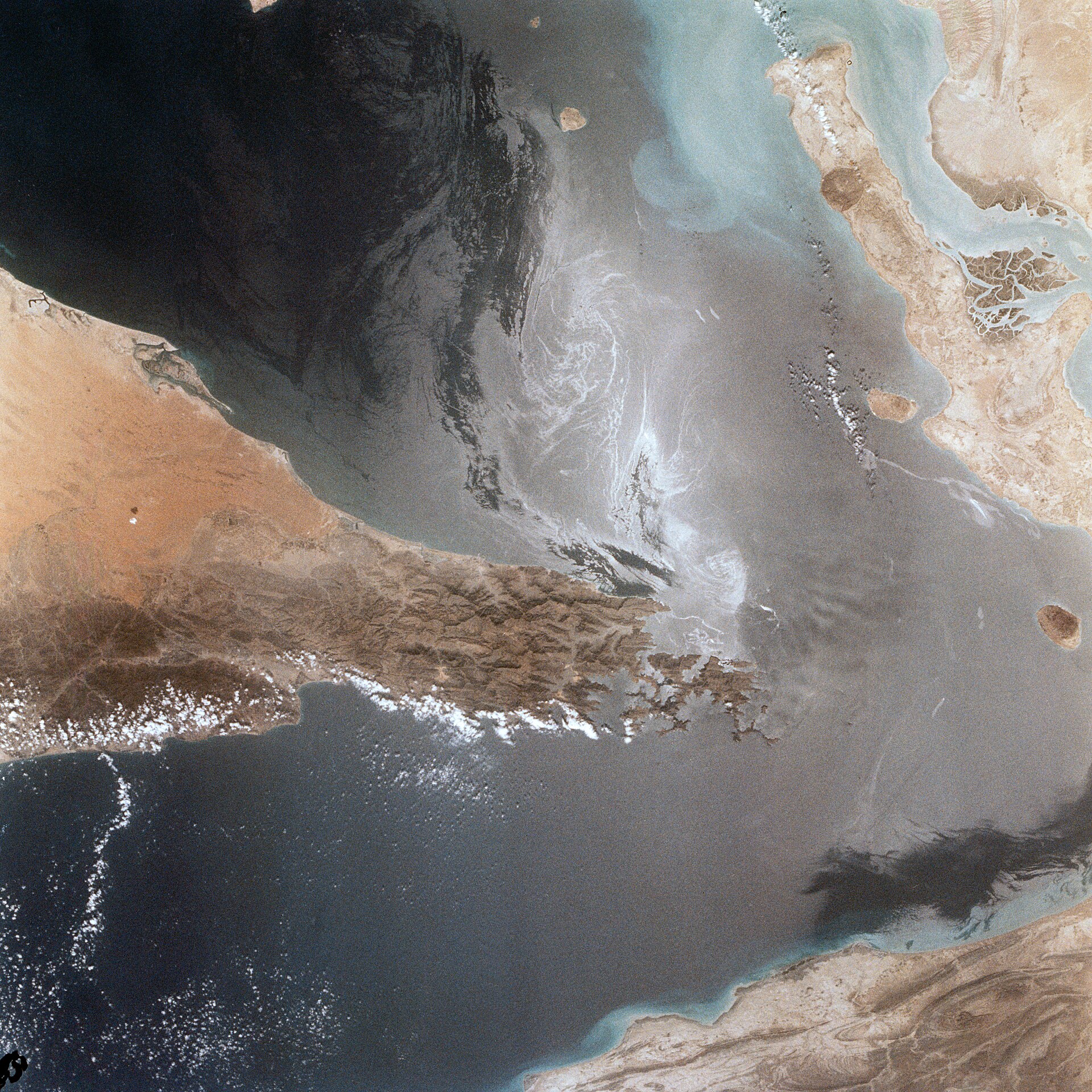
Table of Contents
- The Iraq Exemption: Three Million Barrels of Leverage
- Who Pays and Who Passes? The Five-Tier Friendliness System
- The Yuan-Crypto Architecture: How Iran Built a Dollar-Free Toll Booth
- Why Are Western Ships Already Paying?
- The Cartaz Parallel: Five Centuries of Hormuz Licensing
- What Does the Iran-Oman Protocol Mean for International Law?
- Can Iraq Actually Use Its Exemption?
- How Does the Toll System Fracture the Anti-Iran Coalition?
- Hormuz After the War
The Iraq Exemption: Three Million Barrels of Leverage
Iran’s military statement, released in Arabic via IRNA on April 4-5, was calibrated not merely for Baghdad but for every capital watching the strait. “Brotherly Iraq is exempt from any restrictions we have imposed on the Strait of Hormuz,” the spokesman declared. “We hold profound respect for Iraq’s national sovereignty. Iraq bears the scars of American occupation, and your struggle against the US is worthy of praise and admiration.” The language was ideological, but the offer was commercial: all Iraqi shipments — not merely Iraqi-flagged vessels — could pass.
The scale of what that unlocks is considerable. Iraq is OPEC’s second-largest producer behind Saudi Arabia, with pre-war production of approximately 4.35 million barrels per day and exports of roughly 3.4 million bpd. Since the war began on February 28, Iraq’s southern exports — which flow almost entirely through the strait — had collapsed by an estimated 97 percent, falling to a daily average of just 99,000 barrels in March, according to Bloomberg data. Storage tanks at the Basra fields of Rumaila, West Qurna, and Majnoon filled to capacity, forcing production cuts of around 70 percent. Iraq was hemorrhaging an estimated $260-280 million per day in lost revenue.
The exemption, if shipping companies are willing to act on it, could restore the bulk of those flows. Iraqi economic expert Nabil al-Marsoumi told Iraqi News that Iraq could recover “70% of its oil exports to Asian markets” if Iran allows non-US tankers to collect cargoes from Basra. An Iraqi official who spoke to Bloomberg offered the sharper assessment: “The usefulness of the exemption will depend on whether shipping companies are willing to risk entering the strait to collect cargoes.”
That caveat contains the entire logic of Iran’s system. The exemption is real, but exercising it requires accepting Iranian authority over the passage — accepting, in practice, that Iran governs who enters and leaves the Persian Gulf. Every barrel of Iraqi crude that transits under the exemption is a barrel that validates Tehran’s claim to administer the strait. Baghdad gets revenue; Tehran gets legitimacy. The same logic now extends to Doha: two laden Qatari LNG tankers are attempting Hormuz on April 6, the first gas cargo to attempt exit since February 28, in what amounts to Iran opening the gas lane while keeping the crude lane shut — a second franchise exemption calibrated to reward a neutral gas exporter while Saudi crude remains blocked.
Who Pays and Who Passes? The Five-Tier Friendliness System
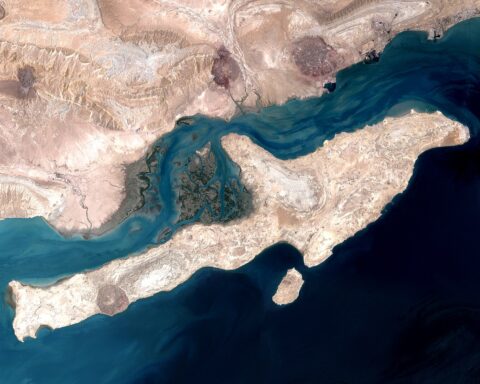
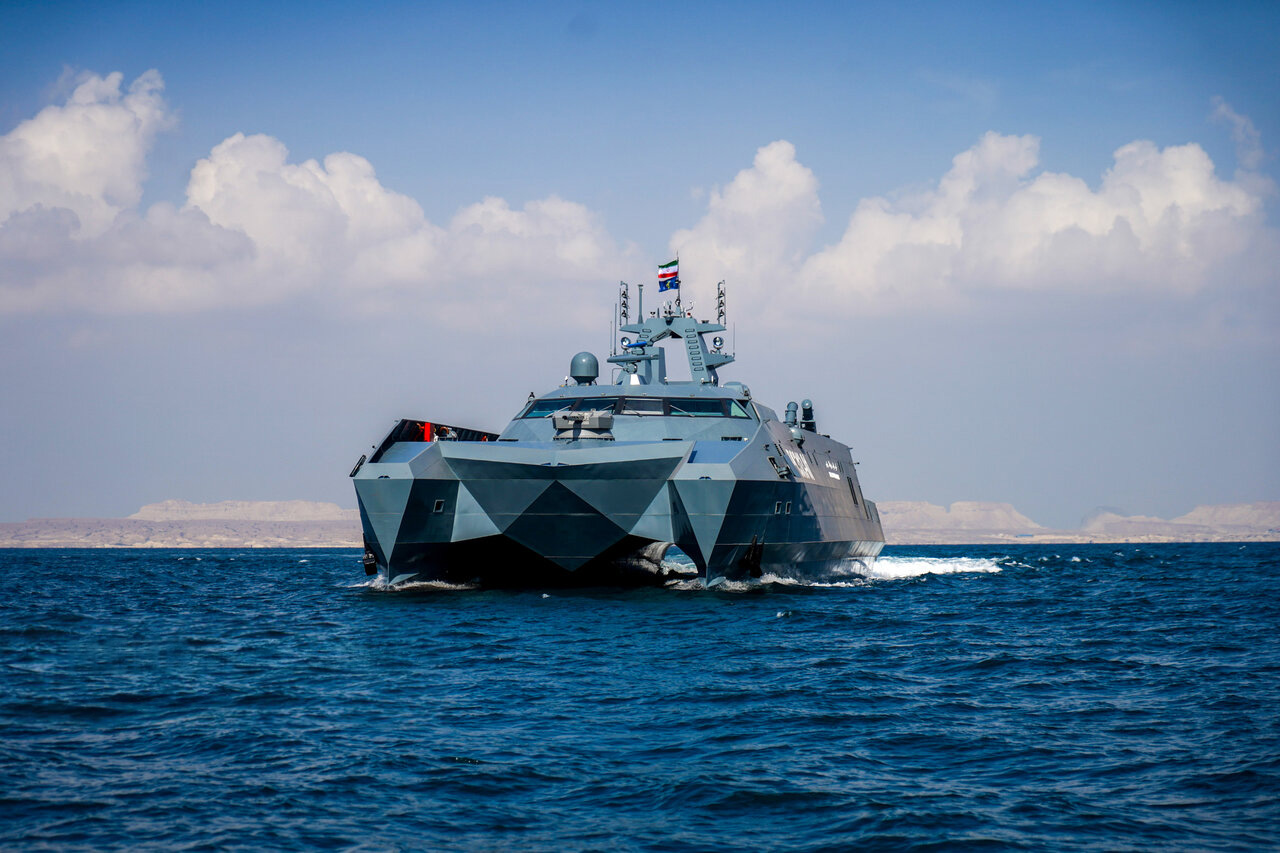
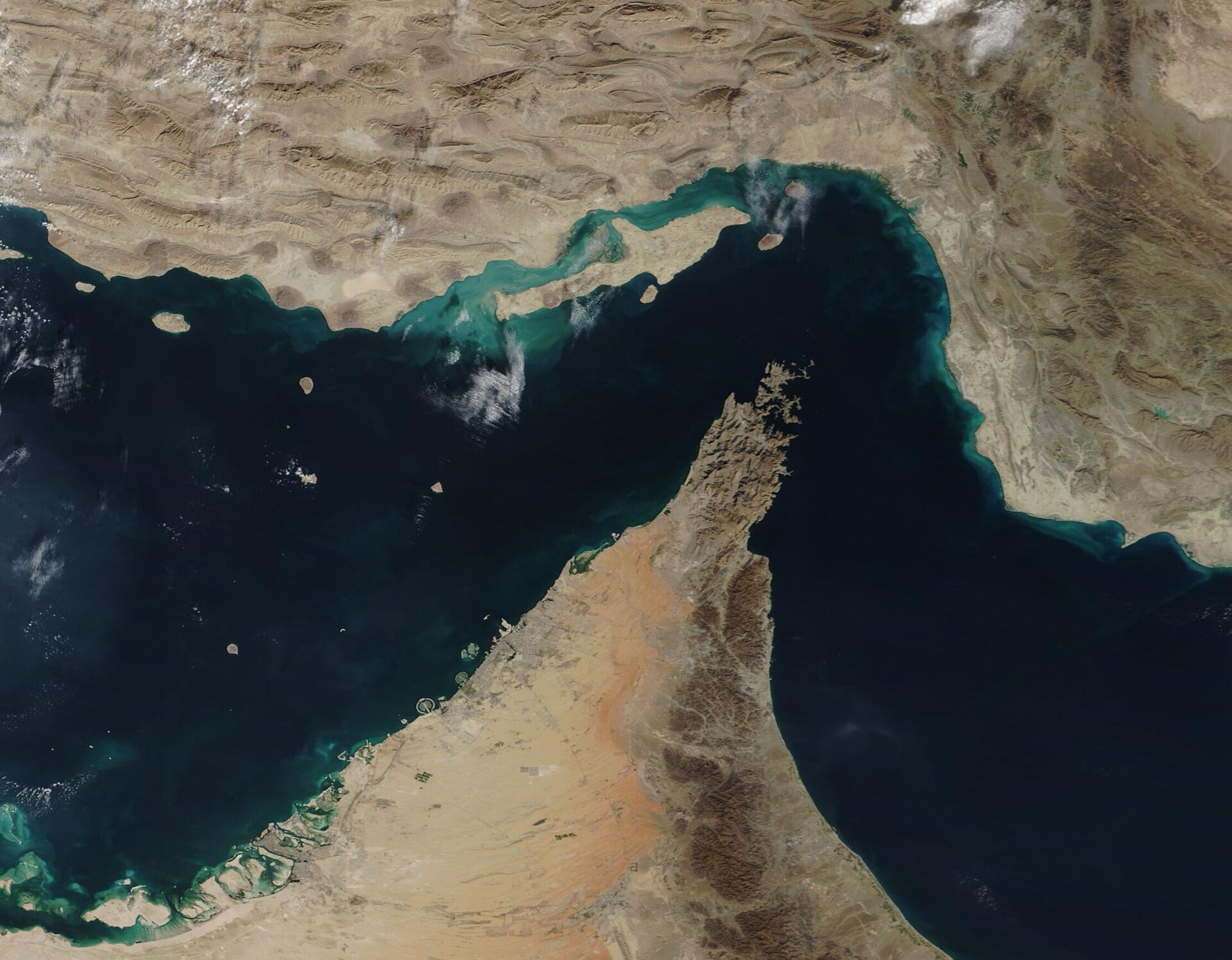
The IRGC’s administration of the strait operates through a vetting architecture that Al Jazeera first detailed on March 26 and that has since been confirmed by multiple shipping industry sources and the Atlantic Council. The system assigns every nation a “friendliness ranking” from one to five. Vessel operators must submit documentation to an IRGC-linked intermediary: vessel ownership, flag state, cargo manifest, crew list, destination port, and AIS tracking data. The IRGC Navy’s Hormozgan Provincial Command conducts the vetting, screening specifically for any links to the United States or Israel. Cleared ships receive a VHF-broadcast passcode and are escorted through a single controlled corridor north of Larak Island, inside Iranian territorial waters.
The Middle East briefing 3,000+ readers start their day with.
One email. Every weekday morning. Free.
Foreign Minister Araghchi formally identified five permitted nationalities on March 26: China, Russia, India, Iraq, and Pakistan. The Pakistan arrangement — 20 vessels at two per day, agreed March 28 — illustrates the bilateral, almost contractual nature of the system. Each country negotiates its own terms. Iraq pays nothing. Axis partners and large neutral buyers transact at preferential rates. Western-aligned shipping pays the full toll, if it is permitted to pay at all. US and Israeli-linked vessels are denied outright.
| Tier | Countries / Entities | Transit Terms | Payment |
|---|---|---|---|
| 1 — Axis allies | Iraq | Full exemption, all shipments | None |
| 2 — Strategic partners | China, Russia | Priority escort, preferential rates | Yuan via Kunlun Bank |
| 3 — Negotiated neutrals | India, Pakistan, Oman | Bilateral quota agreements | Yuan or stablecoins |
| 4 — Tolerated Westerners | France (CMA CGM), Japan (Mitsui OSK) | Case-by-case, full toll rate | Yuan (~$2M per VLCC) |
| 5 — Blocked | US, Israel, US-flagged or US-linked vessels | Denied passage | N/A |
The Atlantic Council’s Alisha Chhangani described it precisely: Iran is operating “a kind of toll booth in which it clamps down on commercial flows through the vital waterway while allowing some vessels to transit for as much as $2 million per voyage or according to particular political and financial conditions.” The toll booth metaphor, though, understates what is happening. A toll booth charges everyone the same rate. This system charges your enemies more, your friends less, and your closest allies nothing — and the price differential is the entire point.
The Yuan-Crypto Architecture: How Iran Built a Dollar-Free Toll Booth
The payment infrastructure underlying the toll system was not improvised after the war began. In January 2026 — a full month before the first American and Israeli strikes on February 28 — Iran’s Ministry of Defense Export Center updated its systems to accept cryptocurrency for military export transactions, according to Bloomberg reporting on April 1. The crypto payment rails were already in place when the IRGC needed them for the strait.
The toll itself operates at a baseline of one dollar per barrel for oil tankers, settled not in dollars but in Chinese yuan via Kunlun Bank or in USDT stablecoins on the Tron blockchain. A single Very Large Crude Carrier hauling two million barrels generates a two-million-dollar transit fee — paid entirely outside SWIFT, outside dollar clearing, and outside the reach of US sanctions enforcement. For context on the revenue potential, Iran’s Hormuz Toll Law, which its parliamentary National Security Committee approved on March 31, is designed to codify what the IRGC has been doing operationally since mid-March into permanent legislation.
The clearing infrastructure scales well beyond the strait. The mBridge cross-border payments platform — originally incubated under the Bank for International Settlements and now involving the central banks of China, the UAE, Thailand, Hong Kong, and Saudi Arabia — processed more than $55 billion in transactions during Q1 2026, with China’s digital yuan comprising over 95 percent of volume. G7 finance officials told the Atlantic Council’s GeoEconomics team that they believe participants may already be using mBridge infrastructure to settle Hormuz-related payments, though the platform remains opaque enough that definitive proof is elusive.
What is not elusive is the structural consequence. Every yuan-denominated transit through the strait builds transaction volume and institutional familiarity with non-dollar settlement for energy trade. China has a direct financial interest in the continued operation of Iran’s toll system — not because Beijing designed it, but because the system runs on Chinese payment rails, and every barrel that clears through yuan settlement is a barrel that did not clear through dollars. The Hormuz toll is, functionally, a de-dollarization accelerant with an armed escort.
Why Are Western Ships Already Paying?
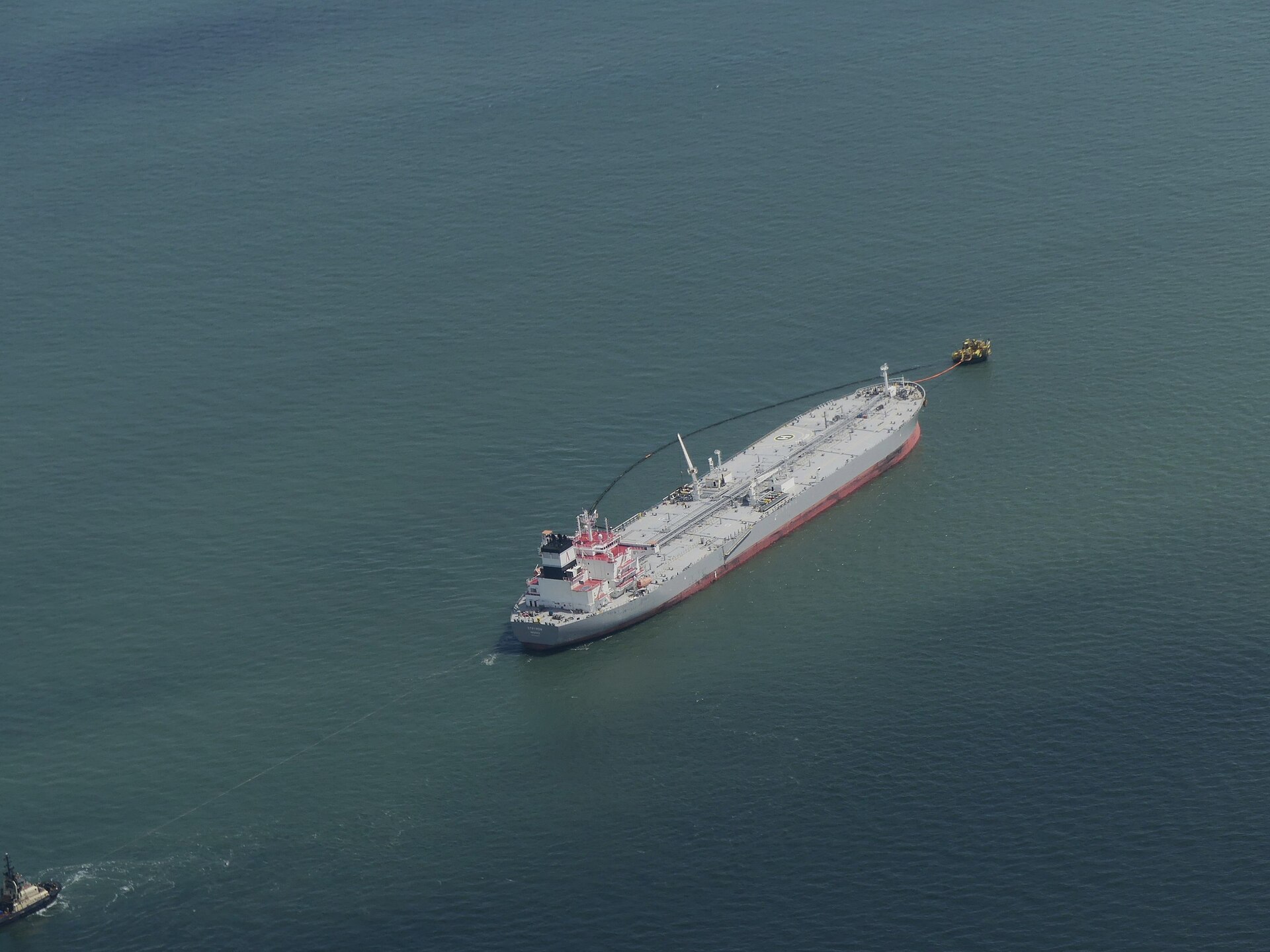
On April 3, the CMA CGM Kribi — a Malta-flagged container ship operated by France’s CMA CGM, one of the world’s three largest shipping lines — sailed eastbound from waters off Dubai, through the channel between Qeshm and Larak islands, and became the first vessel linked to Western Europe to transit the strait since the war began. Hours later, Mitsui OSK Lines’ Sohar became the first LNG carrier to cross. Both transited under IRGC escort. Both reportedly paid in yuan. CMA CGM declined to comment on arrangements or fees. The crossing was covered in detail by House of Saud’s earlier reporting on the first Western ships paying Iran’s toll.
The context makes the crossings more striking than the individual payments. More than 40 nations had joined the UK-hosted Hormuz coalition by April 2. Germany, Spain, Italy, France, the United Kingdom, Japan, South Korea, and Australia all declined President Trump’s request to provide naval escorts to force the strait open. France killed the Hormuz vote at the UN Security Council. And yet French and Japanese companies were among the first Western entities to pay the toll, less than a week later. The coalition that refused to break the blockade by force is now funding the blockade’s replacement system through commerce.
Bloomberg’s Hormuz Tracker on April 4 recorded 13 ships crossing in a single day — 10 exiting, three entering — with the seven-day rolling average reaching its wartime high. The shift from NPR’s April 1 report of near-zero transits to the April 4 uptick reflects not a collapse of Iranian control but a controlled reopening, a deliberate widening of the aperture as more nations and companies negotiate their way through. Trump shelved his April 6 Hormuz ultimatum in the same week that commercial traffic began flowing again — not because the strait was free, but because it was functioning on Iran’s terms.
The Cartaz Parallel: Five Centuries of Hormuz Licensing
In July 1507, a Portuguese fleet under Afonso de Albuquerque dropped anchor off the island of Hormuz and began constructing what would become the most profitable protection racket in maritime history. After seizing the island permanently in 1515, Portugal implemented the cartaz — a licensing system that required every vessel trading through the Persian Gulf to carry a Portuguese-issued pass, route cargo through Portuguese customs houses, and pay transit fees. Ships without a cartaz were treated as enemies: cargoes seized, crews killed or enslaved, hulls burned or incorporated into the Portuguese fleet.
The structural parallels to the IRGC’s current system are difficult to ignore. Territorial control of the chokepoint, a vetting process that distinguishes friend from enemy, a licensing document (the VHF passcode) that grants safe passage, escort through a controlled corridor, and a fee structure that funds the controlling power — the architecture is identical across five centuries. The difference is that Portugal used the cartaz to monopolize the spice trade. Iran is using it to restructure the political economy of global energy transit, and to do so outside the dollar system that Portugal’s eventual successor — the American maritime order — built.
The cartaz endured for over a century until a combined Persian-British force expelled the Portuguese from Hormuz in 1622. Whether Iran’s version proves as durable depends less on military force than on whether the states now paying the toll find the arrangement more convenient than the alternatives. Portugal fell when the costs of its system exceeded the benefits for its users. Iran has designed a system in which the benefits — access to Gulf oil — are existential for the users, and the costs are borne primarily by those excluded from it.
What Does the Iran-Oman Protocol Mean for International Law?
Under the United Nations Convention on the Law of the Sea, the Strait of Hormuz is an international strait through which all states enjoy the right of transit passage. Iran has not formally claimed to suspend that right. Instead, Tehran is constructing a legal framework that achieves the same practical effect while maintaining nominal compliance cover — and it has found a partner in Muscat.
Deputy Foreign Minister Kazem Gharibabadi confirmed on April 2 that Iran and Oman are co-drafting a “Strait of Hormuz Maritime Monitoring Protocol” that would require tanker movements to be “supervised and coordinated” with the two coastal states. “These requirements do not mean restrictions,” Gharibabadi said, “but rather aim to facilitate and ensure safe passage and provide better services to ships.” The language is the diplomatic equivalent of a protection racket couched in customer service. Oman’s participation transforms what would otherwise be a unilateral Iranian imposition into something with the appearance of a bilateral governance arrangement.
The model Tehran appears to be constructing is analogous to the Montreux Convention, under which Turkey exercises legal authority to restrict warship passage through the Bosphorus under a 1936 treaty. Turkey’s control of the Bosphorus is accepted by the international community because it is codified in law and applied with reasonable consistency. Iran’s Hormuz Management Plan — approved by the parliamentary National Security Committee on March 31 and advancing to a full vote — aims to achieve the same normalization. If the legislation passes, the IRGC’s operational practice since mid-March will have a statutory basis, and challenging it will require contesting not merely a military operation but a sovereign law.
The legal architecture matters because it shapes what comes after the war. Military operations can be reversed by military force. Laws, especially laws that a second state has co-signed and that 13 ships a day are already complying with, develop their own inertia. Every transit that clears under the protocol’s terms becomes a precedent. Every yuan payment processed through Kunlun Bank becomes a data point in a new normal.
Can Iraq Actually Use Its Exemption?
The exemption gives Iraq permission to ship through the strait. It does not give Iraq ships. The practical obstacle is that international shipping companies — insurers, charterers, flag-state registries — must be willing to send vessels into a waterway where the IRGC conducts armed escort operations and where the legal status of transit depends on a daily passcode broadcast over VHF radio. Iraq can exempt itself from Iran’s restrictions all it likes; if Lloyd’s of London will not underwrite the hulls, the oil stays in Basra.
The alternative routes underscore the trap. Iraq’s only functioning pipeline export route runs north to Turkey’s Ceyhan terminal, currently operating at roughly 650,000 barrels per day with a theoretical maximum of around 1.5 million bpd after repairs. A proposed Syria lorry route carries minimal volumes. The long-discussed Jordan-Aqaba pipeline remains unbuilt. Total non-Hormuz Iraqi export capacity sits below 1.5 million barrels per day, against a Hormuz-dependent requirement of roughly three million bpd. As the East-West Pipeline bypass analysis showed for Saudi Arabia, alternative routes can cover a fraction of pre-war volume, but the strait remains the only path to full export recovery.
| Route | Current Capacity (bpd) | Max Potential (bpd) | Status |
|---|---|---|---|
| Hormuz (with Iran exemption) | Up to 3,000,000 | 3,400,000 | Conditional on shipping company participation |
| Iraq-Turkey Pipeline (Ceyhan) | ~650,000 | ~1,500,000 | Operational; repair needed for max capacity |
| Syria lorry route | Minimal | Minimal | Operational at negligible volumes |
| Jordan-Aqaba pipeline | 0 | TBD | Not yet built |
This arithmetic is the source of Iran’s leverage over Baghdad. Iraq cannot recover its oil revenue without using the strait, and it cannot use the strait without accepting Iranian administration of the waterway. The exemption is generous precisely because it costs Tehran nothing to grant and delivers something money cannot buy: the second-largest OPEC producer validating Iran’s authority over the Gulf’s only outlet. Every day that Iraqi crude flows under the exemption is a day that Baghdad’s economic survival depends on Iranian goodwill — a dependency that predates the war through Iranian gas supplies to Iraqi power plants and IRGC-aligned militia networks, but that the Hormuz exemption has now made explicit and transactional.
How Does the Toll System Fracture the Anti-Iran Coalition?
The genius of the tiered system — if one can use that word for an extortion architecture — is that it gives every potential opponent of Iranian control a material reason to tolerate it. China gets yuan settlement volume and preferential access for its tankers. India gets a negotiated quota. Pakistan gets 20 vessels at two per day. France’s CMA CGM gets its container ships through. Japan’s Mitsui OSK gets its LNG carriers moving. Each bilateral deal is a thread pulled from the fabric of collective opposition.
Washington’s own posture compounds the contradiction. Even as US strikes targeted Iranian military infrastructure, OFAC issued General License U on March 20 — a 30-day sanctions waiver permitting Indian refiners to purchase Iranian crude with no escrow requirement, no volume cap, and no reporting obligation. India confirmed its first Iranian crude purchase since May 2019 on April 4, the same week it was also negotiating a quota within Iran’s Hormuz toll corridor.
The 40-plus nation coalition that the UK assembled to confront Iran’s Hormuz control has produced no military action and no successful UN Security Council resolution. France vetoed the Hormuz resolution. Trump’s April 6 deadline passed without enforcement, as House of Saud reported. Meanwhile, the CSIS’s Clayton Seigle has quantified the stakes: “A deficit of 20 million barrels per day is hitting global oil market balances with no sign of relief.” Against that deficit, Iran is offering partial relief — but only on its terms, only to those who accept its authority, and only in currencies that erode the dollar’s dominance in energy trade.
The coalition’s fracture follows a predictable logic. States that depend on Gulf energy imports — which is to say nearly every major economy except the United States — face a choice between principled opposition to Iran’s control of the strait and practical access to the oil and gas their economies require. Principle does not heat homes or fuel refineries. The CMA CGM Kribi’s transit through the Larak corridor, yuan payment in hand, was the moment that commercial logic defeated collective resolve. The French government that blocked a UN resolution to challenge Iran’s control of the strait now hosts a shipping company that pays Iran for passage through it.
Riyadh’s simultaneous calls to Moscow, Beijing, and Tokyo on April 2 reflected an awareness that the coalition approach had failed and that bilateral diplomacy — the same mode Iran uses to administer the strait — was the only viable path forward. The great-power trilateral calls were, in effect, an acknowledgment that the strait is now governed by bilateral deals rather than multilateral rules, and that Saudi Arabia needs to navigate that reality rather than reverse it.
Navigating that bilateral reality carries direct costs for the Saudi non-oil economy that oil revenue arithmetic does not capture. Vision 2030’s hidden Hormuz dependency surfaced in the March 2026 PMI reading: export orders at their lowest since the Ukraine supply shock, supplier delivery times at their worst since June 2020, and a 7.3-point collapse in the composite index that exposes how deeply franchised toll collection on the strait has disrupted the import-dependent supply chains underpinning Saudi Arabia’s non-oil private sector.
Hormuz After the War
Washington’s apparent assumption — that Iran is using the strait as a bargaining chip for a ceasefire or sanctions relief — misreads what Tehran is building. Responsible Statecraft’s analysis was blunt: “Trump miscalculates if he thinks Tehran is using the strait as a bargaining chip for a ceasefire or sanctions relief. The most likely scenario is that the IRGC will maintain de facto control over the Strait of Hormuz, supported by a broad consensus across Iran’s political spectrum. Hormuz is not a tool to end the war — it is how Iran wins the aftermath.”
The evidence supports that reading. The Hormuz Management Plan advancing through Iran’s parliament is not a wartime emergency measure — it is permanent legislation. The Iran-Oman monitoring protocol is a governance framework, not a ceasefire demand. The yuan/crypto payment infrastructure was built before the war started. The five-tier friendliness ranking is an administrative system, complete with documentation requirements, intermediary vetting, and escort procedures. These are not the actions of a state looking to trade the strait back for concessions. They are the actions of a state building permanent institutions of control.
The Atlantic Council estimated that selective toll enforcement could generate between $500 million and $1 billion annually for Iran. But the revenue is secondary to the strategic position. A state that controls who enters and exits the Persian Gulf — and that denominates passage fees in yuan rather than dollars — holds a structural veto over the energy security of every US-aligned economy in Asia and Europe. That veto does not expire when the shooting stops. It becomes more valuable in peacetime, when the justification for military intervention fades and the legal framework hardens into custom. The OPEC meeting that could not be won already demonstrated how wartime energy disruption reshapes market dynamics; the Hormuz toll system ensures those dynamics outlast the war itself.
Iran did not close the strait. It opened a franchise. The franchise terms are clear: pay in yuan, submit to vetting, accept Iranian sovereignty over the corridor, and your oil moves. Refuse, and it doesn’t. Five centuries after Portugal’s cartaz, the Strait of Hormuz is once again a licensed passage — and the license is written in Tehran.
Frequently Asked Questions
How much revenue could Iran’s Hormuz toll system generate annually?
The Atlantic Council’s GeoEconomics Center estimated that selective toll enforcement could yield between $500 million and $1 billion per year for Iran, based on the $1-per-barrel baseline rate applied to the fraction of pre-war traffic that is gradually resuming under IRGC escort. The revenue model is dynamic: higher-tier (less friendly) nations pay above the baseline, and if Iran extends full-rate tolling to additional country categories, annual income could approach the upper estimate well before transit volumes recover to pre-war levels. Chinese payment processing firms listed on mainland exchanges saw stock price increases following Bloomberg’s confirmation of yuan-denominated toll payments on April 3, suggesting markets are pricing in sustained transaction volume.
What happens to global oil prices if the toll system becomes permanent?
The toll system adds a structural cost layer to every barrel transiting the Gulf that did not exist before the war. At $1 per barrel, the direct cost is modest relative to $109 Brent crude. But the indirect costs — war-risk insurance premiums, escort-wait delays averaging 48-72 hours per transit, the currency conversion costs of settling in yuan rather than dollars, and the political risk premium of operating inside an IRGC-administered corridor — compound to an estimated $4-7 per barrel in total added friction costs, according to shipping industry estimates cited by Lloyd’s List. If codified permanently through the Hormuz Management Plan legislation, these costs become embedded in the baseline price of Gulf-origin crude, creating a permanent premium that benefits competing producers in the Americas and West Africa.
Could the US Navy forcibly reopen the strait and override the toll system?
Technically, the US Fifth Fleet, headquartered in Bahrain, possesses the naval firepower to sweep the IRGC Navy from the strait’s surface. But the IRGC’s control does not rest primarily on surface vessels — it rests on anti-ship missile batteries on the Iranian coastline, fast-attack craft operating from island bases at Qeshm, Larak, and Abu Musa, submarine-laid mines, and the geographic reality that the navigable shipping channel passes within 21 nautical miles of Iranian territory. Forcible reopening would require sustained military operations against Iranian coastal defenses, which would itself halt all commercial traffic for weeks or months. The 40-plus nation coalition assembled by the UK specifically declined to provide the naval escorts Trump requested, and the shelving of the April 6 ultimatum suggests Washington itself concluded that a forced reopening would disrupt more oil than it would liberate.
Is Oman genuinely co-governing the strait or providing diplomatic cover?
Oman’s role falls closer to the diplomatic cover end of the spectrum, though Muscat derives tangible benefits from the arrangement. Oman shares the southern shore of the Strait of Hormuz and has historically maintained neutrality between Iran and the Gulf Arab states. By co-drafting the maritime monitoring protocol with Iran, Oman gains a formal seat in strait governance that it lacked under the pre-war status quo, and it insulates itself from any future Iranian restrictions on Omani-flagged shipping. For Iran, Oman’s participation transforms a unilateral military operation into something resembling a bilateral governance accord, making it substantially harder for the international community to challenge as a pure act of aggression. Sultan Haitham’s Muscat has calculated that partnership with Tehran on strait governance delivers more security than opposition to it — a calculation that several dozen shipping companies appear to share. The deputy FM-level talks that formalised that partnership into a draft transit protocol are covered in Oman and Iran Are Writing the Hormuz Transit Rules. Saudi Arabia Is Not in the Room.
What role does the mBridge platform play in sustaining the toll system long-term?
Iran’s 10-point written counter-proposal, submitted hours before Trump’s April 6 deadline, explicitly demands recognition of Iranian sovereignty over Hormuz transit governance as a precondition — not a Phase 2 deferral. That demand entrenches the toll system described here as a permanent post-war fixture. The counter-proposal’s Hormuz sovereignty clause is analyzed here.
Project mBridge — the cross-border CBDC settlement platform involving the central banks of China, the UAE, Thailand, Hong Kong, and Saudi Arabia — processed $55 billion in Q1 2026 transactions, with digital yuan comprising over 95 percent of volume. G7 finance officials have told the Atlantic Council they believe some participants are already using mBridge infrastructure to settle Hormuz-related payments, though the platform’s opacity makes confirmation difficult. If mBridge becomes the default settlement layer for strait tolls, the system would gain institutional backing from multiple central banks, making it far more resilient to US sanctions pressure than the current Kunlun Bank and Tron blockchain channels. That resilience is the long-term strategic prize: a toll system whose payment rails no single Western government can unilaterally sanction into dysfunction. China’s role in that architecture was confirmed on April 6, when Beijing brokered the Al Daayen’s passage — the first laden Qatari LNG transit through Hormuz since the war began — settling the $2 million IRGC fee in yuan through Kunlun Bank. The question of what Saudi Arabia does with its spare capacity if the US strikes Kharg Island and eliminates 90 percent of Iranian crude exports is analyzed in Kharg Goes Dark and Aramco Faces a $612 Million Daily Bet. The humanitarian consequence of the franchise model — 3,200 vessels and 20,000 seafarers trapped in a juridical void that falls outside blockade law, UNCLOS, and IMO authority — is analyzed in 3,200 Ships and 20,000 Seafarers Trapped in Gulf Waters: The Legal Void Iran Engineered at Hormuz. When the ceasefire arrived on April 7, the franchise model did not end — it simply raised its throughput ceiling: only 15–20 ships transited Hormuz in the first 24 post-ceasefire hours, roughly one-seventh of the pre-war daily average. Iran’s Point 3 in its 10-point peace proposal — which Trump endorsed as “workable” on April 7 — now seeks to codify that franchise arrangement in international law, transforming an operational chokepoint tactic into a permanent legal architecture: every point of Iran’s framework is a direct threat to Saudi Arabia’s security.