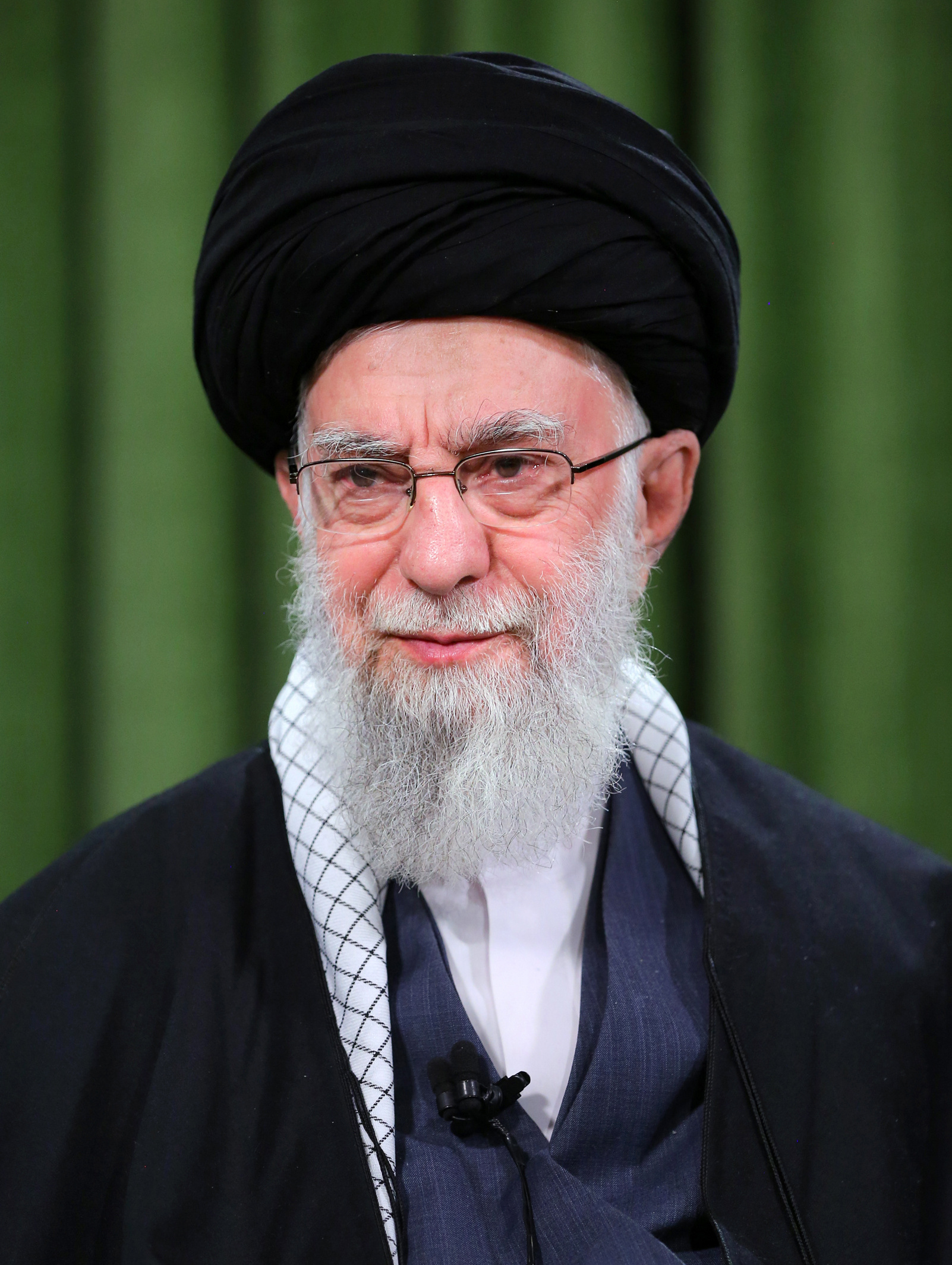
TEHRAN — Iran’s supreme leader is alive, mentally sharp, and governing by speakerphone — and that is constitutionally worse, for the purposes of ending this war, than if he were dead. Mojtaba Khamenei’s audio-only existence since March 9 has locked Iran into a governance mode where the IRGC’s autonomous operations are not a breakdown in command and control but the only available form of national decision-making, because the one person constitutionally empowered to ratify a ceasefire cannot appear in public to do it.
Reuters confirmed on April 11 what three people close to Mojtaba’s inner circle described: severe and disfiguring wounds to his face and one or both legs, sustained in the February 28 airstrike that killed his father. He is taking part in meetings with senior officials via audio conferencing. He is engaged in decision-making on major issues including the war and negotiations. His circle says images might come in “one or two months” — which places his first possible public appearance somewhere between mid-May and mid-June, three to eight weeks after the April 22 ceasefire expiry.
Table of Contents
- The Poison Chalice He Cannot Drink
- Why Dissolving the Interim Council Was the Decisive Mistake
- What Can a Written Statement Actually Stop?
- The IRGC Did Not Seize Power. The Constitution Handed It Over.
- How Close Was Islamabad — and Would It Have Mattered?
- Why Does Vahidi Answer to No One Pezeshkian Can Reach?
- Nine Days to April 22
- FAQ
The Poison Chalice He Cannot Drink
When Ruhollah Khomeini accepted UN Security Council Resolution 598 in July 1988, ending the Iran-Iraq War after eight years and roughly a million dead, he did not simply issue a written directive. He performed three separate public acts across four days: a signed letter hand-delivered by then-President Ali Khamenei to the UN Secretary-General’s New York residence on July 17; a personal written statement read aloud on Tehran Radio on July 20, containing the now-mythologised “poison chalice” formulation; and a separate explanatory letter personally addressed to Friday Imams, parliamentarians, Assembly of Experts members, and senior officials across the country.
The legal mechanism was the letter to the UN. But the operational mechanism — the thing that actually stopped IRGC commanders from continuing to fight — was the radio address. “Taking this decision is more deadly than drinking from a poisoned chalice,” Khomeini said. “I know it is hard on you — but isn’t it hard on your old father?” That was not a constitutional requirement. It was a ritual requirement, the supreme jurisprudent telling every corps commander and Basij volunteer that he had personally absorbed the humiliation, that their honour remained intact because his had been sacrificed. Without it, the ceasefire had no downward authority.
“Taking this decision is more deadly than drinking from a poisoned chalice… I know it is hard on you — but isn’t it hard on your old father?”Ruhollah Khomeini, Tehran Radio, July 20, 1988
Mojtaba Khamenei cannot replicate any of these three acts. He cannot sign a letter on camera. He cannot be photographed delivering a document. He cannot broadcast his voice — or, more precisely, he has not done so since March 9, and his inner circle’s timeline for a possible public appearance extends past the ceasefire deadline. A written statement read by an IRIB newsreader carries the formal authority of the supreme leader’s office but none of the ritual weight that makes IRGC compliance something other than optional. The April 8 ceasefire halt order followed exactly this pattern: a text attributed to Mojtaba, read on state television, containing no filmed appearance, no audio recording, no fatwa, no personal address to commanders.
The Middle East briefing 3,000+ readers start their day with.
One email. Every weekday morning. Free.
The results were immediate and measurable. Within hours of that written ceasefire order, Kuwait intercepted 28 drones; Bahrain reported 37 aerial threats; the UAE logged 52; Qatar faced 7 missiles. Thirty-one semi-autonomous IRGC provincial corps, operating under pre-authorised standing orders, did not stop fighting because a written statement on state TV does not carry the same downward command authority as a supreme leader publicly absorbing humiliation on behalf of the entire military apparatus.
Why Dissolving the Interim Council Was the Decisive Mistake
Article 111 of Iran’s constitution provides for exactly the scenario that unfolded on February 28: the death of the supreme leader. The mechanism is a three-member Interim Leadership Council consisting of the president, the chief justice, and a Guardian Council jurist — in this case, Pezeshkian, Mohseni-Eje’i, and Arafi. This council was activated on March 1, the day after Ali Khamenei’s assassination, and it functioned for eight days. On March 9, the Assembly of Experts elected Mojtaba as the new supreme leader, and the council dissolved.
That dissolution is the constitutional hinge of this entire crisis. The Interim Leadership Council had a structural advantage that Mojtaba’s singular authority does not: it was a committee. A committee can negotiate and sign a ceasefire because no single individual’s honour is at stake. The humiliation of ending a war is distributed across three office-holders, none of whom carries the theological weight of the supreme jurisprudent. The committee could have sent Pezeshkian to Islamabad with the full constitutional authority to sign, and no IRGC commander could have claimed the agreement lacked legitimacy — because the constitution explicitly designates the council as the supreme leader’s replacement.
By electing Mojtaba as a named, singular supreme leader — but one who cannot appear — Iran simultaneously locked out both available face-saving architectures. The committee option was dissolved. The personal-public-capitulation option, the Khomeini model, requires a leader who can be seen and heard, and Mojtaba is neither. Some senior clerics recognised this immediately; Al Jazeera reported that several called for returning to the temporary council in the days after March 9. They were overruled by the Assembly of Experts, which is itself dominated by figures aligned with the IRGC’s institutional interests.
The bitter paradox is that the Assembly’s decision was rational on its own terms. A named supreme leader restores the appearance of institutional continuity, projects strength, prevents the factional fragmentation that a committee inevitably generates. But it also creates a governance structure that is constitutionally incapable of ending a war — because the one person who must publicly ratify a ceasefire cannot publicly do anything at all.
What Can a Written Statement Actually Stop?
Every public communication attributed to Mojtaba Khamenei since March 9 has followed the same format: a written text, distributed through IRIB or state news agencies, read by newsreaders or referenced by officials. No video. No audio recording. No photographed appearance. The pattern has held without a single exception across 35 days.
Iranian state media has framed this through the “janbaz” descriptor — an Iranian term of honour for those severely wounded in war — positioning his wounds as hero status rather than disability. PressTV has quoted army spokesmen saying the “enemy agreed to ceasefire based on Iran conditions after failure of war goals,” presenting the April 8 halt order as strategic victory rather than capitulation. The framing is sophisticated and internally consistent, but it cannot resolve the operational problem: IRGC corps commanders who have been granted independent operational authority under the Mosaic Defense doctrine take orders from a supreme leader they can see and hear, not from a newsreader citing a written text whose authorship they have no way to independently verify.
This is not speculation about what might happen. It already happened. Iranian Foreign Minister Abbas Araghchi said it himself, in a statement the Soufan Center documented in March: “Our military units are now, in fact, independent and somewhat isolated, and they are acting based on general instructions given to them in advance.” That is a sitting foreign minister describing his own country’s military as operationally beyond central command — and he said it before the ceasefire, before Islamabad, before the post-ceasefire violations that proved his description accurate.
“Our military units are now, in fact, independent and somewhat isolated, and they are acting based on general instructions given to them in advance.”Abbas Araghchi, Iranian Foreign Minister, March 2026
The question is not whether Mojtaba is making decisions. Reuters’ sourcing — three people close to his inner circle — is strong enough to take at face value: he is mentally sharp, he is engaged, he is participating in meetings via audio conference. The question is whether decisions made by audio conference, transmitted as written statements through state television, carry sufficient downward authority to override the standing operational orders that 31 IRGC provincial corps have been executing since the war began. The empirical answer, as of April 13, is that they do not.
The IRGC Did Not Seize Power. The Constitution Handed It Over.
The standard Western framing — that the IRGC has “seized control” or is “acting outside its authority” — misreads the constitutional architecture. The IRGC’s autonomous operations are not a coup. They are the designed outcome of three overlapping constitutional and doctrinal features that, taken together, make centralised command of Iran’s military structurally impossible under current conditions.
The first is Article 110, which assigns the supreme leader — not the president, not the SNSC, not any committee — supreme command of the armed forces, the power to declare war and peace, and sole authority over IRGC appointments. This means Pezeshkian has no constitutional authority over the IRGC whatsoever. When he accused Vahidi and Abdollahi on April 4 of “acting unilaterally and driving escalation through attacks on regional countries” and warned that their policies “had destroyed any remaining chance of a ceasefire” and would steer Iran toward “a huge catastrophe,” he was constitutionally correct that they were acting without his authorisation. He was also constitutionally irrelevant — because they do not answer to him. They answer to Mojtaba, who answers by written statement through IRIB.
The second is the Mosaic Defense doctrine, formally announced by IRGC General Mohammad Ali Jafari in 2005 and restructured into 31 provincial commands in 2008. The doctrine was explicitly designed to prevent the regime-collapse outcome that followed Saddam Hussein’s centralised command structure in 2003 — if Baghdad falls, everything falls. Under Mosaic Defense, each provincial corps has pre-authorised operational parameters. Commanders no longer require prior approval from Tehran to act within those parameters. The doctrine assumes leadership decapitation as a planning premise. An audio-only supreme leader who issues written statements through state TV actually fits this doctrine’s design assumptions: the leader provides strategic direction while the corps execute tactically without requiring specific authorisations.
The third is the SNSC, the body constitutionally designated under Article 176 to confirm decisions in the supreme leader’s name. Article 176 requires every SNSC decision to receive “confirmation by the Supreme Leader” before carrying legal force. But the SNSC is headed by Zolghadr — himself under US and EU sanctions, himself an IRGC loyalist. The body that is supposed to serve as a check on IRGC autonomy is itself IRGC-controlled. The confirmation loop is closed: the IRGC acts, the SNSC confirms, Mojtaba’s written approval is attributed through IRIB, and no external actor can verify whether the sequence ran in that order or in reverse.
The IRGC has been commanding Iran alone since the night of February 28. The Reuters reporting confirms that Mojtaba is participating in this system rather than being excluded from it. But participating by audio conference in a system designed for autonomous provincial execution is not the same as commanding it — and the gap between participation and command is where ceasefires go to die.
How Close Was Islamabad — and Would It Have Mattered?
Araghchi said the talks were “inches away” from an Islamabad MoU. Vance said Iran chose “not to accept our terms,” specifically citing the refusal to commit not to develop nuclear weapons. Ghalibaf, the parliament speaker, said the US “failed to gain the trust” of Iran’s delegation. The collapse came after 21 hours of negotiation, and the standard framing — maximalist US demands, Iranian red lines, mutual blame — has dominated coverage since April 12.
But the structural question beneath the diplomatic one is whether it would have mattered if the US had conceded everything. Suppose Vance had dropped the nuclear commitment demand. Suppose Araghchi had initialled an MoU text. What happens next, constitutionally? The MoU would require ratification by the supreme leader under Article 110’s war-and-peace authority. That ratification, to carry operational weight with 31 autonomous IRGC provincial corps, would require something more than a written statement read on IRIB — because the existing written ceasefire order, issued April 8, demonstrably failed to stop post-ceasefire attacks across four GCC states.
The Islamabad talks may have been “inches away” on paper. They were structurally impossible to consummate, because even a signed MoU has no downward enforcement mechanism in a system where the supreme leader cannot appear and the military doctrine explicitly provides for autonomous execution without central authorisation. Araghchi knows this. His March statement about independent and isolated military units was not a complaint — it was a description of constitutional reality that his own diplomatic efforts cannot override.
This does not mean the talks were theatre. Araghchi and his team appear to have negotiated in genuine good faith, within the boundaries of what they understood their authority to be. The problem is that their authority, derived from a president who has no constitutional command over the IRGC and a supreme leader who governs by written proxy, was never sufficient to deliver what the talks required: a binding commitment that Iran’s military would actually stop fighting.
Why Does Vahidi Answer to No One Pezeshkian Can Reach?
Ahmad Vahidi is the man who holds the operational keys to Iran’s war, and his constitutional position is essentially unassailable under current conditions. As a former IRGC commander and former defence minister, Vahidi sits at the intersection of military authority and institutional knowledge. He rejected Pezeshkian’s intelligence minister candidates. He forced the president to accept an unwanted SNSC secretary. He demanded that Zolghadr — his ally — be placed on the Islamabad negotiating team. Pezeshkian accused him and Abdollahi of destroying any remaining chance of a ceasefire. None of this matters constitutionally, because Vahidi’s chain of accountability runs through Article 110 to the supreme leader alone.
And the supreme leader communicates by written statement through state television. Vahidi can claim — and has, implicitly — that he is faithfully executing Mojtaba’s strategic direction, that his operational decisions align with the “general instructions given in advance” that Araghchi described. There is no constitutional mechanism for Pezeshkian to prove otherwise. There is no public forum where Mojtaba can contradict Vahidi in real time, because Mojtaba does not appear in public forums. There is no press conference, no filmed meeting, no photographed confrontation where the supreme leader can visibly overrule his military commanders.
This is the structural condition that makes the IRGC’s autonomous action not a failure of command and control but the only available governance mode. Vahidi does not need to defy Mojtaba. He simply needs to interpret written statements in ways that align with operational decisions already taken — and in a system where the supreme leader cannot publicly clarify his intent, interpretation becomes indistinguishable from command.
The IRGC Navy’s declaration of “full authority” over the Strait of Hormuz followed this pattern precisely: the declaration was issued while Araghchi was in Islamabad, effectively torpedoing the diplomatic track from within while remaining formally consistent with the supreme leader’s written instructions to “cease fire” — because the Hormuz declaration framed naval control as defensive posture rather than offensive action. Written orders, unlike spoken ones delivered in person, cannot be clarified with tone, emphasis, or the visible displeasure of a commander-in-chief watching his subordinates undermine his position.
Nine Days to April 22
The ceasefire expires on April 22 — nine days from today. Mojtaba’s inner circle told Reuters that images of the supreme leader might come in “one or two months.” Even taking the most optimistic end of that timeline, his first possible public appearance falls in mid-May, three weeks after the ceasefire deadline. There is no extension mechanism built into the April 8 halt order — the Soufan Center noted this absence explicitly — and no constitutional process by which a written statement can be upgraded to a binding, publicly ratified peace agreement within nine days.
| Date | Event | Constitutional Implication |
|---|---|---|
| Feb 28 | Ali Khamenei killed; Mojtaba wounded | Article 111 Interim Council activated |
| Mar 1 | Interim Leadership Council begins | Committee governance — no single-person ratification required |
| Mar 9 | Mojtaba elected Supreme Leader | Council dissolved; singular authority restored to invisible leader |
| Mar 9–present | Zero public appearances (audio, video, or photo) | All governance via written proxy through IRIB |
| Apr 4 | Pezeshkian accuses Vahidi/Abdollahi | President has no Article 110 authority over IRGC |
| Apr 8 | Written ceasefire order on IRIB | No personal voice, no fatwa, no filmed appearance |
| Apr 8 | Post-ceasefire violations across 4 GCC states | Written order insufficient to override Mosaic Defense autonomy |
| Apr 12 | Islamabad talks collapse after 21 hours | Even a signed MoU lacks ratification mechanism |
| Apr 22 | Ceasefire expires | No extension mechanism; no public ratification possible |
| Mid-May–June | Earliest possible Mojtaba public appearance | 3–8 weeks after ceasefire expiry |
The arithmetic is straightforward and merciless. The ceasefire was already failing with Mojtaba’s written backing — post-April 8 violations demonstrated that conclusively. Without even that written backing, after April 22, the 31 IRGC provincial corps revert to their pre-ceasefire standing orders, which authorise independent offensive operations. There is no supreme leader who can appear on television to extend the ceasefire. There is no Interim Leadership Council to negotiate a replacement. There is a president with no constitutional authority over the military, a foreign minister who has publicly described his own armed forces as “independent and somewhat isolated,” and an SNSC headed by an IRGC loyalist whose institutional incentives align with continued operations rather than diplomatic resolution.
The “one or two months” timeline offered by Mojtaba’s circle may be sincere. His recovery may be genuine. But the constitutional calendar does not wait for reconstructive surgery, and the gap between April 22 and mid-May is not a gap that written statements, however sharp the mind behind them, can bridge.
Frequently Asked Questions
Could Mojtaba broadcast an audio message to carry more authority than a written statement?
Technically, yes — and the fact that he has not done so in 35 days is itself the most revealing data point. Reuters’ sources described his injuries as facial and leg disfigurement, not vocal cord damage. The absence of any audio recording suggests either a deliberate security decision (voice authentication could confirm his location) or a condition more complex than Reuters’ sources have disclosed. Even if he did broadcast audio, the 1988 precedent required visual confirmation — Khomeini’s “poison chalice” moment worked because commanders knew the voice matched the man. An audio broadcast from an unseen leader whose wounds have never been shown would invite the same verification problems that written statements already face, particularly among provincial IRGC commanders operating under Mosaic Defense autonomy who have no direct line to Mojtaba’s audio conferences.
Is there a constitutional mechanism to reinstate the Article 111 Interim Council while Mojtaba remains alive?
Article 111 provides two triggers for the council: the death of the supreme leader or a determination that the leader “is unable to fulfil his constitutional duties.” The determination of inability falls to the Assembly of Experts under Article 111, paragraph 2. In theory, the Assembly could convene, declare Mojtaba unable to fulfil his duties — specifically the public duties like troop inspection, receiving foreign ambassadors, and personally ratifying treaties — and reactivate the council. In practice, the Assembly is dominated by figures who orchestrated Mojtaba’s election nine days after his father’s death, and reversing that decision would amount to an institutional admission that the succession was premature. No faction within the Assembly has publicly advocated this, though the unnamed senior clerics Al Jazeera reported as questioning Mojtaba’s ability to lead may represent an early signal. The political cost of reversal increases with every day that passes, because undoing the succession also reopens the factional contest for who controls the supreme leader’s office — a contest the IRGC-aligned bloc won on March 9.
What happens to the IRGC’s legal authority if the ceasefire expires without renewal on April 22?
The April 8 ceasefire halt order, as a written directive from the supreme leader’s office, carries the force of a standing military order. If it expires without renewal, the legal status of IRGC operations reverts to the pre-ceasefire framework — which, under the Mosaic Defense activation from early March, means pre-authorised independent offensive operations by all 31 provincial corps. The distinction matters for international law: during the ceasefire, post-ceasefire attacks could be characterised as violations of Iran’s own declared cessation, giving external actors legal grounds for response under Article 51 of the UN Charter and the GCC collective defence architecture already built out since February. After April 22, IRGC operations become legally consistent with Iran’s declared military posture, removing that international-law lever. The practical consequence is that US and coalition partners lose the political framing of Iran as a “ceasefire violator” — a framing that has been central to maintaining GCC host-nation political cover for US basing rights.
How does Mojtaba’s situation compare to other wartime leaders who governed while incapacitated?
The closest modern parallel is Woodrow Wilson after his October 1919 stroke, when First Lady Edith Wilson and physician Cary Grayson controlled access to the president for seventeen months. But Wilson’s incapacitation came after the Armistice, not during active hostilities, and the US constitutional framework distributes military authority across civilian and congressional institutions rather than concentrating it in one person. The Iranian constitution, by design, concentrates war-and-peace authority in the supreme leader with no delegation mechanism short of the Article 111 council. A more operationally relevant parallel is the Soviet Politburo’s governance during Andropov’s final months in 1983-84, when the General Secretary governed through written directives while unable to appear — but the Politburo functioned as a collective decision-making body with institutional authority the SNSC does not possess. Mojtaba’s situation is structurally unique: a wartime head of state governing by written proxy in a constitutional system that grants him sole, non-delegable military authority.