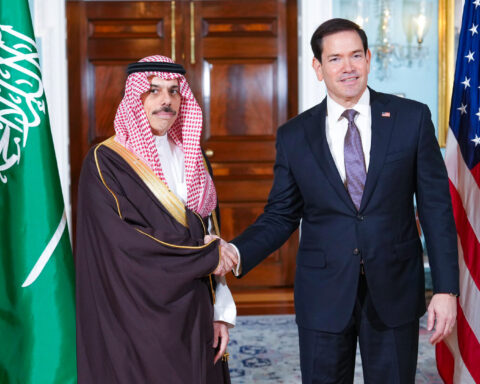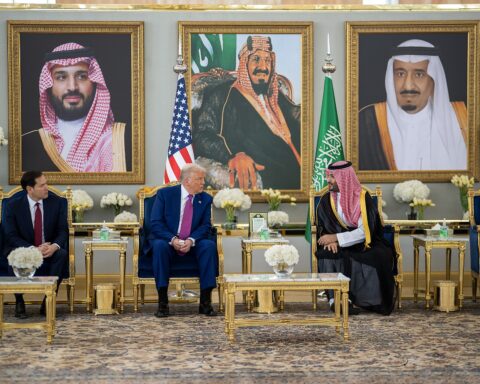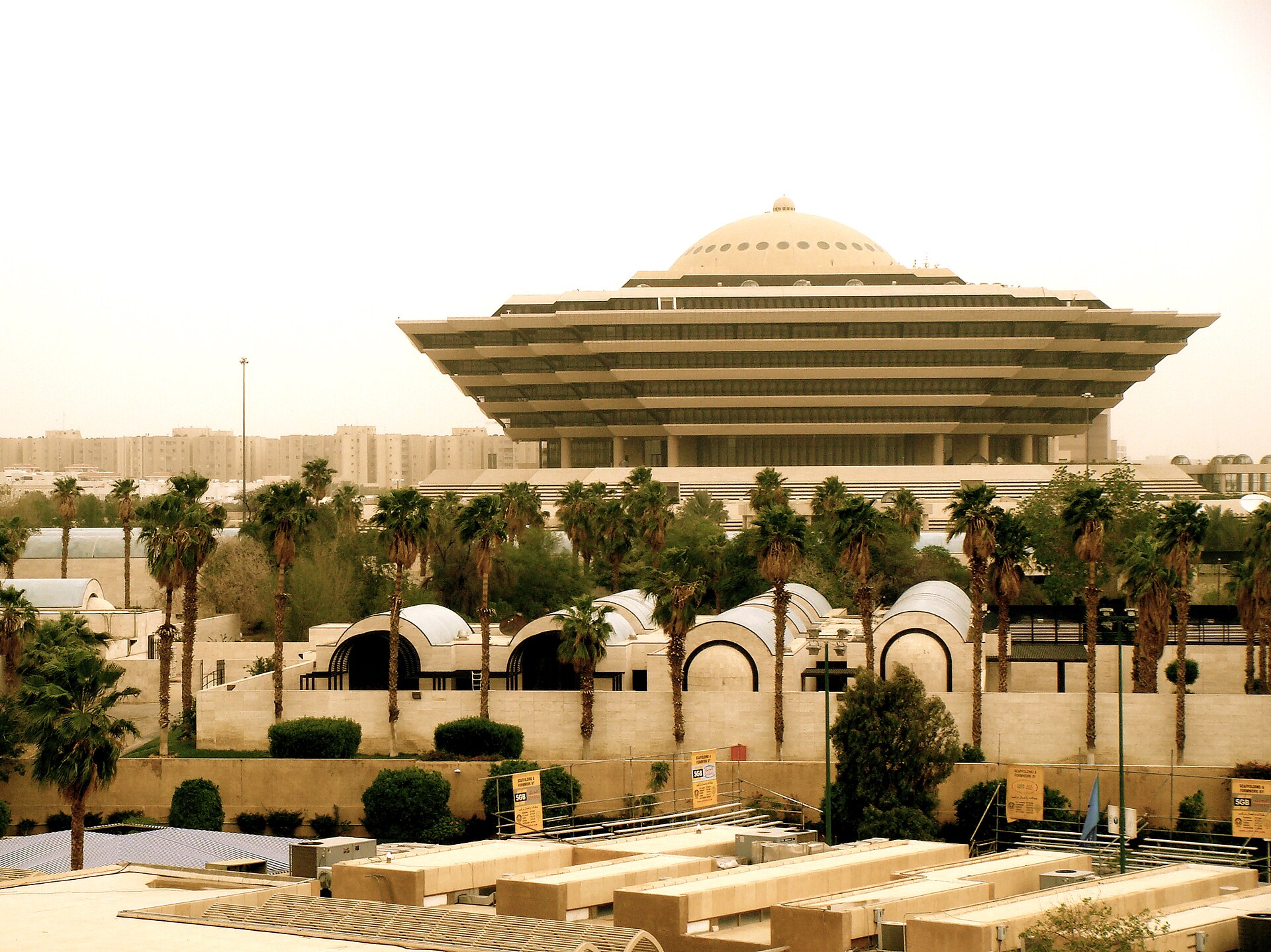

RIYADH — Saudi Arabia summoned Iraqi Ambassador Safia Taleb al-Suhail on Sunday to formally protest drone and missile attacks launched from Iraqi territory against the Kingdom, the Saudi Foreign Ministry confirmed on April 12, 2026. The written protest note, delivered by Undersecretary for Political Affairs Dr. Saud al-Sati, contained language that maps directly onto the UN Charter’s Article 51 self-defense framework — a legal threshold Saudi Arabia has never before crossed in its bilateral dealings with Baghdad over Iranian proxy operations.
The summons follows 44 days of sustained bombardment in which Saudi air defenses have intercepted 894 projectiles over the Eastern Province alone. It makes Saudi Arabia the second Gulf state in five days to formally hold Baghdad responsible for attacks originating from its soil, after Kuwait summoned Iraq’s chargé d’affaires on April 7-8. Baghdad has issued no public response.
Table of Contents
- The Three-Part Statement
- Why Does the Language Matter? Article 51 and the Legal Record
- The Anbar Corridor: 500 Attacks, One Geography
- Can Baghdad Expel What It Cannot Control?
- The 30-Day Gap: Sudani’s Promise vs. Saudi Arabia’s Summons
- A Gulf-Wide Pattern of Accountability
- Background: From Abqaiq to Anbar
- FAQ
The Three-Part Statement
The Saudi Foreign Ministry’s statement carried three escalating elements, each performing a distinct legal function. First: “the Kingdom’s condemnation and denunciation of attacks originating from Iraqi territory against the Kingdom and the Gulf states.” Second: “the importance of Iraq dealing responsibly with these threats and attacks.” Third: Saudi Arabia “will take all necessary measures to defend its security and protect its territories,” according to reporting by Asharq Al-Awsat and Xinhua on April 12.
The progression — condemnation, demand for responsibility, reservation of self-defense — follows a structure familiar to international lawyers. The phrase “all necessary measures” has served as the operative language in every Article 51 self-defense notification filed with the UN Security Council since the United States invoked it against targets in Syria in September 2014, when Washington cited Damascus’s inability to prevent ISIL from using Syrian territory as a base of operations.
Dr. al-Sati’s decision to deliver a written note rather than issue a verbal warning through diplomatic channels creates a documentary record. Written protest notes are admissible before the International Court of Justice and form the evidentiary basis for state responsibility claims — a distinction that separates this encounter from the routine diplomatic complaints Saudi Arabia has filed with Baghdad over the past six years.
Why Does the Language Matter? Article 51 and the Legal Record
Article 51 of the UN Charter permits member states to exercise “the inherent right of individual or collective self-defence if an armed attack occurs.” The controlling legal question since 2001 has been whether a state may invoke Article 51 against non-state actors operating from the territory of another state that is “unwilling or unable” to prevent attacks. Thirteen states now endorse this doctrine, according to a 2024 survey published in the Journal of the Use of Force and International Law. Six states formally object. Ten remain ambiguous.
The Middle East briefing 3,000+ readers start their day with.
One email. Every weekday morning. Free.
Saudi Arabia’s statement addresses both prongs. The condemnation establishes that attacks are occurring from Iraqi territory — the factual predicate. The demand that Baghdad act “responsibly” and the absence of any Iraqi response together document that Baghdad is either unwilling or unable to stop the attacks — the legal predicate. The “all necessary measures” reservation preserves Riyadh’s right to act on that record.
The Kingdom has not filed an Article 51 notification with the Security Council. But the diplomatic architecture being assembled — written protests, bilateral summons, multilateral documentation through Kuwait and the United States — creates the evidentiary foundation for one. Saudi Arabia is not yet claiming the right to strike targets in Iraq. It is documenting that Iraq cannot do what it has publicly promised to do.
The Anbar Corridor: 500 Attacks, One Geography
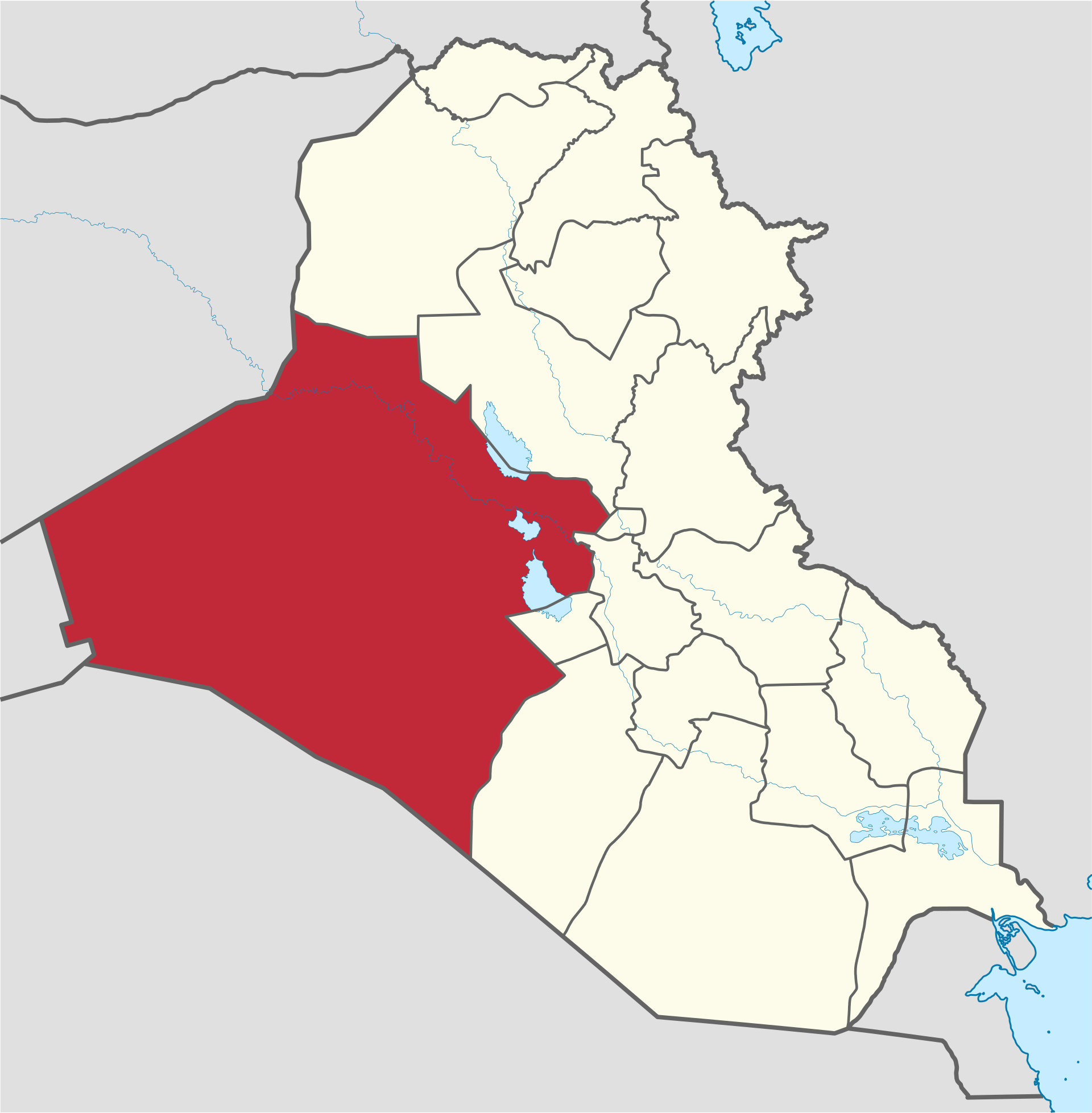
The Foreign Policy Research Institute documented over 500 attacks “conducted against targets inside Iraq or launched from Iraqi territory since late February 2026, primarily by Shia armed factions aligned with Iran.” The geographic concentration is narrow: central Anbar province to Saudi oil infrastructure at Ras Tanura, Jubail, and Shaybah — a corridor of 500 to 700 kilometers. Of those 500-plus FPRI-documented attacks, more than 454 targeted the specific Anbar-to-Saudi oil infrastructure corridor, according to compiled tracking data.
A US airstrike on March 24 confirmed Anbar’s operational role when it killed 14 to 15 Popular Mobilization Forces fighters at a headquarters in the province, according to US Central Command reporting. Among the dead was Saad al-Baiji, the PMF’s Anbar operations commander, struck during what CENTCOM described as a security meeting. The strike demonstrated that the PMF maintains fixed command infrastructure in Anbar — not transient launch teams, but embedded operational headquarters from which the drone campaign is coordinated.
The Islamic Resistance in Iraq — a coalition including Kataib Hezbollah, Harakat Hezbollah al-Nujaba, Kataib Sayyid al-Shuhada, and Asaib Ahl al-Haq — claimed 16 attacks on February 28 alone, the war’s opening day, according to the Foundation for Defense of Democracies’ Long War Journal. The coalition has since claimed over 100 attacks total.
“The Kingdom’s condemnation and denunciation of attacks originating from Iraqi territory against the Kingdom and the Gulf states… Saudi Arabia will take all necessary measures to defend its security and protect its territories.”
— Saudi Foreign Ministry statement, delivered by Dr. Saud al-Sati, April 12, 2026 (Asharq Al-Awsat)
Can Baghdad Expel What It Cannot Control?
The PMF was formally integrated into Iraq’s military command structure by law in 2016, making Baghdad legally responsible for their operations under international humanitarian law. But Iran-aligned factions within the PMF retain operational autonomy and take orders from the IRGC’s Quds Force, not the Iraqi chain of command, according to the Washington Institute for Near East Policy. The legal-operational gap — statutory responsibility without operational authority — is the structural feature that Saudi Arabia’s summons now exploits.
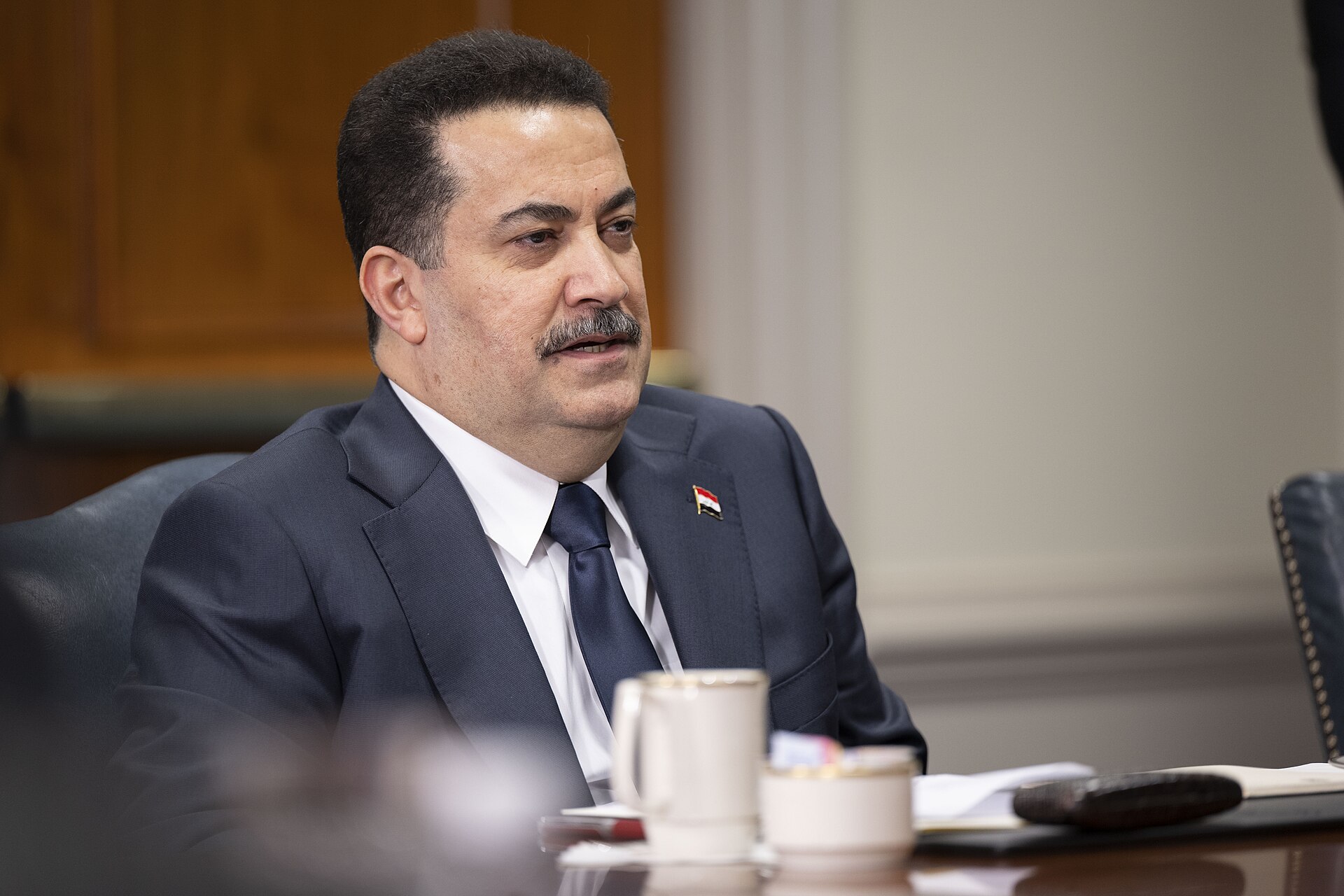
PMF-linked political blocs hold 66 or more seats in Iraq’s parliament, amounting to more than one-third of the ruling coalition, according to a report by The Century Foundation. These factions control government ministries and hold veto power over legislative action that threatens their autonomy. When Prime Minister Mohammed Shia al-Sudani proposed a PMF restructuring law in March 2026 that would have brought command authority under the prime minister’s office, he withdrew it under parliamentary pressure from the same armed factions the law was designed to constrain.
The August 2025 precedent is instructive. After Kataib Hezbollah fighters clashed with Iraqi police at the Agriculture Ministry in Baghdad, killing a police officer, Sudani dismissed the commanders of the 45th and 46th PMU Brigades — the most direct challenge to militia autonomy since his government took office, according to the FDD’s Long War Journal. Kataib Hezbollah’s structural position in parliament and the security apparatus remained intact. The dismissals demonstrated that Baghdad can discipline individual officers. It cannot restructure the institutions they serve.
The 30-Day Gap: Sudani’s Promise vs. Saudi Arabia’s Summons
On March 12, Iraqi PM Sudani told Saudi Crown Prince Mohammed bin Salman in a phone call that Iraq “rejects being used as a launch point for attacks against other countries,” according to a readout documented by the Education for Peace in Iraq Center’s Iraq Situation Humanitarian Monitor. Sudani added that he had “authorized all security forces, including PMU, to respond defensively.”
The authorization language created a problem that the summons now formalizes. By authorizing the PMU “to respond defensively,” Sudani gave the very militias conducting cross-border attacks an operational permission framework they could cite as cover. The PMF’s Iran-aligned factions characterize their drone and missile operations against Saudi Arabia as defensive actions in solidarity with the Islamic Republic — a framing that fits within the authorization Sudani provided, however unintentionally.
Thirty days separated Sudani’s assurance from Saudi Arabia’s summons. In those 30 days, the FPRI documented hundreds of additional attacks from Iraqi territory. Saudi air defenses continued to intercept drones and missiles originating from the Anbar corridor. The gap between Baghdad’s stated position and its operational reality is now documented in a written protest note sitting in the Iraqi Embassy in Riyadh.
Baghdad’s silence since the summons compounds the problem. Iraq’s Foreign Ministry had not issued any public response as of April 13, according to monitoring by Al-Monitor, Turkiye Today, and AzerNews. The silence is structurally determined: Iraq cannot endorse the Saudi position without alienating PMF factions that hold its governing coalition together, and cannot reject it without further straining a bilateral relationship Sudani has spent two years rebuilding.
A Gulf-Wide Pattern of Accountability
Saudi Arabia is not acting alone. Kuwait summoned Iraq’s chargé d’affaires on April 7-8 after Iranian-backed militia rockets struck near Basra, making two Gulf states in five days formally holding Baghdad accountable for proxy attacks launched from its territory. US Deputy Secretary of State Christopher Landau summoned Iraqi Ambassador Nizar Khirullah earlier the same week, emphasizing what Turkiye Today reported as Iraq’s “failure to rein in the groups” and stating Washington “would not tolerate further attacks.”
The coordinated diplomatic pressure creates a multilateral record. Each summons generates its own documentary trail — written notes, bilateral meetings, statements to media — that collectively establish a pattern of notification. Under the “unwilling or unable” doctrine, the sufficiency of evidence depends in part on whether the territorial state has been given adequate warning and opportunity to address the threat. Three governments — Saudi Arabia, Kuwait, and the United States — have now formally told Baghdad to stop what is happening on its soil.
The IRI’s own statements reinforce the legal exposure. On April 8, the Islamic Resistance in Iraq announced a two-week suspension of operations following the Iran-US ceasefire announcement. But the suspension was declared by the militias themselves, not ordered by Baghdad — underscoring that operational decisions rest with the factions, not the Iraqi government. The Iraqi Resistance Coordination Committee stated that its factions had “avoided harming Kuwait’s economic interests,” according to EPIC/ISHM reporting — language that implicitly categorized Saudi oil infrastructure as a legitimate target, distinct from Kuwait’s.
Background: From Abqaiq to Anbar
The Iraq-as-launch-platform pattern predates the current war by nearly seven years. On September 14, 2019, drone and cruise missile strikes hit Saudi Aramco’s Abqaiq processing facility and the Khurais oil field, knocking 5 to 6 million barrels per day offline and costing an estimated $250 to $300 million per day in lost revenue, according to Aramco production data cited at the time by Reuters and the Wall Street Journal. US intelligence concluded the attack was launched from southern Iraq by Iran-backed militias, though the Houthis in Yemen initially claimed responsibility.
Saudi Arabia did not summon Iraq’s ambassador after the 2019 Abqaiq attack. The diplomatic restraint reflected a calculation that bilateral escalation with Baghdad would push Sudani’s predecessors further into Iran’s orbit without generating any operational change. Seven years later, with 894 intercepts over 44 days and a US naval blockade now active as of April 13, that calculation has changed.
The current crisis operates on a different scale. Where Abqaiq was a single coordinated strike, the PMF campaign since February 28 has been sustained and attritional — over 500 attacks in 44 days, degrading Saudi Arabia’s PAC-3 interceptor stockpile at a rate that cannot be replenished by current US production capacity. The shift from episodic to sustained attack changes the legal character of the threat and the proportionality of available responses.
The Islamabad talks between US Vice President Vance and Iranian Parliament Speaker Ghalibaf on April 11 did not address the Iraqi proxy dimension. The ceasefire framework, such as it exists, treats Iran and the United States as the bilateral principals. Iraq’s role as the physical territory from which attacks are launched — and Baghdad’s inability to control that territory — sits outside the negotiating architecture entirely.
The ceasefire expires April 22. Hajj arrivals begin April 18, five days from now. The IRI’s self-declared two-week operational suspension, announced April 8, would expire on approximately April 22 — the same day the ceasefire lapses. Whether the IRGC’s authorization ceiling permits an extension, and whether Baghdad can exert any influence over the timing, remain open questions that the summons was not designed to answer. The summons was designed to ensure that, whatever happens next, Saudi Arabia’s legal position is on record.
FAQ
Has Saudi Arabia ever struck targets inside Iraq?
Saudi Arabia has not conducted unilateral military strikes on Iraqi territory in the current conflict or in recent decades. The Kingdom participated in the 1991 Gulf War coalition to liberate Kuwait, which involved operations in Iraqi territory under UN Security Council authorization (Resolution 678). The current summons does not announce or threaten a specific military operation, but the “all necessary measures” language preserves the legal option. Any Saudi strike in Iraq would likely require either a UN Security Council resolution or an Article 51 self-defense notification — the latter being the framework the current diplomatic record appears designed to support.
What is the Islamic Resistance in Iraq, and how does it relate to the PMF?
The Islamic Resistance in Iraq is a military coordination umbrella comprising Iran-aligned factions within the broader Popular Mobilization Forces, including Kataib Hezbollah, Harakat Hezbollah al-Nujaba, Kataib Sayyid al-Shuhada, and Asaib Ahl al-Haq. The PMF was established in 2014 to fight ISIL and legally integrated into the Iraqi military in 2016. However, Iran-aligned factions maintain parallel command structures answering to the IRGC Quds Force. The IRI functions as the operational identity for cross-border attacks, allowing constituent groups to claim joint operations while individual factions retain organizational autonomy. The FDD’s Long War Journal tracks IRI claims, which have exceeded 100 operations since February 28, 2026.
Could Iraq face sanctions or designation as a co-belligerent?
No state has formally designated Iraq as a co-belligerent in the Iran conflict, and doing so would carry consequences that neither Saudi Arabia nor the United States appears willing to trigger — including disruption of Iraqi oil exports (approximately 3.3 million barrels per day), collapse of bilateral trade, and potential destabilization of the Iraqi government. The more likely trajectory is continued pressure to isolate the PMF’s Iran-aligned factions from Baghdad’s formal command structure, using diplomatic accountability and, potentially, expanded US strikes on PMF targets in Anbar as substitutes for formal co-belligerency designation.
What happens if the IRI resumes operations after its self-declared two-week pause?
The IRI’s suspension, announced April 8, expires around April 22 — coinciding with both the ceasefire expiration and the beginning of Hajj pilgrim arrivals. If operations resume, Saudi Arabia would have a strengthened Article 51 case: the written summons establishes that Baghdad was formally notified and failed to act. The US naval blockade that went live on April 13 adds a separate pressure track on Iran’s ability to sustain proxy operations through supply and funding channels, but the blockade does not directly affect the Anbar launch corridor, which relies on pre-positioned munitions and short-range drone technology manufactured or assembled within Iraq.
Why did Baghdad withdraw the PMF restructuring law in March 2026?
Prime Minister Sudani proposed legislation that would have placed the PMF under direct prime ministerial command authority, effectively subordinating Iran-aligned factions to the Iraqi chain of command. PMF-linked parliamentary blocs, holding 66 or more seats, threatened to collapse the governing coalition. Sudani withdrew the bill — conceding that the political cost of restructuring the PMF exceeded the diplomatic cost of failing to do so. The withdrawal is now part of the record Saudi Arabia is assembling: Baghdad attempted reform, was blocked by the same factions conducting attacks, and lacks the domestic political capacity to try again.
| State | Date | Action | Iraqi Official Summoned | Key Language |
|---|---|---|---|---|
| Kuwait | April 7-8 | Summoned chargé d’affaires | Iraqi chargé d’affaires | Protest over militia rockets near Basra |
| United States | Week of April 7 | Summoned ambassador | Nizar Khirullah | “Failure to rein in the groups” |
| Saudi Arabia | April 12 | Summoned ambassador; written protest note | Safia Taleb al-Suhail | “All necessary measures to defend its security” |