WASHINGTON — The United States asked NATO allies this week to deliver written plans for securing the Strait of Hormuz “within days,” a demand that arrived at the White House, the Pentagon, and the State Department alongside NATO Secretary General Mark Rutte’s April 8 visit to Washington. The request would be ambitious under normal circumstances — the alliance has never conducted mine-clearance operations in the Persian Gulf. Under current circumstances it is something closer to fantasy: the US Navy’s four dedicated mine countermeasure ships in Bahrain were decommissioned six months before the war started, their replacements are largely in Southeast Asia, and the timeline for clearing Iranian mines from Hormuz shipping lanes runs to late summer at the earliest.
Saudi Arabia cannot wait that long: Aramco’s June Official Selling Price must be set around May 5, and the kingdom’s export arithmetic — already buckling under a May OSP priced $11–14 per barrel above spot — depends on actual crude moving through actual water, not on a planning document circulating in Brussels. Washington’s demand for allied commitments on paper creates the appearance of multilateral momentum while concealing a hard physical gap: there is almost nothing to deploy, and nowhere near enough time to deploy it.
Table of Contents
What Washington Asked For — And What Rutte Brought Back
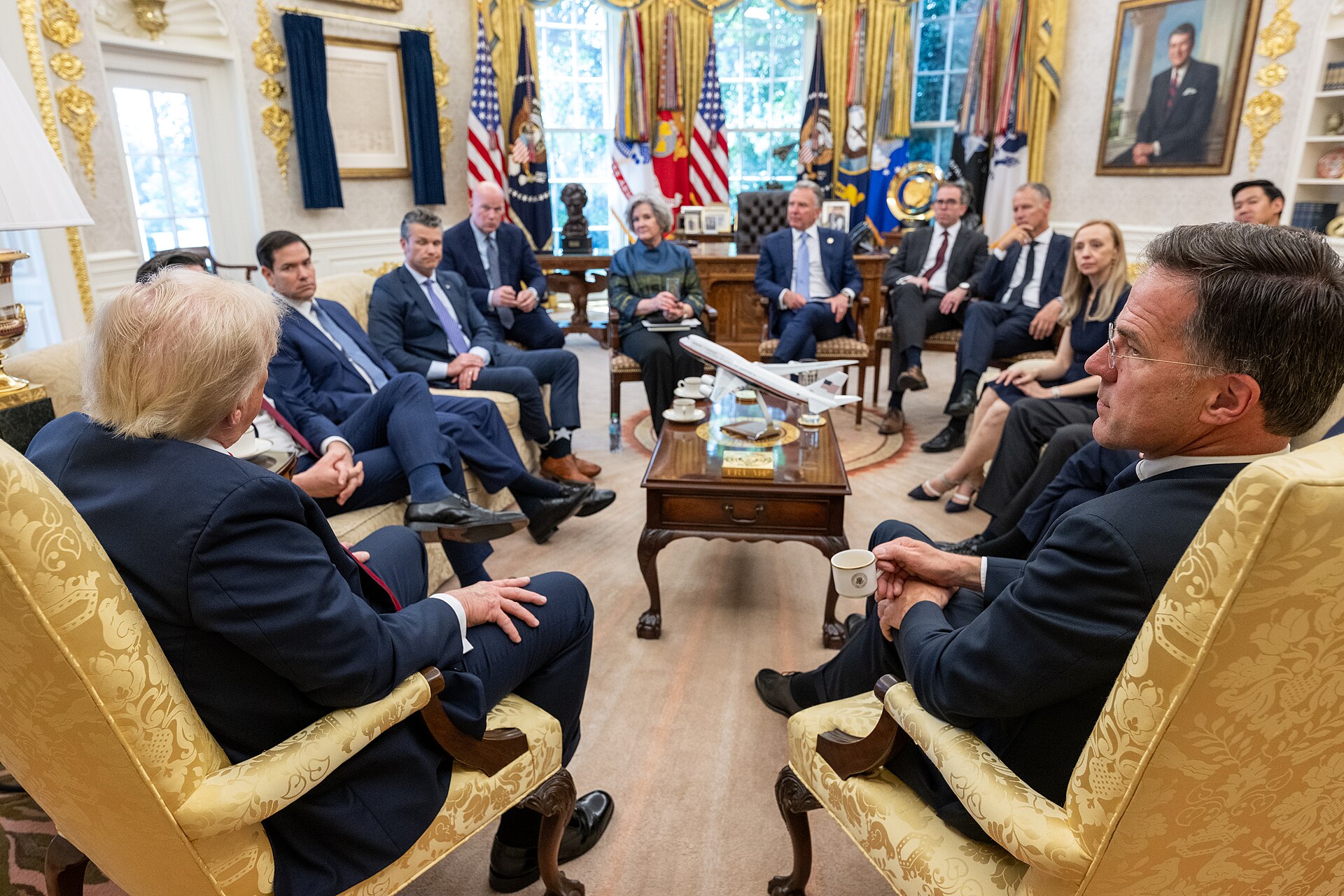
Bloomberg reported April 9 that US officials used Rutte’s Washington visit to press NATO allies for “concrete plans to ensure navigation through” the Strait of Hormuz, asking for specific commitments on a pledge to help secure the waterway “after the fighting in Iran stops.” The discussions spanned the White House, Pentagon, and State Department — a full-spectrum ask that treated Hormuz as an alliance-level priority for the first time since the crisis began February 28.
After more than two hours at the White House, Rutte told CNN that Trump was “clearly” disappointed with many NATO allies. “I can see his point,” Rutte said — a remarkable concession from a secretary general whose job description involves defending the alliance’s collective performance. The meeting produced no formal operational commitment, no deployment orders, no timeline.
Trump’s assessment was less diplomatic. “NATO WASN’T THERE WHEN WE NEEDED THEM, AND THEY WON’T BE THERE IF WE NEED THEM AGAIN,” he posted on Truth Social after the meeting. European NATO members were not consulted before Operation Epic Fury launched February 28, a fact that complicates Washington’s retrospective demand for burden-sharing on a war they had no voice in starting.
Rutte had announced a 22-nation Hormuz coalition by March 22. France’s Emmanuel Macron cited roughly 15 countries preparing a “strictly defensive mission,” according to Reuters. As of April 9, neither initiative has produced a single deployed vessel. German Chancellor Friedrich Merz said the Hormuz operation lacks “a convincing plan.” Michael Froman, the Council on Foreign Relations president, called the seven-nation joint statement a “lukewarm commitment.” These are not the words of an alliance mobilizing for contested mine clearance in the world’s most important oil chokepoint.
The Middle East briefing 3,000+ readers start their day with.
One email. Every weekday morning. Free.
Where Are the Mine Countermeasure Ships?
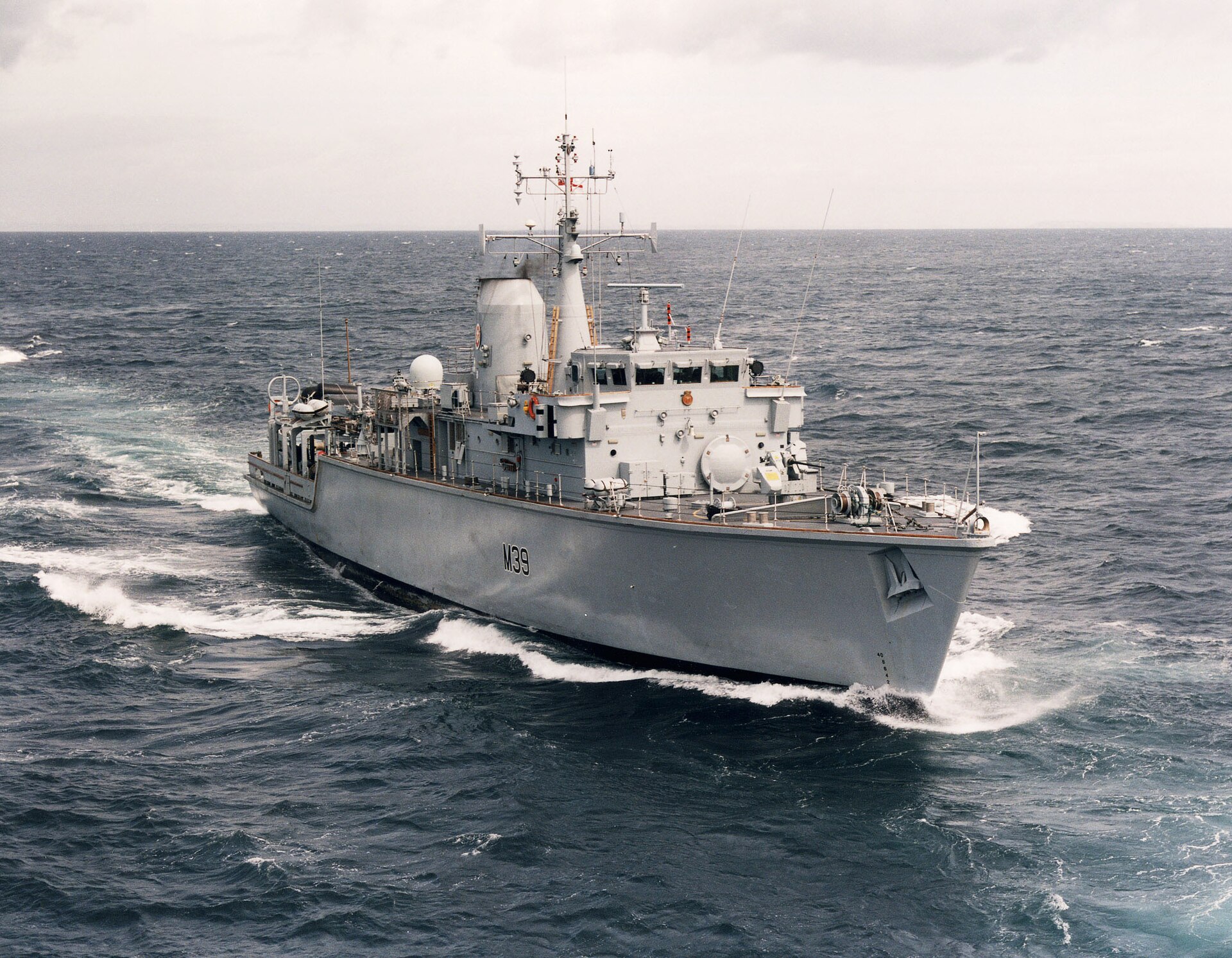
The US Navy’s mine warfare capacity in the Persian Gulf was, until recently, built around four Avenger-class MCM ships homeported in Bahrain: the USS Devastator (MCM-6), USS Sentry (MCM-3), USS Dextrous (MCM-13), and USS Gladiator (MCM-11). All four were decommissioned between September 3 and September 25, 2025, according to USNI News. Their hulls were loaded onto the heavy-lift vessel M/V Seaway Hawk and physically removed from Bahrain on January 9, 2026 — seven weeks before the first Iranian missile struck Saudi territory.
Three Independence-class Littoral Combat Ships replaced them: USS Canberra (LCS-30), USS Santa Barbara (LCS-32), and USS Tulsa (LCS-16), constituting the entirety of the US Navy’s dedicated mine countermeasure presence in Fifth Fleet’s area of operations. But as of mid-March 2026, USNI News photographed USS Tulsa and USS Santa Barbara at Penang, Malaysia — approximately 5,000 kilometres from the Persian Gulf. Only USS Canberra was available for tasking in the region.
The capability question runs deeper than geography. The Pentagon’s own Operational Test and Evaluation office reported in March 2025 that the LCS mine countermeasure package’s “operational effectiveness…cannot be determined due to insufficient performance data.” Zero operational testing was conducted in fiscal year 2025. Emma Salisbury, a senior fellow at the Foreign Policy Research Institute, put it plainly to NPR: “Having a mine countermeasures capability that is not in theater is not particularly helpful.”
Bryan Clark of the Hudson Institute argued that the LCS would “stand clear of the minefields” while unmanned systems operate ahead, reflecting the Navy’s doctrinal pivot toward robotic mine-hunting. But unmanned systems that have never been operationally tested are a procurement ambition, not a deployed capability. Scott C. Truver, a maritime security expert, told NPR that mine warfare accounts for “less than 1% of the Navy’s total budget” — the MCM mission, he said, is the Navy’s “stepchild.”
How Long Does It Take to Clear Hormuz?
Iran possesses more than 5,000 naval mines, with a doctrine built around mining Hormuz “dating back to the 1987 Tanker War,” according to the Defense Intelligence Agency. Admiral James Stavridis, the former NATO Supreme Allied Commander Europe, wrote in a Bloomberg Opinion column on April 2 that Iran “can turn the Strait of Hormuz into a ‘hellscape'” within days, noting that Tehran “has been thinking about this and preparing for it for decades.”
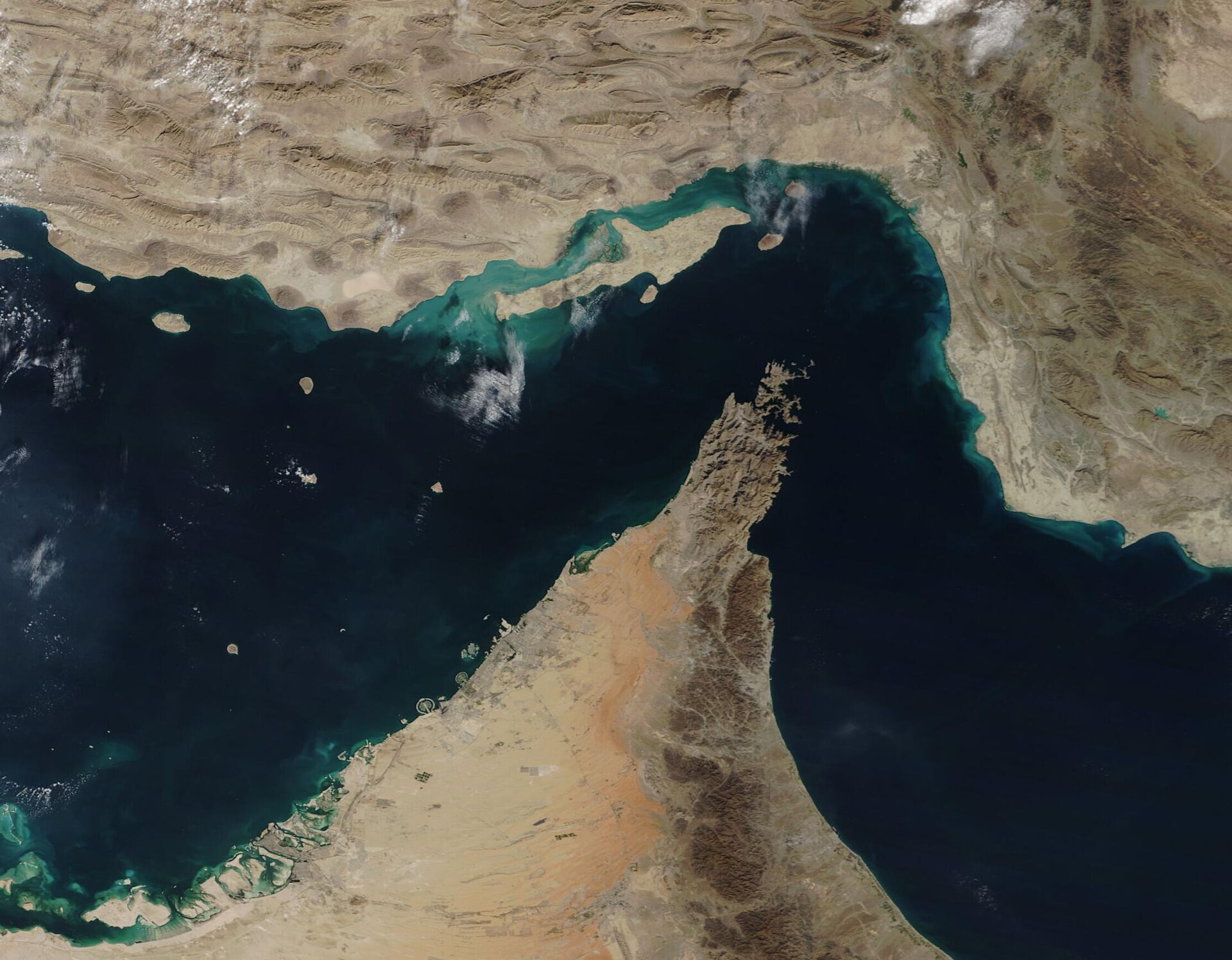
The IRGC published a chart in late February marking the standard Hormuz shipping lanes as a “danger zone,” redirecting commercial vessels into a narrow 5-nautical-mile corridor between Qeshm and Larak islands — inside Iranian territorial waters. The physical area requiring clearance before full commercial transit can resume spans roughly 200 square miles of shipping lanes. At the established rate of 2–3 square miles per day under favourable conditions, that clearance takes six to ten weeks. Defense Domain estimated full commercial restoration at four to six months.
Retired Admiral James Foggo estimated a one-month timeline merely to begin clearing operations — meaning preparation, transit, and staging before the first mine is neutralised. Tayfun Ozberk of Naval News noted that mine clearance is “a slow and delicate process, especially if it has to be done under the threat of further attack,” adding that without “at least temporary control over the coastal threat, any convoy system would operate under constant risk of ambush.”
These timelines are not pessimistic projections from critics. They are the professional consensus of serving and retired flag officers, defence analysts, and the Pentagon’s own testing office, and they all converge on the same conclusion: Hormuz will not be commercially clear before midsummer at the earliest, regardless of what is written in any NATO planning document this week.
Iran’s Permission Architecture
While NATO debates written plans, actual vessel traffic through Hormuz is governed by Iran. On the first day of the ceasefire, roughly 7 ships transited versus 138 per day before the war — about 5 percent of normal throughput. Bloomberg reported that Iran told mediators the cap is approximately 12 vessels per day under ceasefire terms. Behind the strait, 426 tankers, 34 LPG carriers, and 19 LNG vessels are waiting, according to Bloomberg data from April 8–9.
Iranian Foreign Minister Abbas Araghchi stated on April 8 that passage through Hormuz will only be possible “in coordination” with the Iranian military — language that converts a navigational right under international law into a permission-based system administered by the IRGC. Iran’s Parliament passed a transit fee bill on March 31, and the IRGC’s 10-point plan presented at the Islamabad talks includes a requirement that Hormuz operations involve “coordination with Armed Forces of Iran” as a treaty-level demand.
The UN Security Council route for challenging this arrangement is closed. Russia and China vetoed the Hormuz freedom-of-navigation resolution on April 7, voting 11-2 against a text that had already been stripped from Chapter VII enforcement authority to a non-binding declaration. Russia’s ambassador Vassily Nebenzia argued the resolution “presented Iranian actions as the sole source of regional tensions while illegal attacks by the United States and Israel were not mentioned at all.” China’s Fu Cong said the draft “failed to capture the root causes and the full picture of the conflict in a comprehensive and balanced manner.” With the multilateral legal track dead, there is no institutional mechanism to compel Iran to open the strait beyond what Tehran chooses to permit.
This creates a structural reality that NATO planning documents cannot alter: Saudi Arabia’s near-term export recovery depends almost entirely on Iran’s willingness to incrementally raise the throughput cap — from 12 ships per day toward something approaching commercial normalcy. No mine-clearance operation, however well-planned, changes that dependency while the ceasefire holds and Iran controls access.
The May 5 Repricing Clock
Aramco set its May Official Selling Price at +$19.50 per barrel above the Oman/Dubai benchmark on April 6, when Brent crude traded near $109. Brent has since crashed to approximately $96 — the largest single-event decline since the 1991 Gulf War — leaving the May OSP stranded $11–14 per barrel above spot. Bloomberg’s pre-war survey of traders had expected a $40 per barrel premium; Aramco set it at less than half that, and the market moved against even that reduced figure within 48 hours.
The June OSP repricing window opens around May 5. If Hormuz throughput remains at 5–12 percent of pre-war levels, Aramco faces a repricing decision with no good options: maintain elevated differentials and watch Asian buyers defect to spot alternatives (Indian refiners IOC, BPCL, and HPCL can already source at $6–6.50 per barrel below Saudi term pricing), or slash differentials and crystallise the revenue collapse that Goldman Sachs projects at $80–90 billion against Saudi Arabia’s official $44 billion deficit forecast.
The IRGC’s strike on the East-West Pipeline on ceasefire day compounds the problem. Even if Hormuz throughput increases, Saudi Arabia’s export infrastructure is damaged — the pipeline to Yanbu, the kingdom’s Red Sea bypass, was hit at a pumping station on April 8, constraining the very capacity that was supposed to provide an alternative to Gulf-facing terminals. The fiscal arithmetic runs through IMF breakeven estimates of $86.60 per barrel for central government operations, Bloomberg’s PIF-inclusive figure of $94, and a full-capex estimate around $111. At $96 Brent with crippled export volumes, none of these numbers work.
A NATO mine-clearance plan delivered “within days” — meaning mid-April at the very earliest — would initiate a process that Admiral Foggo estimates takes a month just to begin, followed by six to ten weeks of actual clearance. That places the earliest possible operational impact in July or August. The June OSP will be set, traded, and settled long before a single NATO minesweeper enters Hormuz.
Europe’s 150 Minesweepers and the Distance Problem
Europe collectively operates roughly 150 minesweepers and minehunters — a fleet that dwarfs anything the US Navy maintains. Poland alone fields 26 mine warfare vessels. The Royal Navy, French Marine Nationale, German Navy, and Dutch fleet all maintain active MCM squadrons with decades of NATO interoperability training. On paper, the alliance possesses exactly the capability the Persian Gulf lacks.
The problem is that those ships are homeported in the North Sea, the Baltic, and the Mediterranean — between 6,000 and 10,000 nautical miles from the Strait of Hormuz depending on route. Minesweepers are small, slow vessels designed for coastal operations, not blue-water transits. Many would require heavy-lift transport similar to the M/V Seaway Hawk that carried the decommissioned Avengers out of Bahrain in January. Transit times, even under expedited conditions, run to weeks.
During Operation Earnest Will — the 1987–88 Tanker War escort mission — France, the United Kingdom, Italy, and the Netherlands deployed seven minesweepers to the Gulf, and the multinational force eventually grew to more than 30 warships at peak. That deployment took months to assemble after political decisions had already been made. NATO in April 2026 has not made those political decisions. It has been asked to write plans — a stage of institutional process that precedes the decision to deploy, which precedes force generation, which precedes transit, which precedes the start of mine clearance operations.
Saudi Arabia’s air defence stockpile is already down to roughly 400 PAC-3 MSE rounds from a pre-war inventory of approximately 2,800 — an 86 percent drawdown. Hajj peak falls on May 25–26, with the ceasefire expiring around April 22, creating a 33-day security gap during which 1.8 million pilgrims will be inside the kingdom. The timeline pressure on Saudi Arabia is not abstract. It is denominated in interceptor rounds, pilgrim arrivals, and barrels per day — none of which wait for NATO’s institutional clock.
The MV Bridgeton Warning
On July 24, 1987, the reflagged Kuwaiti tanker MV Bridgeton struck an Iranian mine approximately 20 miles west of Farsi Island on the first day of Operation Earnest Will. The US Navy had committed to escorting Kuwaiti tankers through the Gulf but had not deployed adequate mine countermeasure assets — a gap that became viscerally apparent when a 401,000-deadweight-ton supertanker hit a mine while US warships sailed in its wake, using the tanker’s hull as a de facto minesweeper because it was the most survivable vessel in the convoy.
The Bridgeton incident did not end the escort mission; it accelerated allied MCM deployments and eventually contributed to the multinational force that secured Gulf shipping lanes over the following year. But it demonstrated a principle that applies directly to the current crisis: political commitments to secure waterways do not substitute for mine countermeasure ships physically present and operating. The United States in 1987 had far more MCM capacity than it has today, and it was still caught unprepared.
The parallel is uncomfortable precisely because it is so direct. In 1987, Washington asked allies to secure Gulf shipping against an Iranian mine threat drawn from a doctrinal playbook that has only been refined since. The critical vulnerability then was an MCM gap — insufficient forward deployment. The critical vulnerability now is the same gap at a different order of magnitude: not insufficient forward deployment but wholesale capability elimination. The Avengers are gone. Their replacements are untested and largely elsewhere. The written plans Washington has demanded will land on desks in capitals that possess the ships but lack the political will, logistical infrastructure, and timeline to get them where they matter before the financial deadlines that actually govern Saudi Arabia’s crisis.
| Factor | 1987 (Earnest Will) | 2026 (Current) |
|---|---|---|
| US MCM ships in Gulf | Multiple Avenger-class deployed | 1 LCS (untested MCM package) |
| Allied MCM ships deployed | 7 (UK, France, Italy, Netherlands) | 0 |
| Iranian mine inventory | ~1,000 | 5,000+ |
| Time to allied deployment | Months after political decision | Political decision not yet made |
| UN Security Council | Resolution 598 (July 1987) | Vetoed (Russia/China, April 7) |
| Day-one mine strike | MV Bridgeton, July 24, 1987 | IRGC mine chart published, lanes marked “danger zone” |
The 1987 campaign did succeed — but it took 14 months, a multinational armada, and the direct engagement of Iranian naval forces in Operation Praying Mantis before Gulf shipping lanes were reliably secured. Washington’s “within days” demand for written plans compresses the political theatre of alliance consultation into a timeframe that bears no relationship to the physical reality of mine warfare, and no relationship to the May 5 deadline that will determine whether Saudi Arabia’s oil export model survives the summer intact.
Frequently Asked Questions
Could the US bypass mine clearance entirely by escorting tankers through verified safe corridors?
In theory, yes — and the MV Bridgeton convoy in 1987 effectively attempted this. But modern Iranian mines include influence mines that detonate based on magnetic signature, acoustic signature, or pressure changes from passing vessels, making “verified safe” corridors unreliable without systematic clearance. The IRGC has also deployed mines capable of being remotely activated, meaning a corridor swept on Tuesday could be lethal on Wednesday if Iran chooses to seed it overnight from fast-attack craft operating out of Qeshm, Larak, or Abu Musa islands.
Why can’t unmanned underwater vehicles clear mines faster than traditional minesweepers?
The US Navy has invested heavily in unmanned mine countermeasure systems — the Knifefish UUV for buried mines and the AN/AQS-20 towed sonar — as replacements for the Avenger-class approach. Bryan Clark of the Hudson Institute argues these systems allow crewed ships to “stand clear of the minefields.” The constraint is that the Pentagon’s own testing office found the LCS MCM package’s operational effectiveness “cannot be determined” as of March 2025, with zero operational tests completed in FY2025. Unmanned systems may eventually transform mine warfare, but they have not been validated in contested conditions, and Hormuz would be their first real-world test under fire.
What would happen to global oil markets if Hormuz remains at 5–12 percent throughput through June?
Kpler estimates the current throughput shortfall at roughly 6 million barrels per day against pre-war flows. Sustained restriction through June would force Aramco to set the June OSP against collapsed volumes with no credible timeline for recovery, likely triggering the largest single-month OSP correction in the benchmark’s history. More than 70 empty VLCCs are already idling off Singapore on four-week voyage cycles with no cargo. Asian refiners with spot alternatives — particularly Indian state-owned companies newly authorised to import Iranian crude under OFAC General License U — would accelerate away from Saudi term contracts, potentially restructuring buyer relationships that took decades to build.
Has NATO ever conducted mine clearance operations outside the Euro-Atlantic area?
NATO as an alliance has not. Individual NATO member navies participated in Gulf mine clearance during the 1987–88 Tanker War and after the 1991 Gulf War, but under national or ad hoc coalition authority rather than NATO command structures. The Standing NATO Mine Countermeasures Groups (SNMCMG1 and SNMCMG2) operate in the North Sea, Baltic, and Mediterranean. Extending a NATO MCM mandate to the Persian Gulf would require a North Atlantic Council decision, force generation commitments from member states, and a rules-of-engagement framework for operating in waters Iran considers under its sovereign military coordination — a political and legal process that has not begun.
What is Iran’s incentive to allow any traffic through at all?
Iran’s graduated permission system — currently capped at roughly 12 vessels per day — serves multiple functions simultaneously. Each transit generates revenue under the March 31 fee legislation (estimated at $2 million per large vessel). The permission system demonstrates Iranian sovereign control over Hormuz to domestic audiences and positions “coordination with armed forces” as the operational norm that any post-ceasefire arrangement must codify. And the controlled trickle prevents a total blockade that might trigger the kind of desperate military response — from the US, Saudi Arabia, or both — that Iran’s depleted air defences after two rounds of Kharg Island strikes cannot absorb. Iran is not closing Hormuz. It is operating Hormuz — as a toll booth, a bargaining chip, and a demonstration of the capability it wants enshrined in whatever framework emerges from the Islamabad talks.