
The drive from Riyadh to Jeddah is one of the great road trips of the Arabian Peninsula — roughly 950 kilometres of open desert highway that crosses the Najd plateau, climbs the Hejaz escarpment through the rose-growing highlands of Taif, and descends to the Red Sea coast. Whether you treat it as a straight nine-hour dash on Highway 40 or break it into a two- or three-day itinerary with detours, this route captures Saudi Arabia’s geographic range in a single journey. It belongs on any broader Saudi Arabia itinerary, connecting the capital’s modern energy with Jeddah’s historic port culture and everything between.
Distance: ~950 km via Highway 40 (direct); ~1,050 km via Taif scenic route
Driving Time: 9–10 hours direct; 12–14 hours with Taif detour (recommended over 2–3 days)
Best Time to Visit: October to March (cooler desert); March–April for Taif rose season
Getting There: Rent a car from Riyadh airport or city — see our Saudi rental car guide
Visa Required: Yes — tourist e-visa
Budget: $80–150/day (fuel, food, mid-range hotel)
Must-See: Al Hada mountain road, Taif’s Shubra Palace, Jeddah’s Al-Balad district
Avoid: Driving the full route in a single day during summer — desert temperatures exceed 45°C
Choosing Your Route
There are two practical ways to drive from Riyadh to Jeddah. The first is the direct Highway 40 route — a fast, well-maintained dual carriageway with a 140 km/h speed limit that cuts straight west across the desert. The second, and far more rewarding option, adds a detour south through Taif and the Al Hada mountain pass. The scenic route adds roughly 100 kilometres and two to three hours of driving, but the payoff — terraced highlands, hairpin bends through cloud-level terrain, and one of Saudi Arabia’s most pleasant cities — makes it the clear choice for anyone with more than a day to spare.
Highway 40 Direct Route
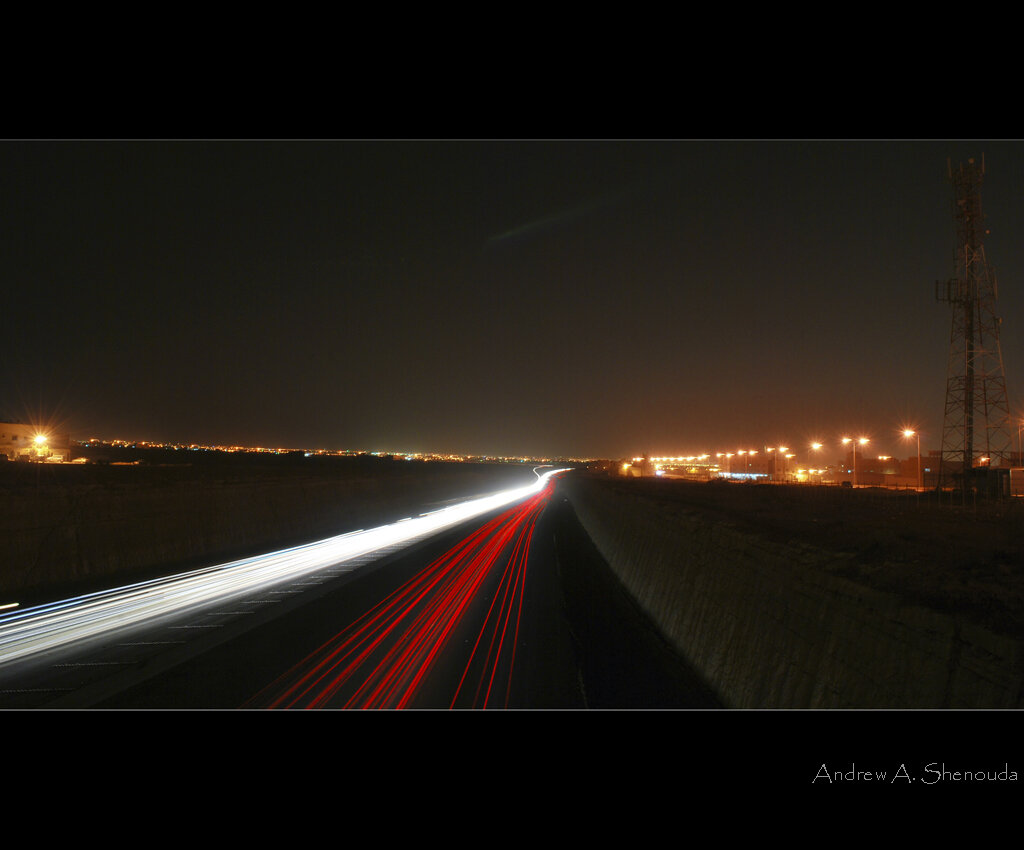
Highway 40 is Saudi Arabia’s principal east-west artery, running 1,395 kilometres from Jeddah on the Red Sea to Dammam on the Gulf coast, passing through Riyadh. Originally completed in 1965 and modernised between 1985 and 1990, it is a six- to eight-lane controlled-access highway with grade-separated interchanges, reflective lane markers, and rest areas spaced no more than 60 minutes apart. The speed limit for private vehicles is 140 km/h, raised from 120 km/h in February 2018. At that pace, expect the 950-kilometre crossing to take nine to ten hours with fuel and prayer stops.
Key waypoints heading west from Riyadh include Al-Muzahimiyyah (the first town outside Riyadh), Al-Quwayiyyah (a reliable fuel and food stop roughly 170 km out), al-Muwayh (a mid-route rest point with multiple service stations), and as-Sayl al-Kabir before the highway descends into Makkah Province. Note that the highway passes near the boundary of the Makkah haram zone — non-Muslim travellers must follow the clearly signposted bypass road that skirts the holy city.
Scenic Route via Taif
From Riyadh, take Highway 40 west as far as the interchange for Highway 15 (south toward Taif). This brings you through the rolling terrain of the western Najd before climbing into the Hejaz mountains. From Taif, the legendary Al Hada Road descends to the coastal plain toward Makkah Province — 21 kilometres of tightly engineered switchbacks with 93 curves and a 2,000-metre elevation change, completed in 1970. From the base of Al Hada, it is roughly 80 kilometres to Jeddah. This is the route we recommend, and the itinerary below follows it.
Day 1: Riyadh to Taif
Leave Riyadh early in the morning to beat the heat and make the most of daylight. The drive to Taif is approximately 750 kilometres and takes seven to eight hours with stops. Fill your tank before leaving — fuel in Saudi Arabia is extraordinarily cheap by international standards (SAR 2.18 per litre for regular unleaded, roughly $0.58 USD), so a full tank for the entire trip costs around $60.
Morning: Edge of the World Detour
If you can add a few hours to your first day, begin with a sunrise visit to the Edge of the World (Jebel Fihrayn), located about 90 minutes northwest of Riyadh on the Tuwaiq Escarpment. The 300-metre cliff drops into an ancient seabed with an uninterrupted horizon — one of Saudi Arabia’s most photographed natural landmarks. A 4WD vehicle is recommended for the final stretch of unpaved track. Return to Riyadh and pick up Highway 40 heading west by mid-morning.
Midday: Al-Quwayiyyah and the Desert Crossing
The first 400 kilometres cross the Najd plateau — flat, arid terrain with occasional rocky outcrops. Al-Quwayiyyah, roughly 170 km from Riyadh, is the first substantive town with restaurants, fuel stations, mosques, and rest facilities. It makes a natural breakfast or coffee stop. From here, the landscape grows increasingly sparse as you cross toward al-Muwayh. Rest areas along this stretch have basic cafes and well-maintained facilities. Pack at least five litres of water per person regardless — the desert is unforgiving if anything goes wrong mechanically.
Afternoon: Arrival in Taif
As you approach Taif, the terrain changes dramatically. The flat desert gives way to rocky foothills, then to the green terraced slopes of the Hejaz highlands. Taif sits at 1,879 metres above sea level — the temperature drops noticeably, often 10–15°C cooler than the desert floor. Check into your hotel and spend the late afternoon exploring. The InterContinental Taif (from SAR 600/night) offers full-service luxury, while mid-range options like the Al Qasr Hotel run SAR 200–500. For something atmospheric, look into mountain chalets in the Al Hada or Al Shafa area (SAR 300–800/night). For broader accommodation options, see our Saudi Arabia hotels guide.
Day 2: Exploring Taif
Taif deserves a full day. Known historically as the summer capital of Saudi Arabia, this highland city has a mild climate, centuries of agricultural heritage, and a growing tourism infrastructure that makes it one of the Kingdom’s most underrated destinations.
Shubra Palace
Start your morning at Shubra Palace, built between 1905 and 1907 by Al-Shareef Ali Pasha, the former Sharif of Mecca. The architecture blends Ottoman, Roman, and traditional Hijazi design — look for the ornate carved rawasheen (projecting wooden window screens) and marble-floored bathrooms. Converted into a regional museum in 1995, the palace houses collections of antique jewellery, Ottoman-era inscriptions, historical swords, and pottery. Entry is free. Open Saturday to Thursday, 9 AM–12 PM and 5 PM–8 PM (closed Sundays).
Taif Rose Farms
If you are visiting between March and April, the Taif rose season is in full bloom. Over 900 farms across the Taif highlands cultivate the Ward Taifi damask rose, and during harvest visitors can tour the operations and watch the traditional copper-pot distillation process — it takes roughly 40,000 flowers to produce a single tola (12 ml) of rose oil. Even outside peak season, rose-scented products are available throughout the city’s souqs.
Al Shafa Village
Drive 30 minutes southwest of Taif to Al Shafa, a mountain village at 2,500 metres known for honey production, terraced agriculture, and cool forest walks. The village is surrounded by juniper woodland and offers some of the best hiking in Saudi Arabia. Local farms sell fresh honey — Taif’s highland honey is among the most prized in the Kingdom.
Souq Okaz and Local Food
In the evening, explore what remains of Souq Okaz, the ancient pre-Islamic market that has been revived as a cultural festival site with poetry readings, artisan demonstrations, and theatrical performances. For dinner, eat where locals eat: Abu Ali Restaurant serves traditional mandi (slow-cooked meat and rice), while Al Saddah is one of Taif’s oldest restaurants for kabsa and grilled meats. Do not leave without trying saleeg — a creamy Hijazi rice porridge that is a regional specialty you will not find done this well elsewhere in the Kingdom.
Day 3: Taif to Jeddah via Al Hada
The final leg from Taif to Jeddah is only 170 kilometres, but it contains some of the most spectacular driving in Saudi Arabia. Leave after breakfast — you will want daylight for the Al Hada descent.
The Al Hada Mountain Road
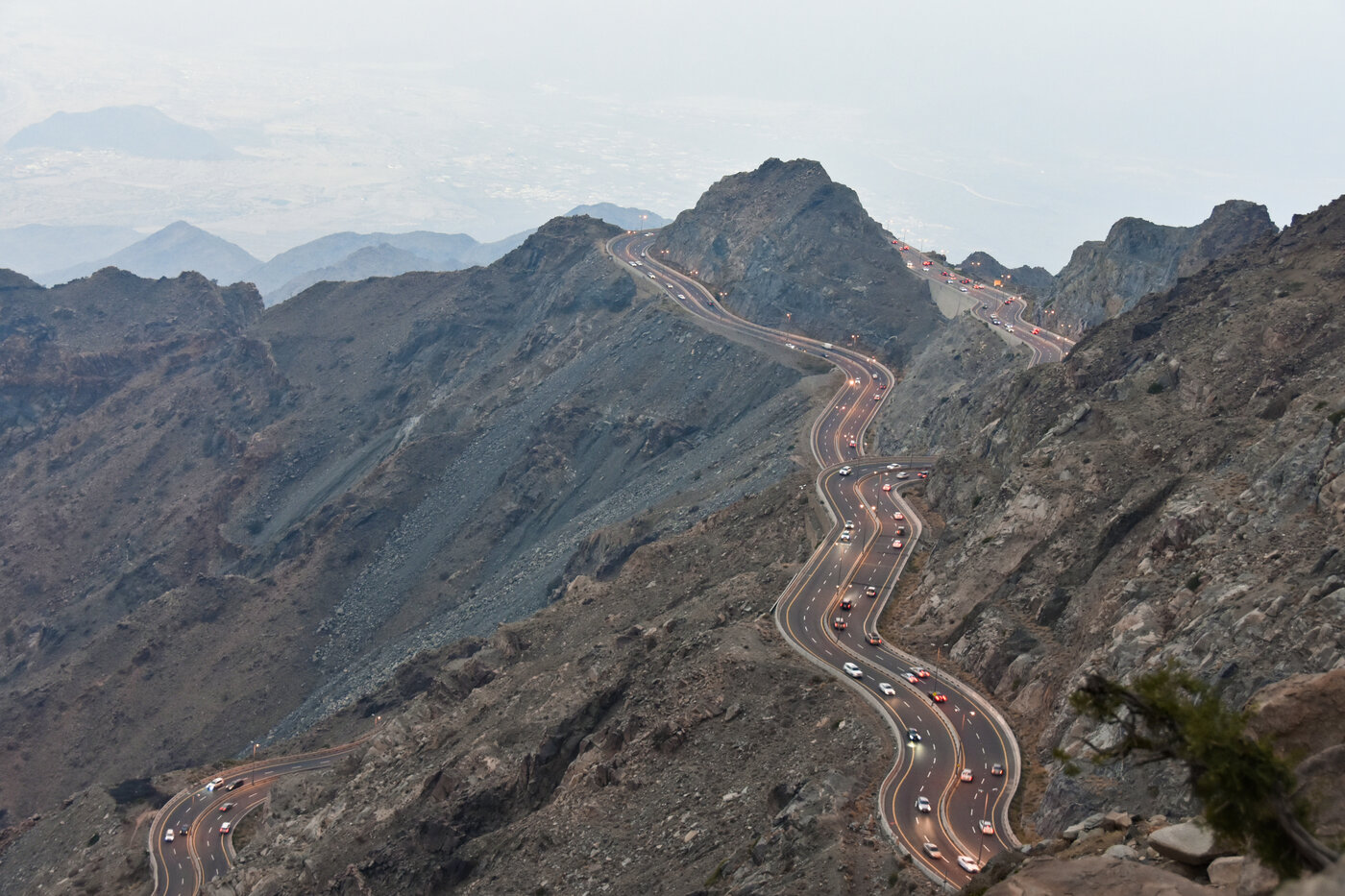
The Al Hada road is a feat of 1970s engineering: 21 kilometres of continuous switchbacks dropping from the Hejaz escarpment to the Tihama coastal plain. There are 93 curves, each precisely banked and numbered. The elevation drops roughly 2,000 metres over the descent. Drive slowly, use low gear, and stop at the marked viewpoints — the panoramic views across the escarpment are extraordinary. Wild baboons are frequently seen along the roadside near the upper curves; do not feed them.
Al Hada Stops
Near the top of the pass, the Taif Cable Car at Al Kar Tourist Village offers a 4.2-kilometre ride with panoramic mountain views — a worthwhile 30-minute pause. Further down, the Strawberry Farm is open year-round and sells fresh strawberry juice, pastries, and ice cream. The Green Mountain Park at roughly 2,000 metres features artificial lakes, a 1,500-metre toboggan ride, and a Ferris wheel — good if you are travelling with children. See our Saudi Arabia with kids guide for more family ideas.
Optional Detour: Al Wahbah Crater
Adventurous travellers with extra time can detour approximately 250 km north of Taif to Al Wahbah Crater, a volcanic maar on the western edge of the Harrat Kishb basalt plateau. The crater is 2 km in diameter and 250 metres deep, with a dazzling white sodium phosphate flat at the bottom. The descent takes 45–60 minutes on a marked trail; the ascent back up takes 60–90 minutes. This is a full-day add-on best suited to those extending the road trip to four days. Bring plenty of water and start early.
Arrival in Jeddah
From the base of Al Hada, it is roughly 80 km along the highway into Jeddah. You will bypass the Makkah haram zone on the signed non-Muslim route (or follow the Makkah road if you are a Muslim pilgrim). Jeddah announces itself with the widening horizon of the Red Sea and the skyline of the new waterfront district. Head straight for the Jeddah Corniche for a sunset walk along the 30-kilometre coastal promenade, or check into your hotel and save exploration for the evening.
What to See in Jeddah
After days of desert and mountains, Jeddah’s cosmopolitan Red Sea atmosphere feels like a different country. Budget at least one full day here.
Al-Balad Historic District
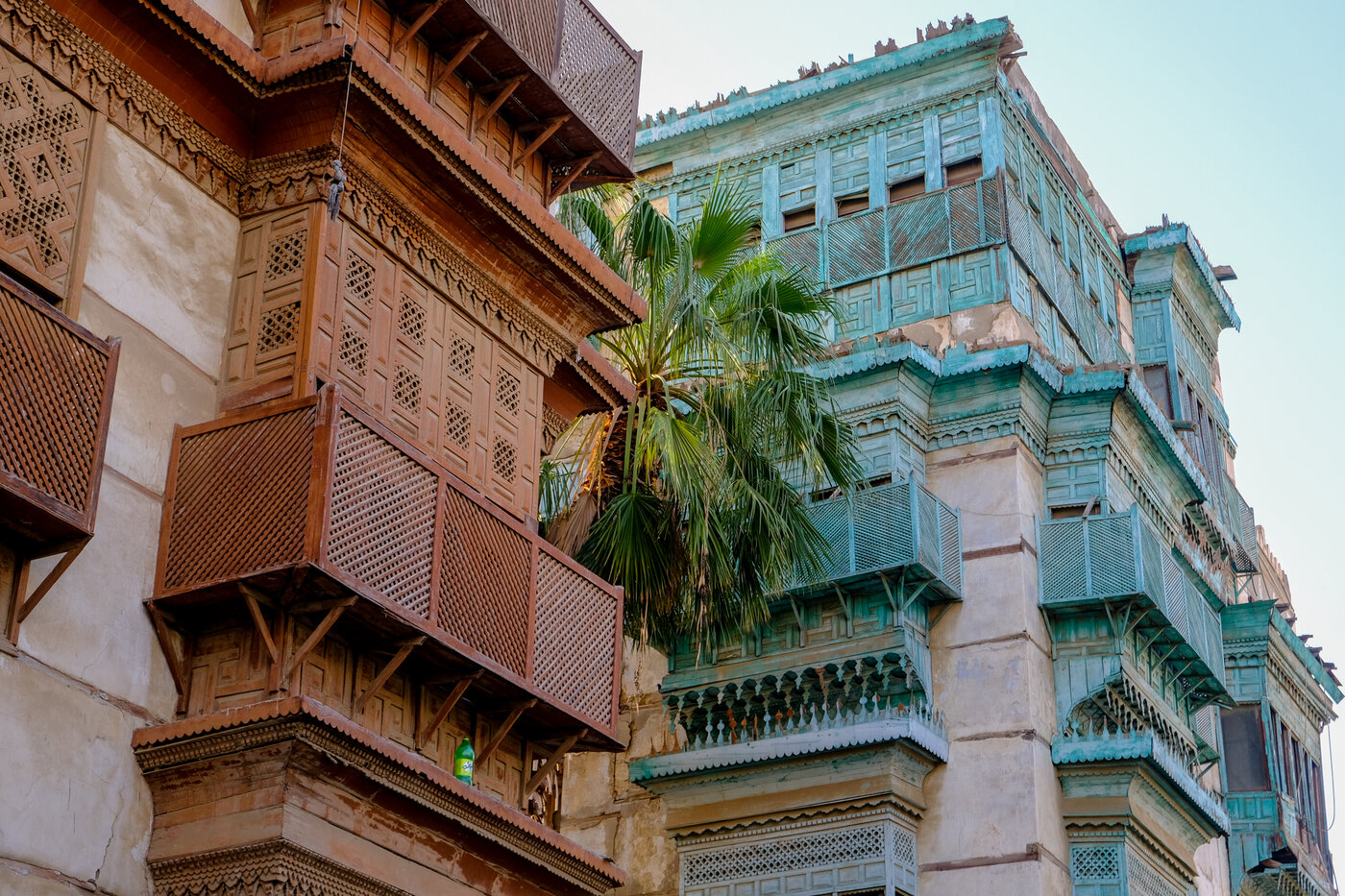
Jeddah’s Al-Balad is a UNESCO World Heritage Site and one of the most atmospheric old quarters in the Middle East. The coral-stone tower houses with their intricately carved wooden mashrabiya screens date to the Ottoman period and were built by wealthy merchants who served the pilgrim trade to Mecca. Wander the narrow lanes, visit the Nassif House Museum, and stop at Bab Makkah (the old gate toward Mecca). Early morning is the best time to explore before the heat builds.
Jeddah Corniche and Waterfront
The Corniche stretches 30 km along the Red Sea coast, with public beaches, sculpture parks, and open-air cafes. The King Fahd Fountain — the world’s tallest water jet at 312 metres — is visible from almost everywhere along the waterfront. Evening is prime time, when Jeddah’s residents come out to walk, eat, and socialise along the seafront.
Food and Nightlife
Jeddah has Saudi Arabia’s most diverse food scene. For traditional Hijazi seafood, try the fish market restaurants near the old port. The Jeddah street food scene centres on foul (slow-cooked fava beans), shawarma, and fresh juice stalls. For evening plans, our Jeddah after dark guide covers the best restaurants, lounges, and entertainment venues.
Practical Information
Car Rental and Driving
Rent a car from Riyadh’s King Khalid International Airport or city centre — major international agencies (Hertz, Budget, Europcar) and local firms (Lumi, Theeb) all operate here. A mid-size sedan handles Highway 40 perfectly; if you plan the Edge of the World detour or Al Wahbah Crater, consider a 4WD SUV. Our rental car guide covers pricing, insurance, and what to expect.
Foreign drivers need a valid home-country licence in Latin script (or with a notarised Arabic translation). An International Driving Permit is recommended as a supplement. Licences from 67 approved nations are valid for 90 days. Carry your licence, vehicle registration (istimara), and insurance documents at all times.
Speed Cameras and Fines
Saudi Arabia operates over 8,200 Saher speed cameras nationwide. On Highway 40 (140 km/h limit), the enforcement buffer is only 4 km/h — cameras trigger at 145 km/h. Fines range from SAR 150–300 for minor speeding to SAR 1,200–1,500 plus six demerit points for exceeding the limit by 40+ km/h. The cameras also detect phone use, seatbelt violations, and unsafe lane changes. Read our speed camera guide for full details on the Saher system.
Fuel and Rest Stops
There are no toll roads in Saudi Arabia — all 151,000 km of highways are free. Fuel stations are plentiful along Highway 40, with rest areas every 45–60 minutes offering petrol, cafes, mosques, and clean washrooms. Fill up whenever you see a station in the more remote central stretch between Al-Quwayiyyah and al-Muwayh, where gaps between services can reach 90 minutes.
Safety Tips
- Water: Carry at least 5 litres per person. The interior desert is extreme.
- Sandstorms: Haboobs can reduce visibility to zero. If caught, pull off the road entirely, turn off headlights (to avoid rear-end collisions from following drivers), and wait it out.
- Night driving: Avoid it. Camels and other animals wander onto unlit desert highways.
- Offline maps: Download your route before departing. Cellular coverage can drop in the central Najd stretch.
- Dress code: Both Taif and Jeddah are more relaxed than Riyadh, but modest clothing is expected everywhere in public — see our men’s and women’s dress code guides.
- Saudi Arabia Itinerary — Plan your route across the Kingdom
- Taif City Guide — The highland summer capital in detail
- Family Road Trips in Saudi Arabia — Routes, tips, and kid-friendly stops
- Riyadh Day Trips — Edge of the World, Diriyah, and more
- Jeddah Al-Balad — Exploring the UNESCO World Heritage old town
- Saudi Arabia Rental Car Guide — Everything you need to hire a car
- Saudi Arabia Road Rules — Licences, fines, and driving laws
- Saudi Arabia Hotels Guide — Where to stay across the Kingdom
- Saudi Arabia Travel Guide 2026 — The complete guide to visiting the Kingdom
- Saudi Arabia Visa Guide — Every visa type explained
Visa and Entry
Most nationalities can obtain a Saudi tourist e-visa online before departure — it is valid for one year with 90-day stays. The process takes minutes and costs approximately $160 USD including insurance. See our complete Saudi e-visa guide for eligible nationalities and the application process.
Best Time for the Drive
| Season | Desert Temps | Taif Temps | Verdict |
|---|---|---|---|
| Oct–Mar | 20–30°C | 10–22°C | Ideal — comfortable driving, cool highlands |
| Mar–Apr | 28–35°C | 18–28°C | Rose season in Taif; manageable heat |
| Jun–Sep | 40–50°C | 28–33°C | Desert unbearable; Taif still pleasant |
Tip: Avoid driving during Hajj season (late May–June 2026) and Eid holidays. Traffic on the western highways near Makkah increases dramatically, and accommodation in Taif books out weeks in advance.
Budget Breakdown
| Expense | Estimated Cost (2-3 days) |
|---|---|
| Car rental (mid-size sedan, 3 days) | SAR 450–750 ($120–200) |
| Fuel (full trip ~950–1,050 km) | SAR 220–250 ($60–70) |
| Accommodation (2 nights, mid-range) | SAR 400–1,000 ($110–270) |
| Food (3 days) | SAR 300–600 ($80–160) |
| Attractions and incidentals | SAR 100–200 ($27–55) |
| Total | SAR 1,470–2,800 ($400–755) |
For tips on doing this more cheaply, see our budget travel guide.