
Saudi Arabia is not the first country most remote workers think of — but that is changing fast. Under Vision 2030, the Kingdom has invested heavily in high-speed internet, world-class coworking spaces, and a hospitality infrastructure that now rivals anywhere in the Gulf. Whether you are a freelance developer, a content creator, or a startup founder who can work from anywhere, Saudi Arabia offers a compelling mix of modern cities, zero income tax, and a cost of living well below Dubai or Abu Dhabi. This Saudi Arabia travel guide covers everything you need to know about working remotely from the Kingdom — from visa routes and coworking desks to monthly budgets and the best neighbourhoods for digital nomads.
Best Time to Visit: October to March (cooler weather, outdoor lifestyle)
Getting There: Direct flights to Riyadh (RUH) and Jeddah (JED) from most major hubs
Visa Required: Yes — tourist e-visa (90 days) or Premium Residency for long-term stays
Budget: $1,500–$3,500/month depending on city and lifestyle
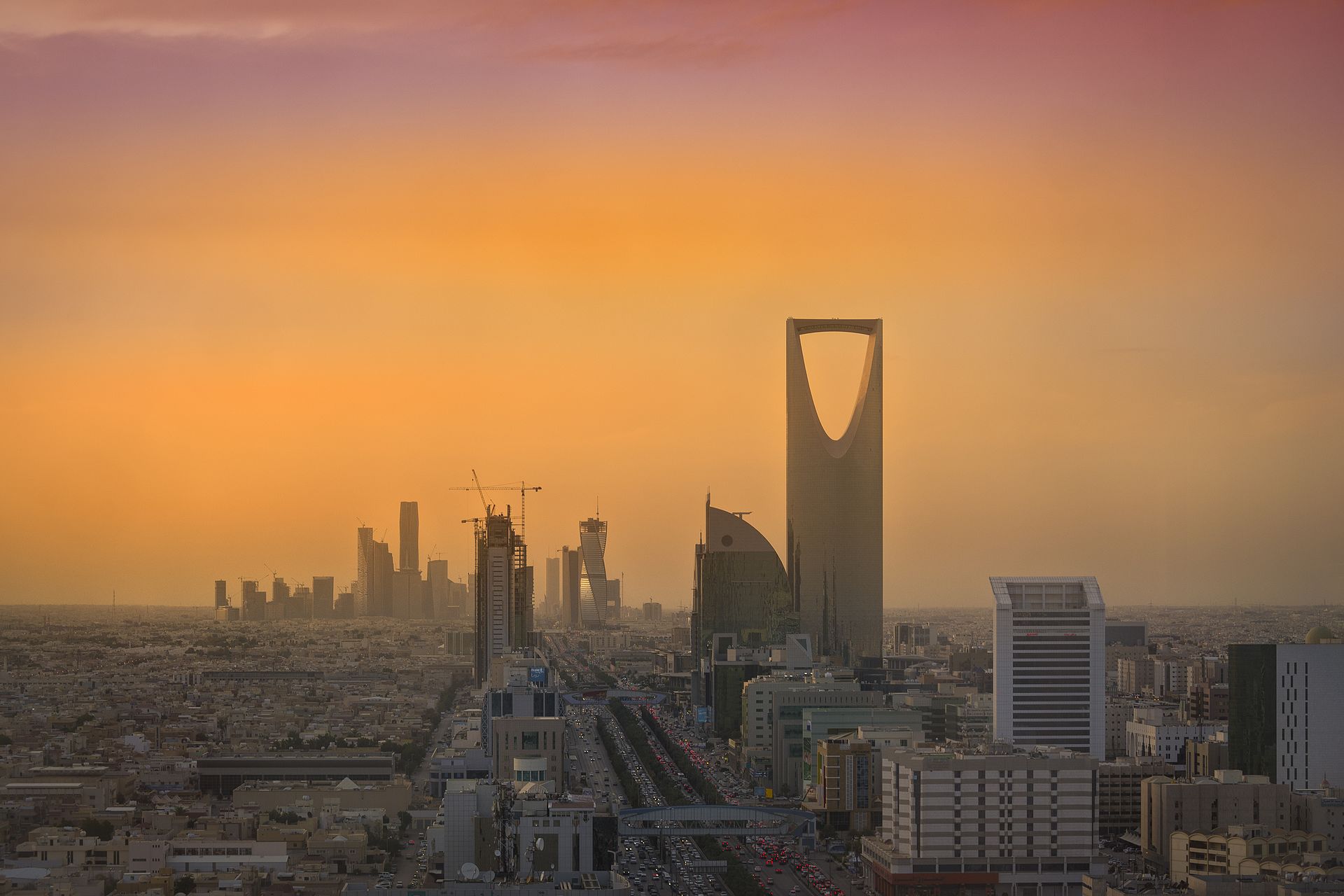
Must-See: KAFD district in Riyadh, Jeddah Corniche, AlUla for weekend escapes
Avoid: Working on a tourist visa for Saudi clients — income must come from abroad
Visa Options for Remote Workers
Saudi Arabia does not yet offer a dedicated “digital nomad visa” in the way Portugal, Thailand, or the UAE do. However, several existing visa routes make it entirely possible — and legal — to live and work remotely from the Kingdom.
Tourist e-Visa (Up to 90 Days)
The most accessible option for most remote workers is the Saudi tourist e-visa. This is a one-year, multiple-entry visa that allows stays of up to 90 days per visit. Citizens of more than 60 countries can apply online in minutes, with the visa typically approved within 24 hours. The fee is approximately SAR 535 (around $143), which includes medical insurance.
Officially, the e-visa is issued for tourism, visiting family, attending events, and performing Umrah. It does not authorise employment with a Saudi company. However, working remotely for a foreign employer or for your own overseas clients — earning no Saudi-sourced income — falls into a widely tolerated grey area. Thousands of remote workers use this route without issue, though it is worth understanding that it is not explicitly sanctioned in the visa terms.
Key rule: On a tourist e-visa you must not receive income from any Saudi entity. Your clients, employer, and payment source must all be outside the Kingdom. If you want to freelance for Saudi businesses, you need a work visa or business registration.
Premium Residency (Long-Term Option)
For remote workers planning to stay longer than 90 days, the Saudi Premium Residency programme is the most relevant pathway. Launched in 2019, it allows qualified foreigners to live and work in the Kingdom without a traditional Saudi sponsor (kafeel). There are two tiers:
| Feature | Permanent Residency | Renewable Residency |
|---|---|---|
| Duration | Indefinite | 1 year (renewable) |
| Fee | SAR 800,000 (~$213,000) one-time | SAR 100,000 (~$26,700)/year |
| Work rights | Full — can own business, freelance | Full — can own business, freelance |
| Property ownership | Yes | Limited |
| Best for | Entrepreneurs, investors | High-earning remote workers |
The Premium Residency is expensive and designed primarily for investors, entrepreneurs, and highly skilled professionals rather than typical digital nomads. However, for remote workers earning six figures who want a long-term Gulf base with zero personal income tax, it can make financial sense.
Freelance Work Document (Saudi Nationals Only)
It is worth noting that the Freelance Work Document (FWD) — often mentioned in guides about freelancing in Saudi Arabia — is currently available only to Saudi citizens. Expatriates cannot use this route to legitimise freelance work. The Ministry of Human Resources issues the FWD through the Musaned platform, but it is not open to foreign nationals regardless of visa status.
Business Visa and Company Formation
If you want to actively do business in Saudi Arabia — taking on Saudi clients, hiring locally, or establishing a presence — you can set up a company through platforms like AstroLabs or the Ministry of Investment (MISA). This gives you a commercial registration (CR), work visa, and the legal right to invoice Saudi entities. The process has been streamlined significantly under Vision 2030, with 100% foreign ownership now permitted in most sectors.
Internet and Connectivity
Fast, reliable internet is non-negotiable for remote work — and Saudi Arabia delivers. The Kingdom has invested billions in telecommunications infrastructure, and the results are impressive by any global standard.
Speed and Coverage
Saudi Arabia’s median mobile internet speed reached 124.61 Mbps in 2025, an 11% year-on-year increase. Fixed broadband speeds averaged 116.96 Mbps, up 12.6% over the same period. The fastest broadband provider, Salam, delivers average download speeds of 140.8 Mbps. Internet penetration stands at 99%, and the country’s 5G rollout is among the most aggressive in the Middle East, with near-ubiquitous coverage across Riyadh, Jeddah, and Dammam.
For context, these speeds comfortably exceed the requirements for video conferencing, cloud-based development, large file transfers, and streaming — the daily essentials of remote work.
Home Internet Providers
If you rent an apartment for a month or more, the main home broadband providers are:
- STC (Saudi Telecom Company) — the largest provider, offering fibre-to-the-home (FTTH) packages from around SAR 230/month (~$61) for 100 Mbps
- Mobily — competitive fibre packages, strong in Jeddah and the Eastern Province
- Zain — good 5G home internet options if fibre is not available at your building
- Salam — fastest average speeds, expanding fibre coverage
Most furnished apartments and serviced residences come with WiFi included. In coworking spaces, high-speed internet is standard — typically 100–500 Mbps symmetrical.
Mobile Data for Nomads
For your first weeks or as a backup connection, a prepaid SIM card is essential. All three major carriers sell tourist SIM packages at airport kiosks in Riyadh and Jeddah:
| Carrier | Plan | Data | Validity | Price (SAR) |
|---|---|---|---|---|
| STC | Visitor 60 | 23 GB | 14 days | 70 |
| Mobily | Visitors 90 | 55 GB | 30 days | 103.50 |
| Zain | Visitor 120 | 55 GB | 28 days | 120 |
For longer stays, convert to a postpaid plan (requires an iqama or Premium Residency card) to get unlimited data packages from around SAR 200/month.
Coworking Spaces in Saudi Arabia
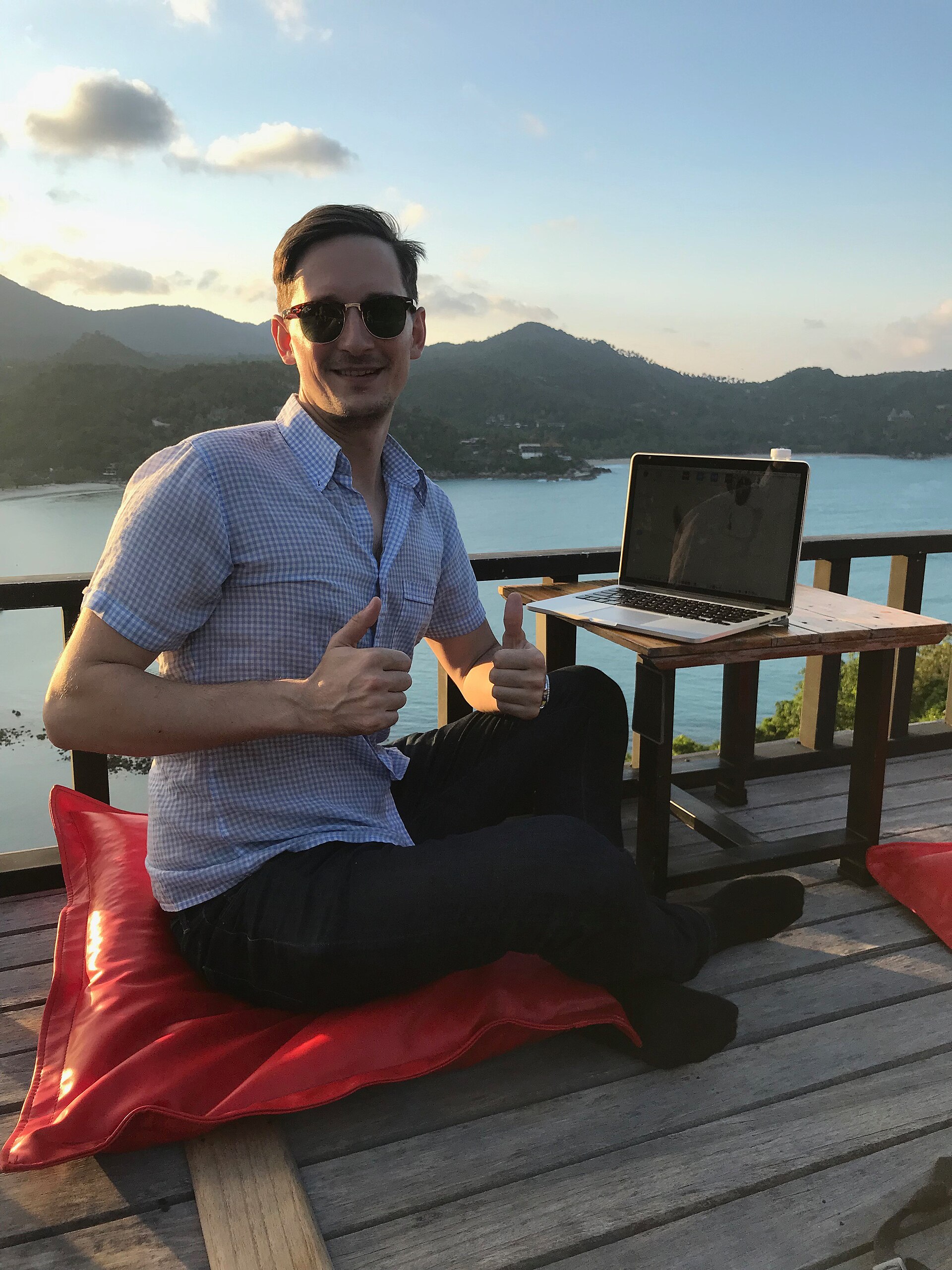
The coworking scene in Saudi Arabia has expanded rapidly since 2022, driven by Vision 2030’s push to diversify the economy and foster entrepreneurship. Riyadh has the most options, but Jeddah and the Eastern Province are catching up. Expect modern facilities, fast WiFi, and — in most cases — complimentary Arabic coffee.
Riyadh Coworking Spaces
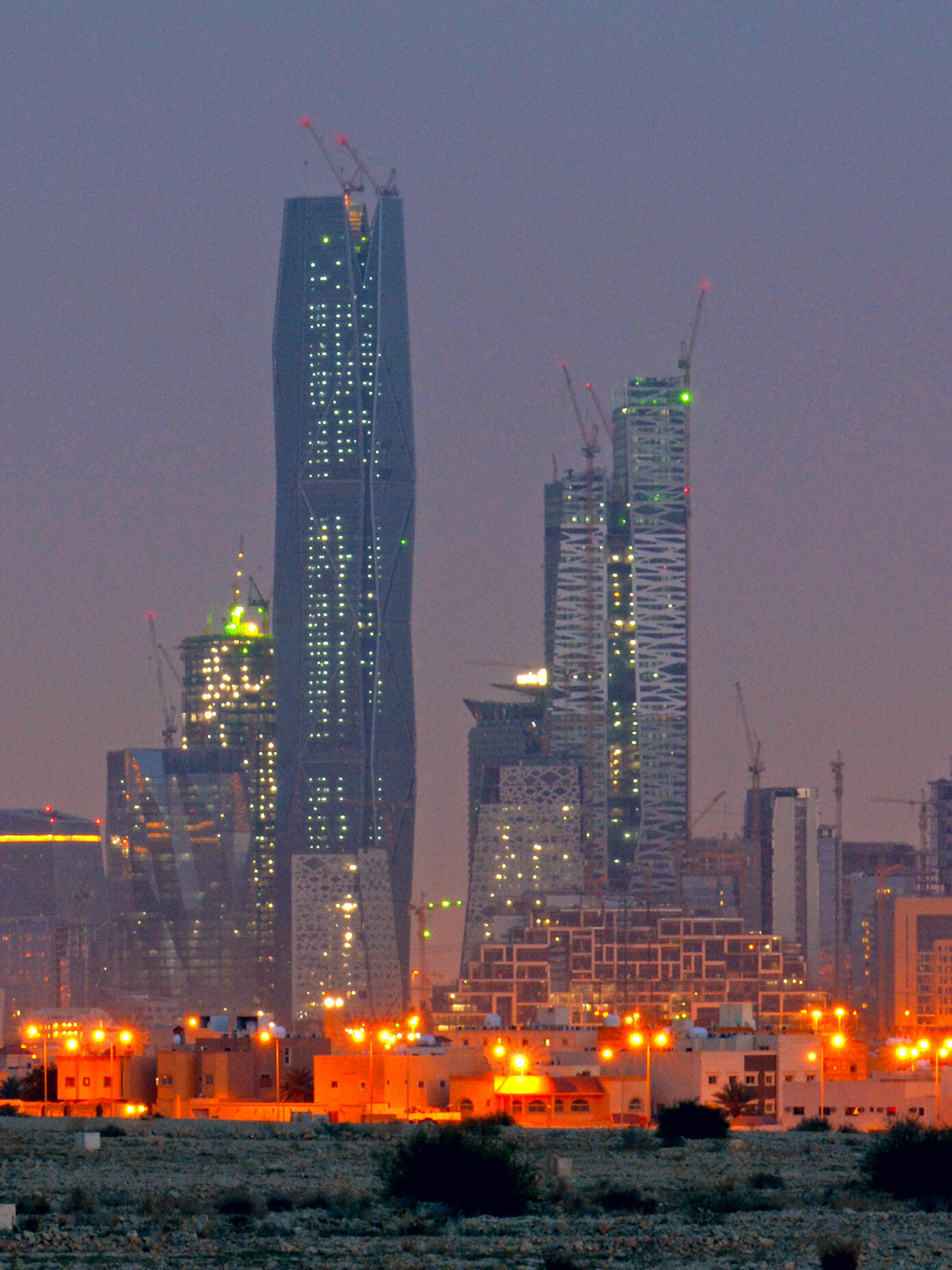
AstroLabs is the standout name for international remote workers. Located in Al Malqa, it is more than a coworking space — it is a launchpad for companies expanding into Saudi Arabia. With more than 130 member companies, it offers hot desks, dedicated desks, private offices, bookable meeting rooms, and a strong community of entrepreneurs, founders, and corporate expansion teams. Memberships start at approximately SAR 750/month (~$200) for a hot desk.
Cloud Spaces has opened two locations in Riyadh, offering flexible memberships with a polished, design-led aesthetic. Other notable options include:
- Regus — four locations across Riyadh including KAFD, the Diplomatic Quarter, and Riyadh Park Mall. Day passes from SAR 100–200; monthly memberships from SAR 600.
- The Front — upscale coworking in the Olaya district, popular with consultants and corporate teams
- Flat6Labs — startup-focused accelerator space in KAFD with community events and mentorship
Jeddah Coworking Spaces
Gravita occupies the 9th floor of Jameel Square, offering hot desks, private offices, and meeting rooms in an ultra-modern setting. It is the most prominent dedicated coworking brand in Jeddah. Servcorp operates from two prestigious locations — King’s Road Tower and Al Murjanah Tower — with monthly hot desk memberships starting at approximately $320/month. The Corniche Commercial Center area also has several smaller shared office providers.
Dammam and Al Khobar
The Eastern Province has a growing coworking scene, particularly around Al Khobar’s Corniche area. Regus has a presence in Dhahran, and several local operators offer day passes. The Eastern Province is a good base if your work connects to the oil and gas sector or if you prefer a quieter, less expensive alternative to Riyadh.
Cafes as Workspaces
Saudi Arabia’s specialty coffee scene has exploded in recent years, and many cafes now actively welcome laptop workers. In Riyadh, try Elixir Bunn, Volume, or Brew92 for reliable WiFi, power outlets, and excellent coffee. In Jeddah, Coffiano and Dose Cafe are popular with remote workers. Most specialty cafes have no issue with you working for a few hours — just keep ordering.
Tip: Saudi cafes tend to be busiest after 9 PM, when the social scene picks up. For quiet, productive work sessions, aim for morning or early afternoon visits. Many cafes open at 6–7 AM.
Where to Live: Best Neighbourhoods for Digital Nomads
Your choice of neighbourhood will significantly affect your quality of life — and your budget. Here is a breakdown of the best areas for remote workers in the two main cities.
Riyadh
Al Olaya is the modern commercial heart of Riyadh, dominated by office towers, shopping malls, and the iconic Kingdom Tower. It is walkable by Riyadh standards, with restaurants, supermarkets, and gyms within easy reach. The Riyadh Metro now connects Olaya to other key districts, making it the most convenient base for a remote worker who wants urban density. A furnished one-bedroom apartment in Olaya runs SAR 3,000–5,000/month ($800–$1,333).
Hittin and Al Aqiq are the newer northern districts that have surged in popularity since the opening of KAFD (King Abdullah Financial District). Modern high-rise towers, new restaurants, and proximity to KAFD’s coworking spaces make this area increasingly attractive. Rents are slightly higher — SAR 3,500–6,000/month for a furnished one-bedroom.
The Diplomatic Quarter (DQ) is a secure, green, campus-like neighbourhood that houses embassies, international organisations, and a large expat community. It is quiet, leafy, and well-maintained, with walking and cycling paths. If you value calm over nightlife, the DQ is hard to beat. Furnished apartments start at SAR 3,500–5,500/month.
As Sulaymaniyah and Al Wurud offer a more affordable alternative while remaining central. These established residential areas have plenty of local restaurants, grocery stores, and are well-connected by road. A furnished one-bedroom here costs SAR 2,000–3,500/month.
Jeddah
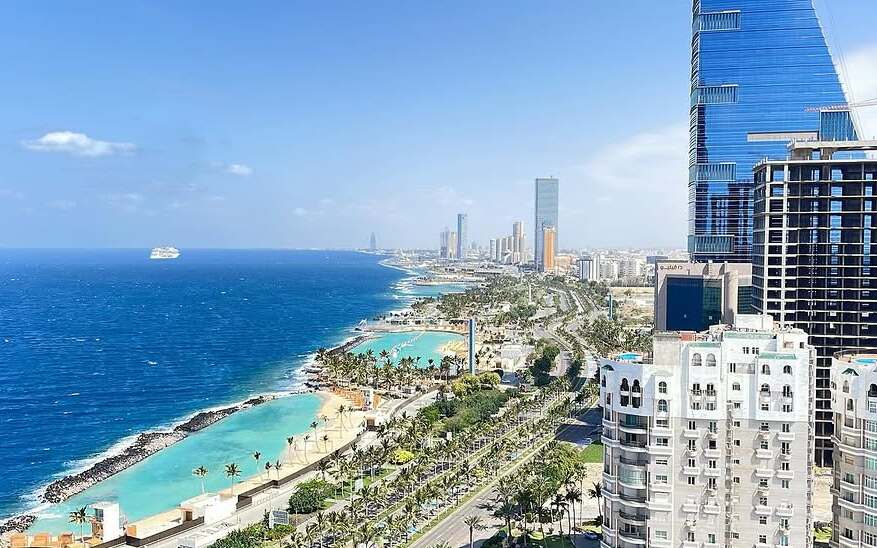
Jeddah offers a more relaxed, coastal lifestyle. The city is less corporate than Riyadh, with a historic old town (Al Balad), a long corniche for evening walks, and a generally more laid-back atmosphere.
Al Hamra and Al Rawdah are central districts close to the Corniche, with good restaurant density and furnished apartment options. A one-bedroom runs SAR 2,500–4,000/month.
Obhur (North Jeddah) is a beachside area popular with younger expats and Saudis. It is further from the city centre but offers access to beach clubs and a more resort-like feel. Rents are SAR 2,000–3,500/month.
Al Balad (Historic Jeddah) — while not the most practical base for a long stay, the UNESCO-listed old town has a unique atmosphere and is worth exploring on weekends. Some boutique accommodation is available.
Monthly Budget Breakdown
Saudi Arabia is significantly cheaper than Dubai or Abu Dhabi, and there is no personal income tax. A comfortable digital nomad lifestyle is achievable on $1,800–$3,000/month in Riyadh, and slightly less in Jeddah. Here is a realistic monthly breakdown. For more detail, see the Saudi Arabia cost guide.
| Expense | Budget (SAR) | Budget (USD) | Notes |
|---|---|---|---|
| Furnished apartment (1BR, central) | 3,000–5,000 | $800–$1,333 | Riyadh/Jeddah city centre |
| Coworking membership | 750–1,500 | $200–$400 | Hot desk at AstroLabs/Regus |
| Groceries | 400–700 | $107–$187 | Local supermarkets; imported goods cost more |
| Eating out | 500–1,200 | $133–$320 | Local restaurants from SAR 20/meal; mid-range SAR 60–100 |
| Transport | 300–800 | $80–$213 | Uber/Careem; Metro in Riyadh; petrol SAR 2.18/litre |
| Mobile data | 100–200 | $27–$53 | Prepaid or postpaid SIM |
| Health insurance | 200–500 | $53–$133 | Tourist e-visa includes basic cover |
| Entertainment and fitness | 300–800 | $80–$213 | Gym, cinema, events |
| Total | 5,550–10,700 | $1,480–$2,853 |
Zero income tax: Saudi Arabia has no personal income tax. VAT is 15% on goods and services. There is no capital gains tax for individuals. This makes the Kingdom one of the most tax-efficient bases for remote workers earning from abroad.
Getting Around
Saudi Arabia is a car-centric country, but the situation is improving — especially in Riyadh. Full transport details are in our getting around Saudi Arabia guide.
Riyadh Metro
The Riyadh Metro began phased operations in late 2024 and now covers six lines, 85 stations, and 176 kilometres. It connects key districts including Olaya, KAFD, the Diplomatic Quarter, and King Khalid International Airport. For a digital nomad living in Riyadh, the Metro is a game-changer — eliminating the need for a car in many cases.
Ride-Hailing
Uber and Careem (now owned by Uber) operate widely in Riyadh, Jeddah, Dammam, and other cities. Rides are affordable by global standards — a 20-minute trip in Riyadh typically costs SAR 15–30 ($4–$8). Both apps are reliable and widely used.
Car Rental
If you plan to explore beyond the cities — and you should, given Saudi Arabia’s extraordinary landscapes — a rental car is the way to go. Monthly rentals start from SAR 1,500/month (~$400) for a compact sedan. An international driving licence is required.
Intercity Travel
The Haramain High-Speed Rail connects Jeddah, Mecca, and Medina. Saudi Railway (SAR) operates a Riyadh–Dammam route. For longer distances, domestic flights with Saudia, flynas, and flyadeal offer affordable fares — Riyadh to Jeddah from SAR 200 one-way.
Practical Tips for Remote Workers
Working Hours and Culture
The Saudi working week runs Sunday to Thursday. Friday and Saturday are the weekend. This aligns well with remote workers serving Middle Eastern or Asian clients but requires adjustment if your team is in Europe or the Americas. Saudi Arabia is on AST (UTC+3), which is the same as Moscow and three hours ahead of London.
During Ramadan, working hours shift significantly. Many businesses operate shorter days, and eating or drinking in public during daylight hours is restricted. Restaurants open after sunset for iftar. For more, see the Ramadan travel guide.
Dress Code
Saudi Arabia has relaxed its dress code significantly in recent years, but modest dress is still expected. Men should wear long trousers and shirts with sleeves. Women no longer need to wear an abaya in most settings, but should dress conservatively — covering shoulders and knees. In coworking spaces and business settings, smart casual is the norm. Full details are in our Saudi Arabia dress code guide.
VPN and Online Services
Some VoIP services and websites are blocked or restricted in Saudi Arabia. WhatsApp calling and FaceTime work, but some other VoIP services may not. Many remote workers use a VPN for reliable access to all services. VPN use is common and generally tolerated for personal and business purposes, though using one to access illegal content is prohibited.
Banking and Payments
Saudi Arabia is increasingly cashless. Apple Pay, Google Pay, and contactless cards are widely accepted. For longer stays, opening a local bank account (possible with Premium Residency) gives you access to STC Pay and other local payment platforms. Wise (TransferWise) works well for receiving international payments in SAR.
Health and Safety
Saudi Arabia is extremely safe, with very low crime rates. The healthcare system is modern and well-equipped, though expensive without insurance. The tourist e-visa includes basic medical coverage, but serious remote workers should carry comprehensive international health insurance. Pharmacies are widespread and well-stocked. For more on safety, see is Saudi Arabia safe?.
Community and Networking
Riyadh and Jeddah have growing expat and entrepreneur communities. AstroLabs hosts regular networking events. Meetup groups for tech, startups, and specific nationalities are active. Riyadh Season (October–March) brings a packed calendar of entertainment, concerts, and cultural events that make the city feel vibrant and international.
Weekend Escapes
One of the underrated advantages of basing yourself in Saudi Arabia is access to extraordinary weekend destinations. When you need a break from the screen, consider:
- AlUla — ancient Nabataean tombs, desert canyons, and a world-class cultural season. A 90-minute flight from Riyadh.
- Abha and the Asir Highlands — cool mountain air, green terraces, and temperatures 15–20°C below the desert cities. Perfect for a summer escape.
- Yanbu — Red Sea diving, snorkelling, and quiet beaches. A 3-hour drive north of Jeddah.
- Tabuk and NEOM — dramatic northwest landscapes, wadis, and the emerging NEOM development.
- Desert camping — the Empty Quarter, Hail, and the red sands near Riyadh offer unforgettable wild camping under star-filled skies.
Who Is Saudi Arabia Best For?
Saudi Arabia is not yet the polished digital nomad destination that Bali, Lisbon, or Bangkok are. The coworking infrastructure is newer, the visa situation is less formalised, and the social scene is still developing. But for certain profiles, it is an outstanding choice:
- Tax-conscious freelancers earning from abroad who want to keep 100% of their income
- Tech and startup founders exploring the Saudi market — one of the fastest-growing in the Middle East
- Muslim remote workers who want easy access to the Haramain and a lifestyle aligned with Islamic values
- Adventure-seeking nomads who have done Southeast Asia and Europe and want something genuinely different
- Consultants and professionals working with Gulf clients who need a regional base
If you need a vibrant nightlife scene, cheap street food on every corner, or a large established digital nomad community, Saudi Arabia is not there yet. But if you value safety, connectivity, tax efficiency, and access to one of the world’s most rapidly transforming countries, it deserves serious consideration.
Explore More Saudi Arabia Travel Guides
- Saudi Arabia Travel Guide 2026 — The complete guide to visiting the Kingdom
- Saudi Arabia Visa Guide — Every visa type explained, including tourist e-visa and Premium Residency
- Saudi Arabia Cost Guide — Detailed breakdown of prices, budgets, and what things really cost
- Budget Travel in Saudi Arabia — How to explore the Kingdom on under $50 a day
- First Time in Saudi Arabia — Everything you need to know before your first visit
- Saudi Arabia SIM Card Guide — Best data plans and connectivity options for travellers
- Saudi Arabia Hotels Guide — Where to stay, from budget to luxury