
Saudi Arabia is building on a scale the modern world has never seen. Under Vision 2030, the Kingdom has launched more than a dozen giga-projects — developments valued at $1 billion or more — that are reshaping its coastline, its cities, and its identity. From the 170-kilometre linear city carved into Tabuk’s desert to overwater villas on pristine Red Sea islands, these projects are central to any Saudi Arabia travel itinerary in 2026 and beyond. This guide explains what each project is, what’s actually open to visitors today, and what remains under construction — separating the headline renders from the on-the-ground reality.
Best Time to Visit: October to March (cooler temperatures for site visits and outdoor exploration)
Getting There: Riyadh (NEOM Bay Airport for NEOM; King Khalid International for Qiddiya and Diriyah; Red Sea International Airport for Red Sea resorts)
Visa Required: Yes — tourist e-visa available for 63 nationalities
Budget: $150–$800+/day depending on project (Red Sea resorts at the top end; Diriyah and Qiddiya accessible on moderate budgets)
Must-See: Diriyah’s Bujairi Terrace, Six Flags Qiddiya City, Red Sea island resorts
Avoid: Assuming every giga-project is open — most are still under construction
What Are Saudi Arabia’s Giga-Projects?
The term “giga-project” refers to developments backed by the Public Investment Fund (PIF) with budgets exceeding $1 billion. The PIF, Saudi Arabia’s sovereign wealth fund, manages assets worth approximately $930 billion and serves as the financial engine behind Vision 2030. As of 2026, the Kingdom has more than a dozen active giga-projects spanning tourism, entertainment, residential development, culture, and green energy. Combined, they represent over $1 trillion in planned investment.
For travellers, the practical question is always the same: what can I actually visit? The answer is changing rapidly. In 2024, almost none of these projects had public-facing components. By mid-2026, several have opened their first phases. Here is the current state of every major giga-project, organised by what you can do today.
NEOM: The $500 Billion Megacity

NEOM is the flagship — and the most controversial — of Saudi Arabia’s giga-projects. Located in Tabuk Province on the Red Sea coast near the Egyptian and Jordanian borders, it spans 26,500 square kilometres and carries an original allocation of $500 billion from the PIF. An estimated $40–50 billion has been spent as of early 2026.
The Line
The most famous component: a 170-kilometre linear city designed to house 9 million residents in a structure 200 metres wide and 500 metres tall, with no cars and no streets. Construction was formally suspended in September 2025 after only 2.4 kilometres of foundation work had been completed. The full project is in indefinite suspension; only a 2 km initial phase is considered viable at this point. Visitors cannot access The Line.
Trojena
NEOM’s mountain resort, designed to host the 2029 Asian Winter Games with an artificial ski slope and freshwater lake at 1,500–2,600 metres elevation. In February 2026, the Asian Winter Games were reassigned to Almaty, Kazakhstan after construction delays. The following month, NEOM cancelled three Trojena contracts worth $6 billion, including Webuild’s $4.7 billion dam-and-lake project. Trojena is effectively stalled.
Oxagon
An octagonal floating industrial city designed as NEOM’s economic engine. The broader platform is pushed to the early 2030s, but one sub-project is thriving: the NEOM Green Hydrogen plant is at 80% completion with an $8.4 billion investment, on track for mid-2026 delivery. Green ammonia exports are expected in 2027. A $5 billion DataVolt AI data centre partnership was announced in February 2026.
Sindalah
The island luxury resort is NEOM’s nearest-to-ready tourism product. A ceremonial opening was held in October 2024 with Crown Prince Mohammed bin Salman in attendance. The resort features an 86-berth superyacht marina (yachts up to 50 metres) and 75 offshore buoys for vessels up to 180 metres. However, as of April 2026, Sindalah is not open to the general public — no room rates have been published and no booking portal is live. A public opening is targeted for late 2026, with an estimated $4 billion spent to date.
Traveller’s note: As of April 2026, there is nothing at NEOM that a tourist can book or visit. If you’re planning a trip to Tabuk Province, focus on AlUla and Wadi Disah instead. Sindalah may open to guests by late 2026.
Diriyah Gate: The One You Can Visit Now
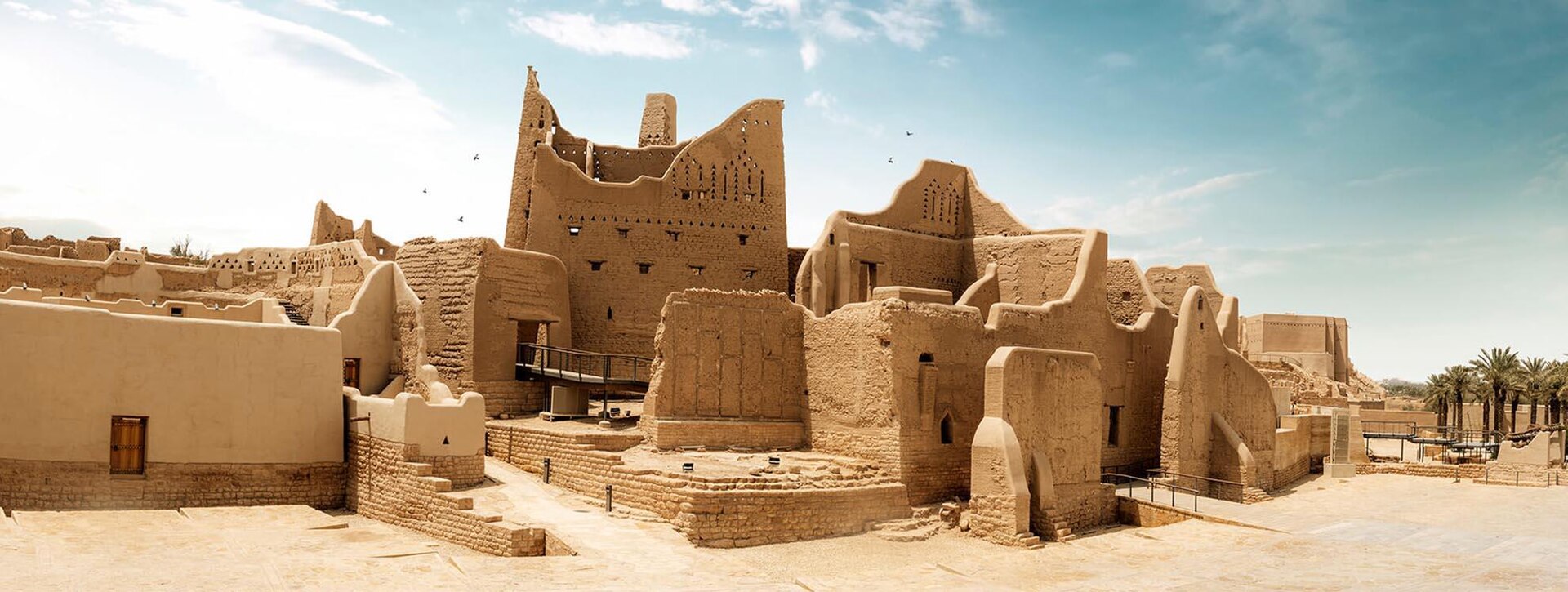
Diriyah is the giga-project success story. Located on the northwestern outskirts of Riyadh along Wadi Hanifa, this $63 billion development managed by the Diriyah Company (a PIF entity) is built around the At-Turaif UNESCO World Heritage Site — the mud-brick capital of the First Saudi State, inscribed in 2010. For a deeper exploration of Diriyah’s history as the cradle of the Saudi state, the site rewards a full day.
What’s Open
Bujairi Terrace opened in 2022 and has become one of Riyadh’s most popular destinations, attracting over 3.6 million visits by mid-2025. This dining and retail promenade overlooks the At-Turaif ruins and features restaurants, cafes, and cultural spaces. It is within a 20-minute drive of central Riyadh — easily combined with a self-guided Riyadh walking tour or a visit to the National Museum.
The At-Turaif district itself is open to visitors, with restored palaces, mosques, and the Salwa Palace complex. The site tells the story of the Al Saud family’s origins and the first Saudi state’s rise in the 18th century. The traditional Najdi architecture — mud-brick towers, carved wooden doors, triangular decorative motifs — is exceptional.
What’s Under Construction
Diriyah Gate’s full masterplan includes 38 hotels, the Royal Diriyah Opera House (the Metropolitan Opera has committed to winter residencies for five consecutive years starting 2025–2026), Diriyah Arena, and Diriyah Square. More than $27 billion in contracts have been awarded since 2024.
Traveller’s note: Diriyah is the most accessible giga-project for visitors. Budget half a day for Bujairi Terrace and At-Turaif. If you’re staying in Riyadh, the best luxury hotels are 15–25 minutes away by car.
The Red Sea and AMAALA: Luxury Island Resorts
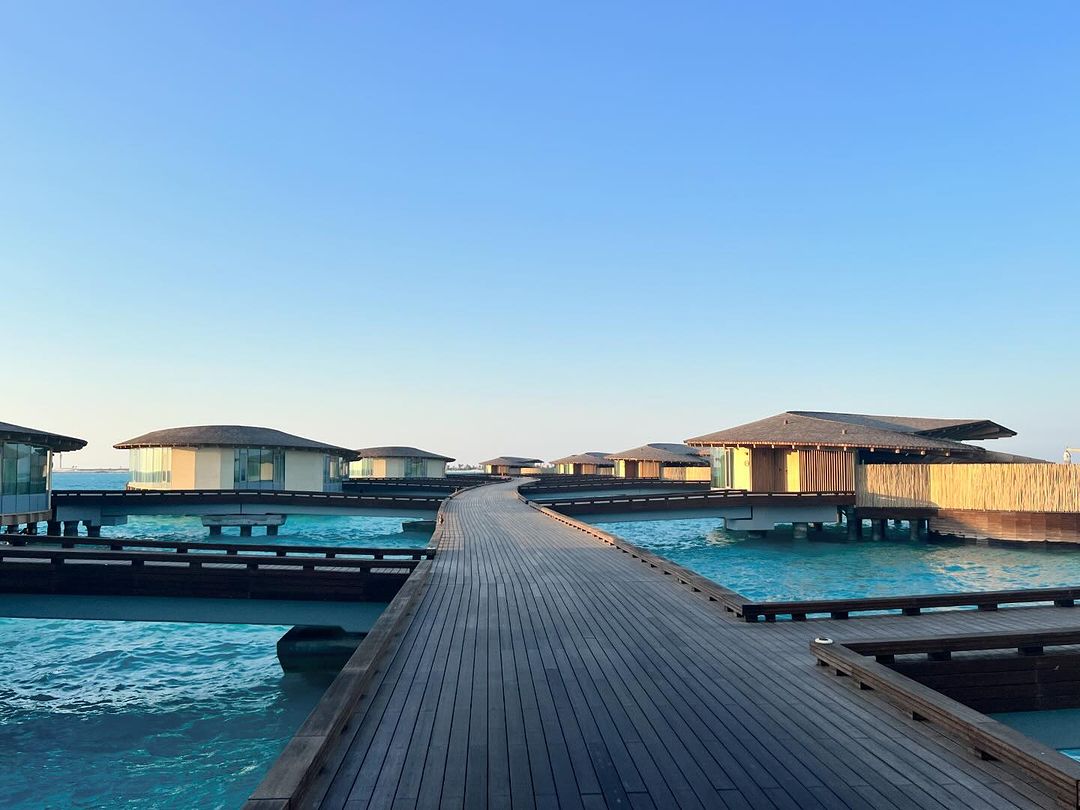
Red Sea Global manages two linked mega-destinations along Saudi Arabia’s northwestern Red Sea coast, spanning approximately 28,000 square kilometres. The combined tourism masterplan is valued at approximately $17 billion. The Red Sea’s marine biodiversity — hosting the world’s fourth-largest barrier reef system with over 265 coral species — is the ecological foundation.
The Red Sea — Shura Island (Open Now)
Shura Island opened in September 2025 with three flagship resorts:
- SLS The Red Sea — contemporary luxury with a party-hotel edge
- InterContinental The Red Sea — family-oriented island resort
- The Red Sea EDITION — Ian Schrager’s boutique brand
- Days 1–2 (Riyadh): Diriyah Gate — Bujairi Terrace and At-Turaif in the morning, National Museum in the afternoon. Explore Riyadh’s other museums or the Old Quarter walking tour.
- Day 3 (Qiddiya): Six Flags Qiddiya City for thrill rides; Aquarabia if it has opened.
- Days 4–6 (Red Sea): Fly to Red Sea International Airport for Shura Island resorts. Diving and snorkelling in the Red Sea’s coral reefs.
- Budget-friendly: Diriyah (free to walk around; restaurants at Bujairi Terrace from $15–40 per person), Qiddiya theme parks (ticket prices comparable to international Six Flags parks)
- Mid-range: Red Sea island resorts start around $400–600 per night
- Ultra-luxury: AMAALA resorts (Ritz-Carlton, Four Seasons) expected at $800–2,000+ per night; Sindalah superyacht marina for the ultra-wealthy
- Saudi Arabia Travel Guide 2026 — The complete guide to visiting the Kingdom
- Diriyah: The Cradle of the Saudi State — The full history of Saudi Arabia’s first capital
- Saudi Arabia Art Scene — Galleries, public art, and the cultural transformation
- Traditional Architecture in Saudi Arabia — Mud towers, forts, and wind towers explained
- Saudi Arabia’s Most Exclusive Experiences — The best money-can-buy options across the Kingdom
- Saudi Arabia Visa Guide — Every visa type explained
Shura Island also features Saudi Arabia’s first island golf course, Shura Links, and is served by Red Sea International Airport with direct flights from Riyadh and Jeddah. Eight more resorts are scheduled to open through 2026. These represent some of the most exclusive experiences available in the Kingdom.
AMAALA — Triple Bay (Opening Late 2026)
AMAALA is the ultra-luxury sibling, capped at 500,000 visitors annually to protect the environment. Triple Bay is set to open in Q3 2026 with six initial resorts:
| Resort | Brand | Keys | Focus |
|---|---|---|---|
| The Ritz-Carlton AMAALA | Marriott | 390 | Full-service luxury |
| Four Seasons AMAALA | Four Seasons | 202 + 25 residences | Resort and residences |
| Rosewood AMAALA | Rosewood | TBC | Sense of place luxury |
| Six Senses AMAALA | IHG | TBC | Wellness and sustainability |
| Clinique La Prairie | Independent | TBC | Medical wellness |
| Jayasom Wellness Resort | Independent | TBC | Holistic health |
Additional confirmed brands include St. Regis Red Sea Resort (already open on Ummahat Islands) and Equinox Resort AMAALA. The entire destination will run on 100% renewable energy, eliminating an estimated 350,000 tonnes of CO2 equivalent annually. A Corallium marine life research institute will anchor conservation efforts.
Traveller’s note: Shura Island resorts are bookable now — this is the premier beach destination in Saudi Arabia. AMAALA Triple Bay resorts should start accepting guests in late 2026. For honeymooners, the Red Sea islands are the Kingdom’s most romantic option.
Qiddiya: Theme Parks and Entertainment
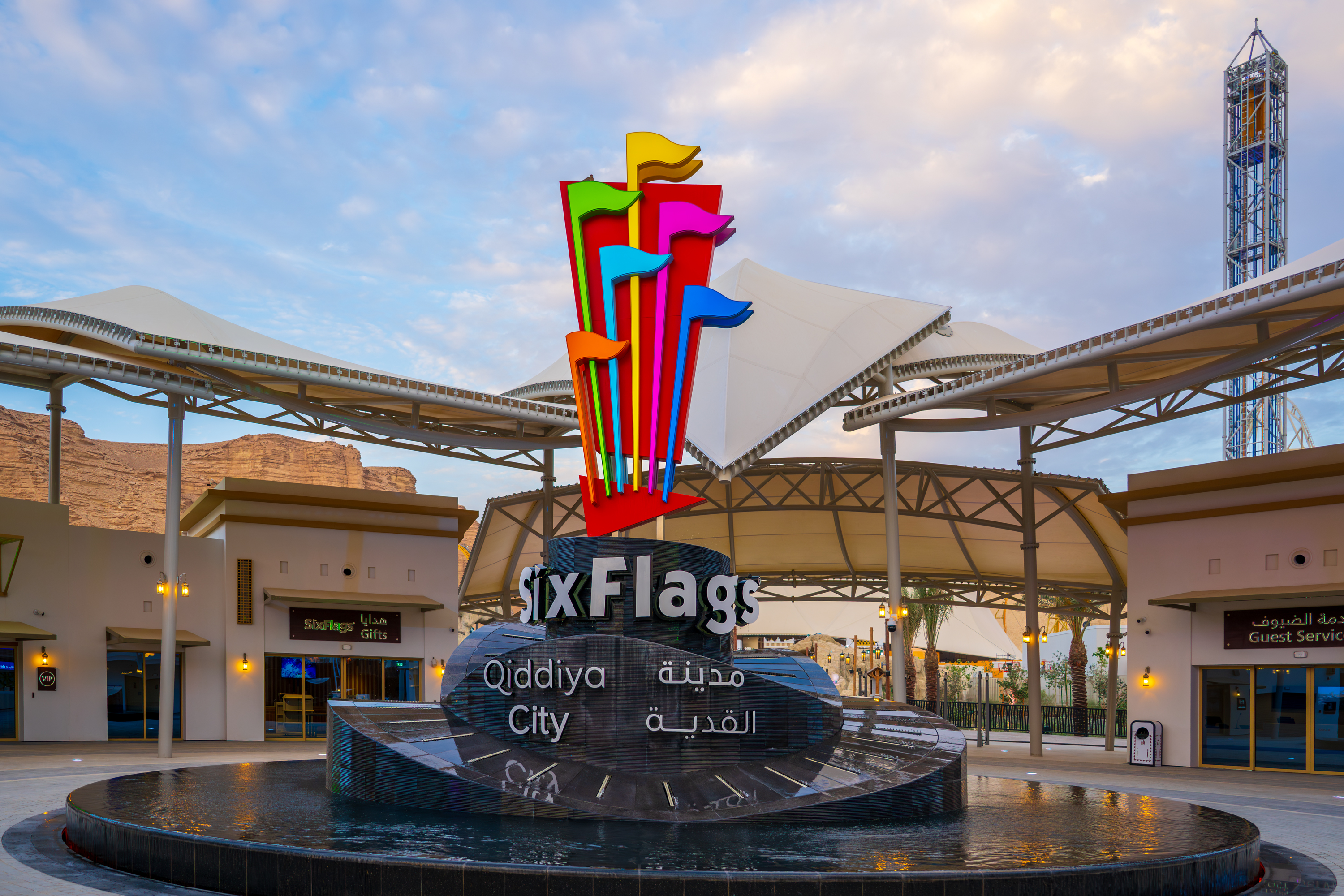
Qiddiya is the Kingdom’s entertainment capital, set into the Tuwaiq Mountains escarpment 45 kilometres southwest of downtown Riyadh — roughly a 40-minute drive. The 376 square kilometre site carries an estimated $22–40 billion investment from the PIF. It is the most family-friendly giga-project and the easiest to visit after Diriyah. If you’re travelling with children, combine it with Riyadh’s other kid-friendly activities or the growing list of theme parks across Saudi Arabia.
Six Flags Qiddiya City (Open Now)
Saudi Arabia’s first major theme park opened on 31 December 2025 — the first Six Flags park outside North America since 2004. It features 28 exclusive rides across six immersive lands, including Falcon’s Flight, the world’s tallest, fastest, and longest roller coaster. Tickets are available online and at the gate.
Aquarabia Water Park (Opening April 2026)
At over 250,000 square metres, Aquarabia is the largest water park in the Middle East and the first Saudi-owned park of its kind. It features more than 20 rides, including four world-record-breaking attractions. Opening is scheduled for 23 April 2026.
What’s Still Coming
Qiddiya’s full masterplan includes Speed Park (a motorsport venue), a Jack Nicklaus signature golf course, residential neighbourhoods, and arts and cultural venues — most still under construction with no public timelines announced.
ROSHN: Building Saudi Arabia’s New Neighbourhoods
ROSHN stands apart from the other giga-projects because it is not a tourism or entertainment play. It is Saudi Arabia’s largest residential developer, targeting Vision 2030’s homeownership goals by building integrated communities for Saudi citizens. With over SAR 350 billion ($93.3 billion) planned over the next decade across nine cities in four regions, ROSHN is housing 2.2 million people by 2030.
Key Communities
| Community | City | Size | Status |
|---|---|---|---|
| Sedra | North Riyadh | 20 million sq m, 30,000+ homes | Phase 1A handed over; several thousand families living on site |
| Warefa | East Riyadh | 1.4 million sq m, 2,380 homes | Show villas open; sales underway |
| Alarous | North Jeddah | 4 million sq m | Under development |
| Marafy | North Jeddah | 6.8 million sq m | Features Saudi Arabia’s first 11 km water canal |
| Almanar | Makkah | 21 million sq m | Under development; 20-minute drive from Al-Masjid Al-Haram |
ROSHN communities are not tourist destinations, but architecture and urbanism enthusiasts may find them interesting. The developments showcase Salmani architectural language — a modern Saudi design vocabulary that draws on Najdi heritage while incorporating contemporary materials and sustainability features. Sedra and Warefa are the most complete and can be visited as part of a broader Saudi art and design exploration.
King Salman Park: Riyadh’s Central Green Space
Built on the site of the former King Salman Air Base in central Riyadh, King Salman Park will be one of the world’s largest urban parks at 17.2 square kilometres — five times larger than London’s Hyde Park and four times larger than New York’s Central Park. The project carries $23 billion in government funding plus $15 billion targeted in private sector investment, with over $5.3 billion committed as of early 2026.
The park will include over 11 square kilometres of green space, more than 7 square kilometres of pedestrian pathways, and over one million trees. The Royal Arts Complex is at 48% completion. First sections are expected to open late 2026 to early 2027. Designed by Omrania with SWA Group, it will transform Riyadh’s urban core with gardens, museums, performance venues, and recreation spaces.
Traveller’s note: King Salman Park is not yet open. If visiting Riyadh now, the best green spaces are the restored Wadi Hanifa corridor near Diriyah and Edge of the World (Tuwaiq Escarpment).
Jeddah Tower: The Race to One Kilometre
Jeddah Tower is the Kingdom’s bid to build the world’s tallest structure — a 1,008-metre skyscraper that would surpass Dubai’s Burj Khalifa by 173 metres. Part of the $20 billion Jeddah Economic City development in North Jeddah, the tower carries a $1.2 billion budget and is designed by Adrian Smith + Gordon Gill Architecture.
Construction resumed in January 2025 after a seven-year pause (halted since January 2018). As of April 2026, the tower has surpassed 80 floors and reached approximately 370 metres, with crews adding a new floor every 3–4 days and approximately 5,200 workers on site. Facade cladding is underway on lower floors. Completion is targeted for 2028.
The finished tower will house a luxury hotel, offices, serviced apartments, luxury condominiums, and the world’s highest observatory. While not yet open, the construction itself is already a landmark visible from across Jeddah’s skyline.
The Rig: Offshore Adventure Tourism
One of Saudi Arabia’s most unusual giga-projects, The Rig converts retired offshore oil platforms 40 kilometres off the eastern coast into an adventure tourism complex. Backed by the PIF, the development will include three hotels with more than 800 luxury rooms and over 70 attractions: bungee jumping, roller coasters, zip lines, water sports, obstacle courses, and submersible experiences.
Phased opening is expected beginning in 2026, with full operations targeted by 2032. No public booking dates have been confirmed. When it opens, The Rig will be the world’s first offshore adventure tourism destination and an extension of the Eastern Province’s emerging tourism scene.
Which Giga-Projects Can You Visit in 2026?
This is the question that matters. Here is a clear status table as of April 2026:
| Project | Status | Can You Visit? | Location |
|---|---|---|---|
| Diriyah Gate (Bujairi Terrace + At-Turaif) | Open since 2022 | Yes | Riyadh |
| Six Flags Qiddiya City | Open since Dec 2025 | Yes | 45 km from Riyadh |
| Aquarabia (Qiddiya) | Opening April 2026 | Yes (imminent) | Qiddiya, near Riyadh |
| Red Sea — Shura Island | Open since Sep 2025 | Yes | Red Sea coast (via RSI Airport) |
| AMAALA Triple Bay | Opening Q3 2026 | Late 2026 | Red Sea coast |
| Sindalah (NEOM) | Targeting late 2026 | Not yet | Tabuk Province |
| The Line (NEOM) | Suspended | No | Tabuk Province |
| King Salman Park | Under construction | Late 2026/early 2027 | Central Riyadh |
| Jeddah Tower | Under construction (80+ floors) | No (viewable from distance) | North Jeddah |
| ROSHN Sedra | Residents moving in | Not a tourist site | North Riyadh |
| The Rig | Under construction | Not yet | Arabian Gulf |
Planning a Giga-Projects Trip
Best Itinerary for 2026
A focused giga-projects tour works best based in Riyadh with a Red Sea extension:
Getting There and Visas
All giga-project sites are accessible via Saudi Arabia’s expanding domestic flight network. Riyadh’s King Khalid International Airport serves Diriyah and Qiddiya. Red Sea International Airport opened specifically for the coastal resorts. NEOM Bay Airport will serve Sindalah when it opens to guests.
Citizens of 63 countries can obtain a tourist e-visa online within minutes. The visa is valid for one year with multiple entries and stays of up to 90 days.
Budget Considerations
Giga-project experiences range from accessible to ultra-premium:
The Vision 2030 Context
Saudi Arabia’s giga-projects are the physical expression of Vision 2030, the national transformation plan launched in 2016 by Crown Prince Mohammed bin Salman. The strategy aims to reduce the Kingdom’s dependence on oil revenue by developing tourism, entertainment, technology, and diversified industries. Saudi Arabia targets 150 million annual tourist visits by 2030 (up from roughly 100 million in 2023, mostly religious tourism).
Not every project will be delivered as originally announced. The Line’s suspension, Trojena’s loss of the Asian Winter Games, and the PIF’s 15% capex reduction in its 2026–2030 strategy signal a pragmatic recalibration. But the projects that are open — Diriyah, Qiddiya, the Red Sea resorts — demonstrate that the ambition is producing real, visitable results.
For travellers, the giga-projects represent a Saudi Arabia that did not exist five years ago: world-class theme parks, island resorts with overwater villas, UNESCO heritage sites with Michelin-quality dining. The Kingdom is building its tourism infrastructure in real time, and visiting now means seeing that transformation first-hand.