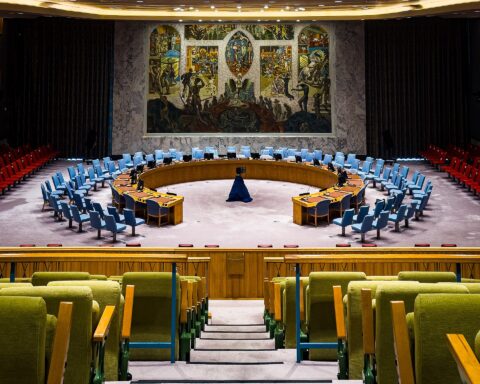
RIYADH — Saudi Arabia summoned Iraq’s ambassador on Saturday and handed her a formal note of protest over drone attacks launched from Iraqi territory — language that, parsed alongside six weeks of coordinated GCC legal positioning, reads less like a diplomatic complaint and more like the penultimate entry in a self-defence dossier being assembled for the United Nations Security Council. The Kingdom told Ambassador Safia Taleb Al-Suhail it “will take all necessary measures to defend its security and protect its territories,” a phrase that maps directly onto Article 51 of the UN Charter and that no foreign ministry deploys accidentally, six days before the first Hajj pilgrims are due to arrive on Saudi soil.
Dr. Saud Al-Sati, the Undersecretary for Political Affairs who conducted the meeting, condemned “attacks originating from Iraqi territory against the Kingdom and the Gulf states” and “emphasised the importance of Iraq dealing responsibly with these threats.” The choreography was deliberate — a senior official, a written note, published language calibrated for international legal consumption rather than bilateral diplomacy. What Riyadh is building, document by document, is an attribution record that satisfies the “unable or unwilling” standard the United States established against Syria in 2014, applied now to an ostensible ally whose prime minister insists he opposes the very attacks his armed forces are structurally incapable of preventing.
Table of Contents
- The Legal Weight Behind “All Necessary Measures”
- How Did the GCC Build Its Article 51 Framework?
- 454 Operations and Counting
- Why Can’t Baghdad Stop the Attacks?
- Anbar Province as the Kill Chain’s First Link
- 13,000 Troops Arrived the Day Before
- What Does the April 18 Hajj Deadline Change?
- The Ambassador Who Was Already in Trouble
- The Ceasefire That Lasted Hours
- Frequently Asked Questions
The Legal Weight Behind “All Necessary Measures”
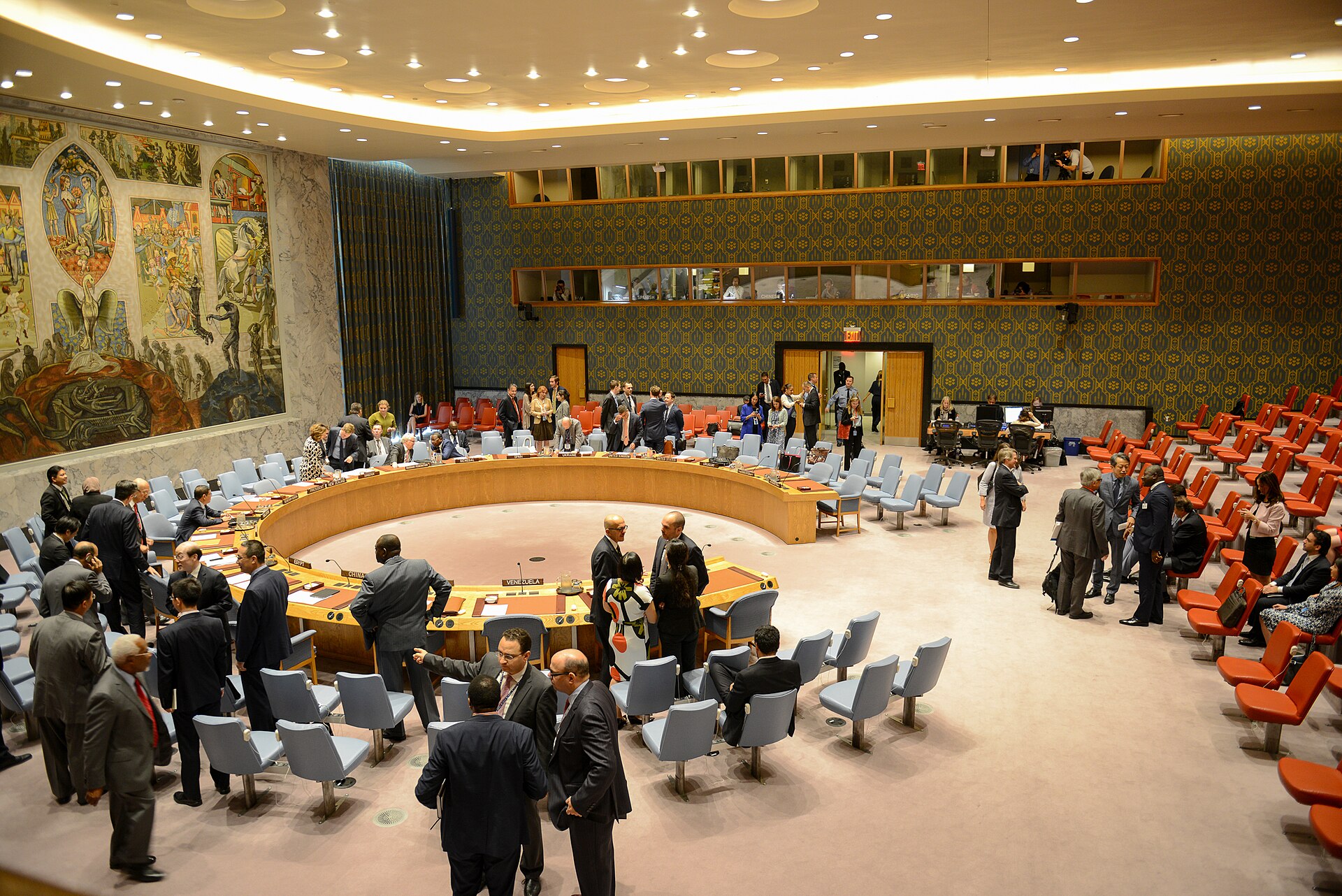
Diplomatic protests are routine; the language Riyadh chose is not. “All necessary measures” is the phrase states use when they are reserving the right to use force, and its deployment in a formal note of protest creates a documented record of warning that precedes any military action under customary international law. When the GCC Ministerial Council, at its 50th Extraordinary Meeting in late February 2026, “affirmed that GCC countries reserve their legal right to respond in accordance with Article 51 of the United Nations Charter,” it was establishing the collective framework — Saturday’s summons is Saudi Arabia filling in the bilateral detail, naming Iraq specifically as the territory from which the threat originates.
Article 51 permits self-defence “if an armed attack occurs against a Member of the United Nations,” but the practical threshold for invoking it against a non-state actor operating from another state’s territory requires something more: proof that the host government is either unable or unwilling to suppress the threat. The United States established this precedent on September 23, 2014, when it notified the Security Council that it was conducting airstrikes against ISIL in Syrian territory because Damascus was “unable or unwilling” to prevent its soil from being used as a base of operations. Saudi Arabia appears to be constructing an analogous legal record, and the April 12 summons — with its written note, its named senior official, its published demand that Iraq “deal responsibly” — is the kind of document that appears in a legal brief’s appendix.
The six-state joint statement from March 30 makes the architecture explicit. Saudi Arabia, the UAE, Qatar, Kuwait, Bahrain, and Jordan cited both UNSC Resolution 2817 and Article 51, “while holding the Iraqi government directly responsible for controlling the armed groups operating within its borders.” That is six sovereign governments, in writing, placing Iraq on notice that they consider its failure to control Iranian proxy forces a matter of self-defence under international law — a legal position that, once documented, does not expire.
How Did the GCC Build Its Article 51 Framework?
The legal scaffolding was not improvised in response to Saturday’s summons — it has been assembled methodically since the first week of the war. The GCC-EU Joint Ministerial Statement of March 5, 2026, “recalled the inherent right of the GCC countries to defend themselves against armed attacks of Iran under Article 51 of the UN Charter,” embedding the self-defence reservation into a document co-signed by European foreign ministers and thereby giving it a wider diplomatic audience than any unilateral statement could achieve. The choice of the word “recalled” is itself a legal signal: it implies the right was already established and is being restated, not newly claimed.
The Middle East briefing 3,000+ readers start their day with.
One email. Every weekday morning. Free.
“GCC countries reserve their legal right to respond in accordance with Article 51 of the United Nations Charter.”GCC Ministerial Council, 50th Extraordinary Meeting, March 2026
The pattern follows a recognisable sequence from international law practice — collective assertion of the right, identification of the threat’s origin, formal bilateral warning to the host state, and reservation of further action. What the UNSC Hormuz resolution veto demonstrated in early April was that the multilateral enforcement path through the Security Council is blocked by Russian and Chinese vetoes, which paradoxically strengthens the Article 51 case: if the council cannot act, member states retain their inherent right to self-defence, and the documented failure of multilateral channels becomes part of the legal record justifying unilateral or coalition action.
The precision of the legal language across multiple documents — the GCC Ministerial Council statement, the GCC-EU joint statement, the six-state declaration, and now the April 12 bilateral note — suggests coordination with international legal counsel rather than ad hoc diplomatic messaging. Each document builds on the last, narrows the scope, and increases the specificity of the attribution. The March statements named Iran. The six-state statement named Iraq as responsible. Saturday’s summons delivered the warning directly to Iraq’s ambassador with a written record.
454 Operations and Counting
The scale of cross-border attacks from Iraqi territory provides the factual substrate for the legal architecture. Iran-aligned groups — operating under the umbrella of the Islamic Resistance in Iraq, which includes Kata’ib Hezbollah, Asa’ib Ahl al-Haq, Harakat Hezbollah al-Nujaba, and Kata’ib Sayyid al-Shuhada — have launched between 21 and 31 operations daily against Gulf targets since February 28, accumulating over 454 operations by early April according to tracking by the Long War Journal. The IRI itself claimed 67 attacks in the first three days of the conflict alone, a rate of sustained offensive activity that no government could credibly describe as beyond its knowledge.
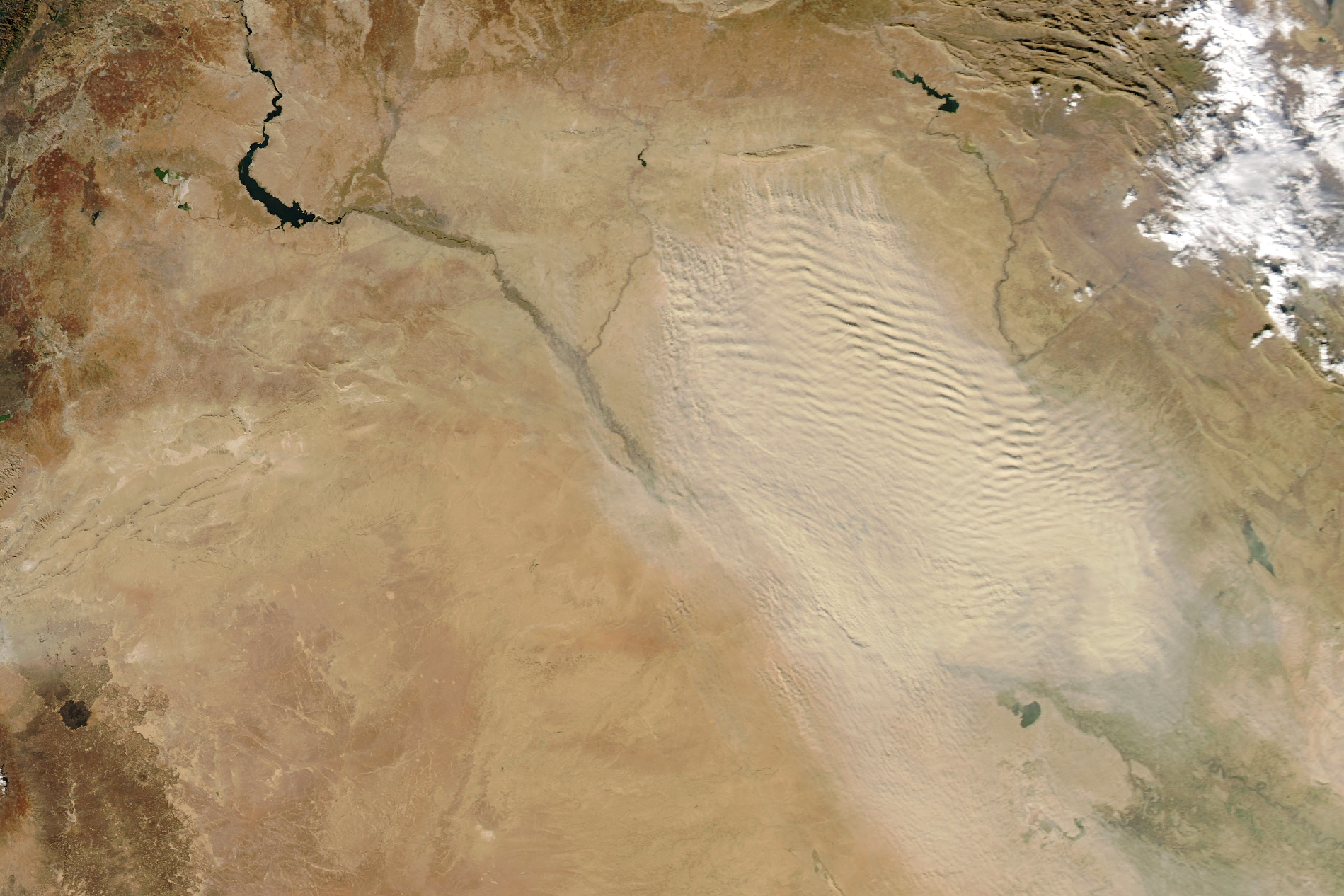
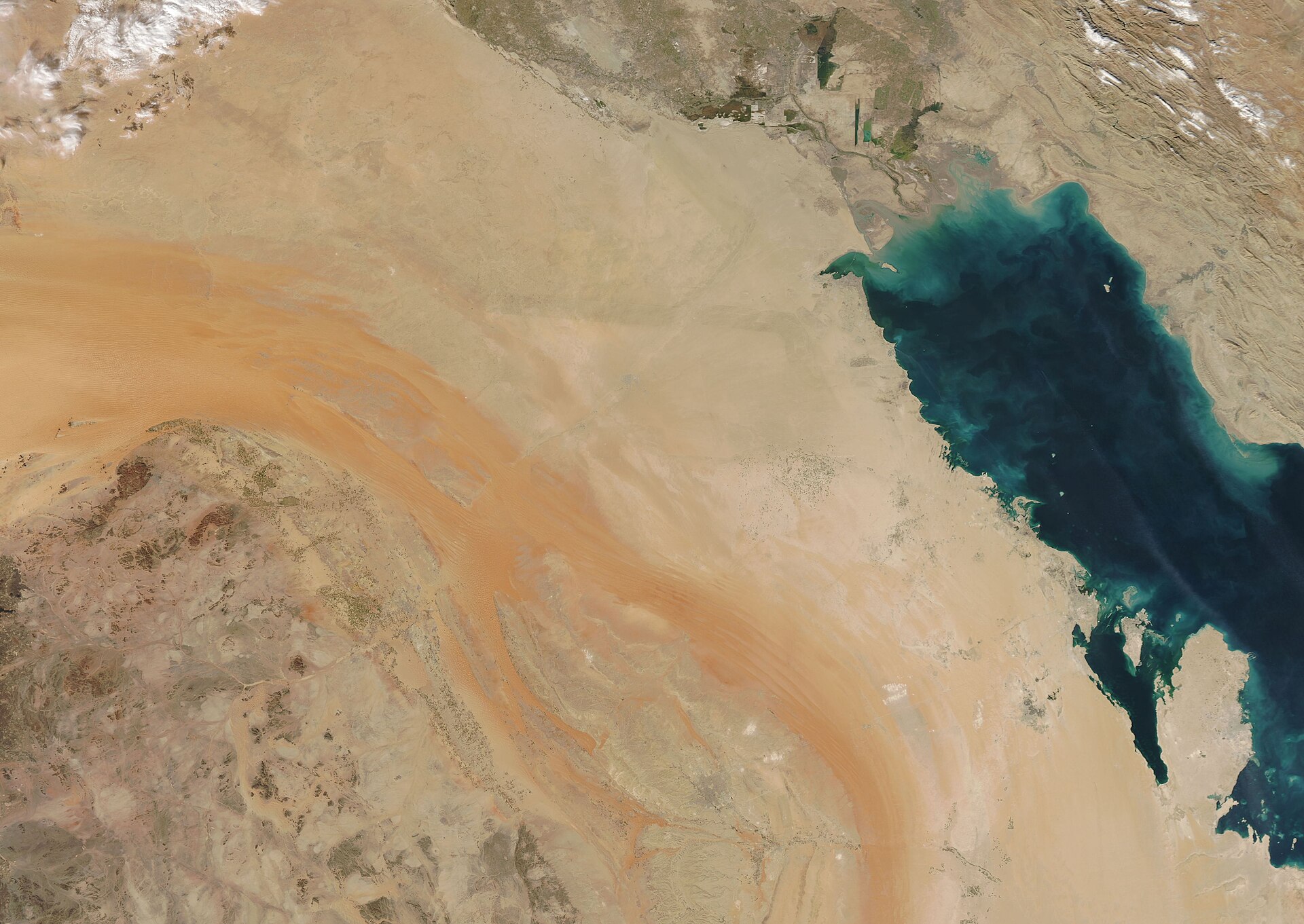
The geographic signature of the attacks tells its own story. On March 12, Saudi defences intercepted 24 drones “heading across the Empty Quarter toward the Shaybah oil field,” as reported by Al Arabiya — a trajectory that traces back across the Saudi-Iraqi border through Anbar province, the shortest overland route and the location where, twelve days later, a US airstrike would kill the PMU’s Anbar operations commander during a security meeting. Shaybah sits near the Saudi-UAE-Oman tri-border, roughly 900 to 1,100 kilometres from central Anbar, at the outer edge of the Shahed-131’s 900-kilometre range — meaning the launch points are likely closer to the border, in the western Anbar desert where Iraqi central government control has been nominal since 2014.
| System | Type | Range | Anbar-to-Target Viability |
|---|---|---|---|
| Shahed-131 | One-way attack drone | 900 km | Covers Eastern Province, marginal for Shaybah |
| Shahed-101 | One-way attack drone | 900 km | Covers Eastern Province, marginal for Shaybah |
| Al-Arqab | Cruise missile | 1,650 km | Covers all Saudi territory including Red Sea coast |
That operational tempo requires a logistics chain — storage, assembly, launch infrastructure, command nodes — that cannot exist without some degree of institutional tolerance, whether active or passive. Gulf security analysts cited by Al Jazeera in March have noted that Iran deliberately uses Iraqi proxies to bypass international resolutions while maintaining “plausible deniability,” but the deniability is increasingly thin when the launch sites are in a province where the Iraqi government claims sovereign control and where Iraqi armed forces — including, on paper, the PMU itself — are officially deployed.
Why Can’t Baghdad Stop the Attacks?
Prime Minister Mohammed Shia’ al-Sudani’s predicament is structural, not merely political, and understanding it explains why Riyadh’s diplomatic protest is simultaneously genuine and performative. In a March 12 phone call with Crown Prince Mohammed bin Salman, Sudani — as paraphrased by the Saudi Press Agency, with no direct quote confirmed — “reiterated that Iraq rejects being used as a launch point for attacks against other countries.” In almost the same breath, he “authorized all security forces, including PMU, to respond defensively,” creating a legal permission structure that the very militias conducting the attacks could interpret as operational cover.
The 2016 Popular Mobilization Law formally integrated the PMF into the Iraqi Armed Forces, making its fighters government employees and its commanders nominally subordinate to the commander-in-chief. In practice, as the Library of Congress, the NESA Center, the Washington Institute, and the Stimson Center have all documented, PMF leaders “act independently from state control and answer to the Supreme Leader of Iran.”
Sudani’s government withdrew a proposed new PMF Law in March 2026 that would have restructured command authority — removing the one legislative tool that might have given Baghdad genuine oversight over militia operations and confirming, in the withdrawal itself, that the political cost of confronting the PMU exceeds what a caretaker prime minister who also serves as his own interim defence minister is willing to pay.
“Baghdad’s response appears aimed at addressing diplomatic embarrassment rather than proactive security measures.”Retired Iraqi Maj. Gen. Majed al-Qaisi, Al Jazeera, March 2026
Retired Iraqi Major General Majed al-Qaisi’s assessment, published by Al Jazeera in March, captures the dynamic with military bluntness. The Iraqi government’s pattern — categorical rejection of responsibility, offers to receive intelligence, expressions of full readiness to act — follows a script that has remained unchanged across multiple prime ministers and multiple crises, and whose predictability is itself a data point in the “unable or unwilling” calculus. Sudani is not lying when he says Iraq rejects being used as a launch pad; he is describing a preference, not a capability, and the distinction is precisely what Article 51’s “unable or unwilling” doctrine was designed to address.
Anbar Province as the Kill Chain’s First Link
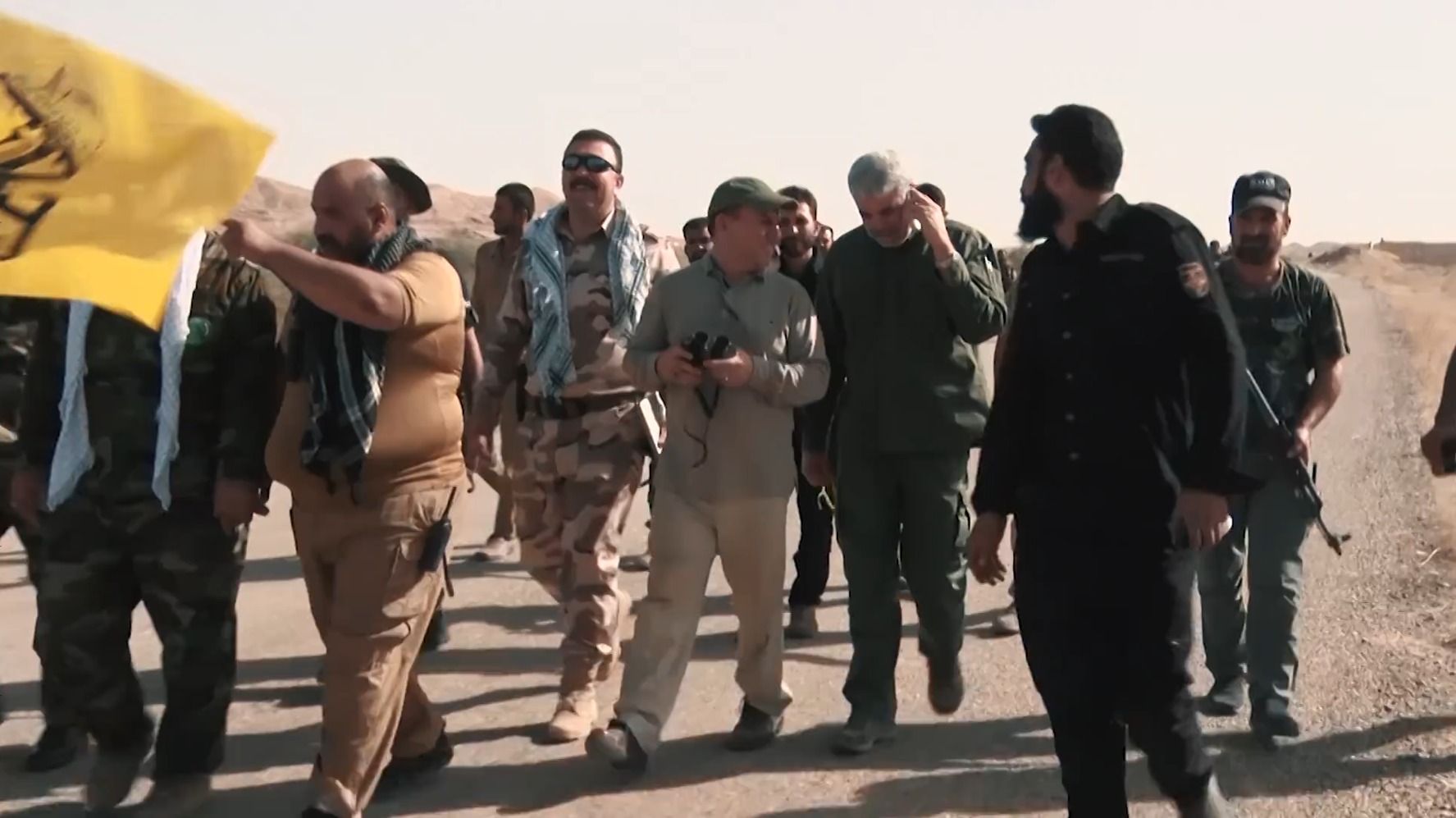
The US airstrike on March 24 that killed 14 to 15 PMF fighters at a headquarters in Anbar province — including the Anbar operations commander Saad al-Baiji, struck during a security meeting — confirmed what the drone trajectories had already suggested: Anbar is not merely a transit corridor but an active command-and-launch node for operations against Saudi Arabia and the Gulf states. Al-Baiji’s death was reported by Al-Monitor, Al Arabiya, and Arab News, and the detail that he was killed during a security meeting indicates an established, semi-permanent command structure rather than ad hoc launch teams operating from the desert.
Anbar’s geography makes it the optimal staging ground for attacks on Saudi territory. The province shares Iraq’s longest border with Saudi Arabia, its western desert provides concealment and dispersal for mobile launch platforms, and the distance from central Anbar to Saudi Eastern Province oil infrastructure — roughly 500 to 700 kilometres — sits comfortably within the operational range of every drone and cruise missile system in the IRI’s arsenal. The March 12 Shaybah intercept, at the outer limit of drone range, suggests that some launches originate from deeper inside Anbar rather than from the border zone, consistent with a command infrastructure protected by distance from both Saudi air defences and Iraqi government authority.
The American strike on al-Baiji’s headquarters also created an uncomfortable precedent for the legal framework Saudi Arabia is building. Washington demonstrated that it considers Iraqi territory a legitimate theatre for counter-terrorism operations against Iranian proxy forces — not under Iraqi authorisation, but under the same “unable or unwilling” doctrine that Riyadh is now documenting for its own purposes. If the United States can strike PMU targets in Anbar under Article 51, the Saudi legal position for doing the same is strengthened by American precedent, even if the political dynamics of a Saudi strike on Iraqi soil would be entirely different from an American one.
13,000 Troops Arrived the Day Before
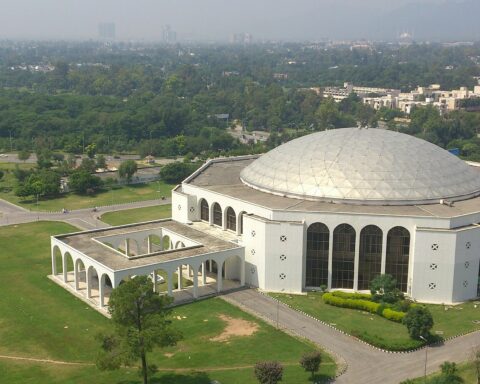
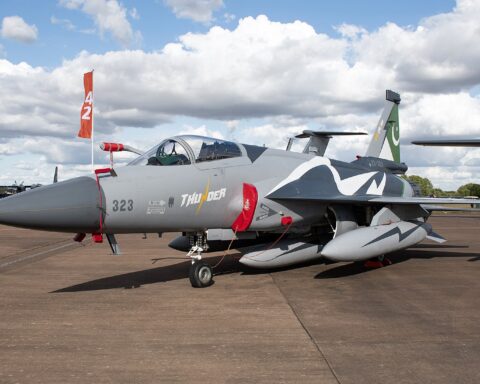
The timing of Saturday’s summons gains additional texture from what happened the day before. On April 11 — the same day Vice President JD Vance departed Islamabad without a ceasefire deal — approximately 13,000 Pakistani troops and between 10 and 18 fighter jets arrived at King Abdulaziz Air Base in Saudi Arabia’s Eastern Province, under the September 2025 Saudi-Pakistan Strategic Military Defense Agreement. The deployment, reported by Al Jazeera and The National, represents the first large-scale foreign troop presence on Saudi soil since the US drawdown of Patriot batteries, and it arrived in the province most directly threatened by the Iraqi-origin drone attacks that prompted the next day’s diplomatic protest.
The Pakistan deployment does not give Saudi Arabia the capability to strike Iraqi territory — that capability already exists in the Royal Saudi Air Force — but it changes the force posture calculus in two ways. Pakistani troops in the Eastern Province free up Saudi military assets that would otherwise be committed to air defence and ground security, potentially making them available for other operations. And the presence of a third country’s forces on Saudi soil adds another layer to the Article 51 narrative: an attack on Saudi territory that endangers Pakistani military personnel creates a second state with a self-defence claim, broadening the coalition that can legitimately invoke the Charter.
The Pakistan-as-enforcement-mechanism dynamic is already complicated by Islamabad’s role as ceasefire mediator, and the deployment’s timing — arriving as diplomatic talks collapse, one day before a formal protest against Iraq — suggests that Riyadh is layering military positioning with legal positioning in a way designed to give Baghdad the maximum number of reasons to take the drone problem seriously. Whether Sudani reads the Pakistani troop presence as a shield for Saudi Arabia or a signal that the shield is about to become a staging ground depends on how seriously he takes the note his ambassador carried out of the Foreign Ministry on Saturday.
What Does the April 18 Hajj Deadline Change?
The most important date in this crisis is not the ceasefire expiration on April 22 but the beginning of Hajj pilgrim arrivals on April 18 — six days after the ambassador’s summons and the point at which Saudi Arabia’s freedom of military action narrows to almost nothing. Indonesia will begin sending its 221,000 pilgrims, Pakistan’s 119,000 will start departing on the same date, and within days the Kingdom will be hosting hundreds of thousands of Muslim civilians from countries whose governments Saudi Arabia needs as diplomatic allies, arriving through airports and seaports in regions that are actively under drone and missile attack.
The Hajj ceasefire deadline analysis published last week laid out the constraint: the Custodian of the Two Holy Mosques cannot simultaneously be the protector of the world’s Muslim pilgrims and the initiator of a cross-border military strike against another Muslim-majority country. The 1987 Hajj massacre — in which 402 people died in clashes between Iranian pilgrims and Saudi security forces, leading to an 87% Iranian quota cut and a three-year boycott — remains the governing precedent for what happens when Hajj becomes entangled with geopolitical confrontation, and every Saudi decision-maker alive today remembers what it did to the Kingdom’s standing in the Islamic world.
This is why the April 12 summons reads as a clock-management exercise as much as a legal one. Riyadh has six days to extract a meaningful change in Iraqi behaviour before the Hajj cordon makes kinetic escalation politically unthinkable. The formal note of protest, the “all necessary measures” language, the Pakistan deployment the previous day — all of it is designed to communicate maximum seriousness within a window that is closing for reasons that have nothing to do with military capability and everything to do with the Islamic calendar. If Sudani does not act before April 18, Saudi Arabia’s leverage shifts from the credible threat of force to the documented record of Iraqi failure — useful for the UN, less useful for stopping the drones.
The Ambassador Who Was Already in Trouble
The choice of ambassador matters in ways that complicate Baghdad’s response. Safia Taleb Al-Suhail — a veteran diplomat and the daughter of a prominent Iraqi opposition figure assassinated by Saddam Hussein’s regime — was already at the centre of a diplomatic controversy in February 2026, when a viral video showed her and embassy staff standing while Saudi officials remained seated during an official function. The Iraqi parliament demanded her recall within 48 hours, and while the embassy denied any protocol breach, the incident created a domestic political dynamic in Baghdad where the ambassador is simultaneously the person receiving Saudi complaints and a figure whose continued tenure is contested by Iraqi lawmakers.
For Baghdad, recalling an ambassador under parliamentary pressure over a protocol dispute is embarrassing but manageable. Recalling an ambassador after she has been formally summoned by the host government over cross-border military attacks is a different category of humiliation — it concedes that the attacks are Iraq’s problem rather than Iran’s, and it removes the diplomatic channel through which any bilateral resolution would have to be negotiated. Sudani’s likely response is to keep Al-Suhail in post while issuing the standard categorical rejection of responsibility, which satisfies neither the Saudi demand for action nor the Iraqi parliamentary demand for accountability but preserves the fiction that Baghdad has the situation under control.
The Ceasefire That Lasted Hours
The credibility of any Iraqi assurance is further undermined by the IRI’s own behaviour during the April 8 ceasefire. The Islamic Resistance in Iraq announced a suspension of operations for two weeks — and within hours, Akram al-Kabi of Asa’ib Ahl al-Haq and Abu Ala’ al-Walaie publicly threatened to resume strikes against Israel, while a diplomatic facility at Baghdad International Airport was struck during what was nominally a ceasefire period. The gap between announcement and action — measured in hours, not days — demonstrates exactly the command-and-control deficit that the “unable or unwilling” doctrine is designed to capture.
The IRI’s structure makes coherent ceasefire compliance almost impossible even if its constituent groups wanted to comply, which the April 8 evidence suggests they do not. The umbrella’s constituent organisations have overlapping but distinct chains of command, some reporting to the IRGC Quds Force and others to Iraqi political patrons whose interests diverge from Tehran’s in important ways. A ceasefire announced by the IRI media office binds only the groups that choose to be bound by it, and the April 8 threats from al-Kabi and al-Walaie were effectively public declarations that binding is optional.
For Riyadh’s Article 51 case, the April 8 ceasefire collapse is valuable evidence. It demonstrates that Iraq cannot control the groups even when those groups announce their own cessation of hostilities — a level of dysfunction that goes beyond “unwilling” into “unable” territory, which is the stronger legal foundation for self-defence action. The ten-day void following the Islamabad talks collapse has only widened this gap, as each day without effective Iraqi action adds another entry to the documented record of incapacity.
| Date | Document | Legal Significance |
|---|---|---|
| Late Feb 2026 | GCC Ministerial Council, 50th Extraordinary Meeting | Collective Article 51 reservation established |
| 5 March 2026 | GCC-EU Joint Ministerial Statement | European co-signature of self-defence right |
| 30 March 2026 | Six-state joint statement (SA, UAE, Qatar, Kuwait, Bahrain, Jordan) | Iraq named as directly responsible; UNSC 2817 cited |
| 12 April 2026 | Saudi bilateral summons of Iraqi ambassador | Formal written protest; “all necessary measures” language |
Dossier Without a Deadline
The editorial tension at the centre of the April 12 summons is whether Riyadh is genuinely preparing to use force against targets in Iraqi territory or whether the entire legal architecture — the GCC statements, the six-state declaration, the bilateral note — is a pressure instrument designed to make PM Sudani’s domestic position untenable enough that he acts against the PMU without Saudi Arabia having to fire a shot. The answer, in all likelihood, is that Riyadh is building both capabilities simultaneously and will decide which to deploy based on what happens in the next six days.
The Hajj constraint makes the escalation question binary in a way it would not otherwise be. Before April 18, Saudi Arabia has both the legal framework and the operational window for a limited cross-border strike against launch infrastructure in western Anbar — the kind of operation the United States already conducted on March 24, establishing a precedent that Saudi Arabia could follow while pointing to both American and international legal authority. After April 18, with hundreds of thousands of pilgrims on Saudi soil and the eyes of the Islamic world on Mecca and Medina, the political cost of initiating hostilities with Iraq becomes prohibitive regardless of the legal justification.
The UAE’s demand that Iran pay for 2,819 intercepted missiles follows the same pattern — building a documented record of damages and attribution that serves the legal framework whether or not force is ultimately used. Saudi Arabia’s April 12 summons is a move in the same game, and the fact that it came one day after 13,000 Pakistani troops arrived in the Eastern Province and six days before the Hajj cordon seals shut is not a coincidence but a calculation. Riyadh is giving Baghdad a window to act, and documenting — in writing, with witnesses, through formal diplomatic channels — every hour that Baghdad does not.
The Hajj security editorial published earlier this week noted that the pilgrim cordon and the ceasefire expiration date overlap in a way that leaves almost no margin for error. Safia Taleb Al-Suhail walked out of the Saudi Foreign Ministry on Saturday carrying a document that her government cannot comply with and cannot afford to ignore, into a six-day window that closes not because anyone decided it should but because 1.8 million Muslims are about to arrive for a pilgrimage that predates the modern state system by fourteen centuries, and the man who holds the title Custodian of the Two Holy Mosques cannot be at war with a neighbouring Arab capital when they do.
Frequently Asked Questions
Has Saudi Arabia ever conducted a military strike inside Iraqi territory?
Saudi Arabia participated in the 1991 Gulf War coalition that liberated Kuwait, with Saudi forces operating inside Iraqi territory during the ground campaign. More recently, the Saudi-led coalition in Yemen conducted operations along the Iraqi-Yemeni information space but not inside Iraq proper. A unilateral Saudi strike on Iraqi soil would be unprecedented in the modern diplomatic relationship, which is why the legal documentation through Article 51 channels is so meticulous — Riyadh would need an ironclad international legal foundation before crossing that threshold, and the current dossier-building suggests awareness that the bar is high even with ample justification.
What is UNSC Resolution 2817 and why did the six-state statement cite it?
The six-state March 30 joint statement cited UNSC Resolution 2817 alongside Article 51 without elaborating on that resolution’s specific operative clauses. The dual citation — one grounded in an existing UNSC resolution and one in the inherent right of self-defence — creates a layered legal basis that is harder to dismiss as unilateral overreach than an Article 51 invocation standing alone. Whether 2817’s scope directly addresses Iranian proxy activity or a broader category of regional obligations, the six states’ invocation of it creates a documented legal record in which the Security Council’s own authority is incorporated into the self-defence argument.
Could Iraq face consequences at the UN for failing to control PMU attacks?
The most direct consequence is that Iraq’s failure to control groups operating from its territory weakens its sovereign immunity claim against cross-border military action. Under the “unable or unwilling” doctrine — which remains contested in international law but has been applied by the US, UK, France, Turkey, and Russia in various theatres since 2014 — a state that cannot prevent its territory from being used as a base for armed attacks on neighbours loses the protection that sovereignty would otherwise provide. Iraq’s position is further complicated by the fact that the PMU is formally part of its armed forces under the 2016 law, meaning the attacks could be attributed to the Iraqi state itself rather than to non-state actors, which would lower the threshold for a lawful military response.
Why did Saudi Arabia summon the ambassador rather than downgrade diplomatic relations?
A summons preserves the diplomatic channel while creating a formal record of warning — it is an escalation within the framework of continued relations, not a rupture. Downgrading or expelling the ambassador would remove Saudi Arabia’s ability to communicate directly with Baghdad and would signal that diplomacy has failed, which would undermine the “we gave them every chance to act” narrative that the Article 51 dossier requires. The summons is legally and strategically more useful than a recall precisely because it documents Saudi Arabia’s restraint and Iraq’s continued failure within an intact bilateral relationship.
How does the Saudi-Pakistan military agreement affect the Iraq situation?
The September 2025 Strategic Military Defense Agreement between Saudi Arabia and Pakistan includes mutual defence provisions that could, in theory, be invoked if Pakistani forces stationed in the Eastern Province are endangered by drone attacks originating from Iraqi territory. Pakistan’s 13,000 troops at King Abdulaziz Air Base create what international lawyers call a “security interest” — if a Pakistani soldier is killed by an Iraqi-origin drone, Islamabad would have its own Article 51 claim independent of Saudi Arabia’s, potentially broadening any coalition response. The deployment’s scale and timing suggest that this legal multiplier effect was part of the strategic calculation, though Pakistan’s simultaneous role as ceasefire mediator complicates any direct military involvement.