
ABU DHABI — The UAE has formally demanded that Iran pay reparations for 2,819 missiles and drones fired at Gulf states over 40 days of war, citing roughly $6 billion in direct economic damage — and Saudi Arabia, which absorbed hundreds of strikes of its own and co-sponsored a UN resolution demanding exactly this outcome two weeks ago, has said nothing. The silence is not an oversight; it is the most consequential diplomatic signal the Gulf has produced since the ceasefire took hold on April 8, and it marks the first open fracture in a wartime GCC alliance that was already built on convenience rather than conviction.
What Abu Dhabi is doing is straightforward: building a public legal and diplomatic record of Iranian liability that can survive any future negotiation. What Riyadh is doing is harder to watch but easier to explain — Saudi Arabia cannot afford to endorse reparations publicly because doing so would collapse the Phase 2 negotiations it needs more than any other Gulf state, and it cannot afford Phase 2 collapsing because the fiscal, military, and strategic arithmetic all point in the same direction. The split between the two is not about whether Iran should pay. It is about whether demanding payment now is worth risking everything that comes after.
Table of Contents
- What the UAE Is Actually Demanding
- Why Is Saudi Arabia Silent on Iranian Reparations?
- The March 25 Resolution Saudi Arabia Would Rather You Forgot
- How Much Did the War Cost the UAE and Saudi Arabia?
- Iran’s Legal Judo
- Is the GCC Alliance Fracturing After the Ceasefire?
- What Does Saudi Arabia Lose If Phase 2 Fails?
- Can Iran Actually Be Forced to Pay Reparations?
- The Quiet Room
What the UAE Is Actually Demanding
The UAE’s Foreign Ministry statement on April 8 was calibrated to do maximum diplomatic damage with minimum rhetorical excess. Afra Mahash Alhameli, the ministry’s Director of Strategic Communications, called Iran’s attacks “unprovoked” and stated that “the scale and nature of these incidents necessitate a firm position, including ensuring that Iran is held accountable and fully liable for damages and reparations.” The language was precise — “fully liable” is a legal phrase, not a diplomatic one, and Abu Dhabi chose it deliberately.
The UAE absorbed approximately 2,400 of the 2,819 total projectiles Iran fired at GCC states — roughly 85% of all GCC-directed fire, according to multiple tracking estimates compiled by ANI News. The breakdown: 537 ballistic missiles, 2,256 drones, and 26 cruise missiles intercepted or struck Emirati territory between February 28 and April 8. Thirteen people were killed, including two Emirati military personnel and 11 foreign nationals from a total of 31 nationalities. Another 224 were wounded.
But Abu Dhabi’s demands extend well beyond compensation for the 40-day war. Alhameli called for “a comprehensive and sustained approach” addressing Iran’s nuclear capabilities, ballistic missile programme, drone networks, proxy operations, what she described as Hormuz piracy, and economic warfare — a list that maps almost perfectly onto everything the Islamabad ceasefire framework deferred to Phase 2. The UAE is not simply asking Iran to pay for broken glass. It is demanding that the terms of any permanent settlement include the very issues the mediators deliberately excluded from the initial truce because they were too contentious to resolve under fire.
Anwar Gargash, the diplomatic adviser to UAE President Sheikh Mohamed bin Zayed, had been sharpening this position for days before the formal statement dropped. “We don’t want a ceasefire that does not address some of the main issues that will create a much more dangerous environment in the region,” he told Euronews on April 7, and then added a line that doubles as the UAE’s entire post-war thesis: “When Iranians speak about reparations, it also works here.”
The Middle East briefing 3,000+ readers start their day with.
One email. Every weekday morning. Free.
Why Is Saudi Arabia Silent on Iranian Reparations?
Saudi Arabia’s silence on reparations is a calculated diplomatic bet driven by its dependence on Phase 2 negotiations succeeding. Riyadh cannot publicly demand Iranian accountability without torpedoing the very talks it needs to reopen the Strait of Hormuz, secure interceptor resupply, and stabilise its fiscal position — all of which require Iranian cooperation or at least acquiescence in the months ahead.
The first publicly confirmed contact between Saudi FM Prince Faisal bin Farhan and Iranian FM Hossein Amir-Abdollahian Araghchi since February 28 came on April 9, one day after the ceasefire. The Saudi readout was a masterclass in deliberate vagueness: the two “reviewed the latest developments and discussed ways to reduce tensions to restore security and stability.” No mention of reparations. No mention of accountability. No mention of Iran’s nuclear programme, its missile capabilities, or its drone campaigns. The contrast with Abu Dhabi’s simultaneous demand for full liability and a comprehensive settlement addressing everything from Hormuz piracy to proxy networks could not have been sharper if Riyadh had planned it as a counterpoint.
Saudi Arabia’s official ceasefire welcome statement was equally drained of confrontation — expressing hope that the truce would “lead to a comprehensive sustainable pacification” and calling for Hormuz to open, but stopping well short of anything that could be read in Tehran as a precondition. Marwan Muasher, vice president for studies at the Carnegie Endowment, had already identified this dynamic: Saudi Arabia “won’t want to appear too close to the Israeli or the American missions in a postwar situation — at least publicly.” The reparations silence fits neatly inside that logic, but it extends further than diplomatic optics alone.
The deeper driver is structural. Saudi Arabia was excluded from the April 10 Islamabad bilateral between Vice President Vance and Iranian Speaker Ghalibaf — despite having held a co-guarantor seat at the March 29–30 talks. Riyadh’s diplomatic position has deteriorated from guarantor to observer in under two weeks, and demanding reparations from the country that just stripped its seat at the table would accelerate that deterioration into irrelevance. The silence is not weakness. It is the sound of a country that cannot afford to speak.
The March 25 Resolution Saudi Arabia Would Rather You Forgot
Saudi Arabia’s April silence becomes considerably more interesting when measured against its March position. On March 25, all six GCC states plus Jordan co-sponsored a UN Human Rights Council resolution demanding that Iran “immediately and unconditionally cease all unprovoked attacks” and “provide full, effective and prompt reparation to all victims.” The resolution was adopted by consensus, supported by more than 100 countries, and Saudi Arabia’s name was on it without qualification or caveat.
That was eighteen days ago. In the intervening period, the ceasefire has taken hold, the Islamabad framework has divided the war’s aftermath into a Phase 1 truce and a Phase 2 comprehensive settlement, and Saudi Arabia has quietly retreated from a position it already held publicly at the United Nations. This is not a government that failed to stake out a position on reparations — it is a government that staked one out, watched the diplomatic terrain shift beneath it, and decided to pretend the March 25 resolution belongs to a different strategic era.
The UAE has no such inhibition. Abu Dhabi has continued building on the March 25 foundation with escalating specificity — Gargash’s March 29 statement that any political solution “must include clear guarantees to prevent future attacks, reinforce the principle of non-aggression, and ensure Iranian compensation for targeting civilian and vital infrastructure,” followed by the April 8 formal demand, followed by Alhameli’s comprehensive scope expansion. The trajectory is a straight line from the UNHRC resolution to a post-war settlement framework that refuses to separate the ceasefire from the conditions that produced the war. Saudi Arabia co-signed the first step of that trajectory and has been walking away from it since.
How Much Did the War Cost the UAE and Saudi Arabia?
The financial damage from 40 days of Iranian strikes split unevenly across the two largest Gulf economies, but the fiscal consequences fall harder on Saudi Arabia despite the UAE absorbing the larger physical toll. The UAE’s direct losses stand at approximately $6 billion, including tourism collapse, Fujairah port disruption, and the shutdown of the Ruwais Industrial Complex — where strikes on the ADNOC-Borealis Borouge joint venture, a $60 billion operation producing 5 million tonnes per annum of polyolefins, forced a complete suspension of operations. Goldman Sachs forecast that UAE GDP could shrink by roughly 5% if the war had continued through April, approximately $120 billion was wiped from Dubai and Abu Dhabi stock markets according to exchange data compiled by Bloomberg, and FlightRadar24 logged more than 18,400 cancellations across UAE-controlled airspace.
| Metric | UAE | Saudi Arabia |
|---|---|---|
| Projectiles absorbed | ~2,400 (~85%) | ~400 (~15%) |
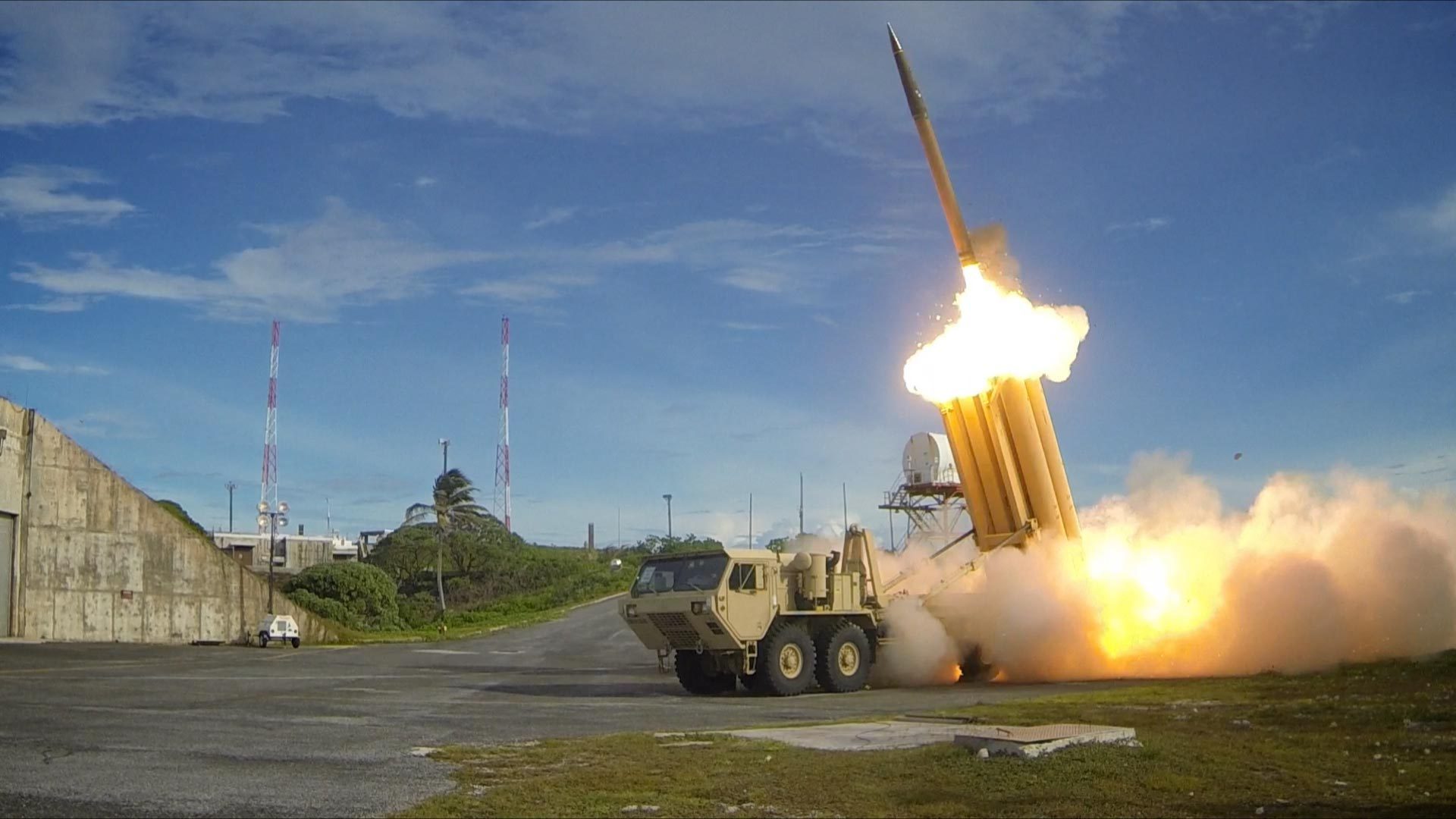
| Interception system | THAAD — 96% rate | PAC-3 — ~86% stockpile depleted |
| Remaining interceptors | Cheongung-II resupply incoming (South Korea) | ~400 PAC-3 rounds from ~2,800 |
| Direct economic losses | ~$6B | Not publicly disclosed |
| Market losses | ~$120B (equities) | Not publicly disclosed |
| Fiscal break-even | Lower threshold (diversified revenue) | $108–111/bbl (Bloomberg, PIF-inclusive) |
| Brent at ceasefire | ~$96/bbl | |
| Emergency arms sale inclusion | Yes ($16.5B package) | Not included |
The table tells the story that the diplomacy obscures. The UAE took the brunt of the physical punishment but has better defences, faster resupply, and lower fiscal vulnerability. Saudi Arabia took fewer hits but is running out of the interceptors that stopped them, was excluded from the $16.5B emergency arms sale that went to the UAE, Kuwait, and Jordan, and faces a fiscal break-even of $108–111 per barrel against a Brent price sitting at roughly $96 at ceasefire — a structural deficit that the kingdom cannot close without Phase 2 delivering Hormuz relief at speed.
Sultan Ahmed Al Jaber, ADNOC’s CEO, captured Abu Dhabi’s post-war posture in a single sentence at a Gulf Business forum: “The Strait of Hormuz is not open and needs to be open unconditionally.” He had earlier described Iran’s attacks on Hormuz as “economic terrorism against every nation” in a March CNBC interview. This is the language of a state that absorbed $6 billion in damage and intends to make someone pay for it — not in a decade, not through a patient multilateral process, but as a precondition for any settlement the UAE signs.
Iran’s Legal Judo
Iran’s response to the UAE’s reparations demand was a piece of legal judo designed to neutralise the entire framework before it solidified. Amir-Saeid Iravani, Iran’s representative to the United Nations, sent a formal letter to the UN Secretariat and Security Council president claiming that Bahrain and the UAE “must compensate Iran for all material and moral damages incurred” — not for anything Iran did, but for Bahrain and the UAE’s alleged role in facilitating the US-Israeli attack infrastructure that struck Iranian territory, killing more than 1,200 Iranians according to Tehran’s figures.
The logic is crude but structurally effective. If the UAE demands reparations as a victim of unprovoked aggression, Iran asserts that the UAE is not a victim at all but a co-belligerent that hosted the bases, provided the airspace, and enabled the strikes that hit Iran. Alhameli’s insistence that “the UAE is not a party to this war” is the direct counter — a simultaneous claim of victimhood and non-belligerent status that becomes the legal foundation for any reparations case Abu Dhabi eventually files. The contradiction between hosting US military infrastructure and claiming non-belligerent status is real, but international law has accommodated similar fictions before, and the UAE’s bet is that its 13 dead and 224 wounded will matter more to any adjudicating body than Iran’s argument about base access.
President Pezeshkian’s three ceasefire conditions, articulated as far back as March 12, included reparations for US and Israeli strikes that killed more than 1,200 Iranians — making reparations a formally symmetrical demand, with both sides claiming the other owes compensation. The difference is that Iran’s counter-claim is backed by a state whose UN representative also demanded IRGC “coordination” as a treaty requirement for Hormuz navigation and US withdrawal from all regional bases. When the country demanding compensation is simultaneously demanding that the victims of its attacks submit to its military authority over international waterways, the reparations argument starts to function less as a legal position and more as a negotiating chip designed to cancel out the other side’s legal position.
Is the GCC Alliance Fracturing After the Ceasefire?
The reparations split between the UAE and Saudi Arabia is the first visible crack in a wartime alliance that papered over years of pre-existing divergence. Before Iran fired its first missile on February 28, the two countries were already on opposite sides of the conflicts in Yemen and Sudan, had taken different approaches to the Qatar blockade — Saudi Arabia normalised relations in 2021 while the UAE resisted — and were competing rather than cooperating on economic diversification and foreign investment. The war temporarily unified them under a shared threat, but the threat has now paused, and the old fault lines are reasserting themselves with new material to work with.
Yoel Guzansky, head of Gulf research at Israel’s Institute for National Security Studies, has described the Saudi-UAE relationship as undergoing “an ongoing strategic shift that affects Gulf cohesion,” driven by MBS seeking “regional leadership, not as a protégé but as a leading figure.” The reparations split maps directly onto this dynamic: Abu Dhabi is acting as the alliance’s public accountability mechanism, absorbing the diplomatic risk of confronting Iran openly, while Riyadh preserves its freedom to negotiate quietly. In a partnership of equals, this division of labour might be coordinated. In a partnership where one side is asserting primacy, it starts to look like Saudi Arabia free-riding on Emirati confrontation.
“The era of courtesies has passed, and frankness has become a necessity.”— Anwar Gargash, Diplomatic Adviser to UAE President, April 2026
The GCC spectrum is widening along predictable lines. Kuwait named Iran formally for post-ceasefire drone strikes on April 10 — breaking the careful silence most Gulf states maintained during the war’s final days. Oman, which served as a go-between with Tehran throughout the conflict, has stayed entirely quiet. Qatar issued a mild statement calling for dialogue. Saudi Arabia has positioned itself between Qatar’s mildness and the UAE’s confrontation, which is a coherent position only if you believe the middle of a fracturing alliance is a stable place to stand. Muasher’s assessment was blunt: “Prewar and wartime sources of divergence within the Gulf Cooperation Council are apt to continue.” WARYATV distilled the split into a single frame — “Riyadh fears escalation; Abu Dhabi fears stagnation” — and the reparations question is where those two fears produce opposite policies.
The UAE’s confrontational posture on reparations is consistent with its broader security alignment: Abu Dhabi is one of only two Middle East states — alongside Bahrain — that joined the 22-nation US-led Hormuz coalition, while Saudi Arabia declined to enter. The institutional split between UAE coalition membership and Saudi abstention is the structural explanation for why Abu Dhabi can demand Iranian accountability publicly while Riyadh cannot: Riyadh’s Phase 2 leverage depends on keeping a Tehran channel open that formal coalition membership would signal it had closed.
That positioning shifted visibly on April 12, when Riyadh formally summoned Iraq’s ambassador and deployed explicit Article 51 self-defence language against Baghdad — a move that mirrors the UAE’s more confrontational posture and signals that Saudi Arabia is building a legal dossier, not just a diplomatic complaint.
Hesham Alghannam, a scholar at the Malcolm H. Kerr Carnegie Middle East Center, identified the external pressure compounding the internal split: “President Trump, eager for a quick political victory, could tolerate some Iranian leverage over the strait in exchange for a fragile truce, prioritising optics over Gulf realities.” If Washington settles for a deal that leaves Hormuz partially constrained and Iran’s missile programme intact, the UAE’s maximalist demands and Saudi Arabia’s quiet diplomacy will both have failed — but they will have failed for different reasons and with different consequences, which is precisely the kind of outcome that turns an alliance fracture into a permanent realignment.
What Does Saudi Arabia Lose If Phase 2 Fails?
Phase 2 of the Islamabad ceasefire framework is where everything Saudi Arabia needs gets decided — Hormuz sovereignty, Iran’s nuclear programme, the future of US basing in the region, and the terms under which Gulf oil can flow freely to Asian markets. Phase 1 stopped the shooting. Phase 2 determines whether the shooting stays stopped, and at what price.
The fiscal arithmetic alone explains Saudi Arabia’s reluctance to antagonise Iran before Phase 2 begins. With Brent sitting at roughly $96 per barrel against a PIF-inclusive fiscal break-even of $108–111, every month the Strait of Hormuz remains partially closed widens a deficit that Goldman Sachs already projects at $80–90 billion for 2026 — nearly double the kingdom’s official $44 billion forecast. The East-West Pipeline to Yanbu provides some bypass capacity, but Saudi exports are still running well below pre-war levels, and the longer the strait stays throttled, the more the PIF’s ambitious 2026–2030 strategy — already stripped of The Line and restructured around AI partnerships — depends on oil revenue that isn’t arriving at the assumed price.
The military position is equally constraining. Saudi Arabia’s PAC-3 interceptor stockpile is down to approximately 400 rounds from a pre-war inventory of roughly 2,800 — an 86% depletion rate that Lockheed Martin’s annual production of around 620 interceptors cannot replenish on any timeline that matters. The kingdom was not included in the $16.5B emergency arms sale that fast-tracked interceptors and air defence systems to the UAE, Kuwait, and Jordan, and South Korea is already fast-tracking interceptor resupply to Abu Dhabi while Riyadh waits. If Phase 2 collapses and the IRGC resumes strikes, Saudi Arabia’s air defence shield is thinner than at any point since the war began.
Iran’s 10-point plan, presented at the Islamabad talks, includes two demands that are structurally incompatible with Saudi Arabia’s survival as a US-allied Gulf power: Point 7, requiring IRGC “coordination” as a treaty condition for Hormuz navigation, and Point 8, demanding US withdrawal from all regional bases. Prince Sultan Air Base, which hosts 2,000–3,000 US troops and cost more than $1 billion in Saudi-funded construction, was already struck by six ballistic missiles and 29 drones on March 28. Endorsing reparations now, in Riyadh’s calculation, makes it harder to negotiate away these two points in Phase 2 — and if either survives into a final agreement, Saudi Arabia loses either its air defence umbrella or its sovereignty over its own shipping lanes, possibly both.
Can Iran Actually Be Forced to Pay Reparations?
The only successful precedent for post-war reparations in the Middle East is the UN Compensation Commission established after Iraq’s 1990 invasion of Kuwait, and it offers more warnings than encouragement. UNSC Resolution 687, passed in April 1991 under Chapter VII, created a compensation fund financed by 30% of Iraqi oil export proceeds — a mechanism that distributed $52.4 billion to 1.5 million claimants before Iraq completed its final payment in February 2022, more than three decades after the invasion.
The UNCC worked because Iraq was a defeated, occupied country with no veto-wielding ally on the Security Council willing to block the mechanism. Iran in 2026 has two: Russia and China both sit as permanent members and have already demonstrated their willingness to shield Tehran from binding action, vetoing or threatening to veto Hormuz-related resolutions that were watered down from Chapter VII to non-binding language over six drafts and fifteen days. Any attempt to create a UNCC-style Iran compensation fund through the Security Council will die the same death.
The UAE’s alternative route — the UNHRC track that produced the March 25 resolution — has the numbers (100-plus supporting countries) but not the teeth. Human Rights Council resolutions are non-binding, carry no enforcement mechanism, and have never compelled a state to pay reparations. What they can do is build a legal and diplomatic record that survives the current moment, establishing a baseline of international consensus that can be cited in future arbitration, bilateral negotiations, or — if Iran’s government eventually changes — a successor regime’s calculations about rehabilitation and sanctions relief. Abu Dhabi’s reparations campaign is less about getting paid next year than about ensuring that the ledger stays open indefinitely.
Mohamed Abushahab, the UAE’s permanent representative to the UN, framed the underlying principle in language designed to outlast any individual negotiation: “No country should have the power to shut down the arteries of global commerce. The Strait of Hormuz cannot become a bargaining chip for Iran.” The sentence is diplomatic boilerplate on its surface, but it contains a structural argument that applies regardless of whether reparations are ever paid — that the behaviour itself must be delegitimised permanently, not just paused by a ceasefire that leaves the perpetrator’s capability intact.
The Quiet Room
On April 9, the same day Alhameli was demanding full Iranian liability for 2,819 projectiles and $6 billion in damage, Prince Faisal bin Farhan picked up the phone and called the foreign minister of the country that fired them — and the Saudi readout mentioned tensions, stability, and the latest developments, as if describing a weather pattern rather than the aftermath of the largest missile campaign against Gulf states in modern history. Sara Bazoobandi, a Gulf analyst at Kiel University and the Arab Gulf States Institute, had already written the epitaph for what that call represented: “A rebranded tyranny brokered in a back-room deal would be the bitterest possible outcome.”
The back room is where Saudi Arabia has chosen to operate, and the UAE has chosen to operate everywhere else. Whether that division produces a durable settlement or a permanent split depends on something neither Abu Dhabi’s lawyers nor Riyadh’s diplomats can control — whether Iran interprets the silence as an invitation and the demands as a bluff, or the other way around.
Frequently Asked Questions
What legal mechanisms exist for enforcing reparations against a sovereign state?
Beyond the UNCC model, states can pursue reparations through the International Court of Justice (ICJ), bilateral arbitration treaties, or countermeasures under the International Law Commission’s Articles on State Responsibility (2001). Iran accepted ICJ jurisdiction in its 1973 Treaty of Amity case with the US but has rejected compulsory jurisdiction since 2018, and no Gulf state currently has a bilateral investment treaty with Iran that includes an arbitration clause applicable to military damage claims.
How does the UAE’s THAAD interception rate compare to historical missile defence performance?
The UAE’s reported 96% THAAD interception rate against Iranian ballistic missiles is the highest sustained combat performance for any theatre missile defence system in history, exceeding Israel’s Iron Dome (~90% against short-range rockets) and Saudi Arabia’s Patriot performance during the 2019 Abqaiq-Khurais attack, where interception failures were widely reported. The US Missile Defense Agency had only confirmed two THAAD combat intercepts prior to 2026 — both against Houthi missiles fired at the UAE in January 2022.
Has Iran ever paid war reparations or compensation to a foreign state?
Iran has never voluntarily paid reparations but has been subject to compensatory mechanisms. The Iran-US Claims Tribunal, established by the 1981 Algiers Accords to resolve claims from the 1979 revolution and hostage crisis, awarded approximately $2.5 billion to US claimants and $1 billion to Iranian claimants over four decades. Iran also paid $150 million in 1996 to settle claims related to the 1988 USS Vincennes shootdown of Iran Air Flight 655, though it characterised the payment as “ex gratia” and never accepted legal responsibility.
What is the Cheongung-II system South Korea is supplying to the UAE?
The Cheongung-II (also called KM-SAM Block II) is a medium-range surface-to-air missile system developed by South Korea’s Agency for Defense Development with technical assistance from Russia’s Almaz-Antey. It intercepts aircraft and tactical ballistic missiles at ranges up to 40km and altitudes up to 20km — filling the gap between short-range point defence and THAAD’s high-altitude coverage. South Korea fast-tracked the export licence in March 2026, marking the system’s first combat-zone deployment and Seoul’s most direct involvement in a Gulf conflict.
Why was Saudi Arabia excluded from the April 10 Islamabad bilateral?
The shift from multilateral (March 29–30, with Saudi FM as co-guarantor) to bilateral (April 10, Vance-Ghalibaf only) reflected Washington’s decision to pursue principal-level direct talks with Iran — the first US-Iran face-to-face since 1979. Pakistan, as host and sole mediator, structured the session around the two belligerents rather than the guarantor framework, and Ghalibaf’s 71-member delegation was calibrated for a bilateral negotiation, not a multilateral conference. Hamad Althunayyan, a political analyst at Kuwait University, warned that “the Gulf expects its interests to be represented, and included, in any deal with Iran” — a standard that the April 10 format did not meet.