
RIYADH — Saudi Foreign Minister Prince Faisal bin Farhan called UN Secretary-General António Guterres on approximately April 1, ten days before the Islamabad talks between the United States and Iran broke down without agreement on April 12 — and eighteen days after Guterres had already appointed Jean Arnault, a French diplomat with four decades of UN experience, as his personal envoy for the conflict. The call, the envoy, and a Gulf-bloc UNSC resolution vetoed by Russia and China on April 7 now form a complete multilateral paper trail that allows Riyadh to demonstrate, to any future tribunal or diplomatic forum, that it exhausted every available institutional channel before the 14-day ceasefire expires on April 22.
That paper trail was never designed to produce results. It was designed to exist.
Table of Contents
The Three-Layer Paper Trail
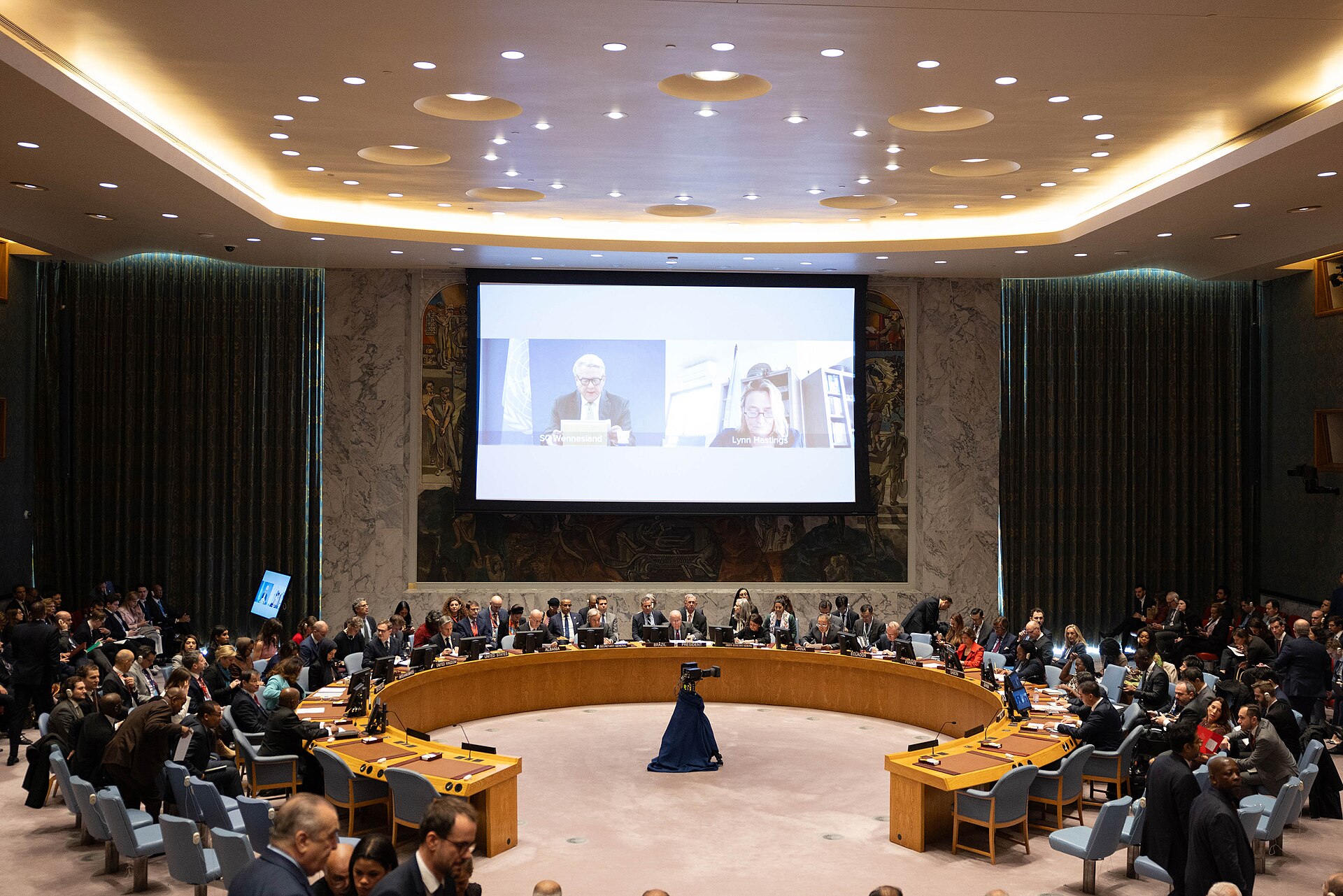
Saudi Arabia’s UN engagement since late March has operated on three distinct tracks, each producing its own documentary record. The first was Arnault’s appointment on March 25, when Guterres named the veteran French diplomat as his personal envoy “on the conflict in the Middle East and its consequences” — a title broad enough to encompass everything from Hormuz shipping to humanitarian access but narrow enough to carry no enforcement authority. The second was the Faisal-Guterres phone call around April 1-2, in which the Saudi MFA said discussions “focused on the latest developments in the region and their repercussions, as well as international efforts to address them.” The third was the Gulf-bloc UNSC resolution on Hormuz, co-sponsored by Saudi Arabia alongside Bahrain, Jordan, Kuwait, Qatar, and the UAE, which secured eleven votes in favour before Russia and China killed it on April 7.
Each layer serves a different evidentiary function. Arnault’s appointment proves the UN system was engaged at the Secretary-General’s personal initiative. The FM-to-SG call proves Saudi Arabia participated in that engagement directly, at ministerial level. The UNSC vote proves Riyadh sought binding enforcement and was blocked by the veto — not by its own inaction. Together they constitute a diplomatic defence-in-depth, built across eighteen days, that pre-dates and now survives the collapse of the Islamabad bilateral track.
The Saudi MFA’s public statement on the ceasefire captures the tone precisely: Riyadh “welcomes the ceasefire announcement, urged an end to attacks on countries in the region, said that the Strait of Hormuz should be opened, and hopes the ceasefire will lead to a comprehensive sustainable pacification.” Every verb is passive or optative. Nothing commits Saudi Arabia to a next step, because the next step was always someone else’s to take.
What Does Arnault’s Mandate Actually Cover?
Arnault was tasked with visiting countries across the region “to support all efforts aimed at achieving a comprehensive and durable resolution to the conflict,” according to UN Press release SGA2401 dated March 25. The operative words are “comprehensive and durable” — language that explicitly frames his mission around a final settlement, not around extending the existing 14-day ceasefire that began April 8. Guterres announced the appointment with a line that read like a caption for the entire UN posture: “It is time to stop climbing the escalation ladder — and start climbing the diplomatic ladder.”
The Middle East briefing 3,000+ readers start their day with.
One email. Every weekday morning. Free.
Arnault’s career explains both why he was chosen and why his mandate was drawn so carefully. He served as the UN’s Special Representative in Afghanistan from 2004 to 2006, as personal envoy for Colombia during the verification of the 2016 Final Peace Agreement, and as personal envoy for Bolivia during its 2019-2020 political crisis — all post-conflict or de-escalation environments where at least one party had already accepted the principle of a negotiated exit. None of his prior mandates involved active great-power military confrontation, an ongoing naval blockade, or a counterparty whose supreme leader has been publicly absent for thirty-nine days.
The gap between Arnault’s mandate and the operational reality on April 12 is total. His “comprehensive and durable resolution” track runs on a diplomatic calendar measured in months. The ceasefire expires April 22 — ten days from now. Trump announced a US naval blockade of Hormuz within hours of the Islamabad collapse, posting on Truth Social: “Effective immediately, the United States Navy…will begin the process of BLOCKADING any and all Ships trying to enter, or leave, the Strait of Hormuz.” Arnault’s next scheduled stop was Pakistan. He has no mandate to broker a ceasefire extension, no Chapter VII authority behind him, and no mechanism to compel any party to the table.
How Iran Absorbed the UN Channel Without Conceding Anything
Iran’s response to the UN engagement has been a masterclass in formal acceptance coupled with substantive emptiness. Iran’s UN Ambassador Amir Saeid Iravani said Tehran “stands ready to engage constructively with all genuine diplomatic efforts, including through Pakistan, Turkey, and Egypt, as well as diplomatic efforts by China and Russia, and supports any credible initiative capable of bringing about a sustainable end to this unlawful and unwarranted war.” The statement bundles the UN track with bilateral formats where Iran has leverage — China, Russia — while describing the war as “unlawful” and “unwarranted,” preserving Iran’s framing of any future settlement as vindication rather than concession.
Arnault visited Tehran approximately April 8-9, meeting Deputy Foreign Minister Majid Takht-Ravanchi — a JCPOA-veteran diplomat senior enough to demonstrate engagement but not a decision-maker on Hormuz reopening or nuclear commitments. The UN described the talks as “substantive,” a word that in diplomatic usage means both parties spoke at length without necessarily agreeing on anything. Arnault also visited bombed civilian sites, including a university and an apartment block, and met representatives of the Iranian Red Crescent, according to UN readouts — stops that served Iran’s narrative about civilian suffering far more than they advanced any negotiating framework.
The choice of Takht-Ravanchi, rather than Foreign Minister Araghchi or anyone from the SNSC, reinforces the authorization ceiling problem that has defined Iran’s diplomatic posture throughout the conflict. Iran engages at the level below where decisions are made, ensuring that any commitment extracted can be walked back by a higher authority — an authority that, in Supreme Leader Khamenei’s case, has been publicly absent for thirty-nine days and counting.
The Veto Architecture Saudi Arabia Needed to Fail
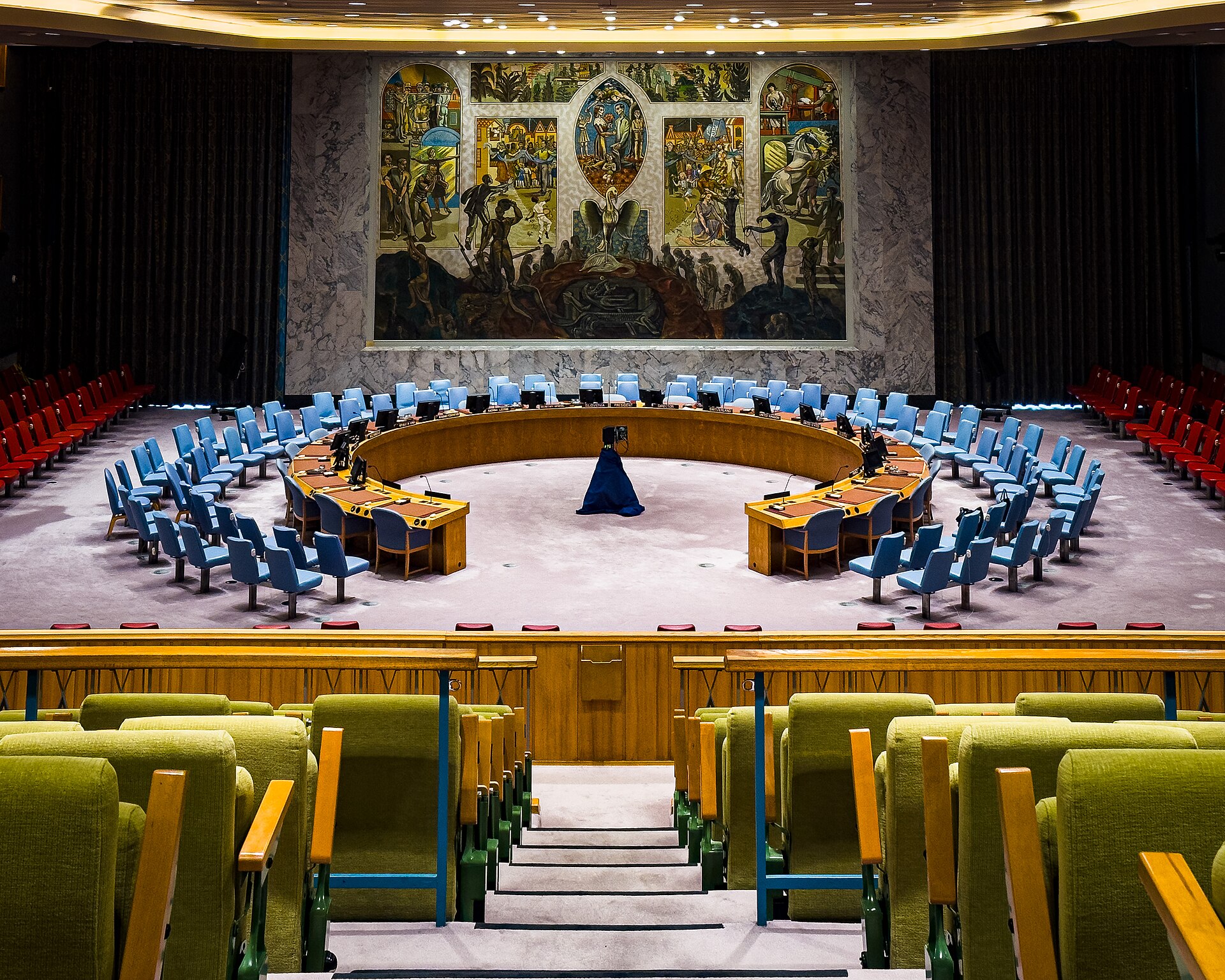
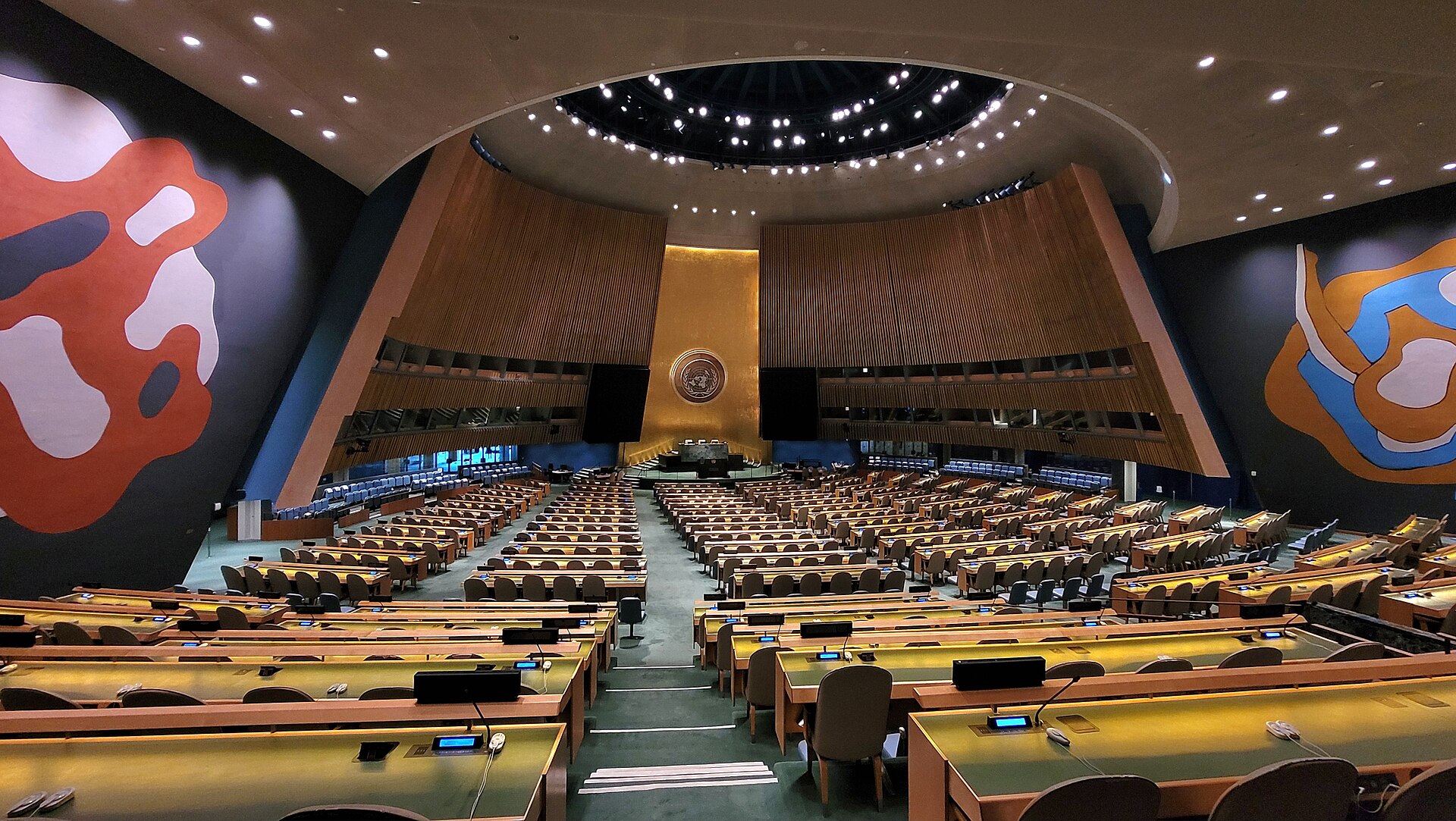
The UNSC resolution that Russia and China vetoed on April 7 went through six drafts over fifteen days, each iteration stripped of enforcement language to accommodate objections. The original text, co-drafted by Bahrain, sought authorization for “all necessary means” to ensure Hormuz transit — UN language for military force. France, Russia, and China objected, and the text was progressively weakened until the final version carried no Chapter VII authority at all. Russia and China vetoed it anyway. The vote was 11-2, with Colombia and Pakistan abstaining.
Russia’s UN Ambassador Vasily Nebenzya called the resolution “unbalanced, inaccurate and confrontational” for framing Iran as the sole source of destabilization — a formulation that made clear the veto was structural, not negotiable. No amount of textual revision would have changed the outcome. Saudi Arabia and its Gulf co-sponsors invested fifteen days of diplomatic effort into a resolution they had reasonable grounds to believe would fail, and the failure produced exactly the record they needed: documented proof that the multilateral enforcement route was blocked by great-power obstruction, not by Gulf indifference.
The veto also killed any prospect that the Guterres-appointed Task Force on Hormuz could acquire coercive authority. The task force exists, but without Chapter VII backing it operates under Article 99 — the Secretary-General’s good offices power — which is diplomatic, not coercive, and cannot authorize force, impose sanctions, or mandate a ceasefire extension. Saudi Arabia’s UN paper trail now includes both a vetoed enforcement resolution and a toothless good-offices track, covering every available institutional option.
The Hajj Contradiction
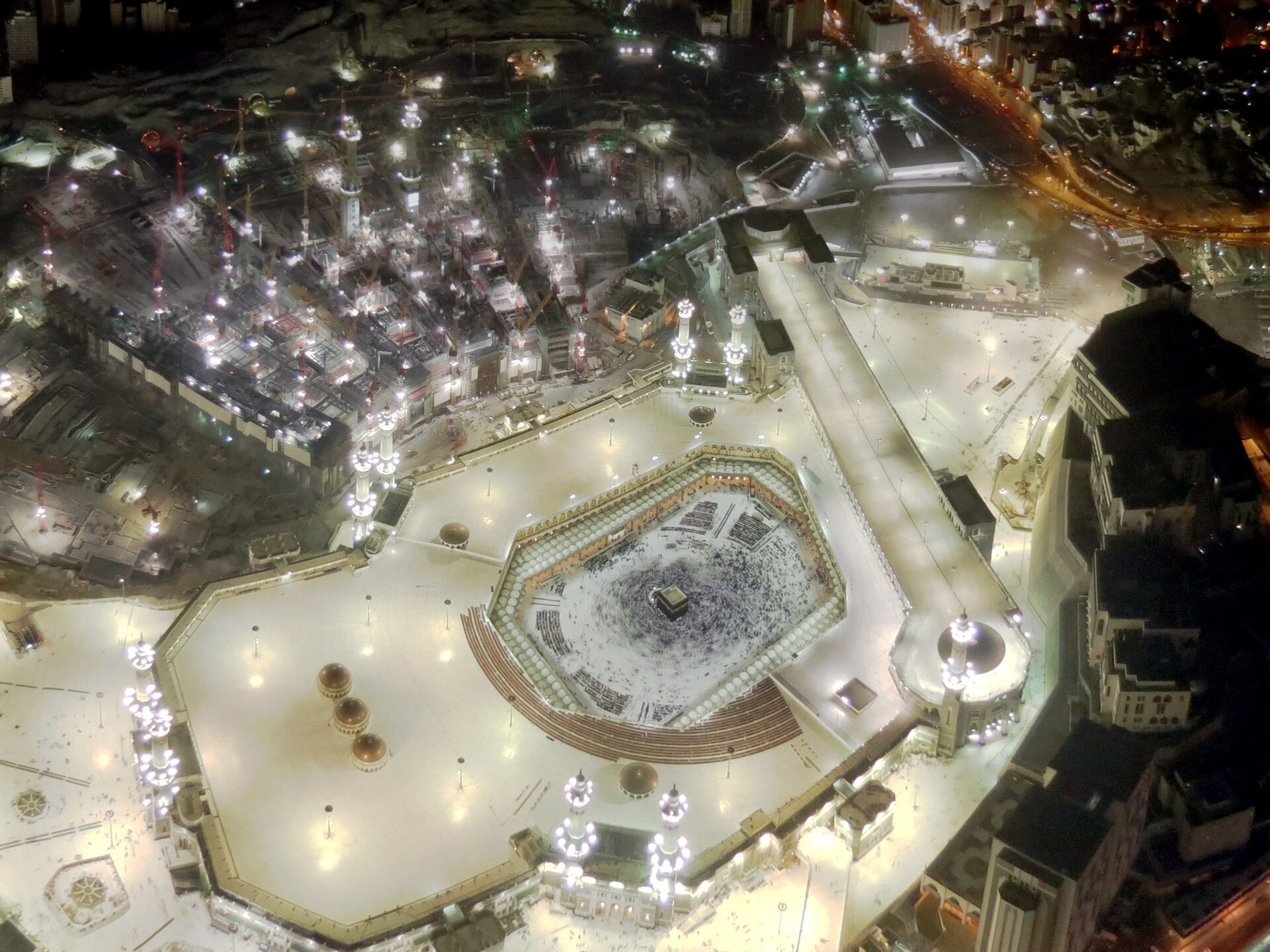
On the same day Arnault was appointed — March 25 — Saudi Ambassador Faisal bin Abdullah Al-Amudi told a Jakarta press conference that “Alhamdulillah, Saudi Arabia remains safe at this time. Everything will proceed as planned,” with preparations described as 95 percent complete. The Hajj arrival window opens April 18, four days before the ceasefire expires, with 1.8 million registered pilgrims scheduled to converge on the Hejaz. Indonesia’s 221,000 pilgrims depart April 22 — the day the ceasefire ends. Pakistan’s 119,000 arrive April 18.
Saudi Arabia is now addressing two audiences with structurally contradictory messages. The UN engagement — FM calls, envoy tours, UNSC votes — signals alarm at the highest multilateral level, framing the conflict as a threat to global stability severe enough to warrant the Secretary-General’s personal intervention. The Hajj messaging signals normalcy, institutional readiness, and the Kingdom’s unbroken capacity to fulfil its custodial obligations. Both messages are demonstrably true. Both cannot be simultaneously operative if the ceasefire collapses on April 22 while nearly two million pilgrims are inside the Umrah cordon.
The deployment of Pakistani fighter jets to King Abdulaziz Air Base on April 11 — the first visible military activation of the Saudi-Pakistan mutual defence pact since the war began — sharpens the contradiction further. Pakistan is simultaneously sending 119,000 civilians into Saudi Arabia for Hajj and deploying combat aircraft to defend Saudi airspace, arriving one day before the Islamabad talks its own foreign minister hosted collapsed without result. Pakistan FM Ishaq Dar said after the collapse that his country would “try to facilitate a new dialogue between Iran and the U.S. in the coming days” — days that will overlap with the Hajj cordon sealing on April 18.
What Comes After April 22?
The Islamabad collapse removes the bilateral track. Trump’s blockade announcement removes any pretence that the US is still pursuing a diplomatic resolution on its own. Arnault’s mandate covers “comprehensive and durable” outcomes, not the ten-day window before the ceasefire expires. The UNSC is structurally deadlocked. What remains is exactly what Saudi Arabia’s paper trail was built to frame: a situation in which Riyadh can demonstrate it pursued every available multilateral channel, was blocked at each one by factors outside its control, and now faces the ceasefire deadline with no institutional mechanism for extension.
VP JD Vance, departing Islamabad, said: “The bad news is that we have not reached an agreement. And I think that’s bad news for Iran much more than it’s bad news for the U.S. … they have chosen not to accept our terms.” Iran’s Parliament Speaker Ghalibaf, who led the Iranian delegation, countered: “The US did not succeed in gaining the trust of the Iranian government during the talks.” Neither statement addresses the ceasefire deadline, and neither mentions the UN track — which tells you everything about how much weight either party assigned to Arnault’s mission.
Saudi Arabia’s position on April 12 is one of documented exhaustion — not physical, but procedural. Every multilateral option has been attempted, recorded, and either vetoed or rendered toothless by mandate limitations. The Kingdom has 1.8 million pilgrims arriving in six days, Pakistani jets on its eastern runways, a US naval blockade forming in the strait that carries its oil exports, and a UN envoy somewhere between Tehran and Islamabad whose mandate does not cover the thing that will matter most on April 22. The paper trail is complete. What it proves is that no one — not the UN, not Pakistan, not the United States — has the authority or the will to extend a ceasefire that both sides have reasons to let expire.
Background
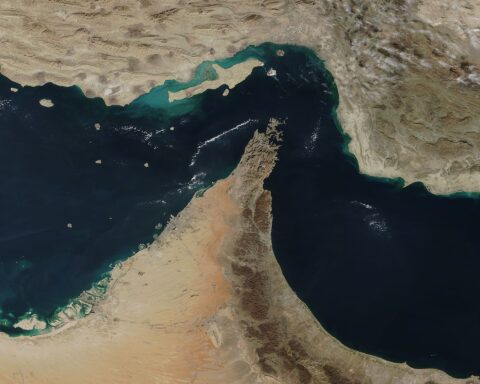
The Iran-US conflict, which began with US strikes on Iranian nuclear and military facilities in late February 2026, has produced more than 100 days of sustained military operations across the Persian Gulf. Iran responded with ballistic missile and drone attacks on Gulf state infrastructure, including Saudi oil facilities at Ras Tanura and the SABIC complex at Jubail, while imposing de facto control over the Strait of Hormuz through a combination of naval patrols, mine warnings, and administrative rejection of vessel transits. Pre-war Hormuz throughput of 138 ships per day has fallen to 15-20, according to maritime tracking firm Windward, with approximately 800 vessels stranded and 70-plus empty VLCCs idling off Singapore.
A 14-day ceasefire, brokered through Pakistan and announced April 8, has reduced but not eliminated hostilities — Kuwait intercepted 28 drones and Bahrain intercepted 31 drones and 6 missiles in the post-ceasefire period. The ceasefire contains no extension mechanism. Saudi Arabia has rerouted the majority of its oil exports through the East-West Pipeline to the Red Sea port of Yanbu, operating at an effective capacity of 5.9 million barrels per day against pre-war Hormuz throughput of 7-7.5 million bpd — a structural gap of 1.1 to 1.6 million bpd. Saudi Arabia has intercepted 799 drones and 95 missiles — 894 total — since March 3, at an estimated cost of $3.49 billion in PAC-3 interceptors alone.
Frequently Asked Questions
Can Arnault broker a ceasefire extension before April 22?
His mandate does not cover ceasefire extensions — it is framed around a “comprehensive and durable resolution,” which operates on a timeline of months, not days. He has no Chapter VII authority, no enforcement mechanism, and as of April 12 is reportedly en route to Pakistan, not to either belligerent capital with a draft text. The UN’s good offices power under Article 99 is diplomatic, not coercive. Even if Arnault were to propose an extension framework, it would require acceptance by both Iran and the United States — the same parties that just spent 21 hours in Islamabad failing to agree on far more modest terms, per CNBC and Al Jazeera reporting.
Why did Saudi Arabia co-sponsor a UNSC resolution it expected to be vetoed?
The resolution’s value was in the attempt, not the outcome. By securing eleven affirmative votes and forcing Russia and China to exercise their vetoes — rather than allowing the text to be quietly withdrawn — Saudi Arabia and its Gulf co-sponsors created a public record of great-power obstruction. In international legal terms, this establishes that the Gulf states sought collective security through the UN Charter’s prescribed mechanisms and were denied it, potentially strengthening any future claim to self-defence measures under Article 51. The fifteen-day, six-draft negotiation history also demonstrates good-faith engagement with the veto-holding powers’ concerns — engagement that was rebuffed.
What is the legal status of a UN Personal Envoy versus a Special Representative?
A Personal Envoy of the Secretary-General operates under the SG’s direct authority and does not require Security Council authorization — which means the appointment cannot be vetoed but also carries no Council-backed mandate. A Special Representative (SRSG) is typically authorized by a Security Council resolution and can carry Chapter VI or VII authority. Arnault has served in both capacities across his career (SRSG in Afghanistan, Personal Envoy for Colombia and Bolivia). His current appointment as Personal Envoy means he reports to Guterres alone, can engage any party, but cannot compel cooperation or invoke enforcement mechanisms. His findings carry moral authority but no legal force.
Has Arnault visited Saudi Arabia?
No confirmed visit to Riyadh appears in available reporting as of April 12. Arnault has visited Tehran (April 8-9), where he met Deputy FM Takht-Ravanchi and toured civilian strike sites, and was expected next in Pakistan. The absence of a confirmed Saudi stop may reflect Riyadh’s preference to engage the UN track through existing channels — the FM-to-SG call, the UNSC resolution co-sponsorship — rather than hosting the envoy directly and creating expectations of bilateral engagement that could constrain Saudi Arabia’s freedom of action after April 22.
How does Trump’s blockade announcement affect the UN track?
Trump’s Truth Social declaration of a US naval blockade of Hormuz, posted within hours of the Islamabad collapse on April 12, introduces a unilateral military dimension that the UN track has no capacity to address. A blockade is an act of war under international law, and its declaration by a UN Security Council permanent member effectively renders the Council’s role in Hormuz mediation moot — the US cannot simultaneously blockade the strait and participate in good faith in multilateral negotiations about reopening it. For Saudi Arabia, the blockade compounds the export gap problem: the Kingdom’s Yanbu bypass handles 5.9 million bpd, but a US-enforced blockade could trap Saudi-flagged or Saudi-chartered vessels on the Gulf side of Hormuz, further reducing effective export capacity below the pipeline’s theoretical ceiling.