ISLAMABAD — Pakistan’s decision to route its post-collapse diplomacy through Riyadh — not back to Islamabad, not to a neutral capital — answers the question the “Islamabad Process” has been avoiding since April 12: the ceasefire framework cannot produce a second round without Saudi buy-in, and Saudi Arabia knows it. Prime Minister Shehbaz Sharif’s confirmed two-day visit to Riyadh on April 15-16, accompanied by Field Marshal Asim Munir, Foreign Minister Ishaq Dar, and Finance Minister Mohammad Aurangzeb, is not a consultation. It is a structural acknowledgment that the mediator needs the excluded party’s permission to mediate again.
The gap between Saudi formal exclusion from the April 11-12 Islamabad bilateral and Saudi structural indispensability to any successor framework is the central tension of Iran-war diplomacy entering its seventh week. Iran insisted on keeping Riyadh out of the room. Iran’s foreign minister then called the Saudi foreign minister twice — on April 9 and again on April 13, the day the US blockade began — to brief him on what happened inside that room.
Table of Contents
- The Rebranding: From Venue to Process
- Why Does Pakistan Go to Riyadh Before Antalya?
- The Exclusion Paradox: Saudi Arabia’s Absent Presence
- 13,000 Troops and a Telephone Call
- What Collapsed in 21 Hours?
- Can the Quadrilateral Survive Without a Quadrilateral Venue?
- The Financial Architecture of Mediation
- Why Has Iran Not Condemned Pakistan’s Military Deployment?
- What Must Happen Before Round 2?
- Frequently Asked Questions
The Rebranding: From Venue to Process
Within hours of the April 12 collapse, Pakistan rebranded its diplomatic track. What had been a series of ad hoc meetings in Islamabad became the “Islamabad Process” — a name that implies institutional permanence, sequenced phases, and Pakistan’s proprietary ownership of the mediation architecture. The branding was immediate and deliberate. By April 13, CBS News, Al Jazeera, and CNN were all using the term, sourced to Pakistani officials.
The name does real work. A “process” survives a failed round in ways a single venue does not. Oslo survived years of stalled implementation because it was a process, not a meeting. Astana survived because Turkey, Russia, and Iran agreed to reconvene under the same name regardless of outcome. Pakistan is attempting the same institutional lock-in: whatever happens next happens under the Islamabad Process banner, with Pakistan as convener.
Foreign Minister Dar’s language after the collapse was calibrated to sustain this framing. “Pakistan has been and will continue to play its role to facilitate engagements and dialogue between the Islamic Republic of Iran and the United States of America in the days to come,” he told Al Jazeera on April 13. The phrasing — “will continue,” “in the days to come” — presumes continuity. It does not ask whether there will be a next round. It assumes one and positions Pakistan as its custodian.
But a process without a second round is just a press release. And the obstacles to Round 2 run through Riyadh before they run through Tehran or Washington.
The Middle East briefing 3,000+ readers start their day with.
One email. Every weekday morning. Free.
Why Does Pakistan Go to Riyadh Before Antalya?
The sequencing of Shehbaz’s post-collapse travel answers the question his diplomats have been deflecting. After Riyadh on April 15-16, the delegation proceeds to the Antalya Diplomacy Forum on April 17-19, where a four-way meeting of Turkey, Pakistan, Saudi Arabia, and Egypt is planned on the sidelines. The Riyadh stop comes first because it must. Pakistan cannot walk into Antalya proposing Round 2 without having secured Saudi acquiescence — or at minimum Saudi non-obstruction — in advance.
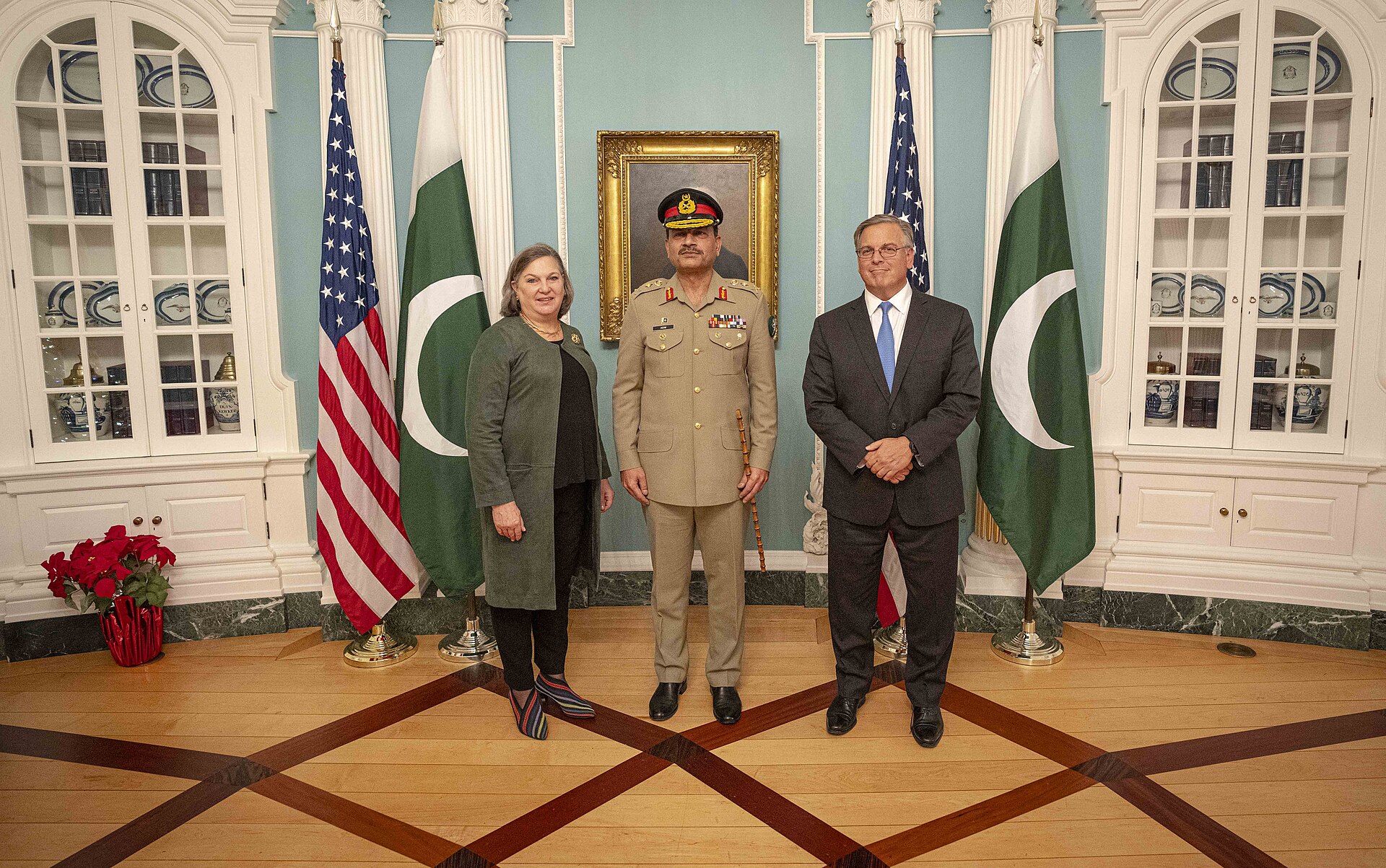
The delegation composition tells the same story. Shehbaz brings not just Dar and the diplomatic apparatus but Field Marshal Munir, whose 13,000 troops are currently deployed to King Abdulaziz Air Base in Saudi Arabia’s Eastern Province, and Finance Minister Aurangzeb, whose ministry is managing the financial facilities that underwrite Pakistan’s mediating capacity. This is not a foreign-policy consultation. It is a meeting between a mediator and the party whose military hosting, financial support, and diplomatic consent make mediation possible.
The visit followed a direct invitation from Crown Prince Mohammed bin Salman, according to Daily Pakistan and Aaj TV reporting on April 13-14. An invitation, not a request. The distinction matters in Gulf diplomatic grammar: Pakistan asked to mediate; Saudi Arabia summoned Pakistan to explain what mediation produced.
The Exclusion Paradox: Saudi Arabia’s Absent Presence
Iran’s insistence on excluding Saudi Arabia from the April 11-12 bilateral was, on its own terms, successful. The Islamabad talks were a US-Iran affair, mediated by Pakistan, with no Saudi representative in the room. This was Iran’s condition, and Washington accepted it — a concession that infuriated Riyadh, which had attended the March 29-30 Islamabad quadrilateral ministerial as a formal co-guarantor alongside Turkey and Egypt.
But exclusion from the room did not produce exclusion from the process. Saudi Foreign Minister Prince Faisal bin Farhan received two calls from Iranian Foreign Minister Abbas Araghchi — on April 9, before the talks began, and on April 13, after they collapsed. The April 9 call was the first direct Saudi-Iran foreign minister conversation since the war began on February 28. The April 13 call, on the day the US naval blockade took effect, saw Araghchi characterize the blockade as “provocative U.S. actions” — language designed to position Iran and Saudi Arabia on the same side of a shared grievance against Washington.
The calls reveal the structural reality beneath the formal exclusion. Iran needed Saudi Arabia out of the room to avoid negotiating under the gaze of a co-belligerent whose territory its missiles had struck repeatedly since March. But Iran needed Saudi Arabia adjacent to the room — reachable by phone, aware of developments, invested in outcomes — because any ceasefire that holds requires Saudi compliance with its terms. A ceasefire that stops US strikes but not Saudi-hosted operations is no ceasefire at all from Tehran’s perspective. And the 13,000 Pakistani troops at King Abdulaziz Air Base, deployed on the same day the Islamabad talks opened, made Saudi territory operationally inseparable from the military situation Iran was trying to freeze.
13,000 Troops and a Telephone Call
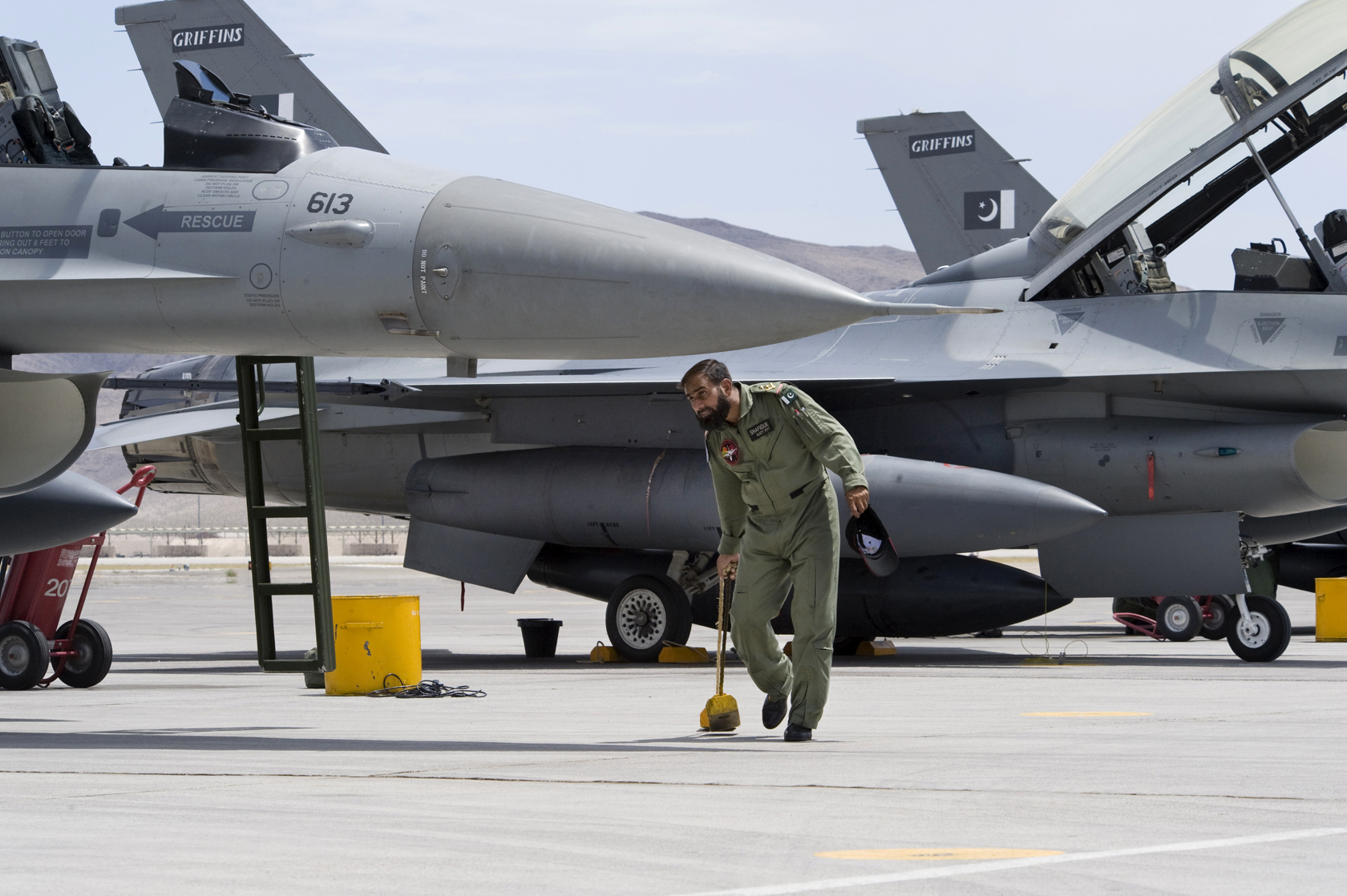
The simultaneity of April 11 deserves its own accounting. On the same day JD Vance sat across from Majlis Speaker Mohammad Baqer Ghalibaf in Islamabad, Pakistan completed its first formal deployment under the September 2025 Saudi-Pakistan Mutual Defense Agreement — approximately 13,000 ground troops and between 10 and 18 F-16 fighter jets — the number varies between Pakistani and Saudi official releases — to Saudi Arabia’s Eastern Province. The deployment bypassed Pakistan’s parliament entirely, authorized under the 27th Constitutional Amendment that granted Field Marshal Munir, as Chief of Defence Forces, a five-year command tenure extending to 2030 and operational authority independent of elected government approval.
The SMDA contains NATO Article 5-equivalent language: an attack on one party constitutes an attack on both. Pakistan’s 2015 parliamentary refusal to join the Saudi-led Yemen coalition — the wound that still shapes Saudi-Pakistani relations — was precisely the scenario the SMDA was designed to make constitutionally unrepeatable. Munir’s command authority means the deployment decision sits outside democratic deliberation. The troops went because the treaty said they would, and the treaty was written to ensure no parliament could say they wouldn’t. The full leaked text of the SMDA and its implications for Pakistan’s dual role are the subject of Iran’s Chosen Mediator Is Saudi Arabia’s Contracted Military Auxiliary.
Imtiaz Gul, a Pakistani security analyst, offered the clearest reading of the deployment’s diplomatic function. “Three jets won’t make much of a difference militarily,” he told Al Jazeera on April 11. “It’s messaging Tehran to be flexible in these talks.” Muhammad Faisal of the University of Technology Sydney was more direct: the deployment “will complicate Iran’s targeting calculus.” Both assessments converge on the same point — the troops were a diplomatic instrument disguised as a military one, deployed to give Pakistan’s mediation weight it could not generate from neutrality alone.
Dar himself had laid the groundwork months earlier. In early March, he warned Iranian leaders that “Islamabad was bound by its obligations to Riyadh,” securing — according to Al Jazeera’s reporting — an Iranian assurance that Saudi territory would not be used as a vector for attacks on Iran. The warning was a confession: Pakistan’s mediating position rested on a military alliance with one of the belligerents. The “Islamabad Process” was never neutral. It was structurally tilted toward Riyadh from inception, and Iran accepted this tilt because the alternatives were worse.
What Collapsed in 21 Hours?
The Islamabad talks lasted 21 hours across three rounds before ending without agreement on April 12. The post-mortems from each side are irreconcilable. Araghchi claimed the US was “inches away from an MoU” before walking out. Vance said Iran refused to commit to long-term nuclear limitations: “We need to see an affirmative commitment that they will not seek a nuclear weapon — not just now, but for the long term. We haven’t seen that yet.” The US had proposed a 20-year enrichment moratorium. Iran countered with monitored down-blending of its 440.9 kilograms of 60%-enriched uranium — a technical concession that fell short of the duration Washington demanded.
Iran’s 10-point plan, presented at Islamabad, included items that exceeded any bilateral US-Iran framework: a Hormuz transit protocol under Iranian coordination, an end to all regional conflicts including Israeli operations in Lebanon, full sanctions lifting, and war reparations. Several of these points required Saudi action or acquiescence — Hormuz transit affects Saudi exports directly, Lebanon’s inclusion was a demand Saudi Arabia had been quietly advancing through British proxies, and sanctions architecture intersects with Saudi oil-market positioning. Iran brought a 10-point plan to a bilateral meeting that required a multilateral table to resolve.
Araghchi’s post-collapse framing was instructive. The talks were “not an event, but a process” that “laid the foundation” for future engagement, he said. “For us, diplomacy is a continuation of struggle.” The language mirrors Pakistan’s “Islamabad Process” branding — both sides want institutional continuity even as they disagree on what the institution produced. But Araghchi’s phrase — “continuation of struggle” — carries a specific resonance in Iranian revolutionary discourse. It signals domestic audiences that negotiation is resistance by other means, not concession.
The sharpest external assessment circulating among Washington analysts was blunt: “No process, however well-led, can close a gap the parties themselves have not yet chosen to close.” The gap at Islamabad was not procedural. It was structural. Iran’s authorization ceiling — the distance between what Araghchi could discuss and what the IRGC-controlled Supreme National Security Council would ratify — meant the Iranian delegation arrived with less mandate than its language suggested. And the US delegation arrived with a blockade already prepared for the day after failure.
Can the Quadrilateral Survive Without a Quadrilateral Venue?
The four-party format — Pakistan, Saudi Arabia, Turkey, Egypt — first coalesced at a March 19 Riyadh consultative meeting, hardened at the March 29-30 Islamabad ministerials, and is scheduled to reconvene at Antalya on April 17-19. The format has survived the bilateral’s failure. Whether it can produce Round 2 depends on resolving a venue problem that is also a sovereignty problem.
Round 1 took place in Islamabad because Iran trusted Pakistan enough — and distrusted the alternatives enough — to accept Pakistani soil as a meeting ground. Turkey hosted the Antalya Forum but has a US military base at Incirlik, a fact Turkey-based Iran analyst Betul Dogan-Akkas cited when explaining Iran’s “strategic choice” to use Pakistan rather than “a powerful middle power with a US military base.” Egypt has its own US military relationship and a cold peace with Iran. Saudi Arabia is a belligerent.
A return to Islamabad is the path of least resistance, but the “Islamabad Process” brand creates a problem: if Round 2 happens elsewhere, the brand weakens; if it happens in Islamabad again after a failure, the brand carries the residue of collapse. Pakistani officials quoted by CBS News on April 13 said they were “counting the time they have at their disposal in hours, rather than days.” The ceasefire expires April 22. The Hajj cordon seals April 18, after which any military escalation near the Holy Cities carries a different political charge.
The Antalya four-way meeting may function as a venue negotiation disguised as a diplomatic consultation. Turkey’s interest in hosting — Ankara has invested heavily in positioning itself as a mediating power since the Ukraine grain deal — intersects with Pakistan’s interest in preserving its brand and Saudi Arabia’s interest in being inside the room this time. The quadrilateral’s survival depends on whether Saudi Arabia will accept continued formal exclusion from US-Iran talks in exchange for structural influence over the framework that produces them.
| Date | Event | Saudi Role | Format |
|---|---|---|---|
| March 19 | Riyadh consultative meeting | Host and convener | Quadrilateral (Pak-KSA-Tur-Egy) |
| March 29-30 | Islamabad ministerials | Co-guarantor (FM Faisal attended) | Quadrilateral ministerial |
| April 9 | Araghchi calls Saudi FM Faisal | Briefed on upcoming talks | Bilateral phone call |
| April 11-12 | Islamabad US-Iran talks | Formally excluded at Iran’s insistence | Bilateral (US-Iran), Pak mediator |
| April 11 | Pakistan deploys 13,000 troops to KSA | Host under SMDA | Bilateral military (Pak-KSA) |
| April 12 | Saudi-Qatar $5B pledge to Pakistan | Co-funder | Financial bilateral |
| April 13 | Araghchi calls Saudi FM (post-collapse) | Briefed on collapse + blockade | Bilateral phone call |
| April 15-16 | Shehbaz-Munir visit Riyadh | Host (MBS invitation) | Bilateral summit |
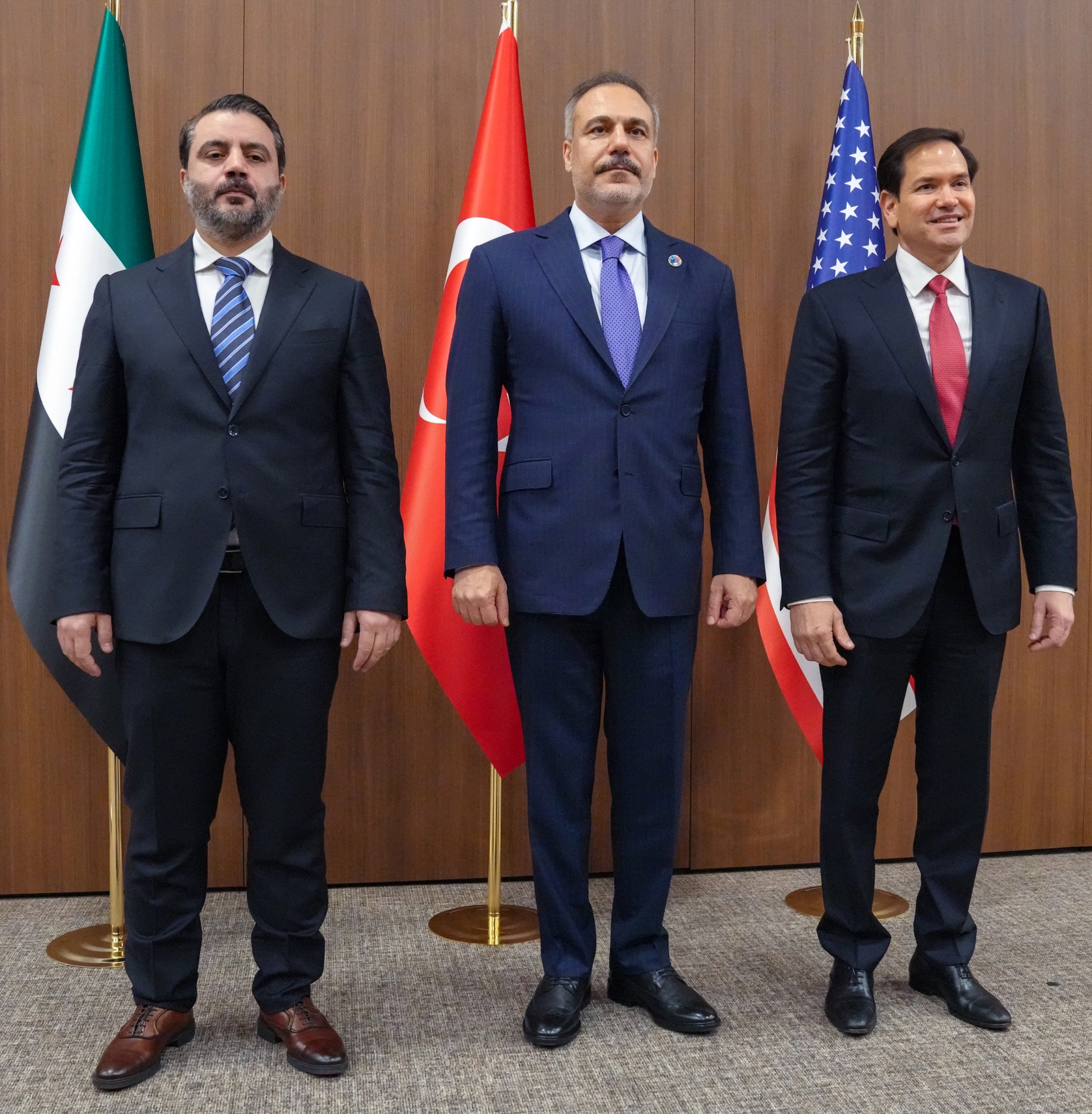
| April 17-19 | Antalya Diplomacy Forum | Participant in four-way sideline | Quadrilateral (Pak-KSA-Tur-Egy) |
The Financial Architecture of Mediation
Pakistan’s mediating position has a price tag, and Saudi Arabia holds most of the receipts. The financial flows surrounding the Islamabad Process are not incidental to the diplomacy — they are the material basis on which Pakistan’s mediating capacity rests.
On or around April 12, simultaneously with the confirmation of Pakistan’s military deployment, Saudi Arabia and Qatar jointly pledged approximately $5 billion in fresh financial support to Pakistan — reported by The Print (India) and ProPakistani. This sits atop a prior $5 billion Saudi cash deposit facility that Pakistan was already drawing on. Separately, a UAE debt repayment of $3.5 billion falls due at the end of April, creating a rolling financial dependency that ties Pakistan’s fiscal calendar to Gulf diplomatic rhythms.
Finance Minister Aurangzeb’s inclusion in the Riyadh delegation is the clearest signal that the April 15-16 visit will address these flows directly. A mediator whose fiscal solvency depends on one party’s financial facilities is not a neutral mediator. Pakistan has never claimed neutrality — Dar’s early-March warning to Iran about Pakistan’s “obligations to Riyadh” was an explicit acknowledgment of the tilt. But the financial architecture makes the tilt load-bearing. Pakistan cannot sustain the Islamabad Process — the travel, the security, the diplomatic bandwidth, the domestic political cost of hosting talks that fail — without Gulf funding.
The 2015 Yemen precedent haunts this calculation from the Saudi side. Umer Karim of the King Faisal Center for Research and Islamic Studies framed it directly: “Perhaps this is the last time the Saudis will test Pakistan” on whether it will honor defense pact obligations. The financial support is not charity. It is the cost of an answer to a question Saudi Arabia has been asking since 2015: will Pakistan show up when called? The SMDA deployment and the $5 billion arrived on the same day because they are the same transaction.
Why Has Iran Not Condemned Pakistan’s Military Deployment?
The silence is louder than any statement would have been. On April 11, Pakistan deployed 13,000 troops and between 10 and 18 F-16s to the territory of a nation Iran has been striking with ballistic missiles since March. No named Iranian official condemned the deployment. PressTV, which had covered the Islamabad talks extensively, did not editorialize against Pakistan’s military commitment to Saudi Arabia. Araghchi called the Saudi foreign minister two days later without, according to the SPA readout, raising the deployment as an obstacle to continued engagement.
Iran’s silence reflects a cold calculation: Pakistan’s mediating utility outweighs the provocation of its military deployment. Qamar Cheema of the Sanober Institute identified the foundation of this utility — Pakistan’s early condemnation of US strikes on Iran “proved where Pakistan won over the Iranians.” Masood Khan, former Pakistani ambassador to both the UN and the United States, offered the fuller inventory: Pakistan provided “reliability, impartiality, consistency, restraint and deliverables. We fit the bill.” The word “impartiality” sits uneasily beside 13,000 troops in Saudi Arabia, but Khan’s list reflects Iran’s perception, not an objective assessment.
Iran’s tolerance has structural limits that the Riyadh visit will test. Pakistan’s 15-20% Shia population — between 37 and 50 million people — creates a domestic political constraint on how far Islamabad can visibly tilt toward Riyadh. The approximately 900-kilometer Pakistan-Iran border generates its own security interdependencies. And Iran retains the option of withdrawing cooperation from the Islamabad Process at any time, collapsing Pakistan’s mediating brand overnight. The deployment was a calculated risk: Pakistan bet that Iran would absorb the provocation rather than lose its only trusted interlocutor with Washington. So far, the bet has held.
What Must Happen Before Round 2?
The obstacles to a second round of talks are sequential, not parallel — each depends on resolving the one before it. The Riyadh visit on April 15-16 addresses the first and most fundamental: Saudi consent to the framework under which Pakistan continues mediating. Without it, the Islamabad Process is a name without a mandate.
The second obstacle is the US naval blockade, effective since April 13. Iran has characterized it as an act of war. Araghchi told Saudi FM Faisal it constitutes “provocative U.S. actions.” No Iranian government will return to a negotiating table while under active naval blockade without a face-saving mechanism — a pause, a partial lifting, or a reframing as “enforcement of existing sanctions” rather than a new escalatory step. Pakistan cannot broker this reframing alone. It requires either a US concession or a Saudi intermediary role that Iran would currently reject in public but might accept in practice, as the Araghchi-Faisal calls suggest.
The third obstacle is the authorization ceiling in Tehran. Ishtiaq Ahmad of Quaid-i-Azam University credited Pakistan with having “shaped the sequencing, timing and framing of proposals” and possessing “leverage with all sides.” But Alter’s Atlantic Council assessment applies: the gap is not procedural but political. The distance between what Foreign Minister Araghchi can discuss and what the IRGC-aligned Supreme National Security Council will ratify has not narrowed since April 12. Khamenei’s prolonged absence from public decision-making — now exceeding 40 days — means the Iranian system lacks a figure with the authority to override IRGC objections to terms that touch Hormuz sovereignty or nuclear enrichment timelines.
The fourth obstacle is time itself. The ceasefire expires April 22. Pakistani officials told CBS News they are counting in hours. The Hajj cordon seals April 18, and the first major pilgrim contingents — 119,000 Pakistanis, 221,000 Indonesians — begin arriving the same week. Any military escalation after April 18 carries risks to pilgrims that would transform the war’s political character across the Islamic world. Aziz Alghashian of the Gulf International Forum offered the governing principle: “Treaties are only as strong as the political calculations and political will behind them.” The Islamabad Process is only as durable as the calculation that sustaining it costs less than abandoning it — and that calculation changes daily.
The Antalya four-way meeting on April 17-19 is the last diplomatic window before the ceasefire expires. If the quadrilateral cannot agree on terms for Round 2 at Antalya — venue, scope, participants, Saudi role — the Islamabad Process enters April 22 without a successor framework. At that point, Pakistan’s brand survives only if both Washington and Tehran choose to let it survive, and the US blockade’s coercive logic runs in the opposite direction from diplomatic patience.
The Riyadh Variable
What Shehbaz and Munir hear in Riyadh on April 15-16 will determine whether Pakistan arrives in Antalya proposing a Round 2 or managing the optics of a process that has already stalled. Saudi Arabia’s options are three: accept continued formal exclusion from US-Iran talks while exercising structural influence through Pakistan and the quadrilateral; demand inclusion as a condition for supporting Round 2, which Iran will reject; or withdraw active support for the Islamabad Process in favor of a bilateral Saudi-US track that addresses Saudi security interests directly, bypassing the multilateral framework entirely.
The first option preserves the architecture but leaves Saudi Arabia dependent on Pakistani reporting of what happens inside the room — an uncomfortable position for a kingdom whose Eastern Province is absorbing missile strikes. The second option collapses the talks before they begin. The third option marginalizes Pakistan and Turkey, fractures the quadrilateral, and concedes to Iran the argument that Saudi Arabia was never a mediator but always a belligerent seeking a seat it had not earned.
MBS’s invitation to Shehbaz suggests the first option remains operative, but with conditions. The $5 billion in fresh financial support, the SMDA deployment, and the Riyadh summons form a single package: Saudi Arabia is willing to let Pakistan front the process, provided Pakistan delivers a framework in which Saudi security interests — Hormuz reopening, Eastern Province protection, Iran’s nuclear trajectory — are addressed with the same seriousness as the US-Iran bilateral issues that dominated Round 1. The mediator, in other words, must mediate for the excluded party too. That is the structural paradox Shehbaz carries to Riyadh, and the one the Islamabad Process must resolve to earn its name.
Frequently Asked Questions
What is the “Islamabad Process”?
The Islamabad Process is Pakistan’s formal name for the diplomatic mediation track between Iran and the United States that it began hosting in March 2026. Pakistan adopted the branding immediately after the April 12 collapse of the first bilateral US-Iran talks, transforming what had been an ad hoc venue arrangement into a named institutional framework — similar to the Astana Process for Syria or the Minsk Process for Ukraine. The name asserts Pakistani ownership of the mediation architecture regardless of where future rounds are held, and commits both Washington and Tehran to acknowledging Pakistan’s convening role in any successor talks. The quadrilateral co-guarantors are Saudi Arabia, Turkey, and Egypt, though only Pakistan served as direct mediator in Round 1.
Why was Saudi Arabia excluded from the April 11-12 talks?
Iran conditioned its participation on Saudi Arabia’s absence from the bilateral format. Tehran’s rationale was partly procedural — the talks were framed as US-Iran negotiations, not a multilateral conference — and partly strategic. Saudi Arabia had been a target of sustained Iranian missile and drone attacks since February 28, and Iranian negotiators assessed that Saudi presence would shift the agenda toward security guarantees and war reparations rather than the nuclear and sanctions issues Tehran prioritized. Saudi FM Prince Faisal bin Farhan had attended the March 29-30 Islamabad quadrilateral ministerial as a formal co-guarantor, making the exclusion a deliberate downgrade of Saudi Arabia’s diplomatic standing within the framework Riyadh had helped construct. The March 19 Riyadh meeting had been the quadrilateral’s founding venue.
How does the SMDA differ from the 2015 Yemen coalition request?
The September 2025 Saudi-Pakistan Mutual Defense Agreement contains NATO Article 5-equivalent language making an attack on one party an attack on both — a treaty obligation rather than a political request. The 2015 Saudi request for Pakistani participation in the Yemen coalition was a voluntary invitation that Pakistan’s parliament voted to decline. The SMDA, combined with the 27th Constitutional Amendment of November 2025 granting Field Marshal Munir a five-year command tenure with operational authority independent of parliamentary approval, was designed to make a repeat refusal structurally impossible. The April 11 deployment of 13,000 troops proceeded under Munir’s authority without a parliamentary vote — exactly the scenario the SMDA’s architects intended.
What happens if no Round 2 occurs before April 22?
The existing ceasefire, brokered through Pakistani mediation and accepted by Trump based on conversations with Shehbaz and Munir, expires April 22 with no automatic extension mechanism. The Soufan Center has noted the absence of any renewal clause. If the ceasefire lapses without a successor agreement, the US naval blockade — already in effect since April 13 — becomes the default diplomatic instrument, and military operations on all sides resume without constraint. The Hajj cordon sealing on April 18 adds a complication: Indonesia’s 221,000 pilgrims begin departing April 22, and Pakistan’s 119,000 arrive starting April 18. Military escalation during the Hajj season would mark the first time since 1987 — when 402 people died in Mecca clashes — that armed conflict directly intersected with the pilgrimage.
Is Pakistan a neutral mediator?
Pakistan has not claimed neutrality and cannot credibly do so. It has 13,000 troops deployed to Saudi territory under a mutual defense pact, receives approximately $10 billion in Saudi and Qatari financial facilities, and its foreign minister explicitly told Iran in March that Pakistan was “bound by its obligations to Riyadh.” What Pakistan claims instead is unique access: it has served as Iran’s protecting power in the United States since 1992, handling consular affairs for Iranian nationals at the Pakistani Embassy in Washington — a role that gives Islamabad a direct institutional channel to Tehran that no other US-adjacent state possesses. Pakistan was also the first government to publicly condemn US strikes on Iran after February 28, a move that Qamar Cheema identified as the act that “won over the Iranians” before any formal mediation was proposed. Pakistan’s mediating position rests not on neutrality but on being simultaneously indispensable to both sides for structurally different reasons.
What the Islamabad Process has not resolved — and structurally cannot resolve — is the fifteen-year gap between Washington’s demand for a twenty-year enrichment moratorium and Tehran’s counter-offer of five years. Why the 20-year vs 5-year enrichment gap cannot close, and why Saudi Arabia’s exclusion from the Islamabad nuclear process is a structural feature rather than an oversight, is examined here.