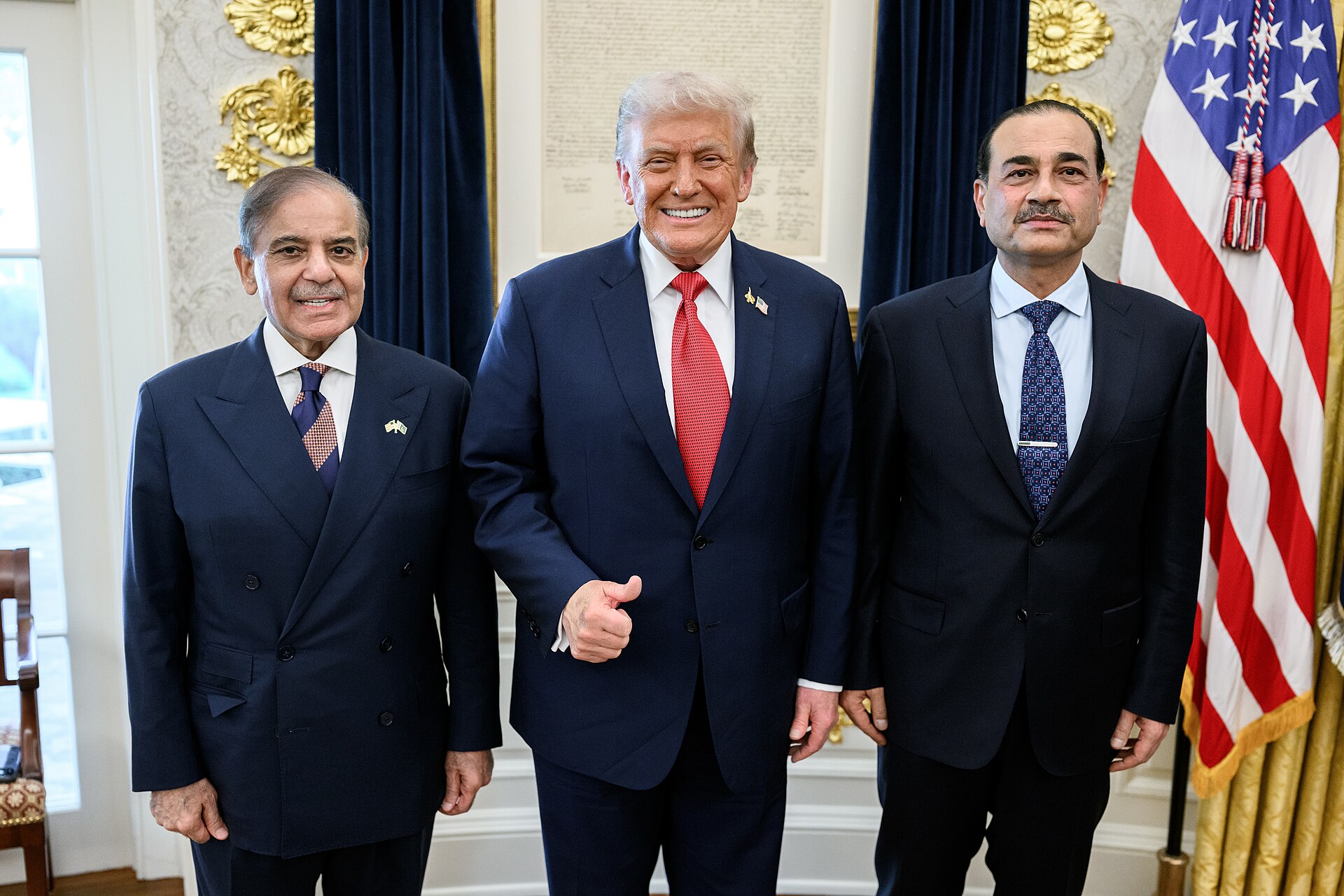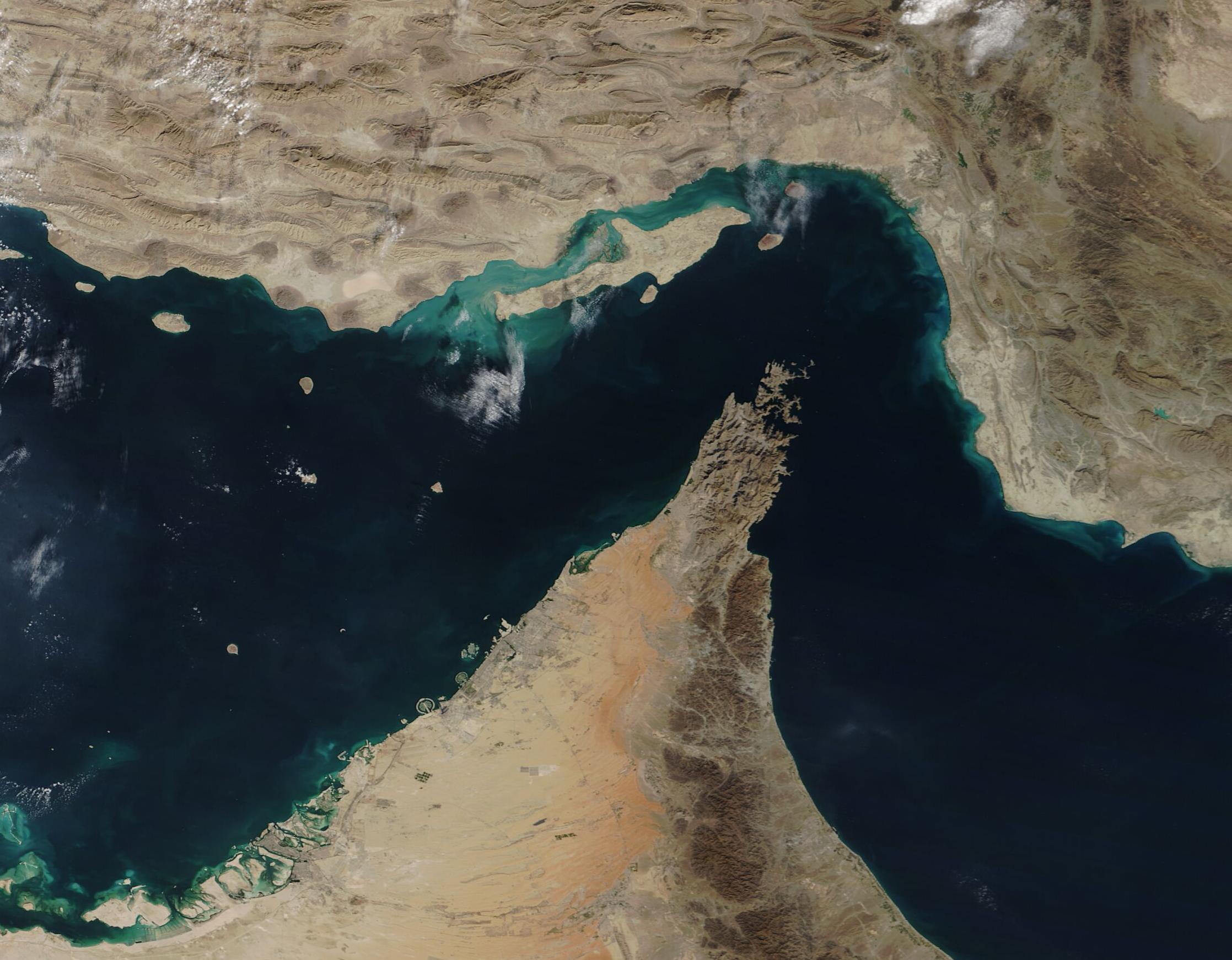

RIYADH — Saudi Finance Minister Mohammed bin Abdullah al-Jadaan landed in Islamabad on April 11 — the same day JD Vance sat across from Iran’s Majlis Speaker Mohammad Baqer Ghalibaf, and the same day Pakistan completed its 13,000-troop deployment to King Abdulaziz Air Base in Saudi Arabia’s Eastern Province. He met Prime Minister Shehbaz Sharif, Deputy Prime Minister Ishaq Dar, and Field Marshal Asim Munir together. By April 12, a $5 billion Saudi-Qatar financial package had been confirmed, covering $4.8 billion in external obligations Pakistan could not meet alone. No formal agreement was signed during al-Jadaan’s visit. Within 24 hours, MBS personally invited Sharif to Riyadh for April 15.
The sequence is not coincidence. It is a transaction ledger. Saudi Arabia is financing the only diplomatic channel it cannot enter directly — and the April 15 visit, with Munir and Dar in the delegation alongside Finance Minister Aurangzeb, is where the financier collects the briefing on what his investment produced.
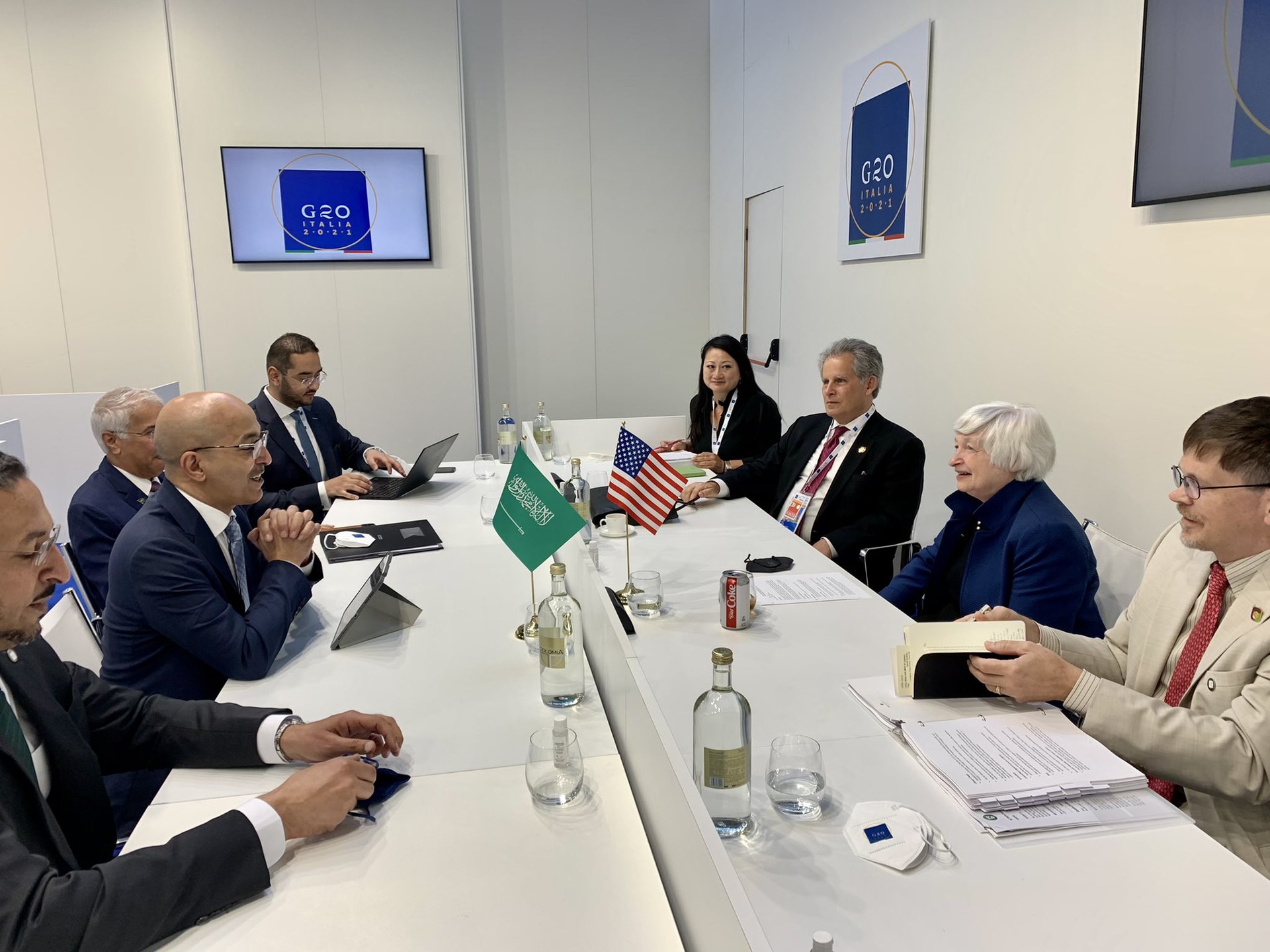
Table of Contents
- The $5 Billion Question
- Who Invited Whom — and Why Does It Matter?
- The Munir Factor: Diplomat, Commander, Saudi Alumnus
- April 11: Three Events, One Day
- What Does Saudi Arabia Want From Pakistan’s Mediation?
- Iran’s Calls to Faisal
- The UAE Gap and the Saudi Fill
- Why Does Riyadh Come Before Antalya?
- The Protecting Power Paradox
- Frequently Asked Questions
The $5 Billion Question
Pakistan secured approximately $5 billion in joint Saudi-Qatar financial backing, announced April 11-12, designated to cover $4.8 billion in external obligations coming due between April and June 2026. The Saudi-Qatar breakdown was not publicly disclosed. The timing was not publicly explained either — but it explains itself.
The obligations are specific. The United Arab Emirates demanded repayment of $3.5 billion across three tranches: $450 million on April 11, $2 billion on April 17, and $1 billion on April 23. Pakistani authorities framed the UAE repayment as a matter of “national dignity,” per Asian Mirror reporting on April 12. The dignity was purchased with Saudi and Qatari money.
Saudi Arabia already holds $5 billion in State Bank of Pakistan deposits through the Saudi Fund for Development — $3 billion rolled over in December 2025 with the next maturity in December 2026, and $2 billion maturing in mid-June 2026. A separate $1.2 billion Saudi oil facility carries 6 percent interest. The new $5 billion package does not replace these existing obligations. It stacks on top of them. Pakistan’s total financial exposure to Riyadh now approaches $11.2 billion, not counting the operational costs of the 13,000-troop SMDA deployment to Saudi Arabia’s Eastern Province.
| Instrument | Amount | Maturity / Status |
|---|---|---|
| SFD cash deposit (tranche 1) | $3.0B | December 2026 |
| SFD cash deposit (tranche 2) | $2.0B | Mid-June 2026 |
| Saudi oil facility (6% interest) | $1.2B | Rolling |
| New Saudi-Qatar package (April 2026) | ~$5.0B | Terms undisclosed |
| Total Saudi-linked exposure | ~$11.2B |
The $2 billion SFD deposit maturing in mid-June sits on a collision course with the ceasefire timeline. If the April 22 ceasefire expires without extension, and the war resumes, Riyadh’s willingness to roll over that deposit becomes a policy instrument, not a banking decision. Islamabad knows this. So does every analyst at the State Bank of Pakistan.
The Middle East briefing 3,000+ readers start their day with.
One email. Every weekday morning. Free.
Who Invited Whom — and Why Does It Matter?
Sharif is traveling to Riyadh on a personal invitation from Crown Prince Mohammed bin Salman, according to Daily Pakistan and The News reporting on April 13. This is his second visit in one month — the first was a restricted meeting in Jeddah on March 12-13, before the quadrilateral framework had been formalized. In Gulf diplomatic protocol, the distinction between requesting a meeting and receiving a summons matters. Pakistan requested the mediation role. Saudi Arabia is summoning the mediator to account for what mediation produced.
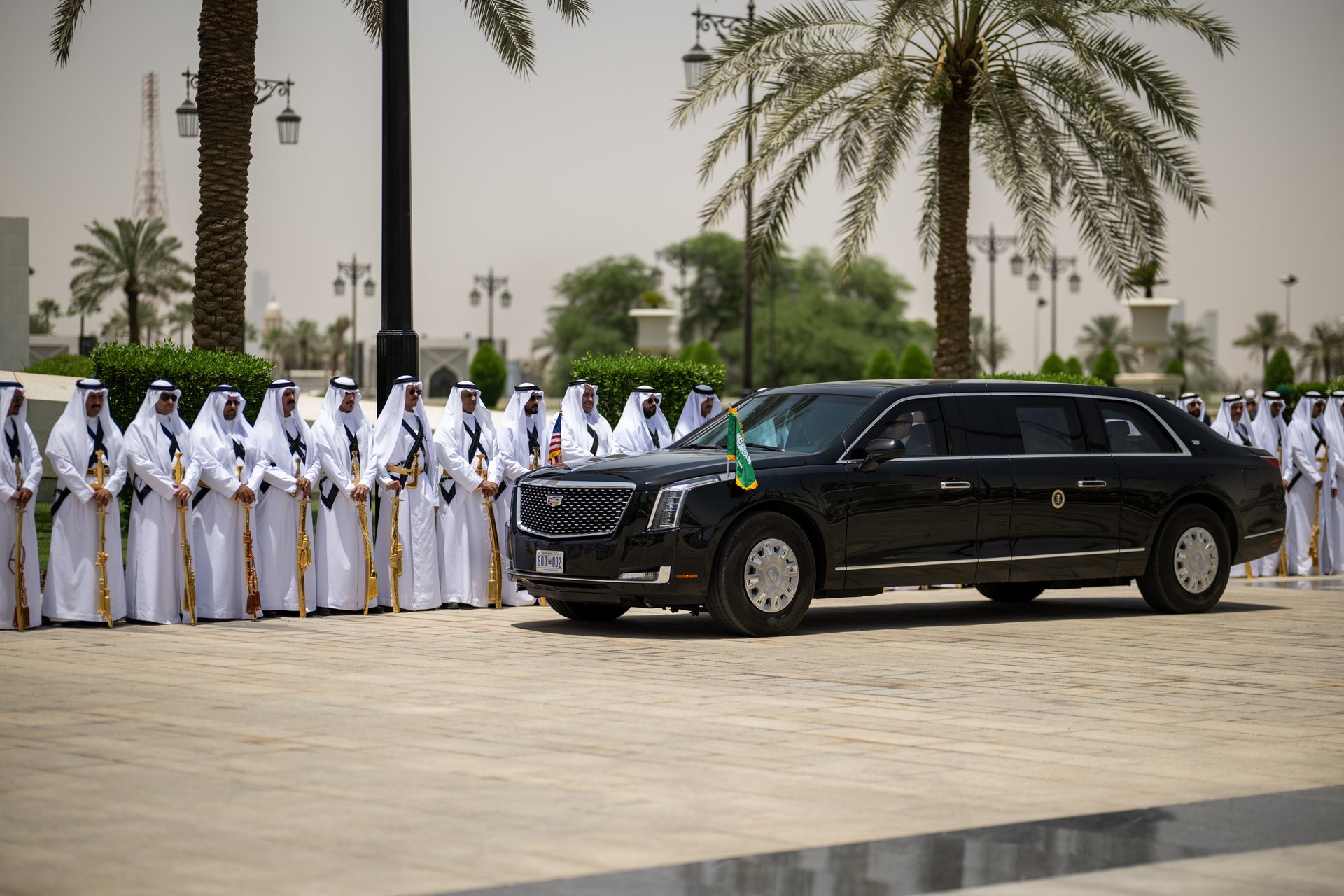
The delegation composition reinforces the reading. Sharif brings Field Marshal Munir, whose 27th Constitutional Amendment authority makes him the actual operator of Pakistan’s ceasefire diplomacy. He brings Dar, who personally warned Tehran in early March that “Islamabad was bound by its obligations to Riyadh” under the Saudi-Pakistan Mutual Defense Agreement. He brings Finance Minister Aurangzeb, whose ministry manages the financial facilities that underwrite Pakistan’s capacity to mediate at all. And he brings Special Assistant Tariq Fatemi, a career diplomat whose portfolio includes the quadrilateral coordination. This is not a bilateral courtesy call. It is a full operational review.
The Munir Factor: Diplomat, Commander, Saudi Alumnus
Asim Munir served as Pakistan’s Defence Attaché in Saudi Arabia before rising to Director-General of Inter-Services Intelligence and then Chief of Army Staff and Chief of Defence Forces — a dual appointment consolidated under the 27th Constitutional Amendment passed in November 2025. His institutional relationships with the Saudi defense establishment predate the war by years. In early March 2026, he met Saudi Defence Minister Prince Khalid bin Salman to discuss SMDA obligations, per Dawn and Tribune India reporting.
The 27th Amendment created a constitutional asymmetry that shapes every dimension of Pakistan’s mediation. Munir’s removal as CDF requires a two-thirds parliamentary majority. The prime minister’s removal requires a simple majority. Chatham House described the amendment as bringing Pakistan “one step closer to authoritarian rule.” The practical effect for ceasefire diplomacy: Munir controls the timeline, the troop deployment, and the operational relationship with Riyadh. Sharif provides the civilian face. The elected government can be changed without changing the mediator. The mediator cannot be changed without a constitutional supermajority.
Trump described Munir as “his favorite field marshal” and credited the ceasefire to “conversations with Prime Minister Shehbaz Sharif and Field Marshal Asim Munir, of Pakistan.” Munir’s name came second in Trump’s sentence but first in the operational chain. He held two separate meetings with Iran’s negotiating team during the Islamabad talks, per IRGC-affiliated Tasnim News — a detail that confirms Iran recognizes where decision-making authority actually sits in Pakistan’s delegation.
Kaitlyn Hashem at the Stimson Center offered the most precise external assessment of this arrangement: Pakistan’s initiative “is undermined by its own political limitations vis-à-vis both Iran and the United States.” Pakistan “lacks meaningful leverage to compel concessions if the US and Iran are not willing to come to terms.” The observation is accurate but incomplete. Pakistan’s leverage is not diplomatic. It is structural — 13,000 troops on Saudi soil, a protecting-power role in Washington, and a field marshal who answers to Riyadh’s defense establishment by institutional biography.
April 11: Three Events, One Day
The compression of April 11 into a single day deserves careful accounting, because Riyadh’s financial, military, and diplomatic instruments all fired simultaneously.
At King Abdulaziz Air Base in Eastern Province, Pakistan completed its SMDA deployment — approximately 13,000 troops and a contingent of JF-17 Thunder and F-16 fighter jets. The deployment had been authorized by Munir under his CDF powers, bypassing parliamentary approval. It was the first operational activation of the September 2025 SMDA, signed at Al Yamamah Palace.
In Islamabad, al-Jadaan met Sharif, Dar, and Munir to confirm the financial package that would cover Pakistan’s $4.8 billion external obligations. The finance minister of a nation that had been excluded from the bilateral talks was in the mediator’s capital on the day those talks opened. No formal agreement was signed. “Support discussions had been underway for some time,” unnamed officials told Free Malaysia Today.
Across Islamabad, at the talks venue, JD Vance’s delegation sat down with Ghalibaf’s 71-member Iranian team. The Islamabad Accord — the ceasefire framework Munir had personally brokered — was supposed to provide the structure for 15-20 days of negotiation. It lasted 21 hours.
Three events. One city, one air base, one day. The mediator simultaneously hosted peace talks, received the check from one of the belligerents, and deployed combat aircraft to that belligerent’s territory. Pakistan’s claim to neutrality rested on the fiction that these events were unrelated. Iran’s decision to continue engaging rested on the calculation that a biased mediator was still preferable to no mediator at all.
What Does Saudi Arabia Want From Pakistan’s Mediation?
Natasha Lindstaedt of the University of Essex identified the primary Saudi objective: to “prevent the war from devouring its internal modernization space and its negotiating leverage among Washington, Israel, and the Arab world.” The formulation is precise. Saudi Arabia needs the war to end — or at least to stop hitting Saudi infrastructure — without being seen to have negotiated directly with Iran from a position of weakness.
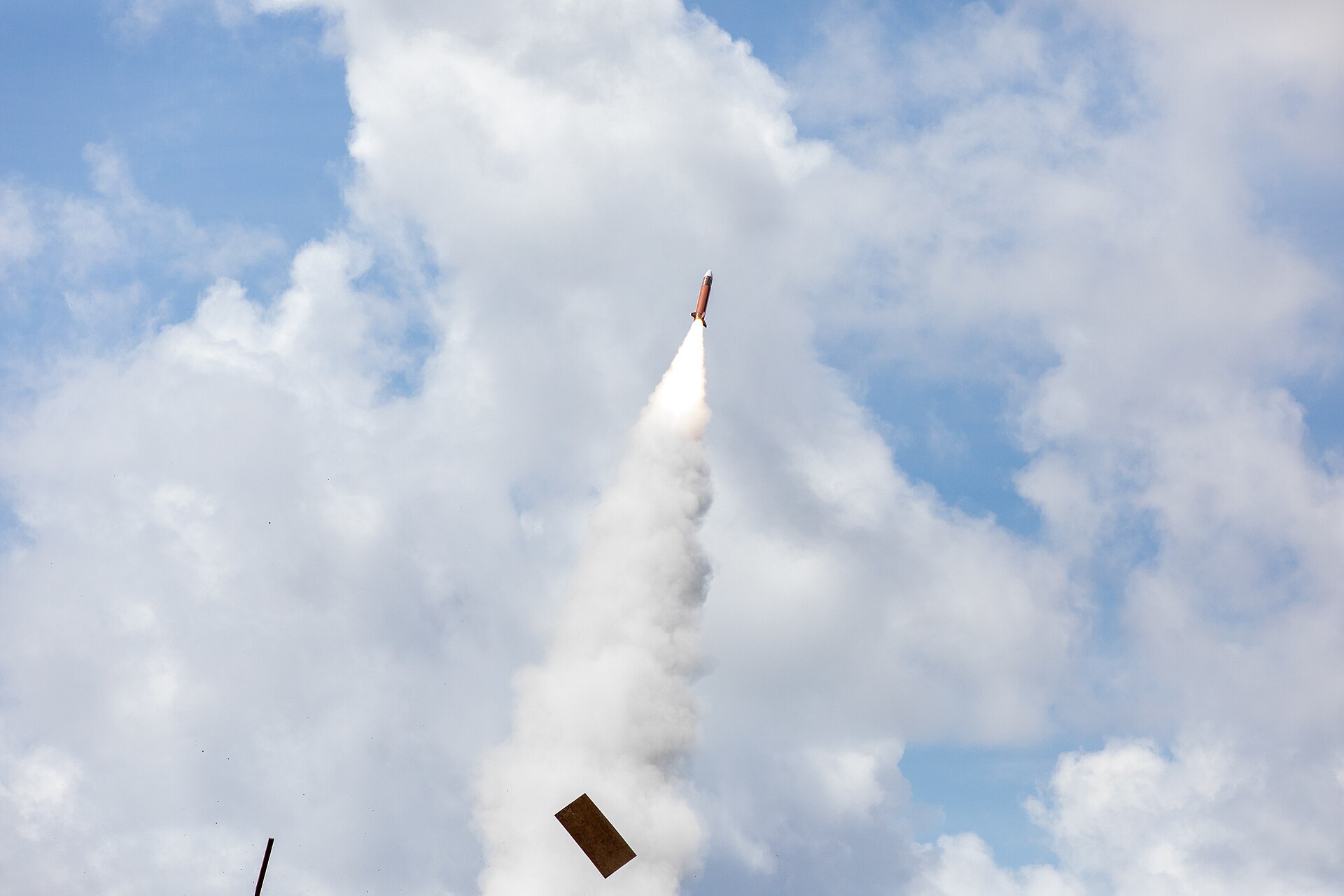
The numbers explain the urgency. Saudi Arabia has intercepted 894 projectiles — 799 drones and 95 ballistic missiles — between March 3 and April 7, depleting an estimated 86 percent of its PAC-3 MSE stockpile to approximately 400 rounds. Camden, Arkansas — the sole US production facility — manufactures roughly 620 interceptors per year. Poland refused a Patriot battery transfer on March 31. Raytheon’s production pipeline cannot close the gap before Saudi air defenses reach critical depletion.
The fiscal arithmetic is equally constrained. Saudi Arabia’s break-even oil price is $108-111 per barrel on a Bloomberg PIF-inclusive basis. Brent traded at approximately $97 on April 14 — $11-14 below break-even. Saudi exports through Hormuz remain disrupted, with the East-West Pipeline to Yanbu operating at a ceiling that covers roughly 80-85 percent of pre-war export volumes. Every week the war continues costs Riyadh revenue it cannot replace and interceptors it cannot replenish.
Pakistan, then, is not just a mediator. It is the mechanism through which Saudi Arabia participates in ceasefire negotiations without sitting at the table — without acknowledging to Iran or to its own population that it is negotiating under duress. The $5 billion buys this service. Munir’s April 15 visit to Riyadh is where the service provider reports to the client.
Iran’s Calls to Faisal
Iranian Foreign Minister Abbas Araghchi called Saudi Foreign Minister Prince Faisal bin Farhan on April 9, before the Islamabad talks began, and again on April 13, the day the US naval blockade took effect and the day after talks collapsed. The April 9 call was the first direct foreign minister conversation between Riyadh and Tehran since the war began on February 28.
The April 13 call carried a specific message. Araghchi told Faisal that “unfortunately, we witnessed the continuation of excessive demands by the American side, which resulted in a lack of progress,” while characterizing Iran’s approach as “responsible” and conducted in “good faith.” He framed the US blockade as “provocative actions” — language designed to position Iran and Saudi Arabia as sharing a grievance against Washington’s escalation.
Faisal’s response was diplomatic boilerplate: he “expressed hope for a complete end to the war and the return of stability to the region” and “emphasized support for diplomatic efforts.” The asymmetry is telling. Araghchi was specific. Faisal was generic. Iran wanted Saudi Arabia to condemn the blockade. Saudi Arabia offered hope for peace.
On the same April 13, Dar briefed Faisal on the Islamabad talks outcomes. Riyadh received both sides’ readout — Iran’s via Araghchi, Pakistan’s via Dar — within the same 24-hour window. Saudi Arabia was not in the room. It was, however, the first audience both sides briefed when they left it. Dar’s message to Faisal was pointed: “It is imperative for all the parties to uphold their commitment to the ceasefire.” The “all parties” phrasing, from the mediator that had simultaneously deployed 13,000 troops to one party’s territory, carried an unstated corollary about which party’s compliance Pakistan was actually positioned to enforce.
The UAE Gap and the Saudi Fill
The $5 billion Saudi-Qatar package exists because the UAE created a hole. Abu Dhabi demanded repayment of $3.5 billion across three April tranches, forcing Pakistan to find replacement creditors under wartime conditions. The UAE did not roll over its deposits. Saudi Arabia and Qatar did what the UAE would not.
The geopolitical subtext is legible. The UAE has maintained a distinct posture throughout the Iran crisis, declining to host US strike operations from its territory and pursuing its own channel with Tehran through Emirati-Iranian trade links that predate the war. Abu Dhabi’s financial withdrawal from Pakistan coincides with Islamabad’s deepening military commitment to Saudi Arabia’s defense — a commitment that makes Pakistan less useful to the UAE’s preferred neutrality.
Qatar’s participation in the package mirrors its broader repositioning. Doha mediated between the US and the Taliban, between Hamas and Israel, and now co-finances the mediator of the US-Iran track. The Saudi-Qatar partnership on this package would have been inconceivable during the 2017-2021 Gulf blockade. That it is possible now reflects MBS’s post-reconciliation calculation that Qatar’s diplomatic brand — neutral, well-funded, globally connected — is more useful aligned with Saudi interests than opposed to them.
For Pakistan, the creditor swap carries obligations beyond the financial. The UAE’s $3.5 billion came with minimal diplomatic strings — Abu Dhabi did not ask Pakistan to deploy troops or mediate wars. The Saudi-Qatar replacement comes with both. Pakistan’s $4.8 billion in immediate obligations are now covered by the two states most invested in the ceasefire’s outcome. The mediator’s solvency depends on the parties’ generosity.
Why Does Riyadh Come Before Antalya?
The Antalya Diplomacy Forum runs April 17-19 with a confirmed four-way side meeting of Turkey, Pakistan, Saudi Arabia, and Egypt — the full quadrilateral formed at a March 18 Riyadh session. Turkish Foreign Minister Hakan Fidan set the framework for discussions on April 13: “If the parties make good progress, an additional ceasefire could be introduced — lasting 45 to 60 days — so that negotiations can continue.” He conceded that the original 15-day window “may not have been technically possible” for finalizing an agreement, and warned that if “the nuclear matter turns into an all-or-nothing situation, especially regarding enrichment, we could face a serious obstacle.”
Fidan’s framing accepts the Islamabad talks’ failure as procedural, not substantive — a problem of timeline compression, not irreconcilable demands. This is the framework Saudi Arabia will encounter at Antalya. Riyadh’s task at the April 15 bilateral with Pakistan is to determine whether this framing is credible or convenient, and what Saudi Arabia’s position should be before the four-party meeting convenes.
The quadrilateral has a structural vulnerability: it was founded in Riyadh, but Iran insists on Saudi exclusion from direct talks. The format functions only if Saudi Arabia accepts the role of absent co-guarantor — present at preparatory meetings, absent from negotiations, briefed after the fact. The April 15 visit tests whether Riyadh will continue accepting this arrangement, or whether the US blockade’s escalation and the Islamabad talks’ collapse have changed its calculation.

The ceasefire expires April 22. The Hajj cordon seals April 18 — the same day Pakistan’s 119,000 pilgrims begin arriving. Indonesia’s 221,000 pilgrims depart April 22. Any military escalation after April 18 occurs in the shadow of Islam’s holiest obligation, in a kingdom whose sovereign holds the title Custodian of the Two Holy Mosques. The calendar is not neutral. It is a constraint that amplifies every day of failed diplomacy between now and the ceasefire’s expiration.
The Protecting Power Paradox
Pakistan has served as Iran’s protecting power in the United States since March 1992. Iran’s Interests Section operates inside Pakistan’s embassy in Washington — a 34-year arrangement that predates every other dimension of the current crisis. This role gives Pakistan something no other potential mediator possesses: a permanent institutional presence inside the US capital that formally represents Iranian interests.
The role also creates a contradiction that the $5 billion Saudi package sharpens. A protecting power is expected to advocate for the interests of the represented state. A state receiving $11 billion in financial support from one party to a conflict cannot credibly advocate for the other party’s interests. Pakistan manages this contradiction through compartmentalization — the protecting-power role is handled by the foreign ministry, the SMDA deployment by the military, and the financial facilities by the finance ministry — as though these institutions operate in sealed chambers rather than under a single field marshal’s authority.
Iran is aware of the contradiction and has chosen to work within it. Araghchi accepted the ceasefire “in response to the brotherly request of PM Sharif” — framing that gives Iran a domestic narrative for negotiating through a channel it knows is compromised. IRGC-affiliated media noted Pakistan’s dual role without demanding an alternative mediator. Iran’s January 2024 missile strike on Balochistan — and Pakistan’s 72-hour reciprocal strike — established a baseline of mutual deterrence that paradoxically makes Pakistan more credible as an intermediary. Both sides know the other can escalate. Neither has an interest in doing so while the larger war persists. When Munir returned on April 16 with a nuclear “breakthrough,” it confirmed exactly what the $5 billion Saudi package bought: Pakistan’s role as Washington’s message carrier — delivering a deal that resolved the US HEU problem while leaving Hormuz, reparations and IRGC posture, the three demands Riyadh financed the mediation to secure, entirely deferred.
The protecting-power arrangement also gives Pakistan access that pure mediators lack. Pakistan’s diplomats in Washington interact with US officials on Iranian matters as a matter of routine protocol, not special envoy access. When Trump credited the ceasefire to Munir and Sharif, he was acknowledging a channel that runs through the permanent architecture of US-Iran relations, not through ad hoc diplomacy. Saudi Arabia, by financing Pakistan’s solvency, gains indirect access to this channel — a channel Riyadh has no means of establishing on its own, having severed diplomatic ties with Iran in 2016 and only restored them through Chinese mediation in March 2023.
| Pakistan’s Dual Obligations | Saudi-Aligned | Iran-Aligned |
|---|---|---|
| Military | 13,000 troops + F-16s at King Abdulaziz AB (SMDA) | None |
| Financial | ~$11.2B total exposure to Saudi-linked instruments | Minimal bilateral trade |
| Diplomatic | Quadrilateral co-founder; FM Dar briefs Saudi FM directly | Protecting power since 1992; Iran Interests Section in DC |
| Institutional | Munir served as Defence Attaché in KSA; CDF tenure to 2030 | ISI historical channels with IRGC intelligence |
| Demographic | 2.5M Pakistani guest workers in KSA | Shared Balochistan border; Shia minority (~20%) |
The asymmetry is structural, not incidental. Saudi Arabia can withdraw $5 billion. Iran cannot withdraw 2.5 million guest workers. The financial relationship is voluntary and conditional. The geographic and demographic relationships are permanent and unconditional. Pakistan mediates between a party that can bankrupt it and a party it shares a border with. The $5 billion makes the first relationship more binding. Nothing can make the second one less so.
Pakistan’s initiative is undermined by its own political limitations vis-à-vis both Iran and the United States. [Pakistan] lacks meaningful leverage to compel concessions if the US and Iran are not willing to come to terms.
Kaitlyn Hashem, Stimson Center, April 9, 2026
Frequently Asked Questions
When is Shehbaz Sharif visiting Saudi Arabia?
Prime Minister Shehbaz Sharif is scheduled to visit Riyadh on April 15, 2026, at the personal invitation of Crown Prince Mohammed bin Salman. This is his second Saudi visit in one month, following a restricted meeting in Jeddah on March 12-13. The delegation then proceeds to the Antalya Diplomacy Forum in Turkey on April 17-19 for a four-way meeting with Saudi, Turkish, and Egyptian counterparts.
What is the $5 billion Saudi-Qatar package for Pakistan?
Announced April 11-12, the joint Saudi-Qatar financial package covers approximately $4.8 billion in external obligations Pakistan faces between April and June 2026. The package was necessitated by the UAE’s demand for repayment of $3.5 billion across three tranches in April alone. The Saudi-Qatar breakdown has not been publicly disclosed. Combined with existing Saudi deposits and facilities, Pakistan’s total Saudi-linked financial exposure now approaches $11.2 billion.
What is the SMDA and why does it matter for the ceasefire?
The Saudi-Pakistan Mutual Defense Agreement was signed at Al Yamamah Palace on September 17, 2025 — the first formal collective defense commitment between nuclear-armed Pakistan and Saudi Arabia. It contains NATO Article 5-equivalent language. Its first operational activation came on April 11, 2026, when Pakistan deployed 13,000 troops and fighter jets to Saudi Arabia’s Eastern Province. The SMDA makes Pakistan simultaneously a party to Saudi Arabia’s defense and the mediator of Saudi Arabia’s war — a dual role Iran has accepted without formally acknowledging.
Why does Field Marshal Munir control Pakistan’s ceasefire diplomacy instead of the prime minister?
The 27th Constitutional Amendment, passed November 13, 2025, created the Chief of Defence Forces position with a five-year tenure extending to 2030. Munir’s removal requires a two-thirds parliamentary supermajority, while the PM can be removed by simple majority. This constitutional structure means Munir — who served as Pakistan’s Defence Attaché in Saudi Arabia and later as DG ISI — controls foreign and security policy independent of elected government approval. Trump publicly credited both Sharif and Munir for the ceasefire, but Munir held the direct meetings with Iran’s negotiating team at Islamabad.
What happens at the Antalya Diplomacy Forum regarding the ceasefire?
The April 17-19 Antalya forum will host a four-way side meeting of Turkey, Pakistan, Saudi Arabia, and Egypt — the full quadrilateral ceasefire framework. Turkish FM Fidan has proposed a 45-60 day ceasefire extension, acknowledging the original 15-day window was insufficient. The meeting occurs three days before the April 22 ceasefire expiration and coincides with the Hajj cordon sealing on April 18, which raises the political cost of any military escalation near Islam’s holiest sites. The Riyadh bilateral on April 15 is preparatory — Pakistan aligning with Saudi Arabia before the multilateral caucus.
The April 16 Jeddah meeting read differently once Munir’s simultaneous Tehran visit became public: Sharif collected $3 billion from MBS at the same hour Pakistan’s army chief was delivering a US ceasefire framework to Araghchi — the same-day architecture that puts MBS outside both conversations — and MBS’s rented diplomatic channel into Tehran is examined in full in the follow-on analysis.