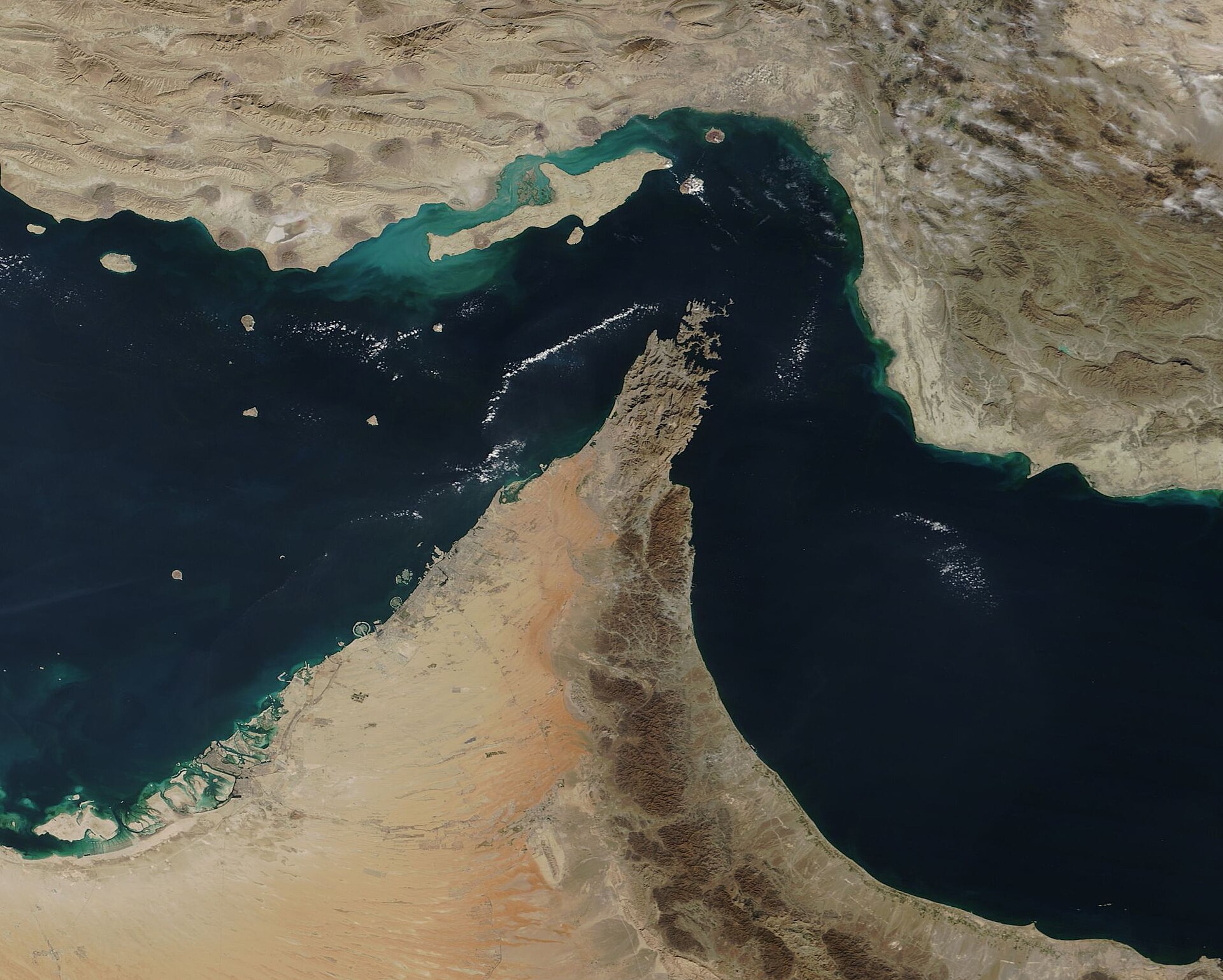

NASA MODIS satellite image of the Strait of Hormuz and Musandam Peninsula, December 2018, showing the 34-kilometre-wide chokepoint through which 20 percent of global oil supply transits daily

The US Blockade of Iran Is Coercive Diplomacy, Not a Strategic Walkaway — and Pakistan Holds the Proof

The US naval blockade of Iran is a nine-day coercive tool, not a strategic exit. Pakistan's structural incentives prove talks are still alive before April 21.

ISLAMABAD — The United States naval blockade of Iran, effective 10:00 a.m. Eastern Time on April 13, is not the end of negotiations — it is the most expensive negotiating tactic Washington has deployed since the Cuban Missile Crisis. The strongest evidence is not in the CENTCOM press release, which applies interdiction to “all maritime traffic entering and departing Iranian ports and coastal areas,” but in what happened within hours of its announcement: Pakistan, Egypt, and Turkey — the three mediators who brokered 21 hours of direct US-Iran talks in Islamabad — all publicly insisted a deal remains reachable before the April 21 ceasefire expiry. Pakistan’s Deputy Prime Minister Ishaq Dar said Islamabad “will try to facilitate a new dialogue between Iran and the U.S. in the coming days.” Turkey’s Foreign Minister Hakan Fidan said both sides remain “sincere.” An anonymous regional source told Axios the bluntest version: “We are not in a complete deadlock. The door is not closed yet. Both sides are bargaining. It’s a bazaar.”

Conflict Pulse IRAN–US WAR
Live conflict timeline
Day
46
since Feb 28
Casualties
13,260+
5 nations
Brent Crude ● LIVE
$113
▲ 57% from $72
Hormuz Strait
RESTRICTED
94% traffic drop
Ships Hit
16
since Day 1

The blockade exists inside a nine-day window — April 13 to April 21 — compressed further by the start of Hajj arrivals on April 18. Pakistan, the country holding the widest portfolio of structural incentives to keep both sides at the table, is the actor whose behavior most reliably distinguishes coercive diplomacy from strategic walkaway. Its behavior says this is coercion, not collapse.

NASA MODIS satellite image of the Strait of Hormuz and Musandam Peninsula, December 2018, showing the 34-kilometre-wide chokepoint through which 20 percent of global oil supply transits daily
The Strait of Hormuz at its narrowest point: 34 kilometres between Oman’s Musandam Peninsula (right) and Iran’s coastline (top). CENTCOM’s April 13 blockade targets the Iranian port economy while leaving this transit corridor nominally open — a calibration designed to preserve the legal fiction of freedom of navigation while interdicting Iranian commerce. NASA MODIS satellite image, December 2018. Photo: NASA / Public Domain

What the Blockade Does — and What It Deliberately Does Not

CENTCOM’s April 13 announcement contains a scope limitation that most coverage has buried. The blockade applies to vessels entering and departing Iranian ports and coastal areas — Arabian Gulf and Gulf of Oman — and explicitly does not impede freedom of navigation for ships transiting the Strait of Hormuz to non-Iranian destinations. This is not a total maritime closure of the kind that would trigger immediate confrontation with every oil-importing nation on earth. It is a calibrated squeeze on Iran’s port economy while leaving the broader shipping lane architecture intact, at least on paper.

The calibration has a direct historical precedent. In October 1962, Kennedy’s naval quarantine of Cuba applied only to Soviet weapons shipments, not all maritime traffic — a deliberate limitation designed to buy negotiating time without triggering a shooting war. The CENTCOM blockade replicates that logic: it interdicts Iranian commerce specifically, including any vessel that has paid Iran’s self-declared Hormuz transit tolls, while preserving the legal fiction that Hormuz itself remains open. Retired Admiral James Stavridis, former NATO Supreme Allied Commander Europe, estimated enforcement will require “at least two Navy aircraft carriers, more than a dozen destroyers and other military assets” — assets that translate to at least two carrier strike groups — calling it “a big task, and a big gamble.”

The gamble is not military. The US Navy can physically enforce a blockade of Iranian ports; it has done similar operations before. The gamble is whether the economic pain inflicted during the nine-day window before the ceasefire expires on April 21 is sufficient to shift the internal Iranian calculus — specifically the calculus of the IRGC commanders who actually control Iran’s Hormuz posture and enrichment infrastructure. Alexander George’s coercive diplomacy framework, the standard academic model for this kind of operation, identifies the success criterion: the target must calculate that compliance costs less than defiance. The question is whether that calculation can even be made inside Iran’s current command structure.

Three US Navy carrier strike groups — USS Nimitz, USS Kitty Hawk, and USS John C. Stennis — transit in formation during Exercise Valiant Shield 2007, with B-52 bombers overhead
Three US Navy carrier strike groups — USS Nimitz (CVN 68), USS Kitty Hawk (CV 63), and USS John C. Stennis (CVN 74) — transit in formation during Exercise Valiant Shield 2007. Retired Admiral Stavridis estimated enforcing the April 13 blockade requires “at least two Navy aircraft carriers, more than a dozen destroyers and other military assets” — a deployment footprint that represents approximately 20,000 personnel and a daily operating cost exceeding $30 million. Photo: US Navy / Public Domain

Why Is Pakistan the Key to Reading This Correctly?

Pakistan is the most over-committed mediator in modern diplomatic history, and that is precisely what makes its continued optimism credible rather than performative. Islamabad holds at least five structural positions that cannot be unwound if talks collapse: the Strategic Mutual Defence Agreement with Saudi Arabia, signed September 17, 2025, which commits both parties to treat aggression against one as aggression against both; 13,000 troops deployed to Saudi Arabia’s Eastern Province under that agreement; a $5 billion Saudi loan maturing in June 2026; its role as Iran’s protecting power in the United States since 1992, the institutionalized communication channel that survived even the hostage crisis aftermath; and the 27th Constitutional Amendment, which places ceasefire diplomacy under Army Chief Munir’s authority rather than the elected government’s.

The HOS Daily Brief

The Middle East briefing 3,000+ readers start their day with.

One email. Every weekday morning. Free.

On April 11 — the same day Pakistan hosted the Islamabad talks between Vance and Ghalibaf — up to 18 Pakistani JF-17 Thunder Block III jets deployed to King Abdulaziz Air Base in Dhahran, seven kilometers from Aramco headquarters. The simultaneity was not coincidental. Pakistan is doing what The Diplomat called a “Reverse Bismarck”: making itself indispensable to both sides at once, so that neither can afford to let it fail. If the talks collapse permanently, Pakistan loses its position as the mediator both sides need, its SMDA obligations to Saudi Arabia potentially drag it into direct conflict with a country whose diplomatic interests it formally represents in Washington, and its $5 billion loan comes due during what would be an active regional war.

Deputy PM Dar’s statement that Islamabad will facilitate “a new round of dialogue in the coming days” is not diplomatic boilerplate. It is a country with a maturing sovereign loan, 13,000 troops already deployed to the war zone’s most targeted province, and its entire strategic positioning on the line telling both parties it has too much at stake to let them walk away. The Observer Research Foundation’s framing — that Pakistan’s mediating credibility derives from its inability to be fully co-opted by either side — captures the structural logic. Pakistan cannot afford a breakdown. When it says the door is open, it is describing its own institutional imperatives as much as the negotiating room’s atmosphere.

The Nine-Day Clock: Blockade, Hajj, and the Ceasefire Deadline

The blockade became effective on April 13. The ceasefire expires on April 21. Hajj pilgrim arrivals begin on April 18 — Pakistan’s first charter flight departs that day, with Indonesia’s 221,000-strong contingent beginning movement on April 22, the day after the ceasefire lapses. These dates are not negotiable, and they compress the blockade’s coercive utility into a window far shorter than nine days.

From April 18 onward, any military escalation in the Persian Gulf or Eastern Province carries the risk of disrupting the Hajj — a scenario that Saudi Arabia, as Custodian of the Two Holy Mosques, cannot tolerate under any circumstances. The kingdom has already deployed Patriot batteries around Mecca with approximately 400 PAC-3 rounds remaining, a measure that confirms how seriously the kingdom reads the threat calculus. The 1987 Mecca massacre, which killed 402 people and triggered a three-year Iranian boycott with an 87% quota cut, remains the operative precedent for what happens when Hajj security fails.

This means the blockade’s effective coercive window is five full days — April 13 through April 17 — before Hajj arrivals begin on the 18th. After that, the kinetic risks of continued confrontation begin to outweigh the diplomatic utility of the blockade. If no framework agreement or extension mechanism emerges by April 18, the blockade shifts from a negotiating tool to a standing military posture without a clear diplomatic off-ramp — the Iraq 1990-91 pattern, where Saddam Hussein calculated the coalition was bluffing and discovered too late that it was not.

China’s simultaneous signalling on Day One of the blockade — a Xinhua amplification of IRGC capabilities combined with a sanctioned Chinese-owned tanker transiting unchallenged through the Hamriyah loophole — contracted that window further before Washington had completed its first 24 hours of enforcement. How Beijing framed the blockade on its first day, and what it means for Saudi Arabia’s narrowing position, is the subject of a companion analysis.

The Nine-Day Timeline: Key Dates and Constraints
Date Event Implication
April 13 CENTCOM blockade effective (10:00 a.m. ET) Iranian port commerce halted; Brent surges 7-8% to $102-103/bbl
April 13 Araghchi calls Saudi FM Faisal, French FM Barrot Iran diplomatic channels active post-blockade — not withdrawal behavior
April 15-16 Expected window for Pakistan-brokered resumption Dar committed to facilitating “new dialogue in the coming days”
April 18 Hajj pilgrim arrivals begin; Pakistan first charter Kinetic risk threshold — escalation now endangers Hajj
April 21 Ceasefire expires No extension mechanism exists; IRGC posture reverts to pre-ceasefire
April 22 Indonesia first Hajj departure (221,000 pilgrims) Largest Muslim-majority nation’s pilgrims in transit during potential escalation
Muslim pilgrims in concentric circles around the Kaaba at Masjid al-Haram, Mecca, 2026 — the Hajj season beginning April 18 creates the hard deadline that compresses the blockade window to five days
Pilgrims circumambulate the Kaaba at Masjid al-Haram, Mecca, 2026. Hajj arrival movements begin April 18 — five days into the blockade — when Pakistan’s first charter flight departs and 221,000 Indonesian pilgrims begin their journey. Saudi Arabia, as Custodian of the Two Holy Mosques, cannot tolerate military escalation that risks Hajj disruption; the 1987 Mecca massacre, which killed 402 people and triggered an Iranian three-year boycott with an 87 percent pilgrim quota cut, remains the operative precedent constraining both sides’ calculus. Photo: Wikimedia Commons / CC BY-SA 4.0

What Broke in Islamabad — and What Almost Didn’t

The Islamabad talks ran 21 hours across April 11 and 12, with Vice President Vance, Special Envoy Witkoff, and Jared Kushner facing Parliament Speaker Ghalibaf and Foreign Minister Araghchi. They broke on three explicit US demands: end all uranium enrichment, dismantle major enrichment facilities, and remove Iran’s highly enriched uranium stockpile from Iranian territory. These are conditions Iran cannot accept under its current political structure — not because the civilian government opposes them, but because the IRGC controls the enrichment infrastructure and no civilian authority can order its dismantlement.

What has received less attention is how close the talks came to producing an intermediate outcome. Axios reported on April 13 that the US proposed a 20-year moratorium on enrichment — a clear retreat from permanent dismantlement — and that Iran countered with “monitored down-blending” of its HEU stockpile rather than removal from the country. The Iranians believed a Memorandum of Understanding was within reach by Sunday morning and were, according to Axios, “caught off guard” by Vance’s press conference announcing failure. Araghchi’s subsequent framing — “when just inches away from an Islamabad MoU, we encountered maximalism, shifting goalposts, and blockade” — is consistent with this account.

The gap between the US position and the Iranian counter-offer is real but not unbridgeable. A 20-year moratorium versus monitored down-blending represents a disagreement about verification mechanisms and timeline, not about the fundamental principle of constraining Iran’s nuclear capability. Vance’s own language — “a method of understanding that is our final and best offer” — frames the US position as a take-it-or-leave-it, which is itself a negotiating posture rather than a declaration of permanent breakdown. The blockade, announced within hours, is the enforcement mechanism for that posture: accept the terms, or absorb $435 million per day in economic damage until you do.

How Much Economic Pain Can Iran Absorb Before the Clock Runs Out?

The Foundation for Defense of Democracies’ Miad Malki calculated the blockade’s projected daily damage at $435 million — $276 million in blocked exports, primarily oil, and $159 million in blocked imports. Monthly, that is roughly $13 billion, a figure that exceeds Iran’s entire pre-war monthly oil revenue. But the blockade does not need to bankrupt Iran to succeed as coercive diplomacy. It needs to make the next nine days painful enough that someone inside Tehran’s fragmented command structure decides compliance is cheaper than defiance.

Iran’s pre-blockade economic baseline was already catastrophic. Food inflation hit 105% in February 2026. The rial trades at 1.5 million to the dollar — the government introduced a new 10-million-rial banknote worth approximately seven dollars. Government officials have privately expressed concern about making payroll. The blockade adds acute crisis to chronic deterioration, compressing the economic timeline in ways that favor the US negotiating position — but only if there is a coherent Iranian decision-maker capable of responding to economic pressure with political concessions.

Pamela Munger, Vortexa’s head of market analysis for Europe, offered the dissenting view: “Instead of forcing compliance, this blockage could in fact increase escalation without delivering any meaningful short-term economic pressure on Iran.” Her argument rests on timing — a blockade takes weeks to bite, and the ceasefire expires in nine days. The coercive theory requires Iran to anticipate future pain, not just absorb current pain. Whether the IRGC’s operational commanders think in those terms is the central uncertainty.

Iran’s Economic Pressure Points: Pre-Blockade vs. Post-Blockade
Indicator Pre-Blockade (as of April 12) Post-Blockade Projection Source
Daily export revenue loss $139M/day (war-era, pre-blockade) $276M/day blocked FDD / Kpler
Daily import disruption Minimal (ports operational) $159M/day blocked FDD
Food inflation 105% (Feb 2026) Accelerating — import channel closed Fortune
Rial exchange rate 1.5M/dollar Further depreciation expected Fortune
Brent crude ~$95/bbl (pre-announcement) $102-103/bbl (+7-8%) Bloomberg / Al Jazeera
Monthly aggregate damage N/A ~$13B/month FDD

The Authorization Ceiling: Can Anyone in Tehran Accept a Deal?

The blockade’s coercive logic depends on a functioning target — a decision-maker who can weigh costs, accept terms, and enforce compliance. Iran’s command structure, as of April 13, does not clearly contain such a person. President Pezeshkian publicly accused IRGC commanders Ahmad Vahidi and Ali Abdollahi of “acting unilaterally” and destroying any chance of a ceasefire, saying their policies were steering Iran toward “a huge catastrophe.” Under Article 110 of Iran’s constitution, the president has zero authority over the IRGC. Only the Supreme Leader can override them.

The Supreme Leader cannot currently perform that function. Ali Khamenei has been effectively absent from governance for 44 days as of April 13. His son Mojtaba is reportedly governing by audio conference, but Article 176 of the constitution requires Supreme Leader ratification of every Supreme National Security Council decision — a mechanism that is structurally inoperative when the Supreme Leader’s capacity is unverifiable. SNSC Secretary Zolghadr, who would normally coordinate between the Supreme Leader’s office and the IRGC, is sanctioned by the US, EU, UK, Canada, and the UN Security Council, making him an impossible interlocutor for any deal that requires Western verification.

The authorization ceiling runs between Iran’s diplomatic representatives, who can negotiate, and the IRGC commanders who control the enrichment facilities and Hormuz maritime posture that any deal would need to address. Ghalibaf, who led the Iranian delegation in Islamabad, was himself IRGC Aerospace Force commander from 1997 to 2000 — he understands the institution’s autonomy from the inside. His accusation that the US “failed to gain the trust” of the Iranian delegation may be less about American bad faith than about his own inability to guarantee delivery on terms the IRGC has not pre-authorized.

Saudi Arabia’s Backchannel Silence

Saudi Foreign Minister Prince Faisal bin Farhan called Iranian Foreign Minister Araghchi on April 13 — the first bilateral contact after the blockade announcement. Araghchi framed the US as exhibiting “greed” and characterized the blockade as proof of American bad faith, a message designed for both the Iranian domestic audience and the Saudi interlocutor. The kingdom has issued no public statement on the blockade itself, maintaining the dual posture it has held throughout the crisis: private engagement with Tehran, public silence on Washington’s military moves.

The silence is strategic, not accidental. Saudi Arabia has 13,000 Pakistani troops on its soil under the SMDA, Patriot batteries around its holiest sites, and a Hajj season beginning in five days. It cannot publicly endorse a blockade that the IRGC has declared a ceasefire violation — doing so would invite Iranian retaliation against Saudi infrastructure, which the IRGC has already demonstrated it can reach. Equally, it cannot publicly oppose the blockade without rupturing its relationship with Washington at the moment of maximum dependence on American military assets. The backchannel call to Araghchi is the only available move: signal to Tehran that Riyadh remains a communication partner, without committing to any position on the blockade’s legality or wisdom.

Araghchi’s willingness to take the call, and his simultaneous outreach to French Foreign Minister Jean-Noel Barrot — to whom he said “progress was made on many issues” and both sides “stressed the continuation” of discussion — is the behavioral indicator that matters most. A country preparing for permanent confrontation does not work the phones to its adversary’s regional allies on the first day of a naval blockade. It does so when it believes there is still something to negotiate. What the backchannel silence cannot do, however, is eliminate Saudi Arabia from the IRGC’s targeting calculus: the April 13-14 counter-blockade declaration explicitly named ports of “states that claim neutrality” as legitimate military objectives, a doctrine examined in detail in IRGC counter-blockade targeting and the limits of Saudi neutrality.

What Do the Mediator Signals Actually Mean?

Three mediator countries — Pakistan, Egypt, and Turkey — all confirmed on April 12-13 that a deal remains possible before the April 21 deadline. Turkish Foreign Minister Fidan’s framing was the most analytically precise: both sides remain “sincere,” but if the nuclear issue becomes “an all or nothing matter, it will create a serious obstacle.” This tracks exactly with the gap identified in the Islamabad talks — the US demanding total enrichment cessation, Iran offering monitored down-blending — and points toward the most likely compromise territory: a framework that constrains enrichment without requiring full dismantlement, paired with a Hormuz reopening mechanism that preserves Iranian face while restoring commercial transit.

The anonymous US official who told Axios a deal is possible if Iran shows “more flexibility” is delivering the same message as the blockade itself, in diplomatic rather than naval form. The blockade is the stick; the mediator channels are the offer to resume talks with the stick already in the water. In Persian negotiating culture — and Araghchi is a career diplomat who has conducted nuclear negotiations since the Rouhani era — a declared collapse often precedes the final compromise. The “inches away” framing is not an expression of despair. It is an invitation to close the remaining distance, delivered through a face-saving narrative of American overreach.

What distinguishes this from wishful thinking is the structural position of the mediators themselves. Pakistan cannot afford collapse because of its SMDA obligations and maturing Saudi debt. Turkey cannot afford collapse because it has positioned itself as the indispensable regional broker under Fidan’s tenure. Egypt cannot afford collapse because the Suez Canal revenues that sustain its economy depend on Gulf shipping stability. None of these countries are offering optimism out of generosity — they are offering it because their own institutional survival depends on a deal materializing.

Two Outcomes, Nine Days

The Iranian signals that distinguish a deal from escalation are identifiable, if not yet conclusive. On the deal side: Araghchi’s continued diplomatic outreach, Ghalibaf’s framing of Iranian “forward-looking initiatives” rather than categorical rejection, and the anonymous Axios source’s “bazaar” characterization all point toward ongoing negotiation behind the public collapse. On the escalation side: the IRGC’s declaration that any military vessel approaching Hormuz “will be considered a ceasefire violation and met with severe force,” the “whirlpools” threat, and Vahidi’s institutional refusal to include missile negotiations in any framework all point toward a command structure that has not authorized concessions.

The HEU stockpile is the technical hinge. Iran’s 440.9 kilograms of uranium enriched to 60% U-235 requires only 564 additional separative work units to reach weapons-grade 90% — roughly one percent of the enrichment effort already expended. The IAEA’s access was terminated on February 28, its cameras disabled, its seals removed. The stockpile’s current location and post-strike status are unverifiable. The US demand for removal from Iranian territory and the Iranian counter-offer of monitored down-blending represent the narrowest gap in the entire negotiation: both sides accept the stockpile must be constrained, they disagree on where and how.

If a Pakistan-brokered resumption occurs in the next three to five days — as Dar’s timeline suggests — the compromise space is visible. A moratorium shorter than 20 years, a down-blending protocol with international monitors on Iranian soil, a Hormuz reopening tied to IRGC Navy withdrawal from the commercial shipping lanes, and a blockade suspension contingent on verified compliance. The pieces exist. The question is whether any authority in Tehran can pick them up, with the Supreme Leader incapacitated, the president constitutionally powerless over the IRGC, and the IRGC itself operating under a command structure that has lost its second intelligence chief and has no clear Hormuz naval successor to the killed Admiral Tangsiri.

The blockade is a clock placed on top of a clock. The ceasefire clock runs to April 21. The Hajj clock starts April 18. The economic clock ticks at $435 million per day. Coercive diplomacy works when the target can read the clocks and decide. Iran’s authorization ceiling means the clocks are running, but the room where someone might read them and act is, at best, half-occupied.

Frequently Asked Questions

Does the US blockade affect all shipping through the Strait of Hormuz?

No. CENTCOM’s April 13 directive applies only to vessels entering or departing Iranian ports and coastal areas, plus any vessels that have paid Iranian transit tolls. Ships transiting the Strait to non-Iranian destinations — including Saudi, Emirati, Kuwaiti, Qatari, Bahraini, Iraqi, and Omani ports — are explicitly excluded. This mirrors the legal structure of Kennedy’s 1962 Cuban quarantine, which targeted only Soviet weapons shipments rather than all maritime traffic. The distinction matters legally because a total Hormuz closure would violate freedom of navigation principles even under US interpretation, while a targeted port blockade falls under belligerent rights during an active conflict.

Why did the Islamabad talks collapse if both sides were reportedly close to an MoU?

The collapse occurred over sequencing, not principle. The US insisted on front-loading enrichment cessation and HEU removal before any sanctions relief or blockade suspension. Iran proposed back-loading those steps — beginning with a ceasefire extension and Hormuz reopening, deferring enrichment constraints to a Phase 2 negotiation. Vance’s press conference declaring failure before the Iranian delegation expected it suggests the US may have calculated that announcing collapse, then immediately imposing the blockade, would generate more pressure than continued negotiation from a perceived position of parity. The blockade resets the power dynamic by making every subsequent day of delay cost Iran $435 million.

What would a ceasefire extension require procedurally, and who has the authority to grant it?

An extension would require a separate instrument — not a modification of the April 8 Islamabad Accord, which contains no extension clause, but a new signed agreement among the original parties. Pakistan, as the host and effective custodian of the accord, would need IRGC consent communicated through Army Chief Munir’s back-channel to the SNSC. Because Zolghadr, the SNSC secretary, is sanctioned by the US, EU, UK, Canada, and the UN, any extension carrying Western verification requirements would need a fourth-country signatory — most likely Oman — to serve as the technical intermediary. No such mechanism has been prepared, and the Islamabad Accord’s silence on extension was a known structural defect at signing.

Can Iran sustain its economy during a naval blockade?

Iran’s pre-blockade economy was already in severe distress — 105% food inflation, a rial at 1.5 million to the dollar, government payroll concerns. However, Iran has experience operating under extreme sanctions and maintains overland trade routes through Turkey, Iraq, Afghanistan, and Pakistan that a naval blockade cannot interdict. Chinese-flagged vessels, which have historically carried Iranian oil through sanctions regimes via ship-to-ship transfers and transponder manipulation, represent another potential evasion channel. The $435 million daily damage estimate assumes full enforcement, which Admiral Stavridis estimated requires two carrier strike groups and over a dozen destroyers — assets the US has in theater but which cannot be everywhere simultaneously across Iran’s 2,440-kilometer coastline.

What role does Iran’s Supreme Leader succession crisis play in the blockade’s effectiveness?

Ali Khamenei’s 44-day effective absence creates a constitutional gap that directly undermines the blockade’s coercive logic. Under Article 176, every SNSC decision requires Supreme Leader ratification — a mechanism designed to ensure civilian control over military decisions. With Khamenei incapacitated, his son Mojtaba governing by audio conference lacks formal constitutional authority to ratify an SNSC decision to accept US terms. The IRGC, which derives its mandate from the Supreme Leader rather than the elected government, has no institutional incentive to accept constraints without direct orders from an authority it recognizes. This means the blockade may be coercing the wrong interlocutor: the civilian government and diplomatic corps feel the economic pain, but the military commanders who would need to execute any compliance measures operate outside the civilian chain of command. The same day the blockade took effect, Iran’s senior foreign policy adviser declared Bab el-Mandeb equivalent to Hormuz as a chokepoint — a statement that collapses the bypass arithmetic Saudi Arabia has relied upon since March, as analyzed in full here.

With Pakistan now routing its post-collapse diplomacy through Riyadh on April 15–16, the structural question has shifted: whether Saudi Arabia will provide the buy-in the Islamabad Process needs to produce a second ceasefire round is analyzed in Pakistan’s “Islamabad Process” and the Riyadh Routing: Why Saudi Arabia Becomes the Structural Key to Ceasefire Round 2.

The fiscal logic driving Saudi Arabia’s formal objection to the blockade — specifically how Yanbu’s dependence on Bab al-Mandeb creates an exposure the bypass cannot resolve — is examined in Saudi Arabia’s Blockade Objection Is About the Red Sea, Not Iran.

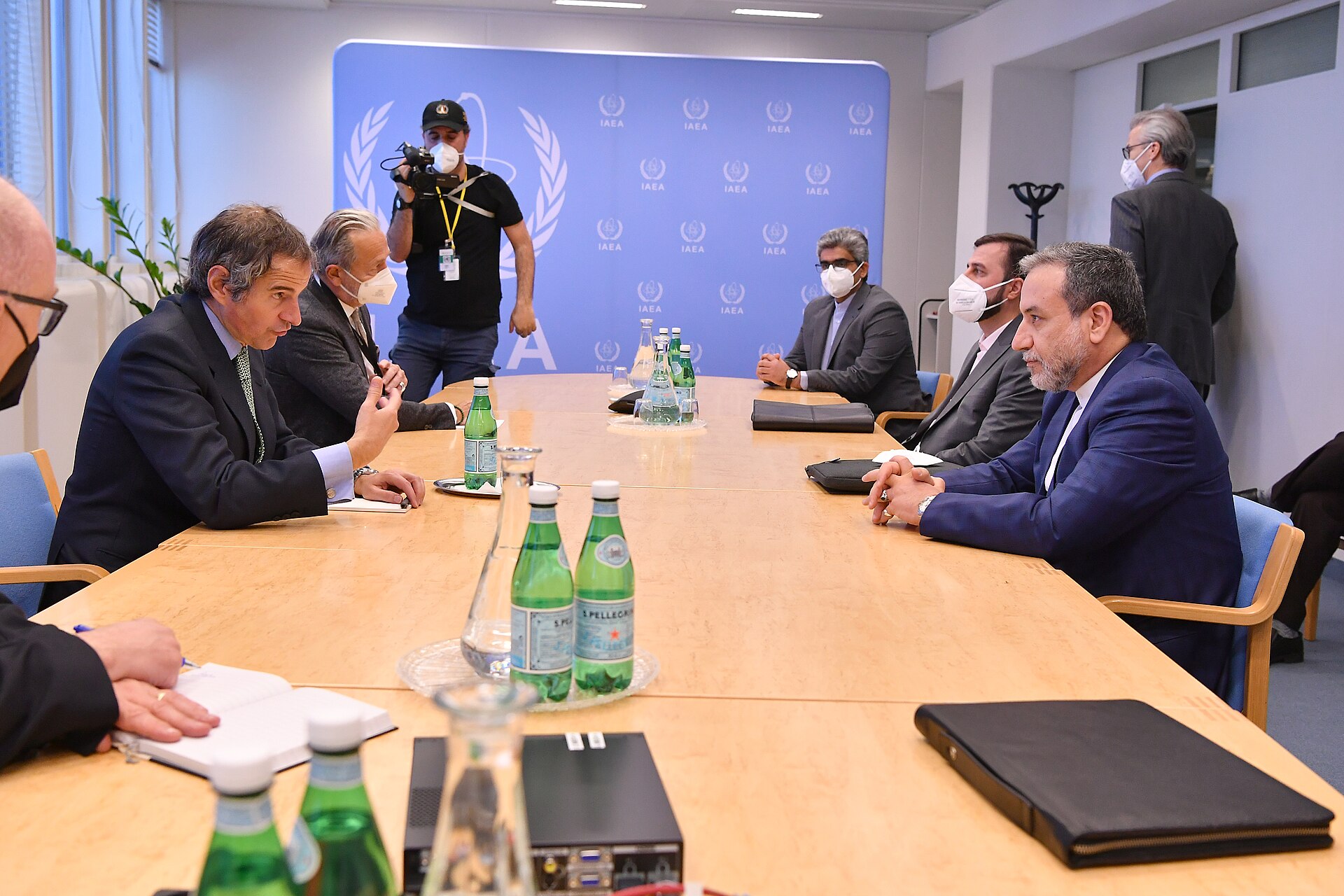
Abbas Araghchi at IAEA diplomatic meeting table, seated across from officials in a bilateral consultation at IAEA headquarters Vienna
Previous Story

Araghchi Called Riyadh on Blockade Day — It Was Never About Peace

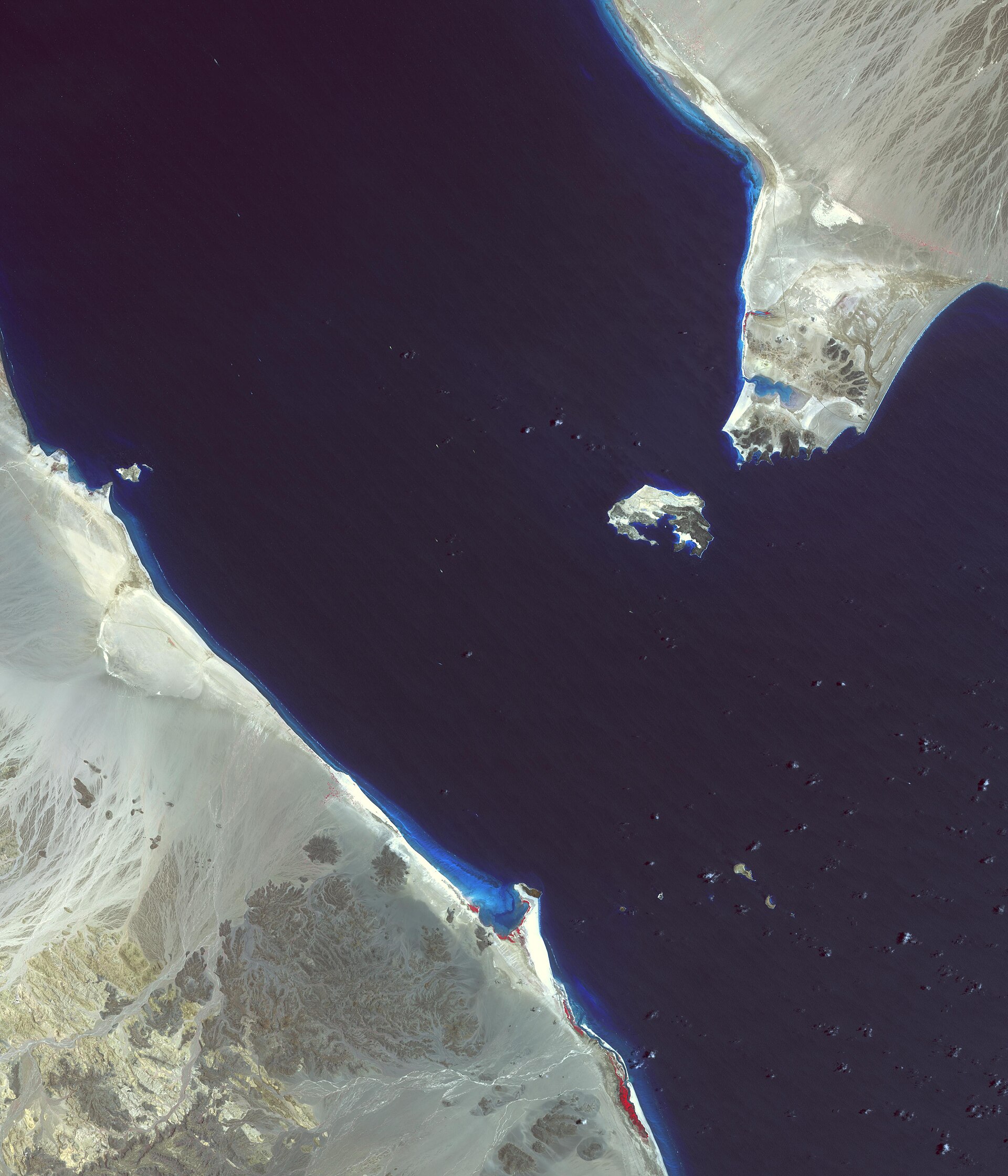
Bab el-Mandeb Strait satellite view from NASA ASTER instrument showing the narrow waterway between Africa and Yemen
Next Story

The Bypass Was the Hedge. Now the Hedge Is Threatened.

Latest from Diplomacy & Geopolitics

The HOS Daily Brief

The Middle East briefing 3,000+ readers start their day with.

One email. Every weekday morning. Free.

Something went wrong. Please try again.