
Saudi Arabia is opening its doors to the world, and while English is increasingly spoken in hotels, airports, and tourist areas, learning even a handful of Arabic phrases will transform your trip. Locals respond warmly to any attempt at their language, and a well-placed shukran or as-salamu alaykum can open doors that no amount of money or technology can. This guide is part of our comprehensive Saudi Arabia travel guide and covers every phrase you are likely to need, from your first greeting at the airport to haggling in a Jeddah souk, ordering kabsa in a Riyadh restaurant, or asking for directions in AlUla. Whether you are visiting for the first time on a tourist e-visa or returning for deeper exploration, these phrases will help you connect with Saudi culture on a level that goes far beyond sightseeing.
Language: Arabic (Modern Standard Arabic is official; Saudi dialects vary by region)
Script: Arabic script, read right to left
English Widely Spoken? Yes in tourist areas, hotels, and malls; less so in rural areas, local souks, and small towns
Visa Required: Yes — tourist e-visa available for 49+ nationalities
Must-Know Phrases: As-salamu alaykum (greeting), Shukran (thank you), Bikam hadha? (how much?)
Avoid: Using your left hand for gestures or handshakes — the right hand is customary
Why Learn Arabic for Your Saudi Trip?
You do not need to be fluent in Arabic to enjoy Saudi Arabia. The Kingdom has invested heavily in bilingual signage, English-speaking hospitality staff, and tourist infrastructure. That said, there are compelling reasons to learn at least the basics:
- Cultural respect: Saudis take immense pride in the Arabic language. A greeting in Arabic signals genuine interest in their culture and is almost always met with warmth, smiles, and often an invitation to sit down for coffee.
- Practical advantage: Outside the tourist corridors of Riyadh and Jeddah, English proficiency drops. Taxi drivers, market vendors, and staff in smaller cities like Taif or Najran will communicate far more easily if you can say a few words in Arabic.
- Better prices: In traditional souks and markets, speaking some Arabic often signals that you are not a first-time tourist and can lead to fairer opening prices during negotiation.
- Deeper experiences: Understanding the religious and cultural expressions woven into daily Saudi conversation — inshallah, mashallah, alhamdulillah — helps you understand the rhythm of Saudi life itself.
- Najdi Arabic — spoken in central Saudi Arabia, including Riyadh and surrounding cities like Buraydah. This is the dialect most closely associated with the Saudi identity. It tends to be more guttural and pronounces the Arabic letter qaf (ق) as a hard “g” sound.
- Hejazi Arabic — spoken in the western coastal region, including Jeddah, Mecca, and Medina. Hejazi is considered softer in sound and has absorbed vocabulary from Egyptian, Yemeni, and Turkish influences due to centuries of pilgrim traffic through the Hejaz.
- Gulf Arabic (Khaliji) — spoken in the Eastern Province (Dammam, Al Khobar, Dhahran) and shares features with the dialects of Kuwait, Bahrain, and the UAE.
- Southern dialects — spoken in Asir, Najran, and Jizan, these dialects have their own distinct character and share some features with Yemeni Arabic.
- Accept the cup with your right hand.
- The server will pour a small amount — this is normal, not stingy. Arabic coffee is served in small cups and refilled repeatedly.
- When you have had enough, shake the cup gently from side to side to signal you are done. Otherwise, your cup will be refilled.
- To thank your host, say “Allah ya’teek al-afiya” (الله يعطيك العافية) — meaning “God give you strength/wellness.” This is the culturally appropriate way to express thanks for hospitality.
- Always start with a greeting — as-salamu alaykum — before discussing prices.
- Expect the initial asking price to be 50-100% above the final price in traditional markets.
- Saying ghali (too expensive) with a friendly smile is the standard opening move. The seller expects it.
- Walking away slowly is a legitimate tactic. If the seller calls you back, you have leverage.
- Khalas (done/enough) signals you have reached your limit.
- Never haggle in modern malls, supermarkets, or shops with posted prices — this is considered rude.
- Do not be alarmed — it is normal.
- You may be asked to wait or to leave the shop briefly.
- The phrase “ba’d as-salah” (بعد الصلاة, “after prayer”) tells you the shopkeeper will return after prayers.
- If someone says they need to pray, respond with “taqabbal Allah” (تقبل الله, “may God accept”) — a kind and culturally appropriate response.
- Duolingo Arabic — teaches MSA with audio pronunciation. Free and gamified, though it does not cover Saudi dialect specifically.
- Pimsleur Arabic (Eastern) — audio-based course focused on spoken Gulf Arabic, which is closer to Saudi dialect than MSA courses.
- TalkInArabic.com — offers a dedicated Saudi Arabic section with video lessons taught by native speakers from different Saudi cities.
- ArabicPod101 — podcast-format lessons with both MSA and Saudi dialect content.
- Google Translate — the camera translation feature is surprisingly useful for reading Arabic signage, restaurant menus, and product labels in real time. Download the Arabic language pack for offline use before you travel.
- YouTube — search for “Saudi Arabic for beginners” or “learn Saudi dialect” for free video lessons with native speakers.
- Left hand: Always use your right hand for greetings, eating, and passing objects. The left hand is traditionally considered unclean in Arab culture.
- Sole of the foot: Avoid showing the sole of your shoe or foot to anyone — it is considered deeply disrespectful across the Arab world.
- Compliments without mashallah: As noted above, always add mashallah to compliments. Forgetting this can be read as inviting envy.
- Assuming “inshallah” means “yes”: It often does, but not always. Pay attention to tone and follow up if clarity matters.
- Being too direct with “no”: Saudis often soften refusals. Rather than a flat la (no), a phrase like “inshallah bukra” (God willing, tomorrow) may be a polite way of declining. Learning to read this indirect communication style is part of understanding Saudi culture.
- Gendered language: Arabic distinguishes between male and female in pronouns, verb forms, and some greetings. When in doubt, use the masculine form — it is understood and accepted. When you know you are addressing a woman, switching to the feminine form (halik instead of halak, min fadlik instead of min fadlak) is appreciated but not mandatory.
- Using slang with officials: At immigration, police stations, or government offices, stick to formal MSA phrases rather than Saudi slang. Na’am (yes) rather than ee; shukran (thank you) rather than yislamo.
- Start every interaction with a greeting. Whether you are entering a taxi, a shop, a restaurant, or a government office, always open with as-salamu alaykum or at minimum marhaba. This is non-negotiable in Saudi culture.
- Download offline Arabic on Google Translate before you arrive. Mobile data is cheap and fast in Saudi Arabia (see our phone and SIM card guide), but having offline capability for menus and signs is a safety net.
- Point and phrase. In restaurants without English menus, combining a pointed finger at another table’s dish with “abi hadha” (I want that) is perfectly acceptable and effective.
- Write it down. If you are heading to a specific address, have it written in Arabic on your phone to show taxi drivers. Most Saudi addresses include neighbourhood names rather than street numbers.
- Embrace the learning curve. You will mangle pronunciations. You will use masculine when you mean feminine. You will say inshallah at the wrong moment. None of this matters. The attempt is what counts, and Saudis will meet your effort with warmth every time.
- Saudi Arabia Travel Guide 2026 — The complete guide to visiting the Kingdom
- Saudi Arabia Customs and Etiquette — What to do and what not to do
- Saudi Arabia Food and Dining Guide — What to eat and where to find it
- Saudi Arabia Shopping Guide — Best malls, souks, and what to buy
- Mosque Etiquette in Saudi Arabia — How to visit mosques respectfully
- Saudi Arabia Visa Guide — Every visa type explained
Tip: Do not worry about perfect pronunciation. Saudis are genuinely delighted when foreigners attempt Arabic. Even a basic marhaba delivered with a smile will earn you goodwill everywhere from a Dammam coffee shop to an AlUla desert camp.
A Quick Note on Saudi Arabic Dialects
Arabic is not monolithic. The Modern Standard Arabic (MSA, or fusha) taught in textbooks is the language of news broadcasts, official documents, and the Quran, but nobody uses it in everyday conversation. In Saudi Arabia, you will encounter several distinct dialects:
The good news for travellers is that all Saudis understand MSA and will understand the phrases in this guide regardless of which region you visit. The phrases below use a mix of MSA and widely understood colloquial Saudi forms.
Greetings and Basic Courtesies
Greetings are the foundation of Saudi social life. A proper greeting is never skipped, even in busy shops or hurried taxi rides. Get these right and you have already won half the battle.
| English | Arabic Script | Pronunciation | When to Use |
|---|---|---|---|
| Peace be upon you | السلام عليكم | as-salamu alaykum | Universal greeting — works everywhere, always |
| And upon you peace (reply) | وعليكم السلام | wa alaykum as-salam | Reply to as-salamu alaykum |
| Hello / Welcome | مرحبا | marhaba | Casual, friendly greeting for any situation |
| Welcome (warm) | أهلا وسهلا | ahlan wa sahlan | Warm welcome; you will hear this constantly |
| Good morning | صباح الخير | sabah al-khayr | Morning greeting (before noon) |
| Good morning (reply) | صباح النور | sabah an-noor | Reply — literally “morning of light” |
| Good evening | مساء الخير | masa’ al-khayr | Evening greeting (after noon) |
| Good evening (reply) | مساء النور | masa’ an-noor | Reply — literally “evening of light” |
| How are you? (to a man) | كيف حالك؟ | kayf halak? | Standard “how are you” to a male |
| How are you? (to a woman) | كيف حالك؟ | kayf halik? | Same phrase, slightly different pronunciation for a female |
| Fine / Good | بخير | bi-khayr | Standard reply to “how are you” |
| Praise be to God | الحمد لله | alhamdulillah | Common reply to “how are you”; also used to express gratitude |
| Goodbye | مع السلامة | ma’a as-salama | Standard farewell — literally “go with peace” |
| In God’s protection | في أمان الله | fi aman Allah | A beautiful and common alternative farewell |
Cultural note: Always greet with as-salamu alaykum when entering a shop, meeting someone new, or starting any interaction. It is the single most important phrase in Saudi Arabia and sets a respectful tone for everything that follows. Non-Muslims are welcome to use it — locals appreciate it regardless of your faith.
Essential Polite Expressions
Saudi culture places enormous value on courtesy. These words will come up dozens of times a day.
| English | Arabic Script | Pronunciation | Context |
|---|---|---|---|
| Thank you | شكرا | shukran | Universal — use it constantly |
| You’re welcome | عفوا | afwan | Reply to shukran |
| Please (request) | من فضلك | min fadlak (m) / min fadlik (f) | When asking for something |
| Excuse me / Sorry | عذرا | udhran | Getting someone’s attention or apologising |
| No problem | ما في مشكلة | ma fi mushkila | Reassuring someone; also “don’t worry about it” |
| Yes | نعم | na’am | Formal “yes” |
| No | لا | la | Simple “no” |
| God willing | إن شاء الله | inshallah | Used for any future plan — “I’ll be there at 7, inshallah” |
| God has willed it | ما شاء الله | mashallah | Complimenting someone or something; protects against the evil eye |
| Praise be to God | الحمد لله | alhamdulillah | Expressing gratitude or satisfaction |
| In the name of God | بسم الله | bismillah | Said before eating, starting a journey, or beginning any task |
| I swear by God | والله | wallahi | Emphasising truth or sincerity; very common in casual speech |
Understanding “Inshallah” — The Most Important Word You Will Hear
If you learn only one Arabic expression beyond shukran, make it inshallah. This phrase — meaning “God willing” — appears in virtually every Saudi conversation about the future. “Will the tour start at 9?” Inshallah. “Can you fix the air conditioning today?” Inshallah. “Is the restaurant open tonight?” Inshallah.
For travellers, it is important to understand the range of meanings. Inshallah can mean a genuine “yes, God willing, it will happen.” It can also mean “I hope so but I’m not certain.” And occasionally, said with a particular tone, it can mean a polite “probably not.” Context and tone are everything. If you are waiting on a firm confirmation, a follow-up question is perfectly acceptable.
When to Use “Mashallah”
When complimenting anyone or anything in Saudi Arabia — a beautiful child, a well-decorated home, a delicious meal, a nice car — always add mashallah. This is not optional social decoration. In Saudi culture, a compliment without mashallah can be perceived as inviting the evil eye (al-ayn). Saying mashallah attributes the good thing to God’s will and protects the person or object from envy. You will hear Saudis say it reflexively, and adopting this habit shows cultural awareness.
Getting Around: Directions and Transport
Whether you are using Uber and Careem, hailing a taxi, or navigating on foot, these phrases will keep you moving. For a full breakdown of transport options, see our getting around Saudi Arabia guide.
| English | Arabic Script | Pronunciation |
|---|---|---|
| Where is…? | وين…؟ | wayn…? |
| Where is the hotel? | وين الفندق؟ | wayn al-funduq? |
| Where is the airport? | وين المطار؟ | wayn al-matar? |
| Where is the bathroom? | وين الحمام؟ | wayn al-hammam? |
| Take me to… | خذني إلى… | khudhni ila… |
| How much to the hotel? | بكم إلى الفندق؟ | bikam ila al-funduq? |
| Stop here, please | وقف هنا من فضلك | waqqif hina min fadlak |
| Right | يمين | yameen |
| Left | يسار | yasar |
| Straight ahead | على طول | ala tool |
| Near / Close | قريب | gareeb |
| Far | بعيد | ba’eed |
| Street | شارع | shari’ |
| Train station | محطة القطار | mahattat al-qitar |
| Bus station | محطة الباص | mahattat al-bas |
Tip: In Riyadh, the new metro system has full bilingual signage, so navigation is straightforward even without Arabic. However, for the older bus routes and SAR trains, a few Arabic words for stations and directions go a long way.
Hotels and Accommodation
Most hotels in Saudi Arabia have English-speaking reception staff, but these phrases are useful in smaller guesthouses, budget accommodation, and when communicating with housekeeping.
| English | Arabic Script | Pronunciation |
|---|---|---|
| I have a reservation | عندي حجز | indi hajz |
| I have a reservation under the name… | عندي حجز باسم… | indi hajz bi-ism… |
| Room | غرفة | ghurfa |
| Room key, please | مفتاح الغرفة من فضلك | miftah al-ghurfa min fadlak |
| Is there Wi-Fi? | في واي فاي؟ | fi way-fay? |
| Air conditioning | تكييف | takyeef |
| The air conditioning is not working | التكييف ما يشتغل | at-takyeef ma yishtaghil |
| Hot water | ماء حار | ma’ har |
| Checkout | تسجيل الخروج | tasjeel al-khurooj |
Food and Dining
Saudi Arabia’s food scene is one of the best reasons to visit. From Riyadh’s booming restaurant quarter to street-side shawarma stalls and traditional mandi houses, these phrases will serve you well. For a full culinary overview, see our Saudi Arabia food and dining guide.
| English | Arabic Script | Pronunciation |
|---|---|---|
| I’m hungry | أنا جوعان | ana jaw’an |
| I’m thirsty | أنا عطشان | ana atshan |
| Table for two, please | طاولة لشخصين من فضلك | tawla li-shakhsayn min fadlak |
| The menu, please | المنيو من فضلك | al-menyu min fadlak |
| What do you recommend? | شو تنصحني؟ | shu tinsahni? |
| I’d like… | أبي… | abi… (Najdi) / abgha… (Hejazi) |
| Water | ماء / موية | ma’ / moya |
| Coffee | قهوة | gahwa (Saudi pronunciation) |
| Tea | شاي | shay |
| Chicken | دجاج | dajaj |
| Lamb / Meat | لحم | laham |
| Rice | رز | ruz |
| Bread | خبز | khubz |
| Delicious! | لذيذ! | ladheedh! |
| The bill, please | الحساب من فضلك | al-hisab min fadlak |
| Without spice / Not spicy | بدون حار | bidoon har |
| I don’t eat meat | ما آكل لحم | ma akul laham |
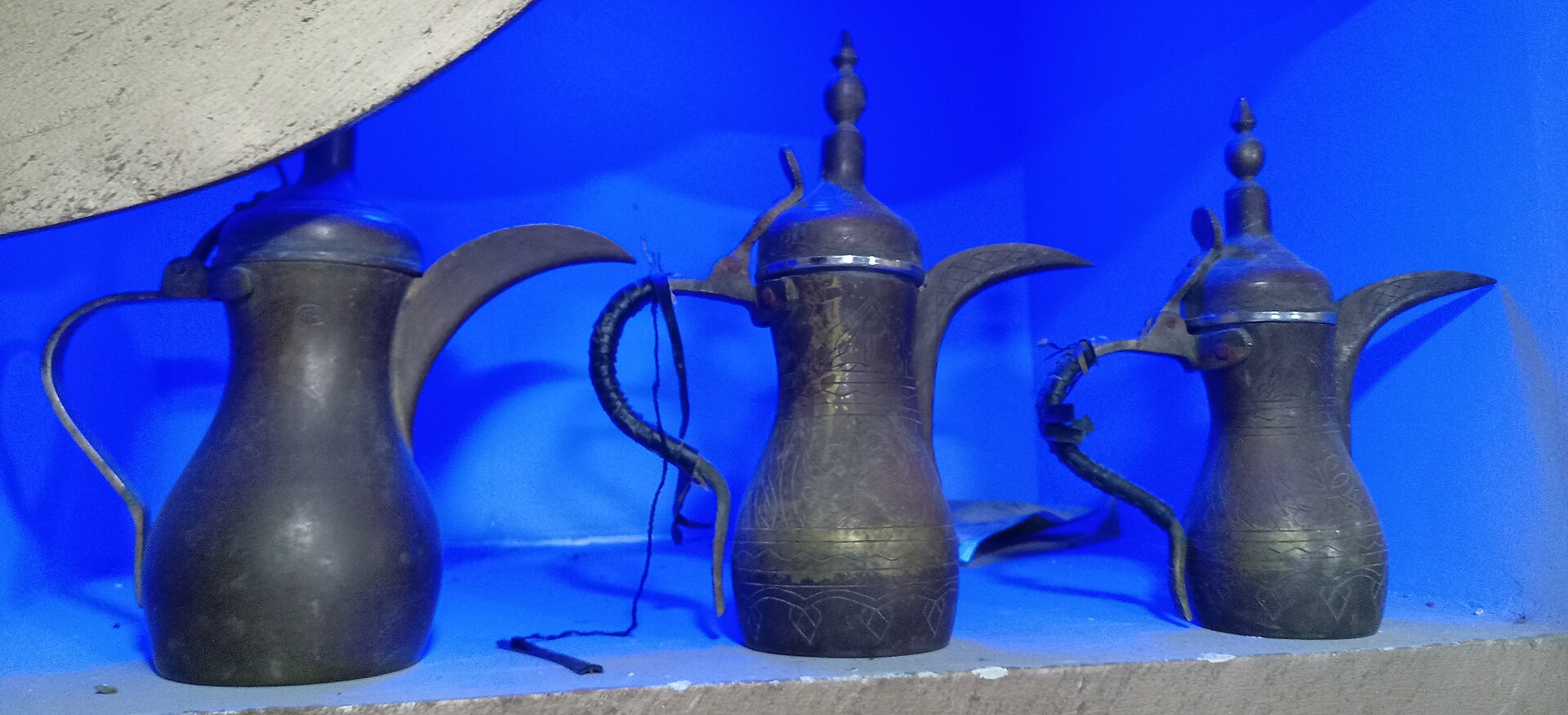
Arabic Coffee Etiquette
Being offered Arabic coffee (gahwa) and dates is one of the most common hospitality rituals in Saudi Arabia. It will happen at hotels, homes, shops, and even government offices. Here is the etiquette:
Dining note: Many traditional restaurants in Saudi Arabia have a family section (قسم العائلات, qism al-a’ilat) and a singles section (قسم الأفراد, qism al-afrad). The family section is for families and mixed groups including women; the singles section is for men dining alone or in male-only groups. This distinction has relaxed considerably in recent years, especially in Riyadh and Jeddah, but you may still encounter it in smaller cities. For more on navigating Saudi dining customs, see our Saudi cooking classes guide.
Shopping and Bargaining
From the gold souks of Al Balad in Jeddah to the traditional markets of Al Malaz in Riyadh, knowing some shopping Arabic is essential. Fixed-price stores (malls, supermarkets) do not require negotiation, but traditional souks expect it — and good-natured haggling is part of the experience. For a complete shopping overview, see our Saudi Arabia shopping guide.
| English | Arabic Script | Pronunciation |
|---|---|---|
| How much is this? | بكم هذا؟ | bikam hadha? |
| Too expensive | غالي | ghali |
| Is there a discount? | في خصم؟ | fi khasm? |
| Can you lower the price? | تقدر تنزل السعر؟ | tigdar tinazzil as-si’r? |
| I’ll take it | آخذه | akhudhuh |
| I don’t want it | ما أبيه | ma abih |
| Just looking | بس أتفرج | bas atfarraj |
| Do you have…? | عندك…؟ | indak…? |
| Done / Deal | تمام / خلاص | tamam / khalas |
| Where is the market? | وين السوق؟ | wayn as-souq? |
Haggling Tips in Saudi Souks
Numbers: 1 to 20 and Key Amounts
Knowing numbers in Arabic is particularly useful for prices, taxi fares, and hotel rooms. Saudi Arabia uses both Arabic-Indic numerals (٠١٢٣٤٥٦٧٨٩) and Western numerals (0123456789) — you will see both on signs and price tags. For more on money and payments, see our Saudi Arabia currency guide and ATM and banking guide.
| Number | Arabic Script | Pronunciation | Arabic Numeral |
|---|---|---|---|
| 1 | واحد | wahid | ١ |
| 2 | اثنين | ithnayn | ٢ |
| 3 | ثلاثة | thalatha | ٣ |
| 4 | أربعة | arba’a | ٤ |
| 5 | خمسة | khamsa | ٥ |
| 6 | ستة | sitta | ٦ |
| 7 | سبعة | sab’a | ٧ |
| 8 | ثمانية | thamaniya | ٨ |
| 9 | تسعة | tis’a | ٩ |
| 10 | عشرة | ashara | ١٠ |
| 20 | عشرين | ishreen | ٢٠ |
| 50 | خمسين | khamseen | ٥٠ |
| 100 | مية | miya | ١٠٠ |
| 1,000 | ألف | alf | ١٠٠٠ |
Money note: The Saudi currency is the Saudi Riyal (SAR), divided into 100 halalas. A riyal is colloquially called a riyal (ريال). When asking prices, “bikam?” (بكم, how much?) is all you need. For amounts, you can simply say the number followed by riyal: “khamseen riyal” = 50 riyals.
Religious and Cultural Expressions
Saudi Arabia is the birthplace of Islam, and religious expressions are woven into everyday conversation — even among less religiously observant Saudis. Understanding these phrases is not just practical but essential for respectful interaction. For more on navigating religious customs, see our mosque etiquette guide and our guide for non-Muslim travellers.
| Expression | Arabic Script | Pronunciation | Meaning and Usage |
|---|---|---|---|
| In the name of God | بسم الله | bismillah | Said before eating, drinking, entering a home, starting a journey. Use it before your first bite at any meal. |
| God willing | إن شاء الله | inshallah | Any reference to future plans. “See you tomorrow, inshallah.” |
| God has willed it | ما شاء الله | mashallah | When complimenting anything — a person, a view, a car, food. Essential. |
| Praise be to God | الحمد لله | alhamdulillah | After eating, when something good happens, when asked how you are. |
| Glory be to God | سبحان الله | subhanallah | Expressing wonder or amazement at something. “The desert sunset was… subhanallah.” |
| God bless you | بارك الله فيك | barak Allahu feek | Thanking someone deeply; a step above “shukran.” |
| If God permits | بإذن الله | bi-idhn Allah | Stronger version of inshallah; implies more certainty. |
| God give you strength | الله يعطيك العافية | Allah ya’teek al-afiya | Said to anyone working — a waiter, driver, shopkeeper. Very well received. |
| May God have mercy | الله يرحمه | Allah yarhamuh | When someone mentions a deceased person. |
Prayer Times and What to Say
Saudi Arabia observes five daily prayers, announced by the adhan (call to prayer) from every mosque. During prayer times, many shops close for 15-30 minutes. If you are in a shop or restaurant when the adhan sounds:
Emergencies and Health
Hopefully you will never need these, but having emergency phrases ready is essential. Saudi Arabia’s emergency number is 911 (or 999). Operators may answer in Arabic; if you need English, say “English, min fadlak” and you will usually be connected to an English speaker. For more on staying safe, see our health and vaccinations guide.
| English | Arabic Script | Pronunciation |
|---|---|---|
| Help! | !مساعدة | musa’ada! |
| Help me! | !ساعدني | sa’idni! |
| I need a doctor | أحتاج دكتور | ahtaj doktoor |
| Hospital | مستشفى | mustashfa |
| Pharmacy | صيدلية | saydaliya |
| Police | شرطة | shurta |
| Where is the police station? | وين مركز الشرطة؟ | wayn markaz ash-shurta? |
| I’m lost | أنا ضايع | ana daye’ |
| I’m sick | أنا مريض | ana mareed |
| It hurts here | يوجعني هنا | yooja’ni hina |
| I’m allergic to… | عندي حساسية من… | indi hasasiya min… |
| Fire! | !حريق | hareeq! |
| Ambulance | إسعاف | is’af |
| Everything is fine | كل شيء تمام | kul shay’ tamam |
Key numbers: 911 — unified emergency number (police, fire, ambulance). 997 — ambulance only. 993 — traffic police. Most hospital emergency departments in major cities have English-speaking staff.
Uniquely Saudi Slang and Expressions
These are phrases you will hear Saudis use constantly that do not appear in any textbook. They are the linguistic markers of someone who understands Saudi culture beyond the surface.
| Expression | Arabic Script | Pronunciation | Meaning |
|---|---|---|---|
| Let’s go! | يلا | yallah | The universal call to action — “come on, let’s go, hurry up.” Used everywhere, all day. |
| Really / Very / Much | مرة | marrah | Perhaps the most Saudi word there is. “Marrah zain” = really good. “Marrah ghali” = very expensive. |
| Done / Enough / Finished | خلاص | khalas | Signals the end of anything — a deal, a meal, a conversation. “Khalas, I’m full.” |
| Great / OK | تمام | tamam | Universal acknowledgement — “OK, great, perfect, fine.” |
| My dear / Beloved | حبيبي | habibi (m) / habibti (f) | A term of endearment used broadly — to friends, to strangers being friendly, to children. Not romantic in most contexts. |
| Beautiful / Nice | حلو | hiloo | “Marrah hiloo” = really nice. Used for food, places, people, things. |
| Welcome (warm, repeated) | هلا والله | hala wallah | An enthusiastic welcome — “hello and welcome by God.” Informal and friendly. |
| Good stuff / Excellent | زين | zayn | “Good” in Saudi dialect. “Zayn?” = “All good?” |
| What? | ايش؟ | aysh? | Saudi way of saying “what?” More colloquial than MSA “madha.” |
| Now / Right now | الحين | al-heen | Saudi for “now” — different from MSA “al-aan.” Very commonly used. |
At the Airport and Border
International airports in Saudi Arabia (Riyadh, Jeddah, Dammam) have extensive English signage and English-speaking immigration staff. Still, these phrases are useful for smaller domestic airports and for interacting with ground staff.
| English | Arabic Script | Pronunciation |
|---|---|---|
| Passport | جواز سفر | jawaz safar |
| Visa | تأشيرة | ta’sheera |
| Where is the baggage claim? | وين استلام الأمتعة؟ | wayn istilam al-amti’a? |
| Where is the exit? | وين المخرج؟ | wayn al-makhraj? |
| I’m a tourist | أنا سائح | ana sa’ih |
| I’m here for… days | أنا هنا لمدة… أيام | ana hina li-muddat… ayyam |
| Arrivals | الوصول | al-wusool |
| Departures | المغادرة | al-mughadara |
Useful Phrases for Specific Situations
Taking Photos
Saudi Arabia is a photographer’s paradise, but always ask before photographing people, especially women.
| English | Arabic Script | Pronunciation |
|---|---|---|
| Can I take a photo? | ممكن أصور؟ | mumkin asawwir? |
| Can I take a photo of you? | ممكن أصورك؟ | mumkin asawwrak? |
| No photography here | ممنوع التصوير هنا | mamnu’ at-tasweer hina |
Making Friends
Saudis are famously hospitable. If you are invited to someone’s home or struck up a conversation, these phrases deepen the connection.
| English | Arabic Script | Pronunciation |
|---|---|---|
| What is your name? | شو اسمك؟ | shu ismak? (m) / shu ismik? (f) |
| My name is… | اسمي… | ismi… |
| Where are you from? | من وين انت؟ | min wayn inta? |
| I’m from… | أنا من… | ana min… |
| Nice to meet you | تشرفنا | tasharrafna |
| I love Saudi Arabia | أحب السعودية | ahibb as-su’udiya |
| I don’t speak Arabic | ما أتكلم عربي | ma atakallam arabi |
| Do you speak English? | تتكلم إنجليزي؟ | titkallam ingleezi? |
| I’m learning Arabic | أتعلم عربي | at’allam arabi |
| Slowly, please | ببطء من فضلك | bi-but’ min fadlak |
Cultural tip: If a Saudi invites you to their home, it is polite to accept. Remove your shoes at the door. You will almost certainly be offered Arabic coffee and dates upon arrival. Compliment the home (with mashallah). When offered food, the host will insist you eat more — it is polite to resist gently once or twice before accepting. Saying “alhamdulillah, I’m full” (الحمد لله شبعت, alhamdulillah shiba’t) signals you are satisfied. Read more about cultural do’s and don’ts in our Saudi customs and etiquette guide.
Pronunciation Guide for English Speakers
Arabic has several sounds that do not exist in English. Here is a quick guide to the trickiest ones:
| Sound | Arabic Letter | How to Say It | Example |
|---|---|---|---|
| kh | خ | Like the “ch” in Scottish “loch” or German “Bach.” A raspy, throat-clearing sound. | khubz (bread), khayr (good) |
| gh | غ | Similar to a French “r” — a gargling sound from the back of the throat. | ghali (expensive), ghurfa (room) |
| ‘ (ayn) | ع | A constriction deep in the throat, like the sound you make when you gag slightly. No English equivalent. | ‘arabi (Arabic), sa’idni (help me) |
| h (heavy) | ح | A breathy, whispered “h” from the throat — not the light English “h.” | habibi (my dear), haram (forbidden) |
| q | ق | A “k” sound produced far back in the throat, at the uvula. In Saudi Najdi dialect, often becomes a hard “g.” | gahwa (coffee), qitar (train) |
| dh | ض | An emphatic “d” sound — tongue pressed against the palate. | Ramadan |
Do not stress about perfection. If you pronounce kh as a regular “k” or miss the ayn entirely, people will still understand you from context. The effort matters more than the accuracy. Saudis will often gently correct your pronunciation in a friendly, encouraging way — take it as a compliment that they want to help you get it right.
How to Learn More: Resources and Apps
If this guide has whetted your appetite, here are practical ways to build on these basics before and during your trip:
Common Mistakes to Avoid
A few cultural and linguistic pitfalls to be aware of:
Quick Reference: 20 Phrases to Memorise Before Your Flight
If you only learn twenty phrases, make it these. Print this list or save it to your phone.
| # | English | Pronunciation |
|---|---|---|
| 1 | Peace be upon you | as-salamu alaykum |
| 2 | Hello | marhaba |
| 3 | Thank you | shukran |
| 4 | Please | min fadlak |
| 5 | Yes | na’am |
| 6 | No | la |
| 7 | Goodbye | ma’a as-salama |
| 8 | How much? | bikam? |
| 9 | Where is…? | wayn…? |
| 10 | God willing | inshallah |
| 11 | God has willed it (for compliments) | mashallah |
| 12 | Praise God | alhamdulillah |
| 13 | In the name of God (before eating) | bismillah |
| 14 | Delicious! | ladheedh! |
| 15 | Too expensive | ghali |
| 16 | Water | moya |
| 17 | I need help | ahtaj musa’ada |
| 18 | Do you speak English? | titkallam ingleezi? |
| 19 | Let’s go! | yallah |
| 20 | Done / OK / Enough | khalas |