
Few experiences in Saudi Arabia are as vivid, chaotic, and authentically Arabian as stepping into a working camel market at dawn. Long before the country opened to tourism, these dusty trading grounds were the economic and social heartbeats of desert communities — places where fortunes changed hands with a handshake and where Bedouin heritage stayed alive in the bellow of a thoroughbred she-camel. Today, as part of a wider Saudi Arabia travel itinerary, visiting a camel market offers something no luxury resort or megaproject can replicate: an unfiltered window into a culture that has revolved around the dromedary for millennia. This guide covers the Kingdom’s three major camel markets, the spectacular King Abdulaziz Camel Festival, practical tips for visitors, and the cultural traditions that make the Saudi relationship with camels unlike anything else on earth.
Best Time to Visit: October to March (cooler months; festival season December–January)
Getting There: Buraydah market is a 4-hour drive from Riyadh; Riyadh’s Souq Al Jamal is 30 km north of the city centre
Visa Required: Yes — tourist e-visa
Budget: $50–100/day (markets are free to enter; costs are transport, food, and accommodation)
Must-See: Buraydah Camel Market, King Abdulaziz Camel Festival, Souq Al Jamal (Riyadh)
Avoid: Visiting in summer (temperatures exceed 45°C at outdoor markets)

Why Saudi Camel Markets Matter
Saudi Arabia is home to approximately 1.8 million camels — one of the largest populations of any country. The dromedary (single-humped) camel is woven into every layer of Saudi identity: it provided transport across the Empty Quarter, nutrition through milk and meat, leather for trade goods, and a measure of tribal wealth for generations of Bedouin families. Even the word for “beautiful” in many Arabian dialects shares its root with the word for camel.
In 2024, the Saudi Ministry of Culture declared it the “Year of the Camel”, and the Saudi Camel Club — established by royal decree in 2017 with Crown Prince Mohammed bin Salman as general supervisor — has poured hundreds of millions of riyals into preserving and modernising camel heritage as part of Vision 2030’s cultural programme. For visitors, this means the camel markets and festivals are better organised, more accessible, and more spectacular than ever.
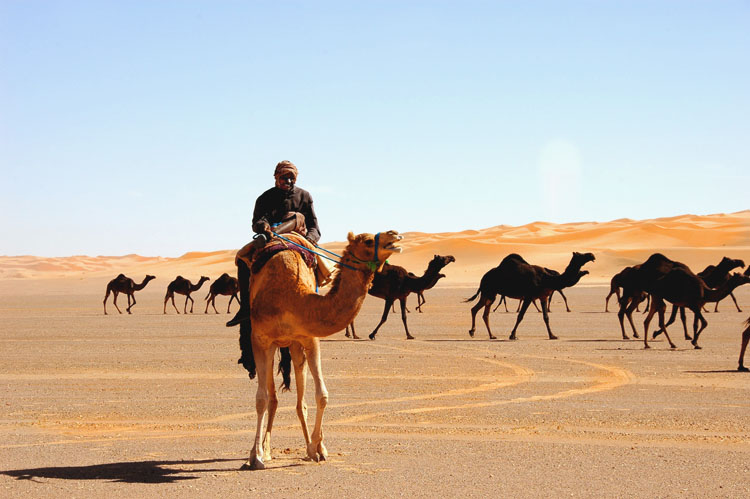
There are seven recognised Saudi dromedary breeds: Majaheem (dark/black), Maghateer (white), Sufur (beige with black shoulders), Shi’l (dark brown), Wodh, Shageh, and Asail. Knowing these names will earn you instant respect at any market — traders love discussing bloodlines.
The Three Major Camel Markets
Buraydah Camel Market — The World’s Largest
Sprawling across roughly two square miles on the outskirts of Buraydah, the capital of Al-Qassim Province, this is the undisputed capital of the global camel trade. Around 700 animals change hands on a typical day, swelling to approximately 2,000 on Saturdays — the busiest trading day. The market opens daily at dawn (5–6 AM), and the peak action is over by mid-morning.
What you’ll see: dromedaries of every age, colour, and temperament, from gangly newborn calves wobbling on spindly legs to towering breeding bulls that can fetch upwards of $50,000. Premium thoroughbred racing camels at special auctions have sold for up to $1 million. Alongside the camels, traders sell sheep, goats, saddles, halters, woven blankets, and camel accessories. Most camels sold here are destined for meat or dairy production, though wealthy buyers from across the Gulf travel to Buraydah specifically for racing and breeding stock.
Visitor tip: Be prepared for strong livestock smells, dust, and chaotic conditions. Wear closed shoes you don’t mind getting dirty. The atmosphere is noisy, hectic, and genuinely thrilling — most visitors describe the locals as welcoming and happy to show off their animals.
Getting there: Buraydah is roughly 360 km northwest of Riyadh — about a four-hour drive via the Dammam road. Domestic flights from Jeddah take around two hours. If you’re driving across Saudi Arabia, take the Thumamah exit. Budget two to three days in Buraydah to combine the camel market with the city’s famous date market, local museums, and day trips into the surrounding Al-Qassim countryside.
Souq Al Jamal — Riyadh
For travellers based in Riyadh, Souq Al Jamal offers a camel market experience without the long drive to Buraydah. Located roughly 30 km north of the city centre, this sprawling souq covers approximately five square kilometres and is one of the largest camel trading grounds on the Arabian Peninsula.
Unlike Buraydah, the rhythm here is different: the market comes alive in the late afternoon and evening, when camel owners arrive to tend their animals, socialise over coffee, and negotiate deals. Weekends (Friday–Saturday) draw the biggest crowds. The variety of camel colours here is remarkable — from creamy off-white Maghateer to near-black Majaheem, lined up in pens along dusty lanes.
Note: Riyadh’s urban expansion has relocated the souq several times. Check locally for the current location before setting out, or ask your hotel concierge. The general area remains north of the Dammam road near the Thumamah exit.
Hofuf Camel Market — Eastern Province
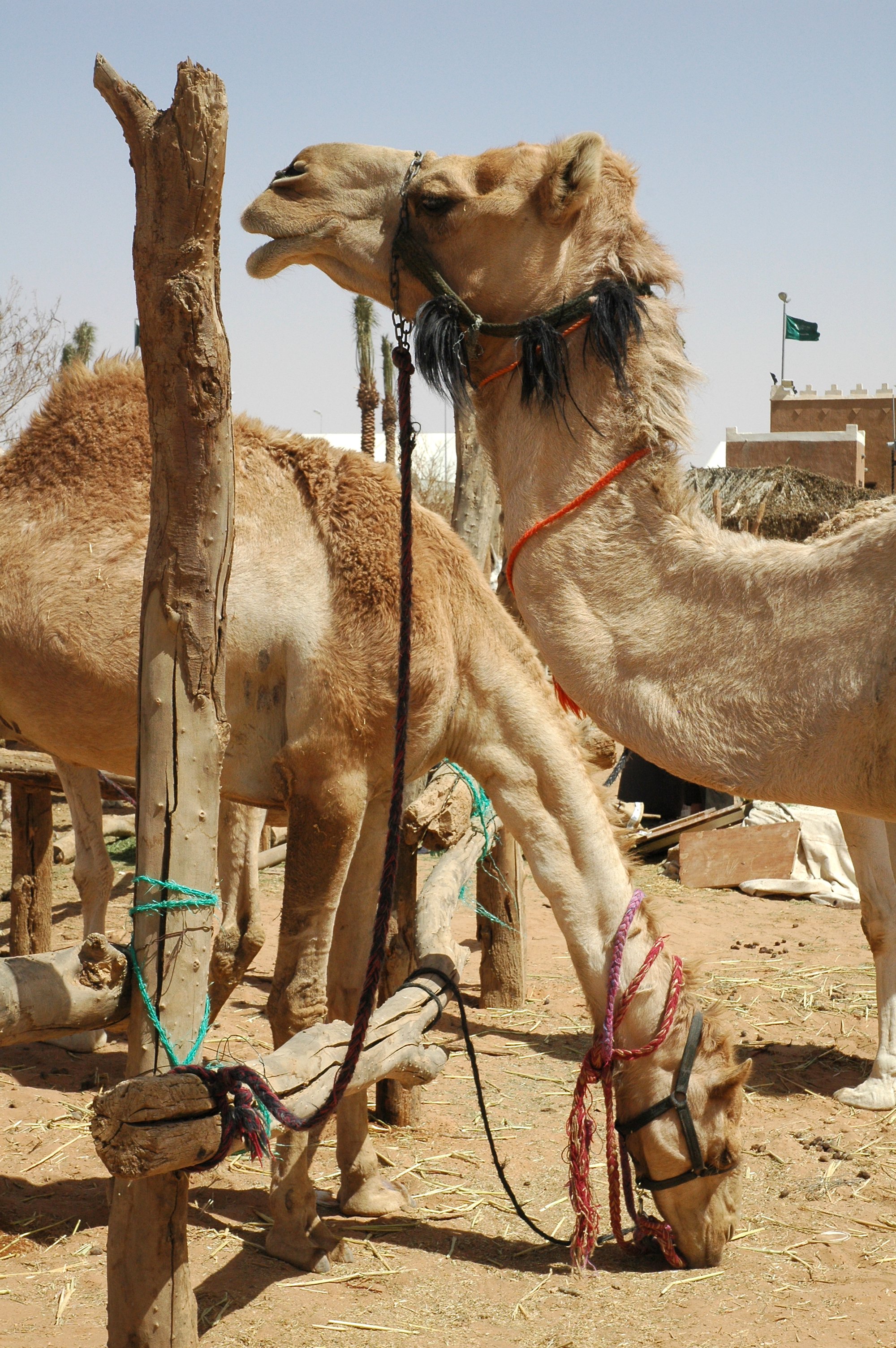
About 20 km from Al-Hofuf city centre in the Al-Ahsa Governorate, this well-organised market is the Eastern Province’s main camel trading hub. It operates from 6:30 AM to 5:00 PM, with Thursday traditionally the busiest trading day.
Hofuf’s market is more structured than the sprawling chaos of Buraydah — spacious barns, bales of hay stacked neatly, and a calmer pace. Most camels here are sold for meat and are slaughtered on-site, which may not suit all visitors. It also serves as a social gathering spot for herders from across the Eastern Province, making it a great place to observe traditional trading customs.
Al-Ahsa itself is a UNESCO World Heritage Site, so pairing a morning at the camel market with an afternoon exploring the oasis, Al-Qarah caves, and Ibrahim Palace makes for an excellent day trip.
The King Abdulaziz Camel Festival
If camel markets are the daily heartbeat of Saudi camel culture, the King Abdulaziz Camel Festival is its Super Bowl. Held annually at a purpose-built site in Al-Sayahid village — 120 km northeast of Riyadh, between Rumah and al-Rumahiyah — the festival sprawls across more than 225 square kilometres and attracts around 38,000 camels and thousands of spectators, including over 3,000 international visitors from 50+ countries.
The 10th edition ran from December 1, 2025 to January 3, 2026, and prize money now exceeds SAR 300 million (approximately $80 million USD), making it the richest livestock event on earth.
The Camel Beauty Contest (Mazayen al-Ibl)
The centrepiece of the festival is the beauty pageant — and it is exactly as magnificent and absurd as it sounds. Camels are judged across six main categories organised by herd size (from individual entries to herds of 100), further divided by colour: Majaheem (dark), Maghateer (white), Shi’l (brown), and Sulfur (beige). Age classes separate younger Degh camels (under five years) from mature Jel camels (over five).
Judging criteria include: head size, whether the lips fully cover the teeth, neck length, hump roundness, eye size, eyelash length, drooping nose, back-set ears, overall height, gait, and ear size. Drooping lips earn premium points. Top individual “Bayraq” camels can win up to $3 million.
The Botox Scandal
The festival made global headlines when contestants were caught cheating. In 2018, 12 camels were disqualified after veterinarians discovered Botox injections in their lips and heads — designed to make them appear larger and more drooping. The crackdown escalated: 7 disqualified in 2019, and a record 43 camels barred in 2021. Banned procedures now include Botox, hormone injections (bodybuilding steroids to thicken lips and noses), facelifts, rubber bands to inflate body parts, and injectable fillers. Veterinarians use electronic microchips and advanced screening to detect tampering.
Camel Racing
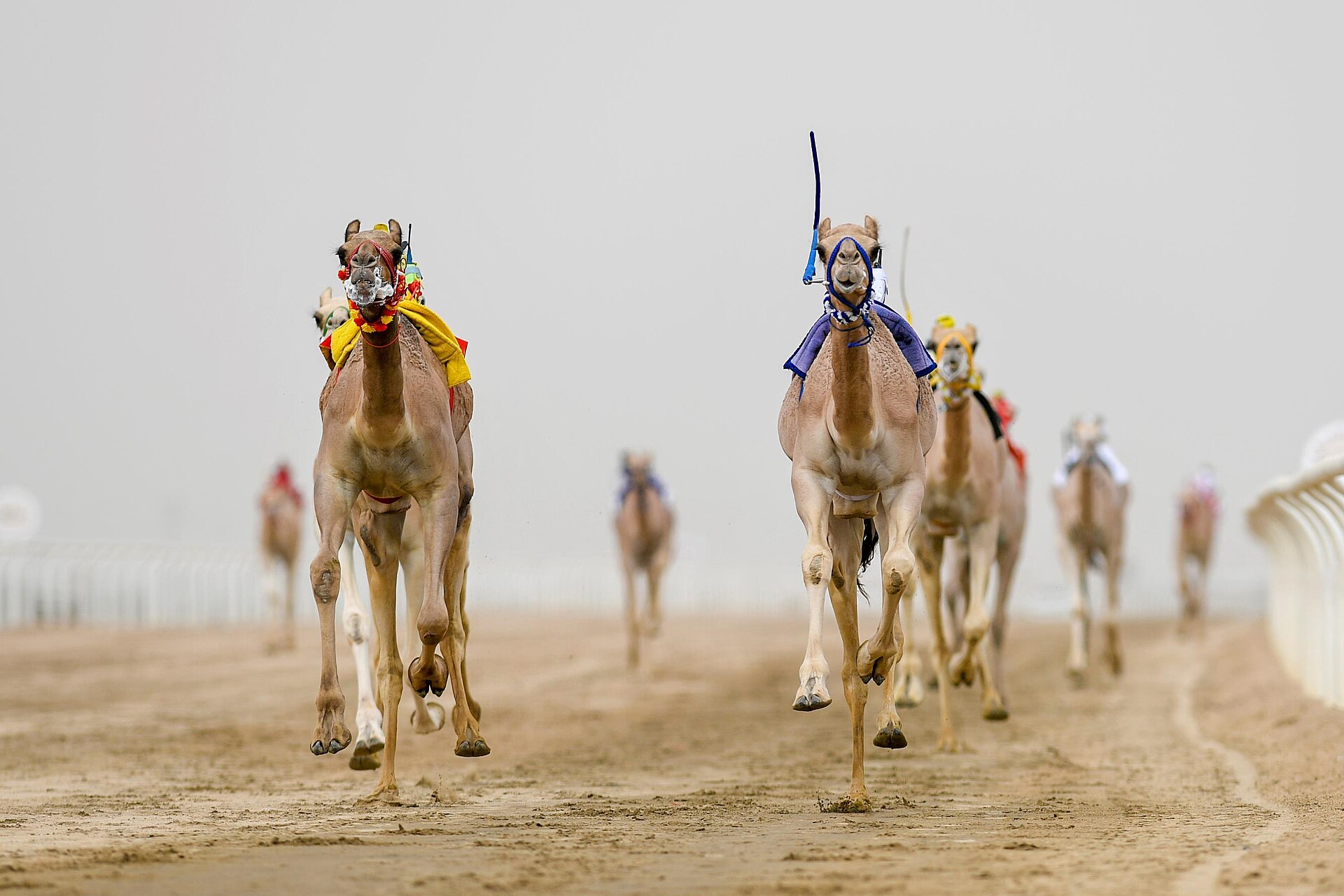
The festival’s racing programme covers 1,335 km across 233 rounds, with SAR 200 million in prize money. Camels sprint at up to 40 km/h over 8 km tracks, guided by robot jockeys — remote-controlled devices equipped with speakers (so owners can shout encouragement from their SUVs alongside the track) and automated whips. Robot jockeys replaced child riders, addressing a previous human rights concern. The Crown Prince Camel Festival in Taif hosts additional racing events, with recent auction sales exceeding SAR 56 million ($15 million).
Other Festival Activities
Beyond the beauty contests and racing, the festival is a cultural immersion: traditional Nabati poetry recitals, falconry demonstrations, livestock auctions (over 8,000 camels sold at the 2022 edition for approximately SAR 100 million), artisan craft markets, and traditional food stalls serving camel milk and meat dishes. The trophies, incidentally, are crafted by British manufacturer Thomas Lyte.
Camel Culture: What You Need to Know
Camel Milk
Rich in iron, vitamin C, and insulin-like proteins, camel milk was historically the lifeline that sustained Bedouin families across the desert. Today, Saudi brands like Noug and Sawani bottle and distribute camel milk through cafes and supermarkets, and the Kingdom is developing a mega-processing facility to position itself as the world’s leading camel milk producer. Expect to find fresh camel milk at any market — it’s tangier and slightly saltier than cow’s milk, and well worth trying. Many visitors pair it with dates, a classic Arabian combination.
Al-Heda’a: The UNESCO-Listed Camel Herding Song
One of Saudi Arabia’s most haunting cultural traditions, al-Heda’a is a vocal practice used by herders to guide their camels through rhythmic calls, gestures, and poetry. Each herder develops a distinctive call, and camels form emotional bonds with familiar voices, responding to their owner’s al-Heda’a above all others. UNESCO recognised it as Intangible Cultural Heritage, and it’s still practised primarily in the Najran and Jazan regions by both men and women. You may hear echoes of it at traditional markets.
The Digital Turn: Rai Alnadhar
In December 2024, the Saudi Camel Club’s digital platform Rai Alnadhar entered the Guinness World Records as the largest digital platform dedicated to camel heritage globally. It hosts Monqiyat Al-Jazeera, the world’s largest digital camel competition — reflecting the Vision 2030 push to modernise traditional culture without losing its essence. The government has allocated $450 million to camel racing infrastructure, with eight new world-class facilities under development.
Practical Tips for Visiting a Camel Market
When to Go
The best months are October to March, when temperatures are manageable (20–30°C daytime) and the King Abdulaziz Camel Festival is in full swing (December–January). Summer markets still operate, but midday temperatures above 45°C make outdoor visits brutal. Arrive at dawn for the best trading action — most deals are done by 9 AM.
| Market | Best Day | Peak Hours | Location |
|---|---|---|---|
| Buraydah | Saturday | 5–9 AM | Al-Qassim, 360 km NW of Riyadh |
| Souq Al Jamal (Riyadh) | Friday–Saturday | 4–8 PM | 30 km north of Riyadh centre |
| Hofuf | Thursday | 6:30 AM–12 PM | Al-Ahsa, Eastern Province |
| King Abdulaziz Festival | Daily (Dec–Jan) | All day | 120 km NE of Riyadh |
What to Wear
Saudi Arabia has a dress code — modest clothing is expected, especially in traditional areas like camel markets. Men should wear long trousers and shirts with sleeves (avoid shorts and sleeveless tops). Women should wear loose-fitting clothing covering arms and legs; an abaya is respectful though no longer legally required for visitors. Most importantly: wear closed, sturdy shoes you don’t mind ruining. The ground at camel markets is a mix of sand, dust, mud, and animal waste.
Photography and Etiquette
Photographing camels and the general market scene is welcome — traders are often proud of their animals and happy to pose. However, always ask permission before photographing people, particularly women and children. Some traders may request a small tip for posing with their best camels. Use “As-salamu alaykum” (peace be upon you) as a greeting, shake hands with the right hand only, and be prepared for market activity to pause during prayer times.
Health and Safety
Camel markets are working livestock facilities, not tourist attractions — that’s part of their appeal, but it means taking basic precautions. Keep a safe distance from agitated animals (a camel kick is no joke). Wash hands thoroughly after touching animals. MERS-CoV (Middle East Respiratory Syndrome) is associated with dromedary camels — the WHO advises avoiding drinking raw camel milk and practising good hand hygiene around camels, though the risk to casual visitors is extremely low. Check the latest Saudi Arabia safety guidance before your trip.
Getting There and Around
For Buraydah, the simplest option is renting a car in Riyadh and driving the four hours via Highway 65. Domestic flights connect Riyadh to Buraydah (Qassim Airport). For the King Abdulaziz Camel Festival, organised shuttle buses run from Riyadh during the festival period. Souq Al Jamal in Riyadh is easily reached by taxi or ride-hailing apps (Uber and Careem both operate in the Kingdom). A tourist e-visa covers all these destinations.
Costs
All three markets are free to enter — there are no admission charges. Your costs will be transport, food, and accommodation. Budget hotels in Buraydah start around SAR 200–300 ($55–80) per night, while Riyadh offers options at every price point. For a detailed cost breakdown, see the Saudi Arabia cost guide. Camel meat dishes at local restaurants near the markets cost SAR 30–60 ($8–16).
Combining Camel Markets with a Wider Itinerary
A camel market visit slots naturally into a broader Saudi Arabia itinerary. From Buraydah, you can loop through Ha’il (the Ha’il region has its own rich camel heritage), then continue to AlUla for Hegra and the Nabataean tombs. From Riyadh, pair Souq Al Jamal with the Diriyah UNESCO site and the Riyadh food scene for a comprehensive capital city experience. If you’re visiting during Ramadan, check the food and dining guide for adjusted market and restaurant hours.
For first-time visitors to Saudi Arabia, a camel market is one of the most rewarding and memorable experiences the Kingdom offers — raw, authentic, and utterly unlike anything else in your travel portfolio.
Explore More Saudi Arabia Travel Guides
- Saudi Arabia Travel Guide 2026 — The complete guide to visiting the Kingdom
- Buraydah City Guide — Full guide to Al-Qassim’s capital, home of the world’s largest camel market
- Riyadh Travel Guide — Everything to see and do in Saudi Arabia’s capital city
- Saudi Arabia Events Calendar 2026 — Festivals, races, and cultural events across the Kingdom
- Saudi Arabia Food Guide — From camel milk to kabsa — the essential dining guide
- Saudi Arabia Visa Guide — Every visa type explained